Posts in news

E-Books Fail To Save Publishers From Revenue Decline

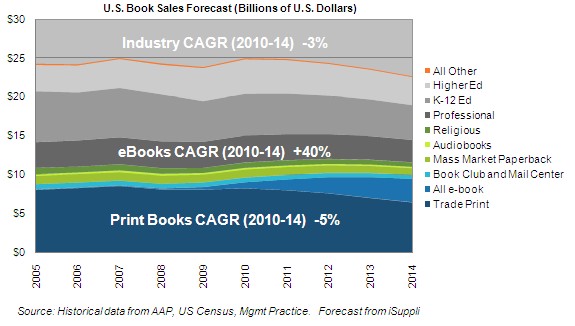
Research published yesterday by IHS iSuppli reveals that the US book publishing industry has reached a “major inflection point” in which there will be a long-term decline in revenue, as e-book sales fail to reach the levels required to compensate the fall in physical book sales.

Over the period of 2010-2014, the book publishing industry will face a compound annual growth rate (CAGR) decline of 3% for both e-books and paper books. This reflects a fall in revenue from $25 billion between 2005 and 2010 to $22.7 billion between 2010 and 2014. Driving the decline is a 5% fall in the CAGR of physical book revenue, which far outweighs the 40% CAGR in e-books. This is mostly due to the fact that the selling prices of e-books are on average 40% lower than those of paper copies.

Dedicated e-readers, however, are forecast to triple in sales from 2010’s 9.7 million sales to over 30 million units in 2014. Previous figures did forecast over 40 million sales, but IHS iSuppli believes devices such as the iPad and other tablets will limit the market for such dedicated e-reading devices. IHS iSuppli also reveals in its analysis that since the introduction of the iPad, e-reader manufacturers have been forced to shrink margins from 35% to far lower levels.

[Via IHS iSuppli]


Square Set To Add Encryption To Next Generation Of Card Readers

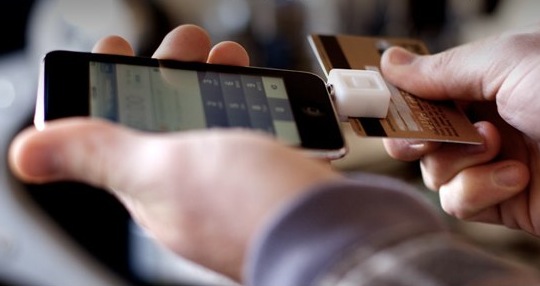
Yesterday Square revealed that it had received from financial services superpower, Visa, strategic investment of an unspecified size. However in a lower key announcement it also revealed that this summer they will be releasing a new card reader that uses encryption on the read head.

You may recall the little squabble a few months back where VeriFone and Square traded blows over whether the Square card reader was secure enough. VeriFone claimed it wasn’t and that Square should recall all their readers because thieves could easily skim credit card information using the device. Jack Dorsey, CEO of Square, hit back at VeriFone saying it was “not a fair or accurate claim and [that] it overlooks all of the protections already built into your credit card.”

Yet despite all that, Square will soon be addressing those “concerns” that VeriFone had, and release a card reader that employs encryption. The Square COO, Keith Rabois, notes that they are adopting Visa’s newly released (yesterday) mobile application best practices. He says that the “adoption of best practices will help increase trust in innovative payment solutions” although equally stresses that Square currently complies with all industry standards. TechCrunch rightly highlights that it is clearly no coincidence that Square’s endorsement of Visa’s best practices came on the same day as their funding announcement.

TechCrunch inquired as to whether users would have to replace their current readers but Rabois declined to comment specifically but he did continue to affirm Square’s previous rejection of VeriFone’s demand to recall the Square readers. Rabois also noted that encryption will not be the only new feature of the third iteration of readers coming this summer.

[Via TechCrunch]


Apple Plans Largest Australian Store In Brisbane CBD

Apple is reportedly planning to open its eleventh Australian retail store in the CBD of Brisbane that would become the country’s largest Apple Store. The reports come after plans were last night lodged at the Brisbane City Council over a $10.5 million renovation of the historic MacArthur Chambers (pictured above).

The plans for the renovation, which were lodged on behalf of the MacArthur Central Shopping Centre, do not mention Apple. However the interior plans include all the hallmark features of an Apple retail store with; twin glass doors, illuminated interior signs, stone floor, “feature stairs” and a “new colour scheme of shades of white.” The plans (below the break) seem to also feature a Genius bar and there is even space set aside in the plans for the “location of internally illuminated store signage”, or in other words Apple logo on the front of the building above the main doors.

The MacArthur building, built in 1934, is an English Renaissance-style building that is entrenched in Australian World War II history. It was commandeered in 1942 by US General Douglas MacArthur and was used as the Allied Forces’ South-West Area Headquarters and remained as such until November 1944. It was, until recently occupied by book chain Dymocks but is currently occupied by a discount book seller.

If the plans go ahead, the new Brisbane Apple store would become the largest in Australia at 1900sqm, which would be even larger than the flagship Apple store in Sydney and one of the most architecturally interesting of all the Australian, if not all, Apple stores. Apple has some past experience renovating cultural, and architecturally, significant buildings including the Regent Street store in London and last years Parisian Apple Store.

Also discovered in the planning application was a $3.84 million plan to remove “current modern additions” such as escalators, lifts and its tiled ceiling and returning the building to its “original form” including restoring the buildings original bronze style doors and missing stone wall panels. The glass staircase featured in the plans are speculated to be something similar to those already featured in the Sydney George Street store and the Fifth Avenue store in New York – a hallmark feature of both those stores.

Read more


White iPhone 4 Sells Out In Hong Kong And Beijing

It was delayed and delayed for 10 months but yesterday the white iPhone 4 went on sale…and promptly sold out in Hong Kong and Beijing where there were long lines around Apple stores and resellers. Some shoppers in Hong Kong began queuing up at midnight the day before, and they are probably glad they did, in some stores in China the device was gone within an hour.

It was a different and much more subdued affair in the US where few, if any lines were reported at Apple Stores, and as far as we are aware most stores should still have stock. Although on the online Apple Store there is a 3-5 day wait before shipping for the white model, with the black model shipping in the standard 24 hours.

No one is really sure why the white iPhone 4 sold out in China and not in the US but one could guess at a few factors from the white being more preferred, less stock given to Chinese stores or perhaps an increasing appeal of Apple in China. In any case its an early sign of the expected rapid retail sales growth of Apple products in China which Forbes predicts will propel Apple shares upwards.

[Via Cult of Mac]


Zynga Acquires UK Developer Wonderland Software

Zynga is becoming a growing powerhouse for casual and mobile gaming and their latest acquisition of Wonderland Software further demonstrates their tenacity to expand. Wonderland software is perhaps best known for making GodFinger – which was published by Ngmoco as freemium iOS title.

As a result of the acquisition, Wonderland Software has been rebranded as Zynga Mobile UK and it is pretty clear that Zynga’s intention is to use the company and resources to build out Zynga’s brand and developer network in the UK for mobile and social games. The buyout of Wonderland Software follows the earlier acquisition of Area/Code (developers of Drop7), which now head up Zynga New York and also NewToy (developers of Words with Friends), which was rebranded as Zynga with Friends.

[Via TUAW]


Samsung Doesn’t Give Up, Counter-Sues Apple In The United States

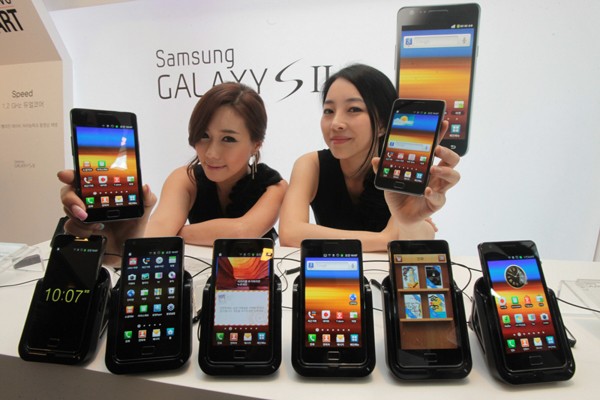
Samsung is not giving up. After countersuing Apple in Europe and Asia for patent infringement in technologies like power conservation and 3G data transmission as a legal action against Apple’s lawsuit (which claimed the company copied the iPhone and iPad “look & feel” with the Galaxy series devices), Samsung is now suing Apple in the United States as well, as reported by Bloomberg. According to Samsung, Apple is infringing 10 patents related to mobile phones with its iOS devices, and whilst it’s clear that Samsung is simply trying to defense itself and counterattack to Apple’s original lawsuit, it’s still interesting to notice the cellphone maker is committed to broadening the litigation to the US, with documents filed yesterday in federal court in San Jose, California.

In the U.S. complaint, Samsung accuses Apple of violating patents that “relate to fundamental innovations that increase mobile device reliability, efficiency, and quality, and improve user interface in mobile handsets and other products.”

The patented technology includes ways that a phone allows calls and Internet surfing at the same time; improvements in how text messages and attachments are sent; reductions in interference among mobile devices; and increases in the capacity of mobile networks, according to the complaint.

At the Q2 2011 earnings call, Apple’s COO Tim Cook said Samsung is an important partner to Apple’s supply chain (the company provides chips used in the iPhone and iPad), but he also stated that the mobile division of Samsung “crossed a line” and, after several attempts to resolve the situation without going to court, Apple felt like it was time to sue to protect their intellectual properties.

Samsung, which received the second-highest number of U.S. patents last year after International Business Machines Corp., is seeking an order to prevent further use of its innovations by Apple, plus cash compensation.

“Apple continues to violate Samsung’s patent rights by using these patented technologies without a license,” Samsung said in the lawsuit.

Both companies are trying to protect their IP by seeking orders to pay up for infringements and block further use of patented technologies, but as the lawsuits extends to outside the US and Samsung countersues Apple, we’ll only see a final decision or settlement years from now. But in the meantime, Samsung has decided that it’s time to move and sue Apple in its own territory.


The White iPhone Is Actually Thicker Than The Black iPhone

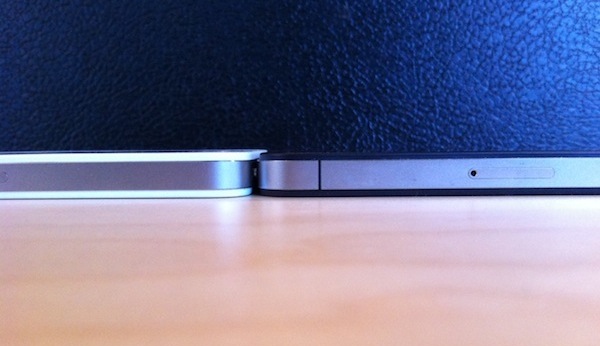
The white iPhone 4 came out earlier today, and it looks just like a regular black iPhone 4…only in white. While Apple doesn’t list any size difference in their Tech Specs page, Ryan Cash of Marketcircle notes on his personal blog that the white iPhone is actually slightly thicker than the black iPhone. As you can see from the photo above, and others after the break Ryan kindly sent us, it’s not the steel enclosure that’s thicker on the white version, it’s the plastic. Sure, it’s a very minimal difference that may not even be spotted from these photos, but it’s there and it may cause problems when trying to fit the white iPhone in older iPhone cases. I’m sure not so many cases will have this problem, but the difference is visible when comparing the devices.

A colleague of mine just picked up a 16 GB iPhone 4 in white. I was a bit surprised when I picked it up off his desk (I had my black 32 GB in my other hand at the same time) – it immediately felt thicker.

We placed them side-by-side on his desk, and sure enough, the white iPhone was a hair thicker.

Have you purchased a white iPhone today, and it doesn’t fit in the case you already have? Let us know in the comments. More photos below.

Update: TiPB notes the white iPhone is 0.2mm thicker than the black iPhone. They’re testing different cases updating with results in their post.

Read more


Apple Showcases Subscription-based Magazines In The App Store’s Homepage

Since the launch of iTunes subscriptions for apps in February, adoption of the new service from magazine and newspaper publishers has been growing at a somewhat slow rate. Following the controversy that sparkled after launch – which was quickly dismissed by Steve Jobs himself in an (alleged) email that confirmed subscription were meant for “publishing apps” – only a handful of publishers decided to implement the system which, as you may remember, requires publishers to give up a 30% of revenue off every subscription sold in-app, through iTunes. Those who implemented subscriptions in their apps, however, posted some interesting results: Popular Science, for example, sold roughly 10,000 subscriptions in 6 weeks. On the other end of the spectrum, though, many speculated that the highly promoted, long anticipated The Daily – a joint collaboration of Murdoch’s News Corp. and Apple – saw a decline in sales and user engagement, although we (and many others) assume that’s because of some poor editorial choices and the very nature of the app, rather than a flaw in Apple’s system. Overall, iTunes subscriptions seem to be working for those that chose to test them: the problem is trying to convince publishers to test them. And as the iPad keeps selling well and the App Store userbase grows, there’s no doubt Apple wants to get more publishers on board. Perhaps a lot will come by June. We’ll see.

In the meantime, Apple also wants to let iOS users know about subscriptions, and the magazines that allow them to subscribe with just one click, with their iTunes accounts. That’s exactly what they’re doing with their latest App Store homepage refresh: in a new section called “Magazines - Subscribe to your Favorites”, Apple is showcasing apps that are powered by subscriptions. This section includes – you guessed it – The Daily, alongside Bloomberg Businessweek (they’re very “pleased” with Apple’s terms), Popular Science, SPIN Play, Popular Photography, Elle, and Nylon. Seven apps aren’t much, but Apple’s goal is different here: they’re not betting on numbers, they want people to know about their “favorite magazines” that now come with the best way to subscribe to digital content. You can check out the App Store section here.

Of course, there are some big names missing from the list. Businessweek is there, but the Financial Times refused to accept Apple’s subscription terms. The Daily provides fresh, downloadable content on a daily basis, but The New York Times still has to flip the switch on Apple’s in-app subscriptions (but, eventually, they will). And so does the Wall Street Journal, which keeps on relying on embedded browser sessions to let users log in & subscribe.

A new version of iOS is expected to be previewed at the WWDC in June, and publishers will be forced to update their existing iOS applications with Apple’s subscriptions by June 30. If the rumors are true and iOS 5 will really feature a completely new notification system, Apple could come up with some intriguing ways to let magazine apps download content in the background, automatically, all day, and let users know about news and fresh content through the new notifications. I’m just speculating here, but a new OS (with betas during summer, and a planned launch in September) might be a great way to tell publishers that iOS is the platform to invest on. Or, Apple could bundle iOS 5 and the new Xcode 4.1 with new tools for publishers to design and develop magazines and newspapers for the iPad. They did it for advertisers. As it stands now, Apple cares about letting people know that magical subscriptions exist. The next step is tell every publisher that iTunes is the only way to go in the digital newsstand era.


Here’s The Sequel to the Most Minimal iPad Stand

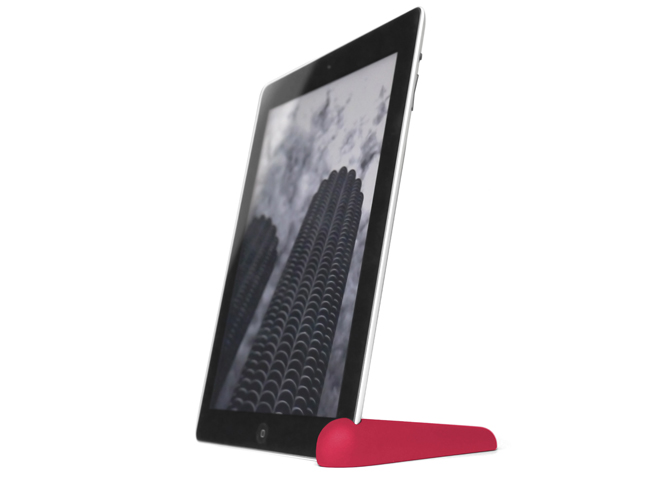
Back in August of last year, we showed you Michiel Cornelissen’s original iPad 1 stand. We called it the “most minimal iPad stand.” Not to outdo himself but he has redesigned the PadFoot for iPad 2. It’s now even lighter and smaller than its predecessor at only 10 grams, and has an increased viewing angle as well. All while being as stable and sturdy as ever.

The new PadFoot clips to the corner of your iPad and securely stands it upright in landscape and portrait modes. Just like other larger and heavier stands, it’s great for tv, movies, and slideshows. It works well for FaceTime calls too. Read more