Posts in news

Sparrow Developers Working on “Sparrow for iPhone”

As revealed by Dominique Leca to Business Insider, the company he co-founded is now working on an iPhone version of Sparrow, which is in the very early stages of development and simply known as “Sparrow for iPhone” at the moment. For those not familiar with the Mac app, Sparrow is an alternative email client for OS that started out as a mix between classic email and Tweetie-like UI to deliver a fresh Gmail experience on the desktop, and eventually evolved into a powerful solution to access Gmail (including features like shortcuts, stars, and labels) as well as classic IMAP. The app got more social and better integrated with Lion, adding full-screen mode and a completely redesigned sidebar for navigating through your inboxes. Some people say Sparrow’s success is due to the fact that the app does email, but it doesn’t feel like email; Sparrow is sold at $9.99 on the Mac App Store with a lite version available, and a licensed version also up on the devs’ website.

We previously reported on Sparrow adding Twitter’s Loren Brichter to the team of advisors, raising $250,000 in funding over the last months; according to Leca, Sparrow has made more than half a million dollars since the Mac App Store release, although they don’t like the fact that Apple’s store for OS X apps lists both indie software and applications from Apple such as Final Cut Pro X, iWork, or OS X Lion.

In the interview, Leca also reveals they’ve started working on an iPhone version of Sparrow, aimed at enhancing Apple’s Mail experience with a different and faster UI, attachments from the compose view, and lots more. If we had to speculate on Sparrow’s focus for iOS, we’d say porting the Gmail integration that has characterized the desktop app to iOS would be a good idea.

Still, the problem for Sparrow is that Apple has always been reluctant in accepting apps that “duplicate functionality”, such as email applications. That’s why Google hasn’t released an official Gmail app for iOS yet, whilst Android has one. Apple does, however, accept third-party browsers for iOS, albeit they’re based on the same engine of Safari – they can’t use their own interpreters. This is the reason behind the lack of a real Firefox version for the iPhone – the Firefox Home that Mozilla ships is actually based on WebKit, like any other alternative browser for iOS. They’re basically skins on top of Safari’s engine, with different functions and interfaces. Same applies to photo album management apps, which are simply connected to the Camera Roll (and Apple’s Photos app) through an API. An API or similar technique doesn’t exist for email messages, thus the lack of third-party email apps for iOS. Much has changed since 2008 (for instance, Apple now accepts web app wrappers such as MailWrangler), but native third-party email apps still haven’t made it to the App Store.

Leca seems somewhat confident in Apple’s intention to start opening up iOS soon to approve apps like Sparrow for iPhone, which in order to work would have to feature its own email assets in order to directly work with Gmail, out of Mail app, with a different UI and compose view. From the interview:

BI: So do you think they’ll approve it?

DL: I think they will. They’re accepting third party browsers, so why not mail? This would be really inconsistent. Opera has a browser out there, and I think Mozilla has one coming too.

BI: So you think it’s only a matter of time until Apple loosens the chains?

DL: Yeah, I guess so. In regards to apps that compete with their own apps, I think iOS is sufficiently settled and I think people have been evangelized enough now so Apple will feel more secure opening it up.

The current iPhone mail app is just about perfect, but we’re just making things faster in terms of UI, and we’re adding a lot of small details for power users, like attaching images straight from the compose window.

We’re looking forward to Sparrow’s upcoming features on the Mac and mobile version, although I’m personally not sure as to whether Apple could really decide to let others sell email apps or real browsers in the App Store. Sure, the platform is mature enough to let users easily differentiate between Apple’s default solutions and standalone apps, but that would mean giving up a bit of control on the ecosystem, something that Apple has carefully nurtured in the past three years. I believe Sparrow would also be a great addition to the iPad – which I use regularly to manage and respond to emails – but, again, I don’t know why and how could Apple free developers from the ties of Safari and Mail in the near future. [Business Insider via MacRumors]
Latest Dropbox Build Gets Nicer on Lion

If there’s something Dropbox, the popular online file syncing service with a strong iOS / OS X presence, should get better at in the future, that would be a new way of informing users of available updates. Or, as Shawn Blanc recently put it, you’d think of all the apps that automatically update themselves, “Dropbox would be a chief at it”. Unfortunately, in spite of its always-connected nature, Dropbox’s internal update mechanism is far from perfect. Too many users downloaded Dropbox months ago, and never updated to faster and more stable builds because of a lack of notifications, sticking with older versions that are likely causing problems.

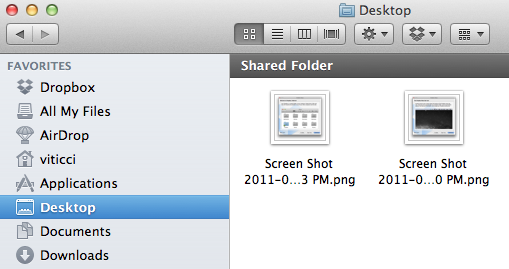
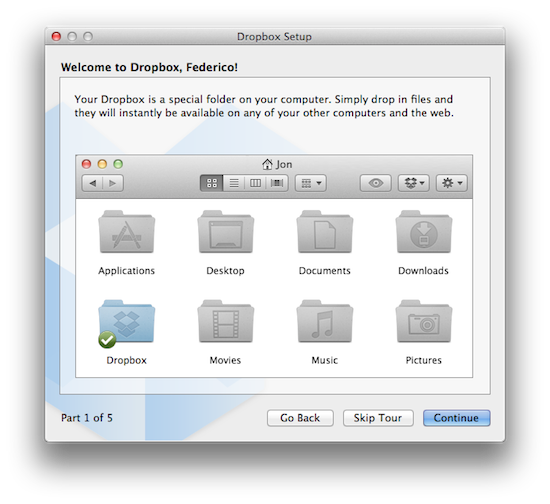
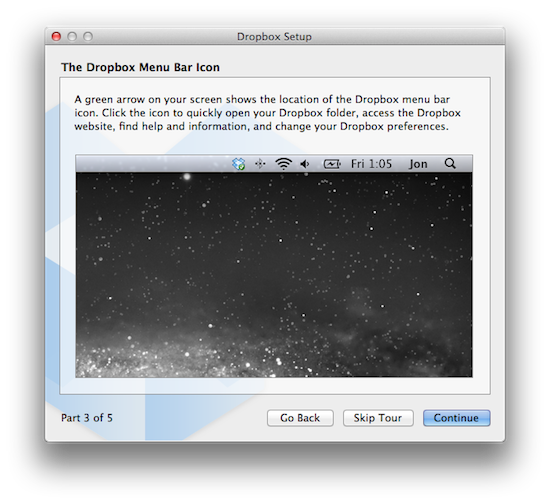
This problem is especially true on Lion, which required the Dropbox team to rewrite parts of the app to integrate with the new Finder. Whilst TUAW noted last week that another “silent” Dropbox update added Lion support, the latest forum build – version 1.2.28 released yesterday – goes even further and brings a new icon for the Finder sidebar, new setup images, and more bug fixes. The changes are minor, but it’s nice to see Dropbox finally having a good-looking shortcut in Lion’s Finder.

Full changelog:

  • Finder Integration: Make Favorites Dropbox icon pretty
  • New tour images for Lion.
  • Fix DNS lookup problem when using a SOCKS5 proxy.
  • Delay upload of 0 byte files so that users don’t get useless transfers.
  • Fix small occurrence of now Resume option after pausing Dropbox in Linux
  • Fix to very rare bug that would prevent directories from being uploaded.
  • Fix bug that would cause auto-update to incorrectly ask for UAC elevation.
  • Fix rare missing sidebar item.

You can download Dropbox 1.2.28 (which, again, is an experimental forum build that, although stable, still isn’t an “official” release) over at Dropbox Forums.


Apple Releases New 10.7.2, iCloud, iPhoto 9.2 Dev Builds

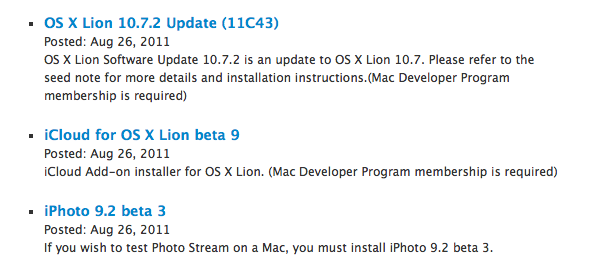
Exactly one week after the latest iOS 5 beta, Apple has released new developer builds of OS X Lion 10.7.2, iCloud beta, and iPhoto 9.2. iCloud beta and 10.7.2 were last updated alongside iOS 5 beta 6 on August 19, which brings today’s releases to:

  • iCloud for OS X Lion beta 9
  • iPhoto 9.2 beta 3
  • OS X Lion 10.7.2 Update (11C43)

Apple is expected to introduce iCloud this fall, and 10.7.2 is in fact being seeded to developers for testing purposes through the separate iCloud installer. iPhoto 9.2 will introduce Photo Stream, a new way of syncing photos from iOS’ camera roll to iCloud, and have the most recent ones always available on all devices including the Mac (indeed, with iPhoto) and Windows PCs.


Tweetbot 1.6 Gets Tweet Marker Timeline Sync

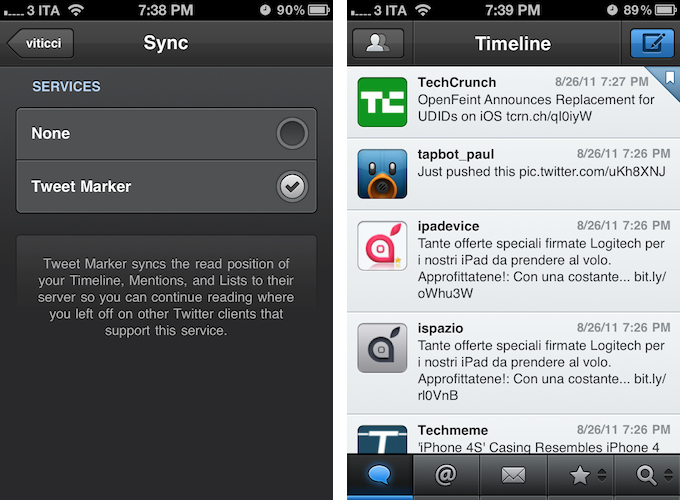
Following the muting features and improvements introduced in version 1.5, everyone’s favorite Twitter client from Tapbots, Tweetbot, has been updated to 1.6 to include timeline sync through Manton Reece’s Tweet Marker. For those unaware of such system, Tweet Marker is a fantastic free web service that allows developers to turn on a feature in their Twitter clients to enable timeline sync for users. Best showcased in the Iconfactory’s Twitterrific for Mac and iOS, Tweet Marker lets users effortlessly switch between apps or platforms (such as the iPad and Mac) while retaining the last-read tweet position. In Twitterrific, as we detailed in our coverage, Tweet Marker integration means the app can either “show the marker”, or automatically scroll to it.

Because Tweet Marker is cross-platform, your timeline position from Twitterrific (or any other app that will soon support the service) can be synced to Tweetbot, and vice versa. Tweetbot will automatically scroll to the last synced tweet in your timeline, and display a “marker” next to it. To enable Tweet Marker in Tweetbot a quick trip to the Settings is required, so you can activate “Sync” under Account Settings -> Services. Furthermore, Tweetbot syncs mentions and lists as well through Tweet Marker, so future applications that will integrate this technology will have the opportunity to get further syncing besides the main timeline. As usual, Tweet Marker’s sync is invisible, and fast. You won’t even notice it once it’s active, and it works really well combined with Twitterrific (which I’m a big fan of).

Tweetbot 1.6 also brings various improvements to username search in the compose view, which now uses your following list, and location. The latter has been refined to “stick” your location including POI across multiple tweets if you haven’t moved. It’s a nice touch.

The latest update to Tweetbot is nice, but it becomes a must-have if you’re already hooked to Tweet Marker’s usefulness and simplicity. Get it now on the App Store at $2.99.


Apple “Discussing” TV Subscription Service with “New Technology To Deliver Video”

As reported by The Wall Street Journal in an article detailing some of the challenges Apple’s new CEO Tim Cook will have to face in the post-Jobs era and many of the achievements of the company’s former chief executive, Apple is allegedly working on a new technology to deliver video to televisions:

An immediate challenge for Mr. Cook will be to advance Apple’s plans in what is expected to be a key market for growth: digital video. Apple is working on new technology to deliver video to televisions, and has been discussing whether to try to launch a subscription TV service, according to people familiar with the matter. Unlike the iPod and music, where Apple has a commanding position, the battle to rule online video remains wide open and the company faces fierce competition.

No additional details are provided in the report, although speculation of new TV products from Apple has increasingly suggested in the past months that, just like with the iPod, iPhone and iPad before, the company is now aiming to disrupt another market that’s long been dominated by services, corporations and standards that don’t make it easy for consumers to have an optimal user experience. Specifically, rumors of an HDTV from Apple have been circulating for years, pinpointing what turned out to be incorrect release dates, tech specs, and prices. However, these rumors have a reason to exist, as they’ve been subtly backed by Steve Jobs’ public criticism towards the current TV business model and cable companies, described as clumsy, complicated, and ultimately bad for consumers. At the D8 conference last year, when asked about whether Apple could get into the television business, Jobs replied:

The television industry fundamentally has a subsidized business model that gives everybody a set-top box for free, or for $10 a month, and that pretty much squashes any opportunity for innovation, because nobody’s willing to buy a set-top box. Ask TiVo, ask ReplayTV, ask Roku, ask Vudu, ask Google in a few months. So all you can do is add a box onto the TV system. […] The only way that’s ever going to change is if you can really go back to square one and tear up the set-top box, and redesign it from scratch with a consistent UI, across all these different functions, and get it to the consumer in a way that they’re willing to pay for it. Right now there’s no way to do that. So that’s the problem with the TV market.

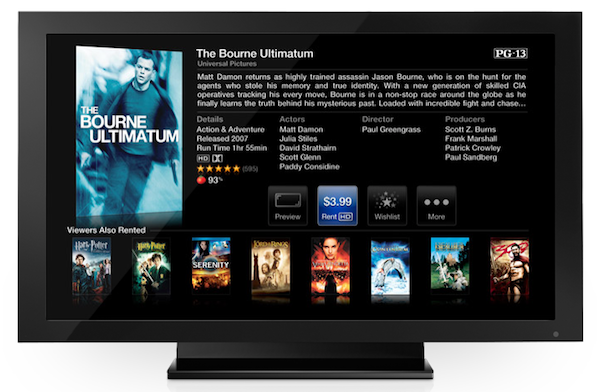
The Wall Street Journal’s report doesn’t mention any new hardware from Apple, focusing on subscription services and technologies to stream video to televisions. However, as Apple is known for driving innovation by integrating software with their own hardware, it’s likely that when the company will find it “viable” to get into the TV market, they’ll do so by releasing their own hardware tightly integrated with a “new technology” and “subscription TV service”. Apple currently sells the Apple TV 2nd-gen – described multiple times by Jobs and Cook as a “hobby” – that runs a modified version of iOS and comes with a native Netflix app for instant movie streaming; recently the company added the possibility to stream any previously purchased content from the iTunes Store to the Apple Tv through their new iCloud platform. It was reported back in April that Apple added 12 petabytes of storage to their server farms for serving iTunes Store video, and a separate report mentioned Apple could soon launch a service similar to Netflix to stream movies and TV shows for a monthly fee.


iPhone 5, iPhone 4S - A Rumor Roundup and Retrospective

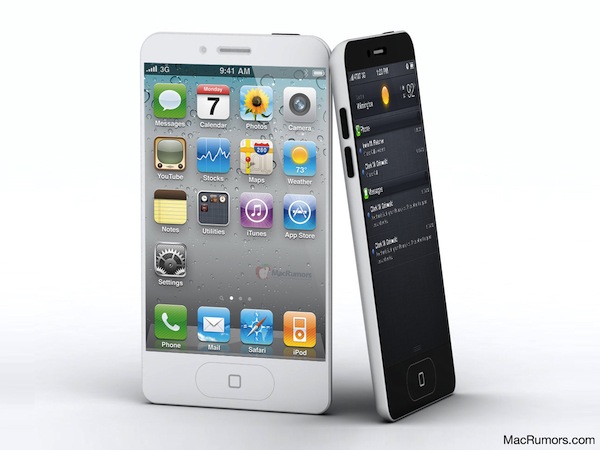
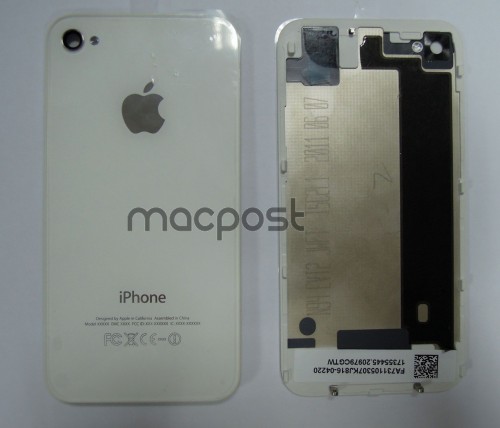
According to new shots showing alleged leaked parts for the upcoming iPhone 5, website MacPost.net (via MacRumors) shows a white back cover from an Apple internal prototype iPhone dated June 7, 2011, labeled N94 and EVT (Engineering Verification Test). In Apple’s prototype design cycle, the EVT monicker is one step ahead of DVT, which stands for Design Verification Test. As you can see from the purported leaked part, the design of the back cover is largely similar (if not the same) to the current-gen iPhone 4, adding more speculation to the rumors suggesting the next-generation iPhone, dubbed iPhone 5, will share the same design of the existing iPhone, only adding a new processor, better camera, and other minor speed bumps.

There’s been a bit of confusion in the past months regarding rumors floating around Apple’s next iPhone. Whereas the N94 and N93 codenames found in the iOS 5.0 SDK (actually, N94 showed up in iOS 4.3) clearly referred to a device running the same A5 processor of the iPad 2 (the iPhone 4 has an A4 processor), multiple sources couldn’t agree on whether Apple was on track to deliver one iPhone this Fall – the iPhone 5 – with a major redesign, a new iPhone with the same design but better specs, or two iPhones aimed at different markets and users.

For this reason, in the most recent weeks a differentiation in rumors has arisen to separate the iPhone 5 from an alleged “iPhone 4S”. The “4S” name, used as an unofficial monicker for the first time by 9to5mac in April, was initially used in regards to a prototype iPhone 4 with an A5 chip reportedly sent to developers for testing – thus not necessarily representing a final product – but has evolved with time into a widely-accepted rumor indicating a second product from Apple that could also refer to a cheaper iPhone the company is working on for pre-paid markets.

Again, there is a lot of confusion around the terms “iPhone 5”, “next-generation iPhone”, and “iPhone 4S”. However, sticking to SDK findings and reliable photographs of unreleased models – not just rumors without evidence – might be the best chance to guess what’s coming in October.

First off, N94 refers to an iPhone carrying the A5 processor, an obvious choice for Apple. With increased performances, low-power consumption and a huge leap forward in terms of graphics rendering, the A5 has been a success on the iPad and there’s no reason why Apple wouldn’t use it in a future iPhone. For reference, the current-gen iPhone 4 was codenamed N90 and N92 for its GSM and CDMA variations, respectively. N93 and N94 might be related to carrier variations of the same iPhone model or two new entirely different products – this can’t confirmed. However, N94 isn’t only present in the iOS 5 SDK: aside from today’s MacPost pictures, BGR showed photos of an unreleased iPhone model running on T-Mobile’s 3G bands back in April. The iPhone was white, like today’s back cover shots, and it was codenamed N94, running a test version of iOS with several Apple-only apps and utilities. Furthermore, MacRumors is now associating those photos from April to a new part leak that seems to depict a redesigned antenna for the iPhone 4-like new iPhone, whatever it may be. The iPhone 4 antenna design was behind the so-called Antennagate media debacle last year, so it would make sense for Apple to redesign it only to avoid further discussion.

Rounding up the evidence about N94 – again, one of the two unreleased iPhone models mentioned by the iOS SDK – it appears that this model will have an iPhone 4-like design, a slightly redesigned antenna, an A5 processor, and it’s been tested on T-Mobile.

However, it’s still not clear whether what we call “iPhone 5” is actually a tweaked iPhone 4 (thus N94), or an all-new model that hasn’t surfaced in the SDK and leaked parts just yet. For as much as new cables and connectors suggest Apple is tweaking the internal specs of an iPhone, they don’t offer confirmation of the device’s design and external look.

To bring some clarity to this whole iPhone 4S/iPhone 5/two iPhones debate we’ve collected the most notable rumors from the past months, in order to see, now that a possible release date is nearing, how speculation evolved and changed over time. Read more


From JailbreakMe To An Internship at Apple

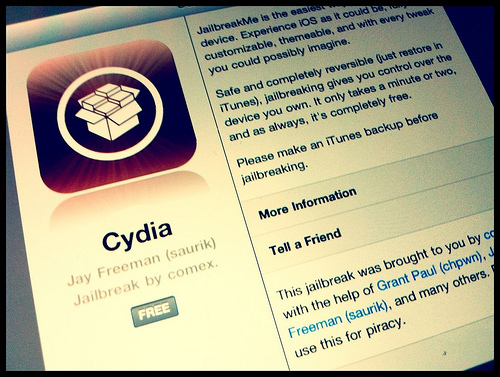
Through a series of tweets posted last night on his personal account, jailbreak hacker and developer comex, best known for his work on JailbreakMe, has announced that he will be joining Apple as an intern in two weeks. Whilst it’s common practice for Apple to hire interns for a limited period of time – this happens to both designers and developers all the time – this internship is worth noting as comex has been for years the brain behind various jailbreak tools that allowed users to install Cydia, the alternative App Store, on their devices, updating these tools multiple tools in a “cat & mouse” game against Apple’s patches and software updates.

Less than a month ago, Forbes profiled comex as 19-year old Nicholas Allegra on a leave from Brown University, who’s been interested in hacking and coding since the age of nine. Among comex’s most notable accomplishments in the jailbreak community, the latest version of JailbreakMe gained popularity thanks to a simple web-based interface to install Cydia on iOS 4.3 devices including the iPad 2. JailbreakMe 3.0 has been used over a million times, becoming the most successful jailbreak tool every released to the public. The hack used a vulnerability in Apple’s PDF library to run JailbreakMe’s code and install Cydia, a security hole that Apple fixed after 9 days.

In their article, Forbes concluded:

But at least in the case of JailbreakMe 3, Allegra also created a patch for the PDF vulnerability he exploited, allowing users to cover their tracks so that other hackers couldn’t exploit the same bug. In the period before Apple released an official patch, users who had jailbroken their iPads and iPhones were in some sense more secure than those who hadn’t.

A postscript to Apple: Perhaps your security team could use another intern.

It’s not clear whether the security team actually hired comex, but it sure looks like his jailbreak skills attracted Apple’s attention.


Flipboard Considering TV Shows and Movies, iPhone Version Launching “In A Few Weeks”

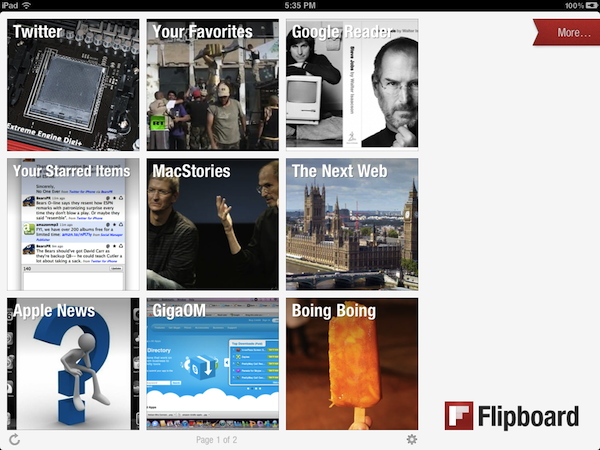
According to a report by Reuters, the iPad app of the Year 2010, Flipboard, might add support for movies and TV shows by the end of the year. If the company and its CEO, Mike McCue, will manage to cut deals with studios and other content providers, Flipboard will expand beyond aggregating articles from social networks such as Twitter and Facebook or RSS services like Google Reader, becoming an all-in one solution to read, share, and watch.

Flipboard mixes articles from a growing list of brands like Oprah.com and the Economist with social media feeds from sites like Facebook into a personalized online magazine. It has received $60.5 million in venture capital funding and its app has been downloaded 3 million times.

Chairman and Chief Executive Mike McCue said he will tackle the video project at the end of the year. He declined to say which studio partners he has approached. He also hopes eventually to cut deals with publishers to sell electronic books through Flipboard.

Just when the concept of “consuming content” starts making less sense now that the iPad has turned into a full-featured platform and device capable of doing things like reading, writing, sharing news, and watching movies, the evolution of Flipboard towards broader audiences and media seems appropriate. The app was launched in 2010 featuring direct Twitter and Facebook integration to display stories from these networks, visualized through an elegant layout with beautiful typography that made great use of the iPad’s screen to present multiple stories at once, and allow readers to re-share them or comment of them without opening a separate client. The app went through a series of updates to further refine the interface, add more services like Google Reader for RSS feeds and Instagram for photos, recently receiving another major revamp to introduce visual search, a popular section, and a completely new UI to browse popular articles and get recommendations from the Flipboard team’s curated list of stories and sources.

We’re big fans of Flipboard here at MacStories, and I believe choosing to diversify the app’s offerings to include more content is step in the right direction. Obviously, as Reuters says, this may never materialize if deals aren’t reached with studios, but it’s reassuring to know Flipboard has been considering video as the next major addition to their social magazine. In the same report, Reuters also says the iPhone version of Flipboard is expected to hit the App Store in a few weeks, although no further details are available.

You can read more about Flipboard and our thoughts on it in our previous coverage, and check out the fantastic original promo video featuring Adam Lisagor below.
Read more


Tim Cook, Apple CEO

Yesterday afternoon brought the big news that Steve Jobs had resigned from the position of Apple CEO (he is now Chairman of Apple’s Board), along with that came the news that Tim Cook will now permanently take over as Apple CEO. Cook had been acting CEO since January this year when Jobs went on medical leave – Cook now has to step up and officially lead Apple, which recently became the most valuable company in the world.

But unlike Jobs who is known to a sizeable proportion of general society and has quite a reputation, Cook is fairly unknown. As Cook today begins his first official day as the CEO of Apple we’ve written this post to give you, our readers, a little bit of background of Tim Cook and what he is like. Be sure to jump the break to read our succinct biography of him along with some fascinating additional reading and videos.

Read more