


If you missed our Mountain Lion coverage, be sure to check it out. Here are today’s @MacStoriesDeals on hardware, iOS, and Mac apps that are on sale for a limited time, so get them before they end!
Read more
#MacStoriesDeals - Wednesday
Starbucks Signs Up For Square

Announced just a short time ago, it has been revealed that Starbucks has partnered with Square, who will process all US credit and debit card transactions by this fall across their 7,000 locations. Additionally, Starbucks will be integrating “Square Directory” into its own “apps and digital network, unlocking other Square merchants to Starbucks patrons new and old to Square” as TechCrunch reports.
In a letter by Jack Dorsey (co-founder and CEO of Square), he drew parallels between the small and humble beginnings of both Square and Starbucks. But Dorsey assured other Square merchants that this big deal with Starbucks won’t change Square’s dedication to building “simple, affordable, and fast tools that level the playing field for everyone”.
Square began with a really simple idea: everyone should be able to accept credit cards. It should be easy and free to get set up, it should use simple technology people already own, and, most importantly, it should instantly adapt to any size business—from the person chasing a dream to the largest organization on the planet. By embracing Square, Starbucks has validated these ideas as powerful tools—not just for small businesses, but for smart businesses.
TechCrunch also reports that Starbucks is investing $25 million in Square with CEO Howard Schultz also joing Square’s Board of Directors. You can view the full letter from Jack Dorsey below the break.
Amazon And Apple Take Steps To Fix Security Holes Revealed By Mat Honan’s Hack
Amazon and Apple have taken serious steps today in responding to news of how Mat Honan was hacked, which was done not with brute-force but by using social engineering to trick Apple and Amazon support staff to give out various pieces of information and reset some passwords. Amazon reacted first and arguably more decisively by enacting a new security policy of no longer allowing users to change account settings (such as credit card information and email addresses) via the phone.
Apple has meanwhile enacted a 24-hour freeze on resetting account passwords over the phone whilst they review their security practices. When Wired then tried to reset an AppleID password through Apple support staff on the phone, the representative said “Right now, our system does not allow us to reset passwords. I don’t know why”.
An Apple worker with knowledge of the situation, speaking on condition of anonymity, told Wired that the over-the-phone password freeze would last at least 24 hours. The employee speculated that the freeze was put in place to give Apple more time to determine what security policies needed to be changed, if any.
Apple Posts New iPad Advert: “All On iPad”
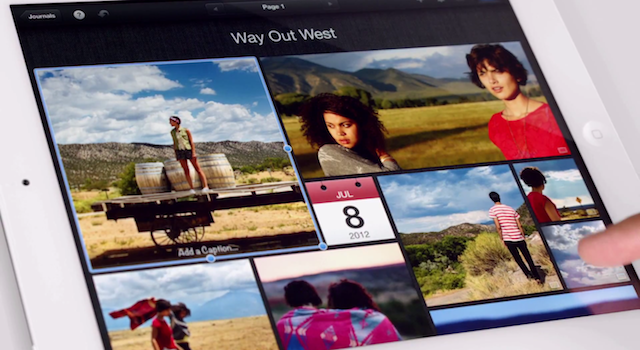
Apple has today released a new advert for the 3rd generation iPad called “All On iPad”. It runs though a bunch of tasks that you can do, ‘all on iPad’ - highlighting apps such as iBooks, FaceTime, Keynote, Square, Real Racing 2 and iPhoto.
Read it. Tweet it. Be surprised, be productive. Make a sale, make some lunch. Make a movie night. Play a game or an old favourite.
Do it all more beautifully with the retina display on iPad.
Apple previously released “This Good” and “Do It All” adverts for the 3rd generation iPad.
#MacStoriesDeals - Tuesday

If you missed our Mountain Lion coverage, be sure to check it out. Here are today’s @MacStoriesDeals on hardware, iOS, and Mac apps that are on sale for a limited time, so get them before they end!
Read more
Weather HD 2 — Yet Another Weather Forecast App?
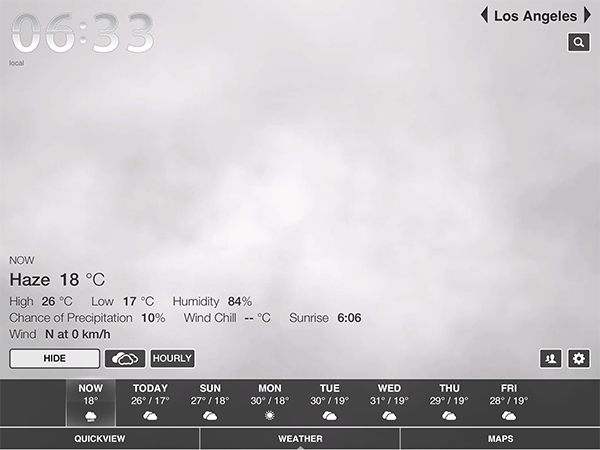
Hello and welcome to this MacStories review of another tremendous, beautiful, high-quality weather app for iOS. Seriously, I’m running out of ideas for how to start a new weather app post without it sounding like one of the many we’ve done before. Why are so many developers spending their time making forecast apps? Maybe because the iPad still has no native one. Maybe because making a good weather app is a fun challenge for developers, since you have to combine appropriate data visualization with intuitive UI. Personally, I tend to think that people developing weather apps for iOS know that they have awesome coding skills but don’t have any major projects to test them on. Whatever the reason, I’m truly thankful that the people at vimov decided to make a weather app because their newest release, Weather HD 2, is one of the finest approaches to data visualization and UI design I’ve ever seen.
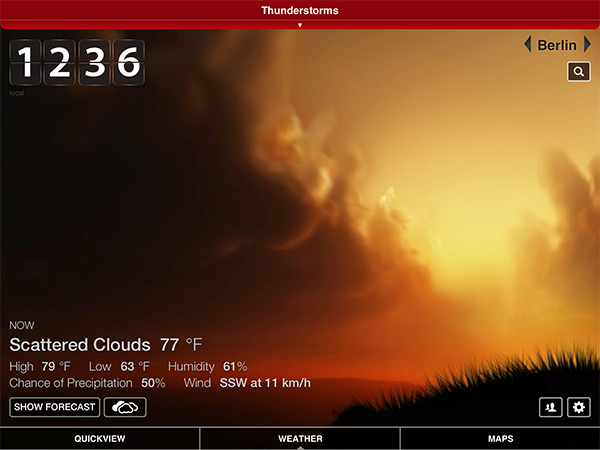
Weather HD 2 is the first major update to vimov’s original Weather HD. Fortunately for anyone who bought that version, the company decided to make 2.0 a free update instead of a new standalone app, so there will be no charge for existing customers. The original Weather HD attracted iPhone and iPad owners with its large, animated weather images, smooth UI, and large typography displaying all kinds of stats from temperature, humidity, and wind to more boring ones like sunrise time. Weather HD 2 incorporates new weather animations to enhance the variety of weather it can display, while the rest of the “old” features look the same. Additionally, the update includes three big new features: 3D weather maps, push notifications for severe weather alerts, and QuickView to view the weather at multiple locations side by side. While it is a universal app, I will only cover the iPad version here since it is much cooler to look at and use. Read more
Mat Honan: How Apple and Amazon Security Flaws Led to My Epic Hacking→
Mat Honan: How Apple and Amazon Security Flaws Led to My Epic Hacking

You may have heard about Mat Honan (Wired writer) being hacked last week, with his Twitter account being compromised and the hackers using iCloud to remote wipe his iPhone, iPad and Mac. Today he’s written up a detailed article on Wired that goes through how exactly the hackers got access to it all. The scary thing is that it wasn’t done by brute force, but rather by using social engineering to trick Apple and Amazon support staff.
But what happened to me exposes vital security flaws in several customer service systems, most notably Apple’s and Amazon’s. Apple tech support gave the hackers access to my iCloud account. Amazon tech support gave them the ability to see a piece of information — a partial credit card number — that Apple used to release information. In short, the very four digits that Amazon considers unimportant enough to display in the clear on the web are precisely the same ones that Apple considers secure enough to perform identity verification. The disconnect exposes flaws in data management policies endemic to the entire technology industry, and points to a looming nightmare as we enter the era of cloud computing and connected devices.
It’s undoubtedly a scary story about the perils of putting our entire lives in the hands of a cloud service - because more so than ever, physical access isn’t needed to wreak havoc. It’s also a friendly reminder to ensure you’re using strong passwords, isolating critical accounts and creating local backups wherever feasible as a last resort if indeed this or something similar does happen to you.
My experience leads me to believe that cloud-based systems need fundamentally different security measures. Password-based security mechanisms — which can be cracked, reset, and socially engineered — no longer suffice in the era of cloud computing.
Apple Removes Native YouTube App From iOS Beta→
Apple Removes Native YouTube App From iOS Beta
The Next Web has an excellent round up of today’s news that the native iOS YouTube app will likely be removed from the upcoming iOS 6 operating system which was reported by both Macrumors and 9to5Mac. The article includes the expected generic PR response from Google and a few more details from Apple they obtained in a statement issued to The Verge.
Panzarino makes some excellent conclusions on why this change was not only inevitable, but beneficial for both companies. I won’t spoil the entire article because it is definitely worth the read however he makes one point specifically that matched my first thought when I heard the news:
Remember, though, that Google’s YouTube app will likely be at a disadvantage to Apple’s native one. The hooks that normally direct a user out to the app will now simply play in Mobile Safari, rather than bumping people out to the app.
There will be tradeoffs to an App Store specific version of YouTube made by Google and many of those tradeoffs will effect us as users. The app will likely see more frequent updates that reflect the growing features of the website, however now they are at the mercy of Apple’s rigorous approval process. Other changes, as Panzarino mentioned, include the fact that users will be redirected to Mobile Safari instead of the official app, much like the experience of clicking links for Twitter. This will likely be a negative for most users however I don’t think I will personally mind the change in which app opens to play the video. I enjoy the Mobile Safari experience and with HTML5 progressing so far, there are fewer downsides to the YouTube web app experience. I am far from a YouTube power user and find myself enjoying other services more, e.g. Vimeo.
This could change again before the final release of iOS 6, however for the reasons Panzarino mentioned, I feel this change is permanent. Nevertheless, the native YouTube app is in good hands being developed by Google. I feel Google proved they can ship a polished, native iOS app in their recent release of Chrome for iOS and I look forward to the direction they take their mobile video offerings. Perhaps they can even woo me away from my aforementioned preferred service Vimeo if they don’t flood mobile users with too many advertisements.
CandyBar Goes Free, Heads To The Iconfactory→
CandyBar Goes Free, Heads To The Iconfactory
Panic has announced popular Mac customization utility CandyBar has gone free and unsupported due to system changes in Mountain Lion (namely, code signing). The app will also head to The Iconfactory, where it “may turn into something new”.
Since we’re unsure about the long-term future of changing system icons, we’re not comfortable charging money for CandyBar, and we’re also not comfortable simply making it disappear, instead we’re going to make the current CandyBar free — but unsupported.
And here’s from The Iconfactory blog:
We and our good friends over at Panic have taken a hard look at the future of desktop icons on the Mac and unfortunately, the writing is on the wall. There may come a time, very soon in fact, when it won’t be possible to customize any system level icon on the desktop except perhaps folders. Apple’s push to sandbox applications, the addition of signed apps and the increasing unification of OS X and iOS mean CandyBar’s days (in its current form) are numbered.
First launched back in 2007, the ease of use of CandyBar spurred the proliferation of websites and communities aimed at showcasing icon and UI replacements for OS X, such as MacThemes and IconPaper. In an interview with MacThemes from 2008 (via Shawn Blanc), Panic’s Cabel Sasser said:
The innovation, the elegance, the lack of focus testing, the general feeling that people care about the end product, it makes us want to keep doing what we do. It’s a feedback loop of inspiration.
Goodbye, CandyBar. You’ve been a trusted companion and served us well in moments of deep crisis.