Posts in news

GoodNotes Launches iCloud Document Collaboration

One of the tech trends I expect has been accelerated by the current state of the world is a demand for collaboration features in software. On Apple’s platforms the company offers its native iCloud collaboration features that apps can adopt, and which are also available in first-party apps like Notes, Reminders, and the iWork suite. While iCloud doesn’t provide the kind of instant, real-time collaboration found with a service like Google Docs, the undisputed king of this domain, it’s nonetheless a solid option that provides valuable utility in apps that support it.

The latest app to add iCloud collaboration is GoodNotes, which in today’s version 5.5 enables you to share documents with other GoodNotes users so you can work together in the same document at once. The way this works is simple: from your documents library, tapping a document’s title will open a context menu where Collaborate is a new option; or, while working in a document, tapping the share icon will also reveal the Collaborate option. Like other apps supporting iCloud collaboration, the feature works by generating a link which grants collaborators access to the shared files, provided they have the source app installed. In this case, anyone who has the link can access the file. Once a document has been shared, it will be badged with a special icon in your library, and all shared documents are additionally housed in a new Shared tab in GoodNotes’ navigation bar.

Collaboration means that multiple people work in a document at once making their own annotations and changes, though there will regularly be a delay of 15-30 seconds before changes appear for all users. As such, GoodNotes’ collaboration doesn’t serve as a replacement for more real-time solutions such as collaborative whiteboard apps, but rather it’s better suited for situations where changes are made over an extended period of time. For example, sharing meeting notes before or after a meeting takes place to get feedback from your team, or letting multiple people annotate a draft-in-progress. As an app, GoodNotes offers tools for a range of use cases in areas of business, education, or personal uses, so there will likely be lots of scenarios where the new collaboration option is valuable despite lacking real-time updates. When there is an update to a shared document, you’ll be notified via a blue badge accompanying the document in your library, which can also inform you of which page in the document received changes.

John and I used different colors to indicate who made which annotations.

John and I used different colors to indicate who made which annotations.

Besides the slow sync time, another key limitation I discovered in my testing is that GoodNotes doesn’t offer a way to identify who made which annotations in a document. Unlike an app like Apple Notes, where you can choose to highlight the text written by each collaborator, there’s no such equivalent feature built-in here. What this means is that if you want to know who is responsible for certain notes or changes, you’ll need to coordinate with collaborators ahead of time and ask them to use specific colors so you know who is who, or else everyone will need to find a different identifying method such as initialing every annotation. Hopefully this drawback will be resolved in a future update. Finally, it’s also worth noting that collaboration features currently don’t work for managed Apple IDs, such as those commonly employed in schools.

Collaboration is such an important feature in 2020, and Apple’s current APIs for iCloud collaboration have been adopted by so few apps, that it’s always nice to see a new one add it. The limitations aren’t great, but my hope is that today’s release should be considered more a 1.0 of collaboration rather than the final version. If GoodNotes’ team (or Apple, via API improvements) can cut down on the lag between changes syncing among collaborators, and can offer a native way to know who made which changes, collaboration could become a key differentiator for the app. Even without those potential enhancements though, in 2020 the addition of collaboration is a valuable asset for any app, and GoodNotes is no exception.


Apple Releases Updates to Final Cut Pro X, Motion, and Compressor with Workflow and Other Enhancements

In a press release today, Apple announced that it has updated its video editing app Final Cut Pro X to version 10.4.9 as well as Motion and Compressor.

The update to Final Cut adds several features designed to improve the editing process including:

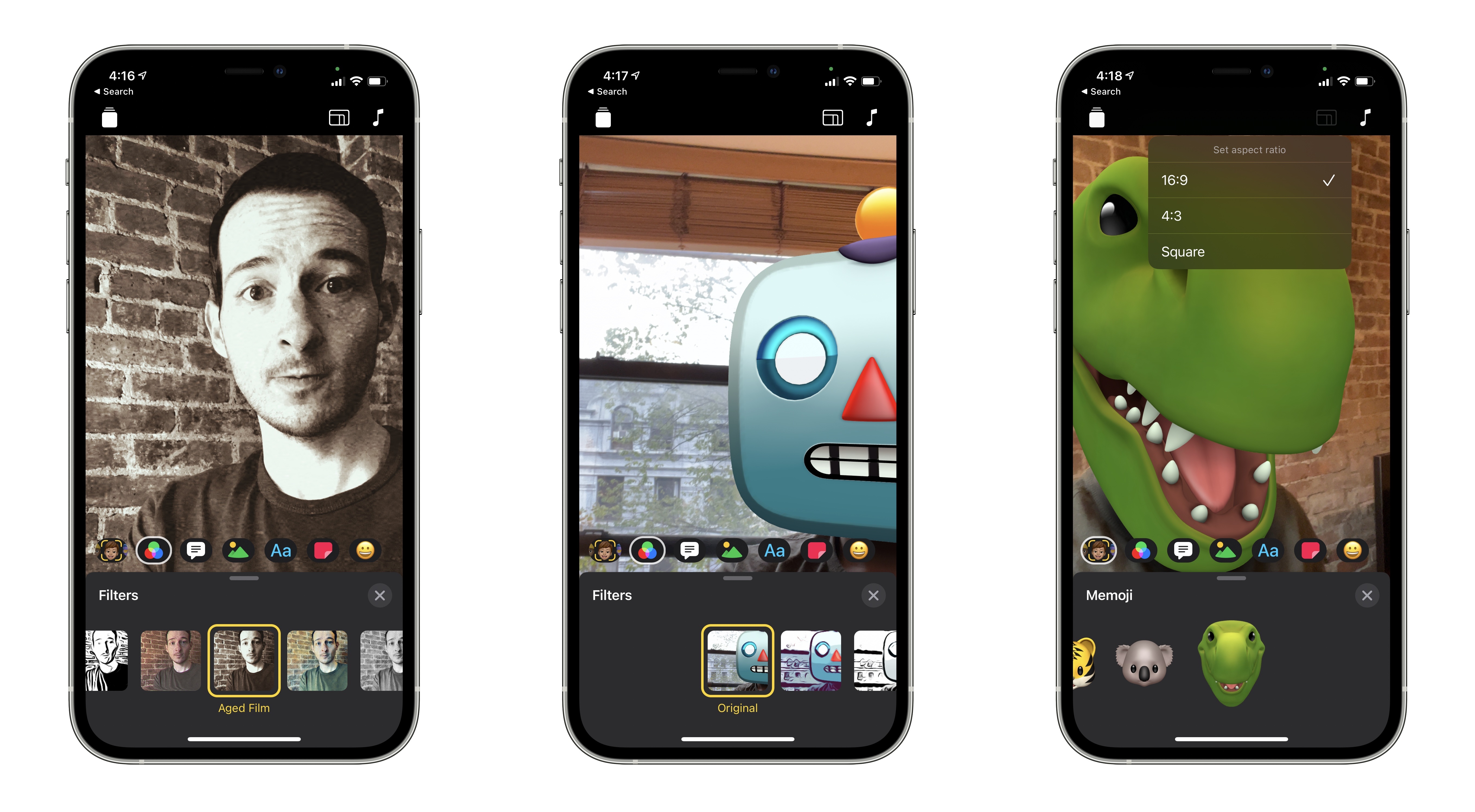
  • New tools for cropping video to fit with popular social media formats such as square and vertical video
  • Improvements to proxy workflows with support for ProRes Proxy and H.264 formats which Apple says can be as small as 12.5% of their original size
  • Linking to proxies generated by apps like Frame.io via XML
  • Exposure of ProRes RAW camera settings in Final Cut Pro’s inspector
  • Metal-based plug-ins for RED RAW and Canon Cinema RAW Light, which improve performance
  • Improvements to 360-degree video workflows

With Motion, third-party 3D models are now available when creating effects and graphics. The app also adds a new customizable Stroke Filter that can automatically outline an object or text using its alpha channel. Compressor has been updated too with custom LUT effects and the ability to convert log-encoded video to SDR or HDR footage using Camera LUTs.

I’m a fairly light user of Final Cut Pro X, but one of the things that I found most frustrating about it in the past was the app’s lack of support for popular social media formats, so I’m glad to see that creating square and vertical video will be easier now. I expect that many video creators will be equally happy with the improvements to proxy workflows and integration with cloud-based apps like Frame.io, which has become very popular.

The updates are free for existing users. New users can purchase Final Cut Pro X for $299.99 and Motion and Compressor for $49.99 each on the Mac App Store. The three apps are also available as a bundle to education users for $199.99. More information about the updates is available on Apple’s Final Cut Pro X webpage.


MacStories Unwind: New Privacy Features Coming this Fall, Apple Music 1, and a TV Bundle

0:00
16:28


Sponsored by: Airmail Pro – Fast, Customizable Email on All Your Devices

This week on MacStories Unwind:

MacStories

Club MacStories

  • MacStories Weekly
    • Anybuffer
    • A collection of iPad apps Ryan would like to see on the Mac
    • A column on the business dilemma of bringing iPad apps to Apple Silicon Macs
    • A Club member iOS 14 Home screen
  • Join Club MacStories

AppStories

Unwind


Apple Rebrands Beats 1 as Apple Music 1, Launches New Global Radio Stations with Fresh Hosts and Shows

Today Apple announced an expansion and rebranding for Apple Music’s radio efforts. The flagship worldwide radio station Beats 1 is being renamed Apple Music 1 while retaining the same content as before.

Joining Apple Music 1 in Apple’s lineup of global radio stations will be two new stations: Apple Music Hits and Apple Music Country. The former is dedicated to well-known and well-loved songs from the ‘80s, ‘90s, and 2000s, while the latter highlights modern and classic country music.

Like Apple Music 1’s roster of hosts and presenters, which includes Zane Lowe, Ebro Darden, and Brooke Reese, Apple’s two new stations will have daily on-air hosts as well. For Apple Music Hits this includes Jayde Donovan, Estelle, Lowkey, and more; Apple Music Country will be hosted by Kelleigh Bannen, Ty Bentli, and Bree, among others.

One of the unique strengths of Apple Music 1, besides its strong team of hosts, is the periodic shows by artists such as Billie Eilish, Elton John, and Frank Ocean. Apple has assembled just as impressive an assortment of shows for its new stations. Per Apple’s press release, Apple Music Hits will feature exclusive shows from “Backstreet Boys, Ciara, Mark Hoppus, Huey Lewis, Alanis Morissette, Snoop Dogg, Meghan Trainor, Shania Twain, and more.” For Apple Music Country the list of shows is even longer, featuring:

Jimmie Allen, Kelsea Ballerini, Dierks Bentley, BRELAND, Luke Bryan, Luke Combs, Morgan Evans, Florida Georgia Line, Pat Green, Willie Jones, Chrissy Metz, Midland, Rissi Palmer, The Shires, Carrie Underwood, and Morgan Wallen, alongside exclusive shows from legendary producers and songwriters like Dave Cobb, Jesse Frasure, and Luke Laird, and journalist Hunter Kelly.

Apple Music hasn’t changed its radio product much over the years, so today’s announcements represent a significant move for the company. While I still wish the Music app provided better tools for informing me when a new radio show I may be interested in is coming up, such as push notifications as a show’s starting, perhaps today’s moves are just the beginning. Now that the content side of radio has been enhanced, perhaps this fall’s updated Music app will offer improvements to the software side of the radio experience.


Apple TV Channels Bundle Now Available Featuring CBS All Access and SHOWTIME

Apple today announced the first bundle offer that’s ever been available for channels in the company’s TV app. It comes with a unique twist in that the offer is only available for customers who already subscribe to Apple TV+, whether through a paid subscription or as part of their free year of service for purchasing a new Apple product. Apple TV+ subscribers can now subscribe to a bundle of CBS All Access and SHOWTIME for just $9.99 per month following a 7-day free trial. When subscribed to separately, these two channels together would cost $20.98 per month, making this a substantial offer.

Apple’s press release highlights some of the features that make channel subscriptions appealing:

By subscribing through Apple TV channels, customers can watch content from all three services online and offline, ad-free and on demand, only on the Apple TV app. Through Family Sharing, up to six family members can share the subscriptions to Apple TV+, CBS All Access, and SHOWTIME using just their personal Apple ID and password.

As someone who has used Apple’s TV app heavily for years, I’ve written before about how much value I find in the channels experience, and how disappointed I am that Apple hasn’t been able to strike more deals for additional channels partners. When Apple TV channels first launched in early 2019, HBO was the most prestigious channel available, but when that service transitioned to become HBO Max, there was no longer a channel option available for Apple users. New streaming services like Disney+ and Peacock haven’t been made available as channels either. So Apple has built a solid TV experience for the streaming age, but it’s not available for the services people care about most. I’m not particularly hopeful that today’s bundle news will change that at all, but it’s good to at least see a little life from the company’s channels initiative.


MacStories Unwind: Apple Maps Changes Coming this Fall and a Soundscape App Review

0:00
31:04


Sponsored by: Calory – Track What You Eat!

This week on MacStories Unwind:

MacStories

Club MacStories

  • MacStories Weekly
    • A collection of music utility apps, a shortcut, and websites
    • Ryan on Apple Podcasts’ Listen Now feature
    • Plus apps, links, and more
  • Join Club MacStories

AppStories

Unwind


Fortnite Developer Epic Games Sues Apple Alleging Anti-Competitive App Store and Payment Processing Behavior

Apple has been on a rapidly accelerating collision course with the videogame industry for the past couple of weeks. Not long after Congressional hearings investigating anti-competitive conduct by large technology companies, including Apple, Microsoft ended the TestFlight beta of its xCloud app because Apple wouldn’t approve the game streaming service. Today, the conflict came to a head when Epic Games, the maker of the hugely popular Fortnite, filed a private antitrust suit against Apple.

In hindsight, the series of events that unfolded today appear to be part of a carefully orchestrated plan leading to the filing of the lawsuit. The day began with Epic offering in-game currency at a discount in the iOS version of the game using Epic’s own payment system in clear violation of App Store guidelines. Apple responded by pulling the game from the App Store. In a statement to The Verge, Apple said:

Today, Epic Games took the unfortunate step of violating the App Store guidelines that are applied equally to every developer and designed to keep the store safe for our users. As a result their Fortnite app has been removed from the store. Epic enabled a feature in its app which was not reviewed or approved by Apple, and they did so with the express intent of violating the App Store guidelines regarding in-app payments that apply to every developer who sells digital goods or services.

Epic has had apps on the App Store for a decade, and have benefited from the App Store ecosystem - including its tools, testing, and distribution that Apple provides to all developers. Epic agreed to the App Store terms and guidelines freely and we’re glad they’ve built such a successful business on the App Store. The fact that their business interests now lead them to push for a special arrangement does not change the fact that these guidelines create a level playing field for all developers and make the store safe for all users. We will make every effort to work with Epic to resolve these violations so they can return Fortnite to the App Store.

Shortly after the game was pulled from the App Store by Apple, Epic filed a 62-page lawsuit in the United States District Court for the Northern District of California alleging violations of the federal Sherman Act and a similar California state statute.

According to Epic:

Apple has become what it once railed against: the behemoth seeking to control markets, block competition, and stifle innovation. Apple is bigger, more powerful, more entrenched, and more pernicious than the monopolists of yesteryear. At a market cap of nearly $2 trillion, Apple’s size and reach far exceeds that of any technology monopolist in history.

The complaint alleges anti-competitive conduct in connection with the distribution of iOS apps and in-app payment processing. According to Epic:

But for Apple’s illegal restraints, Epic would provide a competing app store on iOS devices, which would allow iOS users to download apps in an innovative, curated store and would provide users the choice to use Epic’s or another third-party’s in-app payment processing tool.”

The lawsuit concludes with a request that the court issue an injunction prohibiting the behavior, declaring it unlawful, and ordering other equitable relief to prevent Apple’s actions and remedy the alleged harm that has been caused.

The lawsuit was followed by an in-game video parodying Apple’s famous 1984 commercial asking Fortnite gamers to “Join the fight to stop 2020 from becoming ‘1984.’”

Based on the timing of events, it appears that Epic intentionally violated Apple’s app review guidelines to pick a fight. I would be surprised if backroom negotiations didn’t precede the filing of the lawsuit, but regardless, Epic’s actions raise another line of attack against the way Apple runs the App Store. What’s different about Epic’s lawsuit is that it’s brought by a well-funded, private company that has hired one of the biggest global law firms to fight for it. Barring a quick settlement, this will cost both companies a lot of money and subject Apple to bad publicity over a much longer period of time than a day’s testimony in front of Congress ever could.


Apple Music for Web Debuts New Beta Version with Fresh Design and ‘Listen Now’

The new Apple Music web beta.

The new Apple Music web beta.

It’s been less than a year since Apple launched its first public beta of the Apple Music web player, which after several months came out of beta earlier this year and resides at music.apple.com. On the heels of an updated Music app in this fall’s releases of iOS, iPadOS, macOS, and more, the company isn’t delaying keeping its web player in-sync with the app versions. A new public beta of Apple Music for web can be accessed now at beta.music.apple.com, sporting a design to match the changes seen in the forthcoming macOS 11 and iPadOS 14, and a new Listen Now page that replaces the prior For You option.

The design refresh doesn’t bring major changes, just aesthetic tweaks to elements like the sidebar. Listen Now represents the most substantial update, but it still works similarly to the former For You page. It contains collections of recommended albums and playlists based on your listening activity, alongside Apple Music’s algorithmic playlists like New Music Mix and Chill Mix. You’ll also find Recently Played, New Releases from artists in your Library, and a new prominent section called Top Picks. After using Listen Now in the OS betas for the last couple months, I’ve grown to prefer it over For You, despite there being relatively few differences between the two. Having Top Picks front and center, for example, is a better choice for me than For You’s placement of the algorithmic playlists up top, since I rarely listen to those.

It’s great to see that Apple Music’s web player will be updated on the same cycle as its apps. Apple’s history with iterating its web apps isn’t great (iCloud.com, anyone?), but to better compete against Spotify, which has a first-class web player, a more intentional approach for Apple Music is needed.

Anyone can access the beta version of Apple Music’s web player at beta.music.apple.com, while the previous version is still accessible at music.apple.com.