This Week's Sponsor:

Copilot Money

Copilot Money, The Best Money Tracker, Launches on the Web – Limited-Time: Get 26% Off + 2 Months Free


Posts tagged with "apple"

Apple Backs Down Over Subscription Rules

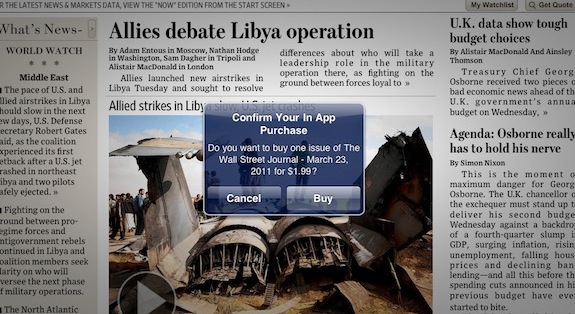
A few days ago Apple quietly modified its ‘App Store Review Guidelines’, and it has significantly reduced the requirements that apps, which deliver content, must abide by, effectively stepping down on their previous demands. In February this year it was revealed that Apple had imposed a deadline of June 30 for all publishers of iOS Apps that delivered subscription content to implement In-App Subscriptions. The requirements were that any app that sold content outside the App Store must also offer the same content to users through In-App Purchases and at the “same price or less than it is offered outside the App”.

Yet as MacRumors has published today, Apple has amended the App Store Review Guidelines to state as follows:

11.14 Apps can read or play approved content (specifically magazines, newspapers, books, audio, music, and video) that is subscribed to or purchased outside of the app, as long as there is no button or external link in the app to purchase the approved content. Apple will not receive any portion of the revenues for approved content that is subscribed to or purchased outside of the app

In plain English this means that content providers with an App Store presence are no longer forced to offer In-App purchases or subscriptions for content. But if they do choose to implement IAP or subscriptions they can offer the content at any price they wish – even if it is more than what they charge outside the App Store. The only requirement is that within an app, there cannot be an external link that redirects users to purchase content from outside the app.

It is unknown why Apple has decided to change tack on this issue, but a likely reason is that a number of publishers decided the 30% cut was too much to bear and had put pressure on Apple to redraw the guideline. Just a few days ago The Financial Times released its iPad webapp in order to sidestep the App Store and its overbearing terms. Similarly, earlier this year Time magazine had also ruled out using the subscription service because of the 30% revenue cut and customers ability to opt-out of giving them certain personal details .

Readability, which launched in February, was also set to offer iOS users an app that would tie into the Readability service, but because of the subscription rules they weren’t able to release the app. Similarly iFlowReader complained in mid-May that Apple’s subscription policy had shut them down because the 30% revenue cut would eat into their already small profit margin. The question now is whether these services and magazines will now re-embrace the App Store under these revised terms.

[Via MacRumors]


Apple to Reject Apps that Identify DUI Checkpoints

After four US Senators sent a letter to Apple’s Scott Forstall concerning apps that reveal DUI Checkpoints, Apple has updated their App Store Review Guidelines to reject apps that aid drunk drivers (and sober drives who just don’t want to be bothered by the delay) from evading the law. Senators Harry Reid, Charles Schumer, Frank Lautenberg and Tom Udall expressed grave concerns about apps that enabled those who drink and drive to escape law enforcement, and cited the apps as harmful to public safety. Apple’s new rules can be found in section 22.8:

Apps which contain DUI checkpoints that are not published by law enforcement agencies, or encourage and enable drunk driving, will be rejected.

If flashing your lights to alert oncoming drivers to a speed trap is against the law in the United States, why shouldn’t these iPhone apps be banned as well? This certainly opens up the opportunity for drunk drivers to break the law, but what about other iPhone apps that can check into police radio and point out speed traps? Just like with sexually explicit apps, this is going to be another hot topic of debate as Apple curates content on the App Store.

[via Autoblog]


Apple Among World’s Most Reputable Companies According To Customers

In a survey of 48,000 consumers across 15 countries, the Reputation Institute named Google, Apple, Disney, BMW, and LEGO as the world’s most reputable companies overall. While I am a little astonished that Google made the top of the list, no one can argue that Google’s search engine is the front and center when we load up web browsers or open new tabs. However, while Apple and Disney were among the most reputable overall, it was Kelloggs that was the clear favorite in the United States, and LEGO took the crown in Europe. Speaking on company excellence, Reputation Institute Executive Partner Nicolas Georges Trad says,

“To build a strong reputation on a global level requires a broad platform that covers all seven dimensions of reputation, including Products & Services, Innovation, Workplace, Governance, Citizenship, Leadership, and Performance.”

Reputation is important for these companies not just for bragging rights, but because being reputable pays off in a big way. Companies with a strong reputation, on average, receive three times the support of less reputable competition. The loyal customer base is more willing to stand-by the brands the associate themselves with, spend more, and say good things about those products. As said by Reputation Institute Chairman, Dr. Charles Fombrun,

The greater the reputation of a company, the more support it earns from consumers, the better its operating performance, and the more money investors are willing to pay for its shares.

Below, we’ve highlighted the top ten overall most reputable brands below. Google edged out Apple (who are neck-and-neck), and Microsoft just missed the list in the 11th spot.

  1. Google
  2. Apple
  3. The Walt Disney Company
  4. BMW
  5. LEGO
  6. Sony
  7. Daimler
  8. Canon
  9. Intel
  10. Volkswagon

The Reputation Institute measures company reputation via a RepTrak Pulse statistic, and looked at over one hundred different companies before reaching their conclusion. Fore more information, check out the source link below.

[via PRNewswire]


Apple Wants To Build A Spaceship-like Campus In Cupertino

Amidst the software announcements at WWDC that finally confirmed the existence of iOS 5 and iCloud, a new build of Lion and the Apple Design Awards, Apple has been busy releasing new software for its platforms and devices. But this week has turned out to be more than just software for the company, as CEO Steve Jobs explained to the Cupertino City Council earlier this week Apple’s plan to build a new campus in Cupertino: a spaceship-shaped, 4-story building to host 12,000 employees and completely revolutionize the way Apple operates in Cupertino. The proposed project is impressive: not only it really looks like a mothership landed on Cupertino, it’s green and eco-friendly in the way it should be built using curved glass thanks to Apple’s retail experience. Not a single piece of glass in the building would be a straight piece – it’s all curved. Parking would be underneath, the number of trees would increase from the current 3,700 to 6,000 with some “apricot orchards” as well – furthermore, it would be located in the 98-acre campus Apple bought from HP last year.

Overall, it’s an impressive project for Apple – and we suspect it may have something to do with a rumor that claimed Norman Foster was collaborating closely with Apple to build a revolutionary campus based on modern, green technologies and renewable energies. Apple would rely on its natural gas facility and use an electricity grid as backup.

As Steve explained to the Cupertino City Council:

It’s a pretty amazing building. It’s a little like a spaceship landed. It’s got this gorgeous courtyard in the middle… It’s a circle. It’s curved all the way around. If you build things, this is not the cheapest way to build something. There is not a straight piece of glass in this building. It’s all curved. We’ve used our experience making retail buildings all over the world now, and we know how to make the biggest pieces of glass in the world for architectural use. And, we want to make the glass specifically for this building here. We can make it curve all the way around the building… It’s pretty cool.

You can check out Steve Jobs’ detailed proposal of the new mothership after the break. [via MacRumors] Read more


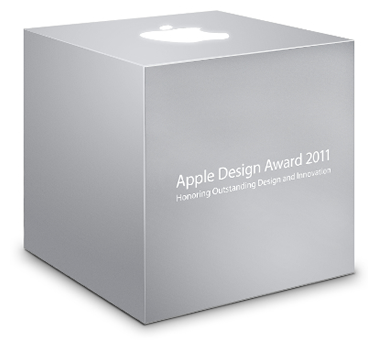
The Best of the Best: Apple Design Awards 2011 Winners Announced

The Apple Design Awards “recognize outstanding achievement and excellence” in apps made specifically for Apple platforms and devices. For the first time, this year’s ADAs (which will be announced tonight at the WWDC 2011 in San Francisco) will award developers of applications for all iOS devices and Macs: whilst last year’s edition skipped the Mac to focus on iOS, 2011 is back at full speed to celebrate great, usable, and well-designed apps available in the Mac and iOS App Stores. For the full list of 2010 ADAs winner, check out our previous coverage here.

So what’s in for tonight? As you may be aware of we’re not in San Francisco to attend WWDC (let’s leave that to developers), but we’ll be following the events as they unfold on Twitter, also thanks to a few developer friends who are actually there to enjoy the show. We will update this story with the fresh names of winning apps and devs as soon as we get them, as well as Apple’s official statements about this year’s ADAs once the official page gets updated later today or tomorrow.

So follow us on Twitter as @macstoriesnet, come back to this post in around 10 minutes from now, and let’s wait and see who’s going to grab the prizes this year at WWDC.

You can check out the full list of winners after the break.

Read more


Hands-On with iTunes’ Purchase History for Apps, Songs, and Books


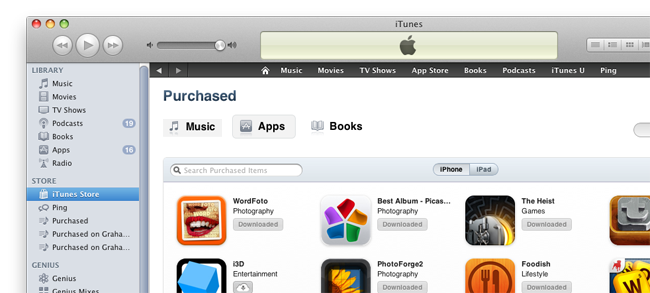
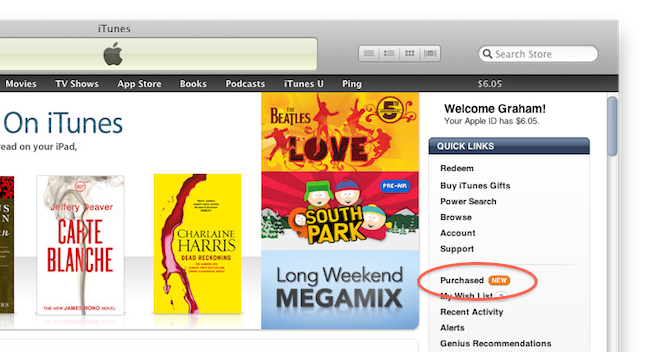
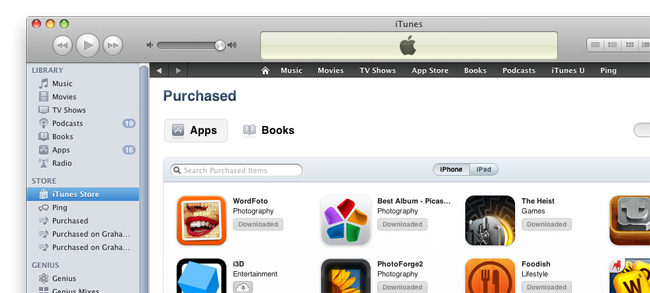
iTunes 10.3 was released a couple of hours ago and one of the new features it brings is a ‘Purchased’ screen that lists every song, app and book that you have ever downloaded from the iTunes Store, App Store or iBookstore. You can get to the ‘Purchased’ screen simply by going to the iTunes Store homepage and clicking “Purchased” from the sidebar on the right of your screen(see below), it should also have a ‘New’ tag beside it, at which point it will take you to ‘Purchased’ screen.

The ‘Purchased’ screen is a really  handy feature to easily and quickly find a previous purchase and instantly download it or even download all of your previous purchases with just one click. The feature, which is also included in iOS 5, is part of Apple’s iCloud, which was unveiled at yesterday’s WWDC keynote. The ‘Purchased’ screen also gives you some fairly powerful tools to find the exact purchase you want, either from just searching, only displaying items not downloaded to your iTunes library or just list the purchases alphabetically.

Make sure to jump the break for a whole slew of screenshots that demonstrate the new feature from iTunes 10.3 (for developers, this feature is also present in iTunes 10.5).

Read more


iTunes and Facebook Credit To Be Transferable For Upcoming Ubisoft Game

AllThingsD is this morning reporting that Facebook credits and iTunes credit will “play nice” with each other, with some minimal transferability of credits set to occur. The news comes from Chris Early, Ubisoft VP of Digital publishing who told AllThingsD that Apple and Facebook have agreed to honor “currency purchased on each other’s platforms for the same game”.

This system of “currency” interoperability will apparently be first demonstrated with Ubisoft’s upcoming Ghost Recon game that will be released on multiple platforms, including on Facebook and mobile devices. Early says that the “new pact” would allow a customer who purchased $20 worth of Ghost Recon credits on Facebook, also have $20 worth of credits for their iPhone version of Ghost Recon, with Facebook receiving the 30% cut of revenue. The reverse would work too, but in either case only the platform that initially received the $20 would receive that 30% revenue cut.

Ubisoft would, according to Early, be the party responsible for managing users’ credit balance across the platform. This may just be Apple and Facebook approving the practice of in-game credits being transferable across platforms, but it certainly opens the slight possibility that iTunes credit could one day be used within the Facebook platform and vice versa.

[Via AllThingsD]


iPhone Now Available On 200 Carriers Worldwide

As reported by John Paczkowski at All Things Digital, according to Apple executives the number of mobile operators carrying the iPhone worldwide has increased to 200, from 186 at the end of March. The expansion, teased by COO Tim Cook in late February alongside the possibility of “lower priced offerings” and other prepaid market offers, is noteworthy for Apple, but still a relatively low figure when compared to RIM’s 500+ carriers selling BlackBerry devices.

Aggressive expansion, actually. Since the end of the March quarter, Apple has expanded the number of iPhone carriers to 200 from 186, according to company executives.

So 14 new customer bases in which to dip, further juicing sales of the device.

Following speculation of low iPhone sales in Q3 2011 due to the rumored lack of a hardware refresh in June (being the WWDC focused on software-related announcements such as iOS 5 and iCloud) with a new iPhone likely coming out this Fall, analysts and investors seem to believe that Apple’s iPhone sales will manage to meet expectations thanks to the release of the white iPhone 4 and the aforementioned carrier expansion. For instance, the iPhone 4 launched in India two weeks ago after an 11-month wait. Apple is also expected to introduce the iPhone 4 on more international CDMA networks to expand into a new market segment, though as of today the CDMA iPhone 4 is only available on Verizon Wireless’ US network.


iCloud To Be Deeply Integrated With Apple’s Time Capsule?

In an article today by Cult of Mac, the website claims to have a scoop on what iCloud is and how it will work. Their source, which is supposedly ‘close to the company’, told Cult of Mac that iCloud will be deeply integrated with Time Capsule. Apparently iCloud will become less of a local backup and “more of a personal cloud server”. The source corroborates the recent rumors that suggested a refreshed Time Capsule would come with embedded A4 or A5 CPUs.

There will apparently be a “Home Folder” in which files saved on a Mac connected to the Time Capsule will be instantly backed up and then made available to any remote Mac or iOS device. The Time Capsule will archive and serve up any files to any connected device, even if the computer that made the file is off. If you do work on a device outside of your local network, the changes will be automatically made when you get back home.

Then in terms of iOS devices, it will allow you to upload photos and videos from, say, an iPhone to the Time Capsule – making them available to the other devices on the network. iCloud becomes the “conduit” for all your files and media.

“Your computer gets backed up to Time Capsule anyways,” said the source. “Now it’ll serve up your content when you want it, where you want it, right there on your iOS device.”

However the source wasn’t entirely sure if it was going to be announced at WWDC, just saying it was “what’s next in line” despite also noting “I heard that they have [it] ready to go”. The final thing the source noted was that they hadn’t heard of anything “about a Time Capsule holding iOS updates”, calling the rumor “incredibly stupid”.

[Via Cult of Mac]