Posts in reviews

Warp: A Simple, Keyboard-Driven Mac Utility for Saving Window Setups

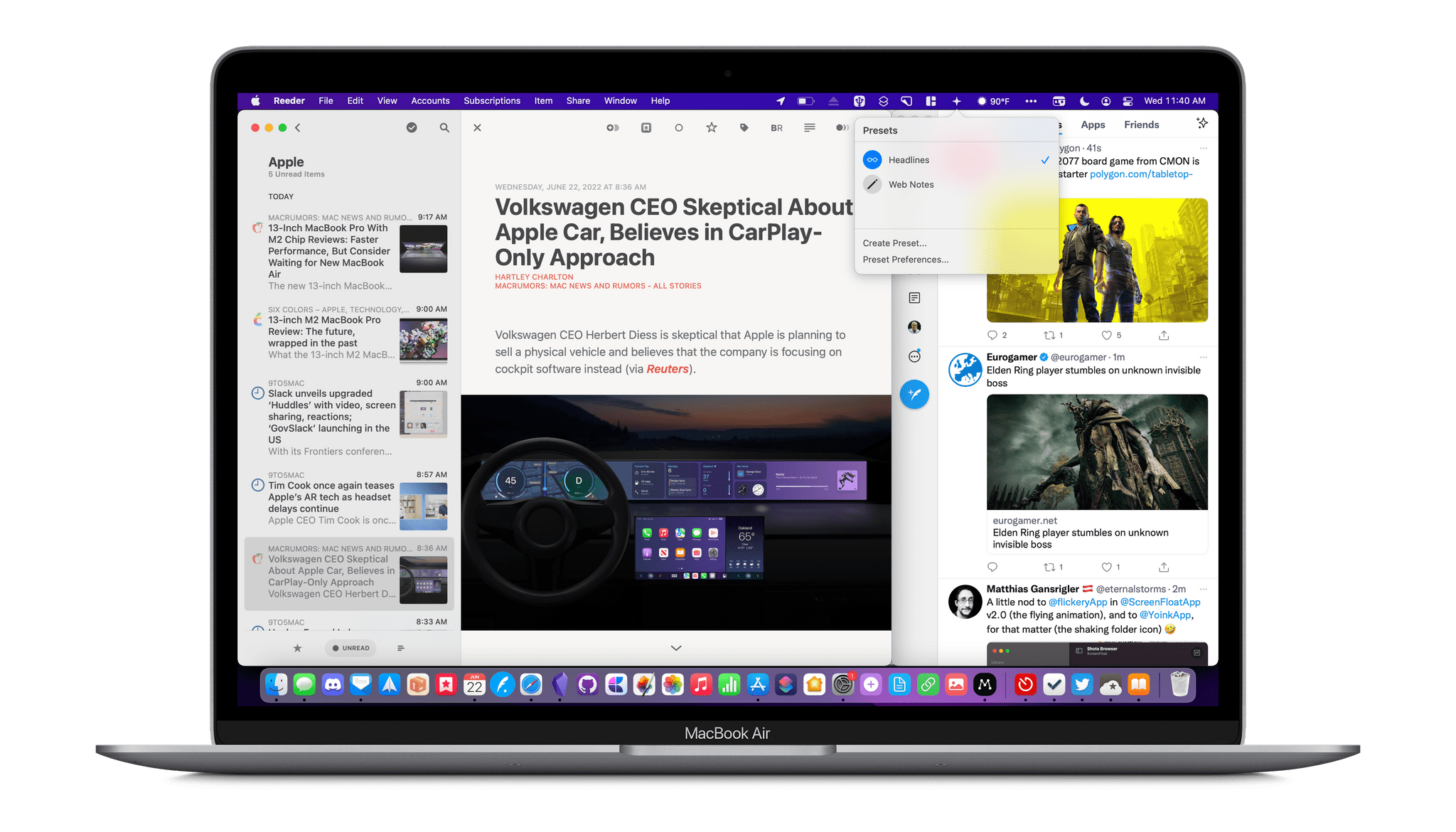
One of the cornerstone features coming to macOS Ventura this fall is Stage Manager, which lets you create sets of multiple apps, decluttering your desktop without a lot of fiddling. In my limited use so far, I’m optimistic about Stage Manager’s future as a way to manage apps, but it’s not for everyone, which is fine because there are so many other ways to manage windows on a Mac.

There are other utilities available for arranging windows on your desktop and saving those configurations. For window placement, I use Magnet. I love that the app can be driven entirely by keyboard shortcuts but is also always available in my Mac’s menu bar.

However, for some reason, utilities for saving the window configurations I create with Magnet have never stuck as part of my workflow. With Stage Manager on my mind recently, though, I thought I’d give a new app called Warp a try.

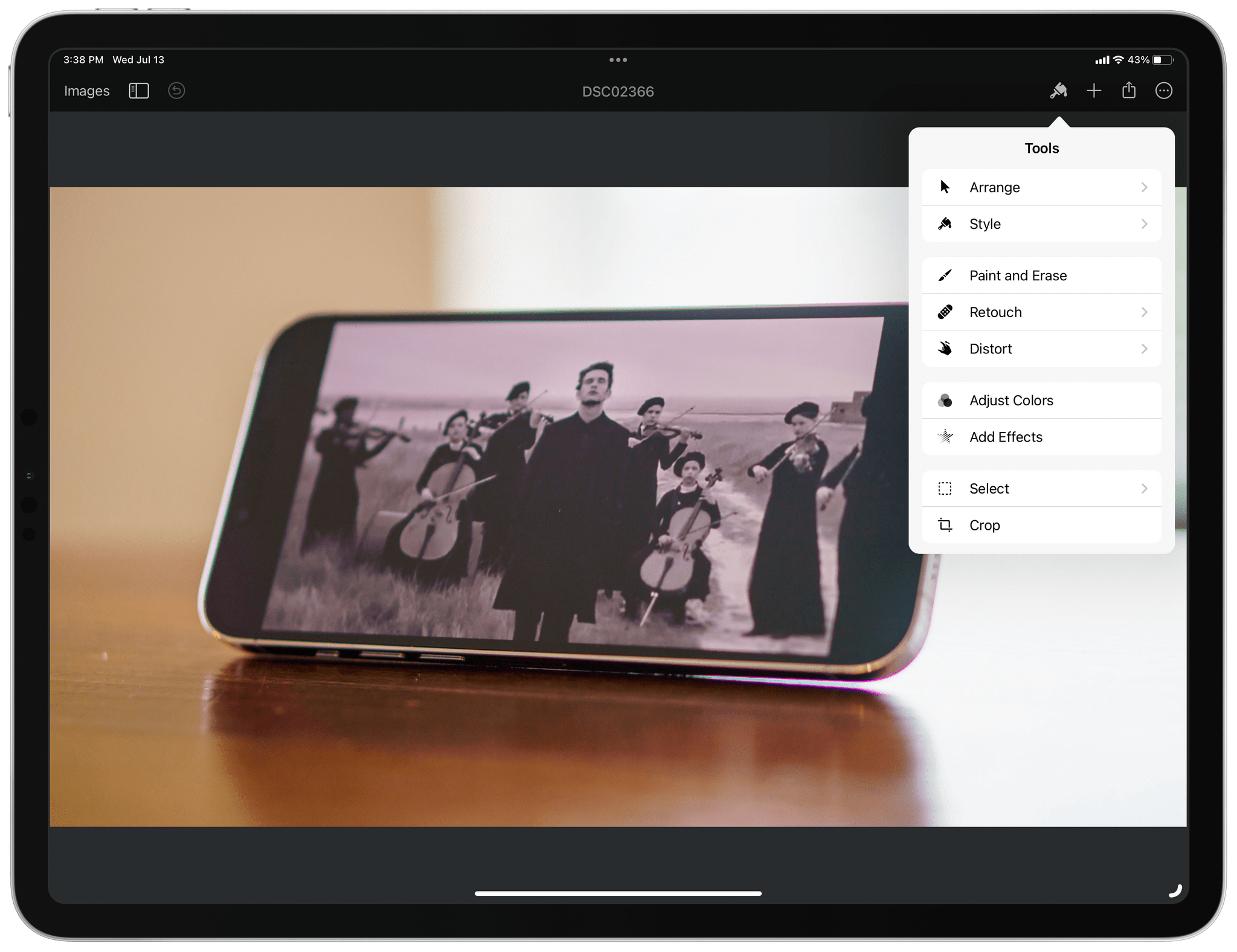
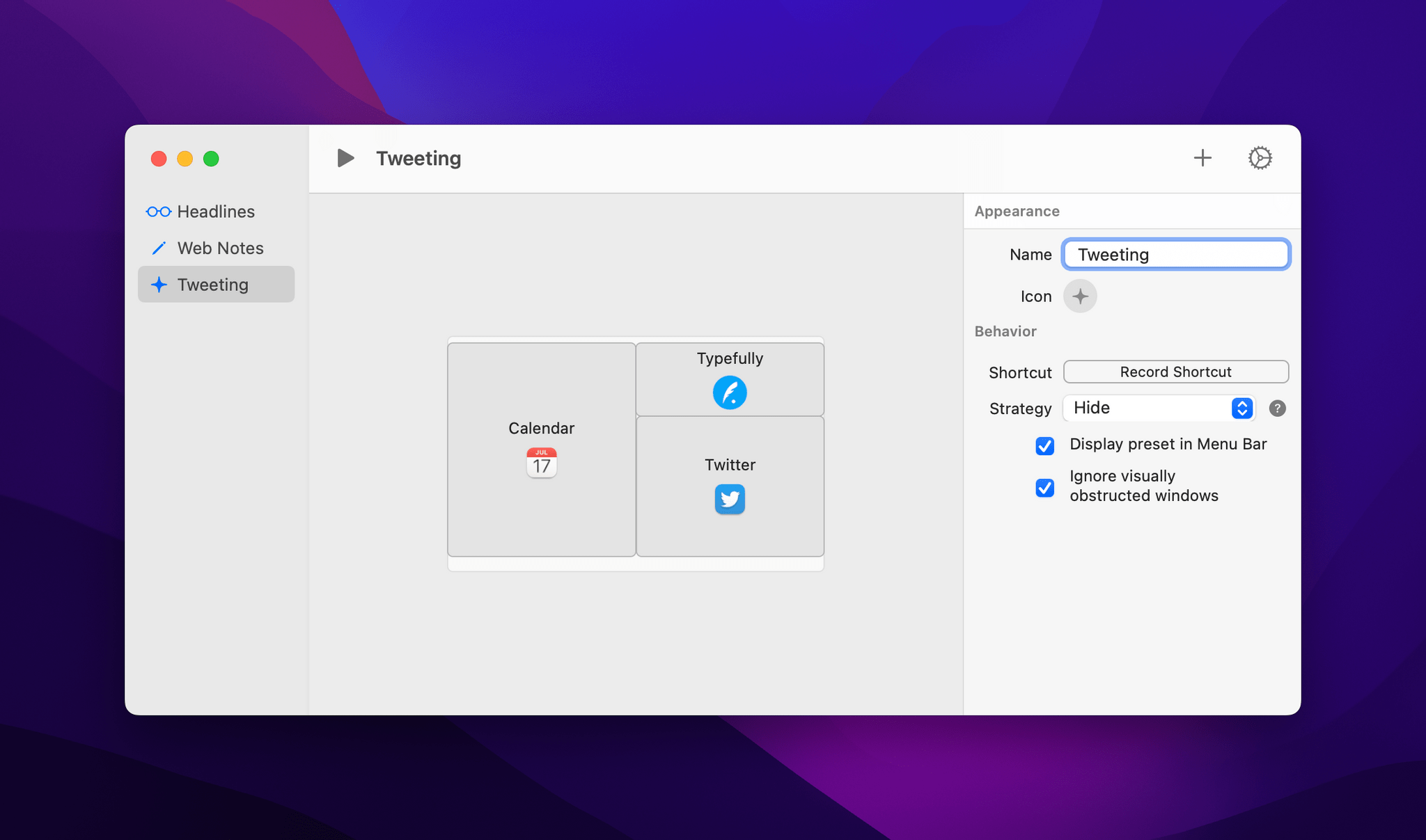
I like the way Warp previews layouts in its preferences.

I like the way Warp previews layouts in its preferences.

Warp is the creation of Mike Choi, who released Juice, a macOS Bluetooth device manager that I covered in 2019. I’ve only been using Warp for a few days, but it has already fit neatly into my Mac workflow because it’s a simple, keyboard-driven utility that scratches the same sort of itch as Magnet.

Read more


iA Writer 6 Adds Cross-Document Linking, Metadata, and More

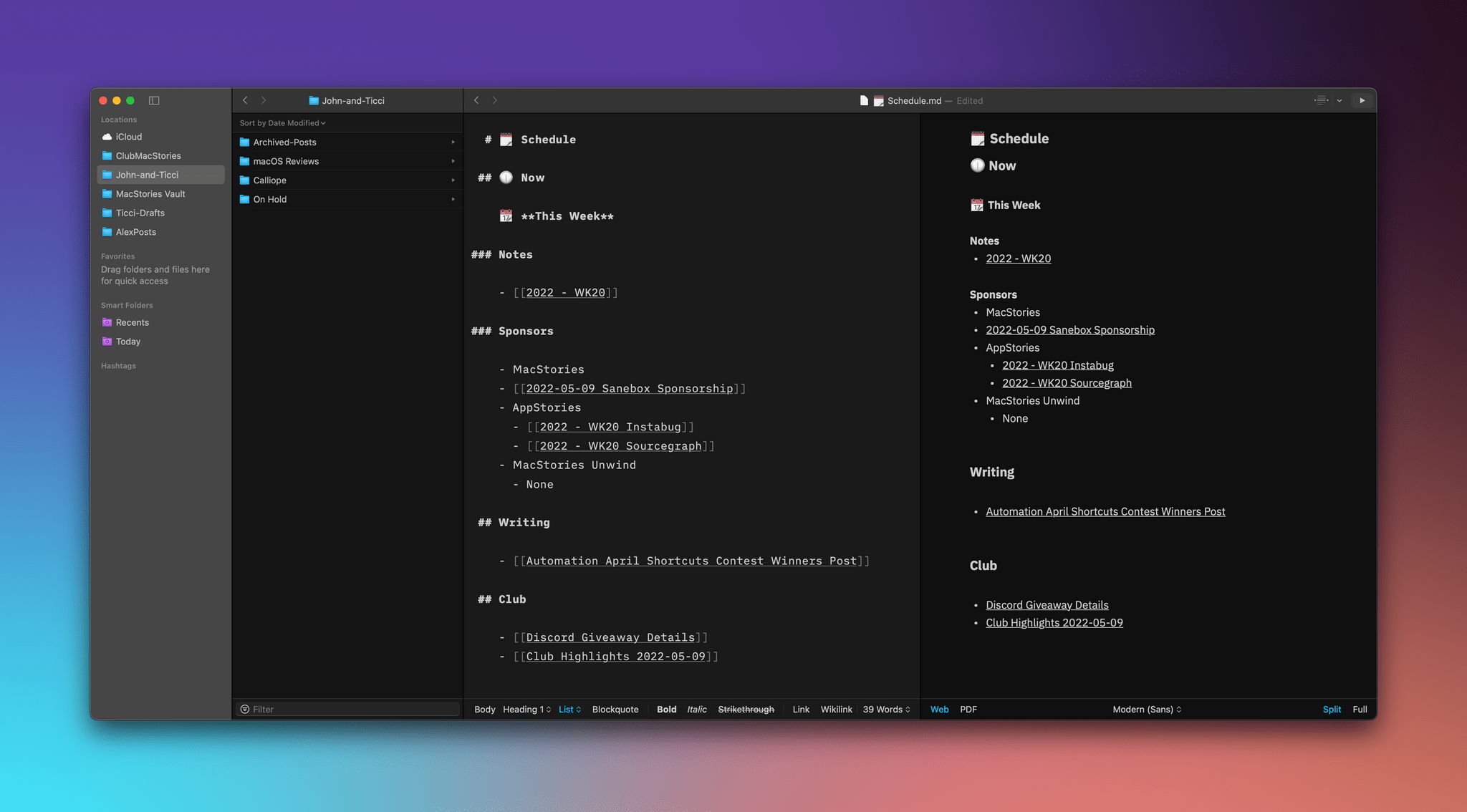
iA Writer has long been one of the premier text editors on Apple’s platforms. The app’s design is top-notch, and it offers a feature set that makes it among the best options for writing in Markdown. Best of all, the app’s features stay out of your way while you’re writing. They’re easy to access, but they aren’t a distraction. That’s as true of iA Writer 6 today as it was with previous versions.

However, the Markdown text editor market is changing rapidly, with tools for creating interlinked notes and documents in a variety of ways that have quickly become table stakes for text editors and note-taking apps alike. iA Writer 6, which is available on the iPhone, iPad, and Mac, is a response to those changes that fits comfortably with the app’s existing feature set and design. The update doesn’t go as far as an app like Obsidian when it comes to internal links. Nor is it extensible with plugins. However, for many users, I suspect iA Writer’s impeccable design and thoughtful features will outweigh its lack of certain power-user features.

Read more


WorldWideWeb: A Simple Web Server Utility for Mac, iPad, and iPhone

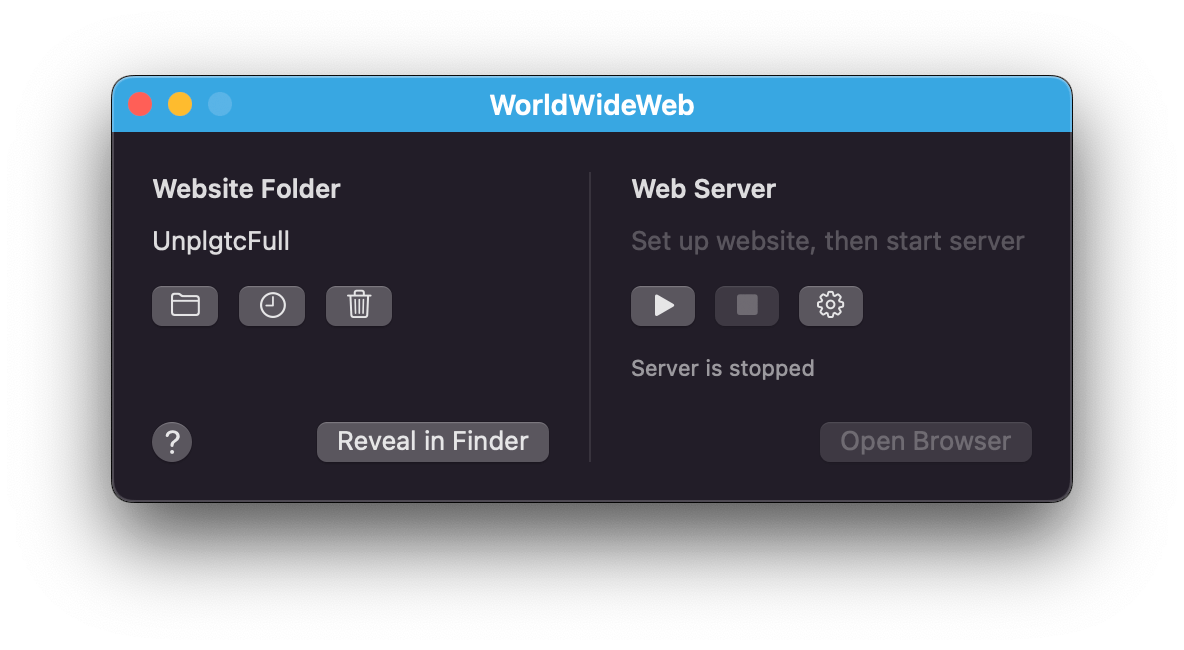
Early today The Iconfactory released their latest app, a simple web server utility called WorldWideWeb. Solidly developer-focused in scope, the app serves files from a local directory to an automatically generated URL, making these files available to any device on your local network. While there are sure to be more inventive use cases for such a utility, its general purpose is for testing simple websites built on the Web’s greatest primitive: HTML.

WorldWideWeb’s killer feature is simplicity. The app’s entire main interface consists of two tiny sections: in the first you select a folder, and in the second you start or stop the web server. When the server is activated, a URL is generated. The app uses Bonjour to make the address available to any device on the same Wi-Fi network as the host. Just copy and paste the URL or press the ‘Open in Browser’ button to view the website natively in a web browser.

Read more


Grocery 3.0 Introduces App-Wide Redesign and New Inventory Features

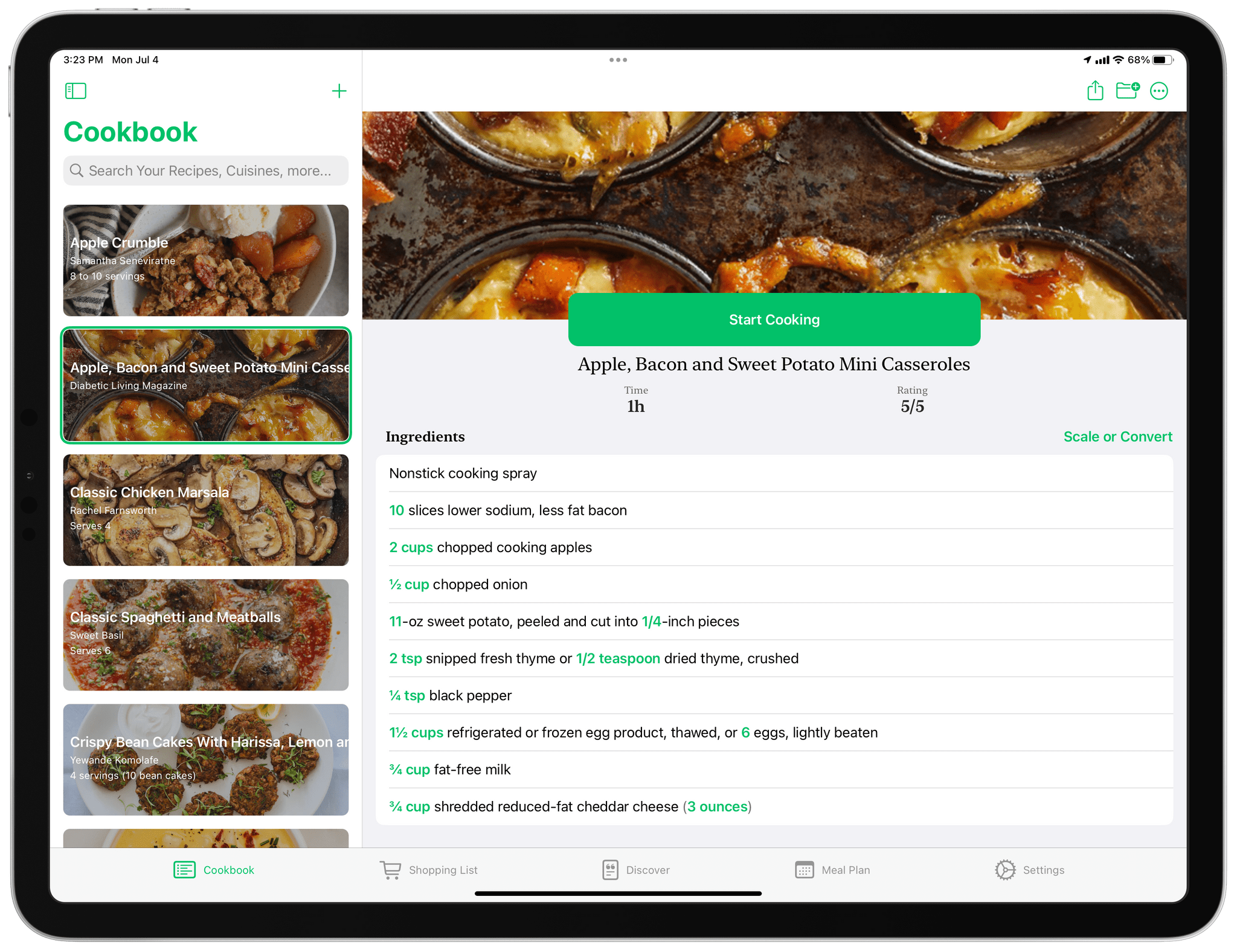
It’s been fun to watch Grocery by Conrad Stoll evolve over the years. The app started as a relatively simple shopping list app on the iPhone but has transformed into something much deeper. Today, Grocery is available on the iPhone, iPad, Mac, and Apple Watch and offers a comprehensive feature set that also covers meal planning, recipes, and inventory tracking. This week’s release of version 3.0 of Grocery takes the app’s formula further with a fresh, modern design, tighter integration between inventory management and shopping lists, and other new inventory features for better tracking of what you have on hand. It’s an excellent update that takes advantage of the latest features of Apple’s OSes to offer a broad-based approach to grocery shopping.

I’m going to focus this review on what’s new in Grocery 3.0, but you can read more about the app’s core features in my past reviews.

Read more


Mario Guzman’s Music MiniPlayer Lets You Control Apple’s Music App in iTunes 10 Style

Earlier this year, we interviewed Mario Guzman in MacStories Weekly about Music Widget, his Apple Music controller utility that recreates the look and feel of the original iTunes Dashboard Widget. This week, Guzman is back with a similar music utility for macOS that’s skinned to look like the original iTunes 10 MiniPlayer.

Called Music MiniPlayer, the utility is a remote control for Apple’s Music app, not a music player itself, that takes its inspiration from iTunes 10’s MiniPlayer. With the exception of some minor tweaks to the background of the playback controls, Music MiniPlayer is a pixel-perfect recreation of the iTunes 10 MiniPlayer written almost entirely using the Core Graphics and Core Animation frameworks to ensure crisp rendering on Retina and non-Retina displays.

Read more


MusicBox Review: The ‘Listen-Later’ Music App I’ve Been Waiting For

MusicBox for iPhone.

MusicBox for iPhone.

Longtime MacStories readers know how much music is important to me. I Made You a Mixtape, which I published six years ago, continues to be one of my favorite, most intimate things I’ve ever published for a simple reason: it tells the story of the importance music had in my life when I was growing up, the connections it helped me make, and the lifelong memories it created. I am not exaggerating when I say that I feel weird inside if I don’t listen to music every day. My love for music – all kinds of music – is also why I spent the past few years rebuilding a personal, offline music library and creating a setup that lets me enjoy music without distractions.

Now, I’ve covered plenty of music apps over the years on MacStories, starting from desktop utilities for music controls to Apple Music clients based on Apple’s official API, music widgets, and even Last.fm scrobblers. But there’s been one particular type of music app, which I’ve always wanted someone to build, that has eluded my coverage of apps on MacStories in over 13 years of reviews: a read-later utility, but for music you want you want to save and listen to later.

That is, until today. MusicBox, the latest app by indie developer Marcos Tanaka, is the “listen-later” music app of my dreams, the one I’ve wanted to use for years and that someone finally made as a Universal app for iPhone, iPad, and Mac. It’s rare for me these days to find new apps that elicit this kind of enthusiasm, but when I do, I know I’ve stumbled upon something special. MusicBox is one of those apps.

This review is going to be pretty straightforward. If you’re a music lover and use either Apple Music or Spotify, and if you feel like you discover more interesting music than you can possibly consume in a day, MusicBox is for you. Open the App Store, spend $2.99 (there are no subscriptions or In-App Purchases in the app), and you’ll get what is likely going to be one of your favorite apps of 2022. Then, if you want to learn more about what the app does, how it integrates with Apple Music, and how you can set it up on your device, come back to this story and let’s dive in.

Read more


Bike: An Elegant Outliner For Mac-Focused Workflows

Bike is a brand new Mac-only outlining app from Hog Bay Software that executes the fundamentals of outlining flawlessly. The outline creation and editing workflows are polished, and the keyboard-focused navigation makes moving around a large outline effortless.

The app’s feature set is limited by design. That focus is part of what makes Bike such a good outliner. The care and attention that has gone into building a solid outlining foundation are immediately evident.

However, that focus comes with a downside. Bike is a simple app that won’t meet the needs of users looking for iPhone or iPad support, formatting options, Shortcuts support, or other features.

Overall, I like the approach Bike has taken a lot, but I think it has gone too far, limiting the app’s utility more than is necessary to maintain its simplicity. Let me explain what I mean.

Read more


Runestone: A Streamlined Text and Code Editor for iPhone and iPad

Runestone is the latest app from Simon Støvring, the developer behind Scriptable, Jayson, and Data Jar. Støvring’s apps tend to be focused on developer or automation use cases, filling holes in the iOS and iPadOS ecosystem to aid power users. Runestone mostly falls into the same category, although it also has some wider potential appeal for general purpose writing.

The new app functions as an excellent plain text editor for anyone who needs to write on their iPhone or iPad. It’s simple and thoughtfully designed, and includes a variety of excellent themes to improve your writing experience. Runestone’s marquee feature, however, is its syntax highlighting. For Markdown writers, the app will use simple color schemes (which can be altered to your liking using the theme settings) and subtle style changes to highlight your links, bold and italic words, footnotes, and more. The result is a very simple, essentially plain-text approach which still makes it easy to see your markup at a glance.

Read more


The iOS App Icon Book: The MacStories Review

I’ve eagerly awaited The iOS App Icon Book by Michael Flarup ever since it was first announced in 2018. The book sits dead center among topics that are at the heart of MacStories: apps, app preservation, and design. As a result, my expectations were high, and I’m happy to report that it doesn’t disappoint. If you care about apps, you’ll love The iOS App Icon Book.

The cover of The iOS App Icon Book sets the tone with a large iridescent squircle, the shape that defines every app icon. It’s the canvas on which every app icon is created. The squircle has become iconic in its own right, creating a consistent thread that ties disparate designs together into a coherent whole. The shimmering foil used for the book’s squircle is an excellent touch that hints at the colorful variety of icons between its convers.

The iOS App Icon Book is an art book at its core. The book’s pages are packed with icons of varying sizes, but the book also features essays by Flarup, a foreward by Bjango’s Marc Edwards, a history of iOS iconography by Jim Nielsen, and profiles of a dozen designers and design studios. The focus of the book lies firmly on the icons themselves, but I’m glad the essays and profiles were included. The essays provide an outlet for anyone who happens upon The iOS App Icon Book and wants to know more about the history and design of icons, while the profiles put a face to some of the artwork on its pages.

Of course, the stars of The iOS App Icon Book are the icons themselves. Each high-resolution image is reproduced in vivid colors on high-quality paper that makes browsing through the book’s pages a pleasure. As someone who writes about apps, I enjoyed flipping through the pages, rediscovering the icons of apps from the early days of the App Store alongside the icons of apps I use every day. It’s a careful mix of old and new that blends the context of early app iconography with current design trends.

As you flip through The iOS App Icon Book, you’ll find that the icons are arranged in a number of different ways. Some are grouped by color, while others are organized thematically, like the pages featuring food, games, and photography apps. My favorite part of The iOS App Icon Book, though, is the pages that trace the evolution of specific icons. Each version is dated and connected by horizontal lines to indicate its lineage. It’s fascinating to see the directions that designers have taken app icons over the years.

The one thing that The iOS App Icon Book doesn’t do that I would have liked to have seen is trace the evolution of the icons used for some of Apple’s system apps. That may not have been feasible given the need to get rights to the artwork for printing in a book. However, it would have been interesting to see the extent to which Apple’s design work has influenced third-party designers.


iOS app icons are the first thing that users encounter when they download an app and use it for the first time. Icons set the tone and personality of an app. It’s an important part of the app experience that has a rich history on iOS. The iOS App Icon Book brings that history to life in a way that immediately had me flipping back and forth through its pages, rediscovering old favorites and studying the details of icons I’d never run across before. I highly recommend it for anyone interested in apps and design.

The iOS App Icon Book is still available to pre-order for €60.00 from its website.