This Week's Sponsor:

Copilot Money

Copilot Money, The Best Money Tracker, Launches on the Web – Limited-Time: Get 26% Off + 2 Months Free


Posts in reviews

Translate Tab Puts Google Translate In Your Mac’s Menubar

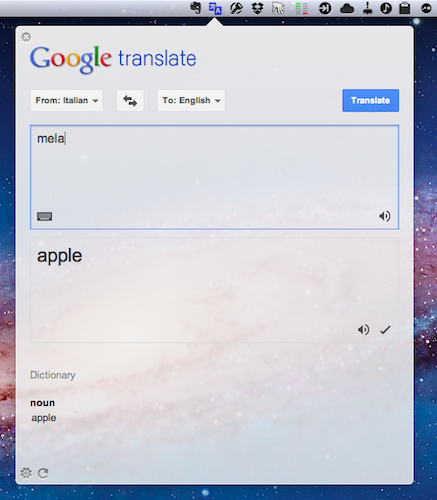
I use Google Translate quite a bit. Automatic, “machine-made” translations of entire sentences are usually bad and may lead to some funny nonsense, but the service has gotten better over the years and, admittedly, it’s useful to quickly look up synonyms from one language to another, or get the general sense of a blog post about technology and Apple (which I do on a daily basis for articles from Macotakara or MacMagazine). And whilst heading over Google Translate via the browser is pretty effortless these days thanks to application launchers like Alfred and LaunchBar, I’ve been looking for a way to embed the translate UI of Google’s website on my Mac in a way that’s always there but unobtrusive, ready to be used when I need it.

Translate Tab does this at $2.99. It takes Google Translate, and puts it inside a nicely translucent, white Lion-like popover in your Mac menubar, which you can access with a keyboard shortcut (and if you’re geek enough, customize with automatic clipboard entry through Keyboard Maestro). Tab Translate can be considered a site-specific browser, and I like how it’s been slightly tweaked to fit inside the popover with no horizontal scrollbars, retaining Translate’s functionalities such as alternate translations.

If you use Google Translate a lot and you’re tired of opening a new browser tab every time, you might as well spend $2.99 on Translate Tab on the Mac App Store.


1Password Now On The Mac App Store: 50% Off, Menubar Icon, Lion-only

AgileBits’ 1Password, a fantastic tool to securely store, manage and organize passwords, online accounts, notes and credit cards which we’ve covered several times here on MacStories, is now available on the Mac App Store. The long-awaited release (1Password is one of the most popular third-party Mac apps, and it’s no surprise customers wanted a way to get it from the most popular OS X software marketplace) comes with a 50% sale price (1Password is currently $19.99) and a series of new features implemented in this new 3.9 Mac App Store version.

To get the app on the Mac App Store, AgileBits had to fine tune some aspects of their application, and at the same time update other areas to properly take advantage of the new features introduced in OS X Lion. This means 1Password has full 64-bit support, is Lion-only, and can run in full-screen mode. 1Password has always been that kind of app I want to keep open without looking at it all the time, so full-screen mode in Lion provides the perfect compromise to keep 1Password a swipe away, running in the background in its own space.

Version 3.9, however, doesn’t stop at simple Lion integration: AgileBits went ahead, and implemented application sandboxing before Apple will start requiring for all Mac App Store apps this November. Sandboxing limits what parts of your computer the app can access, and it’s a change Apple is enforcing to make apps more secure, and users feel safer when downloading third-party software. So with the new 1Password, you can either keep the app’s .agilekeychain file (the database with all your passwords and data) in Dropbox as usual, or within the app’s sandbox. If you choose Dropbox sync – which will enable you to sync the app across computers and iOS devices – you have to make sure Dropbox is located in your OS X account’s home folder (it should be if you follow Dropbox default settings). Because of this new architecture, when you’ll delete the app via Lion’s Launchpad its data file backups will be deleted, too, and only one 1Password data file (again, the database) is allowed. Last, the developers have enhanced the app’s security with PBKDF2 Calibration – they have a blog post here so you can read more about it. That’s it for the technical changes. 1Password works better with Lion, it’s more secure thanks to Apple’s new APIs for 10.7, and it already complies to rules that the company will start enforcing in two months.

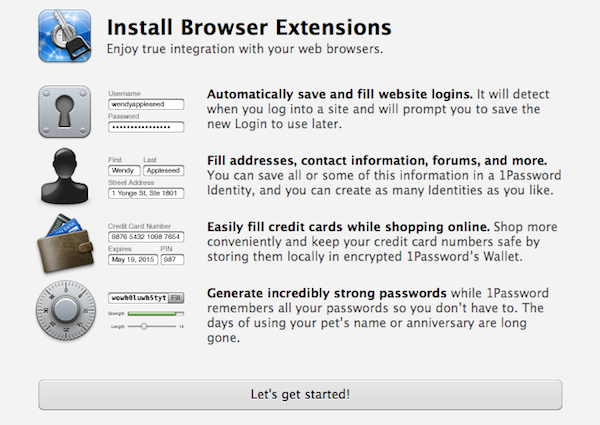
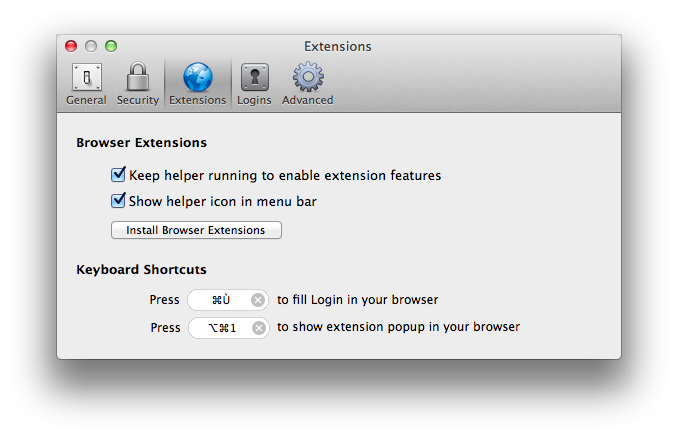
When it comes to new user features, 1Password 3.9 has a series of welcome additions that should simplify a user’s workflow and make the app more intuitive for Mac App Store newcomers. Whilst 1Password correctly recognized the old .agilekeychain data file I had in my Dropbox, those who haven’t used 1Password before will find a new first-run screen to help them find their way around browser extensions (more here), strong passwords, and automatic save and fill. 1Password’s preferences have been redesigned and simplified, as you can see from the screenshots; several menu items have been removed for simplification as well.

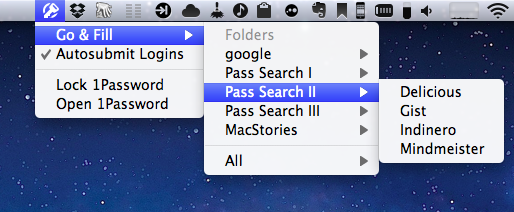
The biggest new feature in this Mac App Store release, from a user’s standpoint, is the new 1Password icon in the Mac’s menubar, which will help you with Folder / Tag Go & Fill access, AutoSubmit, and easily locking/opening 1Password directly from the menubar. The Go & Fill option is especially useful if you don’t want to manually type a URL in your browser, and prefer to let 1Password “take you” to a website, and have it automatically fill the login for you. The new menubar helper works great with the latest Safari on OS X Lion.

I’ve said this many times – 1Password is a must-have application for any Mac user who’s serious about keeping his personal data safe, protected, and always in sync across platforms. The newest update to the app is only $20 on the Mac App Store right now, and customers who purchased 1Password from AgileBits’ website within the previous 30 days can request a full refund if they’d rather buy it through the Mac App Store. Looking forward to a major 4.0 update, 1Password 3.9 is now on the Mac App Store and finely tuned for Lion.


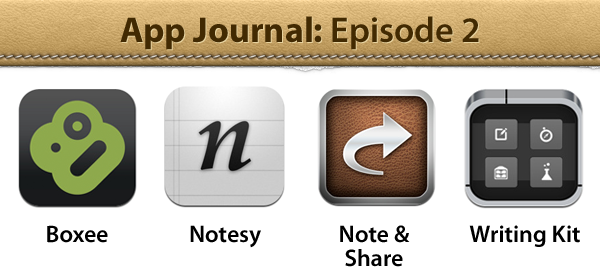
App Journal, Episode 2: Boxee for iPad, Notesy, Note & Share, Writing Kit

App Journal is a weekly series aimed at showcasing apps we have enjoyed using on our iPhones, iPads, and Macs, but decided not to feature in a standalone, lengthy review here on MacStories. App Journal is a mix of classic reviews, weekly app recommendations, and a diary of our experiences with apps that still deserve a proper mention.

For this week’s App Journal episode, I’m taking a look at four iOS apps: Boxee for iPad, Writing Kit, Notesy and Note & Share. You may notice three of them are note-taking apps – in fact, I’ve been playing with several apps of this kind recently, and have yet to decide which one suits better my writing workflow when it comes to quick notes for, say, Dropbox, or longer pieces written in Markdown.

Stay tuned for more App Journal episodes in the next weeks. Read more


Screentaker Helps You Take Beautiful iOS Screenshots

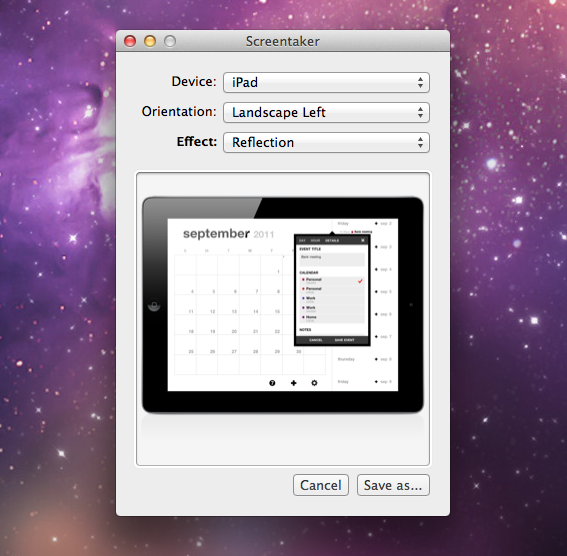
I first mentioned iPhone Screentaker from developer Fabian Kreiser in a post from January 2010, in which I collected some of the tools we used at MacStories to produce beautiful high-quality screenshots of iPhone apps for our articles. We were big fans of Fabian’s side projects, and although he updated the app on his website with support for the original iPad, he never included an iPhone 4 template we could use for our iPhone screenshots. But fortunately for us, and any designer/developer who wants to create better iOS screenshots than a device’s original output, 13 months after the release of the iPhone 4 a completely revamped version of iPhone Screentaker is out, and available on the Mac App Store under a new name.

Screentaker for iOS Apps is available at $4.99, and it’s a very niche app. In fact, my guess is that Kreiser created it to scratch his own itch for better screenshots to present on websites and blog post – Screentaker is an app that might appeal to people like me, who take screenshots of iOS apps every day, or website designers that don’t want to create their own iPhone, iPod touch and iPad templates. Read more


My Artists 2.0 Brings 8tracks Internet Radio, iTunes Integration, Better Controls

When I first stumbled upon My Artists last year, what I found was a great companion for iOS’ native iPod app that allowed users to play songs they had synced on their iPhones with a different interface that, among other things, came with Wikipedia and YouTube integration. My Artists’ main goal, in fact, was to provide users with more information about songs and albums they were listening to, pulling data from the web as a way to showcase videos and songs from the same artist that, however, were not available on the device. My Artists 1.0 was a discovery tool for music already synced on an iPhone; version 1.1 brought several interface improvements, whilst 1.2 focused on Last.fm support as in-app purchase, and made the app independent from iPod.app in that users could see My Artists’ icon in iOS 4’s multitasking tray.

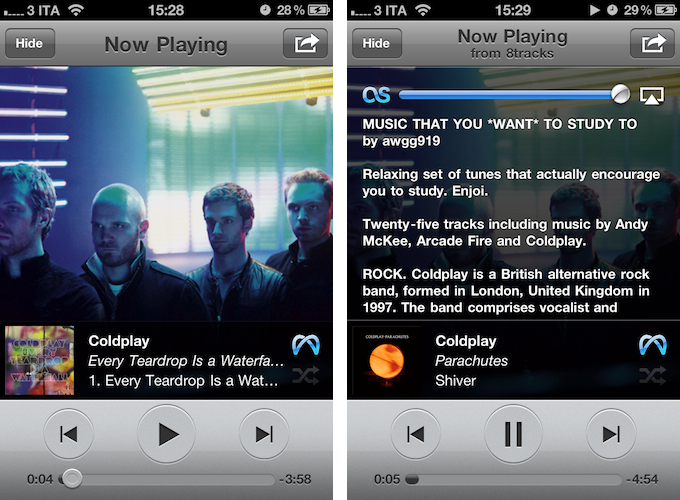
My Artists 2.0, released today, takes the whole concept a step further to become a full-featured music player and discovery system for all kinds of artists, not just the ones you already know and have on iTunes. Thanks to built-in integration with 8tracks, the “handcrafted Internet radio”, users can now listen to a personalized radio station with easy controls to jump through live-streaming songs from the popular online service. Whereas previous versions of My Artists wanted to put more information about your music at your fingertips – by displaying artists’ bios, related music, and videos – My Artists 2.0 brings actual new music to the mix thanks to an 8tracks button that’s always accessible from the main list view, which as usual pulls beautiful and high-res artist pics and album artworks from the web.

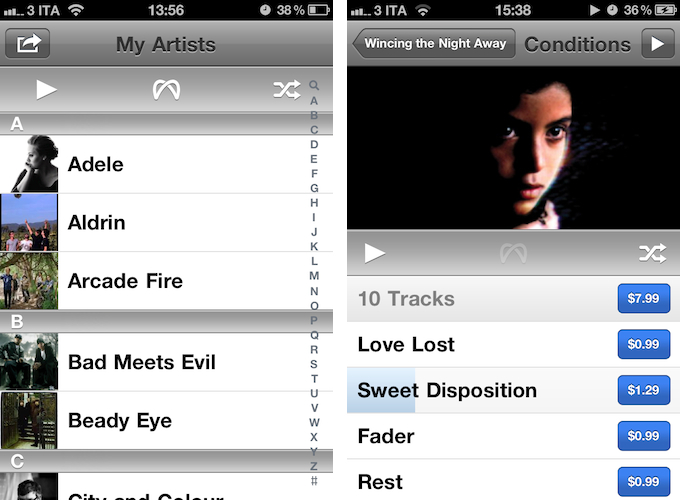
The new control bar in the list view has also got buttons for quick play all and shuffle, surely a welcome addition for those who don’t always want to navigate to an artist’s page to start playing music. Once you hit the 8tracks button, My Artists will open a new window, and start streaming a random playlist within seconds. The playlists are user-generated on 8tracks.com, and you can skip and pause songs with the app’s regular playback controls. Tapping on the album artwork of a song streaming from 8tracks will display an overlay with the playlist’s information, although you can also use the sharing button in the upper right corner to open 8tracks’ website in-app. As with older versions, the sharing button has additional options to “explore” (opens Wikipedia, YouTube, or related artists and genres), open an artist’s profile or album details. And when you check out the details for an album you don’t own or have on your device, that’s where another new feature of 2.0 comes to light: native iTunes Music Store integration.

As you can see in the screenshot, alongside a nice inline playing indicator (available both for local and streaming songs) there’s a blue Buy button next to each song belonging to the album you’re listening to through 8tracks. My Artists 2.0 enables you to preview iTunes Store songs without leaving the app or, alternatively, tap on the purchase button to open iTunes and start downloading right away. No matter how you get to an album or song you don’t own, whether it’s an 8tracks streaming session or Last.fm-based “discovery” for related artists, the app will have an iTunes button next to music you don’t have synced.

Speaking of Last.fm: gone is the in-app purchase from version 1.2. Last.fm scrobbling is now free for every My Artists customer, and it needs to be enabled through a login page the first time you hit the Last.fm button. From there on, My Artists will scrobble songs – be them “local” or coming from 8tracks – to Last.fm.

For me, My Artists 2.0 nears perfection. I still miss the ability of displaying lyrics alongside artists’ bios in the now playing overlay, and it’d be nice to be able to “forward” discovered songs to Rdio or Spotify, besides the iTunes Store. But other than that, for someone who listens to music every day, all day (well, almost), My Artists 2.0 offers a fantastic combination of local music playback (enhanced with better, up-to-date artworks and a fresh UI) and Internet-based discovery.

You can get My Artists 2.0 at $1.99 on the App Store.


WeatherSnitch 2.0: Beautifully Detailed Weather Data and Forecasts

I have tried several weather apps for the iPhone in the past year. Eventually I decided to stick with a combination of BeachWeather and WeatherSnitch for iPhone, even though I appreciated the attention to details of Shine, a beautifully designed weather app that was subsequently updated to work better internationally.

So it was with a bit of curiosity that I approached WeatherSnitch 2 last month, when I learned that the developers had switched the original WeatherSnitch to a free app, and released a major 2.0 version as a standalone, paid app. As it turns out, WeatherSnitch 2 builds on the excellent feature set of version 1 adding a darker UI, more reliable and accurate weather data and forecasts, moon phases, and more. WeatherSnitch 2.0 looks a lot like its little brother, now free on the App Store, albeit it’s been completely rewritten to have a new design with snappier animations, and faster update times.

WeatherSnitch 2 lets you add multiple locations, search the ones you’ve already added, and add your current location by tapping on the default GPS icon as in Apple’s Weather app for iOS. Speaking of Apple’s Weather widget: I believe average users will be more than fine with iOS 5, Weather in Notification Center and the additional features Weather received through the betas, but there will still be room for apps that provide a more detailed look at weather data, forecasts, and so forth.

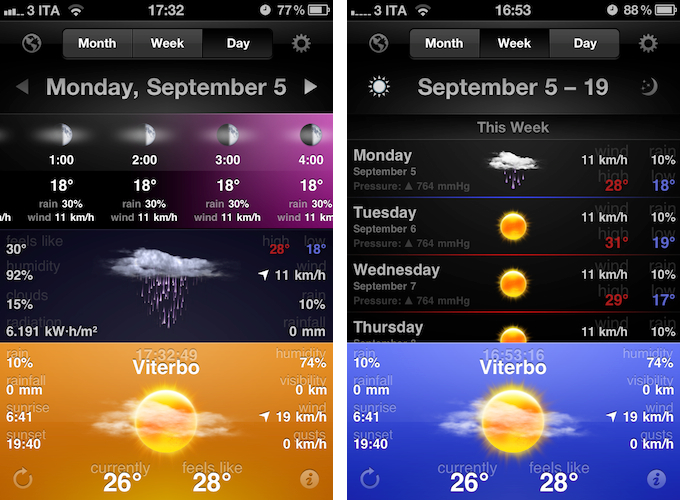
Locations you’ve configured in WeatherSnitch will appear along the bottom of the app as a section you can swipe to change between places. The single-location section lists current time, weather and “feels like” factor, an icon representing the weather, and a bunch of additional information such as rainfall, sunrise and sunset time, humidity percentage, visibility, and wind. Units, colors and other options can be tweaked in the Settings, which have some clever switches for on/off items, as well as units and types (see screenshots below). The bottom part of the UI is WeatherSnitch’s main controller, as swiping between locations automatically updates the data visualized above in the Month, Week, and Day views.

Month view is pretty self explanatory in that it displays a calendar with weather icons and temperature associated to each day of the month. Tapping on a day opens a small popover with the icon in greater detail, high and low temperatures, and humidity percentage. My favorite view, however, is the middle “Week” one. Not only does Week lists weather forecasts for “this week”, “next week” and “week after next” in a vertically scrollable interface with wind/rain/temperature/pressure data, it also lets you switch between day and night forecasts with the tap of a button. The animation for this is delightfully simple, attractive, and powered by a dark linen background.

“Day” is perhaps the most complex of the three views. It contains a continuously scrolling “hour bar” at the top with hour/temperature/wind/rain data and gradually fading colors that reflect the time of day; as you move forward, WeatherSnitch updates the day header at the top, thus allowing you to go as far you want inside the Day view. In the middle, there’s what I interpret as a “day average” section – the developers call it a “a new detail bar” that offers extensive details for each day. The detail bar can be swiped to reveal a nice 3D animation (reminds me of 3Do) to switch night/day forecasts.

WeatherSnitch 2 is a good-looking piece of software with lots of weather data to assimilate – perhaps even too much. In fact, I’m told the developers are working on an update to allow for deeper customization and let users choose what pieces of data to show on screen, optionally with bigger text labels. WeatherSnitch 2 doesn’t disappoint, it’s intuitive and fun to use thanks to support for swipe gesture, and the homescreen icon with optional badge looks fantastic on the iPhone 4. You can get WeatherSnitch 2 at $1.99 on the App Store. Read more


Prowl 1.3 Adds iPad Support and “Do Not Disturb”

Back in July I decided to take a look at Prowl, an iOS app and web service that takes notifications from Growl, the popular app for the Mac soon to receive a major update, and transforms them into push notifications for your iPhone. So say you’ve left Transmission downloading a large torent at home, when the download is complete and Growl displays a desktop notification for that, Prowl will grab that message, push it up to the cloud, and back down to your iOS device when you’re on the go. Prowl works with any app that’s supported by Growl, and I was impressed by the quantity and quality of third party apps based on the Prowl API when I spent my first weekend with the app.

An update to Prowl for iOS was released today, and as the developers had previously teased this new version adds native iPad support and a “do not disturb” feature to force quiet hours when enabled. If you don’t want your devices to wake you in the middle of the night, that’s certainly welcome. And whilst the iPad app looks fairly similar to its iPhone counterpart in terms of design, the main notification list has been tweaked to be more refined and smaller in size. Notifications can be collapsed and expanded, and the settings have been moved to app’s toolbar.

This release also includes the following bug fixes:

  • Fixed quiet time setting the wrong time zone, thus being an hour off.
  • Fixed not leaving edit mode when removing the last entry.
  • Fixed some settings pages lacking titles.
  • Fixed cropping of Prowl app icon.
  • Fixed marking notifications as “new” even after backgrounding.
  • Fixed some description text sizing problems.

Prowl 1.3 retains its underlying simplicity in both design and function while adding some useful options to control how notifications are displayed. Get it here at $2.99.


MarkdownNote Brings Live Markdown Previews to OS X

Folks who enjoy writing in Markdown have already installed Brett Terpstra’s fantastic Marked for Mac, a nifty utility to generate HTML previews from Markdown documents written in any OS X application. You can read our review of version 1.2 here. Those who prefer a more cohesive writing environment with plain text/Markdown and HTML output living in the same application, however, might want to take a look at MarkdownNote, a new entry in the Markdown editing space that’s got some interesting features.

MarkdownNote has been available for quite some time on the iPad, and it’s now jumped over to the Mac with a feature set that takes advantage of Lion’s full-screen, Resume and Versions. MarkdownNote’s distinctive functionality is “live preview”, a split interface that lets you write in plain text with Markdown on the left, and have another panel immediately format Markdown as HTML on the right. This happens as-you-type, and with Markdown’s **strong** and *italic* formatting options you’ll only have to properly close such “tags” for the preview to refresh accordingly. MarkdownNote has a menu on the bottom left to resize the panels for Markdown and Live Preview, with options to set the editor and preview at 50, 70 or 100 percent.

MarkdownNote can save .txt files (everyone loves plain text, right?) , it lets you pick your own font and it’s got some further options to play with in the Preferences. When you’re done writing, you can copy the HTML and paste it somewhere else as usual. I’ve found MarkdownNote to be extremely useful in full-screen mode, as the split interface makes for a great alternative to having large borders around your text – with this app, you don’t waste space and you’ve got a live-updating preview at the same time.

MarkdownNote and Marked

Best of all, MarkdownNote works great with Brett’s Marked, although you may wonder why would anyone use Marked when MarkdownNote has got a live preview. I think MarkdownNote is great at letting you write and quickly keep an eye on the correct visual output, but I still prefer Marked for editing – after I’ve written a long piece, I fire up Marked, choose my favorite style, see how many words I’ve typed, and I go through my Markdown. I love this combination of writing tools.

At $3.99 on the Mac App Store, MarkdownNote gives you an easy way to write in Markdown and instantly see how the words you typed will look like, and use keyboard shortcuts to facilitate the process of Markdown writing itself. MarkdownNote works really well in combination with Lion’s full-screen mode and Marked – if you’re a Markdown nerd, you should give this a try.


EmojiBar Puts Emoji In Your Lion Menubar

With OS X Lion, Apple introduced system-wide support for Emoji characters, implemented on iOS 4’s Japanese keyboard last year and recently extended to all international keyboards in iOS 5 beta. Emoji characters are a cute, fun way to share more detailed emoticons with friends on social networks and messaging apps, and because they’re based on Unicode, they can be used in a variety of other ways, including domain names.

On Lion, users can display Emoji characters and easily insert them using the OS’ default character picker; EmojiBar, a $0.99 app available on the Mac App Store, makes emoji-picking even easier by putting those characters right into the menubar, accessible from a popover. EmojiBar is very simple, and nicely designed: a click on its icon opens the popover, another click on the emoji you need will copy it to the clipboard, and display a notification (notifications can be disabled in the Settings). Icons on the left let you switch between different kinds of emoji characters, whilst the Recents tab gives you access to your most used emojis (presumably your favorite ones as well).

I like the app’s simple approach and design. I know OS X can accomplish the basic functionality by itself, but it’s always nice to see an app doing one thing, and one thing well. You can download EmojiBar here.