What Apple Must Do to Establish Its New Video Service

It’s clear that Apple is building a video service. That much was obvious the moment it hired veteran entertainment executives Zack van Amburg and Jamie Erlicht. But you can’t flip a switch and create a streaming service—not even if you’re Apple. (You could buy one, but Apple has apparently chosen to build, not buy, at least for now.)

What has to happen between now and the day we all sit down and watch the first episode of van Amburg and Erlicht’s first major acquisition to play through our Apple TVs or on our iPads and iPhones?

Great article by Jason Snell on the challenges Apple is facing in building their video streaming service – which, if you’ve been keeping an eye on entertainment news, is perhaps the company’s worst kept secret. (Jason Snell and Myke Hurley have a regular segment about this topic on their Upgrade podcast, which you should listen to.)

Unlike Snell, though, I have a hard time believing Apple will not offer their service on multiple platforms. If the company’s goal is to generate more Services revenue with this product, it’s only reasonable to expect as many people as possible could sign up for it.

Also, from a cultural perspective, I think it’d be wrong to have TV shows (and eventually movies too?) be locked to Apple devices. I was watching the Grammys last night, and there were plenty of Apple Music mentions (and ads) throughout the show; Apple Music, of course, is available both on iOS and Android, which meant everyone watching could access Apple’s Grammys page and playlists. If Apple hopes to create shows that become cultural phenomena like Game of Thrones or Stranger Things, wouldn’t it be best to ensure everyone can enjoy them?

Permalink

Apple Shares First Series of HomePod Ads

Joe Rossignol, writing for MacRumors:

Apple today shared its first series of HomePod ads on its official YouTube channel, titled Bass, Beat, Distortion, and Equalizer.
[…]
The music-focused ads are each set to their own song, including Ain’t I by Lizzo, DNA by Kendrick Lamar, Holy Water by Hembree, and All Night by Big Boi. Apple continues to position the HomePod as a “breakthrough speaker” first and “intelligent home assistant” second in the description of each video.

If there was any doubt on how Apple is trying to position the HomePod, these ads have no mention – visual or otherwise – of Siri functionalities at all. They’re just about music. (Personally, I love the style and animations.)

As someone who actually believes in the utility of smart speakers, I’m curious to see how this strategy will play out for Apple this year, and if they’re going to air “lifestyle” HomePod + Siri commercials at some point (as they did many times before).

Permalink


HomePod First Impressions Roundup

In advance of HomePod pre-orders, which began earlier today, Apple invited a handful of writers to hear the HomePod in action. Apple’s smart speaker was met with universal praise for its sound quality but also, some skepticism.

Read more


Omni Outlines Its 2018 Plans, Including Updates to OmniFocus for iOS and Other Apps

Every year, The Omni Group reflects on the past year and provides a roadmap for coming year. In 2018, OmniFocus will play a prominent role along with updates to OmniGraffle, OmniPlan, and OmniOutliner.

OmniFocus for iOS has been around since the earliest days of the App Store. One of the biggest changes that will be debuted in OmniFocus 3 for iOS is the elimination of contexts, a Getting Things Done concept that hasn’t aged well. Contexts will be replaced with tags, which can be used like contexts or to indicate other attributes of a task like its priority, location, or time. With tags, Omni is will also introduce manual reordering of tasks within a tag.

The way OmniFocus deals with dates and notifications is being revamped too. With version 3, OmniFocus will add more fine-grained control over repeating tasks. To avoid complexity, The Omni Group’s Ken Case says:

we turned to a design principle called progressive disclosure: we ask you to make simple decisions up front (like checking the option “does this repeat or not”), and as you proceed through the interface we progressively disclose more and more options based on what we already know about the task.

Similar flexibility is being added to notifications, which will include more detail in each notification. OmniFocus is also adding the ability to add multiple custom notifications to single tasks and notifications that will continually badger you until a task is marked as complete, as can be done today in apps like Due.

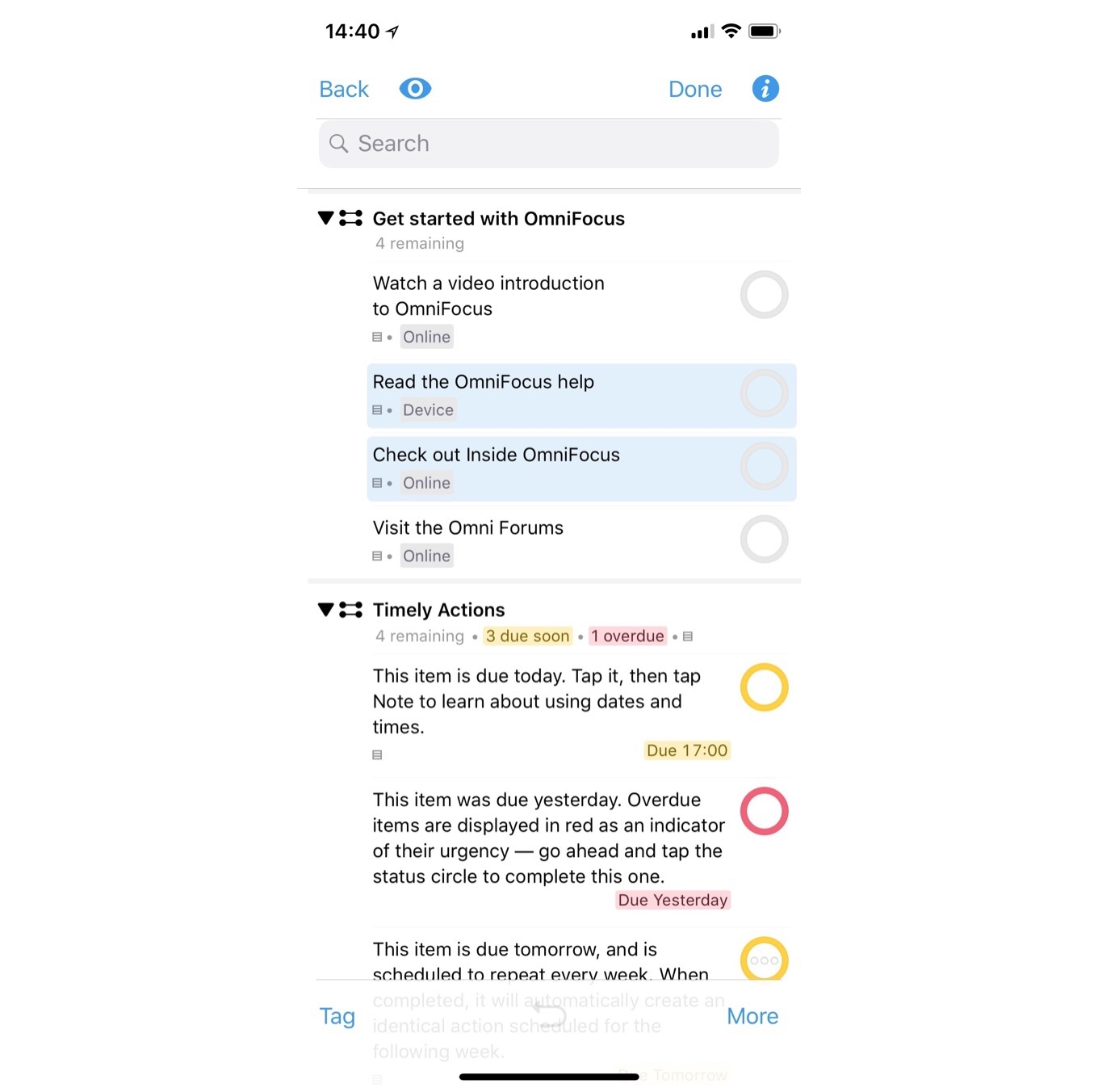
OmniFocus 3’s design will also be refreshed. Omni hasn’t shared many examples of what the update will look like, but here’s an example from the company’s blog post:

JavaScript-based automation, which is included in some of Omni’s other apps, is coming to OmniFocus as is collaboration, which will feature a system that lets multiple people share the same task by linking them. Omni says the system will allow everyone on a shared task to see its status, but place the task wherever they want within their task management setups. Finally, Omni plans a basic web version of OmniFocus that will allow users to access their tasks, though with a limited feature set.

Omni has changes in store for its other apps too. The first 2018 update to OmniGraffle for Mac will focus on the Stencil Browser, which users will be able to place in the left-hand sidebar. A later update will add improvements to SVG import and export support. Later in the year, another update is planned to improve diagramming.

OmniPlan for Mac will add a Project Summary Inspector that provides summary information about a project like its total cost and duration. OmniPlan Pro users will get a new timescale feature for customizing Dashboards too. Improvements to OmniPlan Pro’s publish and subscribe sync feature are planned for later in the year.

OmniOutliner 3 for iOS is scheduled for release in February 2018. The update will introduce Essentials and Pro versions of the app. Essentials offers a simplified outlining environment, while Pro includes advanced features like saved filters, encryption, and JavaScript automation.

It looks as though 2018 will be a busy year for Omni. Updates to apps like Things have raised the bar on task management apps, so it’s good to see Omni rethinking and redesigning some of the fundamental aspects of OmniFocus. I’m also looking forward to the OmniOutliner, an app that I’ve used on and off since it was first introduced on iOS.


Apple Animoji Karaoke Videos Showcase iPhone X Feature in Advance of Grammys

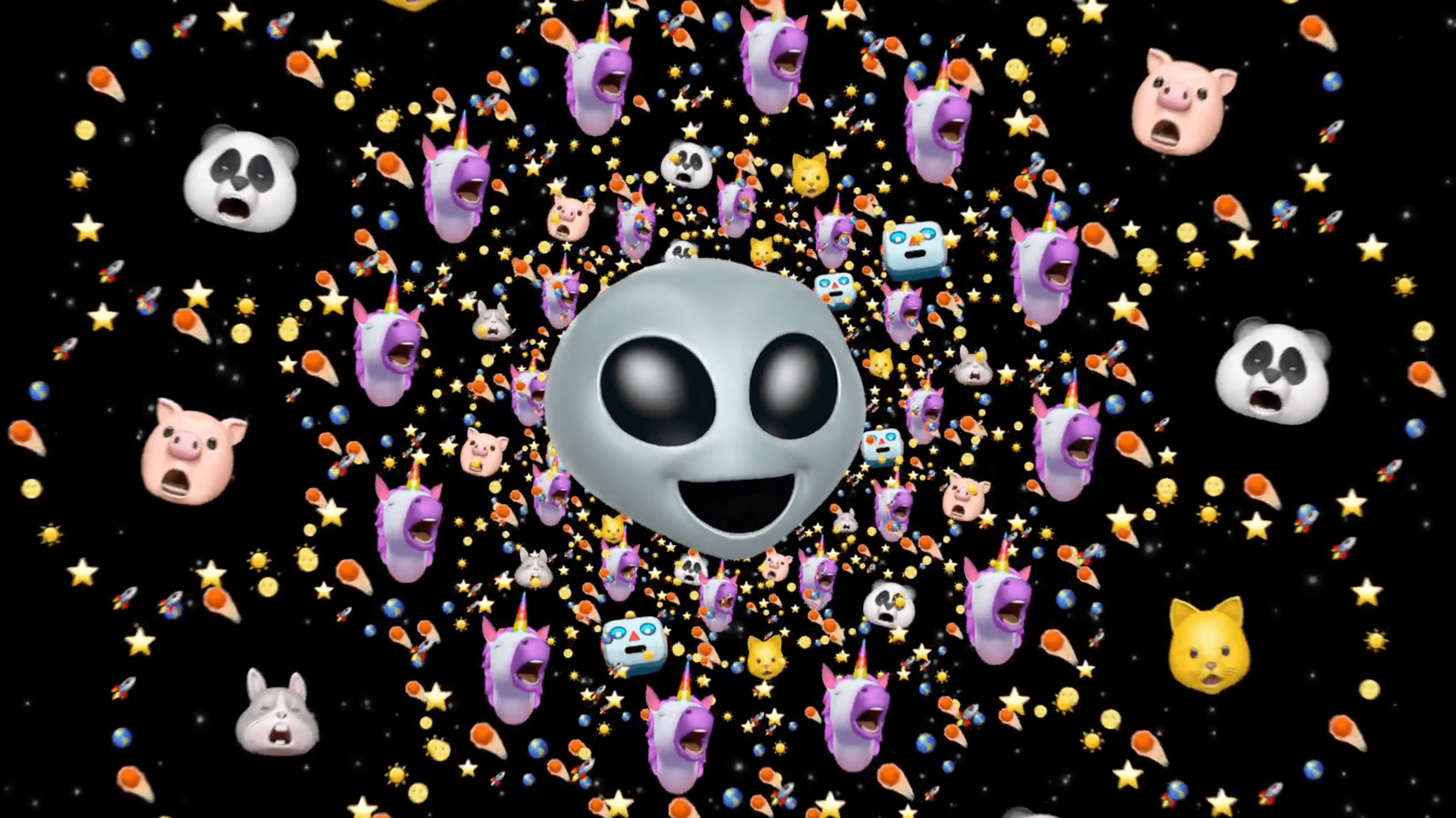
Apple has embraced the phenomenon of Animoji karaoke. Specifically called out in the iOS 11.3 preview press release earlier this week, Apple followed up today with two fantastic videos on its YouTube channel.

One video features Stir Fry by Migos sung by the dog Animoji backed by the smiling poo Animoji.

The other video features Redbone by Childish Gambino with the alien Animoji on lead vocals backed by the rainbow unicorn.

Both videos are fun pairings of Grammy-nominated artists and Animoji, the animated emoji feature that is exclusive to the iPhone X. Migos’ album, Culture, is nominated for Best Rap Album of 2017, and Redbone by Childish Gambino is up for Record of the Year. According to Ad Week, the two videos will air during the Grammys on Sunday, January 28th.

Almost as amusing as the videos themselves is the fine print at the end of each video that says ‘Animoji feature records up to 10 seconds. Professionally animated.’ I’d love to see Animoji recording extended beyond 10 seconds and added to an app like Clips, to make it easier for users to create karaoke videos of their own and eliminate the need for Apple to add a disclaimer to its videos.


Connected, Episode 177: Whatever State Asparagus Is Born In

After wading through HomePod and iOS 11.3 news, the boys give a status report on how they’re feeling about iOS 11 and High Sierra several months into running the releases.

On this week’s episode of Connected, we covered all the latest news from Apple on iOS 11.3 and HomePod, and we also checked in on our experience with iOS 11 and High Sierra so far. You can listen here.

Sponsored by:

  • Squarespace: Make your next move. Enter offer code WORLD at checkout to get 10% off your first purchase.
  • Pingdom: Start monitoring your websites and servers today. Use offer code CONNECTED to get 30% off.
  • Timing: The automatic time tracking app for macOS. Use this link to save 10% on your purchase.
Permalink

HomePod Supports User Presence at Home for Personal Notifications

Refinery29’s Madeline Buxton has spent one hour testing a HomePod ahead of preorders going live tomorrow, and, like others noted at WWDC ‘17, she came away impressed with the small footprint of the device and its audio quality compared to other smart speakers.

This bit from her story is interesting:

Secondly, although everyone in your apartment will be able to use the speaker, only the person who sets up HomePod on their iCloud account will be able to send texts, set up reminders, and get calendar notifications via voice commands. Google Home and Amazon Echo, meanwhile, can recognize different voices and provide personalized content accordingly. (If you do set up personal notifications on HomePod, these will only be available when you are on the network, so you don’t need to worry about your texts being read aloud at home when you are at work. If you don’t want them read aloud when you’re home, you can go into your HomeKit settings and turn off the notifications.)

To my knowledge, this is the first time we hear that HomePod does indeed support calendar notifications (which aren’t mentioned on Apple’s HomePod webpage). As Benjamin Mayo notes, details on how personalized calendar alerts would work are still unclear.

Update: Refinery29 has updated their story to clarify that HomePod will not support calendar notifications.

In addition, I assume that the ability to detect when the HomePod’s owner is at home is powered by the new user presence feature added to HomeKit in iOS 11. Even without a HomePod, iOS 11 lets you set up HomeKit automations with conditions that determine whether you or someone else is at home. The HomePod, as a HomeKit hub, will likely take advantage of the same API, which, in my experience with HomeKit automation in our apartment, has worked well since my girlfriend and I updated to iOS 11 on all our devices in September.

Permalink