Posts in news

Apple Confirms: Media Event on March 7

According to The Loop, Apple has just sent out invitations for a media event in San Francisco on Wednesday, March 7th. The event will be held at the Yerba Buena Center for the Arts in San Francisco, starting at 10 AM PDT (1 PM EST).

Earlier this month, it was reported Apple would hold an event in the first week of March to formally introduce the next-generation iPad, so far unofficially dubbed iPad 3, to a selected press audience in San Francisco. The new iPad, reportedly set to launch later this month, has been rumored to carry a high-resolution Retina Display; MacRumors even posted photos of what they claimed to be a production unit of the display, showing an increased number of pixels when put under a microscope. The device has also been widely rumored to share the same design aesthetics of the iPad 2, with tapered edges and a flat aluminum back. Back in January, Bloomberg reported the iPad 3 would come with a faster processor, presumably quad-core, and LTE connectivity, which was also confirmed in a separate article by The Wall Street Journal. Similarly, Rene Ritchie at iMore claimed Apple would hold an event on March 7th to announce an A6-powered, LTE-enabled iPad 3.

We have collected a series of iPad 3 rumors and theories here.

We’ll cover Apple’s media event on March 7th on MacStories’ homepage.


New Turin Apple Store To Become Italy’s “Most Important” One

According to a report by Italian website Macity [Google Translation], Apple’s upcoming retail store in Via Roma, Turin, will become Italy’s “most important” one as it debuts later this year, with an opening date apparently set for September 2012. Citing “sources with access to information about the new store”, Macity claims the store in Via Roma will cover an approximate area of 1000 square meters (10763 square feet, possibly including warehouse and back of the store) on two floors. Previously owned by Mondadori, the empty store is now being completely emptied so to let Apple rebuild it to fit the store’s style, which will be “different” from the current retail stores in Italy (9 out of 10 are located in shopping malls, with the exception of Via Rizzoli). Last, according to Macity, once open, the new store will be as “prestigious” as other Apple retail stores in Europe, specifically in France and the United Kingdom.

Apple was long rumored to be on the verge of launching a new flagship store in Milan, although the company didn’t manage to get permissions from the city, losing an auction for the Galleria space to fashion firm Prada. The new store in Via Roma will join Apple’s other store in Turin, at Le Gru. [via GGD Milano]


Apple Airs New iCloud Commercial: Harmony

Earlier today Apple posted a new TV ad on its website and YouTube channel, this time about iCloud. Carrying a new tag line “Automatic. Everywhere. iCloud.”, the commercial focuses on practically every functionality of Apple’s cloud service, from Photo Stream and Calendar sync to app downloads, Address Book sync, and iBooks. In particular, the ad shows the kind of integration that’s possible with iCloud – the video briefly touches upon Automatic Downloads from one device to another, and more prominently features Photo Stream for photos and calendar events synced across devices.

The YouTube description of the ad reads:

With iCloud, the stuff you love is everywhere you need it. Automatically.

It’ll be interesting to see whether Apple will start using this new “Automatic. Everywhere.” marketing slogan elsewhere. In the meantime, check out the video below.
Read more


Apple Acquires “Search Engine for Apps” Chomp

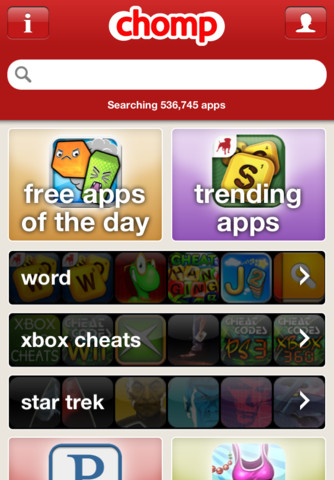
According to MG Siegler at TechCrunch, Apple has acquired Chomp, app search and recommendation engine that has an iPhone app available in the App Store. Siegler reports that the Chomp team and product will be transitioned over to Apple, although details of the deal aren’t clear:

My understanding is that such deals will remain intact for now but are likely to end once the Chomp team and product transitions over to Apple. The same is likely true for Chomp’s stand-alone products.

I haven’t been able to learn the exact terms of the deal, but I hear that all the investors should be very pleased with the outcome. This is not a cheap “acqui-hire”, Apple has bought the Chomp team and technology and plans to use both to completely revamp App Store search and recommendations, I hear.

With Apple’s Tim Cook famously saying he’s not religious about holding or not holding the cash (nearly $100 billion) at Apple’s disposal, the acquisition of Chomp should be a clear sign of the company’s willingness to invest in talent and technologies from startups that have proved to care about quality of their products. Chomp in particular is an interesting choice for Apple, as it might signal important changes coming relatively soon to the App Store, especially on the side of discovery of apps with recommendations targeting a user’s tastes and behaviors. With over 700,000 apps available (per AppShopper) and thousands getting approved every day, the issue with discovery is a real one: most developers struggle to get their apps noticed and the best chance for popularity still remains Apple’s own feature in the App Store’s homepage with the “App of the week” and “New & Noteworthy” sections. Furthermore, the existing App Store infrastructure doesn’t have integrated sharing features for Twitter and Facebook, which Chomp has.

It’s obviously not clear what Apple has in store for Chomp yet, but here’s a couple of wild guesses based on the app’s existing functionalities:

Improve app discovery learning what an app does, rather than just its name. Currently, Apple seems to be basing its algorithm for discovery (part available in the Genius UI, part in iTunes under an app’s description) on categories and “what other customers also bought”. Chomp is capable of learning an app’s core functions, and find similar or complimentary apps.

Build sharing of apps for Twitter and Facebook right within the App Store. This would be a nice feature in iOS 6 – alongside a mobile wish list.

Improve search with suggestions, tags, and a cleaner layout similar to what Chomp already does.

Let App Store users create profiles and revamp the whole review system, as developers have been asking for years now. The profile option would be an interesting possibility, and it could easily work in conjunction with Ping, which has failed to gain traction. This has also been experimented by other apps that have tried to compete in the app recommendation space in the past years.

As with the recent Anobit acquisition, it’s likely Apple will confirm the acquisition of Chomp soon. It will be interesting to see if and how Chomp’s technologies will be integrated with a future version of the App Store, which keeps on growing at a tremendous pace but needs a better system to discover apps and filter out less important results.

Update: Apple has confirmed the acquisition to AllThingsD without providing further details on how the service will be integrated with the App Store.


Apple Purchases Land In Oregon For Another Large Data Center

An Apple spokeswoman has confirmed to news agency KTVZ.com that it has purchased land in Prineville, Oregon and plans to build a data center. The land, purchased from Crook County covers 160-acres and was purchased for a reported $5.6 million. Apple confirmed the purchase after they were named as the purchaser in a February 15th filing in Crook County.

Apple spokeswoman Kristin Huguet confirmed Tuesday that “we purchased the land and it’s for a data center,” but could not speak to details beyond that, other than to say it will be a “green” facility.

Rumors of Apple scouting out land in Prineville for another large data center emerged in December last year when it was reported that Apple was in discussions over purchasing the land. The land Apple purchased is nearby Facebook’s data center in Prinneville, which is pictured above.

[KTVZ.com via MacRumors]


Apple Extends Mac App Store Sandboxing Deadline to June 1

With a notice posted on the Mac Dev Center’s App Sandboxing webpage, Apple has informed developers that the sandboxing deadline, previously delayed to March 1, has been extended to June 1.

Starting June 1, all apps submitted to the Mac App Store must implement sandboxing. Take advantage of new sandboxing entitlements available in OS X 10.7.3 and new APIs in Xcode 4.3.

We have extended the deadline for sandboxing your apps on the Mac App Store from March 1st to June 1st to provide you with enough time to take advantage of new sandboxing entitlements available in OS X 10.7.3 and new APIs in Xcode 4.3.

Starting June 1, if you have an existing app on the Mac App Store that is not sandboxed, you may still submit bug fix updates without sandboxing your app. In addition, if you have technical issues that prevent you from sandboxing your app by June 1, let us know.

Sandboxing is a new technology in OS X Lion that limits the functionalities of Mac App Store applications to a list of “entitlements” that cover various areas of the operating system an app can access, such as networking, printing, or a user’s files. A sandboxed application would be unable to harm the system outside of its operational scope (managed by the entitlements), and this has caused some concerns as apps would lose access to the Mac’s entire filesystem, which is required by some functionalities of certain applications that aren’t necessary malicious or “compromised”. Similarly, inter-app communication would be a technical issue with sandboxing, as apps like TextExpander, Keyboard Maestro and CoverSutra – utilities that perform actions in the background without asking for user’s interaction in some cases (user-initiated actions can override the sandbox) – couldn’t get past the sandboxing requirement for the Mac App Store.

Since the release of Lion last summer, Apple has been touting the advantages of sandboxing as a way to increase security on OS X, whilst third-party developers began asking for more clarity from Apple in regards to the list of entitlements made available to them. For instance, sandboxing has been heavily criticized in the past months as it would theoretically prevent apps that rely on system-level technologies such as AppleScript from working, as they would require an entitlement that Apple isn’t providing. Similarly, apps that would require access to an entire user’s filesystem would be problematic with sandboxing fully enforced (think backup utilities such as SuperDuper).

Sandboxing recently became a topic of discussion again as Apple announced the next version of OS X, Mountain Lion, featuring a new security measure called Gatekeeper, while claiming that sandboxing would still be enforced starting March 1. With Gatekeeper and Sandboxing seemingly aimed at fixing different problems with OS X security, a number of third-party developers asked Apple (again) to reconsider the list of entitlements for the sandbox and figure out a way to work with longtime Mac developers to keep their apps in the Mac App Store.

Notably, Daniel Jalkut of Red Sweater Software wrote:

Apple should embrace the utility of sandboxing by shifting their focus away from sandboxing only Mac App Store titles, to a strategy that would sandbox virtually every Mac app, inside the store or out. Given the current limitations of sandboxing, a significant number of developers will not adopt the technology, so its usefulness to users and to the security of the platform will be diminished. Apple can turn that around so that sandboxing is a worthy counterpart to Gatekeeper, and a technology that any developer in his or her right mind would feel foolish not to incorporate.

To increase adoption, Apple should expand the current list of entitlements until it covers every reasonable behavior that users expect from Mac apps.

As a result of the uncertainty surrounding the sandboxing deadline prior to today’s announcement, some developers have decided to stop supporting the Mac App Store, keeping their applications available for purchase on their website – something that Mountain Lion will continue to support thanks to Gatekeeper. A notable example is Riverfold’s Manton Reece, who wrote a blog post explaining the reasons behind his decision to remove Clipstart from the Mac App Store:

Clipstart also falls into the same “needs to access the whole file system” category as Transmit. It’s not just one feature; the whole app is based on the fact that it can point to video files anywhere on the system, or manage your video library in a central location on any hard drive. These are things that are difficult to do in the sandbox, but even worse, I don’t see a clear path forward for existing customers to move into such a restrictive environment.

Maybe I could file bugs with Apple for exemptions, and reduce the functionality of my app to fit within the limits of the sandbox, but I’ve made the decision that it is just not worth it. I would much rather spend 100% of the time I have for Clipstart on new features only, not playing catch-up with Apple.

Following today’s notice sent to developers, Reece told us: “The delay is great news for developers who have been scrambling to meet the deadline. With brand new sandboxing APIs in 10.7.3, it just wasn’t realistic to expect developers to be ready. And for some apps, there are still areas where the current entitlements fall short.” As for Clipstart, Reece says he’s still planning to remove his app from Apple’s storefront: “I still expect to transition away from the Mac App Store. These delays show that Apple is listening, but also that sandboxing isn’t a stable environment yet. I want to focus my time on adding new features for users instead.”

With Apple extending the Sandboxing deadline, the company will hopefully have time to come up with a broader selection of entitlements developers can use in their apps. As a side note, Apple is expected to hold its annual WWDC in June, and Mountain Lion is set to become available this summer on the Mac App Store. Apple seems to be very flexible with the new June 1 deadline, too, promising developers that they will be able to submit bug fixes without implementing sandboxing, and asking them to “get in touch” if technical issues are preventing them from implementing the new technology.



Things Cloud Goes Public Beta

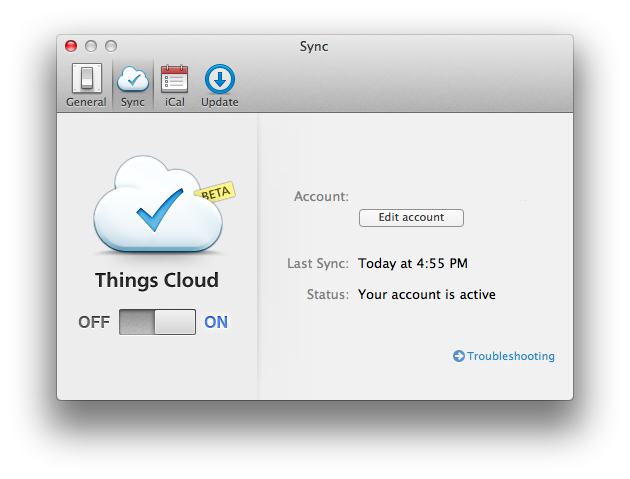
Originally announced last year, Things Cloud, a cloud syncing platform for Cultured Code’s Things GTD app, is now available as public beta. Available on the Mac and iOS, Things is one of the most popular applications to manage todos and projects, and the app even won an Apple Design Award for its ease of use and simplicity. Cultured Code, however, has been heavily criticized by its user base over the years for the lack of a cloud syncing solution that would allow Things for iOS to stay up to date with Things for Mac; the criticism was also exacerbated by the fact that other GTD apps for the Mac and iOS, namely OmniFocus and Firetask, implemented working, reliable cloud databases in a relatively short period of time, whilst also adding new functionalities to their apps for paying customers.

We’ve had incredible feedback from our users, telling us that Things Cloud is proving to be both fast and stable. Some of our users have adopted the beta entirely and created exceptionally large databases. In the coming weeks we are going to work out some kinks and performance bottlenecks related to such large databases. This is an important final step towards enabling the import of existing data. Once the import feature is ready, we’ll post another update.

Whilst we’ll leave our thoughts for a review once the software leaves beta, it’s important to note that Cultured Code has always claimed its syncing solution would require more work (thus additional time to be implemented) because of a different technology being used to effortlessly push tasks and data across devices. For what it’s worth, I have been able to test Things Cloud, and its sync process was indeed pretty fast both on WiFi and 3G. I’ll save further considerations and tests for a proper review.

To enable Things Cloud, you can head over Cultured Code’s website and download the Mac beta. Cloud syncing can also be enabled by downloading the public version of Things for iOS, following the instructions provided on Cultured Code’s website.


Microsoft Office For iPad Coming Within Weeks? [Updated]

Microsoft’s Office Suite could be launching on the iPad App Store within weeks according to a new report in The Daily. Originally rumoured in November of last year by The Daily, Matt Hickey today says that the design team has “wrapped up the project” but an exact launch date was not known.

Hickey claims to have had a brief hands-on with a working prototype of the Office Suite app and notes that whilst the UI is similar to OneNote for iPad, it has hints of Metro. He notes that Word, Excel and PowerPoint files can be created and edited either locally on the iPad or online (presumably using Microsoft’s SkyDrive cloud service).

According to his sources, OneNote will also receive an update soon to reflect the Metro design. Those same sources also noted that no Android version was in the works.

[The Daily via The Next Web]

Jump the break to view all updates to this story.

Read more


China Telecom To Offer The iPhone 4S From March 9th

Starting from March 9th, China Telecom customers will be able to purchase the iPhone 4S. It comes about two months after China Unicom first offered the iPhone 4S in China.

Unlike China Unicom (the second largest carrier after China Mobile), the smaller China Telecom uses the CDMA technology. Though because the iPhone 4S has support for both CDMA and GSM networks, China Telecom will be selling the same hardware that customers on China Unicom and customers elsewhere across the world purchase.


[via The Verge]