Federico Viticci

10769 posts on MacStories since April 2009

Federico is the founder and Editor-in-Chief of MacStories, where he writes about Apple with a focus on apps, developers, iPad, and iOS productivity. He founded MacStories in April 2009 and has been writing about Apple since. Federico is also the co-host of AppStories, a weekly podcast exploring the world of apps, Unwind, a fun exploration of media and more, and NPC: Next Portable Console, a show about portable gaming and the handheld revolution.

Rdio Launches API for Mobile Devices

Music streaming service Rdio, quite popular in the US and Canada but currently unavailable due to regional restrictions in the rest of the world, announced yesterday the release of an API for iOS and Android devices that will allow developers to build apps that are integrated with Rdio’s music and social functionalities. The API – documentation available here and here – will let third-party devs build apps that search “all the artists, songs, albums, playlists, and top charts in Rdio’s catalog of over 8.5 million songs.” On top of that, the API will also bring playlist creation and editing outside of the official Rdio app, as well as the possibility to show a user’s Heavy Rotation, collections or follow other people. For a first release, it sounds like a solid API for iOS and Android.

Attending Google I/O 2011? Take a closer look at our Mobile API on Android devices at Rdio’s Developer Sandbox at Moscone Center in San Francisco. If you won’t be there or want to see the API in action yourself, download the Rdio Music Quiz from the iPhone App store.

While our Mobile API doesn’t yet support our affiliate program, it will soon. So make sure to sign up for it now and start building that incredible mobile app you always wanted to make.

The current API and service terms won’t let developers create paid apps that directly plug into Rdio. Still, with Spotify struggling to launch in the US and an impressive userbase and app selection after a few months, Rdio has the chance to maintain a healthy ecosystem for music streaming apps in the US, and take it from there to Europe. Rdio has big plans for sure, and it’ll be interesting to follow its developments in the next months, especially after Apple will unveil its rumored cloud music service with full labels’ support.


Zynga Hires Key Contributors Behind cocos2d for iPhone

After the acquisition of Wonderland Software late in April, gaming giant Zynga (you might remember these folks for Farmville, among other things) announced they hired key contributors of the cocos2d for iPhone framework Ricardo Quesada and Rolando Abarca. The two developers will join Zynga’s team while still maintaining cocos2d for iPhone community and official website – which the company did not acquire. Cocos2d for iPhone, a framework for creating “2D games, demos, and other graphical/interactive applications” used by hundreds of developers including Atari, ngmoco and Zynga itself, is an open-source project that currently supports the iPhone, iPod touch, iPad and Mac. Quesada and Abarca will continue supporting and contributing to cocos2d for iPhone; the “talent acquisition” from Zynga is clearly aimed at enhancing the company’s portfolio in the development field, which ranges from 2D and 3D games to advanced HTML and social experiences. Zynga has a pretty rich catalog of mobile games, too.

Zynga has long been an advocate of the open source community and we are excited to have Ricardo and Rolando continue to support and contribute to cocos2d for iPhone while in their new roles at Zynga. Games and applications will continue to operate on cocos2d for iPhone as they always have. Zynga did not acquire the community site, cocos2d-iphone.org, which will continue to be managed separately by Ricardo along with the other cocos2d for iPhone administrators. We look forward to advancing the cocos2d for iPhone open source project alongside the cocos2d for iPhone developer community.

At this point, we can’t tell how Zynga will use the talent of cocos2d for iPhone’s contributors to enrich their gaming experiences with complex physics engines and integration with other third-party graphic libraries. What’s for sure is that Zynga doesn’t have a problem in opening its wallet to purchase assets and other smaller companies, considering today’s talent and partial asset acquisition is the 13th one in the last 12 months.


Duke Nukem Forever Also Coming To iOS?

As noted by TouchArcade, popular yet never released console and PC game Duke Nukem Forever might be coming to iOS devices, too. Duke Nukem Forever is particularly interesting as a title as it’s become synonym of vaporware online: development started in 1997, but the game never actually came out (in spite of promotional material and screenshots being handed out to the press and fans) due to multiple delays from the original developers, 3D Realms. If you’ve been following Duke Nukem Forever’s history throughout the years, you know that the brand’s userbase came to the point where many lost any kind of hope in seeing the game officially out: that was until 2010, when game studio Gearbox revealed they had picked DNF off 3D Realms’ hands and were busy working on a full adaption and rewrite for current-gen consoles. They announced a release date for May 2010, but the game was delayed again. It should be finally coming out after 14 years on June 9, 2011, and it’s already available for pre-purchase on Steam.

Digging into the game’s manual, a TouchArcade reader found out the developers included “Apple App Store Additional License Terms” – a bunch of legalese that most gamers usually skip, but it’s intended to inform users about licensing terms, agreements, and so forth. This could mean a mobile version of Duke Nukem Forever is also in the works, which wouldn’t be surprise considering the App Store userbase nowadays and the fact that the Unreal Engine runs on iPhones and iPads. Gearbox hasn’t confirmed they’ll use the Unreal Engine in the game, but that’s a possibility if DNF is really being ported to iOS devices. As TouchArcade notes, the license terms might also refer to the Mac App Store, although Gearbox specifically stated there weren’t any announcements related to the Mac or Linux platforms – and the terms clearly mention the iPhone and iPod touch in regards to the software license.

After all these years, it’d be nice to see the Duke on the iPad.


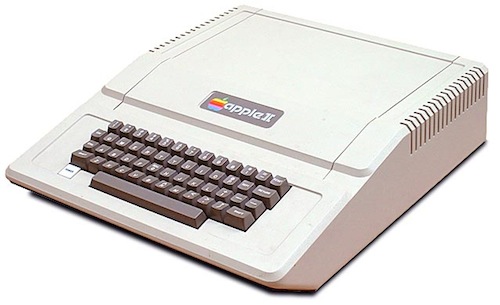
The iPad 2 Could Have Been The World’s Fastest Computer in 1985

The iPad 2 Could Have Been The World’s Fastest Computer in 1985

Jack Dongarra, researcher at Oak Ridge National Laboratory, conducted a study to determine the position of the iPad in the list of the world’s 500 fastest computers in history. Using the Linpack computing benchmark, “a linear algebra test that measures  the mathematical capabilities of computers”, he came to the conclusion that the iPad 2 would be the perfect rival for the four-processor version of the Cray 2 supercomputer, an eight-processor machine that was the world’s fastest computer in 1985.

To date, the researchers have run the test on only one of the iPad microprocessor’s two processing cores. When they finish their project, though, Dr. Dongarra estimates that the iPad 2 will have a Linpack benchmark of between 1.5 and 1.65 gigaflops (billions of floating-point, or mathematical, operations per second). That would have insured that the iPad 2 could have stayed on the list of the world’s fastest supercomputers through 1994.

The Cray 2 was an unusual computer even by the standards of its designer, Seymour Cray. About the size of a large washing machine, it was cooled by immersion in a liquid called Flourinert that had been developed by 3M, and that was occasionally used as a human blood substitute during surgery.

The obvious difference is that, whilst the Cray 2 required to be placed in a large room, the iPad 2 fits in your hands, it’s touch-based and runs thousands of different apps. To put things in context, Steve Jobs also left Apple in 1985.

Permalink

Time Inc. Has Chosen Not To Use Apple’s Subscriptions

Time Inc., one of the major magazine publishers in the US, has announced they’re not looking to implement Apple’s in-app subscriptions in future updates to their iPad magazines like Fortune, Sports Illustrated, or Time. The news comes after it was revealed last week the company had reached a deal with Apple to offer print subscribers free access to digital content on the iPad, breaking an impasse between the publisher and Apple, which wasn’t allowing apps to recognize a subscriber’s status and give out free content. It’s not clear at this point how Time Inc. will manage to keep their existing apps in the Store considering the developer’s deadline set for June 30.

AdAge reports Steve Sachs, Time Inc. exec VP for consumer marketing and sales, confirmed Time Inc. “has chosen” not to implement subscriptions, although the possibility of updating the magazine apps to use subscriptions in the future hasn’t been completely ruled out.

We have chosen not to do that,” Mr. Sachs said in an interview, “because when we look at who to partner with, the key parts of our principles include of course making sure that the look and feel of products is great for consumers and the ability to set pricing terms, but also receiving key consumer data about subscribers.”

“That is one of the major issues for us that we haven’t been able to agree on with Apple,” he said. Things could of course change eventually. “We’re not going to rule out having digital subscriptions down the road with iPad.

Clearly, Time Inc. couldn’t agree with Apple’s subscription terms, which require users to log in with their iTunes accounts, grant Apple a 30% cut off every recurring transaction and allow readers to opt-out from sharing personal information with the publisher – a key detail the publishing industry relies on to trigger targeted advertising. Today’s Time Inc. announcement follows a flood of recent reports that saw many US publishers jumping on Apple’s subscription system, like Hearst last week or Conde Nast today with the release of The New Yorker for iPad featuring monthly and annual in-app subscriptions.


Apple Already Running Nuance Tech in New Data Center, WWDC Announcement?

Following last week’s speculation of Apple negotiating a deal with voice-recognition company Nuance for future integration in iOS devices, TechCrunch reports today more details on the rumored collaboration between Apple and Nuance, which should be a major announcement at next month’s WWDC in San Francisco. According to the website, the partnership between the two companies goes as far as to allow Siri – previously purchased by Apple – to be integrated into iOS 5, using Nuance’s voice recognition technology in the backend. Siri, in fact, was based on Nuance’s tech while providing more information of its own, and since the acquisition last year Apple had to make sure Nuance would still license the software (they even hold multiple patents for it) to use in the future version of Siri – likely a native feature in iOS 5.

For this reason, TechCrunch speculates Apple may be already running Nuance’s tech on its servers in North Carolina, through the massive data center that should begin operations this Spring. With deals likely already inked ahead of the WWDC, Apple might want to pass information through their own cloud to make voice recognition faster for all users, scalable, and more secure.

In digging into the information about the relationship between the two companies, we had heard that Apple might actually already be using Nuance technology in their new (but yet to be officially opened) massive data center in North Carolina. Since then, we’ve gotten multiple independent confirmations that this is indeed the case. And yes, this is said to be the keystone of a partnership that Apple is likely to announce with Nuance at WWDC next month.

More specifically, we’re hearing that Apple is running Nuance software — and possibly some of their hardware — in this new data center. Why? A few reasons. First, Apple will be able to process this voice information for iOS users faster. Second, it will prevent this data from going through third-party servers. And third, by running it on their own stack, Apple can build on top of the technology, and improve upon it as they see fit.

Valued at over $6 billion, an acquisition of Nuance was quickly dismissed last week as an expense Apple wasn’t ready to consider, suggesting a partnership would make more sense in order to keep things running (in Siri and the future iOS integration) at a lower cost. The fact that Apple may be running Nuance’s tech on its own backend, however, seems to suggest that Apple has at least negotiated a way to get direct control of the service, which, again, should power the next version of Siri for iOS 5. TechCrunch speculates voice recognition will be one of the WWDC’s big announcements, although it’s unclear whether third-party developers will get immediate access through a series of APIs or not.

The WWDC kicks off on June 6, and Apple has already formally announced that they’ll unveil the future of iOS and OS X at the developer-oriented event. Voice recognition has long been in the rumors as a major new functionality of iOS 5 – alongside a new notification system, maps, and social services – which should be previewed next month and released this Fall at Apple’s usual September media event.


Microsoft Azure Toolkit for iOS Now Available

Following the release for Windows Phone 7 in March, Microsoft today announced the availability of the Azure toolkit for iOS, which can be downloaded now from GitHub. Similarly to Amazon Web Services, Microsoft’s Azure is a cloud platform hosted on the company’s servers that allows developers to build, host and scale web applications. Today’s iOS toolkit includes resources and services for developers to integrate Azure in their iPhone and iPad apps, including an Objective-C library to work with Azure services (such as storage and push notifications), documentation, a sample iOS app with full Azure storage integration, as well full source code for the aforementioned Objective-C library with Xcode project files. More details on Azure Toolkit for iOS can be found here.

Last March we released the Windows Azure Toolkit for Windows Phone 7, which provided a set of generic services for Windows Azure.  This toolkit was the first step in enabling developers to build native experiences on multiple platforms using Windows Azure.  As the next step in this process, today we’re pleased to announce the release of the Windows Azure Toolkit for iOS.  This toolkit contains resources and services designed to make it easier for iOS developers to use Windows Azure.

Downloads:

Microsoft has also release a Cloud Ready package to simply the process of setting up Azure services, and it has announced the release of an Android toolkit for next month. [via The Next Web]


iPhone and iPad Drive Softbank’s Profit Growth

As reported by The Wall Street Journal, Japanese mobile carrier Softbank (the third largest carrier in the country by number of subscribers) has announced record operating profit for the January - March quarter with net profit surging to Y47.41 billion from the Y1.85 billion posted last year. Thanks to high demand for iPhones and iPads, the carrier managed to move away from last year’s “unusual” profit loss, due to the adoption of 3G mobile services, and the discontinuation of 2G. Softbank is the only carrier that sells the iPhone in Japan, and the high demand for the device in a market otherwise saturated by alternative smartphones helped the company achieving record profit during the quarter.

The expansion of the smartphone market led by the iPhone and iPad was a huge factor that contributed to the growth,” said Softbank President and Chief Executive Masayoshi Son.

Softbank’s earnings also reported average revenue per user – also known as ARPU – rose to Y4,210 (from Y4,070) thanks to the iPhone’s growth in Japan. The iPhone became Japan’s best selling cellphone last October, and Softbank later announced a new promotion to give users an iPad for free upon subscribing to the carrier’s two-year data plan.


Amazon Cloud Player Now Works with iOS Safari

Back in late March, Amazon launched Cloud Player for the web and Android devices, an online interface that, relying on music uploaded to your Amazon account via Cloud Drive, allowed you to stream music from the cloud via a web browser or the native Android application, built into the OS with direct connection to Amazon’s servers to fetch and stream songs on the go. The service, however, wasn’t working with iOS devices, and it wasn’t a Flash issue: somehow, the website itself didn’t want to cooperate with Mobile Safari on iPhones, iPod touches and iPads. We noted that there was a way to make it work by using an alternative browser like iCab Mobile and changing the app’s user agent, but it was convoluted and far from being a reliable alternative to playing music locally in the iPod app, or from third-party services like MOG and Spotify, which do have native iOS apps. The lack of iOS compatibility for Cloud Player left many wondering whether the company intentionally decided to block the service, betting exclusively on the Android platform – which is the foundation for Amazon’s new app marketplace.

As noted by TechCrunch today, however, Cloud Player seems to be working in the iOS browser now. Songs stream just fine, and they even pause automatically during an incoming phone call or if a Push Notification is received. It’s unclear how Amazon exactly “unlocked” the feature and why it went online so quietly without any major announcement, but my guess is the Cloud Player team simply added a string to allow Mobile Safari to start a QuickTime streaming session within the browser.

You might think this had to due with Flash or another technology that iOS wasn’t compatible with, but it wasn’t. It looked like something else was simply blocking it from working. Well, good news. That’s no longer the case.

If you visit Amazon’s Cloud Player through the Safari web browser on an iOS device, you’ll see that it does in fact now work. You’ll first hit a warning page telling you that your browser is not supported, but just ignore that. Click into the music in your drive and it will begin playing.

MG Siegler notes the implementation is still far from perfect (uploading requires Flash, but you wouldn’t be able to upload files from iOS anyway) and the solution implies listening to music in a regular browser window. Still, it’s a start for Amazon, and it reignites speculation of a native Cloud Player app for iOS coming in the near future. The website, for now, is restricted to US access only.

Rumors in the past months pointed at Apple building a full-featured music streaming service based on iTunes, wrapped inside the upcoming iCloud infrastructure for Mac and iOS devices. There’s little doubt at this point Apple hasn’t at least considered the possibility of letting users upload their music collection or subscribe to an à la carte service for streaming songs off the cloud. With the WWDC roughly a month away, we should know more about Apple’s cloud plans and new music options soon.