Posts in news

Reeder for Mac Beta Update: New Features, Tweetie-like UI

I had some pretty good words about the first beta of Reeder for Mac that came out last December, but since then it seemed like Silvio Rizzi – the main developer of Reeder – disappeared from our radars releasing minor updates to the iPhone and iPad versions (focused on Readability integration) and extending the expiration date of Reeder for Mac (public beta) by one month at a time. After a few updates following the feedback Rizzi got after the (insanely popular) launch of the beta, the app was left available for download with a few fixes coming out every once in a while. Six months later, it looks like we’re back to the start: a new beta of Reeder for Mac with lots of new features is available (and like the last time, I’ve been testing it for a while), but the app is still nowhere to be seen in the Mac App Store. This time, however, with Reeder for Mac Public Beta 14, we might have an almost-complete and full-featured RSS reader for our desktops that not only looks better than ever, but it’s also packed with features, new gestures, and interface schemes.

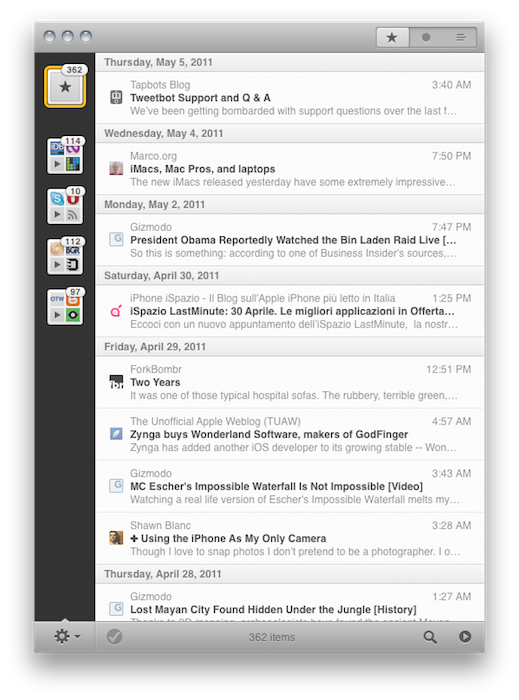
The new beta is available for download here. Without re-reviewing the app all over again (in spite of the additions it still retains 80% of the features seen in the first beta, reviewed here), I’d like to focus on the key areas that Rizzi improved, redesigned and, overall, simply evolved into something new. First off, the app comes with a new optional “minimized layout” that, following a trend started by the original Tweetie for Mac and later re-ignited by other apps like the popular Sparrow email client, places your Google Reader’s source favicons in a narrow sidebar on the left, with unread items in the main panel. The minimized layout, unlike the standard one, doesn’t come with a right panel to read articles: everything happens in a single window, much like Twitter for Mac doesn’t display additional sidebars and popovers when you’re interacting with your timeline. In the new Reeder beta, clicking on a title will open the article (with a neat animation) in the same panel; tap the close button, and the article will bounce back to reveal the main list of feeds again. In this new single-window approach, all the interactions with Google Reader or external services either happen though gestures or keyboard shortcuts – support for both of them has been improved in the new version.

Reeder for Mac retains an iOS-like feel that’s even more visible in today’s beta. The app was accused of being the first iOS app coming to the Mac without considering the nature of the desktop platform; however, as Apple is proving with the Lion developer builds and the latest updates to its flagship applications, it really looks like the future of the Mac will be heavily inspired by iOS. Back to the Mac, as Steve Jobs said, and Rizzi knows this. Reeder for Mac feels like a desktop iOS app more than ever, with support for swipes and pinches to navigate and open / close articles, monochrome icons in the top toolbar to share an article or open it in the browser, and a general feel attached to it that makes Reeder perfect for OS X Lion already, in spite of the OS not being available yet. Whilst the classic reading mode reminds us this is a desktop application meant for RSS power users with lots of features and deep Google Reader integration, the minimized mode and enhanced gesture-based navigation proves, once again, that Reeder is an app with an iOS background that’s coming to a new Mac ecosystem, the one that will start populating our MacBooks and iMacs this summer.

The app is far from finished, though. Whilst Rizzi tells me he’s still planning on making the app available through the Mac App Store, there are some aspects of the app that are not yet completed, such as full subscription management and downloads. However, this new beta confirms that the developer has been busy addressing the issues reported in the first versions: search finally works, and he even implemented a new “appearance” settings panel that will allow you to change Reeder’s color scheme from the much criticized sepia background to something more Mac-like. I love this preference panel: I’m a “standard” user as you can tell from the screenshots in this post, and I appreciate the little touches like the Preferences window fading to let you see the modifications you’re making to the app. Furthermore, the “article list row height” slider enables me to make the app even more minimal with narrower headlines. I quickly skim through hundreds of headlines in my daily news workflow, and I don’t really need to see a three-line preview before deciding to open an entire article. That’s why minimized mode works for me (by the way, you can switch between the two modes at any time by hitting a button in the bottom toolbar).

One thing I’ve always wanted from Reeder for Mac but Rizzi never implemented is the ability to click on a website’s favicon in the upper toolbar to reveal options like “unsubscribe from this source” or “refresh this source only.” Perhaps they’ll come in the final release – which should happen relatively soon at this point, considering the entire app has been rewritten since the original beta and most of the functionalities are working.

Overall, this new beta of Reeder is a terrific improvement over the past version, which was aimed at porting the Reeder experience to OS X, but perhaps lacked the right amount of features that could make it absolutely stand out. With minimized mode, more gestures and an iOS-like approach to news reading, Reeder for Mac leads the way for great things to come. Download the beta here, and check out more screenshots below. Read more


Rovio Nominated for Three Develop Awards

When people spend 200 million minutes playing your game every day, you’d start thinking you’ve done some good to the world of mobile games. Rovio, makers of Angry Birds, have been nominated for three different Develop awards, as noted by TUAW, which include Best Use of a License or IP, Best Indie Studio, and Best Handheld Studio. The Develop awards focus on the best names in the video game and software interaction industry, and Rovio’s inclusion in the nominations doesn’t surprise at all: the last 12 months have been insane for the Finnish company, which saw its game become the most popular in the App Store worldwide and collaborated with Hollywood studios for a spin-off of the series based on animated film Rio.

The Develop Industry Excellence Awards will take place on Wednesday, July 20th, 2011 at the Hilton Brighton Metropole Hotel, UK. The awards and categories include sections like Technical Innovation and Audio Accomplishment, as well as Business Development and Publishing Hero. We’re pretty sure Rovio will manage to bring home some awards this summer – which will also see the release of new Angry Birds games including, perhaps, a real sequel to the original iPhone game.


Conde Nast Will Implement Apple’s Subscriptions Starting Next Week

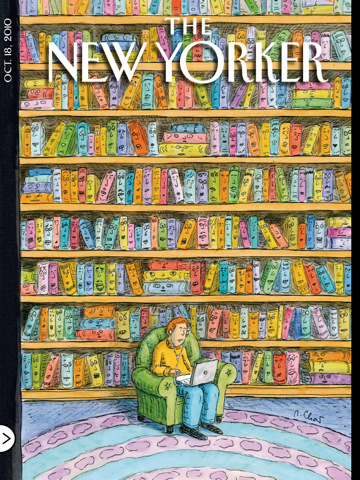
Over the past weeks, several reports pointed to major publishers and publications starting to use Apple’s in-app subscriptions in their magazine and newspaper apps for iPad, quite possibly ahead of the rumored June 30 deadline that will require developers of existing “publishing apps” to implement subscriptions, or get pulled from the App Store. Following the big names from the last weeks – Hearst confirming subscriptions coming with the July issues of magazines like Popular Mechanics and Oprah Magazine or Time Inc. inking a deal with Apple over free access for print subscribers – The New York Post reports Conde Nast, publishers of dozens of magazines also available on the iPad in digital form, will begin relying on in-app subscriptions starting next week with The New Yorker, available on the iPad since last September. The decision to move forward with subscriptions and The New Yorker apparently came after the death of Osama bin Laden, with Conde Nast looking to “capitalize” on the coverage through subscriptions and digital content for iPad.

Conde Nast is very close to a deal to begin selling digital subscriptions via Apple’s iPad.

The New Yorker will become the first publication from the S.I. Newhouse, Jr., empire to be available via subscription on the popular tablet, and it will happen early next week, said a source familiar with the situation.

Conde Nast is also planning on dramatically slashing the prices of single-issue downloads for other iPad magazines like Wired, Golf Digest, Glamour, Vanity Fair, Self, Allure and GQ: the issues will be sold in-app at $1.99, down from the current $4.99 and $3.99 (Glamour). This will keep the prices in line with the current newsstand print editions, and it will also allow Conde Nast to sell annual iPad subscriptions at $19.99. With developers and publishers expected to implement subscriptions before the end of next month, the amount of magazines and newspapers featuring subscriptions will likely increase, allowing Apple to showcase even more in the App Store’s homepage.


Apple Negotiating With Nuance Over Voice Recognition Technology?

A TechCrunch post from late yesterday suggests that Apple and voice recognition company Nuance have been negotiating a deal for months following Apple’s acquisition of Siri. Siri, which Apple acquired last April, developed an iPhone app that was marketed as a “virtual personal assistant” and would listen to audible questions from a user (such as “where can I find parking around here”), and would respond with an answer.

In a previous report, TechCrunch said that they believed the acquisition of Siri would lead to iOS 5 having “assistance technology [that] is said to be deeply integrated into the OS for all the different services offered.” However, Apple has had to renegotiate deals with all the partners of Siri since it acquired them and apparently the one hold out is Nuance. According to TechCrunch’s sources, the negotiations between Apple could be as big as an acquisition or just a partnership.

Apparently an acquisition is unlikely at this stage, likely for a number of reasons mainly surrounding the cost; Nuance is a public company valued at over $6 billion, furthermore much of that value is because of various licensing deals that would likely be stopped if Apple bought Nuance. The other alternative is that Apple partners Nuance and licenses the voice recognition technology; and at this stage it is the more likely option according to TechCrunch’s sources. The hold up is apparently because of Nuance CEO Paul Ricci being a “really hard bargainer”, going as hard as Steve Jobs would in the negotiations and resulting in a standoff between the two companies.

Apple does have alternatives to dealing with Nuance, it could build its own service but this would be fraught with legal issues (Nuance holds many patents) and would take time (that Apple may not want to spend) or it could go with Google, but given the current smartphone battle this seems unlikely. Consequently it seems unlikely that Apple has any good alternative here, particularly given how well the Nuance voice recognition technology works.

With with WWDC rapidly approaching, and iOS 5 fairly likely to make some kind of appearance, one would presume that Apple would be at this stage rushing to finalise a deal with Nuance, particularly if it is a major cornerstone of the iOS 5 experience. One final point made by MG Siegler in the article is that;

And the truth is that Nuance needs Apple too. Not only are they also threatened by Google, but Nuance technology is simply not very meaningful without apps that utilize it like Siri. And many of those apps are appearing guess where: iOS.

[Via TechCrunch]


Skype Bug Leaves Mac Users Vulnerable to Exploit: Updated

Those running Skype on OS X are vulnerable to an exploit that allows attackers to gain root access on target machines. Through an instant message, attackers could deliver a malicious payload that would give them remote access via a shell. The severity of the issue has already been addressed by the Skype team, and should be fixed in a future update. In the meantime, a proof of concept reveals the need for caution with recent OS X security warnings and concerns.

Read more


Foxconn Now Wants To Start Building iPads In Brazil In July

Last month, we reported Brazilian’s President Dilma Roussef and Hon Hai Precision’s founder Terry Gou discussed during an official meeting in Beijing the possibility for Hon Hai’s subsidiary Foxconn to invest $12 billion to start producing and assembling mobile devices in Brazil throughout the next five years, including Apple’s iPad – currently assembled by Foxconn in its Asian facilities. The investment, result of long-term negotiations between Hon Hai and Brazilian minister of Science and Technology Mercadante, is aimed at targeting Brazil’s growing consumer market, as well as allowing Foxconn and its partner Apple to directly address the distribution issues of devices in Brazil, long affected by import tariffs, inflated prices and poor retail presence.

Whilst the original reports claimed Foxconn was planning to start building iPads in Brazil this November, Reuters reports today the company has moved the estimated date to July, still seeking, however, to obtain tax breaks and other government concessions to ease high labor costs that Hon Hai had to face since they opened three other facilities to build components for Sony, Dell and HP in Brazil years ago. It’s still unknown whether iPad production will be located in an existing facility, or if Foxconn is planning on opening a new one just to build iOS devices. Speculation in the past weeks suggested the second possibility, pointing to the massive investment from Foxconn and the requirements forwarded to the Brazilian government such as training for 200 future employees in China, or the need for 20,000 specialized engineers.

Foxconn has moved up its desired start date for assembling iPads in Brazil to July from November, seeking to tap massive demand for the device in Brazil’s booming consumer market, according to newspapers Estado de S.Paulo and Folha de S.Paulo. Their reports quoted government officials.

“It’s a daring timeline. Whatever is within our reach, we’re going to work on making that viable,” Science and Technology Minister Aloizio Mercadante told Folha.

Reuters also reports Foxconn will initially import components from Asia to assemble devices in Brazil (thus the need for tax incentives on imported materials), shifting the manufacturing chain to local production in the next few years.


Search for Tweaks From Your Desktop with Cydia Search


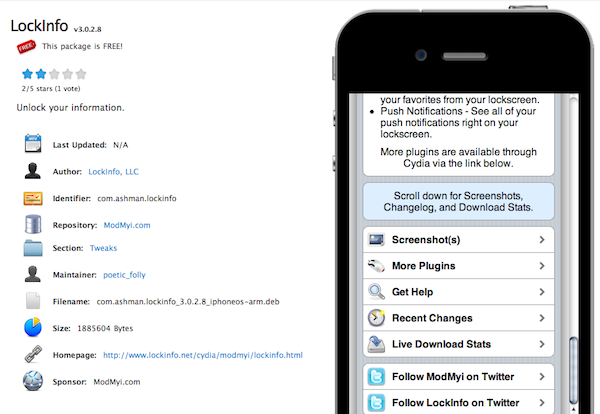
iPhone news website and repository Planet-iPhones launched at the end of April Cydia Search, an online interface that allows you to browse tweaks, apps, utilities and themes available on Cydia. The web app, accessible from any computer and browser, is not meant to replace Cydia – as the name suggests, it provides a streamlined view of Cydia and the packages inside it, enabling you to browse everything without using your iPhone’s Cydia app, which can be slow sometimes. Cydia Search lets you search apps by name, author or description, comes with an embedded iPhone template to see what the package will look like in the actual Cydia (as seen in the screenshot above) and has a pretty huge list of default repositories, top packages, categories, recent updates and latest packages.

Among the features of Cydia Search:

  • View a listing of the most popular packages based on user ratings, the newest packages added, and even recently updated packages.
  • Each package offers detailed descriptions complete with screenshots, author/developer info, etc.
  • Listings clearly show paid packages in a different color similar to the way Cydia does.
  • All packages are clearly labeled whether or not they are from a default major repository.
  • RSS feeds are available for the newest packages list, recent updated packages list, and also for any search query.

If you’ve been looking for an elegant way to see what’s in Cydia without grabbing your iPhone or, more importantly, being forced to jailbreak, Cydia Search is a solid solution we hope will stick around for months to come. You can head over Cydia Search now and start browsing hacks and themes to install on your jailbroken iOS device. [via TUAWPlanet-iPhones]


Light Leakage Issues with LG Displays Caused iPad Shortages Last Quarter

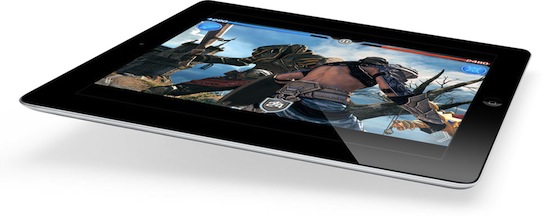
Last month, a report by IHS’ iSuppli claimed the iPad 2 shortages Apple had to face in the quarter (with 4.69 million units sold announced at the Q2 2011 earnings call, well below Wall Street’s analysts’ estimates) were caused by production issues with the IPS display and built-in speaker of the device. Whilst the report didn’t provide additional details on the reasons behind the display manufacturing issues, iSupply wrote “quality concerns” affected Apple’s estimated number of initial iPad 2 shipments. The company mentioned ”lamination issues with one of the touch suppliers”, yet stating that Apple was on track to increase the volume of iPad shipments in the next quarter, as also mentioned by Tim Cook when referring to the iPad 2 as the “mother of all backlogs.”

A new report by Digitimes today claims the production issues with the iPad’s display were caused by light leakage issues in LG’s units, with LG shipping only 3.2 million display units in the quarter.

In other news, Samsung Electronics shipped a total of four million 9.7-inch panels for iPads in the first quarter, outpacing rival LG Display (LGD) as the largest tablet PC panel supplier for Apple, the sources indicated. LGD’s iPad panel shipments reached only 3.2 million units in the first quarter.

LGD was forced to reduce its shipments in the first quarter due to light leakage problem for panels produced at its 6G production lines. The company reportedly has fixed the problem and will resume shipment momentum to Apple in the second quarter, said the sources.

Digitimes does not relate LG’s manufacturing issues with overall iPad shortages in Apple’s Q2, but the report seems to corroborate iSuppli’s previous claims of shipments below estimates due to problems in the iPad production chain.


Do You Miss the Mac vs PC Campaign? Watch All 66 Ads Online

As we all know, Apple has a history of great advertising. One of the most popular campaigns of all time are the Mac vc PC ads with John Hodgman as PC and Justin Long as Mac. They had 66 TV commercials before the series was ended last year. Adweek has compiled all 66 of them into one post for your nostalgic viewing pleasure, in chronological order too.

The very first commercial after the break.

Read more