Federico Viticci

10876 posts on MacStories since April 2009

Federico is the founder and Editor-in-Chief of MacStories, where he writes about Apple with a focus on apps, developers, iPad, and iOS productivity. He founded MacStories in April 2009 and has been writing about Apple since. Federico is also the co-host of AppStories, a weekly podcast exploring the world of apps, Unwind, a fun exploration of media and more, and NPC: Next Portable Console, a show about portable gaming and the handheld revolution.

This Week's Sponsor:

Inoreader

Build your own newsfeed and cut through the noise


Apple Launches Subscriptions for Apps

It’s official: Apple has announced subscription for App Store apps. Billing happens automatically through your iTunes account, and Apple keeps 30% of revenue if they bring a new subscriber to the app. If the publisher brings a new or existing subscriber to the app, the publisher keeps 100%. Publishers can provide alternative payment methods (outside of the app) and login systems for existing subscribers, but iTunes subscriptions must be offered as an option into the app at the same price or less. Plus, publishers can no longer insert links to external payment methods inside their apps. Here’s the gist:

Publishers who use Apple’s subscription service in their app can also leverage other methods for acquiring digital subscribers outside of the app. For example, publishers can sell digital subscriptions on their web sites, or can choose to provide free access to existing subscribers. Since Apple is not involved in these transactions, there is no revenue sharing or exchange of customer information with Apple. Publishers must provide their own authentication process inside the app for subscribers that have signed up outside of the app. However, Apple does require that if a publisher chooses to sell a digital subscription separately outside of the app, that same subscription offer must be made available, at the same price or less, to customers who wish to subscribe from within the app. In addition, publishers may no longer provide links in their apps (to a web site, for example) which allow the customer to purchase content or subscriptions outside of the app.

As for privacy policy, customers “will be given the option” to provide publishers with information, although the use of information will be under the publisher’s privacy policy. Here’s everything you need to know about subscriptions. Press release embedded below.
Read more


Delegate OmniFocus Tasks with Sparrow

Delegate OmniFocus Tasks with Sparrow

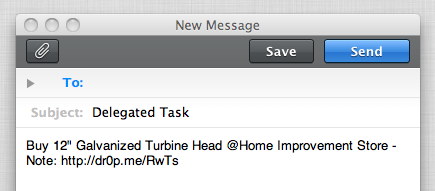
Don Southard created an AppleScript that sends tasks from OmniFocus to Sparrow:

Sparrow updated a few hours ago and brought with it basic support for AppleScript. I wanted to test it out and see what they included so I whipped this very basic script to delegate a task in OmniFocus by sending an email with details about the task using Sparrow.

Very nice. How long until someone figures out a solution for the other way around? Because I would love to export Sparrow emails as OmniFocus tasks.

Update: Ben Brooks shares an updated version of the AppleScript that works with Mail.app and also embeds a link to the OmniFocus task in the message.

Permalink

“The Matrix” iPad App Creates Video Walls

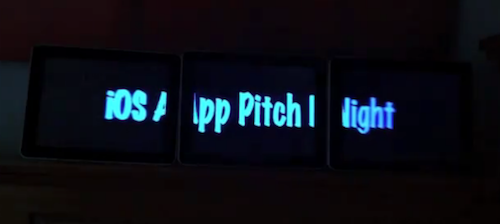
We have covered several video / app walls on MacStories in the past. From Apple’s app wall at the Moscone Center at last year’s WWDC to the Welikesmall iPod Touch Wall, it appears that developers and hackers alike have been playing around with the idea of turning multi-touch displays into interactive installations a lot. So this new app for the iPad, called The Matrix and available at $4.99 in the App Store, doesn’t come as a surprise at this point. But the result, as you can see from the video below, is quite impressive.

The app can turn any rectangular iPad setup into a video wall. Once installed on multiple iPads (demo video shows 3), one instance of the app will act as a server sending video to the clients, which need to be placed properly next to each other for the effect to work.

The Matrix will cost you $4.99 in the App Store, but I guess that’s a no-brainer if you consider you’ll need at least 3 iPads to get it to work. Check out the video below. [via TUAW]

Read more


Apple To Outsource A4 and A5 Production? iPad 2 With “Enhanced” A4?

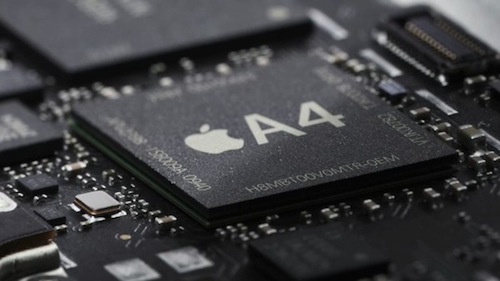
A second report from Digitimes this evening suggest that Apple might outsource the production of the A4 chip and the rumored Cortex-A9-based A5 to Taiwan Semiconductor Manufacturing Company, TSMC. Apple is reportedly concerned about leakage of production techniques and specs now that Samsung is directly competing with them in smartphone and tablet market, and TSMC already provided A4 production when Samsung was unable to meet demand last year.

Apple is reportedly looking to outsource the production of its A4 processor as well as the next-generation ARM Cortex-A9-based A5 processor to Taiwan Semiconductor Manufacturing Company (TSMC), according to industry sources. The Apple A4 processor is currently exclusively produced by Samsung Electronics, and the previous S5PC100 used in the iPhone 3GS was also developed and manufactured by the Korean company.

TSMC declined to comment on the report.

Digitimes also reports the iPad 2 will feature an “enhanced” version of the A4 chip, while the iPhone 5 will come with the brand new Apple A5 processor. A number of reports surfaced in the past indicated Apple was working on a CPU for the next iPhones and iPads, although it is unclear at this point which one will get the new A5. Several pundits also speculated Apple will adopt dual-core processors and implement RAM up to 1GB in the iPhone 5, which will likely come with a universal GSM / CDMA antenna as well.


iPhone 5 To Feature 4-inch Screen?

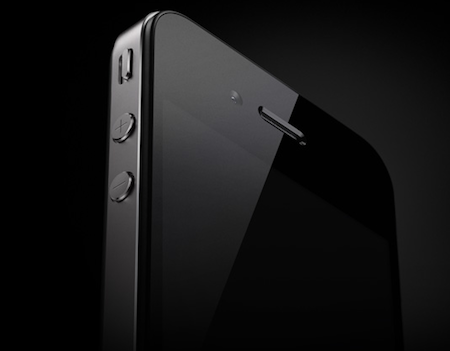
With rumors about a smaller iPhone floating around since last week, the latest report from Digitimes surely is interesting. According to the publication, Apple might expand the next generation iPhone’s screen to 4 inches, mainly to compete with various Android handsets that come with displays larger than the iPhone 4.

Apple reportedly will change the screen size of iPhone to 4-inch for its fifth generation iPhone to compete with the Google Android platform in the 4- to 7-inch smartphone market, according to upstream component suppliers.

The component suppliers noted that the production lines for Apple’s next generation iPhone have begun testing, and Apple is interesting in expanding the screen size to 4-inches to support the tablet PC market as the vendor only has a 9.7-inch iPad in the market.

A bigger iPhone screen would raise questions on the resolution of the device, which is currently dubbed as “Retina” thanks to its DPI on the current 3.5-inch display. Another report from last week suggested Apple might adopt Samsung’s Super LPS screen technology, which offers greater viewing angles and brightness. Engadget reported in January that the iPhone would come with a radical new design which, if the rumors are to believed, would play well with this 4-inch screen theory. Digitimes has a good track record on Apple’s production chain reports, and admittedly a slightly bigger display would be pretty cool in our opinion.

In the past months, other rumors pointed to Apple building an iPhone with NFC capabilities for easy mobile payments (although iOS-to-iOS communication would be interesting, too), dual-core processor and LTE for a summer launch “at the earliest”. Earlier today, a new report suggested Apple has been considering three different iPhone 5 models with one of them featuring a slide-out physical keyboard – again, to possibly compete with Android devices. Last, the iPhone 5 is rumored to be a worldphone with integrated GSM / CDMA antennas.


Real Page Numbers Come to iOS Kindle App

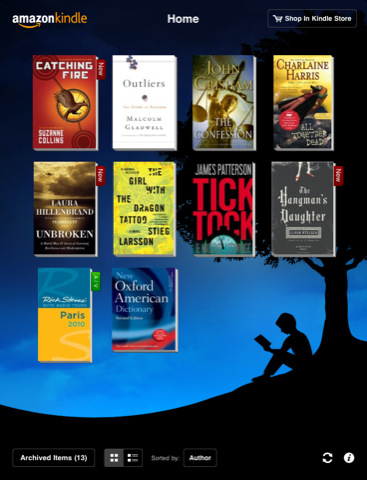
The official Kindle app for iOS (universal, free) was updated a few minutes ago to introduce a new feature recently launched on the physical Kindles: real page numbers. Page numbers (currently available for thousands of Kindle books, more coming soon) allow you for instance to make proper citations that other people using Kindle can follow along. It’s a very welcome addition to the app.

The 2.6 update also brings Google and Wikipedia lookup without leaving the app, reading percentage for iPhone and reading progress on the iPhone and iPad Kindle homescreen through the list view.

Kindle 2.6 is available as a free update here. The app was last updated in January to add features like multitasking and iTunes file sharing support.


Sparrow for Mac Update: Faster, AppleScript Support

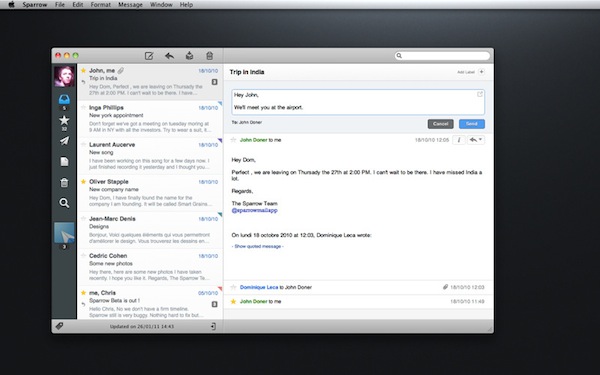
Since its release in the Mac App Store last week, Gmail desktop client Sparrow has been sitting among the top paid software charts and has gained a huge userbase. The app is clean, minimal and it perfectly blends the typical Gmail environment into a Mac-like package that reminds us of Tweetie. I like Sparrow, and although general IMAP support is still nowhere to be seen I have been using as my default email client for the past week (I use Gmail on a daily basis, more specifically Google Apps).

The developers are working hard on making Sparrow a full-featured email app for the desktop, and this begins today with the first update – available now in the Mac App Store. Sparrow 1.0.1 comes with improved sending speed for outgoing messages (it used to takes a few extra seconds to send an email in version 1.0), a finally-working menubar mode, basic AppleScript support – which I’ll make sure to try out. Loading times of conversation threads have been improved as well.

Sparrow 1.0.1 is available here. We look forward to version 1.1, which should bring IMAP compatibility and more.


The Untold Story Of The First Mac

The Untold Story Of The First Mac

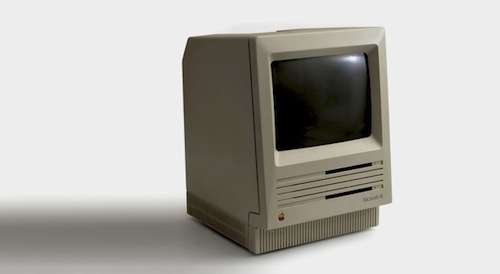
Aza Raskin shares a memo from his father Jef Raskin, one of the creators of the original Macintosh. An interesting tidbit about the vision of an integrated system, already growing at Apple back in the 80’s:

There were to be no peripheral slots so that customers never had to see the inside of the machine (although external ports would be provided); there was a fixed memory size so that all applications would run on all Macintoshes; the screen, keyboard, and mass storage device (and, we hoped, a printer) were to be built in so that the customer got a truly complete system, and so that we could control the appearance of characters and graphics.

Full document is available here, and it’s a must read. Thirty years ago, designers and engineers at Apple were already thinking about issues like software fragmentation and user’s ability to tinker with a device.

Permalink

AT&T Loves iPhone Users, Increases DataPro Plan to 4GB

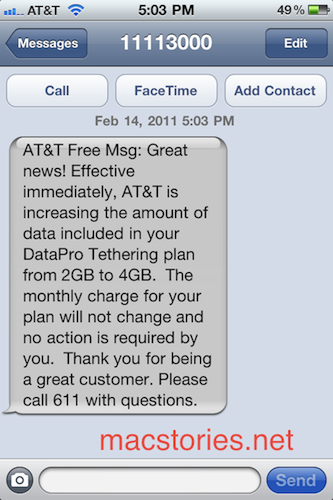
It looks like AT&T keeps saying “thank you” to loyal iPhone users. As you can see in the screenshot above, some users are receiving a message from the carrier about the automatic increase of the DataPro Tethering Plan from 2GB to 4GB. The monthly plan won’t change, and no action is required from users. A similar change in the DataPro plan was spotted by Cult of Mac earlier today, though it appears AT&T has started sending SMS notices this afternoon.

The change clearly is a move by AT&T to face the buzz generated from the Verizon iPhone, and keep users happy on their network. AT&T’s website doesn’t provide any info on this change at the moment, and it’s unclear whether all iPhone users are getting upgraded to 4GB or just a small section.

[Thanks, Willy]