Federico Viticci

10766 posts on MacStories since April 2009

Federico is the founder and Editor-in-Chief of MacStories, where he writes about Apple with a focus on apps, developers, iPad, and iOS productivity. He founded MacStories in April 2009 and has been writing about Apple since. Federico is also the co-host of AppStories, a weekly podcast exploring the world of apps, Unwind, a fun exploration of media and more, and NPC: Next Portable Console, a show about portable gaming and the handheld revolution.

Apple Updates MacBook Pros with Faster CPUs, More Storage, Better Graphics

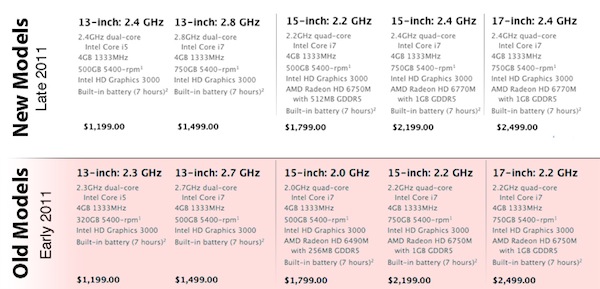
Earlier today Apple quietly updated its online store to include upgraded MacBook Pro models, which feature improved Sandy Bridge processors, more storage, and other tweaks such as better graphics for the 15-inch and 17-inch Pros. As the rumors suggested in the previous weeks, this is indeed a minor refresh for the line that doesn’t yet come with Bluetooth 4.0, rumored to be making its debut on the MacBook Pros but still nowhere to be seen in the product’s Tech Specs page.

First off, the late-2011 MacBook Pros (the line was last updated in February of this year) feature improved processors: the 13-inch model goes from 2.3 GHz Intel Core i5 and 2.7 GHz Intel Core i5 (both dual-core) to 2.4 GHz Intel Core i5 dual-core and 2.8 GHz Intel Core i7 dual-core; the 15-inch model jumps from 2.0 GHz Intel Core i7 and 2.2 GHz Intel Core i7 (both quad-core) to 2.2 GHz quad-core Intel Core i7 and 2.4 GHz quad-core Intel Core i7; last, the 17-inch variation has been upgraded from 2.2 Ghz Intel Core i7 (quad-core) to 2.4 GHz quad-core Intel Core i7.

As for storage, the MacBook Pro 13-inch now starts with 500 GB or 750 GB of internal storage (up from 320 GB and 500 GB for the previous base configurations), whilst the 15-inch and 17-inch models haven’t seen any storage upgrades. Graphics, however, have been upgraded in these two models, with the 15-inch now getting AMD Radeon HD 6750M and AMD Radeon HD 6770M alongside the Intel HD Graphics 3000(previously, the 15-inch got AMD Radeon HD 6490M and AMD Radeon HD 6750M) and the 17-inch now available with an AMD Radeon HD 6770M with 1GB GDDR5 (previously AMD Radeon HD 6750M 1 GB).

The late-2011 MacBook Pros are mostly a CPU and GPU upgrade, perhaps in preparation of the big line refresh that’s been rumored for quite some time to be on track for 2012. Prices are unchanged from the early-2011 models, and you can find the refreshed line on Apple’s online store now.

Full-size comparison chart here.


App Journal, Episode 6: NotifyMe, Whale Trail, Twittelator Neue, BBC iPlayer

App Journal is a new series aimed at showcasing apps we have enjoyed using on our iPhones, iPads, and Macs, but decided not to feature in a standalone, lengthy review here on MacStories. App Journal is a mix of classic reviews, weekly app recommendations, and a diary of our experiences with apps that still deserve a proper mention.

With iOS 5, iCloud and the iPhone 4S now out in the wild and available for all users, App Journal gets back to its regular programming schedule and we couldn’t be more excited to start trying new apps that fully take advantage of the new features offered by iOS 5 and iCloud services. This week, Graham takes a look at the global version of iPlayer, while I try to set a personal record in Whale Trail (thanks to our friends at The Next Web for writing about this gem), experiment with a new Twitter client for iPhone, and enjoy the comfort of a quick-entry panel in a Mac app that creates reminders, but it’s not Apple’s Reminders.

We think this week’s selection is pretty great. Stay tuned for more App Journals in the next weeks.

NotifyMe

With iOS 5, Apple introduced Reminders, and as I wrote in my overview of the app, I’m glad they did. Reminders makes iOS as a platform more efficient and productive, allowing users to forget about having to purchase a standalone to-do app because now the functionality is integrated right into the system. But as I also wrote, it’s not like Reminders aims to replace more complex solutions like OmniFocus, Todo or Things: Reminders is very simple and aimed at people who don’t need advanced personalization of their to-do lists or project management features. Reminders targets the average iOS user that has always wished his iPhone would let him create reminders for when he gets home or needs to take out the trash. With Siri integration, Reminders gets even more accessible thanks to voice-based input.

There will always be room for third-party apps in the iOS ecosystem, and even if Apple “borrows” basic functionalities from third-party software every once in a while, developers always find a way to give their apps a reason to exist and prosper. Just take a look at Instapaper, Grazing, or Fantastical.

NotifyMe, a set of apps by PoweryBase, is an interesting and powerful alternative to Reminders for those who wish they could do a bit more with their to-dos and, more importantly, have them synced back to a native Mac app. NotifyMe is very similar to Reminders in its underlying concept: you create to-dos and they’re synced to the cloud. Unlike Reminders, NotifyMe doesn’t use iCloud – instead the developers have built an infrastructure called the NotifyMe Cloud that keeps iPhone, iPad and Mac clients always up-to-date with a free account you can create at notifymecloud.com. Syncing is free, with no subscriptions – but you’ll have to buy the iOS apps separately on the App Store (no universal version yet) and if you want to have to-dos on your desktop as well, NotifyMe for OS X on the Mac App Store.

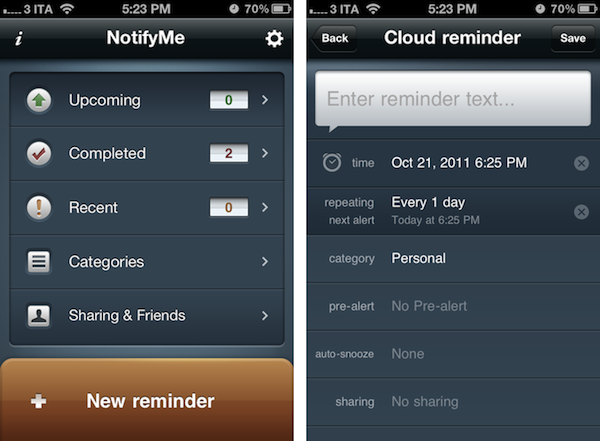
Where NotifyMe really stands out is customization. You can assign reminders to specific categories and create new ones from scratch choosing a custom icon. On iOS, you can pick a melody for NotifyMe alerts, set a [Category] prefix in the notifications that you’ll get from the app, and choose whether or not you want the app to default an “auto-done” state for non-repeating reminders. Furthermore, you can set auto-snooze, customize the app’s badge type to overdue+today or overdue+all upcoming, and select a category for shared reminders added by your friends. NotifyMe makes it easy to curate a personal list of friends and family members that you want to share reminders with – just head over the Sharing & Friends tab in the iOS app, and send a request via email to another NotifyMe user. Friends can create shared reminders, but they can’t browse your whole account and see the reminders you’ve chosen not to share.

Both on the Mac and iOS, the app’s interface is easy to use and focused on lists and the “New reminder” button. Lists include your upcoming reminders, completed and recent ones, as well as your categories and Sharing. On the iPad and Mac you’ll see categories (and to-dos assigned to them) right in the left sidebar, whereas on the iPhone you’ll have to tap on Categories first to navigate to another view. NotifyMe also comes with a web app for those who don’t own a Mac, which you can find at webapp.notifymecloud.com.

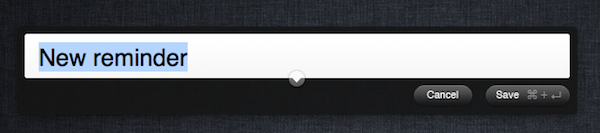
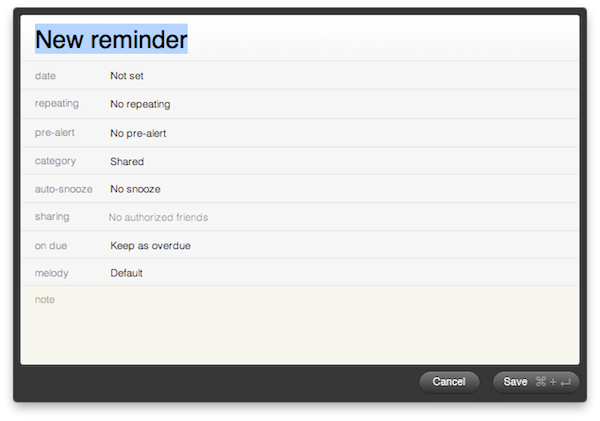
NotifyMe’s reminders don’t have location features, but they have some other options worth mentioning. You can set repeating reminders and pre-alerts; pick a category, set auto-snooze, sharing and melody on a reminder basis and attach notes. The biggest advantage of NotifyMe over similar to-do software for iOS is that its Mac app enables you to create reminders with an OmniFocus-like quick entry panel, which can be assigned a systemwide keyboard shortcut and optionally expanded to reveal more settings as you write. The quick entry panel is possibly the single best feature of the Mac app that justifies the (steep) price if you’re going to create many reminders on your desktop, and have them always available through the cloud.

NotifyMe works reliably, and in some areas it offers more customization options than Apple’s Reminders for iOS 5. The full set of apps (iPhone, iPad, Mac) doesn’t exactly come cheap, so consider the purchase if you’re really going to use the Mac’s quick entry functionality and iPad client a lot. Read more


iPhone 4S Pre-Orders Go Live For October 28th Launch Countries

As the iPhone 4S nears its international rollout in 22 more countries on October 28th, it appears Apple has opened up online pre-orders, allowing customers to buy an iPhone 4S one week ahead of its scheduled launch next week.

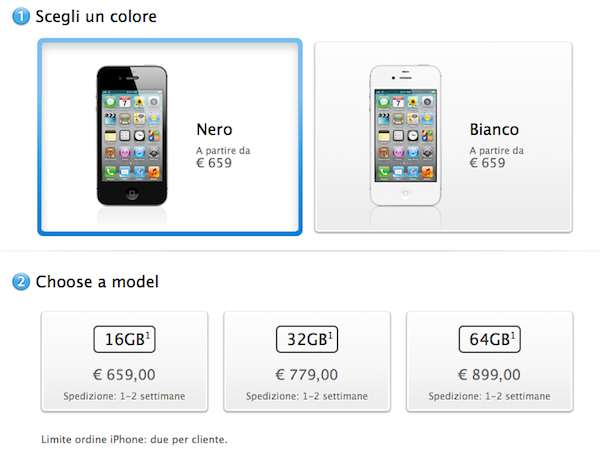
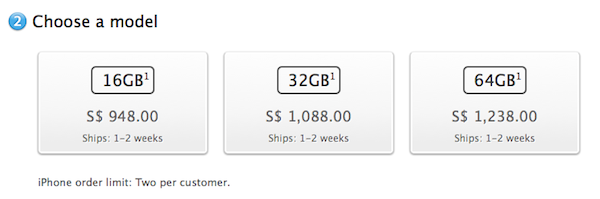
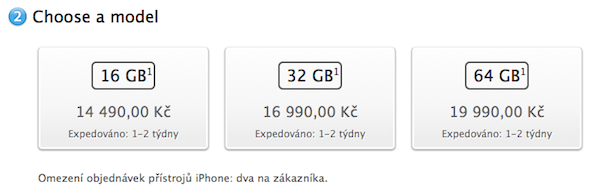
In the 22 countries that will get the iPhone 4S on Friday, October 28th (Austria, Belgium, Czech Republic, Denmark, Estonia, Finland, Hungary, Ireland, Italy, Latvia, Liechtenstein, Lithuania, Luxembourg, Mexico, Netherlands, Norway, Singapore, Slovakia, Slovenia, Spain, Sweden and Switzerland), the Apple Online Store has been updated with a new ordering page to buy an iPhone 4S today, and get estimated delivery dates when the item “is added to your cart”. This morning, all the international Apple Stores report shipments of 1-2 weeks, and we’re hearing customers who pre-ordered an unlocked iPhone 4S in Italy are already receiving emails with estimated delivery between November 3-November 9. We have checked in Netherlands, Luxembourg, Mexico, Singapore, Spain and Czech Republic, and iPhone 4S shipping times are currently set to 1-2 weeks (not a surprise, considering Apple will have to save some stock for its Apple retail stores).

Landing pages on the Italian Apple Store

Singapore

Czech Republic

In spite of October 28th being exactly one week away, it seems Apple isn’t currently guaranteeing an October 28th delivery date for online pre-orders.

Italian website Meladvice [Google Translation] notes that pre-orders came as a surprise, as Apple’s customers support allegedly told them earlier this week pre-orders wouldn’t be launched in Italy. Unlocked iPhone 4S pricing in Italy is set at €659 for the 16 GB model, €779 for 32 GB and €899 for thr 64 GB iPhone 4S. Also in Italy, iPhone 4 carriers Tre, Tim and Vodafone have confirmed that they will sell the iPhone 4S once it’s available.

Apple launched iPhone 4S pre-orders in the initial 7 launch countries on October 7th, one week ahead of the October 14th launch. The company then reported 1 million pre-orders in 24 hours, and over 4 million sales in the first weekend.


Apple Announces iOS 5 Tech Talk World Tour 2011

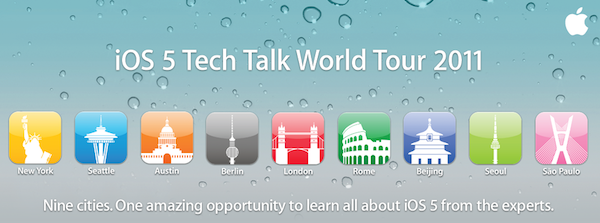
Earlier this year, Apple was rumored to be considering a new edition of the Tech Talk World Tour, a series of developer-focused events in different cities to provide developers with additional sessions, trainings and answers to common questions outside of the typical WWDC environment. Apple has just announced the new iOS 5 Tech Talk World Tour, which will take place in nine cities this year:

We’re taking iOS 5 on a world tour and we want you to come along for the ride. Learn from Apple experts as you take your apps to the next level with the exciting new technologies in iOS. Space is limited, so register today.

The Tech Talk World Tour will start in November, and run through the end of January. The nine cities that will host the event are:

  • Berlin - November 2
  • London - November 7
  • Rome - November 9
  • Beijing - December 5
  • Seoul - December 8
  • Sao Paolo - January 9
  • New York City - January 13
  • Seattle - January 18
  • Austin - January 23

As Apple notes, all iOS Developer Program members are eligible to attend, however priority will be given to developers with at least an app available on the App Store. Tech Talk World Tour sessions are “highly technical”, Apple explains, as a team of expert will travel around the world covering advanced coding and design techniques that developers can implement in their apps.

Tech Talk is free and developers can register with their existing Dev account, however they can’t bring guests as registration is limited to those who got a confirmation email from Apple. Each Tech Talk will share the same agenda and sessions listed on Apple’s website, and developers can’t register for more than one city as Apple wants “to give as many developers as possible the opportunity to attend a Tech Talk”. Apple also states that pre-release software may be covered at Tech Talk, so developers will have to follow the iOS Developer Program License Agreement and Registered Apple Developer Agreement to not share confidential information.

Topics that will be covered in each Tech Talk session include iPhone and iPad User Interface Design, AirPlay, UIKit, Turn-Based Gaming with Game Center, AV Foundation, Core Image and Newsstand apps. Developers can register for Tech Talk World Tour 2011 on Apple’s official page for the event.


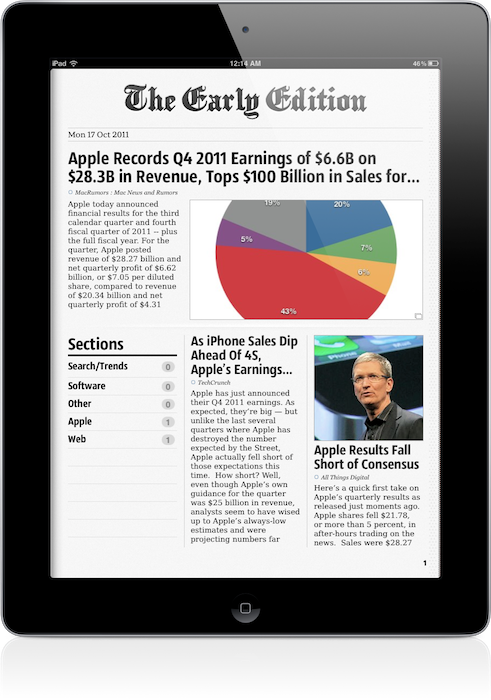
The Early Edition 2 Review

When the original iPad came out last year, it was immediately clear the device would be great for reading. As I outlined in my Instapaper 4.0 review, those who followed the launch of the device in April 2010 may recall that there was little doubt the iPad was going to change our reading habits: from the comfort of a couch or during a daily commute, the iPad’s bigger screen would provide a better alternative to web articles, RSS  feeds and eBooks than the iPhone’s 3.5-inch display. How reading was meant to be changed and enhanced, exactly, wasn’t really clear from the start.

The following months saw the rise of “social magazines” like Flipboard and Zite, a plethora of RSS apps – most of them abandoned now – and variations on the theme of “visual news” that would see developers building apps with a unique, at least initially, spin on the classic visualization of headlines. Among the pioneers of “iPad reading” was Glasshouse Apps, makers of some fine software for iOS devices like Barista and Gift Plan. Last year, Glasshouse Apps released The Early Edition, possibly the first popular app to take on the concept of RSS feeds rendered as a newspaper on the iPad’s screen. Whilst many would later try to copy Flipboard and come up with similar ways to build “social magazines” off your Twitter and Facebook streams, I remember The Early Edition was among the first apps to deliver a fresh RSS experience that turned RSS items into visually-appealing headlines with page layouts, subtitles, bold headlines and summaries. The Early Edition was capable of importing feeds from your Google Reader account and manually managing them inside the app, but it couldn’t sync with Google’s RSS service. The fact that, without any major feature or UI updates, The Early Edition is still in the Top Paid iPad News chart as of this morning is telling of the app’s quality. Overall, The Early Edition was a nice way to read RSS feeds in a different format; perhaps it was overshadowed by Flipboard (which also gained Google Reader capabilities later on), but it’s still a fine piece of software.

The Early Edition 2, released today as a separate app, improves on every aspect of the original application. The interface has been redesigned, the sharing menu completely rebuilt; the app can now sync back to Google Reader (while still offering you an option to manually manage feeds out of Google’s system) and it’s incredibly fun to use, as before.

One of the big advantages of TEE 1 over its many competitors, in fact, was that it was fun. As the iPad as a platform, TEE relied heavily on swipes and taps to let you navigate between articles and sites, with beautifully crafted graphical elements and page turning animations to help convey the feeling of a “real” newspaper on your iPad. The Early Edition 2 builds on the skeuomorphic guidance of the previous version: the sharing menu is a yellow envelope you send out to the world; a wooden background adorns the newspaper’s pages and columns and becomes your coffee table as the newspaper rolls back, revealing its sections. Pages turn faster, and the new Featured Feeds section resembles a newsstand you’d pick your favorite newspaper from while holding your morning coffee on the way to work. Even the Clippings section – the one that holds your “favorite” (starred) items – has been designed as an inbox that sits on your desk, right below your personal newspaper.

Some might say that The Early Edition 2 is over-designed and that it’s blindly following Apple’s trend towards real-life interfaces with textures and materials and physical metaphors – but I like it. Unlike, say, Lion’s iCal or Address Book, I think The Early Edition’s design is functional to what the app does and, ultimately, it’s got personality.

An obvious feature of digital newspapers is that, unlike physical ones, you can customize them. In The Early Edition 2, you can browse All feeds, Unread ones and Today’s only, and note that if Google Reader sync is active, unread items will change their status on all your connected Reader clients, such as Reeder for Mac or Mr. Reader for iPad. In this regard, The Early Edition has proved to have reliable sync: as soon as I scrolled past an article, that was marked as read and changes were synced back to the cloud. Sync is relatively fast, but the app will need a few extra seconds to “assemble your newspaper”, which includes deciding to preload pictures, finding Trending Words in article, and picking a position for Favorite items (which you can choose to display in the newspaper’s Front Page). Search and Trending words in particular provide a nice way to quickly skim through a freshly built newspaper, see what’s most talked about in your sections, or simply find something specific you’re looking for (you can save searches for future usage as well). Another way to customize the newspaper is to browse recent items from single sources: from the Feeds sidebar, the app will let you tap on a website to read its latest entries, but this screen won’t share the same interface design of the “regular” newspaper. It is, however, a nice option to have. You can filter feeds or browse by section, too.

Article reading view has been redesigned from version 1.0. Typographic choices look better on the eye, and the overall page design feels cleaner and more elegant. The app will fetch article information such as publishing date, author and website’s name when refreshing feeds, and as you read an article the page “disappears” underneath the main header – it’s a very nice effect. Along the top of the page, there are buttons to open an article’s web view, share it, increase font size, and email the link or open it in Safari. The reading view is extremely simple, and you can swipe between pages without going back to the main newspaper view.

The Early Edition 2 has also been enhanced with gestures to simplify navigation and provide quick access to often-used sections. Besides swiping to turn pages and navigating image galleries, you can swipe with two fingers to reveal the Browse sidebar, or swipe with three fingers horizontally to skip a section you don’t want to read. A rotate gesture with two fingers gives you access to the Featured Feeds at any time, whilst the Clippings can be accessed with a swipe up from the main view. The app offers a quick recap of available gestures through the Help menu in the toolbar (which you can reveal by swiping down), and I believe that if you’re going to spend a lot of time reading in TEE, gestures will make you save a lot taps (and thus, precious seconds).

Other miscellaneous notes about The Early Edition 2:

  • You can subscribe to feeds, manage your subscriptions, reorder items, and move them around between Google Reader folders
  • Font size controls
  • Hardware brightness controls
  • Double-tap images to enter gallery view (perfect for photography and design blogs)
  • You can “star” items and mark them as unread on Google Reader
  • You can customize Google Reader sync and how items are marked as read
  • OPML import

Overall, The Early Edition 2 is a good app – but the question is, why would you use this over your regular RSS reader or Flipboard? I think there are a few aspects to consider before dismissing The Early Edition or quickly hitting the Buy button. First, unlike Flipboard, The Early Edition bets heavily on the concept of “digital newspaper delivered to you every morning”, whilst Flipboard is more of a social-media powerhouse with support for Twitter, Facebook, Instagram and Google Reader items all displayed through a “magazine view”. Whereas Flipboard is deeply social both in the way it gets content and allows you to share it, The Early Edition feels to me more like an app you’d use once a day to read what’s new and relevant in the feeds you curate. Flipboard, too, enables you to subscribe to sections and feeds, but clearly its focus is on items shared by your friends, displayed through a better view than a web browser. And this is where the difference between The Early Edition and a regular Google Reader client kicks in: assuming that you’re an RSS “geek” with at least 50 subscriptions and hundreds of unread items per day, The Early Edition 2 positions itself as a nice way to read, and not skim, articles from your sources. I don’t know about you, but I use my main Google Reader clients to see what’s up, and other apps to read the good stuff that I missed while I was skimming through. With dynamic page layouts, The Early Edition 2 is also smarter than a normal RSS client, as it’s got an algorithm that decides which stories are more important than others and how they should be displayed. So here’s a first difference between the digital newspaper and a list of unread items. But the opposite is also true: what if you only subscribe to a few feeds, and you get your news via Twitter all day? In that case, you’re likely to use a Twitter client or, again, Flipboard. But when it’s time to read those few feeds, why use a client (which I believe is normally meant for heavy RSS users) when you can have a beautiful app like The Early Edition deliver them for you? It’s an interesting scenario that once again proves how the selection of iPad apps for reading web articles is changing our reading habits and empowering us to choose how we read. There’s one more possible usage scenario: assuming you use your “social magazine” for your “social news” and you don’t have a Google Reader account or even know what RSS is, The Early Edition’s standalone mode (no sync, no Google Reader integration) offers another way to manage the websites you like, not the ones recommended by your friends.

I believe RSS clients and apps like Flipboard and The Early Edition can coexist, but it depends on how you choose to read your news and feeds you care about. The Early Edition 2 is a beautifully designed app, which takes advantage of iOS 5 and nicely integrates with Google Reader.

The Early Edition 2 is propagating in the App Store right now. You will find the app here. Check out a gallery of screenshots and a promo video after the break. Read more


iOS 5 Newsstand “Booming” For Magazine Publishers

iOS 5 Newsstand “Booming” For Magazine Publishers

paidContent reports on some initial indications that Newsstand, a new feature in iOS 5, is helping publishers achieve more sales and subscriptions:

Exact Editions, which says it made about 10 percent of the Newsstand app titles on iTunes Store, says downloads of freemium sample editions jumped by 14x in just a few days, whilst some titles’ actual sales have more than doubled.

Consumer magazine publisher Future says free container apps for its titles were downloaded two million times in three days and reports “consumer spending well in excess of normal monthly revenues”. “Future has sold more digital editions in the past four days through Apple’s Newsstand than in a normal month,” says UK CEO Mark Wood.

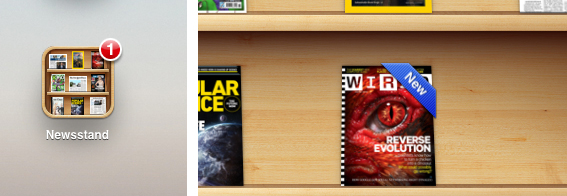
By integrating Newsstand directly into the OS, Apple is not only giving publishers an opportunity to showcase their publications out of the box on every iOS device, to every iOS user interested in reading magazines and newspapers, they’re also giving publishers the tools to make reading and downloading as frictionless as possible. As we detailed in our overview, Newsstand lets you easily subscribe and forget to manually download new content when it’s published. iOS does it for you.

So while geeks may despise the new default icon on the Home screen and the fact that it’s a feature they may never use, the new integrated system – as opposed to single app downloads – makes for a better experience that will encourage readers to subscribe more, manage less, and ultimately read more. I expect Newsstand adoption to grow exponentially in the next months. Looking back, it’s clear iTunes app subscriptions were meant for Newsstand.

Permalink

Apple Updates “Remembering Steve” Page with Tributes From Fans

Last night, Apple updated its Remembering Steve page on Apple.com to include a selection of memories, thoughts and tributes sent by fans and members of the Apple community since Steve’s passing on October 5th. Apple says that over a million people have sent their personal messages to the [email protected] email address.

Over a million people from all over the world have shared their memories, thoughts, and feelings about Steve. One thing they all have in common — from personal friends to colleagues to owners of Apple products — is how they’ve been touched by his passion and creativity. You can view some of these messages below.

And share your own at [email protected].

A private memorial for Steve Jobs was held with close friends and family last week. Apple is also planning a company-wide celebration of Steve’s life and accomplishments today at Apple’s campus, with some Apple retail stores closing briefly during the event.


Apple Q4 2011 Results: $28.27 Billion Revenue, 17.07 Million iPhones, 11.12 Million iPads, 4.89 Million Macs Sold

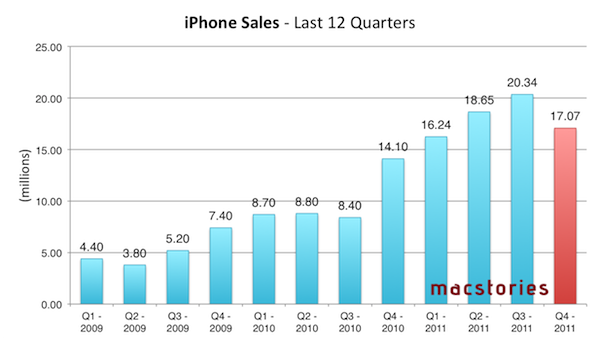
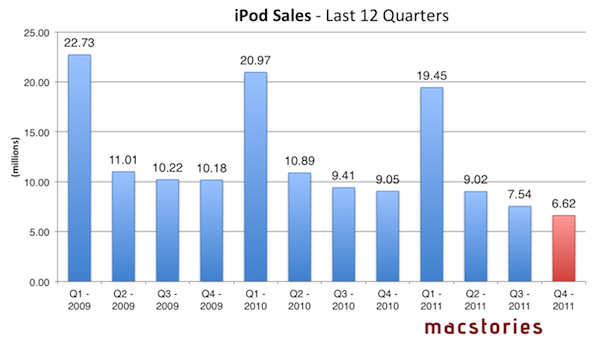
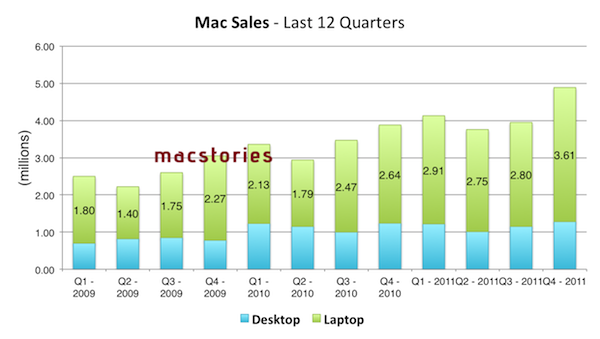
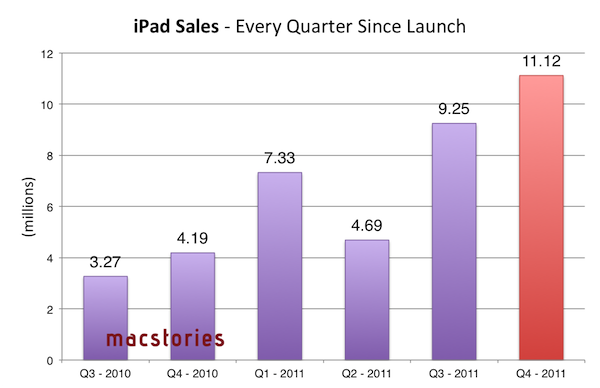
Apple has just posted their Q4 2011 financial results. The company posted record-breaking revenue of $28.27 billion, with 11.12 million iPads, 17.07 million iPhones and 4.89 million Macs sold. The company posted quarterly net profit of $6.62 billion, or $7.05 per diluted share. iPhone represented a 21 percent unit growth over the year-ago quarter; iPod sales are down 27 percent from the year-ago quarter, but Apple reported the best iPad quarter to date with over 11 million units sold and a 166% increase over the year-ago quarter. For the next quarter, Apple set guidance at revenue of about $37 billion and diluted earnings per share of about $9.30.

Estimates and Previous Quarters

Wall Street consensus’ estimate was earnings of $7.28 per share and revenue of $29.45 billion; independent analysts expected earnings per share of $9.07 and $33.47 billion revenue. In Q3 2011, Apple said they expected revenue of about $25 billion and diluted earnings per share of about $5.50 in the fourth fiscal quarter of 2011.

In Q3 2011, the company posted record-breaking revenue of $28.57 billion, with 9.25 million iPads, 20.34 million iPhones and 3.95 million Macs sold.. In the year-ago quarter, Apple posted revenue of $20.34 billion and net quarterly profit of $4.31 billion. In Q4 2010, the company sold 3.89 million Macs, 14.1 million iPhones and 4.19 million iPads, which began selling during the quarter.

Q4 2011 Recap

Apple’s fourth fiscal quarter, which ended on September 25th, saw the release of updated MacBook Air and Mac mini models, OS X Lion on the Mac App Store and, later, on USB drive, as well as a new iMac for the educational market and a new Thunderbolt Display. The company was initially expected to unveil a new iPhone in September, but a media event took place in Cupertino on October 4th, nine days after the quarter ended. iPhone 4S sales numbers will be included in Apple’s Q1 2012, but the company has already announced over four million iPhone 4S units have been sold in the first weekend of availability.

As for the Mac, the MacBook Air is widely believed to have become the crown jewel of Apple’s portable business (which no longer includes the white MacBook, discontinued in July) that, alongside Lion, was expected to boost Mac sales in the September quarter.

On August 24th, Steve Jobs resigned as CEO of Apple, and Tim Cook was elected CEO of the company. Steve Jobs passed away on October 5th.

On October 4th, Apple also announced over 6 million copies of Lion had been downloaded through the Mac App Store since July 20th (when the operating system went on sale), with Mac users approaching 60 million worldwide.

Q4 2011 Earnings Call

Apple will provide a live audio feed of its Q4 2011 conference call at 2:00 PM Pacific, and we’ll update this story with the conference highlights. Full press release is embedded after the break.

Notes from the call

  • Tim Cook: Steve Jobs’ spirit will always be the foundation of Apple.
  • New record sales for Mac and iPad in the September quarter.

  • Mac sales increased strongly in each operating segment.

  • iPod touch continues to account for half of all iPods sold.

  • iPhone sales double in Asia Pacific year-over-year.

- Ended quarter with about 2.5 million iPads in channel inventory.

  • 92% of Fortune 500 testing or deploying iPad.
  • 500,000 apps available in the App Store. Expanded the App Store to 123 countries in the September quarter.

  • - 30 new retail stores opened in the quarter, 21 internationally.

    • $3.6 billion revenue from Apple retail stores.

    - 77.5 million visitors in Apple retail stores in the quarter.

    • Average revenue per store is $10.7 million.
  • Apple has $81.6 billion in cash available.

  • Tim: We’re confident that we’ll have a large supply for the 4S in holiday quarter and set an all-time record for iPhone this quarter.

  • Tim: Progress in China has been amazing: Greater China revenue 2% in FY09; 12% in FY11. Fastest growing major region. $4.5 billion in revenue from China in September quarter.

  • Apple placing additional focus on other promising areas: Brazil, Russia, Middle East. There are several of these markets where Apple hasn’t been historically strong.

  • Tim: China – the sky’s the limit there.

  • Tim: As iPad competitors came to the market, our share went up.

  • Oppenheimer: Pervasive iPhone rumors had a definite negative impact on Apple’s business.

  • 40 million iPads sold on a cumulative basis.

  • Tim on iPhone 4S launch (4 million units) Vs. iPhone 4 launch (1.7 million units) last year: “That’s the mother of all uplifts”.

  • Tim: Number of people using Siri already is amazing. We see this as a profound innovation. Over time  many, many people will use Siri in a substantial way.

  • Tim: We spend a lot of time and money and resource in coming up with incredible innovations. And we don’t like when someone else takes those.

  • Tim: We still see iPhone 3GS and iPhone 4 as incredible products.

  • iPad available in 90 countries.

  • Tim: We are in the main countries with iPad.

  • Tim: Everything we’re doing in the United States, we’re doing in China.

  • Tim: Cannibalization of PC market happening in two ways. Some people choose to buy an iPad over a Mac: a materially larger number of people buying an iPad instead of PC.

  • Tim: I’m not religious about holding cash or not holding it.

  • Tim: We could not be happier with our position in the tablet market. We have some incredible things in the pipeline.

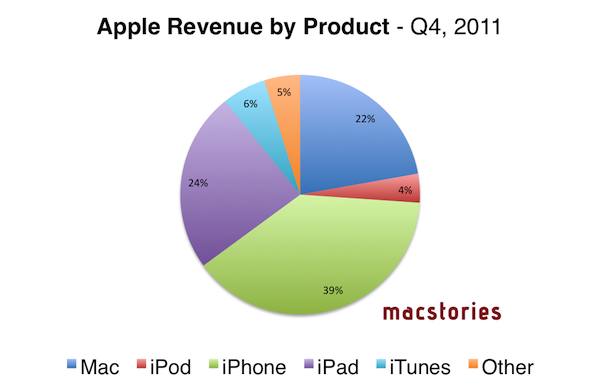
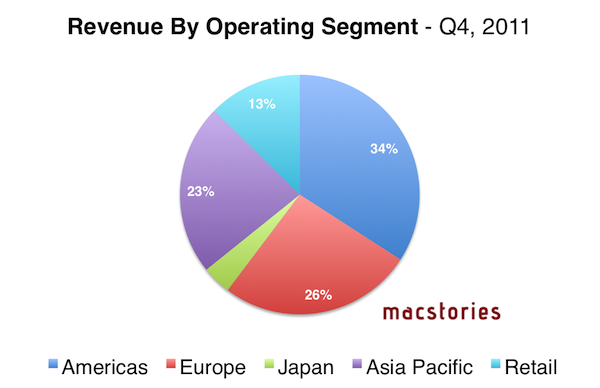
  • Graphical Visualization

    We have compiled a series of graphs and charts to offer a graphical visualization of Apple’s third quarter. Apple’s Q4 2011 data summary is available here.


    Read more


    Fantastical 1.1 Brings Editing, Deleting, Notes and Full iCloud Support

    With the release of the iPhone 4S and Siri, Apple is putting much focus on natural language input and the concept of “personal assistant”, a technology the company first explored almost two decades ago, which was impossible to implement until today. With faster processing power, persistent Internet connections and better voice recognition, Siri is perhaps the most impressive feature of the iPhone 4S and one that Apple will undoubtedly promote heavily in the next months.

    On the Mac, of course, the situation is quite different. Whilst one of the new functionalities of Siri on the iPhone is being able to create and schedule calendar events, on OS X we’ve had calendar apps with natural language support for quite some time, such as Fantastical and QuickCal. And today Fantastical, which I first reviewed here, has received a major update that adds two of the most requested features: event editing and deleting.

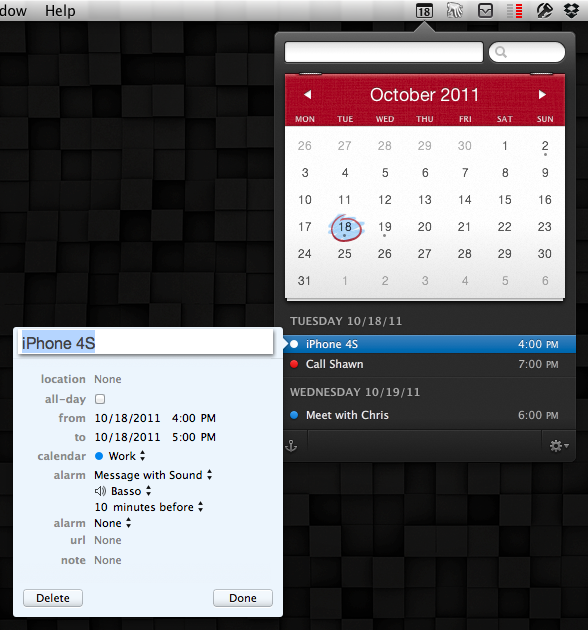
    With Fantastical 1.1, you can edit and delete events without jumping to your main calendar app, like iCal. Now, instead of having to launch iCal to make edits to something you entered through Fantastical, you can simply double-click on an event to start modifying it in a separate popup window. The interface is the same you already know for calendar events; you can also delete an event and add notes, which will be synced across all your devices and, if configured, iCloud. Option-double-clicking an event still opens it in your favorite calendar app – remember, Fantastical supports BusyCal as well – and anchor mode can now be toggled with a keyboard shortcut.

    Another big improvement in Fantastical 1.1 is full iCloud support. The app already supported iCloud calendars, but now that Apple’s service is public the app has been specifically optimized to take advantage of its new push technology for calendars and events. And because Fantastical features direct CalDAV integration, everything you enter in the app will be immediately synced back to the cloud, without having to open iCal (or letting it run open in the background). In my tests, iCloud integration has been extremely reliable, allowing me to enter an event (or make edits) in Fantastical and see the results appear in real-time on iCloud.com and all my iOS devices.

    Fantastical was already a great app, and now that it’s gained editing, deleting and notes it really can be used as a calendar replacement, which thanks to natural language input will also act as your personal “calendar assistant”. Fantastical is available at $19.99 on the Mac App Store.