This Week's Sponsor:

HomeSnap

A Private, Read-Only Window Into Your HomeKit Home


Posts tagged with "apple"

To Be Or Not To Be, Is The iPad A PC?

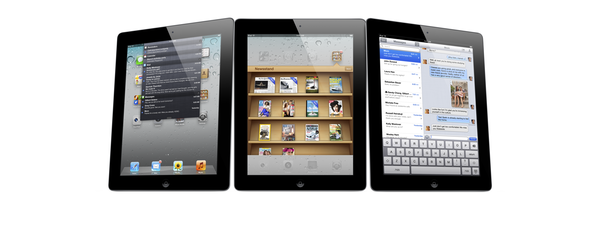
A few hours ago I listened to the latest episode of Shawn Today (a daily podcast from Shawn Blanc available to members of his site), and in it he discussed the issue of whether the iPad is a Personal Computer.  This follows an article by Matthew Panzarino on The Next Web yesterday, titled “Look, tablets are PCs, get over it”. In fact I could point to quite a few articles and discussions about this question of whether tablets (specifically the iPad) are PCs. But Shawn’s episode and Matthew’s post have inspired me to also weigh in on the discussion today, with why I believe the iPad should legitimately be counted within the PC market.

I’ll just start with this question: what computer is more personal than an iPad? The tablet form factor and iOS software combine together to make using the iPad a far more personal computing device than a traditional PC desktop or laptop, where you have to interact with the software from an arm’s length away, using a mouse or trackpad and a keyboard.

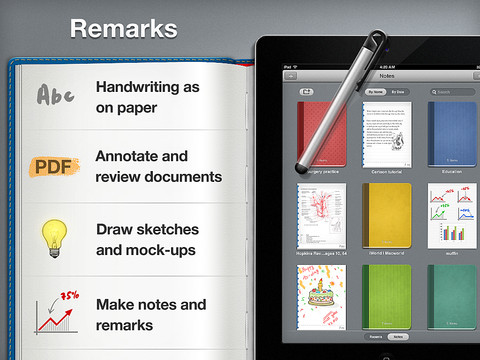
So the iPad is personal device, but is it a fully functional computer? John Mello at PCWorld says no, because in his opinion people don’t use it for content creation. Matthew’s article on TNW does a great job at dismantling this oft-quoted “complaint” about the  iPad and I recommend reading his entire argument. When the iPad first came out I must admit I had the same thoughts about the device, but as time has gone on I have increasingly used it for content-creation — whether it be annotating PDFs for studying, writing, and even some (very average) efforts at using iMovie. Content-creation on the iPad will continue to become more common as people adjust to the device and as app developers continue to adapt to creating great software for the iPad – just look at how productivity apps have improved and advanced in the past year on the iPad.

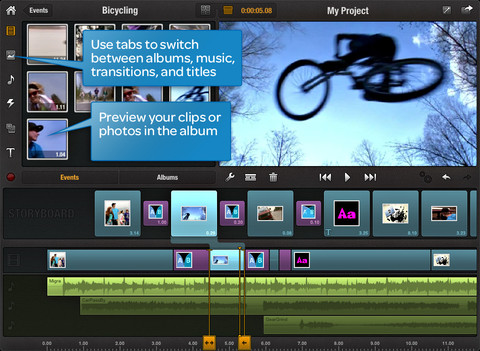
Sure, some content-creation tasks may never be as easy to do on an iPad compared to a more traditional PC – things like advanced video editing or long stretches of writing. But by the same token, a small netbook isn’t good for those tasks either and yet it is counted as a PC. I know I would always choose an iPad over a netbook for virtually any task because in my opinion it is a far more capable personal computer. On the flip side, I think the iPad is actually a better computer for things like annotating PDFs with apps such as PDF Expert. Then for things like advanced video or audio editing it’s only inevitable for those apps to transition to iOS, in fact just today Avid Studio was released – it may be a distilled version of the advanced desktop version, but it will evolve and become increasingly powerful for most tasks that an average user and even “pro-sumer” will need. The iPad is personal and (in my opinion) it is also a functional computing device.

So if you are excluding the iPad from the personal computer category, does that mean there is some checklist of requirements for a device to be a PC? Does it need a keyboard, or perhaps a trackpad or a mouse, or does it just have to be able to install any application you want (without the approval of a gatekeeper such as Apple)? All of these ‘requirements’ are completely arbitrary - with no practical reason as to why they are required to be on a PC. You can still connect a keyboard to the iPad if you need one for extended periods of writing, your finger is the “mouse” and Apple’s App Store has mostly protected consumers from nefarious apps or excessively useless/buggy apps – virtually everything I need is on the App Store (in fact there are over 170,000 apps just for the iPad). You may not like this policy (I can understand that, even if I don’t agree with it), but is it really a reason to bar the iPad from being counted as a PC? Again, that’s completely arbitrary.

Arbitrary: Based on random choice or personal whim, rather than any reason or system.

If you are still thinking that the iPad doesn’t count as a PC, what will all those Windows 8 computers in tablet/slate form be counted as? You can’t bar them from being “a PC” because they will be able to “morph” into what is essentially a Windows 8 laptop with a traditional Windows desktop, use a keyboard (and even mouse) and yet you can use it like them as tablets with a different, touch-based UI.

But if you do count them as a PCs, you surely have to count the iPad as a PC too then. They will be virtually identical devices from a functionality and experience point of view, unless you say the Windows 8 tablet is a PC because it will still have the traditional Windows desktop, and then I go back to the fact that it is an arbitrary requirement. One might actually argue (from what we know at the moment), that the iPad is more functional and will provide a better experience because it has two years of developer support with apps that have been specifically designed for the touch interface, whereas any Windows 8 tablet may be handicapped with the Windows desktop because it isn’t designed for touch-input and Metro may lack many apps at launch. The reality is that both should be counted as PCs: it is the only logical solution.

But…but…..but….

You might now point to the fact that Apple has touted the iPad as a Post-PC device, so surely if Apple themselves aren’t calling it a PC, it shouldn’t then be counted in any PC marketshare analysis. It’s a decent point, but I think Apple did that as more of a marketing move, to point out that it is a different, unique device. In fact, it is the next evolution (if not revolution) of the personal computer. Maybe the solution is just calling the “traditional” PC category something different (Desktops & Laptops perhaps?) that would make much more sense than trying to arbitrarily force the iPad out of the PC category.

One other decent rebuttal may be to then ask, if you are including the iPad, why not also include the iPhone. It’s a very good point, because I think it is also a personal computing device to some degree. I think the reason why it’s legitimate to leave the iPhone and other smartphones out of most PC market analysis is because there are enough points of differentiation between the traditional PC/iPad and the smartphone in the way it is used and experienced. These include the fact that smartphones have a distinct use case of being always-on communication devices, time management devices (Calendar/To-Do apps, etc), time-wasters (Angry Birds in a long queue, anyone?), and are occasionally used for content-creation or content consumption. They are also devices you spend using for a few minutes at a time (typically), multiple times a day — rather than PCs (including iPad), which you use for longer periods of time.

You might claim these are arbitrary reasons and, yes, to some degree they are, but that’s because the line between whether a smartphone can also be counted as a PC is a far blurrier line than that of iPads as PCs. In my opinion at least, it would be OK to include smartphones as PCs in a market analysis if there is a good reason as to why it’s an important conclusion - such as an analysis of trends. A good example of this is Horace Dediu, who included smartphones as PCs in the final graph of his article entitled “The rise and fall of personal computing”.

So as Matthew Panzarino said yesterday in a very succinct title and what I completely agree with, “tablets are PCs, get over it”.



Avid Brings Its Video Editing Tools To The iPad With Avid Studio

Avid has today brought its “pro-sumer” video production tools to the iPad with its new Avid Studio app. Avid is the maker of a number of high-end video and audio production tools that have also gained appeal in the pro-sumer marketplace.

The new iPad app is claimed to be a “distilled” version of their more complete film-editing applications available on the desktop. This certainly won’t be a replacement for Avid’s full-featured tools, but it may be good option for small projects or for people who want something a little bit more than what Apple’s iMovie for iPad offers. Avid believes the app is a complement to their existing offerings with users able to transfer project files between the apps through iTunes or iCloud.

“We’ve seen a shift in how creation is happening, and it’s really happening on almost any device,” said Tanguy Leborgne, vice president of consumer and mobile technology strategy at Avid. “We think the tablet is more than just a consumer device; more and more people are creating on it.”

Priced at just $4.99 for the first month and $7.99 after that, the app is also priced at a very competitively for its capabilities. Pro-sumer video editing apps on the desktop start at least $60 and go up to $299, with Avid’s desktop app itself at $129.99.

[Via AllThingsD]


Localized Flipboard Content Guides Come To UK & Ireland, Australia and Canada

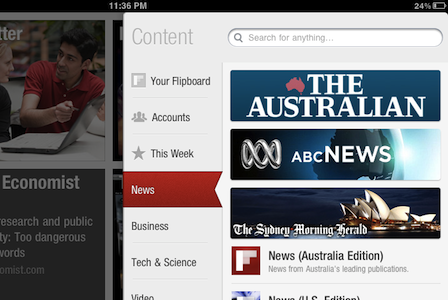
Flipboard has today launched three new localized ‘Content Guides’ in Australia, Canada and the UK and Ireland. Users in these countries will now be shown recommendations that match their location. For example, Australian Flipboard users will now see The Australian, ABC News and the SMH prominently displayed in the News section of the content guide and UK users will be recommended the BBC, The Guardian and The Telegraph amongst others.

The localised recommendations aren’t just for the News section but the other categories such as Business and Tech & Science too. Similarly, it doesn’t mean that no international publications are recommended anymore, it just means that local publications are now recommended more prominently. Flipboard now has six Content Guides for countries outside the US with France, Taiwan and Hong Kong previously receiving localised Content Guides. Flipboard also has a dedicated app for the Chinese market which also has its own Content Guide.

Users in these countries needn’t do anything to receive the new content guides - they are automatically loaded based on the Region Format of the iPad (you can change yours in Settings > General). The Flipboard team does note that they are working on a way to easily change regions from within the app so you can look at recommendations for other regions.

[Flipboard Blog via The Next Web]


Obama, Romney Election Campaigns To Use Square In Fundraising Efforts

Square looks set to play a big part in the 2012 US Presidential race, with both the Obama and Romney camps announcing this week that they will be adopting the tool to give their grassroots fundraising efforts a boost. The mobile payments company uses a small accessory that plugs into the headphone jack of an iPhone, iPad or Android phone and works with a companion app to accept payments from credit cards.

The Obama re-election campaign will begin using Square straight away, initially with campaign staffers and “some approved volunteers”. But the ultimate goal is to develop their own Obama Square app that they can distribute on the App Store - allowing anyone to get the app and Square attachment and go around collecting donations. To comply with the Federal Election Commission’s (F.E.C.) rules, the app will need to collect the name, address, city, state, ZIP code, occupation and employer of the contributor, along with contribution size and collection date.

If the Square rollout is successful, and others follow, campaigns could send out armies of volunteers brandishing the Square credit card reader and collecting millions of dollars in micro-payments from political supporters.

The Romney campaign similarly announced today that they will also be trialling Square and likely developing their own, Romney-themed Square app. They will conduct a “beta-test” of the Square app and accessory on Tuesday night’s Florida primary election.

Daniel Rubin, strategic partnerships manager at Square, who works with political campaigns and major nonprofit organizations, said Square was partnering with a number of campaigns to make 2012 the year mobile payments change the way donations are collected on the ground. “It’s now easier than ever to give to campaigns of any political stripe,” Mr. Rubin said. “At a campaign, or any political event, donors will be able to give on the spot. They won’t have to run home and get a check or fill out long paper forms.”

[via The New York Times]


Apple Hires John Browett To Fill Senior Vice President Of Retail Position

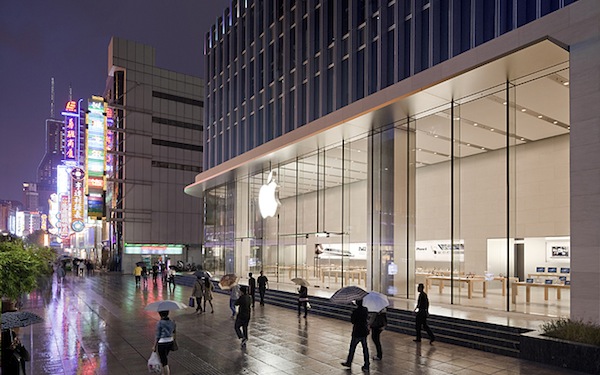
Apple has this morning announced that it is hiring John Browett to serve as the company’s senior vice president of Retail - a position that he will fill from late April. Browett has been the CEO of European technology retailer Dixons since 2007 and has considerable experience in the field, also holding executive positions at Tesco including CEO of Tesco.com.

“Our retail stores are all about customer service, and John shares that commitment like no one else we’ve met,” said Tim Cook, Apple’s CEO. “We are thrilled to have him join our team and bring his incredible retail experience to Apple.

Browett will become responsible for the retail strategy at Apple and lead the expansion of Apple retail stores around the world. He will be taking over the position that Ron Johnson had held until he left Apple last November to become chief executive of JC Penney.

Apple’s full press release and Dixons’ full press release are included after the break.

Read more


Even Apple Can’t Change The Reality Of Consumer Electronics Manufacturing Overnight

Even Apple Can’t Change The Reality Of Consumer Electronics Manufacturing Overnight

There’s nowhere else in the world you can build a modern smartphone or tablet as cheaply, easily, and reliably as the massive factories of companies like Foxconn, which operate on a scale that is difficult to comprehend. The price for doing business with companies like Foxconn is living with the knowledge that these products are being built by people who have signed up for a modern-day version of indentured servitude.

This month the issue of working conditions and the human cost of producing Apple products has come up a few times with a ‘This American Life’ episode, the release of Apple’s annual Supplier Responsibility report and then this week’s New York Times report on the issue. It’s an incredibly serious issue and one that is rightly in the spotlight again. Yet whilst it is wrong to excuse Apple on this issue, the New York Times report perhaps glosses over the important part of this issue. Tom Krazit of paidContent goes one step further than the New York Times report and points out the sad, conflicted reality that if we want these luxury consumer electronics (such as the iPhone), they just have to be made in China and Apple cannot single-handedly change this reality.

As should be clear by now, Apple is only being singled out by the Times because it is at the top of the tech heap, and while that may be fair game given Apple’s unbelievable profit, it overstates the ability of the company to act as a macroeconomic force.

Apple has been the focus of these reports and backlash because they are now at the top of industry - despite the fact that by all accounts they are also one of the most transparent companies regarding this issue. As Krazit points out, Apple’s Supplier Responsibility report is far more detailed than that of Nike or GAP’s - companies that were targeted nearly a decade ago for horrifying conditions in their supplier’s factories. In fact GAP’s last report was in 2010 and Nike hasn’t even released a report since 2009.

It could use some of its $97 billion cash hoard as a carrot and the threat of losing its formidable business (Foxconn has no customer more important than Apple) as a stick. But unless Apple is willing to incur significant risk and set up its own manufacturing facilities governed by its own principles within China (something which, to be clear, may not be permitted by either China or the U.S.) it is dependent upon suppliers that have different standards when it comes to the well-being of their employees. And changing the labor laws of a foreign country is not necessarily a project that a U.S. company can throw money at and cross its fingers hoping everything works out.

Krazit’s full article is well worth the read, as he rationally examines the issue and discusses what could be done by Apple. As he and us at MacStories want to stress, Apple is right to scrutinise their suppliers and should continue to put ever more pressure on their suppliers to improve conditions. Yet it is unrealistic to expect Apple to stop relying on Foxconn and other Chinese suppliers and move production to a Western nation or equalize working conditions overnight. As Krazit notes, “even Apple doesn’t have the clout to reverse two decades of economic history that has led to the status quo”.

Permalink

Why The iPhone’s Average Selling Price Increased Despite The “Free” iPhone 3GS

Earlier this week Apple released its Q1 2012 financial results and it was a blockbuster quarter, Apple’s best ever with $46.33 billion in revenue. One of the key factors that drove this sky-high figure was the sale of 37 million iPhones at an average selling price (ASP) of $660 — iPhone sales actually contributed to 53% of Apple’s revenue for the quarter.

Significantly, this was the first full quarter where Apple offered a “free” iPhone in the US to customers going on contract — the iPhone 3GS. Previously Apple had offered the 3GS alongside the iPhone 4 at a reduced price, but with the 4S the iPhone 4 fell to $99 and the 3GS became free. One would have presumed that the iPhone ASP would thus fall with the addition of another lower-priced iPhone model but in fact the ASP increased from the previous quarter and at $660 the iPhone ASP is near the highest it has ever been.

How has the ASP risen despite the presence of the “free” 3GS?

There are a few reasons as to why the ASP has increased and a big reason is that in addition to the new lower-priced 3GS ($345), Apple also introduced the 64GB iPhone 4S that is at a higher price-point ($849) than the previously most-expensive iPhone. This new higher-priced model would seem to have offset any reduction in the ASP that the iPhone 3GS would have caused - particularly given Q1 2012 was the 4S launch quarter and demand was very high for the new iPhone model.

Whilst Apple didn’t give out details on what the breakdown was of sales between the iPhone 4S, 4 and 3GS, an estimate from Consumer Intelligence Research Partners suggests that in the last quarter the iPhone 4S represented 89% of all iPhone purchases in the US. The report showed that only 4% of iPhone purchases last quarter were for the 3GS and 7% for the iPhone 4. This backs up the notion that the higher-priced iPhone 4S 64GB model (estimated to be 21% of iPhone 4S purchases) actually offset any decrease in the ASP and probably drove the increase in ASP to $660.

How will the iPhone ASP fare in the following quarters?

As Horace Dediu of Asymco points out, there is usually a slight uptick in the iPhone ASP during a launch and holiday season. This would suggest that in the following quarters the ASP may decrease a little as the high launch demand for the 4S subsides a little. It is unlikely to drop that much though, with the iPhone ASP typically hovering somewhere between $620 and $660. Dediu also investigated the historical ASPs for the iPhone, iPad, iPod and Mac and found that “Apple does not change pricing but rather stakes out a specific price point as resonating with consumers given their positioning”. The above chart demonstrates this point quite well.

[Sources: MacRumors, Asymco, AllThingsD]


The Apple Of Gaming

A great piece by Craig Grannell at Revert To Saved about the current state of Nintendo:

For a long time, I considered Nintendo the Apple of gaming—a company that cared about the details and about the right things (fun, excitement, enjoyment). Nintendo’s problem these days is that Apple is now the Apple of gaming—and the Japanese veteran needs to fight back, perhaps borrowing some of the tricks used by the plucky American upstart.

Yours truly, two months ago:

It’s always about the games, ultimately, but the hardware matters, too. More importantly, integration of hardware and software matters, and with my iOS gaming background I think Nintendo still has to get this right. Using the 3DS after years of iPhones and iPads feels strange because I’m dealing with a device that’s pretty capable spec-wise, yet doesn’t show the same amount of attention to detail, integration and flexibility that my iPhone has. I can play Angry Birds on my iPad, quickly look up a webpage, send an iMessage to my friend real quick and then effortlessly come back to the game. I challenge you to do the same on the 3DS with that joke of Internet browser and “suspended” software on the Home screen.

The problem with Nintendo is that for the longest time they thought only geeks and iPhone nerds were paying attention to App Store games, replacing their handhelds with iPads and iPods. It turns out, previous Nintendo customers are actually moving to mobile platforms – I’ll throw Android in the mix as well – for all their gaming needs. Blame changes in society, blame the recession, blame the advancements in graphics processing that made Infinity Blade II possible – mobile gaming is very much real, albeit immature, and Nintendo failed to forecast just how much of an impact it would have on its business. Shame on them for being so stubborn. Now they are paying the consequences, and will likely continue to pay until the Wii U comes out. To get a visual representation of what Nintendo is exactly facing, check out this chart by ngmoco’s Ben Cousins comparing Apple, Microsoft and Nintendo by revenue:

What’s next for Nintendo? That’s a question with no answer, really, as you can’t just know what the company’s up to without having some kind of inside knowledge of their secret plans. Rather, I’d start by proposing some ideas that might be worth considering at the light of iOS’ popularity in mobile games and the changes in consumer behavior:

  • Ship a moden interface for managing a device: users don’t want to be treated like 3 years-old anymore. Make it accessible, flexible, elegant, fast. This is functional to the point below, which is:
  • Make accessing, saving and managing digital content easier. Nintendo’s current solution is a joke – will Nintendo Network be any better? We shall see.

  • Embrace social networking: let players link their Nintendo Network profiles to their Twitter, Facebook or Google+ identities, and allow them to interact with Nintendo content outside of Nintendo’s online platform.

  • Create an ecosystem: make Nintendo Network the single marketplace for all kinds of Nintendo content. Drop regional restrictions and adopt an App Store-like distribution model with worldwide releases, price tiers, promo codes, developer pages. Unlike the App Store, drop user reviews and allow free trials. Let users rely on their Nintendo ID for all kinds of possible future Nintendo services.

  • Drop resistive touch-screens: the future is multi-touch. Delay the Wii U if necessary to make it absolutely right.

  • Don’t drop cartridges entirely, but embrace a digital distribution strategy that makes sense. Advise all developers to release digital versions of their games on Nintendo Network, and perhaps reward buyers of physical copies with free unlockable in-app extras. The goal is to achieve a win-win situation both if you’re buying digital or physical.

  • Ditch friend codes. Because, seriously, why are we still using friend codes in 2012?

  • Create fresh, innovative, strong new IPs while emphasizing the importance and value of historical brands. Fortunately, that seems exactly what Miyamoto is doing.

  • Use cutting-edge hardware: let’s face it, people like to play Call of Duty and Uncharted these days. Whilst good graphics aren’t synonym of good games, they sure help in nurturing an ecosystem of variegate games – those who make presentation their selling point, and the ones that are more focused on gameplay with less impressive graphics. Angry Birds was possible in 2009, but that didn’t stop Apple from leap-frogging itself year over year with the A4 and A5. Make consoles that can stand the onslaught of the Tegras and A6s released every year.

  • Ultimately, stay true to gaming. Users don’t want to read emails on their handheld or have Office on it. Internet-connected doesn’t mean PC-like.

This morning I retweeted three tweets by Zac Cichy:

I don’t know how Nintendo should implement these proposed changes in the next months, but I am sure these are ideas more than just a couple of bloggers agree with. The money just isn’t there anymore, and Nintendo needs to evolve before it’s too late.

[Nintendo Headquarters via David Offf]


Adam Lashinsky’s Inside Apple Is Now Available For Purchase On The iBookstore

Adam Lashinsky’s new book Inside Apple is now available for purchase on the iBookstore and those who pre-ordered it can now download it. The book goes inside the secretive company, revealing a number of tactics, strategies and systems that has allowed Apple to “churn out hit after hit”.

Based on numerous interviews, the book offers exclusive new information about how Apple innovates, deals with its suppliers and is handling the transition into the Post Jobs Era. Lashinsky, a Senior Editor at Large for Fortune, knows the subject cold: In a 2008 cover story for the magazine entitled The Genius Behind Steve: Could Operations Whiz Tim Cook Run The Company Someday he predicted that Tim Cook, then an unknown, would eventually succeed Steve Jobs as CEO.

Inside Apple is available on the iBookstore for $12.99 and is also available on Amazon. We’ll be publishing a full review of Inside Apple sometime in the coming week, so stay tuned for that. A full description of the book is available below the break.

Read more