This Week's Sponsor:

Clic for Sonos

The native app Sonos should’ve made. No lag, no hassle, just music. Save up to 50%.


Posts tagged with "app store"

Drafts 3.5 Brings Refined Interface for iOS 7, Action Improvements

Drafts for iOS has singlehandedly reinvented, alongside Editorial, my iOS workflow. With a combination of URL schemes and custom actions, direct Dropbox and Evernote integration for saving text, callbacks, and a fervent community of passionate users pushing the app to its limits, Drafts has become an extremely powerful iOS notepad without losing its basic simplicity. Drafts is the perfect example of an app that is easy to use and approachable but that power users can tweak and enhance if they know where to look.

With the release of iOS 7, developer Greg Pierce has decided to make Drafts 3.5 an iOS 7-only app that includes an updated design and some new features for power users. This will likely be a controversial decision among users who won’t update to iOS 7 right away, but I certainly understand the motivation of wanting to move forward as fast as possible by promptly embracing our iOS 7 future.

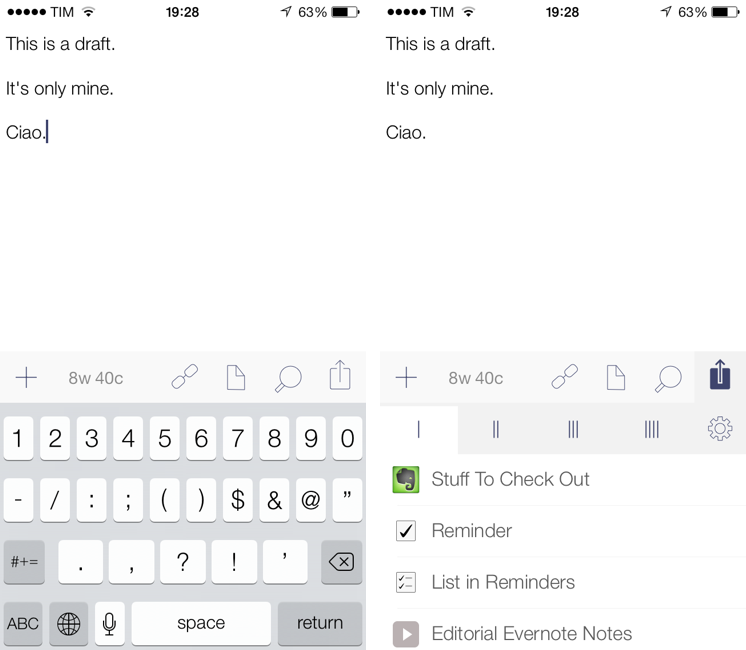
Drafts didn’t have much custom UI to begin with, so this new version’s most visible changes are the keyboard, which defaults to the iOS 7 one, and the revised icons and menus that match iOS 7’s new design trends and guidelines. Icons are thinner, the Settings’ cells run from edge to edge, the On/Off switches are new, the status bar blends with the writing area, and there’s a lot more whitespace. After having used Drafts 3.5 for a few months, I would say that, in the transition to iOS 7, it has lost less than Pierce’s other app, Terminology, in terms of identity and personality. Drafts was already spare and clean-looking – iOS 7 just makes it official and takes the app’s whitespace up a notch. Overall, it’s still the same Drafts, now with new icons and an updated keyboard.

The additions to Drafts 3.5 should please power users and those who rely on Drafts as an application launcher more than a note-taking app. Read more


Apple Updates AirPort Utility and Apple Store Apps with iOS 7 Support

Ahead of iOS 7’s public launch, expected later today, Apple has started updating their App Store apps (the ones that don’t come pre-installed on iOS) with support for the new operating system. The first two apps released this morning to get the iOS 7 treatment are AirPort Utility and the Apple Store app.

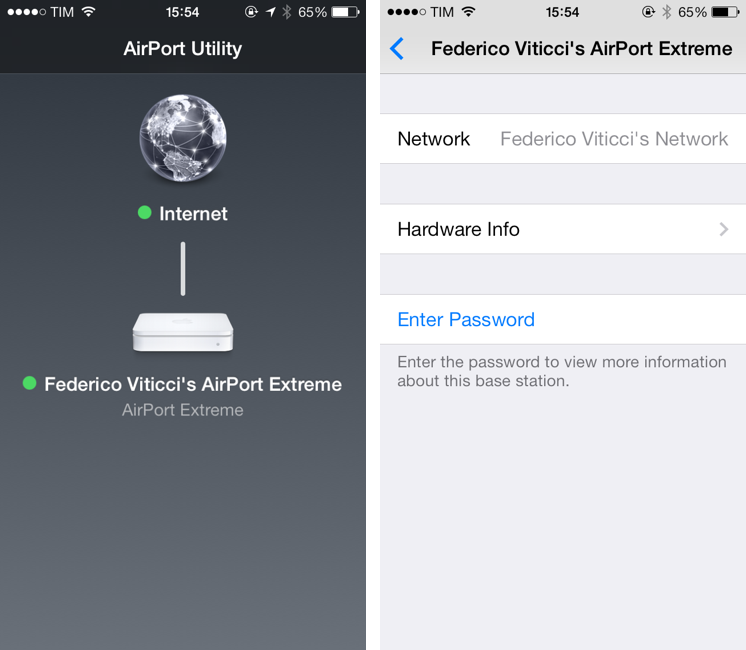
Both apps have been updated to include the new default iOS 7 UI; based on initial tests, it doesn’t seem like Apple added new major functionality to the apps. AirPort Utility, used to manage and configure AirPort stations directly on iOS, has received an integrated status/bar navigation bar that keeps the app’s existing color scheme. There still is a main screen listing all your active AirPort devices, which you can tap on to enter another view for hardware information and more.

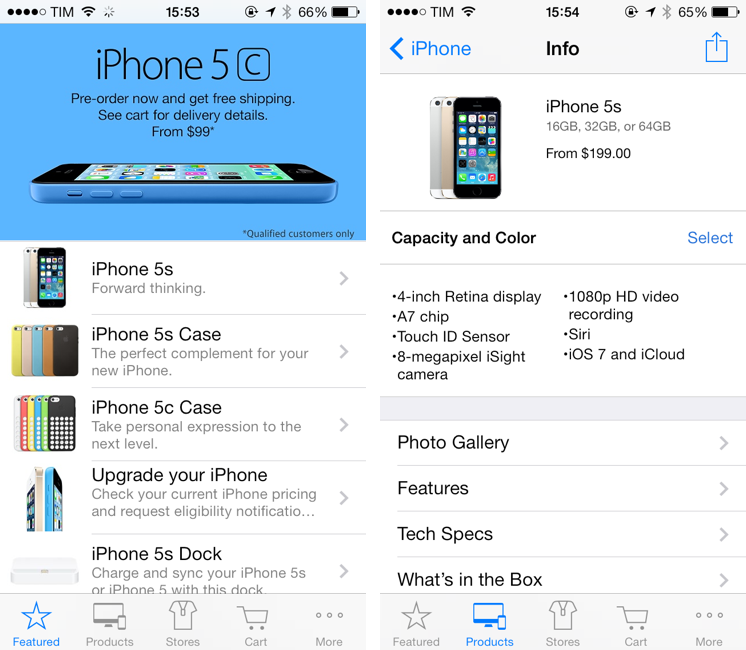
The Apple Store’s update is more substantial from a design standpoint, with Apple including a new app icon and redesigned graphics throughout the app. Apple Store now comes with edge-to-edge sections, translucencies, and thinner tab bar icons that are consistent with Apple’s other iOS 7 apps.

You can find updates to AirPort Utility and Apple Store on the App Store.


Pocket Casts for iOS 7 Review

Pocket Casts 4

Pocket Casts 4

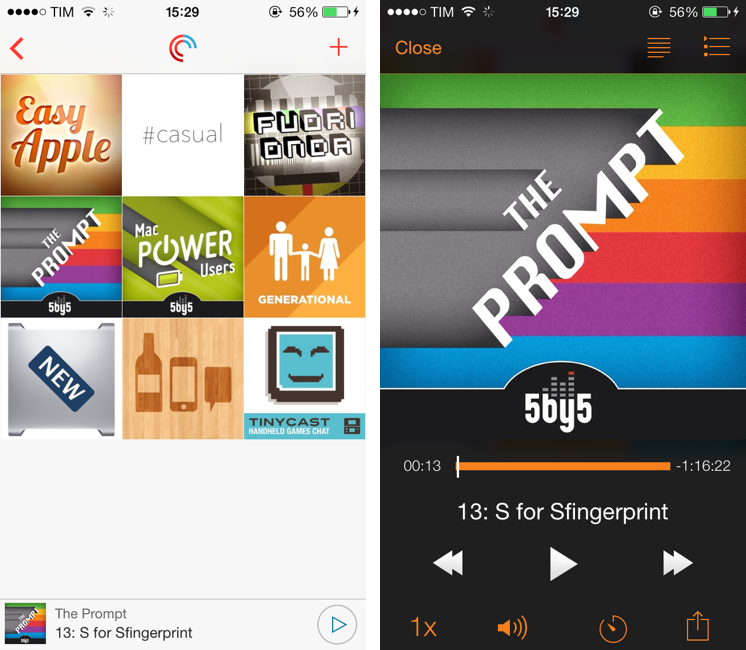
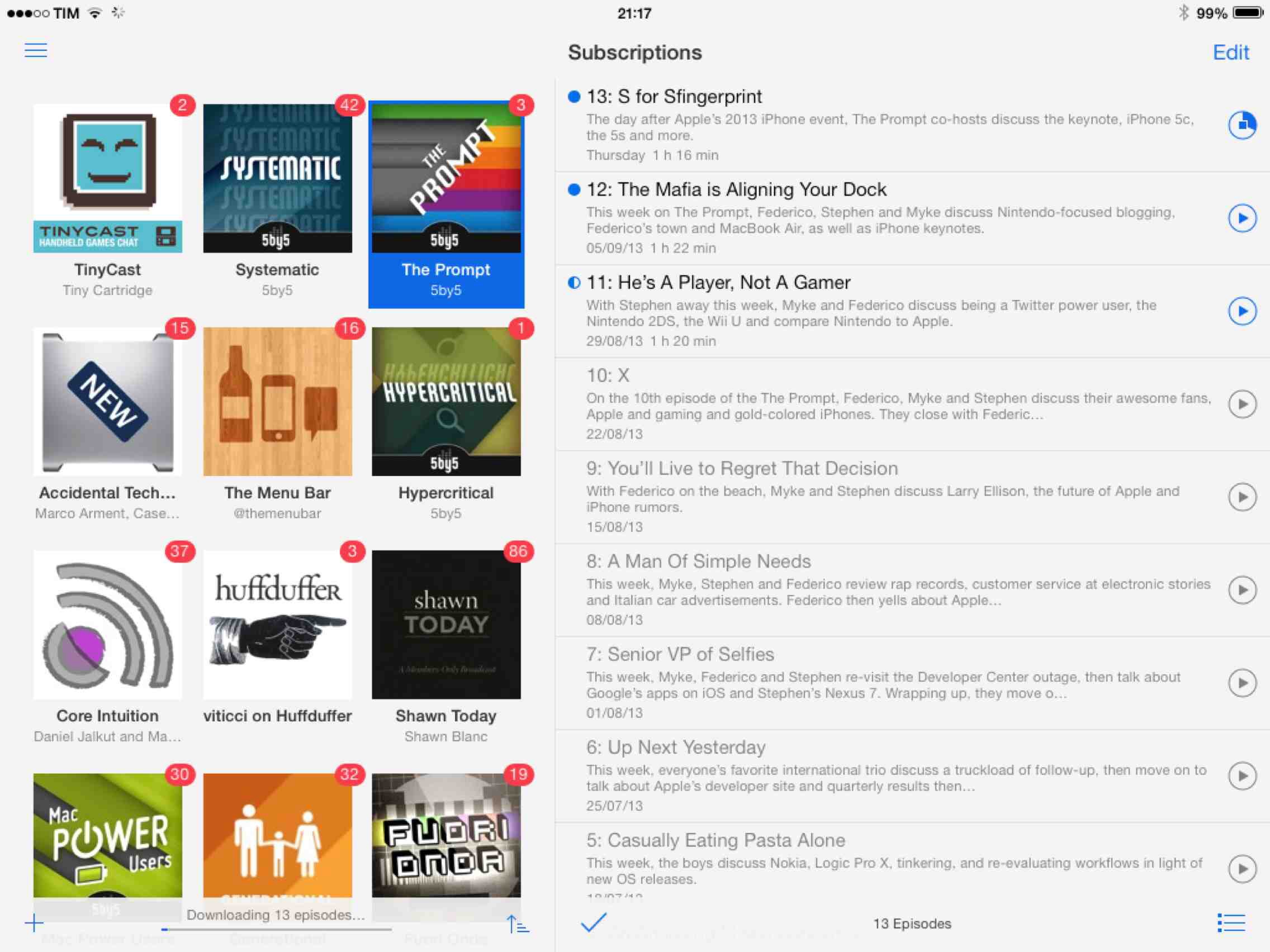
Over the years, I’ve moved my podcast subscriptions to different apps to see which one would fit my listening habits and needs better. I have tried Instacast, Downcast, even Apple’s free Podcasts client with iTunes sync for a while, but never settled on a specific solution for more than six months. The possibility to export a set of subscriptions as OPML to other apps makes it easy to switch, just like it is simple to move RSS feeds from one client to another. But while I have remained loyal to Reeder and Mr. Reader for years now, I’ve never been able to stick with a podcast client for too long. Every time I tried a new app I would say that it was going to be the one for me, but then I encountered an issue, or perhaps a feature was added to a competitor – and I was back exporting my OPML subscription list and relocating to another home.

For the past month, I’ve been testing Pocket Casts 4, developed by the Australian team of Shifty Jelly. Pocket Casts 4 has been approved by Apple, and it will be released on the App Store as soon as Apple will flip the switch for iOS 7 apps on iTunes. Pocket Casts 4 is a Universal app sold at $3.99, and it’s a free upgrade for existing owners of Pocket Casts 3.

While I recognize that I tend to be some kind of an app nomad when it comes to podcast clients, Pocket Casts 4 has some excellent features that work for the way I like to listen to podcasts and organize them. Read more


Amount, A Simple Unit Converter Ready for iOS 7

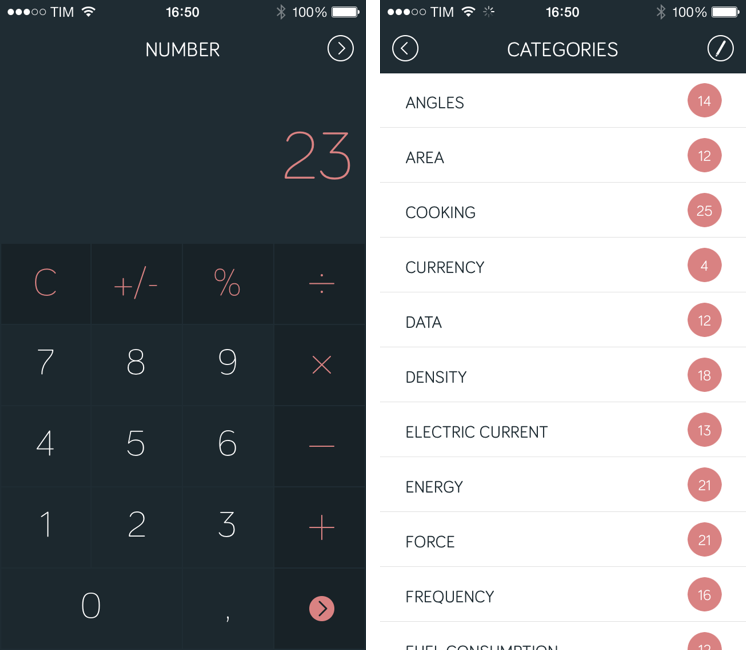
Amount (developed by Marco Torretta) is a unit converter app for iPhone that takes a unique approach in how it lets you enter numbers and pick a unit to convert. The app was updated yesterday to offer a new layout, and it’s ready for iOS 7 with a status bar that blends with the calculator’s dark display (it’s also still compatible with iOS 6 devices, but without the new status bar design).

The main screen of the app is called Number and it’s a standard calculator that lets you enter an amount to convert. Because it’s a calculator, you can use it to do simple operations, and I like how numbers and clearly separated from other keys through color. My only complaint is that there are no sound effects when pressing keys, which can be confusing if you’re not looking directly at the display but still would like to hear feedback from the app. Read more


AroundMe Gets Redesign For iOS 7

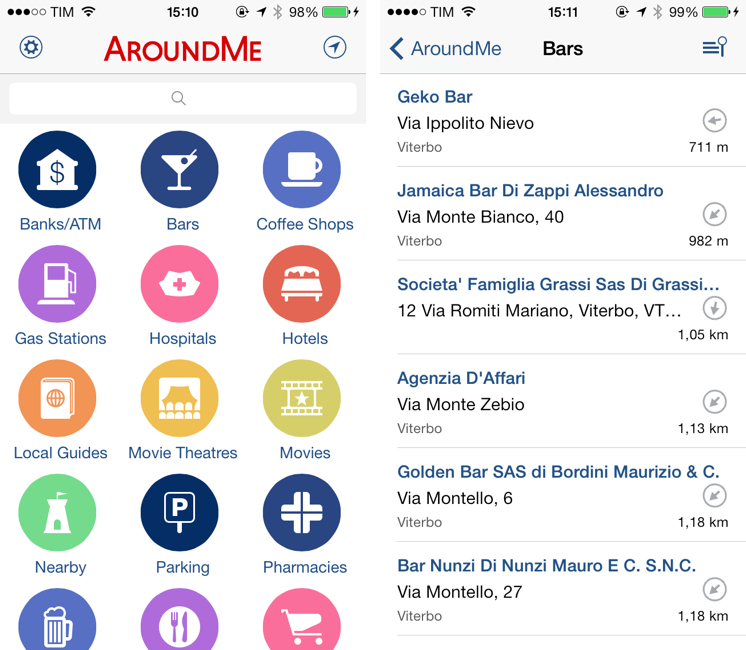
Created by Italian developer Marco Pifferi, AroundMe has long been one of my favorite location-based apps for the iPhone and iPad. In fact, AroundMe is one of the oldest iOS apps I own, as Pifferi always supported the app through the years with free updates and additions that took advantage of Apple’s new OSes and features. With a simple interface and feature set, AroundMe allowed you to easily find nearby places (bars, restaurants, hospitals, hotels, etc) with a rich database and built-in directions for Maps and Google Maps.

AroundMe’s version 7.0, released this week, brings a completely redesigned UI and animations that make the app ready for iOS 7, which is officially coming out on Wednesday. Read more


Stuart Hall’s App Store Experiment

This is an excellent series by Stuart Hall: he developed a 7 minute workout app, and he’s been posting details, numbers, and comments on what it’s like to enter the App Store market today.

Particularly interesting is the switch to a free model with In-App Purchase, detailed in part two:

How does In App Purchase (IAP) stack up against a paid download? For this app it’s been an increase of over 3x from around $22 per day to around $65 per day. The IAP converts at approximate 2-3% of the downloads per day.

[…]

IAP increases revenues - For better or worse for the ecosystem as a whole, it’s been proven over and over again it makes more money.

While Stuart’s story won’t apply to every kind of app category and pricing scheme, there are several data points and charts worth considering. Make sure to check out part one and part two – I hope there will be a part three as well.

Permalink

App Stores and Discovery

Benedict Evans:

After the web directory the next stage was the ‘portal’ - a page with someone’s ideas of what might be useful. This is what Yahoo became, and it’s also what the front page of the iOS or Android app stores look like now. The purpose of these screens is not to allow people to discover your app or service - they cannot hope to be comprehensive in that way. The front pages of an app store do not exist to help developers - they can’t. Rather, they exist to help the users - to ease them into the idea of apps. But they can only scratch the surface of ‘discovery’.

Curation by the App Store’s editorial team can’t be enough if it’s not backed by robust search and discovery algorithms that can provide better search results and personalized recommendations. These are topics that I explored in July for the fifth anniversary of the App Store – and, to an extent, they can be applied to other content sold by Apple, like books and video.

Some may argue that Apple’s recent acquisition of Matcha.tv may signal an increased interest in content recommendation algorithms. While I have no doubt that Apple is working on this, it’s important to remember that the same was said for Chomp last year, and that didn’t result in an improved App Store search or recommendation experience on iOS 6. Maybe Matcha’s algorithm is truly different though, and Apple will find a way to use it to improve discovery on iTunes/App Store – but I wouldn’t expect improvements to become apparent any time soon.

Permalink

Apple Updates App Store Guidelines for Children’s and Gambling Apps

Juli Clover of MacRumors writes about Apple’s latest revisions to the App Store Review Guidelines.

The new section detailing apps for children under age 13 specifies that such apps must include a privacy policy, may not include behavioral advertising (ads based on in-app activity, for example), and must ask for parental permission before allowing children to “link out of the app or engage in commerce.” Apps in the Kids Category of the App Store must be made specifically for children “ages 5 and under, ages 6–8, or ages 9–11.”

In addition to its guideline changes regarding children, Apple implemented two new guidelines that pertain to gambling. Apps that offer real money gaming are now required to be free and are forbidden from using in-app purchases to offer players credit or currency to use in such games.

Emphasis mine. That’s rule 24.3 in the guidelines and it isn’t terribly specific. Not being a parent, I’m not familiar with parental controls, so my initial assumption was that mom or dad would have to enter a password so the child could continue. I asked for specifics on Twitter, and the answer I got clarified that the app will just ask whether you’re a minor. I’m suddenly reminded of this Onion piece.

Parental controls (aka Restrictions) on iOS can also keep your child from installing apps, poking around on the Internet, and from making in-app purchases. Apple’s guide tells you how to turn Restrictions on and set a passcode, but OS X Daily has a quick walkthrough that highlights all the important stuff.

Permalink

Why Are Apps Putting You On A Wait List?

A good piece by Ellis Hamburger at The Verge, who explains why some recent iOS apps have been putting new users on a “wait list” before they can actually start using an app. This is due to the increasingly cloud-based complex scaling challenges that apps (which are downloaded locally) face when trying to work with online components (remotely) for thousands of users.

I understand the difficulties mentioned by Ellis and the developers he interviewed, but I also see part of Ben’s point when he argues that several of these “wait list apps” are free and don’t seek immediate revenue. Mailbox removed the reservation system after it had been acquired by Dropbox, meaning that Dropbox – a larger company – had the human and financial resources to “throw” at Mailbox’s problem. However, I think that resources aren’t a panacea for new apps that rely heavily on server-side features: if anything, the App Store makes it hard to ship apps that are only available to a subset of users, which is forcing developers to implement ideas such as the aforementioned waiting lists.

A better testing process for App Store developers isn’t a new topic, and I wonder if app testing tools made by Apple with support for thousands (instead of hundreds) of “beta” users would alleviate the issues covered by Ellis.

Permalink