OS X 10.6.7 Changes Finder Sidebar Behavior

OS X 10.6.7 Changes Finder Sidebar Behavior

Adam C. Engst at TidBITS:

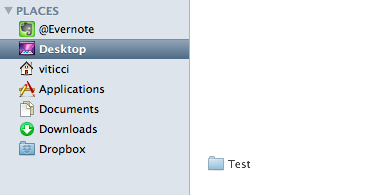
With Mac OS X 10.6.7, Apple not only messed up (and then fixed) font handling (see “OpenType PostScript Fonts Troublesome in 10.6.7,” 27 March 2011, and “Apple Releases Snow Leopard Font Update,” 26 April 2011), they also changed the way you remove items from the sidebar. Now, instead of just dragging items out, you must either Command-drag them out or Control-click them and choose Remove from Sidebar.

I’ve noticed the change too: I was trying to drag a folder out of the “Places” tab, but it wasn’t working. At first I thought I had to restart my Finder for some reason, but that didn’t work either. So I realized maybe something had changed since the 10.6.7 software update, and tried to CMD-drag like I would for items in the menubar. Items in the Finder’s sidebar now share the same behavior of draggable items in the top menubar; Engst believes the change was made after some complaints about accidental removals happening too often, but, frankly, I never removed an item from the Places tab by accident.

Permalink

Mac Mini Vault Tries To Host A Webpage On Apple TV 2G

Mac Mini Vault, a colocation service that allows you to host a website (or multiple ones) on a Mac Mini or Mac Mini Server located in their Chicago data center, is running an interesting experiment to see how a single webpage hosted on an Apple TV 2nd-gen would handle traffic and CPU load. The Apple TV isn’t of course meant for hosting webpages and running on high CPU usage, and in fact the device (with iOS 4.2.2) had to be jailbroken using Seas0npass to enable the installation of lighttpd and a web server.

One of the fun projects going on at Mac Mini Vault is our Apple TV webserver. As much as we ‘d love to see how many Apple TV’s we could mount into a data center cabinet, it will never be a sustainable service to offer. This project was a fun way to see how far we could take the A4 powered Apple TV. The Apple TV is running iOS 4.2.2 (obviously jailbroken) with lighttpd for a web server. You can see the webpage we set up by visiting atv.macminivault.com. We’ll keep an eye on the CPU load and watch the analytics to record how much traffic the Apple TV receives.

The Apple TV-powered webpage is available at atv.macminivault.com, and it’ll be interesting to see how the experiment will play out once curious readers hit the direct link.


Apple Opening A New Data Center in Silicon Valley

Data Center Knowledge reports Apple is adding a new data center in Silicon Valley, set to open in the third quarter of 2011 to provide “additional IT capacity” to Apple’s rumored new cloud services that include music, video, storage, and more. The new space, commissioned to DuPont Fabros Technology, is located in Santa Clara, California, and it’s smaller than the massive data center Apple has been building in Maiden, North Carolina, throughout 2010 and 2011.

Apple is expanding its Internet infrastructure with a new data center in Silicon Valley, as it prepares to bring additional server and storage capacity online later this year. The new server space, housed in a third-party facility, will be smaller than the huge iDataCenter that Apple has built in North Carolina.

DuPont Fabros disclosed the Santa Clara lease in its first quarter earnings, but did not reveal the name of the tenant, which is consistent with its policies. In a conference call with analysts, company executives described the tenant as a “Fortune 50 technology company with excellent credit.” But multiple industry sources have since confirmed that the tenant is Apple.

The website suggests that the wholesale data center space model might be convenient for Apple if they’re looking to deploy a new facility quickly in the next few months, “as wholesale space can be delivered more rapidly than building a new data center.” According to Data Center Knowledge, this new lease refers to a 11,000 square feet space, compared to the 500,000 square feet facility in North Carolina, which had been rumored to be set for an expansion at 1 million square feet as well.

DFT’s Santa Clara site will be built in two phases, each with 18.2 megawatts of capacity. When it is completed, the building will span 360,000 square feet, with a total of 176,000 square feet of space on a 42-inch raised floor, which allows cooling capacity for high-density server installations.

It’s not clear whether Apple has any expansion options for additional space at the facility. But many of DuPont Fabros’ largest tenants follow a pattern in which they lease space in the first phase of a data center, and later take additional space once the second phase is available.

It’s not clear at this point how the new data center is going to be used and if Apple is already planning an expansion by ordering more space; more details about DuPont Fabros and the Santa Clara facility can be found in the original report here.

In the past months, speculation had pegged Apple’s data center plans to be focused on a major MobileMe revamp, dubbed iCloud, to be announced at the upcoming WWDC as part of the next version of iOS and Mac OS X Lion. The North Carolina data center powering iTunes and MobileMe services was rumored to be ready for launch this Spring, but no additional details were provided by Apple on the facility’s official opening, leading many to believe work hasn’t been finalized yet. Back in April, a report also claimed Apple had ordered 12 petabytes of storage for iTunes video content, without mentioning, however, whether such a massive storage would be destined to streaming, or the existing iTunes Store infrastructure.



Final Fantasy Tactics for iPhone Launching This Summer, Coming to iPad Too

Originally announced at E3 2010, Final Fantasy Tactics for iPhone (a porting by Square Enix of the PSP game that was another porting from PSX) has gone through a series of “misunderstandings” and delays regarding the release date, which apparently was initially confirmed for September 15, 2010, but was later denied by Square Enix, who went on to say the game would come in Spring 2011. With June approaching and the game still nowhere to be found in the App Store, it looks like Square Enix won’t make it for a Spring launch, but this time the company has posted an update on the app’s official Facebook page, reassuring everyone that Final Fantasy Tactics will land on the iPhone between June and July, and that an iPad “HD” version is also in the works, although it will launch after the iPhone porting.

Assistant producer Shiina writes:

But now the development reaches the final step and we can see the actual schedule. Thus, YES, finally I can tell you when it will be released.

FFT: WoL will be on sale somewhere between late June - mid July. We have announced “It’s coming Spring 2011” last year so we’re now working pretty hard for the release in June because July is not spring anymore.

We’re also making the iPad version which supports 1024x768px HD resolutions.

No details on pricing have been revealed yet, and information on the iPad version is scarce. It’s good, however, to see the game finally approaching public release after a year of waiting – I played both the original FFT on my PSX and FFT:WOL on the PSP, and I can’t wait to see how Square Enix will redraw controls for multitouch, or simply add new content for iPhone owners. [via TUAW]


Rumor: Apple Working on “Apple Store 2.0” Launch

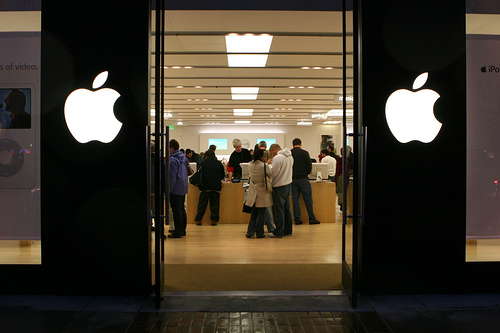
Speculation around Apple’s May 22 retail meetings is running wild these days, and following reports of NFC-equipped tables, the return of the Back to School program and iPads being shipped to Apple Stores for retail specialist usage through RetailMe, 9to5mac is now reporting Apple’s retail plans for this weekend are much bigger than previously expected. According to the website, Apple has been busy working on a major Apple Store 2.0 launch, an internal name for what supposedly is a complete overhaul of the Apple Store experience that saw direct input by Steve Jobs, Jonathan Ive and Senior VP of Retail Ron Johnson.

Apple Store 2.0 is said to give more importance to Personal Setups, a new initiative launched by Apple a few months ago that allows users to be assisted with the purchase of a new Mac in the creation of a new iTunes account, first App Store run and Mac App Store purchases. Personal Setup is rumored to be relocated in new areas inside the Apple Store called Startup Sessions which, among other things, will feature interactive iPads for signage instead of paper. Whether or not these could be the same iPads AppleInsider is reporting on is unknown at this point. 9to5mac also posted more details of this alleged Apple Store 2.0 plan:

Next, these new Apple Stores – at least in some locations – will feature beefed up displays, which are described as “huge,” in addition to brand-new sound systems. Besides those in-store changes, Apple is set to release a brand-new Apple Store iOS application – possibly on Sunday – that is even more interactive. For example, a user with the app can walk into the store and the app will know which location the user is at. The app can even ask the user if they’d like to speak to a specialist, for example.

Details on the new Apple Store app are unclear, however, as the app was already updated months ago to include check-ins, as we reported, and the possibility to see a photo of the employee that will assist you was included, but apparently never effectively used by Apple. Perhaps the rumored Apple Store 2.0 experience will unlock more functionalities in the Apple Store app, and if so we’ll definitely know more on Sunday, May 22, after the retail meetings end.


Apple Equipping Stores with iPads Running New RetailMe?

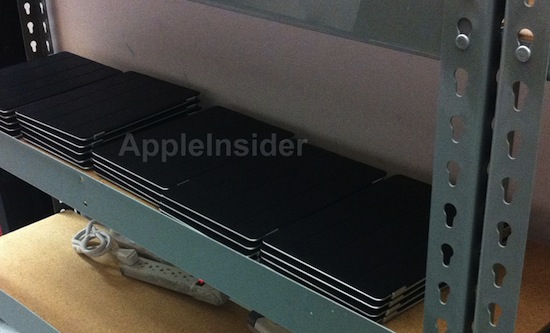
Amidst all the speculation surrounding Apple’s all-hands meetings for retail employees and store leaders set for Sunday, May 22, AppleInsider reports this weekend’s retail plans might not be about a new product launch, 10th anniversary celebration or NFC payments, as the rumors suggested, but rather a series of trainings for employees using iPads running the new custom RetailMe software. According to AppleInsider, retail stores have been receiving stockpiles of iPad 2 featuring black leather Smart Covers, with these iPads being meant for on-the-job use by retail specialists.

People familiar with Apple’s retail operations revealed that stores across the U.S. have been stocked with dozens of iPads that are being prepared for use by employees. Training and utilization of the hardware could begin as soon as this weekend.

It’s not clear whether the iPads are destined to replace Apple’s current in-store payment system based on EasyPay and the iPod touch, but it’s likely that they will be used alongside the portable POS system to better showcase products and features to customers. Apple deployed the iPad 1 in its retail operations last year to allow employees to manage and schedule appointments for people waiting at the Genius Bar (I saw one myself at Rome Apple Store); the new iPad 2 shipments, though, might be linked to the internal release of an updated RetailMe software.

The delivery of iPads to stores around the country comes as Apple is apparently prepared to release an iPad version of its proprietary in-house communications client known as RetailMe. The RetailMe service offers information about products and training videos for retail employees.

One person privy to the workings of Apple’s brick-and-mortar stores suggested that the RetailMe software for iPad could turn out to be the be the password protected gigabytes of corporate training data that employees were recently issued. Still, as usual, employees have been kept in the dark, leaving them to put pieces together and draw conclusions based on the available evidence.

Indeed, BGR reported a few days ago employees were asked to download from Apple’s corporate servers a folder called “training” containing GBs worth of information and material. AppleInsider also reported last night this weekend’s meeting could be used to launch the 2011 Back to School program.


Apple Temporarily Freezing In-App Purchase Approvals?

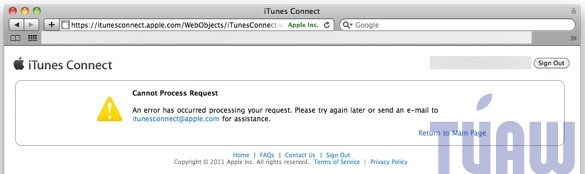
TUAW reports a number of iOS developers have been unable for over a week now to get their in-app purchase content approved by Apple, as the company requires in the iTunes Connect developer portal to test IAP with a test user account, but this account has been offline with no explanation from Apple.

As a matter of policy, Apple requires developers to test in-app purchases (IAP) with a test user account before the application in question can be approved. Unfortunately, this test account has been offline for a week now with no word as to why. If you are a developer, you can see the relevant thread on Apple’s own developer forums here.

Whilst the impossibility to test in-app purchases and thus get the additional content approved may simply be a technical error on Apple’s side, it looks rather curious considering the recent debate surrounding Lodsys and its patent infringement claims against independent iOS developers. As TUAW notes, this can be a simple coincidence that has nothing to do with Lodsys, but The Guardian reported yesterday Apple was “actively investigating” the claims that hit iOS devs, so there’s a chance Apple might have suspended IAP approvals before a decision is made.

If you’re a developer and have encountered a similar error, let us know in the comments. More information is available on the Dev Forums.

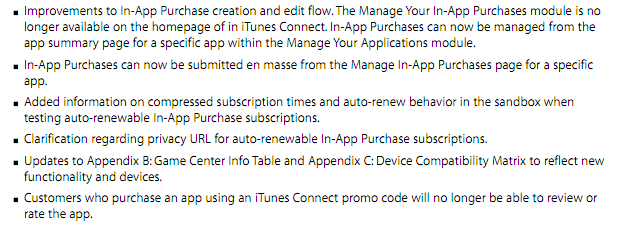
Update: the iTunes Connect Developer Guide was updated on 5/11 including some changes to in-app purchases, but we can’t confirm whether these changes are related to the inability of testing in-app purchases with a test user account. The ITC Developer Guide can be found here.

Improvements to In-App Purchase creation and edit flow. The Manage Your In-App Purchases module is no longer available on the homepage of in iTunes Connect. In-App Purchases can now be managed from the app summary page for a specific app within the Manage Your Applications module.

[Thanks, Jason]

Update #2: TUAW reports the issue seems to be resolved.


Parallels Transporter Makes PC to Mac Migration Dead Simple

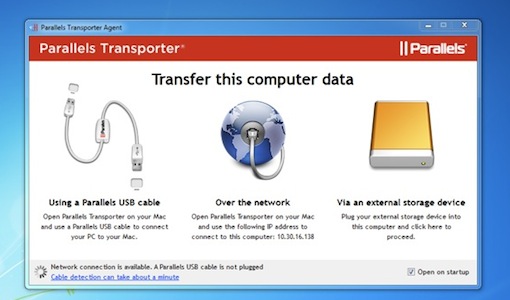
Parallels, probably best known for its popular virtualization software, has today released a new product that lets you make migration from Windows to OS X dead simple. The product, Parallels Transporter is being offered at a special introductory price of $0.99 on the Mac App Store (it’s regular price will be a rather expensive $39.99) and allows users to automatically transfer music, pictures, documents and more from a Windows computer to a Mac.

Using an external hard drive, wireless network or a Parallels USB transfer cable, Transporter will automatically transfer the data to the appropriate locations the Mac. Whether it is documents in the home directory or bookmarks for browsers, Transporter will do all the work in correctly transferring the users files.

We created Parallels Transporter to be the simplest, most efficient way to transfer everything you need from your old PC to your Mac in just a few easy steps. Now you can move to a Mac without the time-consuming chore of manually moving files and without the expense of hiring somebody to do it for you.

Transporter will even transfer over Windows applications and other files into a virtual machine on the Mac so that if you end up using Parallels Desktop, everything will be set up and ready to go for you – although note that this does require the purchase of Parallels Desktop which isn’t included in Transporter.