Posts in news

Apple Releases iOS and iPadOS 13.2 with New Features, AirPods Pro Support, and HomePod Updates

Apple has released iOS and iPadOS 13.2, which is necessary to operate the AirPods Pro that will be in stores on Wednesday, October 30th, and adds several new features to iPhones, iPads, and the HomePod.

One of the most-anticipated features is Deep Fusion, which harnesses the power of the A13 Bionic Neural Engine to generate photos that combine elements of several exposures to bring out additional detail and textures in low light settings. The feature works with the iPhone 11, 11 Pro, and 11 Pro Max, comparing multiple shots pixel-by-pixel to assemble a composite image that is better than any single image captured by the technology. To see examples of Deep Fusion in action, check out Federico’s recent photo tour of Rome. The Camera app has also gained the ability to change the video resolution from the app’s UI for the first time on the iPhone 11, 11 Pro, and 11 Pro Max.
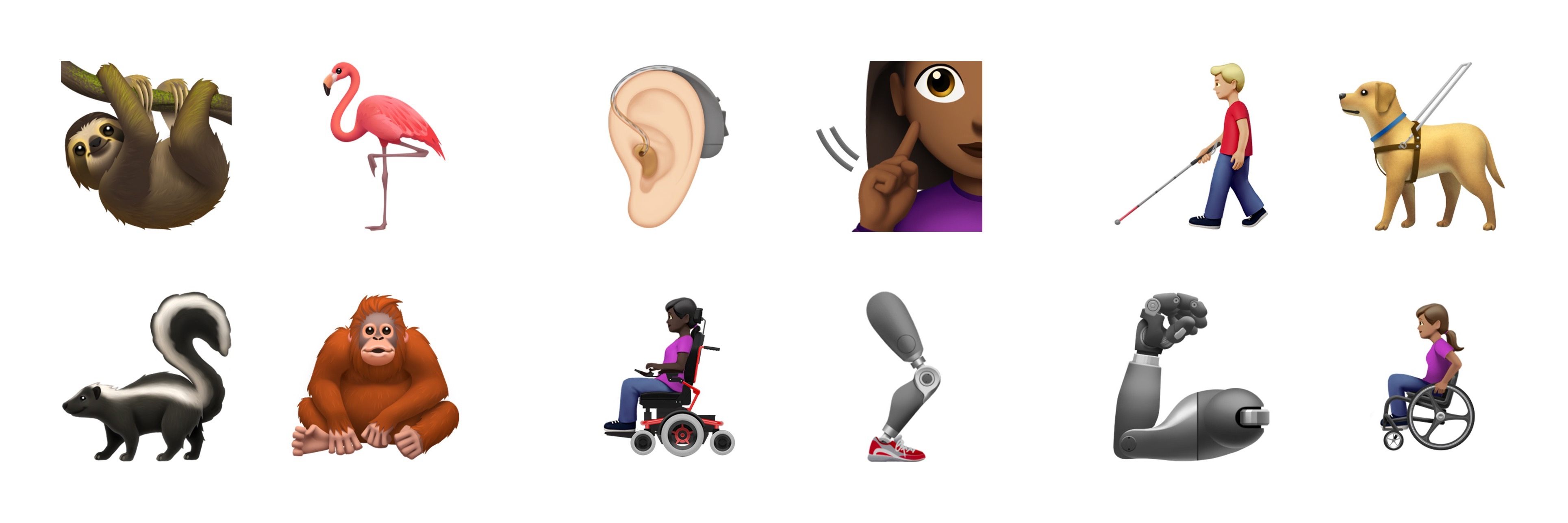
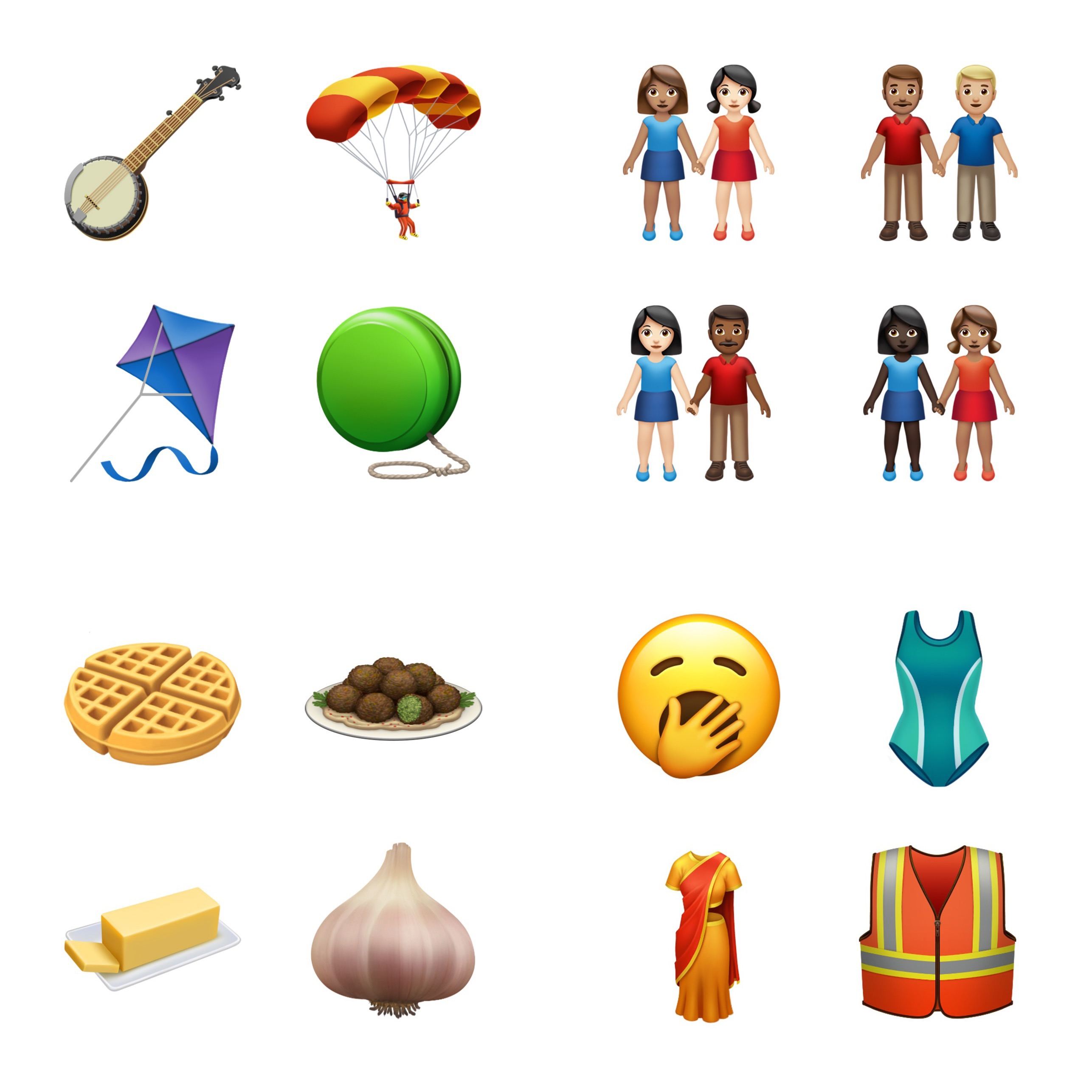
As has become something of a tradition each fall, Apple has paired today’s update with new emoji. Revealed in the iOS and iPadOS 13.2 beta, there are over 70 new emoji including people in wheelchairs, skin tone support for people holding hands, a sloth, a waffle, a yawning face, a skunk, garlic, a yo-yo, and a flamingo.

In addition to support for the new AirPods Pro, iOS and iPadOS 13.2 include the Announce Messages feature which enables Siri to announce new messages via a user’s AirPods as they arrive. HomeKit gains support for Secure Video and HomeKit routers too. Secure Video is designed for secure storage of video taken by home security cameras and includes support for detection of people, animals, and vehicles. Apps can also be deleted from an iPhone or iPad’s Home screen via a quick action for the first time.

Apple’s Shortcuts app received a few updates as part of iOS and iPadOS 13.2 too. The app now works with the Apple Watch, which will provide users with greater flexibility to run their shortcuts. Also, there is a new Feed URL property for podcasts and a Handoff playback action, which I can’t wait to try. Undo allows for reverting parameter changes too.

Apple has also added new Siri privacy settings that allow users to decide whether to allow Apple to store Siri and dictation audio. Siri and dictation histories can be deleted from Settings too.
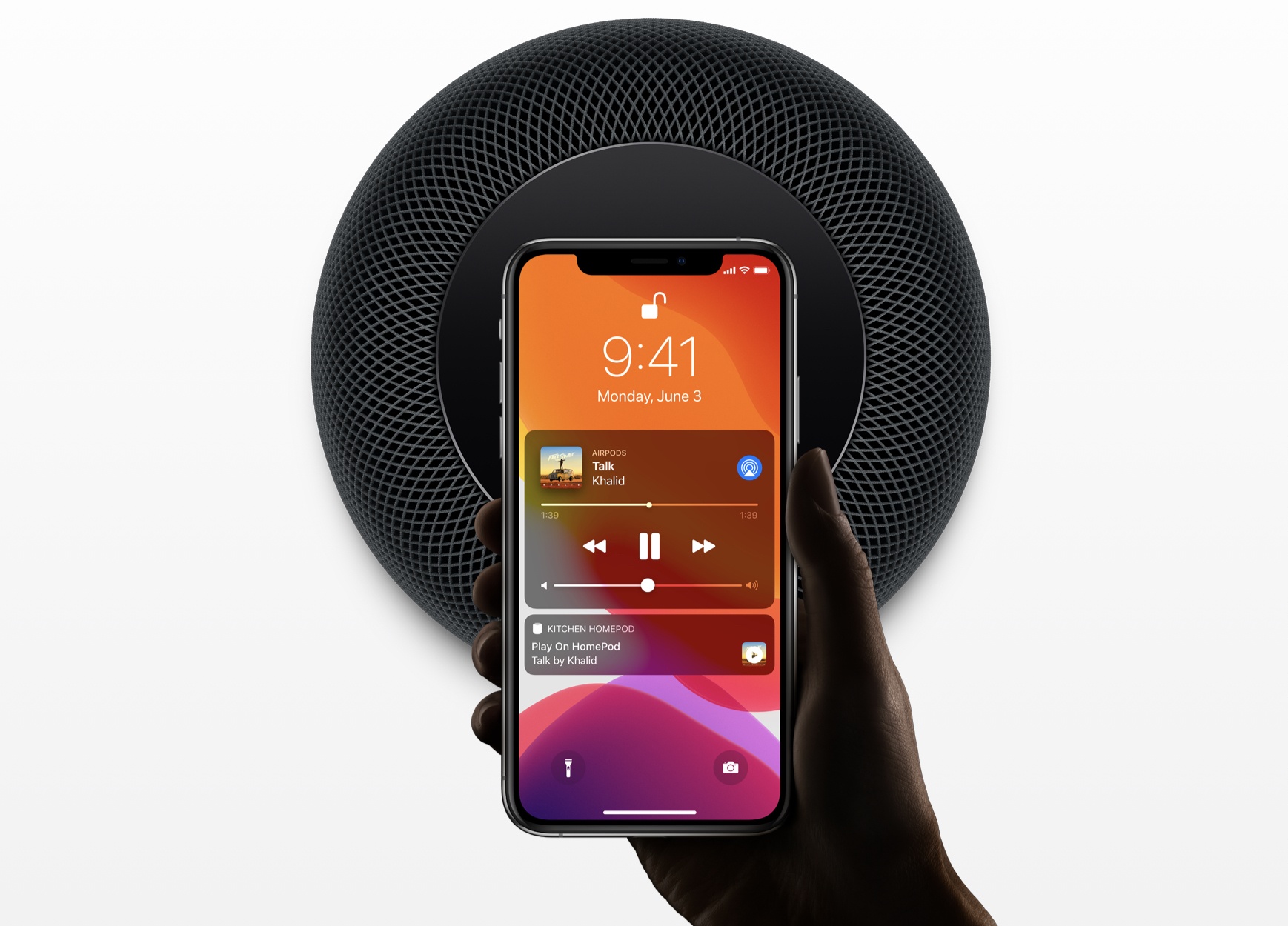
Originally announced at WWDC, Apple has updated the HomePod with several new features. With multi-voice support, the HomePod can recognize the voices of different members of a household, allowing them to each receive an individualized experience. Another big HomePod feature is Handoff support for music, podcasts, and phone calls, which allows you to tap your iPhone on your HomePod to continue the audio on it instead of your phone. HomeKit scenes add support for music, and the HomePod can now play Ambient Sounds, which include things like the sound of a rain storm. Finally, users can set sleep timers for music or Ambient Sounds with their HomePods too.
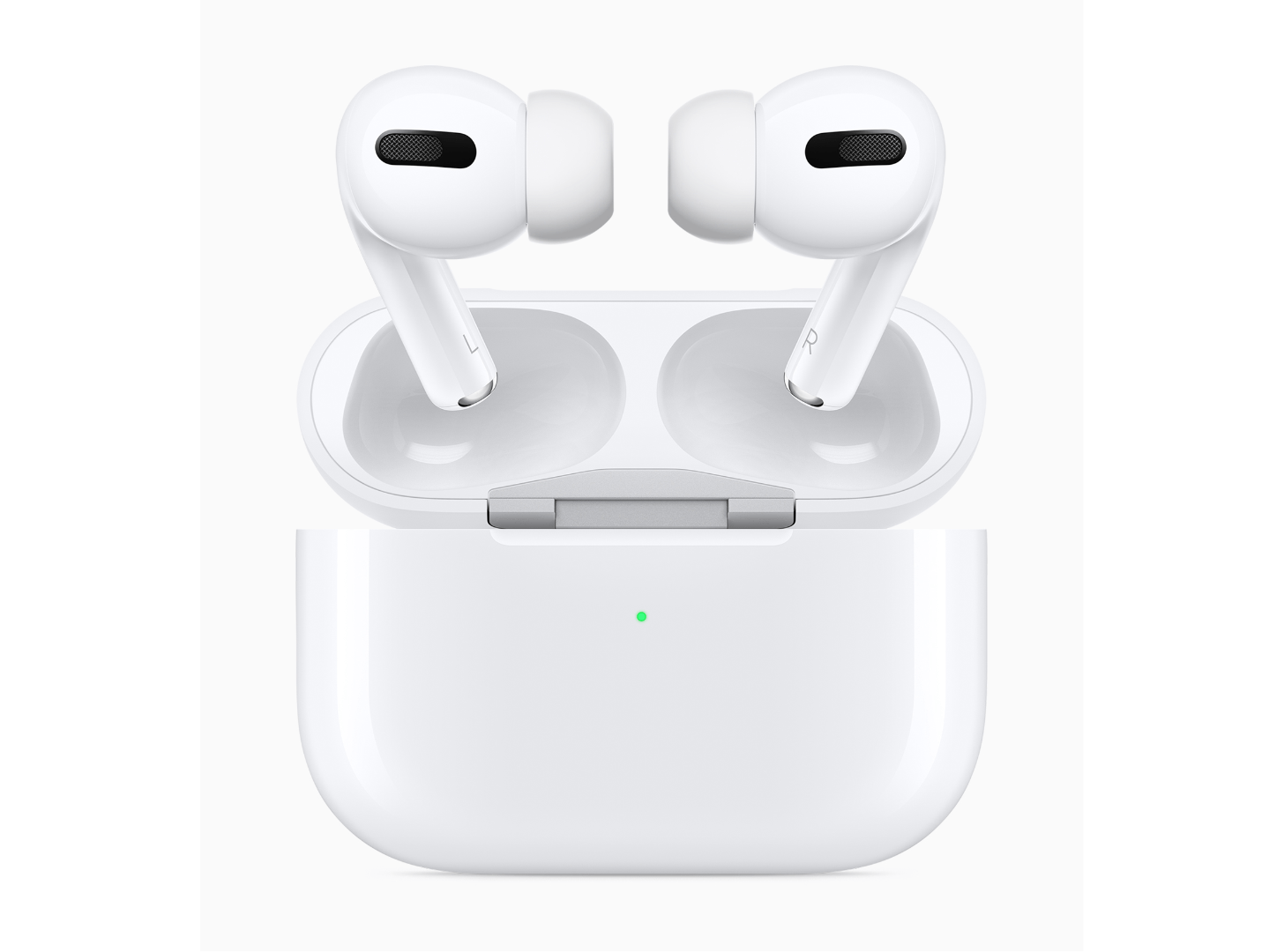
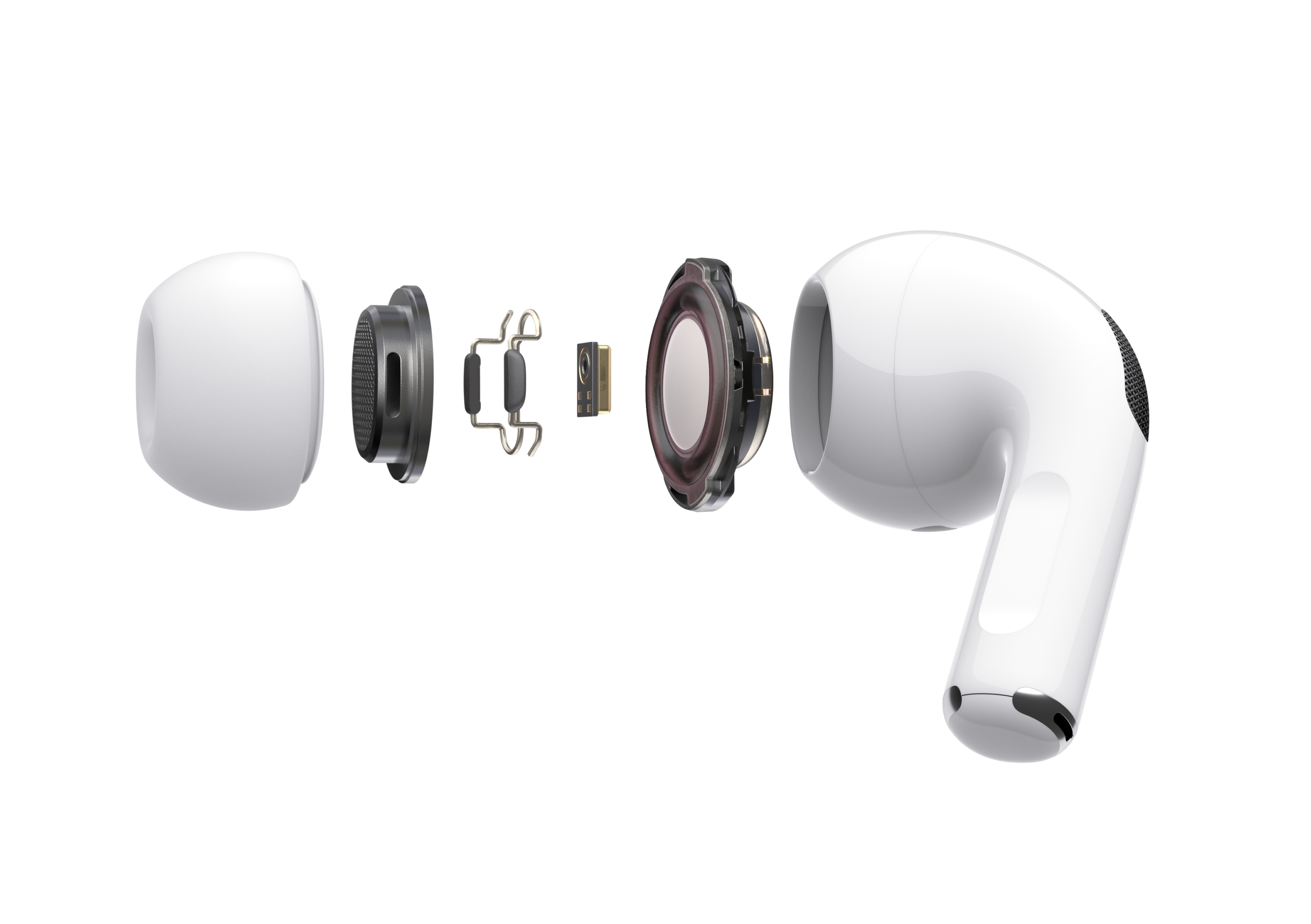

Apple Debuts AirPods Pro, a New Premium Model with Noise Cancelling

Today Apple announced a new, premium model of AirPods which is now available for purchase: AirPods Pro. Rather than replacing the existing second-generation AirPods, Apple is launching AirPods Pro as a separate option for users who want the premium features included in the new Pro model: active noise cancelling, water and sweat resistance, Transparency, and Adaptive EQ. AirPods Pro can be ordered now for $249, and will be in stores on October 30th, just in time for the holiday shopping season.

The new AirPods Pro use two microphones, one that faces outward and one that faces toward the ear for active noise cancellation, adapting the signal 200 times per second. Transparency mode uses the microphones to allow users to listen to music while also hearing their surroundings.

When fitting the AirPods Pro for the first time:

… advanced algorithms work together with the microphones in each AirPod to measure the sound level in the ear and compare it to what is coming from the speaker driver. In just seconds, the algorithm detects whether the ear tip is the right size and has a good fit, or should be adjusted to create a better seal.

The AirPods Pro also use a new feature called Adaptive EQ that:

automatically tunes the low- and mid-frequencies of the music to the shape of an individual’s ear — resulting in a rich, immersive listening experience. A custom high dynamic range amplifier produces pure, incredibly clear sound while also extending battery life, and powers a custom high-excursion, low-distortion speaker driver designed to optimize audio quality and remove background noise. The driver provides consistent, rich bass down to 20Hz and detailed mid- and high-frequency audio.

The AirPods Pro have changed the way music playback and phone calls are controlled too:

Switching between Active Noise Cancellation and Transparency modes is simple and can be done directly on AirPods Pro using a new, innovative force sensor on the stem. The force sensor also makes it easy to play, pause or skip tracks, and answer or hang up phone calls. Users can also press on the volume slider in Control Center on iPhone and iPad to control settings, or on Apple Watch by tapping on the AirPlay icon while music is playing.

According to Apple, the AirPods Pro case provides total battery lasting 24 hours playing music and 18 hours talking on an iPhone, while a single charge of the AirPods Pro provides 5 hours of music listening with noise cancellation off and 4.5 with it turned on. Like the second-generation AirPods, the Pro model also features the H1 chip and can be charged wirelessly with a Qi charger. The AirPods Pro come with a USB-C to Lightning cable and require iOS 13.2.

Earlier this year Apple debuted the first follow-up to the original 2016 AirPods model, changing very little about the device: the second-generation AirPods offered always-on Hey Siri support, an optional wireless charging case, and some connectivity improvements. By contrast, AirPods Pro represent a true evolution for the AirPods line.

It makes sense, however, that the new model doesn’t replace its predecessor, but merely accompanies it in an expanded lineup. Most AirPods customers likely don’t want or need noise cancelling functionality, so the standout feature of AirPods Pro is targeted toward a smaller niche of customers. Following Apple’s pattern with its other products, there’s now a mass-market, lower-cost version of AirPods and a Pro model that offers something extra, but at a higher price tag.

One area Apple could have differentiated AirPods Pro even further is by providing new color options, but white remains the only available finish. As nice as a darker shade would be, from a marketing standpoint it’s hard to argue against maintaining the status quo with AirPods’ iconic white finish. When your product can be effortlessly recognized in public, you don’t change that.


Apple Music’s Beats 1 Introduces New Music Daily with Zane Lowe

On Friday, Apple Music’s Beats 1 debuted a new Zane Lowe show called New Music Daily featuring the best new music across several genres along with interviews and commentary designed to complement Apple Music’s playlist of the same name.

As described by Apple, New Music Daily is all about what is hot now:

Music moves fast. To keep up with hungry fans and tireless creators, Apple Music launched New Music Daily, our playlist for the latest and greatest must-hear songs from pop, hip-hop, Latin, and beyond. This show, broadcasting live on Apple Music every Friday, is the playlist brought to life: Hosted by Zane Lowe, it features interviews with today’s most important artists, sharp commentary, and, of course, all the new songs you need to hear right now.

The show streams live on Apple Music every Friday at Noon New York time and can be replayed later.

https://twitter.com/Beats1/status/1187761241114103809

Lowe’s new show is a companion to Apple Music’s New Music Daily playlist, which is updated daily and is a rebranded version of its Best of the Week playlist. Listeners can visit a dedicated page in Apple’s Music app that collects the show and playlist as well as video interviews with recording artists in one place.

The inaugural episode of New Music Daily, which runs just over one hour, spotlights a wide range of music and interviews including appearances by Selena Gomez, Coldplay’s Chris Martin, and an excerpt from a longer interview with Taylor Swift that will be released next week. New Music Daily’s Apple Music page also includes excerpts of upcoming video interviews with Taylor Swift and Kanye West.

In an interview with People.com, Lowe, who is Apple Music’s global creative director, expanded on his vision for how the playlist and new show will work together:

Our New Music Daily playlist was built in the image of the artist and the fan. Music is constant and it’s in the hands of the artists now. Artists don’t want to wait anymore, and we wanted a really big playlist that reflected that sentiment and could do it quickly. I’ll be in the studio with artists and I ask when they’re putting something out and they’ll say, “I don’t know, in an hour?” We’ve been clearing that space for artists for years, and with New Music Daily as a live show we’ll continue to event-ize music, bringing an audience around shared listening moments, and reflecting the way artists want to release music on their own terms.

One of the consequences of streaming music services is that the release of an album is often not the way people hear the latest music from their favorite artists anymore. Instead, musicians release a steady stream of singles and EPs, only occasionally collecting them as full-length albums. It’s the kind of continuous change that demands a different approach to how new material is surfaced.

Having listened to the first episode of New Music Daily, it strikes me as a formula that will work. The playlist currently includes 85 songs, which is a lot. What Lowe’s new show does is provide context through his interviews and commentary that serve as an entry point into the larger playlist. By sending listeners to the playlist for the latest tracks from pop culture phenomenons like Swift and Gomez, New Music Daily can help spread awareness of lesser-known, emerging artists that included too.

You can check out the first episode of New Music Daily that aired Friday here.


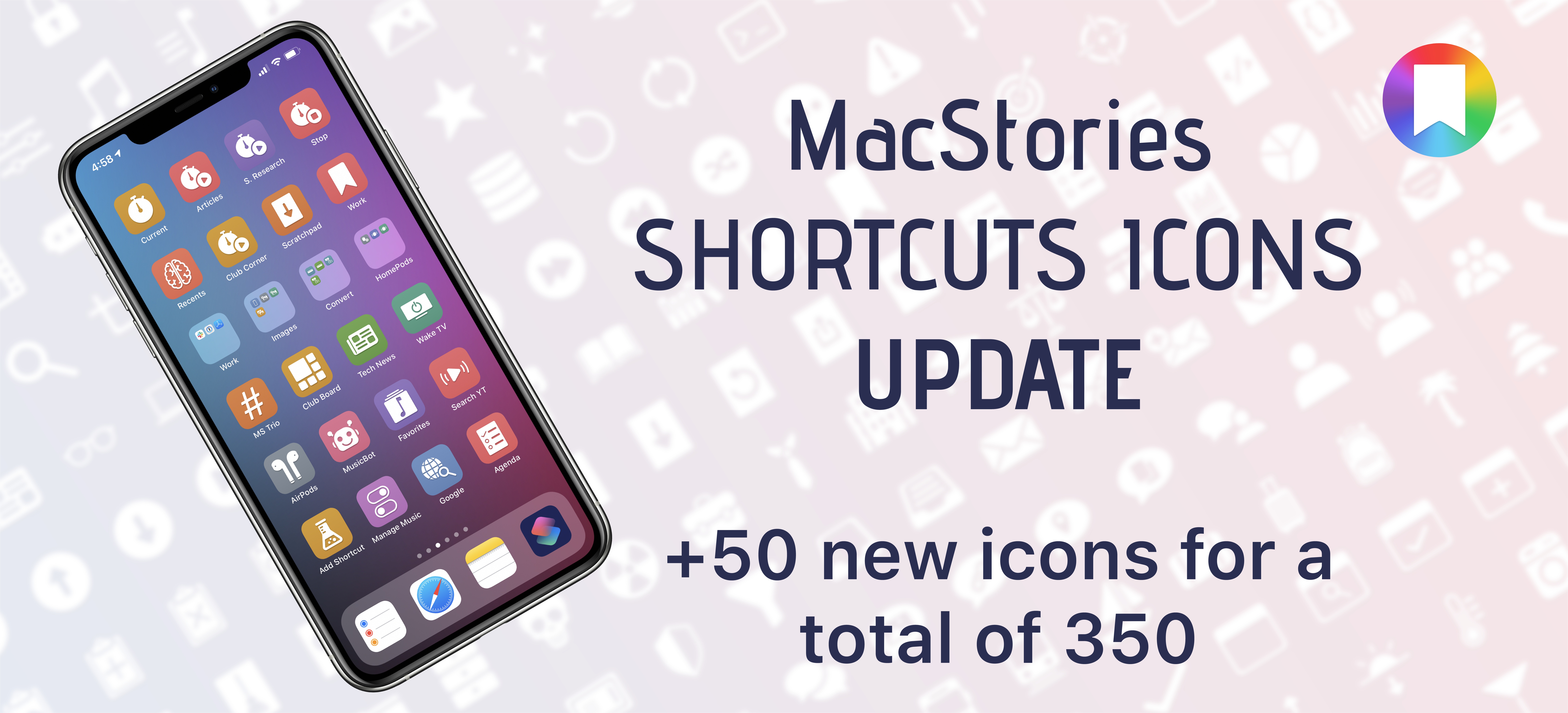
MacStories Shortcuts Icons Receives Free Update with 50 New Glyphs

I’m happy to announce that MacStories Shortcuts Icons, our custom icon set for adding shortcuts to the Home screen, has received an update today that adds 50 new glyphs.

The update is available now for free for existing customers (just download the file again with the link in your original email receipt); for new customers, the update is part of the standard MacStories Shortcuts Icons purchase, which is available at $14.99 for a total of 350 custom Home screen glyphs.

All sales are final. You can read our license and terms of use here.

For those who may have missed it last month: MacStories Shortcuts Icons lets you customize the look of your shortcuts added to the Home screen by choosing from hundreds of glyphs designed specifically with Shortcuts users in mind, going beyond what’s provided by Apple in the Shortcuts app.

Read more


Mac Catalyst Isn’t Only for Bringing iPad Apps to the Mac for the First Time

So far, the most common path to releasing a Mac Catalyst app on the Mac App Store has been to adapt and release an existing iPadOS app as a first-time Mac app. However, that’s not the only route to the Mac App Store. Apple allows developers to use Mac Catalyst in a variety of ways, as Steve Troughton-Smith has demonstrated with HCC Solitaire, a Mac-only game built using Mac Catalyst. He and Brian Mueller, the creator of CARROT Weather, have also used Mac Catalyst to release new versions of Mac apps that were previously built with AppKit.

As Troughton-Smith’s HCC Solitaire confirms, developers are not required to have an iPad app on the App Store to release an app on the Mac App Store using Mac Catalyst.

https://twitter.com/stroughtonsmith/status/1183880710840635400

The game is an implementation of classic solitaire that’s just $0.99 and displays no ads. Perhaps most interesting from a developer standpoint, though, is that you won’t find HCC Solitaire if you search for an iOS or iPadOS version on the App Store. Troughton-Smith built the game using UIKit and the tools provided as part of Mac Catalyst without also creating an iPadOS version.

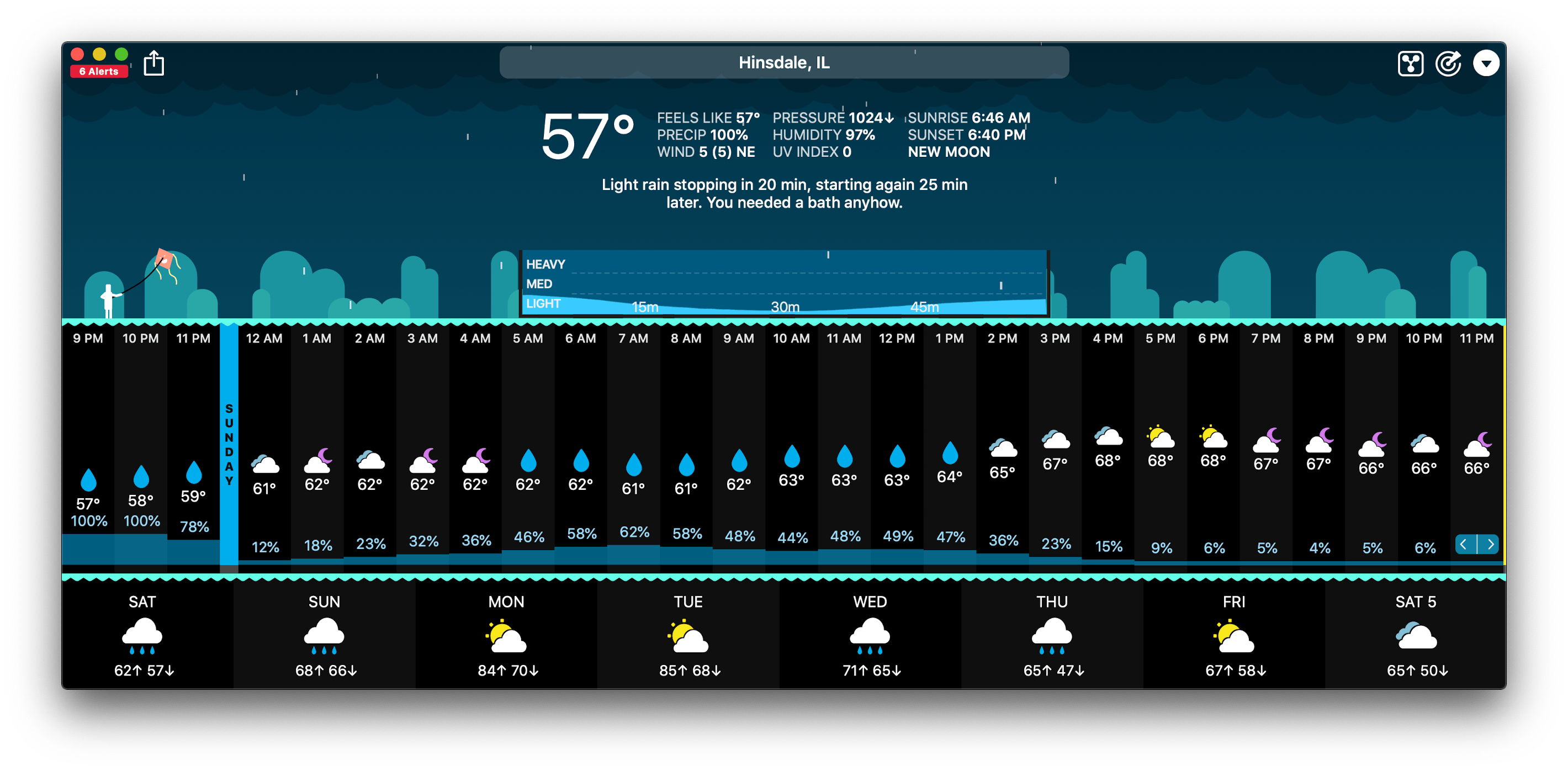
Brian Mueller's CARROT Weather.

Brian Mueller’s CARROT Weather.

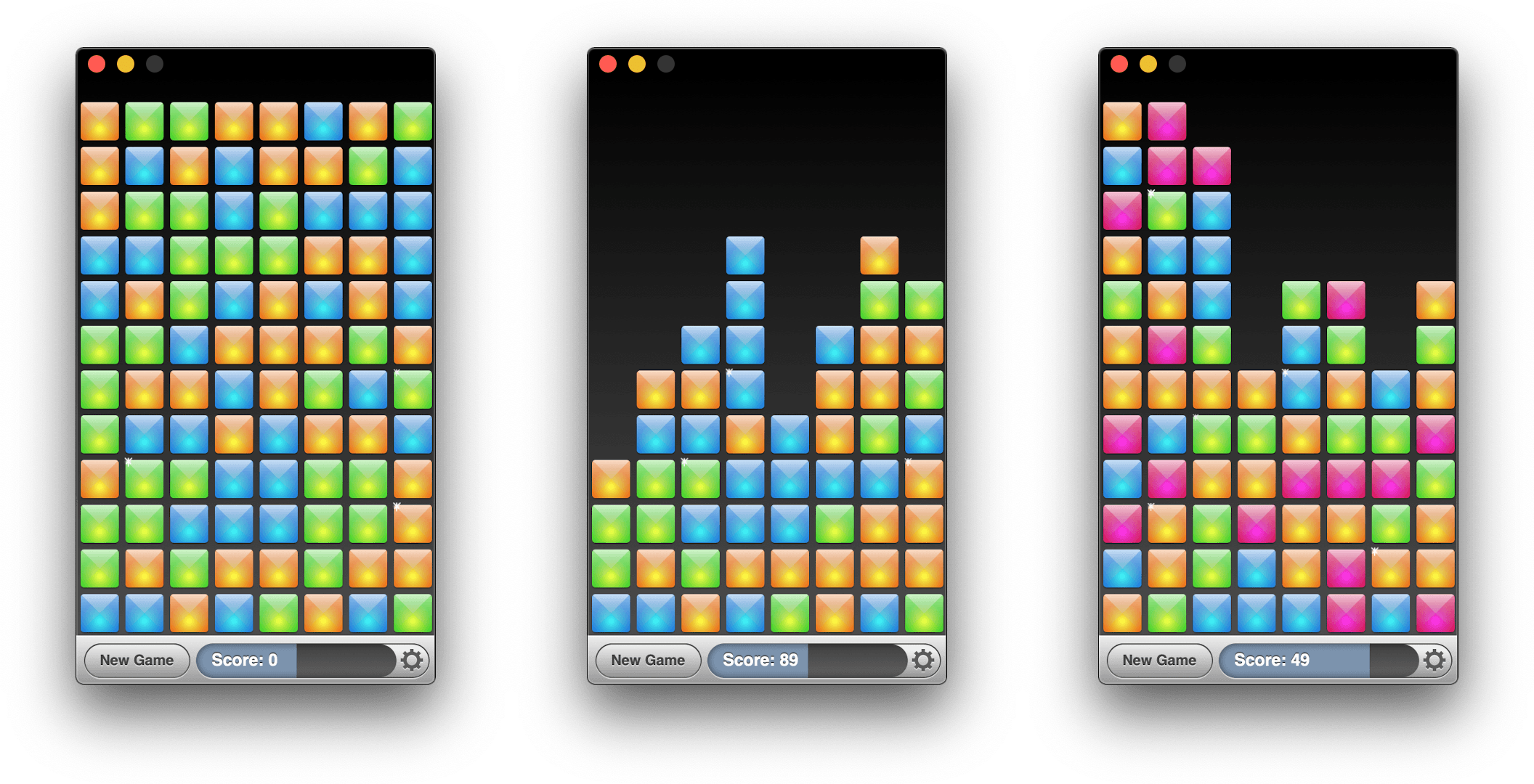
Mac Catalyst apps can also be swapped in for existing Mac apps. That’s what Brian Mueller did with CARROT Weather, which was launched the day macOS Catalina was released as version 4.13 of his existing AppKit app. Troughton-Smith took the same approach with SameGame, a color-matching game in which you earn points by eliminating contiguous blocks that are the same color, releasing version 2.2 shortly after Catalina’s release.

Steve Troughton-Smith's SameGame.

Steve Troughton-Smith’s SameGame.

I don’t expect either of these approaches to become the main way that Mac Catalyst apps are released, but I’m glad to see that it’s possible. Most developers will be bringing an iPadOS app to the Mac for the first time, but business models, developer backgrounds, the APIs used in an app, and many other variables play a role in the decision of whether to use Mac Catalyst. It’s encouraging to see Apple take a flexible approach and allow developers to experiment because that makes Mac Catalyst useful to more of them. However, as I noted in my Catalina review and elsewhere, that flexibility needs to be coupled with bug fixes, documentation, and rapid evolution of Mac Catalyst for it to become a viable option for a wider audience of developers.


New Beats Solo Pro Headphones Featuring Apple’s H1 Chip Are Available for Pre-Order


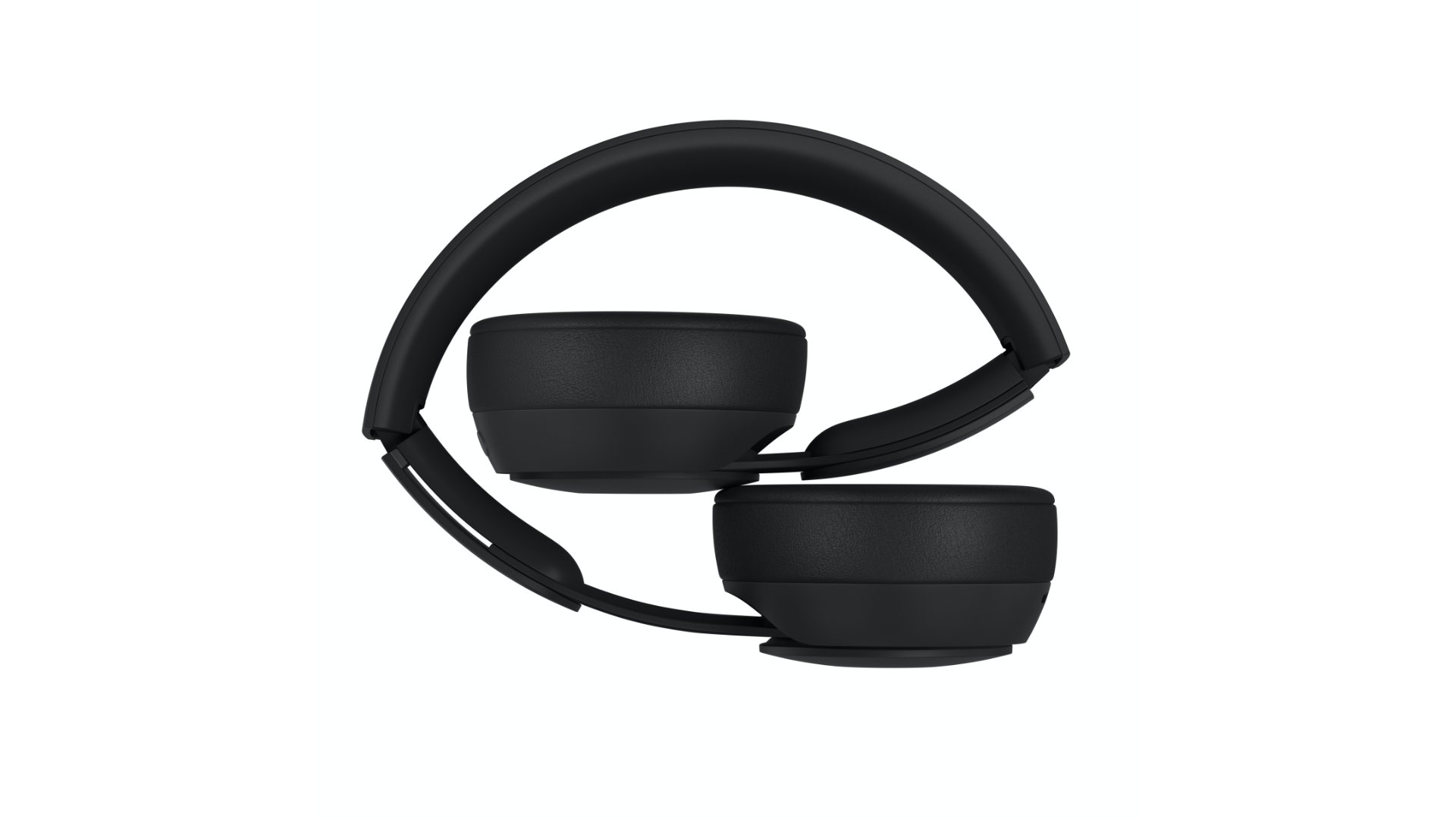
Apple subsidiary Beats has announced a new version of the Beats Solo Pro noise cancelling headphones, which can be pre-ordered now and will begin shipping at the end of the month.

The new headphones, which retail for $299, feature Apple’s H1 chip that also powers the second-generation AirPods and Powerbeats Pro. The H1 chip enables hands-free ‘Hey Siri’ commands and the ability to share audio with someone using the Audio Sharing feature that Apple debuted with iOS and iPadOS 13. The headphones also have volume, track, and call controls on the right ear cup and a button for turning noise cancellation and their Transparency feature on and off on the left ear cup.

Unfolding and folding the Solo Pros turns them on and off.

Unfolding and folding the Solo Pros turns them on and off.

The Beats Solo Pros feature active noise cancellation to filter out external sound and what Beats calls Transparency that uses external microphones to allow some sounds through, so users remain aware of their surroundings when using the headphones. According to Beats, the headphones, which are turned on and off by unfolding and folding them, get 22 hours of battery life with noise cancellation and Transparency turned on. If those features are turned off, the company says the battery life lasts 40 hours. The company also says that a ten-minute charge provides up to 3 hours of battery life. The Solo Pros charge with a USB-A to Lightning cable for the first time too.

The Solo Pros come in six colors: light blue, red, dark blue, ivory, black, and gray. Although The Verge and other sites report that the new headphones will begin shipping on October 30th in the US, apple.com currently lists the ship date as October 29th during the pre-order checkout process.


More than 200 New Emoji Coming Soon Are Now Available in iOS and iPadOS 13.2 Beta 2

It’s October, which means Apple’s latest crop of emoji is right around the corner. As usual, Jeremy Burge at Emojipedia has all of the details. As previewed earlier this year, Apple will release its version of Emoji 12.0 from the Unicode Consortium this fall in iOS and iPadOS 13.2 and in a future update of macOS Catalina and watchOS 6 too.

The release of the new emoji is a long process. The first step came in February when the Unicode Consortium announced the details of the emoji that it had approved for 2019. Apple, like other platform vendors, took the specifications from the Unicode Consortium and implemented its interpretation of each emoji, which the company previewed in July.

Today, those emoji, plus a few that weren’t previewed on World Emoji Day in July, have been added to the iOS and iPadOS 13.2 betas. The new emoji should be shipped to the broader public as the official iOS and iPadOS 13.2 release soon. Among the new emoji are people in wheelchairs, skin tone support for people holding hands, a sloth, a waffle, a yawning face, a skunk, garlic, a yo-yo, and a flamingo.

https://twitter.com/jeremyburge/status/1182350386188828677

For the first time today, Apple also revealed its emoji for an otter, a pinching hand, a beverage box, and a ringed planet. Also added to iOS and iPadOS 13.2 is a new emoji keyboard interaction for picking the skin tone for emoji that depict multiple people.

Emoji have become a significant driver of OS updates for Apple, and I expect this year will be no different. With the explosion of choices, though, I do wish Apple would implement an emoji search mechanism on iOS and iPadOS and improve the search functionality on the Mac.

Permalink

RSS Client Lire Arrives on Mac App Store with One of the Best Early Catalyst Implementations

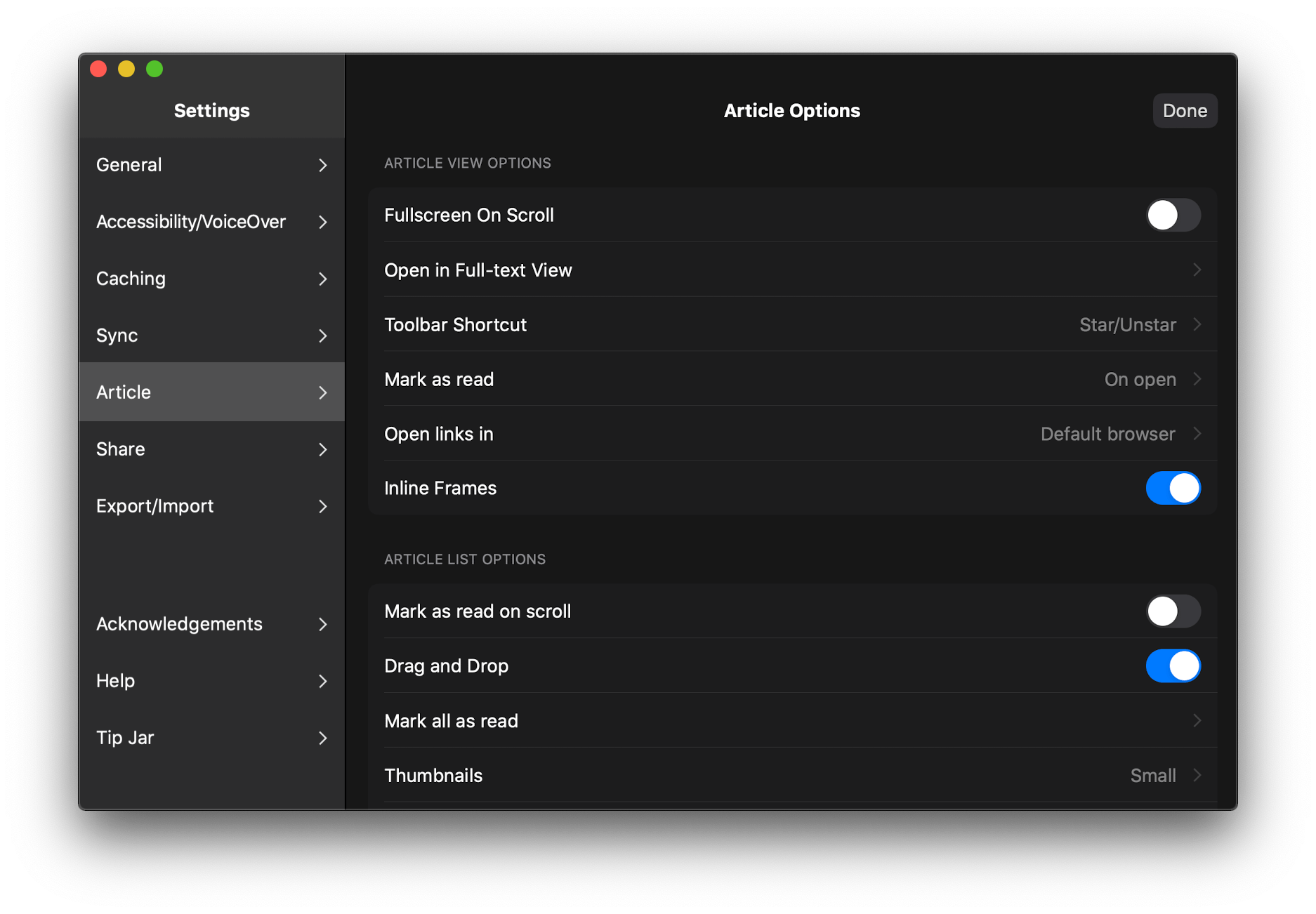
In June I wrote about my hopes for Catalyst, the technology that allows iPadOS developers to bring their iPad apps to the Mac. At the time, I said that RSS clients were one of the categories of apps I wanted to see brought from the iPad to the Mac first. That wasn’t because there are no options on the Mac. For instance, I recently reviewed NetNewsWire, which is excellent. However, there are very few options if you want an app that’s available on the Mac, iOS, and iPadOS, supports a rich set of features, and is actively maintained. That’s why I was pleased to see that lire, one of my favorite RSS readers on iOS and iPadOS, was released this week on the Mac using Catalyst.

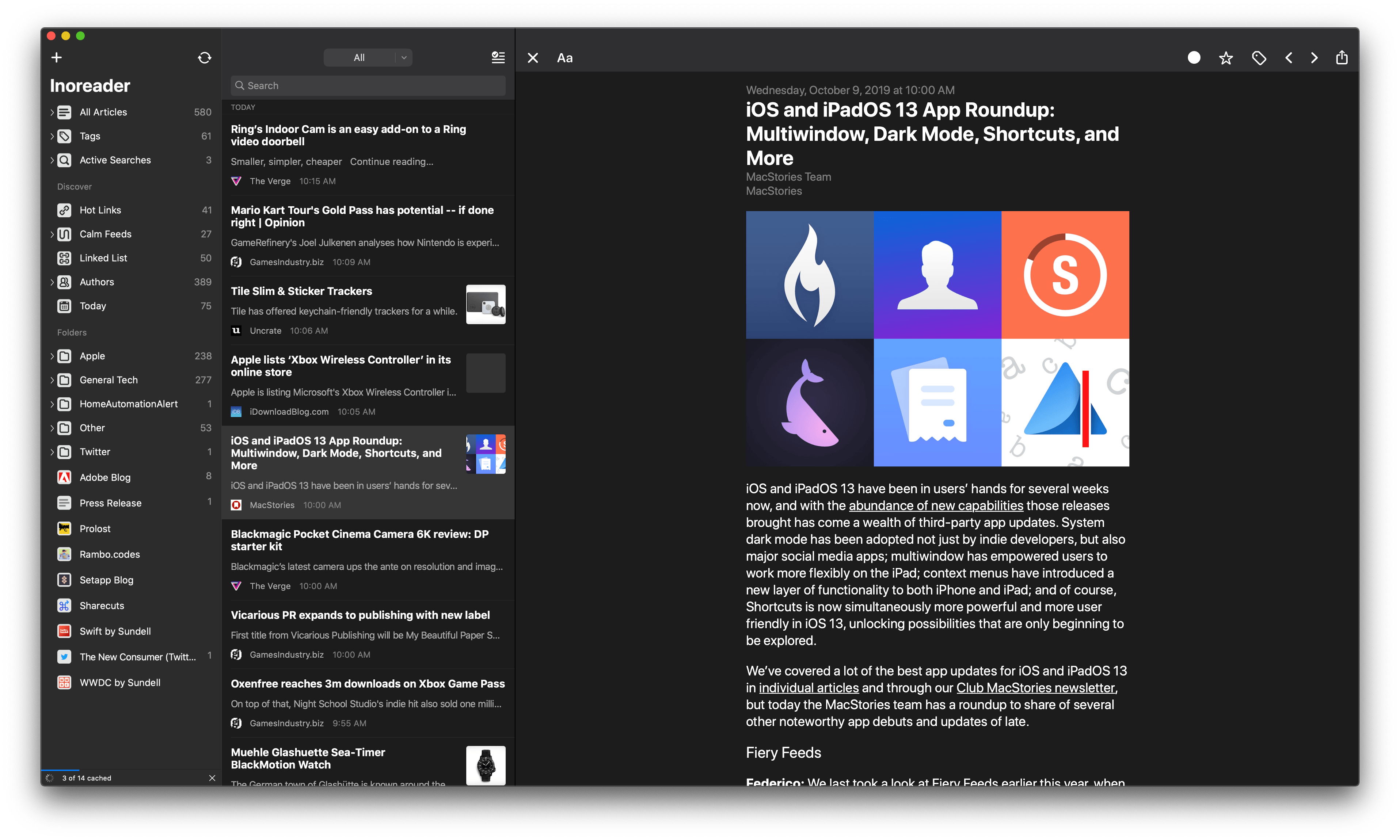
If you’ve used lire on an iPad, you’ll immediately feel at home when you open the app on the Mac for the first time. The layout is similar to the iPad version, with one notable exception: instead of the two columns you see on the iPad, lire displays three columns on the Mac. This means you can view your list of subscriptions, articles, and a selected article simultaneously. On the iPad, the article view is separate from your subscriptions and article list. It’s a small design change that makes a lot of sense on the Mac, where screens are usually larger than the iPad. I would, however, like to have the option of hiding the first two columns, which is not currently possible, though they can be resized.

If you use lire with an RSS syncing service like I do, once you log in you can browse sources in the first column by subscription and tag. Like the iOS and iPadOS versions, the first column also includes Discover and Folders sections. Discover collects Hot Links, which are URLs that frequently appear among your feeds, Calm Feeds for sites that don’t publish often, linked list articles, posts organized by author, and articles published recently, which you can define in the app’s preferences. As you’d expect, folders are user-defined sets of feeds.

Articles and images can be opened in separate windows.

Articles and images can be opened in separate windows.

The article list can be filtered in nine different ways, and there’s a toolbar button to mark everything as read. Right-clicking an article summary provides options to open it in a separate window, mark it as read or unread, star it, mark the articles above or below it as read, mark everything as read, send it to a read-later service, or share it via the system share sheet or lire’s custom share options. The many options make the article list a fantastic way to filter and scan through a large number of articles and manage the ones you want to follow up on and share with other apps.

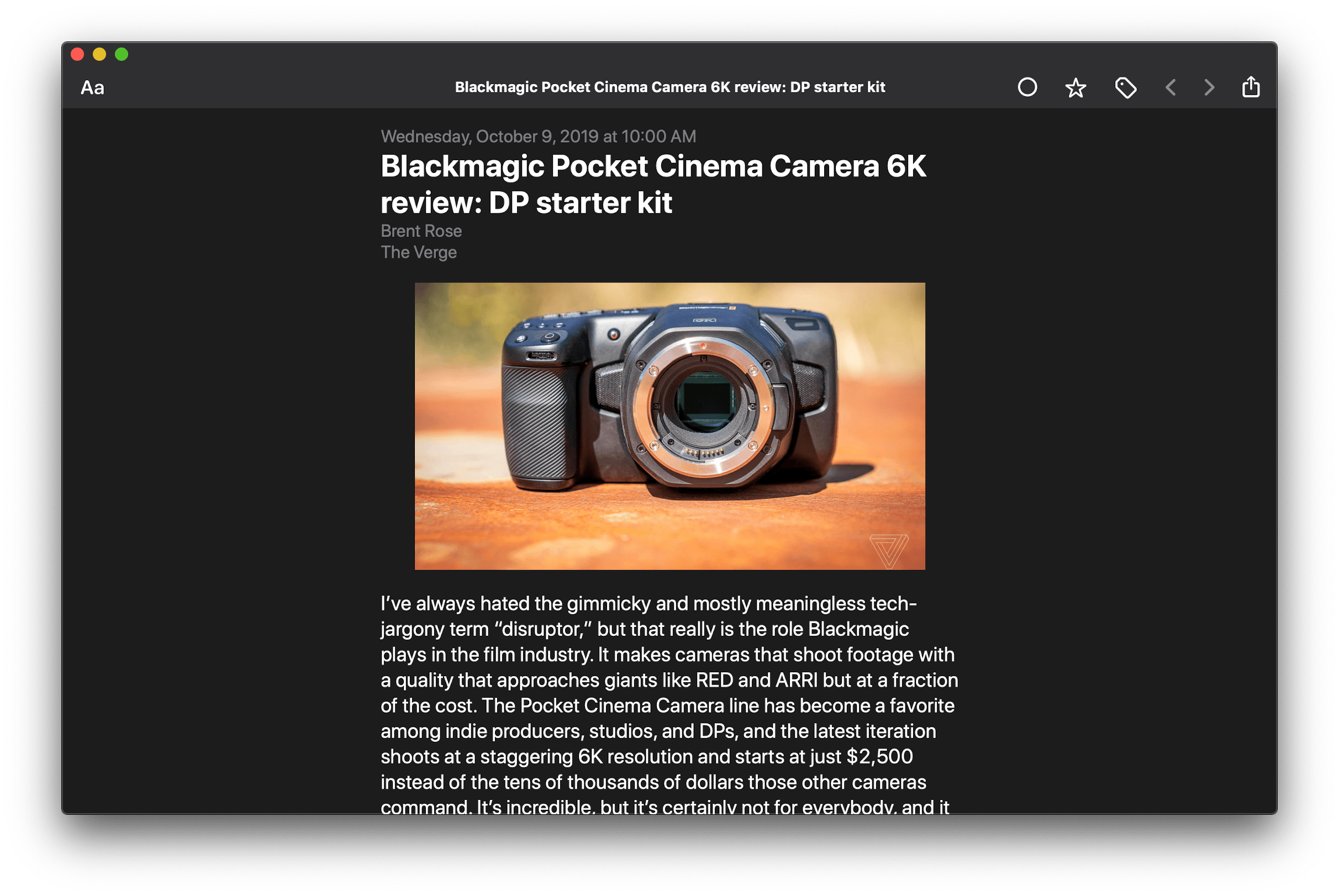
There are separate appearance settings for article view, which is a nice way to manage the amount of information available independently from the subscription and article list. The article view also includes buttons for marking the currently-viewed article as unread, starring and tagging it, navigational arrows, and a share button that includes share options supplied by the macOS share system as well as custom ones like ‘Copy Link,’ ‘Pin Author,’ ‘Download as EPUB,’ and more.

I’ve used a lot of different RSS readers, and lire has always stood out because it can be customized in so many different ways. The app also does a better job than most other RSS clients of pulling the full text of an article from an RSS feed that offers truncated versions of its articles only. Although some features of the iOS and iPadOS apps aren’t available on the Mac yet, such as theming, I’ve been impressed with the level of customization that’s been brought over so far.

Unlike many other Catalyst apps, lire includes a separate preferences window.

Unlike many other Catalyst apps, lire includes a separate preferences window.

However, what makes lire one of the best Catalyst adaptations of an iPad app that I’ve seen so far is its attention to detail on the Mac. It’s a collection of smaller touches that make the app feel more at home on the Mac than most other Catalyst apps. For example, lire includes tooltips when you hover the pointer over the buttons in its toolbar. That’s something that isn’t automatically available to Catalyst apps, so few apps have adopted it so far. Lire has also implemented custom right-click context menus throughout the app to access share, view, mark as read, and other options. The app also makes extensive use of keyboard shortcuts and allows for links to be opened in your default browser in the background, something that far too few AppKit apps offer. I also appreciate that lire uses a separate Preferences window instead of a popup view that hovers over but is still part of the app’s main window, which many Catalyst apps do.

lire makes extensive use of context menus throughout.

lire makes extensive use of context menus throughout.

RSS feeds have benefitted from the healthy app competition found on iOS and iPadOS, pushing power user features forward at a rapid pace. The Mac’s RSS scene hasn’t been nearly as active in the past, but with the addition of lire and Fiery Feeds, which also launched on the Mac App Store for the first time this week, my hope is that we’ll see a resurgence of RSS readers on the Mac App Store with innovative new features.

Lire is available on the Mac App Store for $19.99.


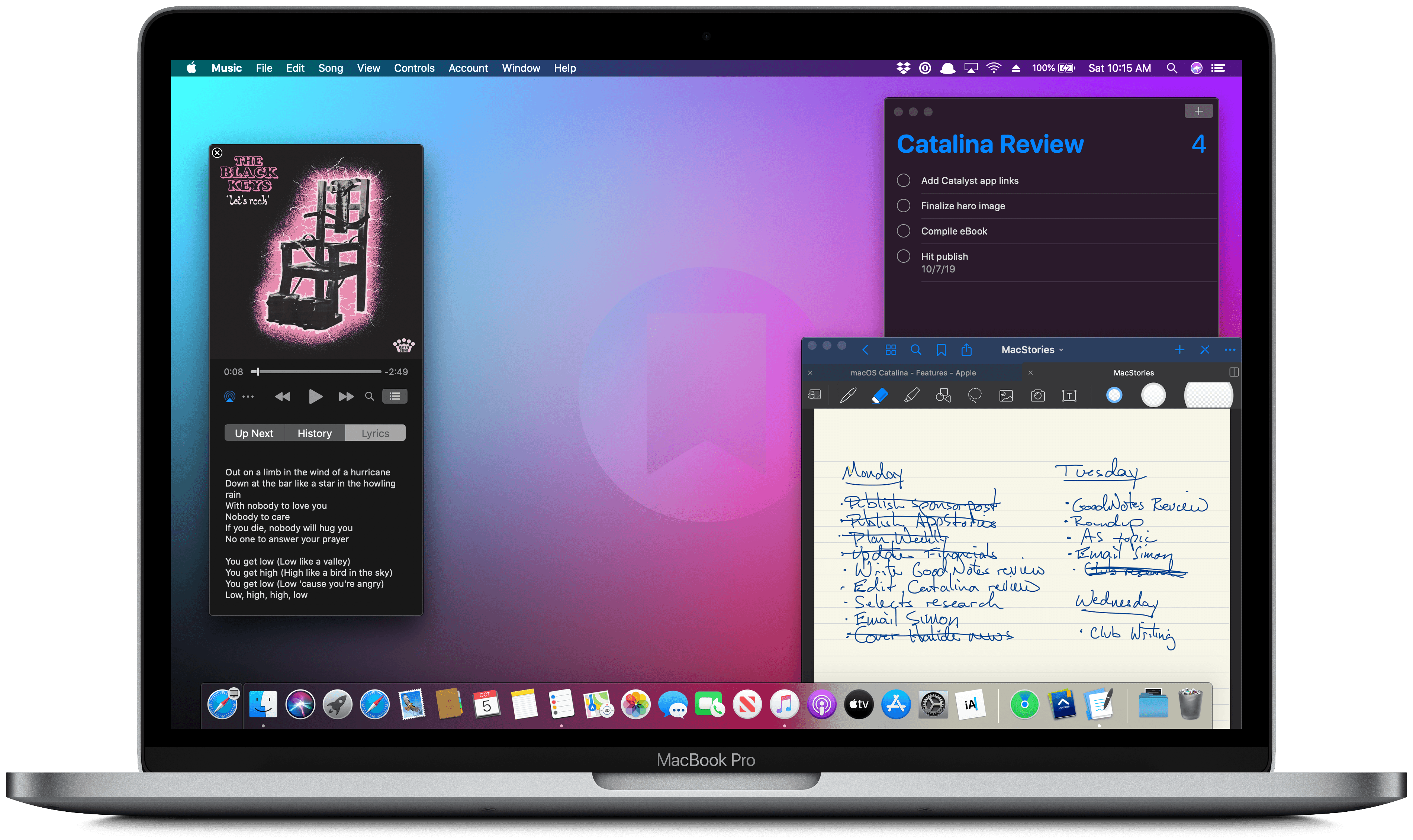
macOS Catalina: The MacStories Review

Ironically, Apple chose to name this year’s update to macOS after an island. Since the iPhone and iOS took off, macOS has sometimes felt like an island isolated from the rest of the company’s OSes, but the goal articulated by the company at WWDC this year was quite the opposite. Apple clearly telegraphed that change is coming to the Mac and it’s designed to bridge the user experiences between each of its platforms.

To developers, that message came in the form of Catalyst and SwiftUI. Catalyst, which was previewed as an unnamed ‘Sneak Peek’ in 2018, is meant to make it easier for iPadOS developers to bring their apps to the Mac. SwiftUI has a similar longer-term goal of unifying and streamlining how developers build the interfaces for their apps across a range of devices, for everything from the Apple Watch to the Mac.

The efforts to draw macOS in closer with Apple’s other operating systems run deeper than just developer tools though. macOS may have been the foundation on which iOS was built, but in the years that followed iOS’s introduction, the two OSes grew apart. Identically-named apps were developed on different schedules, which meant they rarely included the same features. Also, system-level functionality like System Preferences, which serves the same purpose as iOS’s Settings app, was unfamiliar, making Mac adoption unnecessarily hard for newcomers. Catalina is an attempt to address those kinds of inconsistent user experiences.

With Catalina, Apple has taken clear, though not always successful, steps to bridge the divide between the Mac and iOS. App functionality has been realigned, System Preferences has been rearranged, and new features have been added to make it easier to move from one platform to the other.

As with other transitional periods in the Mac’s history, this one isn’t going to be easy. However, because the change is driven by a fundamental change in computing, it’s also necessary. We live in a new climate where computing is now dominated by mobile devices. For many people, a smartphone is all the computing power they need day-to-day. That doesn’t mean there’s no longer a place for the Mac, but it’s clearly what’s driving the changes in Catalina.

Apple could have chosen to ignore the shift of the ground beneath its feet and merely maintained macOS, making the kind of small incremental changes we’ve become accustomed to in recent years. However, not adapting is as deliberate a choice as change is, and it carries just as much or more uncertainty for the Mac as a platform because it risks irrelevance.

The Mac isn’t in crisis, but it isn’t healthy either. Waiting until the Mac is on life support isn’t viable. Instead, Apple has opted to reimagine the Mac in the context of today’s computing landscape before its survival is threatened. The solution is to tie macOS more closely to iOS and iPadOS, making it an integrated point on the continuum of Apple’s devices that respects the hardware differences of the platform but isn’t different simply for the sake of difference.

Transitions are inherently messy, and so is Catalina in places. It’s a work in process that represents the first steps down a new path, not the destination itself. The destination isn’t clear yet, but Catalina’s purpose is: it’s a bridge, not an island.

Read more