Federico Viticci

10759 posts on MacStories since April 2009

Federico is the founder and Editor-in-Chief of MacStories, where he writes about Apple with a focus on apps, developers, iPad, and iOS productivity. He founded MacStories in April 2009 and has been writing about Apple since. Federico is also the co-host of AppStories, a weekly podcast exploring the world of apps, Unwind, a fun exploration of media and more, and NPC: Next Portable Console, a show about portable gaming and the handheld revolution.

iOS 7 Apps and Aggressive Adoption

David Smith, on deciding to go iOS 7-only for his next app updates:

Today, I’ve reverted my position again. I am going to be aggressively adopting iOS 7 exclusively in my apps.

This change is mostly a result not so much of the technical or business implications of supporting legacy versions but of quality assurance needs. I have been able to manage working out the technical needs of supporting both versions but I have found that the time and energy required to test and validate the applications on both is becoming too much of a burden.

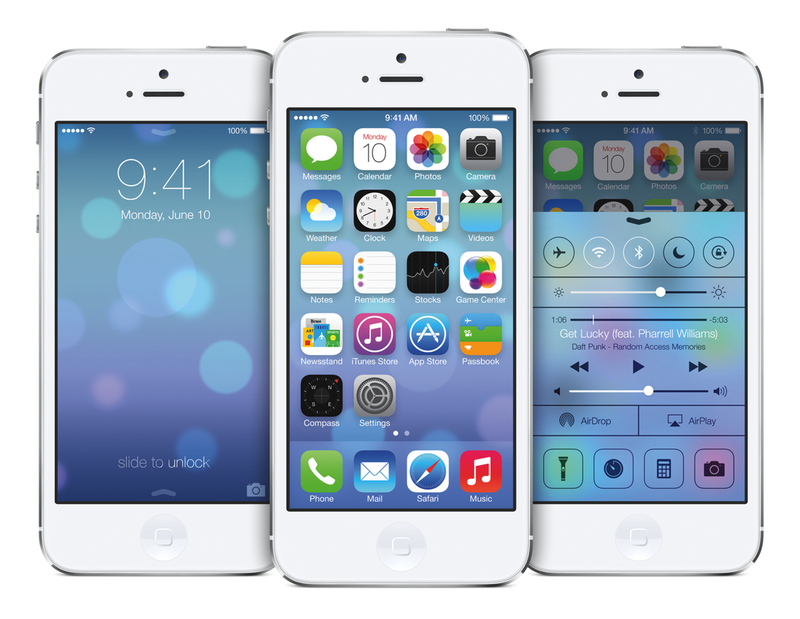
Aside from a technological standpoint, I think the most important factor to consider is that users can’t wait to get their hands on iOS 7. The new version is a major change, and – at least based on my survey of non-geeky friends – I suspect that more people will upgrade more quickly than last year (the launch of iOS 6 surely wasn’t helped by doubts surrounding Maps).

With users being so excited for iOS 7, the decision of going iOS 7-only makes sense. At least, it’s a common pattern that I’m observing this summer.

Permalink

AllThingsD: Apple Announcing New iPhone On September 10

According to Ina Fried at AllThingsD, Apple will announce a new iPhone at a media event on September 10:

Apple is expected to unveil its next iPhone at a special event on Sept. 10, sources told AllThingsD.

The launch comes at an important time for Apple, which continues to make a lot of money from the iPhone but has seen its global market share dip amid a growing wave of lower-cost Android devices as well as an intense battle with archrival Samsung.

AllThingsD has a solid track record with previous Apple event predictions, and it seems safe to assume this rumor will soon be backed by other well-connected sources.

If true, this could set Apple’s pattern history to repeat itself with new phones being released with iOS 7 pre-installed, and the new OS on track for a release 7-10 after the media event. A Golden Master seed of iOS 7 could be released to developers on the day of the event, with Apple asking developers to start submitting iOS 7 apps to the App Store on the same day. In 2011, Apple released the GM seed of iOS 5 on October 4 and asked developers to start submitting apps on the same day; last year, Apple held a media event, released a GM build of iOS 6, and emailed developers on September 12.

New iOS versions are typically released on Wednesdays (iOS 5 was released on October 12, 2011, and iOS 6 on September 19, 2012 – both Wednesdays), which could mean a release of iOS 7 on September 18 (alongside iTunes 11.1, in beta right now) with the new iPhone to follow on September 20 in a few initial markets (new iPhones are usually released on Fridays).

There are differences between this year and 2011/2012 for Apple – most notably, the fact that iOS 7 is a major rethink of iOS that may require more than a week between a GM build and the public release. But there are several minor differences as well: a Dev Center outage that lasted three weeks; a rumor that claimed Apple was forced to “pull away” resources from the iPad team earlier this year to focus on iOS 7 for the iPhone; the fact that iOS 7 beta for iPad was, indeed, released two weeks after the iPhone beta, with recent reports suggesting that the iPad build still isn’t nearly as fast and stable as the iPhone one. And, besides iOS 7, this year’s most prominent rumor – a low-cost iPhone that may or may not see Apple more aggressively entering new international markets. But how many at launch? Will Apple keep growing the list of initial launch countries? Will the low-cost iPhone be introduced on September 10 as well? Will the successor to the iPhone 5 be called iPhone 5S?

We’ll find out, if Ina Fried is right, on September 10.


The Boy Who Beat Ocarina of Time in 22 Minutes

This link isn’t strictly about Cosmo Wright’s Ocarina of Time speedrun – which, by the way, is incredible to watch. Make sure to read Computer and Video Games’ feature on it as well.

Rather, I’d like to point out these two tweets by Sonny Fazio in response to Peter Hajas, who originally shared the link to Cosmo Wright’s speedrun last night:

This is an interesting side effect of the App Store that I didn’t think about. Speedruns are an extremely fun-to-watch, but niche use case that, as Fazio notes, are generally facilitated by glitches and bugs in the source code of games. This goes beyond the App Store and extends to games sold on online platforms like Steam and PlayStation Network as well. Because of updates and patches, will it become increasingly difficult – if not impossible – for speedrunners to analyze and play through games in their original form decades from now?

In the video I linked above, for instance, Cosmo explains that a major glitch in Ocarina of Time took 13 years to be discovered and used. That was only possible thanks to the fact that a) Nintendo 64 cartridges are still physically available today and b) Nintendo’s conversion for the Wii’s Virtual Console is a 1:1 port of the original – bugs and glitches included. Can you imagine someone still playing an iOS game in 13 years?

Twenty or thirty years from now, will we see speedruns for iOS, PS3, or Xbox 360 games? Sadly, I think that a mix of retrocompatibility issues, OS and app updates, and lack of physical access to games will hinder speedrunning. Not to mention Apple’s current state of affairs with games and the gaming community.

Overall, Digital preservation is the bigger topic we should be discussing.

Permalink

The Anti-Apple

Horace Dediu has a great take on the reputed differences and actual similarities between Apple and Amazon:

What I take issue with is the premise that Amazon is the “anti-Apple” in its hunger for growth and patience for profits. Apple has its own “Amazon-like-business”: iTunes has been growing at a steady 25% or more and it also has its ancillary zero-profit hardware analogue to the Kindle called Apple TV. iTunes is a great business in the Amazon vein, harvesting hundreds of millions of users (and their credit cards.) Presumably iTunes could also some day “flip the switch” and become profitable, but something magical needs to happen. Something like becoming a payments processor or retailer of other things. Analyst beware however. There might be conditions that make such switch flipping extremely difficult.

Permalink

Wake-Up Call for New Yorkers

Winnie Hu and J. David Goodman, reporting for The New York Times on a case of child abduction on July 17, 2013:

You have a lot of people on the road at that hour,” said Robert Hoever, director of special programs at the National Center for Missing and Exploited Children, which tracks Amber Alerts across the country. “You’re looking for those eyes and ears to try to find that child.”

By Wednesday afternoon, the police said that they had found Ms. Lopez and her son in “good condition.” Ms. Lopez was arrested and charged with custodial interference. The police said she was found after the Amber Alert led to a tip to the department’s Crime Stoppers hot line.

And the key risk for non-mandatory AMBER alerts, later in the article:

One former state law enforcement official, Michael Balboni, said the alert system should be used prudently.

“It is crucial that emergency notification systems take every precaution to never ‘cry wolf’ or alert needlessly,” said Mr. Balboni, former deputy secretary of public safety for the state. “The risk is evident: If the public loses faith in the system, they may stop participating and the purpose of the system will be lost.


Permalink

Improving AMBER Alerts

I live in Italy, and I’ve never received an AMBER alert on my phone, because we have no such system here. AMBER alerts are a child abduction system that originated in the United States in 1996 (more on Wikipedia) and that allow the US government to send emergency SMS-like alerts when they believe a child has been kidnapped.

Last night, I watched my Twitter timeline quickly report that the state of California had issued the first AMBER alert at 11 PM (local time). Support for AMBER alerts was added by Apple in iOS 6, and these special alerts get an also-special and loud “siren” notification sound that can’t be changed. They don’t work properly with Do Not Disturb, and they don’t contain additional information or links to photos for the suspects or victims. As a result, many iPhone users who live in California got to experience an AMBER alert for the first time last night, and they were not pleased with the lack of clarity and information in the system.

I think that, for a great and potentially life-saving technology such as nation-wide AMBER alerts, Apple should ensure that iPhone users can properly understand it and not disable it.

Craig Hockenberry has posted a thoughtful critique of the current design of AMBER alerts, suggesting some possible improvements:

This is clearly a problem where cooperation between Apple, the Department of Justice, and the public can improve a system where everyone benefits. Better usability with AMBER Alerts is case where “think of the children” isn’t a trite platitude.

Over at Macworld, Lex Friedman has a good overview of what the AMBER system is and how it works:

It also doesn’t help that the government’s messages via the WEA system are more limited than tweets: They get 90 characters to craft their messages, not enough to include all the relevant details available in an Amber Alert. That’s because the system doesn’t use the standard SMS approach; it’s a special system that’s not subject to delays or congestion from other messages.

As also linked by Hockenberry, Michael Jurewitz’s idea is simple, yet clearer than what the government (and, by reflection, the iPhone) is doing: just call them “Missing Child Alert”.

I’m not judging people who disable AMBER alerts. The system is a powerful resource, made even faster and more ubiquitous thanks to smartphones, but it should be improved in terms of how information is displayed.

Permalink

Shawn Blanc’s “Delight is in the Details”

My good friend Shawn Blanc launched his new ”audio book, eBook, and interview series for people who make things” today. It’s called Delight is in the details, and it’s available at $29 (audio book, eBook, and interviews) or $20 (eBook only).

From Shawn’s description:

In the book, I talk about why the long-term success of our products (and our reputations) depends heavily on us taking the time to think through and sweat the details. This book encourages you to strive for excellence and resist the tendency to settle on “good enough” work that leads to forgettable products.

If you buy the $29 “Delight is in the Details” bundle, you’ll also find an interview with me about details and little touches in iOS apps, what makes a good first impression, and the importance of function in software.

I read Shawn’s book, and I highly recommend it. Get it here.

Permalink

Philips Adding LightStrips and Bloom Bulbs To Hue Family

Matt Brian at The Verge:

Philips is set to expand its range of programmable LED Hue lights with the launch of new customizable LightStrips and Bloom bulbs. The flexible LightStrips come in two-meter lengths and are designed to be placed around frames or to accentuate fixtures in the home. The Bloom is a portable lamp and features a 120 lumen LED bulb that highlights specific places or objects in a room.

I’ve wanted to purchase (and automate) Hue lights for several months now. I may actually go ahead and get a set of standard lights and a Bloom once they become available through the Apple online store.


Permalink

Apple Airs New iPhone 5 Commercial: “FaceTime Every Day”

Following commercials for the iPhone 5’s Music and Photos apps, Apple’s “Every Day” campaign is back today with a new television ad called “FaceTime Every Day”. As we expected, the commercial – available on YouTube and Apple’s website – focuses on FaceTime video calling.

The new commercial, similarly to Music Every Day, isn’t primarily aimed at highlighting the technology behind FaceTime or the features of the app; rather, it emphasizes how FaceTime can seamlessly fit into everyday life and turn remote “face to face communication” into something worth enjoying and remembering. Something as natural as talking to another person, but made possible by technology.

A girl shows her engagement ring to, perhaps, her mother or a friend who’s not there with her; a man sends a kiss to his significant other (after having made sure nobody is watching); bits of life around the world – fireworks, an empty apartment, kids playing in the backyard – are shared with FaceTime.

There is no feature checklist. There are no flying robots in a post-apocalyptic scenario or references to wives and Tegra chipsets. The simple idea of connecting people is the checklist. “Every day, more people connect face to face on the iPhone than any other phone”. There’s no mention of FaceTime in the commercial, because there doesn’t need to be: “FaceTime” may be in the ad’s name, but the iPhone experience is the product being advertised.

We have embedded the commercial below. Read more