Federico Viticci

10855 posts on MacStories since April 2009

Federico is the founder and Editor-in-Chief of MacStories, where he writes about Apple with a focus on apps, developers, iPad, and iOS productivity. He founded MacStories in April 2009 and has been writing about Apple since. Federico is also the co-host of AppStories, a weekly podcast exploring the world of apps, Unwind, a fun exploration of media and more, and NPC: Next Portable Console, a show about portable gaming and the handheld revolution.

App Store Vibes

Bryan Irace has an interesting take on the new generation of developer tools that have lowered the barrier to entry for new developers (and sometimes not even developers) when it comes to creating apps:

Recent criticism of Apple’s AI efforts has been juicy to say the least, but this shouldn’t distract us from continuing to criticize one of Apple’s most deserving targets: App Review. Especially now that there’s a perfectly good AI lens through which to do so.

It’s one thing for Apple’s AI product offerings to be non-competitive. Perhaps even worse is that as Apple stands still, software development is moving forward faster than ever before. Like it or not, LLMs—both through general chat interfaces and purpose-built developer tools—have meaningfully increased the rate at which new software can be produced. And they’ve done so both by making skilled developers more productive while also lowering the bar for less-experienced participants.

And:

I recently built a small iOS app for myself. I can install it on my phone directly from Xcode but it expires after seven days because I’m using a free Apple Developer account. I’m not trying to avoid paying Apple, but there’s enough friction involved in switching to a paid account that I simply haven’t been bothered. And I used to wrangle provisioning profiles for a living! I can’t imagine that I’m alone here, or that others with less tribal iOS development knowledge are going to have a higher tolerance for this. A friend asked me to send the app to them but that’d involve creating a TestFlight group, submitting a build to Apple, waiting for them to approve it, etc. Compare this to simply pushing to Cloudflare or Netlify and automatically having a URL you can send to a friend or share via Twitter. Or using tools like v0 or Replit, where hosting/distribution are already baked in.

Again, this isn’t new—but being able to build this much software this fast is new. App distribution friction has stayed constant while friction in all other stages of software development has largely evaporated. It’s the difference between inconvenient and untenable.

Perhaps “vibe coding” is the extreme version of this concept, but I think there’s something here. Creating small, low-stakes apps for personal projects or that you want to share with a small group of people is, objectively, getting easier. After reading Bryan’s post – which rightfully focuses on the distribution side of apps – I’m also wondering: what happens when the first big service comes along and figures out a way to bypass the App Store altogether (perhaps via the web?) to allow “anyone” to create apps, completely cutting out Apple and its App Review from the process?

In a way, this reminds me of blogging. Those who wanted to have an online writing space 30 years ago had to know some of the basics of hosting and HTML if they wanted to publish something for other people to read. Then Blogger came along and allowed anyone – regardless of their skill level – to be read. What if the same happened to mobile software? Should Apple and Google be ready for this possibility within the next few years?

I could see Google spin up a “Build with Gemini” initiative to let anyone create Android apps without any coding knowledge. I’m also reminded of this old Vision Pro rumor that claimed Apple’s Vision team was exploring the idea of letting people create “apps” with Siri.

If only the person in charge of that team went anywhere, right?

Permalink

From Dashboard Widgets to Breaking News: Mark Gurman’s Path to Bloomberg

In this special interview episode, Federico and John welcome Bloomberg’s Mark Gurman to discuss his 16-year journey covering Apple. Mark shares how he started as a teenage app developer before joining 9to5Mac and eventually Bloomberg. The conversation explores Mark’s most memorable scoops, the evolution of Apple news coverage, his relationship with Apple, and advice for aspiring tech journalists.

On AppStories+, Federico and John get into the weeds to explore the hardware and apps Mark Gurman uses and discuss Apple’s acquisition of Pixelmator.


We deliver AppStories+ to subscribers with bonus content, ad-free, and at a high bitrate early every week.

To learn more about an AppStories+ subscription, visit our Plans page, or read the AppStories+ FAQ.


AppStories+ Deeper into the world of apps

AppStories Episode 428 - From Dashboard Widgets to Breaking News: Mark Gurman’s Path to Bloomberg

0:00
46:54

AppStories+ Deeper into the world of apps

This episode is sponsored by:

  • Memberful – Easy-to-Use Reliable Membership Software
  • Drafts – Where text starts. New and expired subscribers can use the link to get your first year of Drafts for $9.99.
  • Tripsy – Your Travel Toolkit. Use the link for 25% off a lifetime purchase or 30% off a 1-Year subscription.

Read more


Testing Todoist’s LLM Integration with Email

Ever since I’ve been back on Todoist as my primary task manager, one of the things I’ve appreciated the most about it is how its web-first nature lends itself so well to different kinds of integrations across platforms. As Club members will know, I’ve created a suite of advanced shortcuts to communicate with Todoist; but...


App Debuts

Quick Capture for Obsidian I’ve been keeping an eye on this Obsidian companion utility for a while now, and I decided to take it for a spin earlier this week. I think it has a lot of potential, with a couple of confusing aspects I’d like the developer to work on. The idea behind...


Choosing Optimism About iOS 19

I loved this post by David Smith on his decision to remain optimistic about Apple’s rumored iOS 19 redesign despite, well, you know, everything:

Optimism isn’t enthusiasm. Enthusiasm is a feeling, optimism is a choice. I have much less of the enthusiastic feelings these days about my relationship to Apple and its technologies (discussed here on Under the Radar 312), but I can still choose to optimistically look for the positives in any situation. Something I’ve learned as I’ve aged is that pessimism feels better in the moment, but then slowly rots you over time. Whereas optimism feels foolish in the moment, but sustains you over time.

I’ve always disliked the word “enthusiast” (talk about a throwback), and I’ve been frequently criticized for choosing the more optimistic approach in covering Apple over the years. But David is right: pessimism feels better in the short term (and performs better if you’re good at writing headlines or designing YouTube thumbnails), but is not a good long-term investment. (Of course, when the optimism is also gone for good…well, that’s a different kind of problem.)

But back to David’s thoughts on the iOS 19 redesign. He lists this potential reason to be optimistic about having to redesign his apps:

It would provide a point of differentiation for my app against other apps who wouldn’t adopt the new design language right away (either large companies which have their own design system or laggards who wouldn’t prioritize it).

He’s correct: the last time Apple rolled out a major redesign of iOS, they launched a dedicated section on the App Store which, on day one, featured indie apps updated for iOS 7 such as OmniFocus, Twitterrific, Reeder 2, Pocket Casts 4, and Perfect Weather. It lasted for months. Twelve years later1, I doubt that bigger companies will be as slow as they were in 2013 to adopt Apple’s new design language, but more agile indie developers will undoubtedly have an advantage here.

He also writes:

Something I regularly remind myself as I look at new Apple announcements is that I never have the whole picture of what is to come for the platform, but Apple does. They know if things like foldable iPhones or HomeKit terminals are on the horizon and how a new design would fit in best with them. If you pay attention and try to read between the lines they often will provide the clues necessary to “skate where the puck is going” and be ready when new, exciting things get announced subsequently.

This is the key point for me going into this summer’s review season. Just like when Apple introduced size classes in iOS 8 at WWDC 2014 and launched Slide Over and Split View multitasking for the iPad (alongside the first iPad Pro) the next year, I have to imagine that changes in this year’s design language will pave the way for an iPhone that unfolds into a mini tablet, a convertible Mac laptop, App Intents on a dedicated screen, or more. So while I’m not enthusiastic about Apple’s performance in AI or developer relations, I choose to be optimistic about the idea that this year’s redesign may launch us into an exciting season of new hardware and apps for the next decade.


  1. Think about it this way: when iOS 7 was released, the App Store was only five years old. 
Permalink

Shortcuts Utility Apps Revisited

This week, Federico and John explore a collection of Shortcuts helper utilities that extend functionality beyond the built-in system actions, sharing how these apps address gaps in Apple’s Shortcuts implementation across the iPhone, iPad, and Mac.

On AppStories+, John interviews Federico about his recent story that concludes web applications often provide superior experiences to native apps on iPad, examining how this trend reflects broader challenges in the iPad ecosystem.


We deliver AppStories+ to subscribers with bonus content, ad-free, and at a high bitrate early every week.

To learn more about an AppStories+ subscription, visit our Plans page, or read the AppStories+ FAQ.


AppStories+ Deeper into the world of apps

AppStories Episode 427 - Shortcuts Utility Apps Revisited

0:00
32:26

AppStories+ Deeper into the world of apps

This episode is sponsored by:

  • Incogni – Take your personal data back with Incogni! Use code APPSTORIES with this link and get 60% off an annual plan.

Read more


The iPad’s “Sweet” Solution

In working with my iPad Pro over the past few months, I’ve realized something that might have seemed absurd just a few years ago: some of the best apps I’m using – the ones with truly desktop-class layouts and experiences – aren’t native iPad apps.

They’re web apps.

Before I continue and share some examples, let me clarify that this is not a story about the superiority of one way of building software over another. I’ll leave that argument to developers and technically inclined folks who know much more about programming and software stacks than I do.

Rather, the point I’m trying to make is that, due to a combination of cost-saving measures by tech companies, Apple’s App Store policies over the years, and the steady rise of a generation of young coders who are increasingly turning to the web to share their projects, some of the best, most efficient workflows I can access on iPadOS are available via web apps in a browser or a PWA.

Read more


On Apple Offering an Abstraction Layer for AI on Its Platforms

Source: Apple.

Source: Apple.

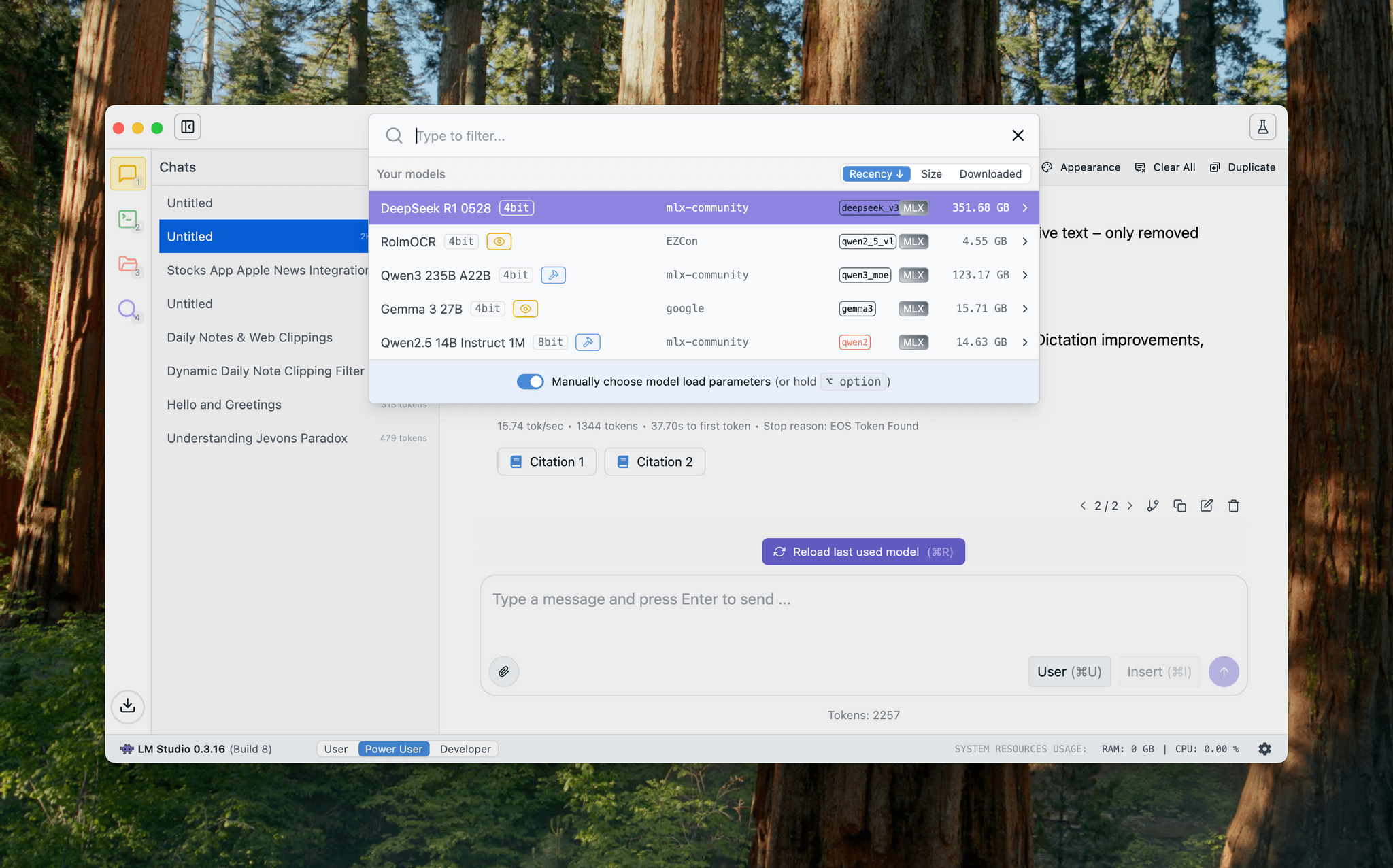
I’ve been thinking about Apple’s position in AI a lot this week, and I keep coming back to this idea: if Apple is making the best consumer-grade computers for AI right now, but Apple Intelligence is failing third-party developers with a lack of AI-related APIs, should the company try something else to make it easier for developers to integrate AI into their apps?

Gus Mueller, creator of Acorn and Retrobatch, has been pondering similar thoughts:

A week or so ago I was grousing to some friends that Apple needs to open up things on the Mac so other LLMs can step in where Siri is failing. In theory we (developers) could do this today, but I would love to see a blessed system where Apple provided APIs to other LLM providers.

Are there security concerns? Yes, of course there are, there always will be. But I would like the choice.

The crux of the issue in my mind is this: Apple has a lot of good ideas, but they don’t have a monopoly on them. I would like some other folks to come in and try their ideas out. I would like things to advance at the pace of the industry, and not Apple’s. Maybe with a blessed system in place, Apple could watch and see how people use LLMs and other generative models (instead of giving us Genmoji that look like something Fisher-Price would make). And maybe open up the existing Apple-only models to developers. There are locally installed image processing models that I would love to take advantage of in my apps.

The idea is a fascinating one: if Apple Intelligence cannot compete with the likes of ChatGPT or Claude for the foreseeable future, but third-party developers are creating apps based on those APIs, is there a scenario in which Apple may regain control of the burgeoning AI app ecosystem by offering their own native bridge to those APIs?

Read more