Posts tagged with "iOS"

Quiche Browser Is a Beautiful and Modular Web Browser for iOS

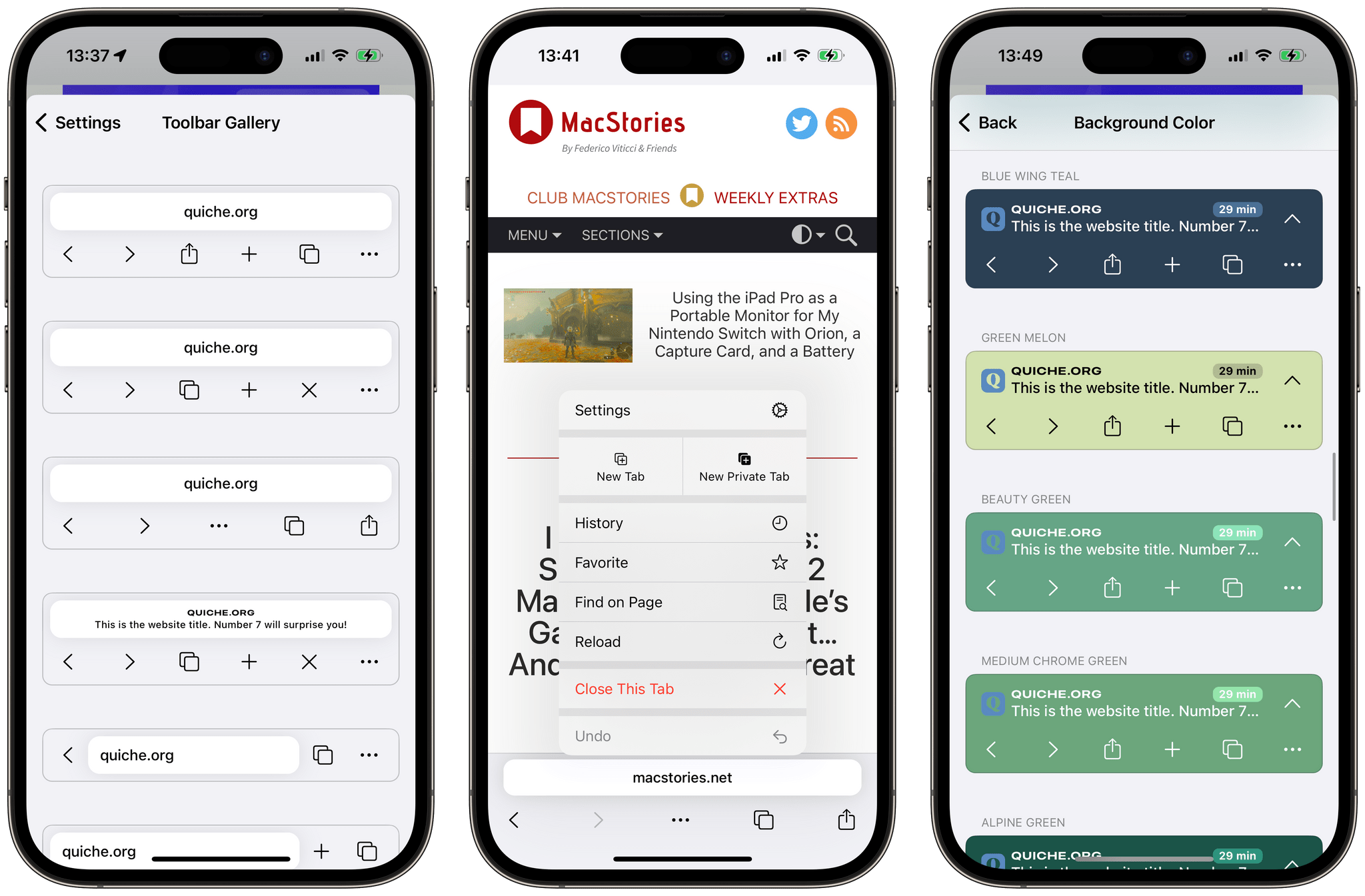
As part of my ongoing experiment with third-party web browsers for the iPhone, I recently stumbled upon a new indie browser for iOS, which I was instantly drawn to thanks to its adorable name. Quiche Browser is a beautiful browser developed by Greg de J that focuses on UI modularity and small quality-of-life enhancements. The app has surprised me with its great design, and one unexpected use case.

In Quiche Browser, every button can be moved and customized. If you are not the kind of person who likes to tweak the placement of every interface element, this may sound overwhelming. Fortunately, Quiche Browser lets you pick from the ‘Toolbar Gallery’, a collection of toolbar presets that you can customize and adjust. This is an excellent way to quickly get started with your preferred preset, and also to learn how you can customize Quiche’s look, whether you want a fully-featured toolbar or a minimalistic look.

Read more


Vivaldi for iOS Is Not Delivering on Its Promise Just Yet

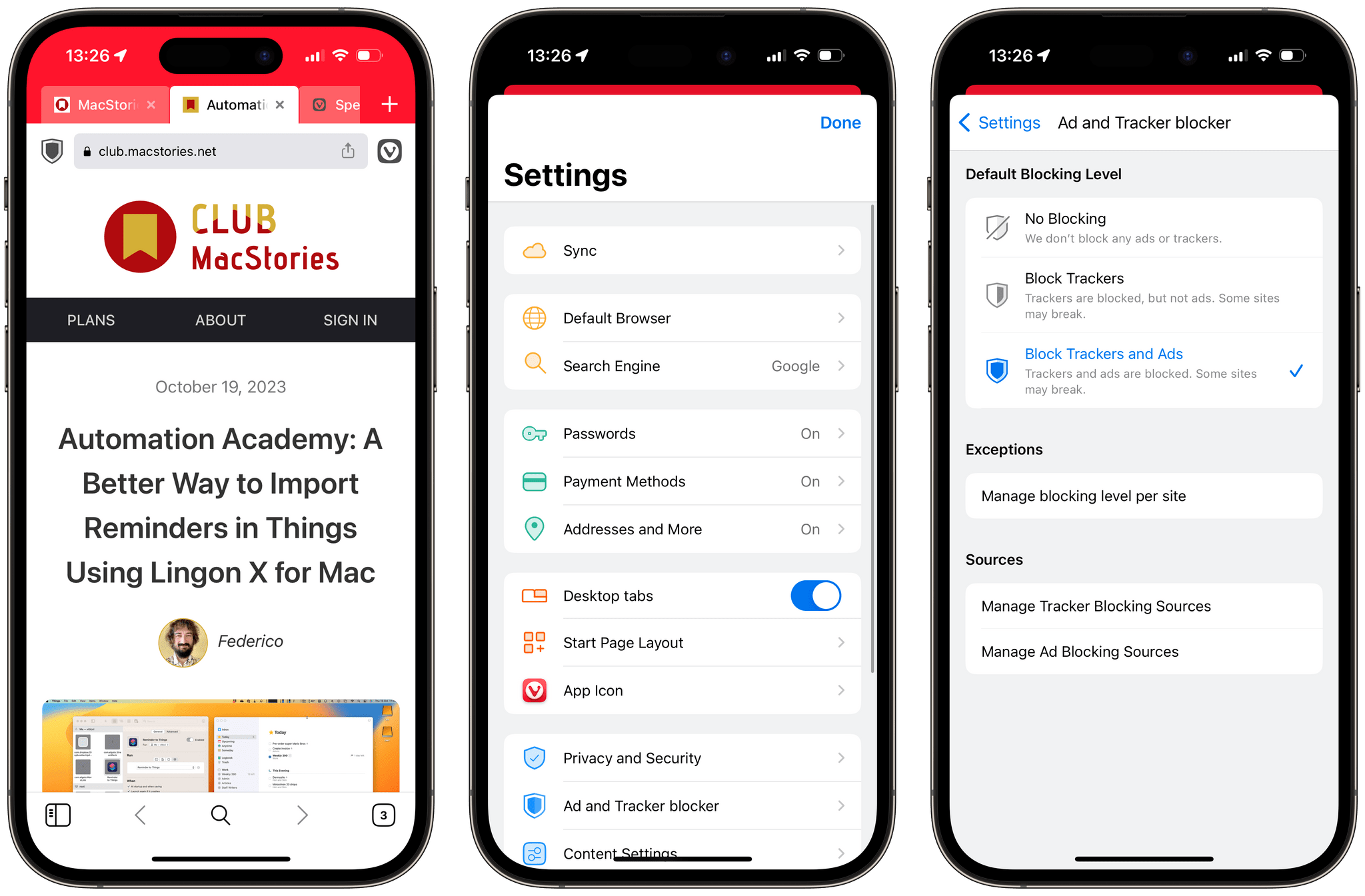
Third-party web browsers on iOS and iPadOS have been in a peculiar state for some time. While it has been possible since iOS 14 to set a third-party browser as the default for opening web links, Apple still doesn’t permit the use of third-party browser enginesat least for now. This means third-party web browsers on iOS are essentially limited to serving as custom user interfaces built on top of the Safari engine.

However, some web browsers thrive in this space. Vivaldi, like many other web browsers on the desktop, is built on top of the Chromium engine and has become a staple of highly-customizable desktop web browsers. With its recent expansion to iOS, I thought I would try using it for a week to see how much of its desktop promise survived the port to Apple’s platform.

Read more


Home+ 6.2 Adds a Battery Smart Section and Widget

Matthias Hochgatterer’s Home+ 6 for the iPhone, iPad, and Apple Watch is one of the most powerful HomeKit apps around, offering automation based on functionality exposed by Apple’s HomeKit framework that its own Home app doesn’t even use. The app also does a terrific job of surfacing sensor data that is buried deep in the Home app, like details about the air quality in your home if you have a sensor that monitors that.

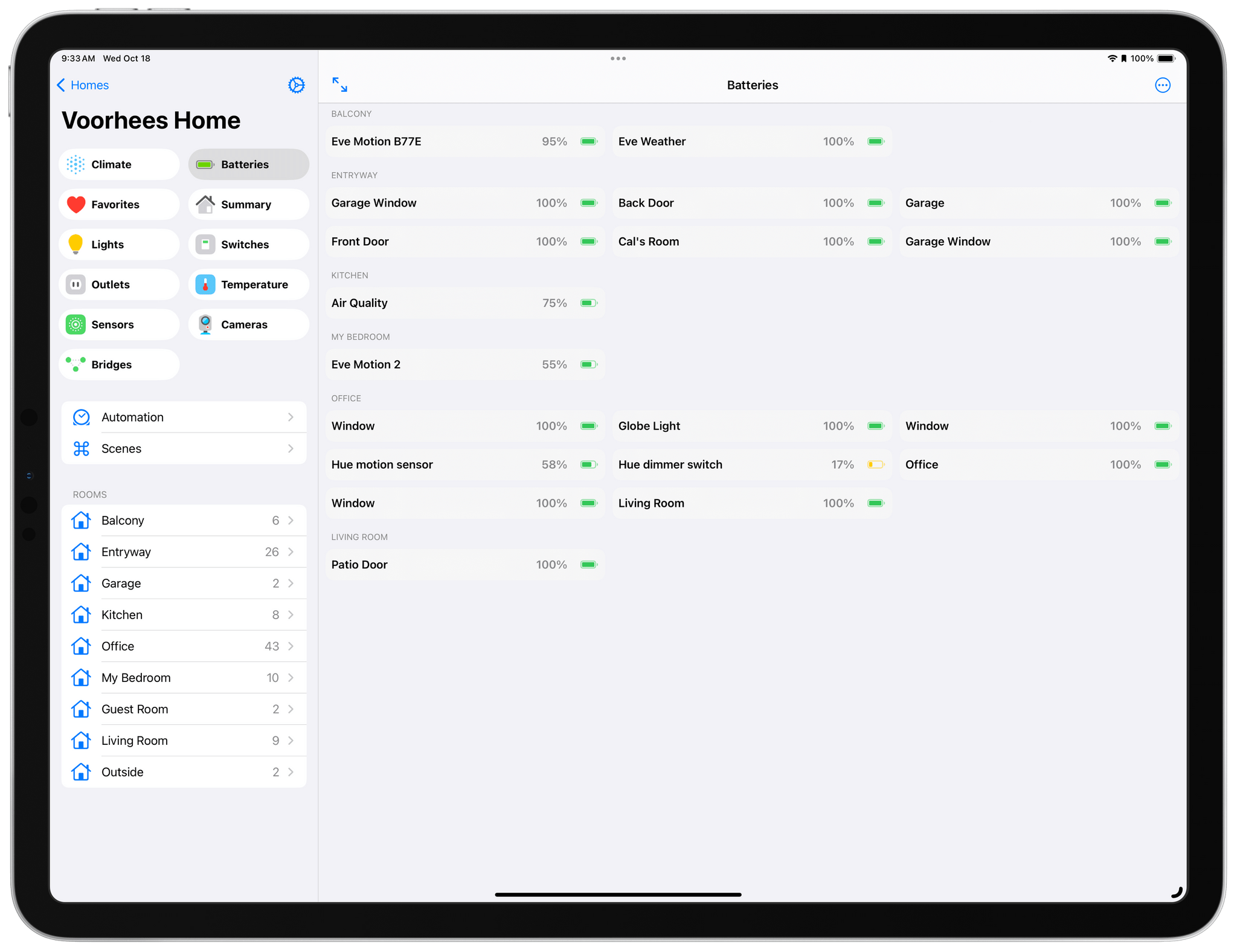
Home+ 6.2 includes a new Smart Group dedicated to battery health.

Home+ 6.2 includes a new Smart Group dedicated to battery health.

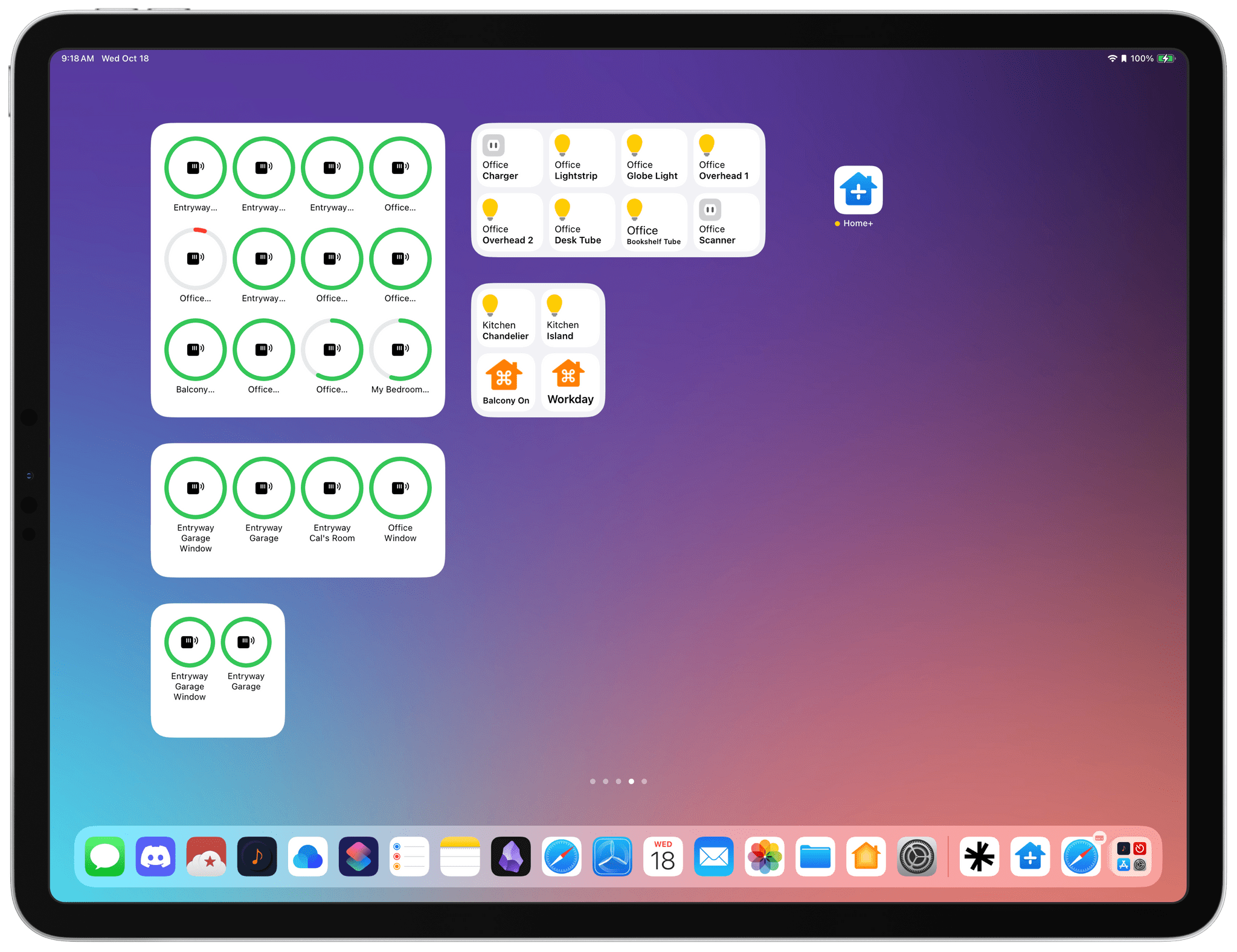
With version 6.2 of Home+, Hochgatterer has added a new section to the app that reports the remaining charge for any battery-operated HomeKit accessories, such as window and door sensors. The new section, which color codes its battery icons according to the remaining charge, is accompanied by a new set of small, medium, and large-sized widgets that can be customized to show all of your battery-operated devices or a subset picked by you. Like the smart section in the main app, the rings around each device icon are color-coded, making it easy to pick out any with low batteries.

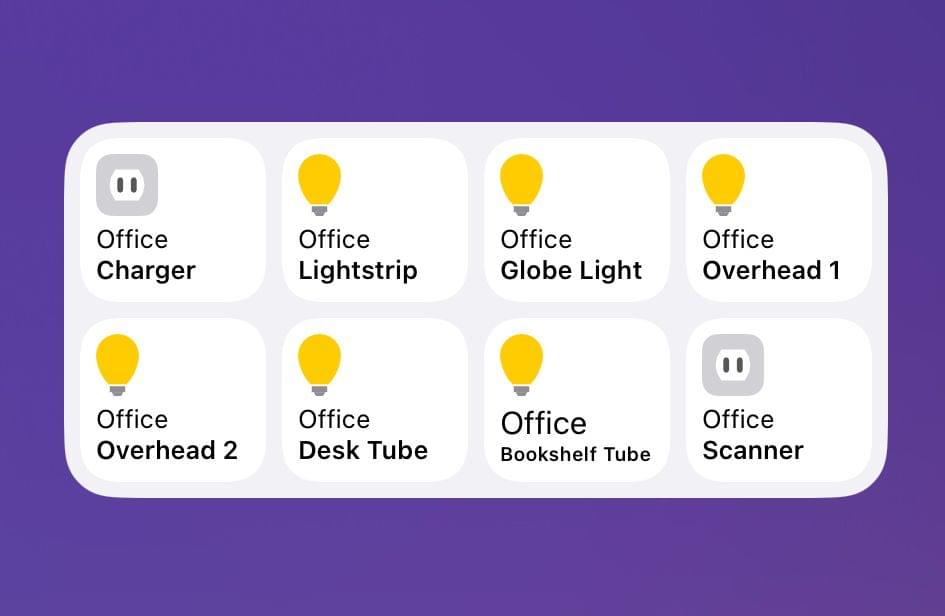
The accessories and scenes widget has added room identifiers.

The accessories and scenes widget has added room identifiers.

Home+ also offers device widgets that have added the name of the room to which they’re assigned, making it simple to tell accessories apart in the widget. However, the accessory and scene widgets are not compatible with iOS and iPadOS 17’s new interactivity. Tapping an accessory or scene will trigger it, but the Home+ app opens in the process. Having gotten used to iOS and iPadOS 17’s interactivity, I hope Home+ adds support for it in the future.

Version 6.2 is a small update for Home+, but one I appreciate all the same. Battery data is too buried in the Home app, and with Home+’s new widget and smart section, I now know I have a Hue dimmer switch that needs my attention. Plus, if you haven’t checked out Home+ in a while, it’s worth exploring its automation tools, which are some of the best available in any HomeKit-based app.

Home+ 6.2 is available on the App Store for $9.99, which is a 30% discount from its usual price.


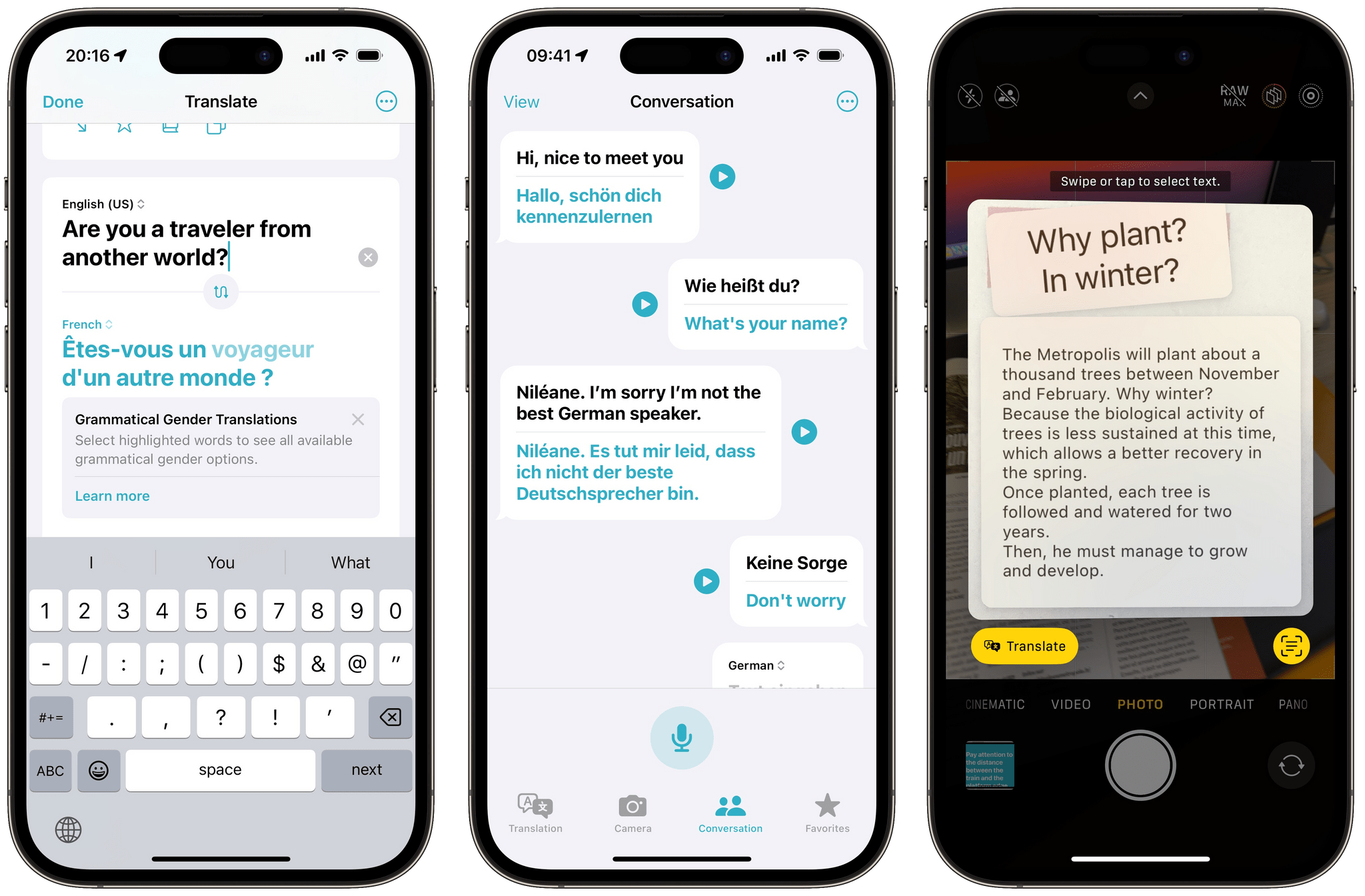
Is Apple’s Translate App Still Getting Lost in Translation?

Apple first introduced the Translate app in iOS 14. Although it was a welcomed addition to the language translation space, I stopped using it a couple of months after its release. Many languages were still missing, its interface was lackluster at best, and I found that its French translations were not great. I would also still often rely on Google Translate to translate text in the real world using the iPhone camera — a feature that was initially missing from Apple’s app. This year, however, the Translate app received a substantial makeover and a handful of new features in iOS 17.

Let’s see how Translate fares in 2023.

Read more


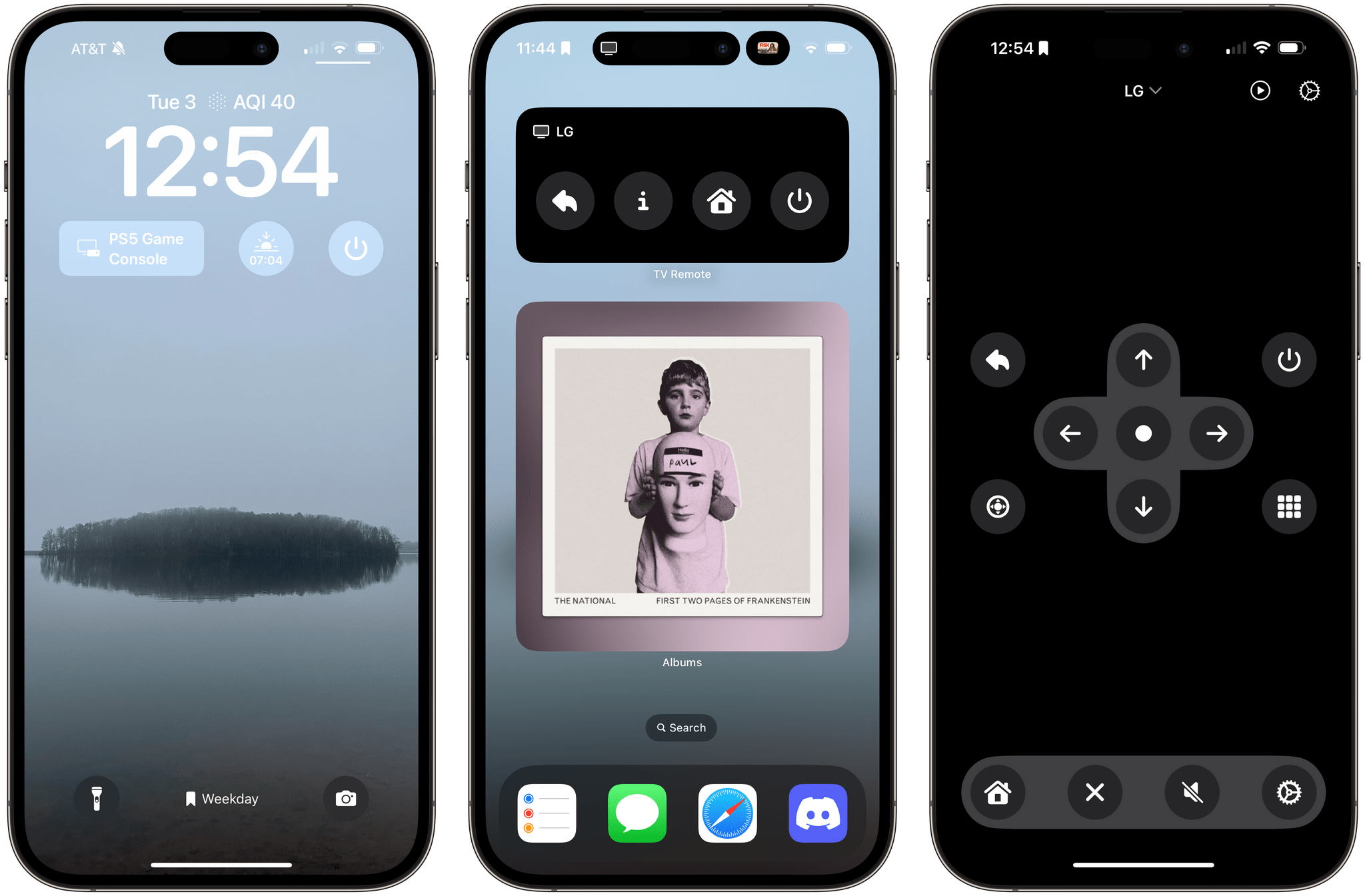
TV Remote: Control Your TV From Your Lock Screen, Home Screen, and Live Activities

Developers have come up with endlessly clever uses for interactive widgets. I love testing them all, but one type is beginning to stick more than others. It’s the widgets for apps that require quick interactions when you’re in the middle of something else. Turning off the lights in my home office when I’m finished working for the day, toggling work timers as I switch from task to task, and then checking off those tasks as I complete them are all perfect interactions for widgets that require minimal switching away from whatever I’m doing. Hopefully, that means fewer distractions and, in turn, a more productive day.

But not everything is about peak efficiency and checklists. Sometimes, you just want to relax, which widgets can help with, too. One of my favorite apps to help with that, which recently added interactive widget support, is TV Remote by Adam Foot. Foot’s app is one I already used with my LG C2 TV, but it’s the app’s new widgets that have graduated it to a regular part of my TV routine.

Read more


Introducing MultiButton: Assign Two Shortcuts to the Same Action Button Press on Your iPhone

MultiButton.

MultiButton.

I got my iPhone 15 Pro Max last week, and I’m loving the possibilities opened by the Action button combined with the Shortcuts app. But as I was playing around with different ideas for the Action button, I had a thought:

Wouldn’t it be great if instead of just one shortcut, I could toggle between two shortcuts with the same Action button press? That’s exactly what my new MultiButton shortcut does.

With MultiButton, you’ll be able to assign two separate shortcuts to the Action button. Unlike other solutions you may have seen that always make you pick shortcuts from a menu, MultiButton automatically cycles between two shortcuts if you press the Action button multiple times in rapid succession. You don’t need to pick shortcuts from a list; just press the Action button and MultiButton will take care of everything.

Toggling between two shortcuts with MultiButton.Replay

Allow me to explain how MultiButton works and how you can configure it for your Action button. In the process, I’ll also share some new shortcut ideas that you can start using today on your iPhone 15 Pro.

Read more


Longplay 2.0: An Album-Oriented Apple Music Player with Loads of New Features

Longplay 2.0 by Adrian Schoenig is out, and it’s a massive update of the iOS and iPadOS album-oriented music app.

If you’ve tried Longplay before, the update will be familiar. The first time it launches, it quickly checks your Apple Music library (about six seconds for over 1200 albums in my case), finds all the nearly complete and complete albums, and displays them in a grid of album art. I’ve always loved this interface because it does such a great job of emphasizing album art. However, what’s different is a long list of new features, but since we’ve only covered the app for Club MacStories members and AppStories listeners, I’m going to cover everything and call out the updated features as I go.

Read more


Obscura 4 Features A Refreshed Design, New Features, and A Different Business Model

Ben McCarthy’s career as a developer coincides almost exactly with mine as a writer. As a result, I’ve had the pleasure of watching Obscura evolve from little more than an idea to one of the best camera apps on the App Store. As with so many apps, what sets Obscura apart from others is Ben’s attention to detail, impeccable design taste, and deep knowledge of the app’s subject matter – photography.

Today, Obscura 4 is out, less than two years since I reviewed version 3 with a refreshed design and a handful of new features. The update includes a change in Obscura’s business model, too. In the past, the app was paid up front, with each major release being a new purchase. Going forward, Obscura is free to download, with certain advanced features, known as Obscura Ultra, requiring a subscription.

Read more


Mercury Weather 2.0 Adds Trip Forecasts

If you’ve ever found yourself repeatedly checking the weather of a trip destination in the days leading up to your travels, you’ll appreciate Mercury Weather 2.0, which was released today for iPhone, iPad, Mac, and Apple Watch. The update’s marquee feature is Trip Forecast, which lets you set up a trip once and keep tabs on your destination’s weather as your travel dates approach. I reviewed Mercury Weather a couple of weeks ago, so for more on the app’s other features, be sure to check out that review.

From Mercury Weather’s Locations view, there’s now an option to add upcoming trips. Just add your destination and the dates of your trip, and it will appear in a separate, collapsable ‘Upcoming Trips’ section, along with the current conditions and dates of the trip. You can also name your trip and add a custom icon.

You can switch between home and upcoming trips in the Daily Forecast section of Mercury Weather.

You can switch between home and upcoming trips in the Daily Forecast section of Mercury Weather.

As your departure date approaches, your destinations will appear along the top of the Daily Forecast graph. Tap a trip’s name to see that location’s weather forecast or the ‘Home’ button to return to your home location’s weather. Once your trip dates pass, the forecast for your destination just disappears from the app unlike destinations you might otherwise save in a weather app’s list of locations.

Trip Forecasts have been incorporated in Mercury Weather’s small and medium-sized ‘Daily Forecast (Customizable)’ widgets too. The widget includes a summary forecast for the next eight days, and if any of those days are part of your upcoming trip, it will show the forecast for that location instead of your current location.

Mercury Weather on the Mac.

Mercury Weather on the Mac.

Trip Forecast is an excellent addition to Mercury Weather. I love that I can set up a trip once and forget about it, letting the app show me the upcoming forecast as my travel day approaches and staying out of the way until then. One thing I still miss from other weather apps is radar data, but aside from that, I’ve loved using Mercury Weather this summer.

Mercury Weather is free to download on the App Store, with Home and Lock Screen widgets, the Apple Watch app, historical data, and more than one saved location available to subscribers for $1.99/month or $9.99/year, with a $34.99 lifetime purchase option. A Family Sharing subscription is $3.49/month, $16.99/year, or $59.99 for a lifetime purchase.