Posts tagged with "google"

Legal Disclaimer In iOS 5 Further Hints At Apple Mapping Service

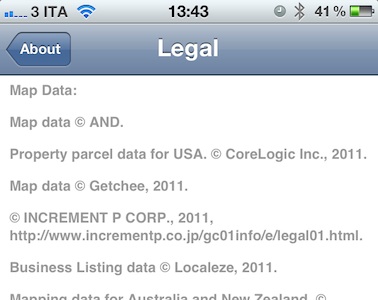
Tipped off by a reader, MacRumors has found that the legal disclaimers in iOS 5 contain new references to a number of third party companies that provide various mapping services. The disclaimers come under a new section called “Map Data” that is not present in previous disclaimers and is completely separate to the section which deals in the disclaimer which deals with licenses used by Google for its mapping service that is used by Apple in the Maps app.

Today’s discovery comes after a number of other revelations, together they form what seems to be the suggestion that Apple is looking (or potentially actively working on) its own mapping solution that could replace Google Maps on iOS. Some of those clues include its acquisition of mapping companies Placebase and Poly9 and its recruitment of employees with navigation software expertise. The location log debacle also revealed that Apple was “collecting anonymous traffic data to build a crowd-sourced traffic database”.

MacRumors had a look into all the companies newly listed in the legal disclaimer and gave a quick description of each of them (included below). Noting two companies in particular that suggest Apple may be developing its own maps service. Urban Mapping provides some extensive additional data such as a wide range of demographic information that can be layed on top of traditional data. Waze, however, is experienced in developing crowd-sourced traffic data - it also has a popular app in the App Store now which demonstrates a lot of their services.

  • CoreLogic offers Parcel data which marks boundaries for of properties to provide positional accuracy in location-based solutions.
  • Getchee provides location and market data on China, India and Southeast Asia.
  • Increment P Corp provides location and traffic data for Japan.
  • Localeze provides local business listings.
  • MapData Sciences Pty Ltd. Inc provides mapping data for Australia and New Zealand.
  • DMTI provides postal code data for Canada.
  • TomTom offers global TeleAtlas mapping data which is also licensed by Google for their map solution.
  • Urban Mapping provides in-depth neighborhood data such as crime, demographics, school performance, economic indicators and more.
  • Waze offers real-time maps and traffic information based on crowd sourced data.

Whilst this doesn’t provide concrete proof of whether Apple is working on its own mapping service, we are fairly sure it (if it exists) will not be launching with iOS 5. This is likely related to the fact that Google recently renewed its agreement with Apple to provide Google Maps to iOS.

Jump the break to see some screenshots of the new legal disclaimer which features these new companies.

[Via MacRumors]
Read more


Google Updates Google Sync for Better Mail and Calendaring on iOS

Not familiar with Google Sync? It’s not an app on your iPhone, iPod touch, or iPad, but rather something that exists in the background to help you keep your Mail, Calendars, and Contacts in check. Today, Google is announcing improvements to the service so you can better push and pull information from the cloud.

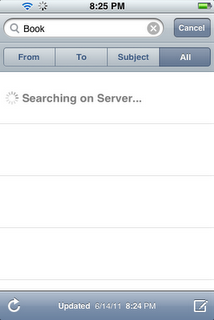
The first improvements are with Mail, and I think this one is my favorite. Google is now giving iOS users the ability to search for messages stored on the server, and not just locally on your device. The next time you’re looking up an old love letter, just search in Mail for your message and it’ll continue the search on the server.

Mail is also getting another improvement in the account department. If you have multiple addresses tied into one gmail account, it’s now way easier to send as an alternate address in Mail. If you “send mail as” in Gmail, iOS will now respect those settings so you’ll never send email from the wrong address again.

Want to edit calendar events? Now you can! Accept, decline, and edit calendar event (invitations) are now possible through iOS.

For more information, and how to setup Google Sync on your device, please refer to the recent blog post and how-to-guide here.

[via The Official Google Enterprise Blog]


Android and iOS Continue To Dominate In US Smartphone Market

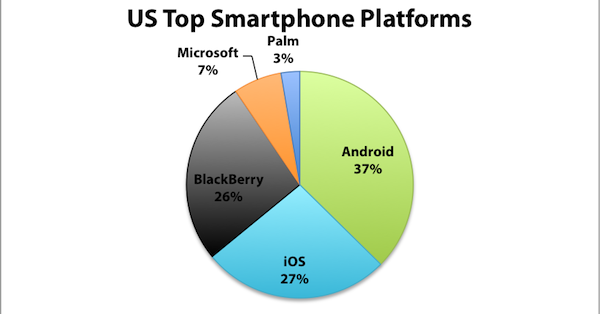
Apple has continued making gains in the US mobile and smartphone market according to the latest comScore ‘Mobile Subscriber Market Share’. Surpassing RIM, Apple jumped to being the fourth largest OEM with a share of 8.3% of the US market. Samsung remains number one with 24.5% of the market, followed by LG and Motorola.

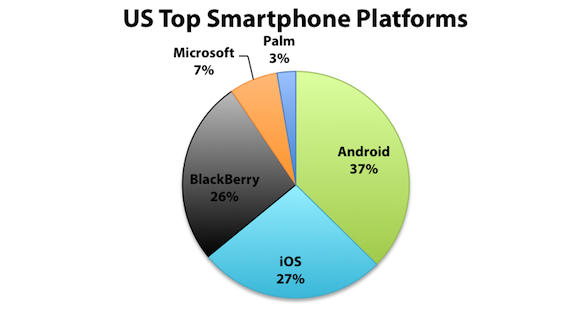
In terms of smartphone operating systems in the US, Google’s Android leads the pack with 36.4% of the market, an increase of 5.2 percentage points over the three month period. Whilst Apple’s iOS, is still in a solid second place, and grew its share by 1.3 percentage points. RIM continues its slide, falling another 4.7 percentage points and Microsoft also managed to see its market share fall by 1.3 percentage points.

Meanwhile in terms of usage, more US consumers ar using web browsers (up 2.1 percentage points), downloading applications (up 2.4 percentage points), playing games (up 2.5 percentage points) and using social networks or accessing blogs (up 2.7 percentage points).

[Via comScore]


Google Renews Maps Deal With Apple, Plus Other Tidbits From Schmidt’s D9 Appearance

Last night the annual D9 conference kicked off with an interview with Google’s Executive Chairman, Eric Schmidt. It led to a number of interesting revelations, perhaps of most significance is that he revealed Google has “just renewed [their] Map and Search agreements with Apple”.

The renewal of the Maps agreement confirms rumors we reported on last week where it was suggested that although Apple is looking to improve the iOS Maps application, it would not replace the Google service that powers it. Speculation about Apple launching their own Maps service was ignited last month after Apple posted the location tracking Q&A post, which talked of a crowd-sourced service to improve traffic information.

Speaking of the new platform war, fundamentally based on the Internet, Shmidt said there is, primarily, a gang of four that includes Google, Apple, Amazon and Facebook. He says that whilst there may be a debate about who is fifth and sixth (suggesting perhaps PayPal and Twitter), it is pretty clear that Microsoft is not included. Asked why, he says Microsoft is not driving the consumer revolution – they are focused on corporate and are doing so successfully – something that will likely continue for decades to come.

Whilst talking about the Chrome OS, Schmidt took off on a tangent and claimed that Chrome was a more secure browser. Then when prodded by Walt Mossberg on what else users could do to improve security, Schmidt said they “could use a Mac instead of a PC”, citing the observation that viruses are less likely to affect users.

When Google launched its cloud music offering, many were disappointed that it was just a locker for music to be stored, with no way to purchase music directly. Asked why Google failed at signing with any of the record labels, Schmidt simply says, “I’ve just not been successful in doing that”. Finally, make sure to jump the break to watch the (fictional) acting-CEO of News Corp, Jane Lynch, launch the D9 conference, with some jabs at The Daily and other News Corp entities.

[Via AllThingsD]


Federal Government Agencies Embrace The iPad, iPhone and Gmail

iPads, iPhones, Gmail and Android phones; typically they have been the devices and services used (and loved) by consumers around the world. Yet in recent times they are increasingly becoming a reality for employees within the confines of the bureaucratic world of government departments. An article today in the Washington Post details how ‘federal government 2.0’ has embraced consumer devices, to solve real world problems and to appease government employees across the US.

Somewhere in America, perhaps at this very moment, a bad guy is under video surveillance. He is being watched, every movement, every step — but not on a little TV. That’s so 2009. Instead, a special agent from the Bureau of Alcohol, Tobacco, Firearms and Explosives is keeping tabs on an iPad.

It isn’t just President Obama that is lucky enough to own an iPad, employees in various departments in all arms of the US government are bringing them in to work and the IT staff have stopped restricting them and started embracing them. Vivek Kundra, the federal government’s chief information officer says that it’s not that people don’t like government or corporate style technology – they despise it.

Kundra’s answer to the issue of people using unauthorized devices is simple: Give them what they want.

Agilex, one of the companies contracted by the government to integrate Apple products into government agencies has said that “the demand we are seeing now in the last 90 days has been just extraordinary.” – “It’s like everybody is saying, ‘This is really happening here now’”. Gmail too has been widely adopted across many agencies in the Federal government including the State Department, NASA and the Army . Yet the best part is that it doesn’t just make the lives of government employees better, but it is also saving the government money.

[Via Washington Post]


Google Rolling Out Revamped Mobile Search UI

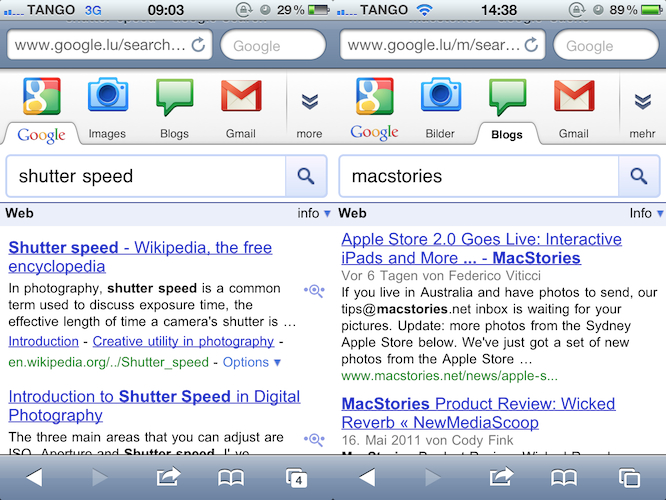
As noted by some of our readers overnight, Google is rolling out a revamped search interface which better showcases all the services offered by Google and allows you to easily and quickly switch between Search, Images, Gmail, Blogs and more. The new page design is not available for everyone (I can’t see it on my iPhone 4 in Italy), as it’s apparently slowly propagating internationally. MacStories reader Kevin, however, managed to grab some screenshots of the updated mobile interface; a new bar at the top provides links to Google Search, Images, Blogs and Gmail, and a “more” button to expand the bar and reveal the icons seen in the screenshots above. Another section of the new top bar displays the Google account you’re currently logged in with, as well as two tabs for Search and Apps. In the Apps section, Google has a Gmail shortcut that takes you to the usual mobile mail interface for iOS devices. Other services are likely visible in the Search tab of international Google domains, as our reader could only see the new design on Google.lu.

Google has updated several of its online services and web apps over the past months to be more functional on iOS and Android devices. Together with Instant and App Store search results, Google made lots of changes to Gmail mobile, improved the weather widget and completely revamped the Maps web app last week. Check out more screenshots below. [Thanks, Kevin] Read more


Google Wallet May Work with Future NFC iPhones

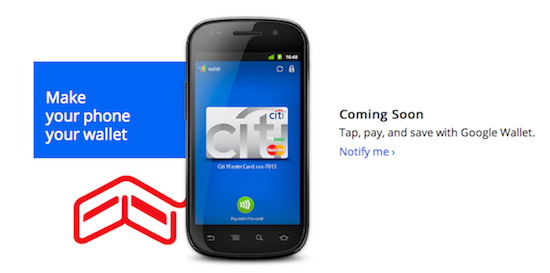
Earlier today Google officially unveiled Google Wallet, the company’s first foray into the near-field communication payment market, based on an app capable of running on the Nexus 4G device and backed by names like Citi, First Data, Sprint and MasterCard. Through the usage of an NFC chip for mobile phones and the Google Wallet app for Android, users will be able to pay with real money from a credit card or “Google Prepaid Card” just by tapping on screen and saving a new transaction. The system is currently being field-tested by Google and will launch publicly this summer in the United States, furthermore it will also support Google’s new Offers platform for special deals and discounts as well as MasterCard’s already deployed PayPass terminals.

Google Wallet has been designed for an open commerce ecosystem. It will eventually hold many if not all of the cards you keep in your leather wallet today. And because Google Wallet is a mobile app, it will be able to do more than a regular wallet ever could, like storing thousands of payment cards and Google Offers but without the bulk. Eventually your loyalty cards, gift cards, receipts, boarding passes, tickets, even your keys will be seamlessly synced to your Google Wallet. And every offer and loyalty point will be redeemed automatically with a single tap via NFC.

As Google is stressing the open nature of its commerce ecosystem, MG Siegler at TechCrunch reports someone at the media event today asked Google’s VP of Commerce Tilenius if the Google Wallet app would eventually run on NFC-enabled iOS, BlackBerry and Windows Phone 7 devices, getting a surprisingly promising answer:

Today, during their Google Wallet/Offers unveiling at the NYC headquarters, Google touted the openness of their new system. Naturally, someone asked a question about what this meant for other, non-Android phone?

“In terms of iPhone, RIM, Microsoft — we will partner with everyone,” Google VP of Commerce Stephanie Tilenius said. Of course, that depends on two things: 1) the inclusion of NFC chips in their phones. 2) the willingness to work with Google on this system.

Of course, considering all the rumors surrounding Apple’s NFC implementation for future iPhones and iPads, it is very likely that Apple will rely on its own payment system based on iTunes accounts or external collaborations with credit card companies, rather than allowing Google to become the preferred system for NFC payments on the iPhone. So while Google is promising today that their app could run on a variety of devices and that they want to partner with everyone to extend the ecosystem, it remains to be seen whether or not Apple will let them release a Google Wallet app for iOS. TechCrunch also reports Google mentioned a “sticker” that could be attached to any device to enable NFC functionalities, and when tapped on another NFC terminal would allow for payments through Google’s cloud, and the Wallet app. Of course, the app would still need to be approved in the App Store or, perhaps, work as a webapp.

Apple was initially rumored to be implementing NFC in the iPhone 5 set for release this Fall, though more recent reports claim the feature will come in future iPhones, not necessarily the one supposed to ship later this year.


Google Completely Revamps Maps on Mobile Browsers

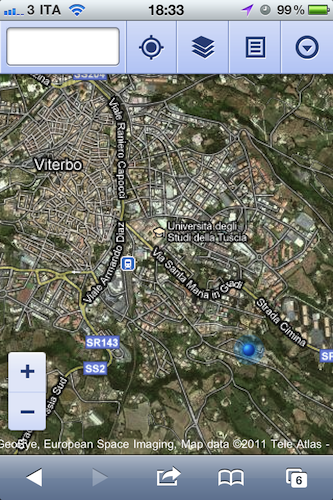
Announced a few minutes ago on the official Google Mobile Blog, the Maps web app for iOS and Android devices has gone under a major update that enables new features and menus when viewed on mobile browsers. As Google reports, 40% of Maps usage happens on mobile browsers, and that’s why the company decided to update the maps.google.com website to offer a more consistent experience across smartphones and tablets. The changes, however, are exclusive to the web app and we can’t see anything new on the native Maps app for iOS, which uses Google’s backend but is developed by Apple.

The new Maps website displays a bar on top to get your current location, enable and disable layers like satellite, labels, traffic and points of interest, and another button to get directions to a specific location or learn more about places that support additional information and photos (like restaurants). Provided you give Safari access to your location, you can easily get directions as you would on a desktop browser, sign out of your Google account and access the “My Maps” interface from Google.

Now, when you visit maps.google.com on your phone or tablet’s browser and opt-in to share your location, you can use many of the same Google Maps features you’re used to from the desktop.

The new features include:

  • See your current location
  • Search for what’s nearby with suggest and auto complete
  • Have clickable icons of popular businesses and transit stations
  • Get driving, transit, biking, and walking directions
  • Turn on satellite, transit, traffic, biking, and other layers
  • View Place pages with photos, ratings, hours, and more
  • When signed into your Google account, access your starred locations and My Maps

You can try new Maps mobile website by heading over to maps.google.com on your iOS or Android device. Check out more screenshots below. Read more