This Week's Sponsor:

HomeSnap

A Private, Read-Only Window Into Your HomeKit Home


Posts tagged with "apple"

iOS 5 Voice Recognition Interface Conceptualized

With far improved voice recognition expected to make its way into iOS 5, the next questions is how Apple will implement it. Well one person, Jan-Michael Cart, has thought of how it might be possible to implement and put together a well-thought out video demonstrating the concept (after the break).

There are number of aspects to the voice recognition he conceptualizes, starting with the notion that it can be used to navigate the entire user interface and is triggered by holding down the home button – much like how Voice Control currently works. Yet instead of bumping you to a whole new screen like Voice Control does, the status-bar will turn blue and serve as a visual guide as to when to speak and telling you how it interpreted what you said.

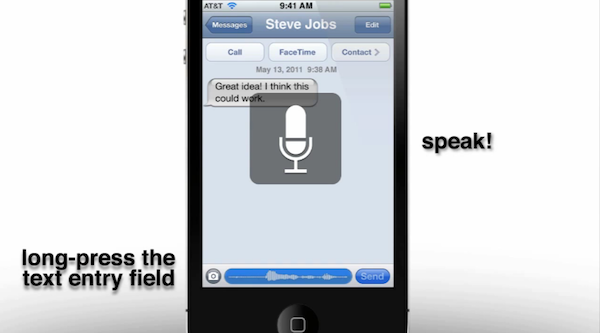
That’s a fairly straightforward extension of what iOS currently does, what is more intriguing is Jan-Michaels concept of how any text-field can have voice input. All you would have to do is press and hold the text-field and again the status bar turns blue and you speak. For somewhere like notes or mail (which don’t have a text-field but rather an area for a block of text) you would double tab to open the copy and past bar but which would also now have a microphone icon – pressing it would start voice dictation.

As would be reasonably expected, Jan-Michael also believes that APIs would be offered to developers to use voice-recognition and shows how the Facebook app would be an easy candidate for voice recognition support. Make sure to jump the break to watch the video by Jan-Michael, and if you like it, I would highly recommend checking out his YouTube page which has some other iOS 5 concepts including faster app switching using gestures and how widgets could be implemented.

Read more


Guinness World Records Awarded To The iPhone 4, App Store and iOS Games

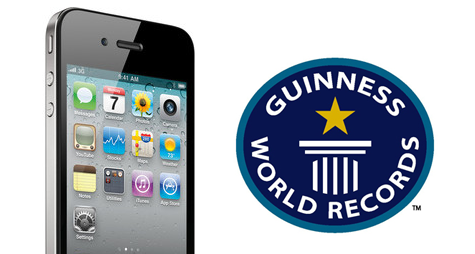
The iPhone 4, the iOS App Store and a number of iOS games have been honoured with Guiness World Record awards. The iPhone 4 was named the fastest-selling portable gaming system following a first day sales figure of 1.5 million units when it was released on June 24 last year – far exceeding the previous holder of the title, the Nintendo DS which sold 500,000 units over a week in 2004.

“The release of the iPhone has not just changed the mobile industry, but the video game world too,”Gaz Deaves, Guinness World Records’ gaming editor, said in a statement. “With the never-ending App Store selection and an intuitive device, Apple has created a gigantic new space for itself in the casual games genre that literally brings entertainment to users wherever they may be.”

Apple’s App Store has also been awarded the Guinness World Record for being the most popular application marketplace following more than 6.5 billion downloads since its launch in July 2008. The App Store is also the largest downloadable video game store, which had as of September last year, roughly 37,000 games. This figure far exceeds other downloadable game services such as Steam, which offers around 1,110 games, the Xbox Live Indie Arcade, which has 1,300, and the Wii Virtual Console, which offers around 580 games. The final award gong given to the App Store was for having the largest launch line-up of any gaming system – with 145 games that were available on July 10th, 2008.

Several iOS games also received awards including the infamous Angry Birds which received an award for being at the top of the paid apps list in the most countries after selling more than 6.5 million copies since being released in December 2009. Plants vs. Zombies was awarded for being the fastest-selling iPhone/iPod strategy game with more than 300,000 paid downloads in just nine days. It also received an award for being the highest-grossing strategy game in the App Store – generating about $1 million for its developer, PopCap, in just over a week. Lastly, the Tap Tap Revenge game series was awarded the most popular game series in the App Store after more than 15 million downloads since launching July 2008.

[Via LA Times]


Apple Offers Free iOS and Mac Repairs Following Japan Disaster

[image via]

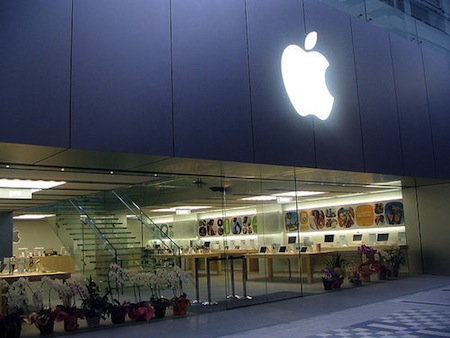
As noted by TUAW, Apple has started offering free repairing services for iOS devices, Macs and Cinema Displays damaged during the Japan earthquake and tsunami in March. The list of supported devices is available here [Google Translation] and includes any Mac model, Apple Cinema Displays, iPhones, iPads and iPod touches. Customers who live in the municipalities listed in the Disaster Relief Act of 2011 can apply to the free repairing service.

Following the earthquake and tsunami, Apple offered its support to victims and staff multiple times. Most notably, a story from an Apple employee in Japan described how the company allowed  customers, employees and regular people to find shelter inside the Apple Stores, using the power lines to recharge their computers and in-store Macs to connect iPhones and iPads. The company then set up a special page in the iTunes Store to donate to the American Red Cross for the Japan relief fund. Apple CEO Steve Jobs also sent a letter to all Apple Employees a few days after the disaster.


Foxlink to Expand Apple’s Retail Distribution in Asia with 50 New Stores

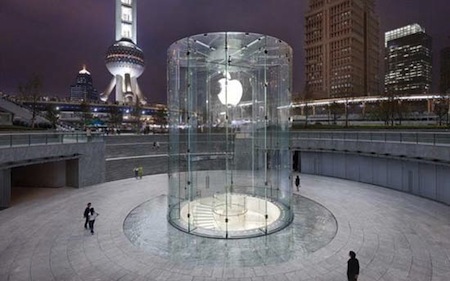
According to a report by Digitimes published today, Foxlink is planning on opening 50 new Apple-exclusive retail stores in China, Taiwan, Hong Kong and Korea by the end of 2011. Currently, Foxlink has 50 stores in Asia, and the move to double its presence  to sell Apple products-only could drive a significant change in Apple’s retail distribution in these countries.

Taiwan-based Foxlink plans to expand the number of its exclusive stores for Apple products in China, Taiwan, Hong Kong and Korea to 100 outlets by the end of the year, from 50 currently, according to the company.

In addition to Foxlink, Cybermart, the Foxconn Group’s retail chain in China, will also open a new store in Changchun, Jilin province, China in July with the store to also set up an exclusive outlet of 200 square meters to sell Apple products.

Back in late January, it was also reported that Cybermart International, Foxconn retail subsidiary, announced its intention to open 500 new Apple-licensed stores in Greater China. The first store was set to open in Tianjin on April 1, 2011, and Digitimes claims today other locations include Xiamen, Zhengzhou, Changchun, Taiyuan, Xinjiang, and Kunming. At the Q2 2011 earnings call, Apple announced the opening of a 5th store in China, with Tim Cook confirming that Apple was “on a tear” in the country thanks to iPhone sales being up 250% in Greater China.


Microsoft, HTC, Nokia File Complaints Over Apple’s “App Store” Trademark

Several technology company heavyweights including Microsoft, HTC, Nokia and Sony Ericsson this week filed formal complaints against Apple’s attempt at getting the terms “App Store” and “Appstore” trademarked. In their complaints they formally ask the Community Trade Mark office in Europe for a declaration of invalidity, claiming that the terms are far too generic.

In a statement, a Microsoft spokesperson said that Apple’s application was an “unsupportable claim of exclusivity” and noted that the terms “App Store” and “Appstore” are like “toy store” or “book store” – a generic tem “that should continue to be available for everyone to use for stores that sell apps.”

Microsoft has also heavily invested in a legal battle started in 2008 when Apple first attempted to trademark the term “App Store” with the US Patent and Trademark Office. That dispute is ongoing and both sides have hired linguists in their legal battle.

Furthermore Apple sued Amazon in March this year, in Amazon’s response to the trademark suit they used a quote from Steve Jobs to further illustrate that even he, as Apple’s CEO was using the term “app store” as a generic term to describe online stores that sell apps:

So there will be at least four app stores on Android, which customers must search among to find the app they want and developers will need to work with to distribute their apps and get paid. This is going to be a mess for both users and developers. Contrast this with Apple’s integrated App Store, which offers users the easiest-to-use largest app store in the world, preloaded on every iPhone

[AllThingsD via CNet]


New iMacs Can Only Use Apple’s Hard Drives

One of the perks of having an iMac, be it a 21.5-inch or 27-inch model, is that you’re signing up for an all-in-one solution that packs everything you need into a “screen” that only needs to be placed your desk, connected to a power source, and it’s ready to go. The iMac – certainly Apple’s top choice in the consumer desktop line – isn’t meant to offer “user serviceable parts”, meaning what you get with Apple’s standard configuration is what you’ll have to stick with until the end of the product’s life cycle. In the past years, however, users who wanted to customize their iMac experience with custom parts like, say, different internal hard drives or better RAM, were able to open an iMac (provided they followed the complex instructions that require to pay attention when disassembling the aluminum enclosure and display) and fit in compatible components to enhance the performances of the machine.

As noted by Michael at Other World Computing’s blog, however, the new 2011 iMacs – the ones with Thunderbolt, Sandy Bridge processors and better graphics – don’t allow you to use any other hard drive but Apple’s custom ones, which are running a custom firmware to provide temperature monitoring through a new 7-pin SATA connector.

For the main 3.5″ SATA hard drive bay in the new 2011 machines, Apple has altered the SATA power connector itself from a standard 4-pin power configuration to a 7-pin configuration. Hard drive temperature control is regulated by a combination of this cable and Apple proprietary firmware on the hard drive itself. From our testing, we’ve found that removing this drive from the system, or even from that bay itself, causes the machine’s hard drive fans to spin at maximum speed and replacing the drive with any non-Apple original drive will result in the iMac failing the Apple Hardware Test (AHT).

In examining the 2011 27″ iMac’s viability for our Turnkey Upgrade Service, every workaround we’ve tried thus far to allow us to upgrade the main bay factory hard drive still resulted in spinning fans and an Apple Hardware Test failure. We swapped the main drive out (in this case a Western Digital Black WD1001FALS) with the exact same model drive from our inventory which resulted in a failure. We’ve installed our Mercury Pro 6G SSD in that bay, it too results in ludicrous speed engaged fans and an AHT failure. In short, the Apple-branded main hard drive cannot be moved, removed or replaced.

To add insult to injury, the latest iMac EFI Update 1.6 unleashed 6Gb/s speeds on two internal ports – and naturally, one of them is the proprietary, firmware-limited, 7200RPM main drive that can’t take advantage of those speeds anyway.

Michael argues that by “closing” the system, Apple’s being evil in not allowing geeks and users who buy stuff on OWC or other Mac hardware shops to upgrade their iMacs to better configurations. As Marco Arment explains though (and I personally agree with him here), the iMac’s not really meant for fiddling and user customizations. Like I said above, when you purchase an iMac you’re signing up for the all-in-one idea of a machine that provides Apple’s latest and greatest innovations in desktop miniaturization technology – by using custom cables, firmwares and hard drives, Apple makes sure you get the best performances out of your iMac, with the “downside” of being unable to customize it. This aspect, of course, can also be seen a way for Apple to make sure that angry modders don’t queue up in the Apple Store asking for free replacements when they purposely opened an iMac to play around with its internals.

You can always find an old iMac online and make it your main machine to mod and improve over time, but you won’t be able to enjoy the improvements in Sandy Bridge architecture and Thunderbolt connectivity. And those, if you ask me, are pretty convincing reasons to get a 2011 iMac and stick with its default hard drives.


Bellevue Apple Store’s Relocation Pokes Fun At Microsoft Store

The retail shopping store war between Microsoft and Apple at Bellevue Square in Washington is heating up again with Apple’s plans to relocate its store. You may recall that the Bellevue Microsoft Store was built just a few doors down from the Apple Store that had existed for some time prior. Well now, Apple will be moving its store to a larger retail space on the second floor, but what is really interesting is where on the second floor it will be.

Yep, that’s right – directly opposite and above the Microsoft store. Just to make sure that those leaving the Microsoft retail store will be able to see the huge Apple store above them. I suspect that although increasing the store space from 4,600 square feet is the main goal of this move, Apple couldn’t resist taking a nice jab at Microsoft after they opened up shop so close to their original store. What better way to do that than let Apple customers look down upon Microsoft customers on the floor below and vice versa!

Apple’s move should be completed by the end of the year, probably by holiday shopping season.

[Via TUAW]


iPad Cannibalization Of PC Market Slows

The iPad’s cannibalization of the PC market may have slowed if the latest NPD market research report is any sign of things to come. The report found that new purchasers of the iPad are less likely to have foregone purchasing a PC than the early adopters of the iPad. It found that of those who had purchased the iPad over the holiday season, 12% would have decided against a PC purchase when they bought an iPad. This is a 2% drop from the 14% of those decided against a PC amongst those who had owned their iPad for 6 months or more.

Netbooks were saved the most, with iPad cannibalization falling by 50%, which actually led the netbook market to grow by 21% between September 2010 and March 2011. NPD also believes that the slowing of PC sales over the past couple of months has more to do with Windows 7 than the iPad:

The explosion of computer sales when Windows 7 launched, as well as the huge increase in netbook sales at that time, are much more to blame for weak consumer PC sales growth than the iPad

The report contradicts what analysts were calling the “iPad effect” in the first quarter of 2011 when US PC sales fell 10.7%. In fact at least one analyst, including Katy Huberty of Morgan Stanley, revised her 2011 PC shipments down after predicting a tablet cannibalization rate of 29% - which is nearly 3 times what this NPD report says was the rate when it surveyed customers in March.

[Via AppleInsider]


Apple Patents Keyboard with Air Feedback Technology

A new patent entitled ”Input Devices and Methods of Operation” uncovered today by AppleInsider reveals Apple has been experimenting with a new kind of desktop keyboard that, following the ongoing trend of reducing the size of keyboards to make them more compact and portable, allows users to receive tactile feedback upon pressing keys through an “air pressure” technology. As the patent notes, keyboards have become thinner and more compact over time, reducing the space between keys and the actual keyboard case design, thus preventing, in many cases, users from having proper feedback upon hitting keys with their fingers. The proposed keyboard design would use proximity sensor below each key to recognize the distance between a user’s finger and the key, allowing a built-in air system to apply a certain resistance or pressure, providing a way to receive tactile feedback on a slim and compact design.

The patent filing describes a system that would “flow air from the input device,” perhaps through openings in the surface of an individual key on a keyboard. This would provide tactile feedback to the user before they make physical contact with the key surface.

This air pressure could be used to apply air pressure against a user’s fingertips, giving tactile feedback even though the key may not move as much as a key on a more traditional keyboard.

Whilst this technology sounds like something Apple may not implement until 10 years from now (Apple, like many other companies, usually patents innovative designs and concepts that most of the times never find their way in actual products), it’s worth noting that a patent discovered earlier this year outlined a new type of keyboard capable of receiving multitouch input from the user thanks to cameras placed around the perimeter of the accessory. If Apple’s trying to reinvent the keyboard, these patents are certainly a starting point to keep in mind for the future.