Posts tagged with "apple"

New Apple Store Opens In Reading, UK

Reported earlier this week after a five-year wait that saw several rumors constantly claiming Apple had finalized work on the location, a new Apple retail store opened this morning in Reading, UK, at the Oracle Shopping Centre. The Oracle Reading centre “is located in Reading town centre on the banks of the River Kennet, just inside the A329 ring road”.

The Apple Store is located in the upper level of the building and, as usual with recent retail grand openings, saw a long line of Apple fans and customers for its debut this morning. ifoAppleStore, who broke the news this week, has some photos and a video of the new Store, and we’ve collected other shots from people who were there from Twitter.

Check out the photo after the break, and visit Apple’s official page for The Oracle Apple Store here. Read more


Apple Posts iCloud Transition Q&A, Confirms iCloud Will Have Web Apps

With iCloud set to replace MobileMe, Apple has just published a transition Q&A to help explain to users of MobileMe what the transition will be like and what will change as they move to iCloud. MobileMe will be discontinued on June 30, 2012, and some services like Gallery, iWeb, and iDisk will no longer be available after that date.

One issue that has been in contention recently is whether or not iCloud would offer web apps with as MobileMe did. Today’s transition Q&A confirms that, yes, there will be iCloud web apps for Mail, Contacts, Calendar and Find My iPhone.

Will I be able to access iCloud services on the web?
Yes. Web access to iCloud Mail, Contacts, Calendar, and Find My iPhone will be available at icloud.com this fall.

In the same transition Q&A, Apple also details the necessary steps to move existing iWeb websites, MobileMe Gallery photos and iDisk files from the old MobileMe infrastructure to different services or a local folder on your Mac. For iWeb, as previously reported the service will be discontinued on June 30, 2012, and if users are willing to keep their websites reachable they’ll need to move files via FTP to a new hosting provider. Instructions are available here.

You will be able to continue publishing iWeb sites to MobileMe through June 30, 2012, even after moving to iCloud.

  • You need an account with a web hosting provider that supports FTP (File Transfer Protocol) before proceeding.
  • When publishing an iWeb site to a web hosting service other than MobileMe, the following features are not available: blog and photo comments, website password, blog search, and hit counter.

iDisk files will simply need to be copied locally on a Mac or PC before June 30, 2012, and no online interface for files will be available.

You will be able to continue using MobileMe iDisk through June 30, 2012, even after moving to iCloud. You should save copies of all files stored on iDisk before that date.

  • From the iDisk window, drag and drop the files and folders you want to keep to your desktop or a local folder on your Mac. For larger files, you may see a progress bar indicating download progress.
  • Check all of your folders on your iDisk for important files including the Documents, Movies, Music, Pictures, and Public folders as these are places where important files and folders are commonly stored. If they have files you want to keep, download these folders.

Last, MobileMe Gallery photos. Apple says that “it is likely that most of your Gallery photos are already in iPhoto or Aperture”, but if they’re not, detailed steps to download photos from MobileMe before June 30, 2012, are available here.

You will be able to continue using MobileMe Gallery through June 30, 2012, even after moving to iCloud. You should save copies of all photos published to your Gallery before that date.

  • Click the “http://gallery.me.com/subscribername…” link at the top right of the page.
  • On the page that opens, click the download arrow icon at the top of the page.
  • If you are downloading a photo album, Gallery will create a .zip file that contains all of the photos and movie clips in the album. Once processing is complete, click the Download button.

Furthermore, Apple has confirmed in the Q&A syncing of Mac Dashboard widgets, keychains, Dock items, and System Preferences will be discontinued after you move to iCloud, or June 30, 2012. Unlike iWeb publishing, Gallery, and iDisk, syncing of these items will no longer be available even after you move to iCloud.

As for separate iTunes and MobileMe accounts, Apple says you won’t be able to merge them, but you’ll be able to transition an old @me.com account to iCloud, and keep using the iTunes one for iTunes in the Cloud and Store purchases. More storage for mail, documents, and backup will be available at a price that Apple will outline this Fall once iCloud launches publicly. For users with Family accounts from the previous MobileMe offerings, they’ll still be able to create new family accounts and manage them if they already have a Family pack. New family packs can’t be purchased or upgraded. More importantly, Family pack members can move their MobileMe accounts separately to iCloud, meaning there shouldn’t be any confusion with a single iCloud account automatically sending purchases to all devices).

Check out Apple’s full Q&A on the MobileMe transition to iCloud here.


The Financial Times’ Web App Is Doing Well With Nearly 200,000 Downloads In Two Weeks

Two weeks after The Financial Times launched their new web app, they are apparently close to racking up a rather impressive 200,000 downloads. The Financial Times had launched the web app as a result of imposing conditions that Apple was asking for with its In-App subscription service, in particular was the lack of data that The Financial Times could attain from user activity.

The statistic comes from Media Week which says Financial Times is about to hit 200,000 downloads of the web app after getting 100,000 downloads in its first week. Given the apparent success of the app (although it remains to be seen how many people will subscribe) it could see other news publications move to the web app model instead of developing a native app. Publishers that develop a native app and charge a subscription fee must give up 30% of revenues to Apple – something all publishers have been somewhat hesitant of doing.

It is not known whether Apple’s revised In-App subscription guidelines will entice The Financial Times back to offering their native app. But they did comment on Media Week’s article, saying:

“We’ve seen strong demand for the FT web app since its launch. We have an ongoing marketing campaign encouraging users to migrate to the new platform and we’re confident we can maintain the momentum.”

[Via The Next Web]


iOS 5 Code Reveals New iPod Touch Model, Normal Fall Launch Expected

Update 2: TUAW made a mistake in their reporting, there isn’t any reference to iPod4,2 in 4.3 - they had accidentally opened the iOS 5 file twice, instead of the 4.3 file. Please ignore update 1.

Update 1: Erica Sadun of TUAW decided to double check whether this reference had existed prior to iOS 5 and sure enough, the same reference was found in iOS 4.3.

When Beta 1 of iOS 5 was released earlier this month some people found references to a next generation iPad and iPhone. That news itself wasn’t all that riveting, new iOS versions often hint at new and upcoming hardware – what was somewhat odd was that those people didn’t find any references to a new iPod Touch as would have been reasonably expected.

It turns out that there are in fact references to a new iPod Touch, they were just hidden away elsewhere, found earlier today by members of the iFans forum. Found inside the “com.apple.fairplayd.N81.plist” file (located in /System/Library/LaunchDaemons/) there is a reference to the “iPod4,2” – a new reference to an iPod Touch.

There haven’t been many rumors surrounding the fifth generation of the iPod Touch, but one would assume Apple would follow the pattern it has set from previous years, launching it sometime around September. The reference within iOS 5 makes this more likely, but perhaps a bigger reason is Apple would unlikely want to miss launching a new iPod Touch for the holiday season given how popular the Touch has become.

[Via Cult of Mac]


Apple Ramping Up Component Orders For July MacBook Air Refresh?

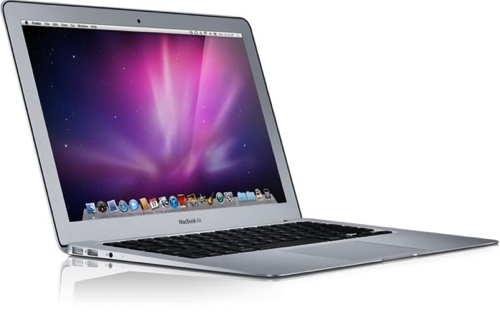
A report from DigiTimes today claims that Apple’s supply chain for its MacBook products will begin to “run in full gear” from early July as Apple prepares to a launch an updated MacBook Air. The report is in line with previous suggestions that Apple will wait until late July to launch a refreshed MacBook Air to coincide with the launch of Lion – which DigiTimes itself corroborates in the report.

[Increasing orders for components] is in line with Apple’s previous strategy to ramp up deliveries prior to the launch of new products.

The report does also mention that Apple expects to take “deliveries of over eight million MacBook Airs in the third quarter”. However, as MacRumors has pointed out, that figure is extremely large and actually represents double the amount of all Macs sold in the second quarter.

[Via DigiTimes]


iPhone 4: A Retrospective, One Year Since It Launched

Today is June 24, 2011. Believe it or not, it has already been one year since the iPhone 4 went on sale across the US, UK, France, Germany and Japan to literally millions of people who eagerly waited in line to get their hands on the latest and greatest iPhone yet. The history of the iPhone 4 has been remarkable, controversial and fascinating, filled with prototype leaks, criminal investigations, amazing technology, scandals, mystical white unicorns, new carrier allegiances and more. Come along with me as we mark the one-year anniversary of the iPhone 4 with a walk down memory lane.

Read more


Macs Now Account For 11% Of Corporate Computers, Windows PCs Still Dominate With 87%

A new report out today shows that whilst Microsoft may still completely dominate the enterprise landscape in terms of desktop computers, Apple is still making steady progress in the market. According to market research by Forrester, the share of Mac OS X in corporate USA has climbed from 9.1% in April 2010 to 11% in March this year.

Ben Gray, co-author of the report, attributed the increase in Mac OS X’s share of the market because of a shift towards “BYO [bring your own] device programs” that workers were pushing for - workers are now expecting Mac and iOS support. Such “consumerization” of the enterprise has been driven by the popularity of the iPad which has shown some significant penetration in the enterprise market - driven by workers wanting to bringing their own iPad into work.

Nonetheless, as Macworld notes, “Microsoft remains a hegemony in the enterprise – 86.7% of all corporate computers run one of its operating system”.  Windows XP, over a decade old, remains the dominate OS in the enterprise with 59.9% of the market, Windows 7 is next with roughly 21% and then Vista with just 6.2%.

[Via Macworld]


Legal Disclaimer In iOS 5 Further Hints At Apple Mapping Service

Tipped off by a reader, MacRumors has found that the legal disclaimers in iOS 5 contain new references to a number of third party companies that provide various mapping services. The disclaimers come under a new section called “Map Data” that is not present in previous disclaimers and is completely separate to the section which deals in the disclaimer which deals with licenses used by Google for its mapping service that is used by Apple in the Maps app.

Today’s discovery comes after a number of other revelations, together they form what seems to be the suggestion that Apple is looking (or potentially actively working on) its own mapping solution that could replace Google Maps on iOS. Some of those clues include its acquisition of mapping companies Placebase and Poly9 and its recruitment of employees with navigation software expertise. The location log debacle also revealed that Apple was “collecting anonymous traffic data to build a crowd-sourced traffic database”.

MacRumors had a look into all the companies newly listed in the legal disclaimer and gave a quick description of each of them (included below). Noting two companies in particular that suggest Apple may be developing its own maps service. Urban Mapping provides some extensive additional data such as a wide range of demographic information that can be layed on top of traditional data. Waze, however, is experienced in developing crowd-sourced traffic data - it also has a popular app in the App Store now which demonstrates a lot of their services.

  • CoreLogic offers Parcel data which marks boundaries for of properties to provide positional accuracy in location-based solutions.
  • Getchee provides location and market data on China, India and Southeast Asia.
  • Increment P Corp provides location and traffic data for Japan.
  • Localeze provides local business listings.
  • MapData Sciences Pty Ltd. Inc provides mapping data for Australia and New Zealand.
  • DMTI provides postal code data for Canada.
  • TomTom offers global TeleAtlas mapping data which is also licensed by Google for their map solution.
  • Urban Mapping provides in-depth neighborhood data such as crime, demographics, school performance, economic indicators and more.
  • Waze offers real-time maps and traffic information based on crowd sourced data.

Whilst this doesn’t provide concrete proof of whether Apple is working on its own mapping service, we are fairly sure it (if it exists) will not be launching with iOS 5. This is likely related to the fact that Google recently renewed its agreement with Apple to provide Google Maps to iOS.

Jump the break to see some screenshots of the new legal disclaimer which features these new companies.

[Via MacRumors]

Read more


Firefox 4 Will Not Receive Any Security Updates, Firefox 5 Is The Only Supported Version

In line with its more rapid release schedule, Firefox 5 was released just three months after Firefox 4, which had arrived earlier this year. According to the Mozilla Security Leader, Daniel Veditz, it also means that Firefox 4 will no longer be receiving any more updates, including any for potential security issues.

Several people have repeatedly said in public places (newsgroups, planning meeting, Monday meeting; could not find a blog or wiki page) that Firefox 5 will be the security update to Firefox 4, and that there will be no 4.0.2

Effectively this means that if you use Firefox, you are expected to be running the latest major version; otherwise you will face safety risks with using a browser that will no longer be receiving security patches. With this kind of a strategy, Mozilla has taken more than just the rapid release schedule from Google Chrome; it is also following the Chrome idea of only supporting the latest releases.

In some ways it does make sense, both Firefox 6 and Firefox 7 are expected to arrive this year. Supporting older versions would become very difficult whilst wasting resources that could be going into developing new features.

[Via Digitizor]