As (Some) Expected, Apple Clarifies iBooks Author EULA

As (Some) Expected, Apple Clarifies iBooks Author EULA

Megan Lavey-Heaton at TUAW reports Apple issued today an update to iBooks Author which includes a slightly revised end-user license agreement (EULA). The Next Web takes a closer look at the updates:

Apple has updated its iBooks Author app in order to clarify the language of its End User License Agreement. The changes to the EULA clarify that Apple does indeed intend the packaged product to be sold on the iBookstore only, but also makes it clear that it does not lay claim to the content that you use to create the book, nor does it try to limit what you can do with that content elsewhere.

Two weeks ago, I wrote:

…we know that Apple is a company that in the past months hasn’t been afraid of reversing a couple of unpopular decisions.

The Next Web also notes:

This change in wording should make it clear, as many right minded people have assumed…

Anyone with a bit of intellect would have guessed since iBooks Author’s day one that the poorly worded EULA was set to be updated soon. Anyone who knows how Apple deals with damage control could have reminisced that the company doesn’t like rushed press released or having executives making jokes on Twitter, or, even better, could have produced a level-headed analysis of the issue. History, after all, taught us that the Apple of the most recent years has always addressed online turmoils in one way or another.

But, you know, Apple wants your content.

Permalink


Mozilla Working On Web Push Notifications for Firefox

Mozilla Working On Web Push Notifications for Firefox

Ryan Paul at Ars Technica reports about Mozilla’s “web push notification” project, which, in theory, would allow Firefox users to stay on top of websites like Twitter, Facebook, or Gmail using a push notification system similar to iOS:

Mozilla is developing a push notification system for the Firefox Web browser. It will allow users to receive notifications from websites without having to keep those sites open in their browser. The system will also be able to relay push notifications to mobile devices.

It’s important to note that this push notification system is distinct from the existing desktop notification mechanisms that are already defined in pending standards. The desktop notifications that websites like GMail and Seesmic Web display to Chrome users, for example, will only work when the website is left open in a tab. Mozilla’s push notification system moves beyond that limitation.

Jeff Balogh has written more about the project here, describing how notifications could be sent to any “Firefox device” including iPhones running Firefox Home:

Once the notification is in the system, we’ll deliver it to the recipient on all the devices they have Firefox installed, but we’ll try not to show duplicate notifications on different devices.

There’s a lot at stake here. On the one hand, desktop browsers have largely failed at delivering the kind of real-time connections and up-to-the-minute social/news updates you can expect from mobile apps on iOS and Android. Sure, there are extensions and add-ons, but they’re not nearly as integrated and “part” of the system. Push notifications almost seem “meant” for mobile devices. Furthermore, notifications are an area of mobile development both Google and Apple have been focusing on during the past years; on the desktop, apps have to rely on their own notification system or third-party apps, but browsers like Firefox sport no built-in push notification technology whatsoever. As far as “web notifications” go, Boxcar has been up to some interesting stuff including the desktop.

On the other hand, one could argue that we have enough notifications on our mobile devices, and having to see the red badge in our desktop browsers would be a terrible idea. I believe Mozilla’s project is worth of attention nevertheless, especially on the iOS side considering the existing Firefox Home app, and I look forward to seeing a first implementation, which hopefully will be available before Firefox 25 ships.

Permalink

Apple, China, and Doing The Right Thing

There is an assumption currently making the rounds that the workers laboring in Chinese factories under terrible conditions are a direct result of Apple’s actions. Some people almost seem to think that Apple is literally enslaving people to work on its products. Needless to say, this is not true.

The fact is that these workers have a choice, albeit a limited one, about where to work. And they are working at factories like Foxconn —which, I remind you, is a wholly separate entity from Apple— because they are better than the alternatives: no job at all, or a job that pays far worse with even harsher conditions.

Think about that. As bad as the stories that we’ve heard about working there are —and make no mistake, they are horrid and no one should have to work under such conditions— the fact that Foxconn has a six-month waiting list of people hoping to become employees seems to suggest that they are still much better than any other opportunity these workers have available.

Given all that, is Apple being ethical by working with a company like Foxconn? A company that, for all its problems, still provides a significantly better alternative to the people clamoring to be hired? I would argue yes.

If Apple were to abandon their involvement with Foxconn and other abusive Chinese suppliers like these boycotts are calling for, what would happen to these workers? The boycotters apparently believe that they would be set free to find safe, well-paid work elsewhere. But if working at Foxconn was already one of the best opportunities they had, that outcome seems unlikely at best.

In reality, they would likely be forced to take a job at another factory with even worse pay and worse conditions. Or perhaps have no choice but to perform peasant work for a fraction of the money they were earning before. Worst case, they may not even be able to find another job at all.

If the goal of a boycott is to assuage the guilt of first-world citizens for buying Apple products made under harsh conditions, Apple leaving China would certainly accomplish that. But if the goal is to make things better for the workers themselves, the only realistic option I can see is for Apple to continue what they’re doing: work with these companies, demand better conditions, conduct audits, and have the workers paid as well as possible for people in their position. 1

Yes, the conditions these workers labor under are terrible. They may have no better choices in their economy, but that doesn’t mean what’s happening there is okay. If first-world companies are going to continue to do business with China and Chinese companies, the only ethical thing for these companies to do is demand continual improvement. And we too should demand as much of those companies whose products we buy.

But the fact remains that as of now, these people will be exploited no matter what we do. Ceasing to provide them better employment opportunities will not help them. Quite the opposite: it will only leave them subject to even worse alternatives. Given that, I believe the best thing we can do is support companies that are taking responsibility for improving conditions and wages for the people that make their products. And right now, the company that is taking the most responsibility…is Apple.


  1. Unfortunately I’m not sure how legally or economically feasible it is for Apple to reduce their margins and pass along the profits to the workers directly even if they wanted to. But if it is, they should be doing so as much as possible.

Quick Review: Remarks

Readdle is today launching their latest iPad productivity app, Remarks. In some ways it is similar to their existing products such as ReaddleDocs or PDF Expert because it features full PDF annotation capabilities, but it is distinctly different because it is the first of their apps to really push the idea of handwriting and note taking as a core function. We’ve reviewed many of Readdle’s products before and by this stage it is clear to us that they make quality productivity software for iOS, so the real question I had when I downloaded this app was what exactly does it let you do and how might it fit into how I work.

What struck me almost instantly was that this app is clearly aimed at being a PDF creation tool, it isn’t like ReaddleDocs or PDF Expert which are more focused as being document management and PDF annotation apps. Remarks may have those same annotation tools but it wants you to create PDF documents, whether it be a handwritten note, drawing or diagram that you want to send to a colleague or perhaps a study note.

In its current form, PDF annotation may be useful but it’s a bit of a pain to get a PDF into Remarks, unlike PDF Expert and ReaddleDocs it doesn’t (yet) have support for cloud services such as Dropbox or SugarSync. Fortunately, this will only be a short-lived annoyance, Readdle plans to have an update ready within two weeks that adds support for cloud services.

Once you do get a PDF into Remarks, you won’t be disappointed - the same powerful annotation functionality that is in Readdle’s other apps is also available in Remarks. So you’ll get the tools to add text, draw shapes and write or draw in freehand on those PDFs, and as usual it is all editable in Preview on the Mac or any other PDF reader such as Adobe Acrobat.

I think for me, this app will come in handy when I need to take down study notes that also require diagrams or illustrations. Things that I can’t do in Evernote, which is very much a text focused note-taking app. In the past I have sketched them down in an exercise book and then for the most important ones I have subsequently drawn them up in Photoshop, OmniGraffle or OmniGraphSketcher, importing those into Evernote. Now I could just use Remarks to make an electronic copy of all my study notes, not just those that are in plain text. I’ll probably still use Photoshop or one of the Omni apps for some of my diagrams that are super important so they are a little neater - but its no longer a requirement.

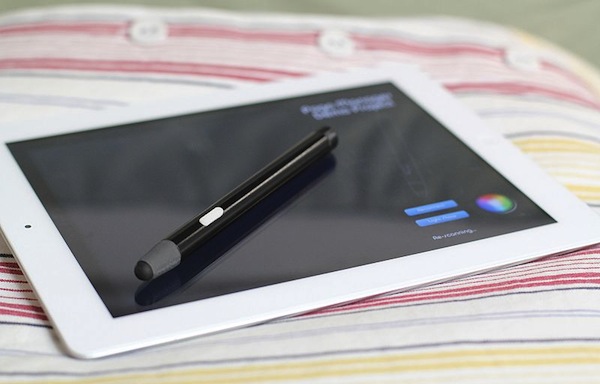
Before I wrap up, I just wanted to make a quick mention of using a stylus with the iPad. The app does recommend using one and I must admit using a stylus in the context of drawing diagrams and general notes does make a lot of sense - using my finger wasn’t as effective as I had hoped and it soon got tiring. So I foresee myself picking up a stylus in the near future, to make sure I can take full advantage of what Remarks offers.

If you are just looking for an app to annotate PDF documents it might be a better idea to go for PDF Expert or ReaddleDocs. But if you want to do more freeform note-taking, drawing diagrams or creating your own simple PDFs, Remarks is the way to go. Remarks is available in the App Store for $4.99.


Matthew Panzarino’s Bing Impressions

Matthew Panzarino’s Bing Impressions

The Next Web’s Matthew Panzarino tries Bing search on his iPhone for a month and reports back with his real-life impressions:

The design is largely cleaner and more attractive than Google’s more cluttered results, and more preview text helps you decide on which link to follow. But, if you’re even reading this article there’s a good chance that Bing isn’t really being made for you.

Instead, Microsoft seems to be heavily targeting the ’99%’ of mobile searchers. Those who will be looking for a restaurant close by, seeing what Lady Gaga is up to now or what the score is on the game. This is smart, because it’s exactly who Apple is targeting with the iPhone.

The whole article is worth a read and offers real-world scenarios for what a search engine should be able to do on an iOS device. I’ve always thought Bing would be a good alternative to Google on the iPhone, and I was also surprised to see Microsoft ship a good dedicated iPad app last year (what’s up with decent search apps for the iPad?).

Actually, since I started using DuckDuckGo in my daily workflow I’ve noticed just how much Google’s search and services are tied to iOS, and how big of a deal it is to be the default engine on a device that sells millions every week. In forcing myself to use a standalone app for search – or type in an address in Safari, then search – I’m noticing how frustrating it is, really, to automatically launch Safari, hit the search box, and remember that Google is in there. Or Bing, if you went through the effort of changing the default search engine in Settings.app. Think about it: not only do Google and Bing benefit from all the iOS users that manually open Safari to search – they also get all the incoming links from third-party apps that forward web pages to Safari, the default browser.

Read Matthew’s Bing impressions, including what he thinks of Maps (likely something even Apple is working on), here.

Permalink

Dropzone 2.0 Gets Path-like Radial Menu

Back in November when I took a look at the Mac App Store release of Aptonic’s Dropzone, I was impressed by how the utility transitioned to the Mac App Store whilst keeping most of its functionalities intact. Through a simple drag & drop interface, Dropzone allows you to save time on common and oft-repeated tasks such as sharing images and bits of text, uploading files to your FTP server, or moving files from one location on your Mac to another.

With Dropzone 2.0, released today on the Mac App Store, Aptonic has been inspired by Path’s radial menu (introduced in version 2.0 of the app) and created a new drag & drop interface based on Circles, which as the name suggests are circular icons that sport pretty much the same animation seen in Path 2.0 for iPhone. I don’t know if the new Circles system is more intuitive than the old dock/menubar-based grid of icons (as a Dropzone user myself, I’ll have to see how Circles works in daily usage and if the feature doesn’t get in the way), but it sure looks very nice. Aptonic has also put together an HTML5 demo of Circles, available here.

Dropzone 2.0 comes with other features and improvements as well:

  • New improved Amazon S3 support
  • New task completion sound
  • Added an option to choose whether to intall applications in the user or main application folder

Like I said, I’ll have to keep on using the new Dropzone to see whether the new Circles interface can grow on me. I love the custom sharing menu in Path, but I don’t know yet if the same approach can work for file management and the various shortcuts I have set up in Dropzone. To celebrate the launch of version 2.0, Dropzone will be available at $9.99 until February 5th.


Favs: An App For Your Internet Favorites

A few weeks ago, I tweeted I’d like to see some sort of Twitter client with its only focus being on Favorites – I keep Twitter open all day, and I save a lot of links. Prior to ending up in my Evernote or Pinboard accounts, the tweets I want to “save for later” are marked as favorites, which, I believe, provide an easy way to use a built-in Twitter functionality for general-purpose “bookmarks” that I may or may not consider for a post or more serious bookmarking in a second service. As you can see, I have a lot of favorites. The same is true for other services I use on a daily basis, such as Google Reader, Vimeo, YouTube, or Instagram: I like to be able to “star”, “like” and mark things as favorite so a) the service knows the stuff I’m interested in and perhaps will leverage this data sometimes in the future or b) perhaps other apps will. And while I’m still waiting for the ultimate app that looks at your Internet favorites and delivers content intelligently to you every day (albeit Zite is on the right path), it turns out someone has built a functional and nice-looking desktop aggregator called Favs.

Favs for Mac is in beta, so don’t expect a full review now – the developers are still polishing the interface and adding features, and it wouldn’t make sense to give a final verdict whilst the app is still being worked on. But the underlying concept is there, and it’s one of those things I’ve been looking for: a single app that collects favorites from a variety of services.

Currently, Favs lets you fetch favorite items from:

  • Delicious
  • Dribbble
  • Facebook
  • Flattr
  • Flickr
  • Github
  • Google Reader
  • Instagram
  • Pinboard
  • Stackoverflow
  • Twitter
  • Vimeo
  • YouTube
  • Zootool

The list is pretty impressive already, and I assume it can only grow before the final release. I don’t know what else I’d add to that list (multiple accounts are already supported) as most of the services I use are already covered – perhaps some kind of Evernote and Instapaper integration, though I honestly can’t imagine how Evernote could work with Favs. Right now, I’m just happy Favs is shipping with a solid selection of services, and I like how the developers also implemented a unified inbox for all your favorites.

Favs, in fact, uses the old Tweetie-like interface with narrow sidebar + right panels (the one we’ve already seen in a multitude of Mac apps such as Sparrow and Reeder) to lay out service icons, unified inbox, and controls to manage settings and refresh all services. The app supports Lion’s full-screen mode, which is probably a good choice considering you’ll want to run Favs as a standalone app that is not your main Twitter or Google Reader client, as it’s focused on letting you view items that you wanted to save for later. Obviously one could easily dismiss this interface approach as “easy” or not innovative, but I believe this design can work for an application like Favs where you’re supposed to quickly switch between sections (sidebar), take a peek at headlines (mid panel) and read the actual content (right panel). As I’ve said this is a first public beta, which means features like keyboard navigation, sharing and contextual menus haven’t been implemented or refined yet. I was able to test Favs with my huge collection of Twitter favorites and it reliably loaded items from 500+ days ago without a single slowdown. I can only imagine things will get even better come the final release.

To me, Favs is a web nerd’s dream come true already. It’s got my Twitter favorites, my Google Reader stars, the stuff I like on Instagram, and it even lets me add multiple accounts if I really want to keep tabs on everything I save online. I look forward to reviewing a final version in the future, and I hope the developers are at least considering an iPad version for this.

For now, you can download the Favs public beta for free here.