Growl 2.0 To Support Notification Center On Mountain Lion

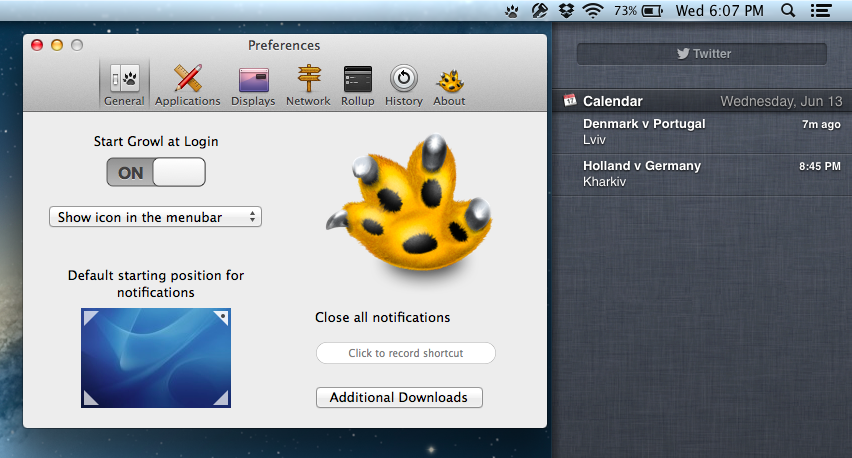
Developers of Growl, the popular third-party notification app for OS X that received a major update with version 1.3, announced today their plans to embrace Apple’s Notification Center on Mountain Lion, and allow developers an easy integration with the Mac’s upcoming native notification system.

With a blog post published earlier today, lead developer Chris Forsythe laid out plans for a future version 2.0 of the app:

For Growl 2 we’re simply going to add a Notification Center action display as well. This is going to make it easy for anyone who wants to see notifications in Growl, and also in Notifcation Center. We don’t know of any downside to doing this, and see it as sort of a simple yet powerful way to get what you want done. There may be some caveates to doing this that we can talk about once 10.8 is out, but there may not be. We’ll all just find out together.

This will be achieved with a new architecture that will enable Growl to handle visual notifications and actions separately:

Also, for Growl 2, we’ve done some really neat things. One of the really neat things that we’ve done is split the action and visual notifications, so that both could fire at the same time.

Let me give you an example of how this would work. You could have a Smoke display, and the MailMe action fire from the same notification if you wanted. This is great and makes things really powerful.

As we’ve already written, the introduction of Notification Center won’t necessarily “sherlock” Growl as a notification alternative for Mac users and developers. While Notification Center will undoubtedly provide an excellent native solution for developers of Mac App Store apps – ultimately serving the average user with a notification system that works out of the box, – Growl will still remain a capable third-party app that offers fine grained controls over notifications with several customization options.

Furthermore, because Notification Center will only work with Mac App Store apps but Mountain Lion will still support external software through Gatekeeper for enhanced security, Growl will also be a fantastic way for developers of apps sold outside of the Mac App Store to enable desktop notifications in their software.

You can read the technical details on the future of Growl over the the official blog. Growl is available on the Mac App Store for $1.99.

iFixit’s MacBook Pro with Retina Display Teardown

iFixit’s MacBook Pro with Retina Display Teardown

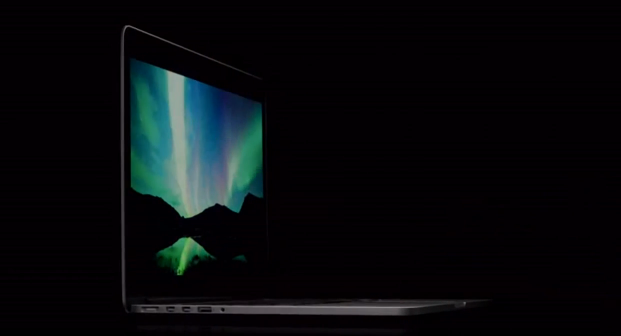
As expected, the guys at iFixit have posted their teardown of the new MacBook Pro with Retina display, announced by Apple earlier this week at WWDC. With an overall repairability score of 1 out of 10, iFixit notes how the latest iteration of the MacBook Pro makes it harder for repairers to replace internal components and disassemble the machine.

In particular, they note how Apple is using proprietary flash memory on the MacBook Pro now, and a fused display assembly without glass that, in case of anything falling inside the display, will need the user to replace the entire assembly. They also noticed a different battery layout:

The lithium-polymer battery is glued rather than screwed into the case, which increases the chances that it’ll break during disassembly. The battery also covers the trackpad cable, which tremendously increases the chance that the user will shear the cable in the battery removal process.

Check out the full teardown (with photos and technical comments) here.

Permalink

FaceTime Over 3G To Support iPhone 4 and iPad 2 In Australia? [Updated]

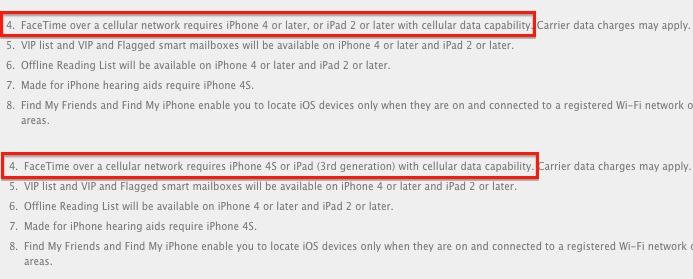
As noted by poster “macrob” on MacTalk’s forums, the Apple Australian webpage for the recently announced iOS 6 suggests FaceTime over cellular will work on the iPhone 4 and iPad 2 in Australia. As indicated in a fine print at the bottom of the page (point 4), ”FaceTime over a cellular network requires iPhone 4 or later, or iPad 2 or later with cellular data capability. Carrier data charges may apply. FaceTime is not available in all countries”. This compares to Apple’s other iOS 6 Preview webpages, where Apple states ”FaceTime over a cellular network requires iPhone 4S or iPad (3rd generation) with cellular data capability”.

Announced earlier this week by Scott Forstall at WWDC, FaceTime over cellular wasn’t given exact specifications on stage during the keynote; on Apple’s iOS 6 Preview webpage, a number of features – such as VIP list and Shared Photo Streams – are shown as available only on newer devices, as collected by MacRumors in this list. It appears Apple’s Australian website is the only one to report FaceTime over cellular as compatible with the iPhone 4 and iPad 2; every other webpage says the feature will only work on the iPhone 4S and iPad 3.

It is unclear whether the fine print on Apple’s Australian website could have been posted by mistake, or if Apple really is planning on supporting older devices for Australian customers. While technically possible as a number of jailbreak tweaks have shown in the past years, some have speculated Apple might want to limit FaceTime over cellular to newer devices due to their improved antenna design and networking capabilities over older generation models.

We have reached out to Apple for comment and we’ll update this story with clarifications when available.

Update: Apple’s Australian website has been updated to clarify FaceTime over cellular will work on the iPhone 4S or iPad 3.


Apple Airs New MacBook Pro Commercial: “Innovation In Every Dimension”

Following yesterday’s announcement at WWDC, Apple today aired a new commercial for the MacBook Pro with Retina display during the NBA Finals in the United States. Still not officially available on Apple’s website or YouTube channel, we managed to find a recorded version on YouTube.

Perhaps not as emotional as Apple’s other commercials for the iPad and iPhone, the ad showcases the “radical new MacBook Pro with Retina display” loading various video streams in Final Cut Pro (which has been updated for Retina) and switching between Lion apps like Mail. The commercial ends with “innovation in every dimension”, a subtle hint at the machine’s redesigned hardware and software components that take advantage of the new display resolution.

You can watch the commercial after the break.

Update: The commercial is now available on Apple’s YouTube channel and website.
Read more


Ping To Be Removed From Next “Major Release” Of iTunes

Ping To Be Removed From Next “Major Release” Of iTunes

According to John Paczkowski at AllThingsD, Apple’s social network for music, Ping, will be removed from the next major release of iTunes, likely coming this Fall. According to his sources, it will be replaced by integration with Twitter and Facebook, both to be supported in the next versions of iOS and OS X at a system level.

Sources close to the company say that Ping, which still exists today in iTunes 10.6.3, will be gone with the software’s next major release, likely scheduled for this fall. And at that point Apple’s social networking offerings will shift to Twitter and new partner Facebook entirely.

At the D10 conference last month, Apple CEO Tim Cook said “the customers voted and said they didn’t want to put a lot of energy into Ping”. Two years ago, NPR called Ping “one of the worst ideas” of 2010.

Ping is still available in iTunes 10.6.3, released yesterday.

Permalink

Apple: “New” Mac Pro Is No Longer New

Apple: “New” Mac Pro Is No Longer New

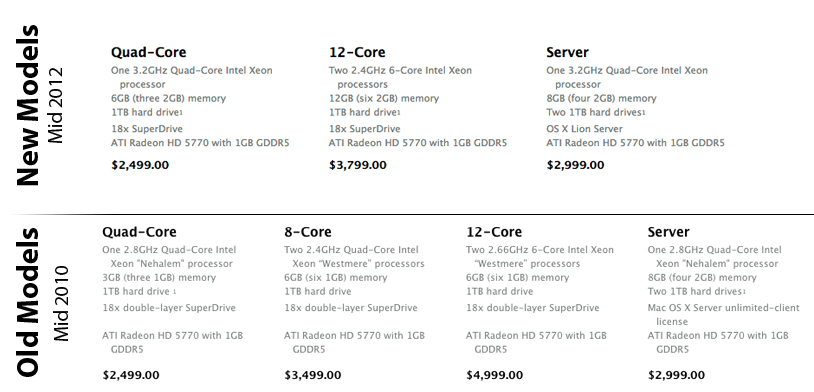
As noticed by @setteBIT earlier today, Apple appears to have changed its mind in regards to putting a “New” label on its online Store next to the “new” Mac Pro that was silently updated yesterday. As shown in the screenshot above, only the MacBook Air and MacBook Pro lines are now indicated as “New” (recently updated) to customers; yesterday, as MacRumors points out and we noticed prior to writing about the update, Apple had decided to put a New tag next to Mac Pro in spite of its minimal hardware changes.

It’s not just about the wild rumors that had been circulating ahead of WWDC – the “new” Mac Pro really isn’t much of an upgrade after two years. As Marco Arment wrote:

After two years, the Mac Pro was “updated” today, sort of: now we can choose slightly faster two-year-old CPUs at the top end, and the other two-year-old CPU options are cheaper now. That’s about it.

No Xeon E5 CPUs, no USB 3, no Thunderbolt. They’re even shipping the same two-year-old graphics cards. Same motherboard, slightly different CPU options from 2010. That’s it.

Below, a comparison image we posted yesterday to compare the “new” Mac Pro to the “old” Mac Pro.

Official Mac Pro specs are available here.

Permalink


WWDC 2012: Tidbits & Links

Yesterday’s WWDC keynote was packed with new information on Apple’s latest product releases. From updates to its notebook lineup to new developer seeds of Mountain Lion and iOS 6, Apple delivered to the goods to a rightfully excited Moscone West audience, as well as the entire Apple community online – and in the process, it also refreshed its online Store with quite a few “stealth updates” that, however, didn’t go unnoticed.

In this post, we have collected some miscellaneous tidbits and interesting links that we missed or only briefly mentioned in our coverage of the event. Read more


iOS 6: Our Complete Overview

Taking the stage at WWDC, Apple’s head of mobile software Scott Forstall kicked off his iOS 6 presentation noting how, with over 365 million iOS devices sold through March, Apple’s mobile software is doing very well in the market. The latest publicly available version, iOS 5, has been installed on over 80% of available devices. Released in October 2011, iOS 5 has seen exceptional adoption: over 140 million iMessage users have sent over 150 billion iMessages to date, making it over 1 billion on average every day. Directly integrated into iOS 5, Twitter saw a 3x growth increase, with over 10 billion tweets sent from iOS 5. The numbers go on and on.

There’s no denying on Apple’s part that iOS 5 has been a success for developers, the companies involved, and, ultimately, the users. iOS 6, previewed and released to developers as beta today, is a major new release that, with over 200 new features, will take iOS devices in “entirely new directions”.

Jump past the break for our complete overview of the next major release of iOS, shipping this Fall. Read more