This Week's Sponsor:

HomeSnap

A Private, Read-Only Window Into Your HomeKit Home


Posts in news

iPhone Has 25% Market Share In The US, Verizon iPhone “Most Acquired Handset” in February

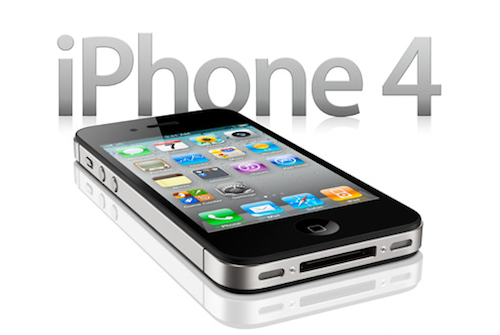
Data released yesterday by market research firm comScore for the November 2010 - February 2011 period details smartphone market share numbers in the United States and provides additional insight into platform vendors’ stats and performances. First off, the study “study surveyed more than 30,000 U.S. mobile subscribers” to find Samsung the top cellphone manufacturer with a 24.8% market share; comScore also claims for the three month period detailed by their study 234 million Americans “ages 13 and older used mobile devices”. As far as OEM market share goes, Apple ranked 5th behind Samsung, LG, Motorola and RIM with a 7.5% share in February, up 0.9% from November 2010. As comScore notes Apple saw the “strongest gain” thanks to the release of the Verizon iPhone 4, which was the “most acquired handset in the month of February” in the United States.

The situation is different from the smartphone OS point of view, with Google’s Android operating system seeing the strongest growth:

69.5 million people in the U.S. owned smartphones during the three months ending in February 2011, up 13 percent from the preceding three-month period. Google Android grew 7.0 percentage points since November, strengthening its #1 position with 33.0 percent market share.

Data from Nielsen referring to the last months of 2010 indicated Apple’s iOS and Android were on the same level of market share in the United States with approximately 28% and 27%, respectively. Another report from January indicated Android had become the most popular smartphone OS worldwide with a 33% share in Q4 2010. comScore’s new numbers place Apple at 25.2% market share behind RIM with 28.9%. RIM, however, saw a 4.6% decrease from November 2010, whilst Apple had a 0.2% increase – not as significant as Google’s Android but still growth.

It’s also worth considering that, as comScore only tracks iOS’ market share on the iPhone, Apple can’t compete by the numbers with the variety of Android and BlackBerry devices available. It would be interesting to see statistics about iOS and Android total market share on every mobile device (media players, smartphones, tablets) to gain better insight into the US’ market trends and sales.


iPhone 5 To Feature 8-Megapixel Camera from Sony?

9to5mac reports Sony CEO Howard Stringer, in an interview with Walt Mossberg at Carnegie Hall in New York City, said shipments of camera sensors to Apple will be delayed due to Sony’s facility in Sendai that was affected by last month’s earthquake and tsunami. Stringer’s statements come as a surprise considering Sony has never been a supplier for Apple’s camera-enabled mobile devices (iPhone, iPad 2, iPod touch 4th gen) as the company chose to implement Omnivision’s image sensors in the past years. Omnivision’s lens modules are used in the iPhone 4 (5 megapixel sensor), iPod touch and iPad 2.

Stringer just said that their camera image sensor facility in Sendai was affected by the tsunami. Getting image sensors to Apple will be delayed.

MacRumors also points to a transcript of the interview by the Wall Street Journal itself, which seems to confirm Stringer’s hints at image sensors set to be shipped to Apple in the near future:

Early on, he raised the irony of Sony supplying camera components for Apple devices. It “always puzzles me,” he said. “Why would I make Apple the best camera?”

It is unclear what devices he was talking about as Sony isn’t known to supply key camera components, known as image sensors, to Apple; A Sony spokeswoman declined to comment and an Apple spokesperson couldn’t be reached for comment.

Following Stringer’s interview, speculation is running wild on the Internet about whether he was referring to a brand new Apple product still in early production stages, or a new version of the iPhone or iPad. A report from April of last year, however, provides more insight into Stringer’s mention of image sensor for Apple: analyst Ashok Kumar claimed that Apple had signed on with Sony for an 8-megapixel camera lens to be used in the “2011 iPhone” – which would be the iPhone 5 set to be announced sometime between summer and fall. The report from Kumar also correctly indicated that Omnivision would be the supplier of a 5-megapixel sensor for the iPhone that Jobs would announce at WWDC 2010 – indeed, the iPhone 4 with a 5 MP camera module from Omnivision. In the past months, several bloggers also speculated Apple could implement Omnivision’s new 16:9 CMOS image sensor in the iPhone 5, although the reports didn’t provide any additional details. The iPhone 5 is also rumored to feature a bigger screen, the same Apple A5 processor seen in the iPad 2, NFC capabilities and a new aluminum design with internal antenna.


OS X 10.6.7 Introduces OpenType Text Bug (You’re Not Alone)

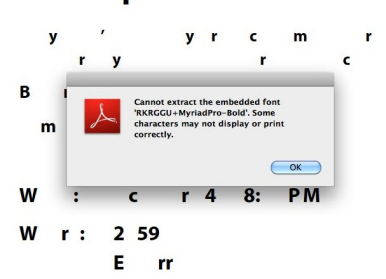
If you find yourself scratching your head over jumbled text in (commonly) PDF files after the 10.6.7 update, it’s an issue that’s cropped up and found its way on Apple’s Discussion boards according to the folks over at Macworld. The text bug occurs with OpenType Postscript fonts, which aren’t included by default with your new Mac but can be later added with the installation of third party software (Adobe is noted). The problem seems to only occur in apps utilizing OS X’s rendering engine outside of the Preview application, displaying jumbled text that’s impossible to read. Upon printing, you may encounter an “invalid font error” in rare cases. The bug only crops up if you’re using software such as Adobe Reader, and the PDF you’re reading utilizes the aforementioned fonts. By using Preview or opening documents that use a common font such as Helvetica for example, it’s possible you’ll never see the word scramble in action.

[via Macworld]

Image credit Macworld


The Onion iPad App Now Available

Right in time for April Fool’s Day, The Onion – “America’s Finest News Source” – has released its first official application for the iPad, available now for free in the App Store. The Onion delivers hilarious fake news, stories and reports every day, and releasing the tablet app today, with all those pranks and not-so-clever fake stories that are floating around on the Internet, seems more than appropriate to us. In fact, we love The Onion and reading its articles directly on our iPads is something we’ve been looking forward to.

The app is very simple: it lets you read, share articles on social networks with a few taps and watch videos without leaving the app. It’s also got support for Instapaper and Google Reader, among others. The interface design doesn’t look exactly beautiful, but all the content from The Onion is there. It should be enough for now.

You can find The Onion for iPad here.


OS X Lion: Multi-User Remote Access, New Auto Save & iChat Options

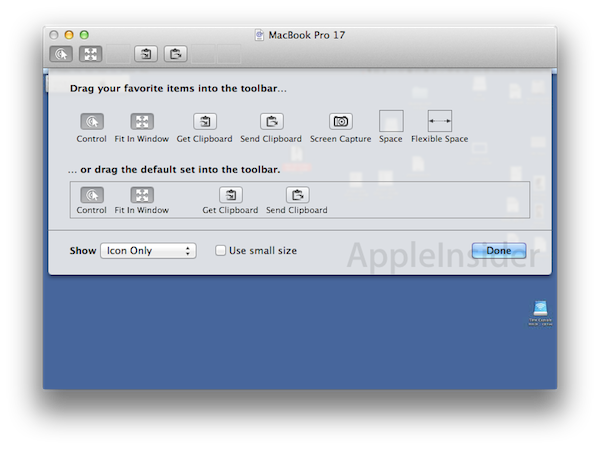
Following the release of the second Developer Preview of OS X Lion two days ago, several blogs have posted details and screenshots of what’s new, improved and changed in this build and, overall, Mac OS 10.7 itself. Together with the new features we covered in the past, Lion introduces a brand new multi-user screensharing system that will allow users to remotely log into their own computer even while it’s being used (locally) with another account. This is a major change that turns Mac OS’ Screen Sharing tool into a powerful remote computing solution with fast users switching options.

AppleInsider has posted details and screenshots of the new feature. A user has the possibility to log into a computer with his own account while another account is currently managing and using the machine; the “remote user” will still see his desktop environment, all his files and applications. In previous versions of OS X, when a user tried to connect remotely and share the screen, the “local user” would have to give up on the possibility of controlling the screen – or otherwise find a way to communicate in real-time with the remote user to decide who should move the mouse and control the computer. We’ve all been in this situation: when a friend asks us to control his machine for troubleshooting purposes, we have to make sure he doesn’t do anything while we’re controlling his desktop UI. Or, we tried to remotely log into our home computer only to find out a family member was using it and we had no way to independently access to our apps, files and folders. Lion will change this, and we believe it’s quite possibly one of the most interesting features unveiled so far, as it opens to a lot of possibilities for remote access, troubleshooting and, overall, effortless management of a machine not in our local network. Read more


Forbes: Rapid Retail Sales Growth In China Could Propel Apple Shares Skyward

According to Eric Jackson at Forbes, an expected boom in Apple’s business in China could be a driving force that propels Apple’s shares (AAPL) to $547 per share by next January. That’s an expectation of shares increasing by around $200 on yesterdays close of trade price of $348.51 and in just nine months.

Jackson bases his expectations on the expansion of Apple’s retail stores, which currently bring in US$1.3 billion per year per store in China, with four currently in existence. Numbers floating around suggest that up to 25 stores could be opened up by Apple in China, where Jackson says consumers are going “gaga for Apple”, and rake in an extra US$32 billion. Such projected figures don’t even take into account third-party sales of Apple products from carrier stores or Cybermart – which is the largest third-party retailer of Apple products in the world.

Jackson and others thus consequently believe that it is well within possibility that Apple could see 50% sales growth in 2011, driven by the growth in China, and reach revenue of around $114 billion and “assuming the same trailing 20x P/E” Apple shares would be reach a value of $547 per share.

MacStories.net does not provide investment advice; consult an expert before buying or selling equities.

[Via Forbes]


Happy 35th Birthday Apple!

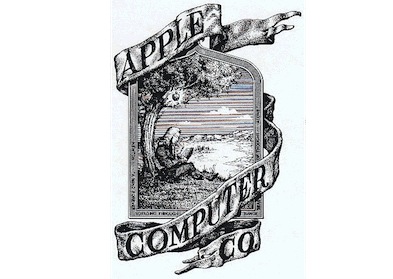
Today, 35 years ago on April 1st 1976, Apple Computer was established by Steve Jobs, Steve Wozniak and Ronald Wayne so that they could later sell their Apple I computer kit. Interestingly Wozniak, who hand built the Apple I decided to permanently leave  the company in 1987 – but is still technically an employee and receives a paycheck.

The other, more unfamiliar founder, Ronald Wayne, assisted Jobs and Wozniak in drawing the first Apple logo (seen above), writing the manual for the Apple I and writing the original partnership agreement. He however decided to leave the partnership just two weeks later and declined Jobs’ attempts to recruit him back years later.

It’s been a truly fascinating 35 years for the company and over the past decade in particular it has transformed the technology industry with the iPod, OS X, exceptional design in all its hardware and of course the iPhone and iPad. Here at MacStories we can’t wait to see what the next year will see Apple bring, let alone the next 35 years. As always Wikipedia provides some great reading about the early years about Apple that I thoroughly recommend if you’re curious and what to read more about those early days of Apple.

[Via MacJournals]


Want Lion’s Scrolling on Snow Leopard? This Free App Enables It

One of the most discussed features of Mac OS X 10.7 Lion is the “backward scrolling” that, in an attempt to resemble the behavior of iOS devices, is enabled by default in System Preferences. In the Lion Developer Preview (both 1 and 2), if you move your fingers down the screen scrolls up, and vice versa. This is activated by default to make iOS users feel comfortable when using the new desktop OS, but has annoyed several long-time OS X users as the preference is automatically enabled and is buried deep down into the Trackpad settings as a checkbox.

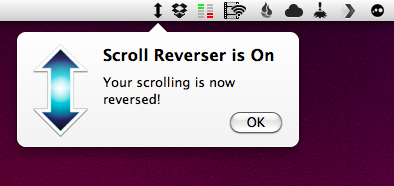
If you believe, however, that changing the scrolling system is actually a great idea and you want to practice before Lion is released to the public, free app Scroll Reverser lets you do just that – on Snow Leopard (and 10.5, too). Once downloaded, it’ll sit in the menubar waiting for you to choose whether you want reversed scrolling or the normal one. A click on the dropdown menu allows you to make the change in seconds, and revert back again. The app can start at login, and has no additional preferences.

Download here. [via Lifehacker]


GarageBand ‘11 For Mac Updated to 6.0.2

GarageBand ‘11 is getting an update this evening to 6.0.2, which now supports imported projects from GarageBand for the iPad alongside bug fixes and improved stability. The update is around 47 MB in size, and you can check Software Update or directly download the update from the support page listed below.

GarageBand 6.0.2: DL1345