Posts in news

Apple Set To Open Second Perth Store Later This Year

Apple is set to open their second retail store in Perth, Australia later this year according to a report by PerthNow. Apple has reportedly begun recruitment for the second store, named in their job advertisement as “South Perth”. PerthNow believes that the store will be located in the suburb of Booragoon, inside the large Garden City shopping centre.

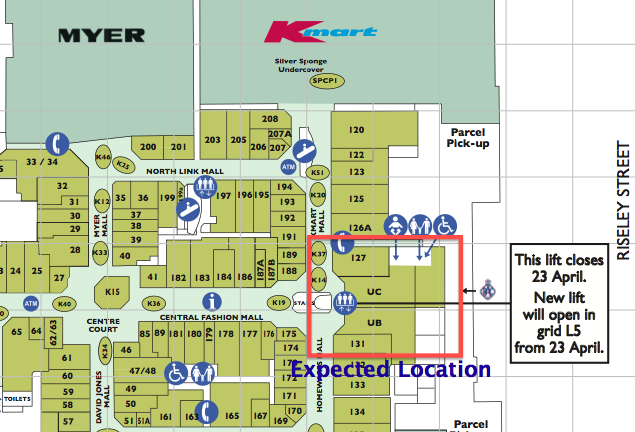
Apple has apparently taken over two of the shops in the centre (Esprit and Sportsgirl) and possibly others that are near Kmart, whilst the centre is also relocating a lift and remodelling stairs nearby. When asked for a comment, the owner of Garden City said that they were currently “remixing the area” but did not specify who the new tenant was.  PerthNow believes the store will open sometime in the second half of this year, possibly even July.

[via PerthNow]


The Humble Botanicula Debut

Spring is here, and what a better way to get you in the mood than a new game called Botanicula. Botanicula is a point’n’click exploration game created by the makers of award-winning Machinarium, development studio Amanita Design and Czech band DVA. Five friends, little tree creatures, set out on a journey to save the last seed from their home tree which is infested by evil parasites. Humble Bundle is debuting this game and offering more cross-platform titles (DRM free) to raise money for the habitat conservation charity World Land Trust. Donate for a great cause and get a bundle of excellent games in return. If you donate more than the average, you can acquire the bonus title Windosill, not otherwise available with the initial line up. If you bought these games separately, it would cost around $53, but they are letting you set the price. If you pay at least $5, you can optionally get a key to redeem the games on Steam (for Mac and Windows).

The Humble Botanicula Bundle includes lots of great titles such as Machinarium, Samorost 2, Windosill and the full-length feature film Kooky (with art direction by Amanita Design founder Jakub Dvorský), giving you plenty of unique Indie gaming to romp through this Spring. Soundtracks are also included with Botanicula, Machinarium, and Samorost 2. You can find links to all the great games below.

There’s fourteen days left to donate, so you have plenty of time to cash in your paycheck and donate to a worthy cause. Be sure to check out The Humble Botanicula official launch video after the break and get amped up!

Read more


Read It Later Reborn: Pocket Saves Everything “For Later”

In the past five years, reading on the web has fundamentally changed. Read It Later, the first popular service to pioneer a certain kind of “bookmarking” for web articles, is reborn today as Pocket, and it promises to change the way users think of web content to “save for later”. Most importantly, Pocket wants to address what has become the scarcest resource of web citizens: time.

Read Later

People never had time to check out all the cool stuff that happens on the Internet every day. As blogging platforms started taking off in the past decade, sometime during 2006 some people began to realize they didn’t have time to read every article that was posted online. The digital publishing revolution had already happened, but the explosion of blogging was just starting to produce high-quality, journalistic and well-informed pieces that, due to a simple scarcity of time and intuitive tools, people didn’t have time to read in their entirety. Whilst the act of “bookmarking” something on the Internet goes back to several years ago, the more focused, practical act of “saving an article for later” can actually be traced back in the form of popular consumer software to somewhere in between late 2006 and 2007.

Nate Weiner was one of the first developers (and avid web readers) to understand that the bookmarking systems in place at the time (Delicious, magnolia, or simple browser bookmarks) weren’t cutting it, from a technical and psychological perspective, for those users that just wanted to put off an article for later.

The difference between “bookmarking” and “saving for later” is both practical and conceptual: a regular bookmark is usually archived for good, as bookmarking services place great emphasis on letting users store bookmarks – links to webpages – forever in their accounts. There are some exceptions today, but the underlying philosophy has pretty much stayed the same. The action of “saving an article for later”, on the other hand, takes a more pragmatical approach: an article a user wants to read today or tomorrow isn’t necessarily representative of a webpage he wants to store and archive for eternity. The terminology itself – “for later” – indicates that something is going to happen ”later”. Once an article is read, most users tend to go on with their lives and forget about it. Like I said, it’s different today, and there are some specific use cases in which someone might want to archive articles – but the original concept lives on. People don’t have time to read every web article ever published.

Back in 2007, Nate Weiner set out to create a simple Firefox extension that would allow him to keep articles he found at work (and wanted to “read later”) in a different place than its browser bookmarks. On August 6, 2007, he launched the aptly-named Read It Later, a Firefox extension that did one thing well: it kept articles in a cozy little extension, saved for later. Users could hit a button to quickly save an article, and they could even save multiple browser tabs at once. As the extension started taking off, Nate began adding more features to Read It Later, such as offline support in December 2007.

Meanwhile, Marco Arment, developer at Tumblr, was facing a similar problem himself in 2007. He was constantly coming across news or blog articles he didn’t have time to read at the moment, and he needed something to read while on the bus or waiting in line. Arment discovered that there was no easy way to save links from a computer and access them later from the iPhone – we’re talking mid-2007 here, when the iPhone was getting in the hands of the first millions of customers, and when there was no SDK for developers to build native apps. So Arment decided, as he would later explain, to build just the service for that: Instapaper, a webpage that collected links saved from a bookmarklet, was launched publicly in January 2008. Like Read It Later, Instapaper solved a twofold issue: it allowed users to quickly save articles, and retrieve them later. Unlike Weiner’s app, though, Instapaper saved links in a webpage that could be easily accessed from the iPhone – mobile reading, in fact, seemed to be one of Instapaper’s primary features from the get-go. As Arment’s service became popular, he also went back to the drawing board – or in his case, programming tools – to implement new functionalities for Instapaper. The service’s hallmark feature, a text mode that strips unnecessary content out of web articles, was released in April 2008.

The rest is history. As Apple kept improving its mobile ecosystem with new devices, OS upgrades, and the App Store, Read It Later and Instapaper evolved, and iteratively became two fantastic services that serve millions of users every month. Over the years, we have followed both Instapaper and Read It Later closely at MacStories. Read more


Samuel L. Jackson and Siri Star in New iPhone 4S Commercial (Update: Zooey Deschanel Too)

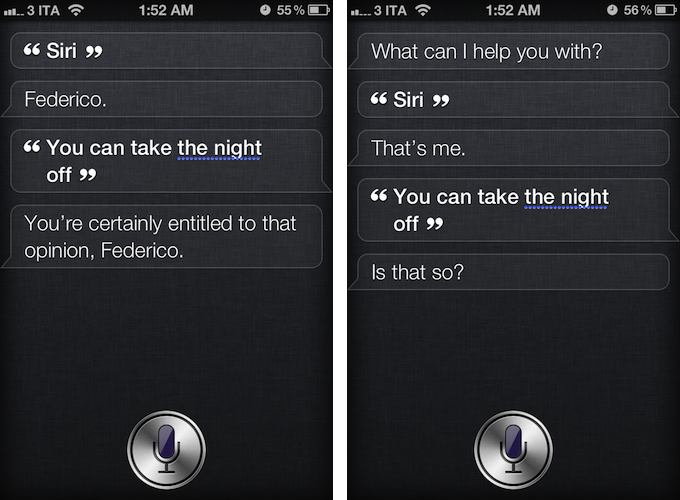
As noted by The Next Web, U.S. carrier Verizon Wireless aired a new iPhone 4S commercial featuring actor Samuel L. Jackson and Siri, the company’s virtual assistant for the iPhone 4S. Remarkably similar to Apple’s own ads in terms of style and message, the ad places Siri front and center, showcasing various functionalities of the software. Samuel L. Jackson asks his assistant to cancel appointments, create reminders, look up locations, and convert units to prepare for his “date night”. At the end of the commercial, the actor ironically asks Siri to take the night off, to which Siri replies “if you say so”.

Even more ironically, as depicted in the screenshots above, Siri really does reply to that command with a series of different answers.

Verizon Wireless’ official YouTube channel hasn’t been updated yet with the new commercial, and it’s not clear whether Apple’s official ad agency Chiat\Day may have been involved in the creation of the ad. You can check out an official embed after the break.

Update: It appears a full “Siri and celebrities” ad campaign is going live today. Another ad featuring actress Zooey Deschanel just aired as well, for carrier Sprint. It also seems like the same ads are airing with different carriers logo at the end, confirming the Samuel L. Jackson ad wasn’t simply a Verizon Wireless commercial, as initially suggested.

Update 17/4: Apple just posted the official versions of the ads on its website and YouTube channel. Find them below, or on Apple’s website (Date Night, Rainy Day).
Read more


Apple Removes iWork, Aperture Trials From Its Website

The trial version of iWork ‘09, Apple’s productivity suite that includes Pages, Numbers, and Keynote, is no longer available on the company’s website for download. The company has replaced the former iWork trial webpage with a message informing customers that iWork is available on the Mac App Store.

The trial version of iWork is no longer supported. But you can easily purchase Keynote, Pages, and Numbers from the Mac App Store to start creating beautiful presentations, documents, and spreadsheets today.

On the Mac App Store, the iWork apps are available as standalone purchases priced at $19.99 each. The iWork trial webpage is still available on some international Apple.com websites, such as the Italian one, although we are hearing reports that the download returns an error, reloading the webpage and displaying the same message about the Mac App Store. The iWork trial briefly disappeared last year, but came back shortly after. In March, Apple also announced the beta of iWork.com (which iWork ‘09 supported) will be discontinued in July.

Similarly, the company has removed the trial of Aperture 3 from its website, with users on Apple Support Communities noticing the change at least more than two weeks ago (recent Apple support documents still instruct users on how to remove the Aperture trial). Aperture is available on the Mac App Store at $79.99.

The trial version of Aperture is no longer available. If you currently have a copy of the Aperture 3 Trial installed on your Mac, you must delete it from your Applications folder before downloading Aperture 3 from the Mac App Store.

The removal of trials from Apple.com shouldn’t come as a surprise. The company has been gradually shifting all its software releases to the App Store, including major releases of OS X and Final Cut Pro. In July 2011, Apple also shut down the Mac OS X Downloads webpage, redirecting customers to the Mac App Store. Apple, however, still has a trial of Final Cut Pro (which is sold at $299.99 on the Mac App Store) available on its website, suggesting that more expensive software may still receive support for trials in the future.

Apple has been rumored for over a year to be on the verge of releasing a new version of iWork, although such rumors never materialized in a finished product with substantial new features. Apple released compatibility updates to introduce Lion support and bug fixes, but avoided implementing direct iCloud integration back in October, requiring users to manually upload and download documents to sync through iCloud.com. According to more recent speculation, Apple may release an updated version of iWork with Mountain Lion, which is on track to become available sometime this summer. [Thanks, Luca]


iPad Launches In 12 Additional Countries This Week

With a press release published this morning, Apple confirmed the new iPad will launch in 12 additional countries this week. The April 20th launch countries include South Korea, Uruguay, and Venezuela. On April 27th, the device will become available in 9 more countries including India and South Africa.

In addition to South Korea, the new iPad also will be available beginning on Friday, April 20 in Brunei, Croatia, Cyprus, Dominican Republic, El Salvador, Guatemala, Malaysia, Panama, St Maarten, Uruguay and Venezuela. Beginning on Friday, April 27, the new iPad will be available in Colombia, Estonia, India, Israel, Latvia, Lithuania, Montenegro, South Africa and Thailand.

The third-generation iPad has been the company’s fastest rollout to date; after the April 27th release day, the new iPad will be available in 56 different countries worldwide since its launch 42 days ago.

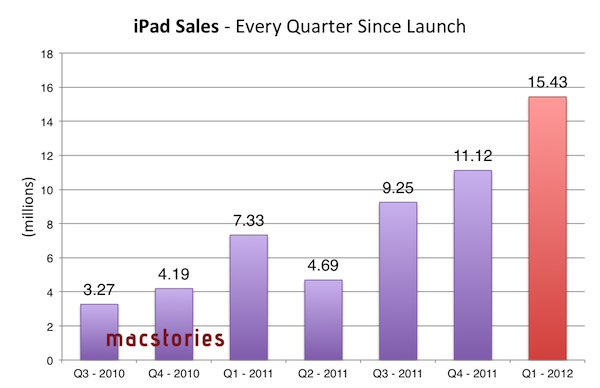
Below, a recap of the iPad’s launch dates and units sold until Q1 2012.

March 16 (10 countries): United States, Australia, Canada, France, Germany, Hong Kong, Japan, Singapore, Switzerland and the UK.

March 23 (25 countries): Austria, Belgium, Bulgaria, Czech Republic, Denmark, Finland, Greece, Hungary, Iceland, Ireland, Italy, Liechtenstein, Luxembourg, Macau, Mexico, The Netherlands, New Zealand, Norway, Poland, Portugal, Romania, Slovakia, Slovenia, Spain and Sweden.

April 20 (12 countries): South Korea, Brunei, Croatia, Cyprus, Dominican Republic, El Salvador, Guatemala, Malaysia, Panama, St Maarten, Uruguay and Venezuela.

April 27 (9 countries): Colombia, Estonia, India, Israel, Latvia, Lithuania, Montenegro, South Africa and Thailand.

On March 19th, the company confirmed the iPad had sold 3 million units in 4 days. The April 20 and April 27 international launches won’t be included in the company’s Q2 earnings, which ended on March 31. Apple will hold its Q2 earnings call on April 24.



Apple Confirms 10th Retail Store in Italy

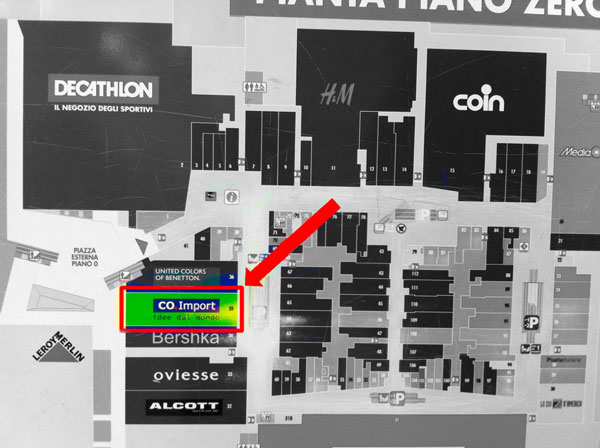
(The location of the Apple Store at Porta di Roma. Image via Macity)

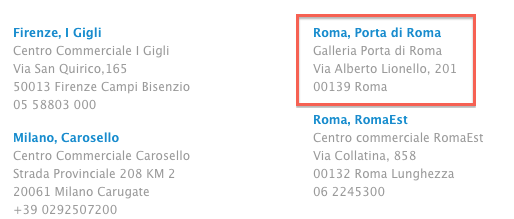
As first noted by setteBIT, Apple officially acknowledged the existence of its 10th retail store in Italy, at the Porta di Roma shopping mall. As previously reported, the retail store is rumored to be opening on Saturday, April 21, albeit no official confirmation in regards to the grand opening has been made yet. The “Galleria Porta di Roma” shopping mall, located near the GRA highway of Rome, is open from 9 AM to 10 PM during the weekends, and it includes 220 retail stores. The new store’s dedicated webpage will be available here.

Two weeks ago, a rumor suggested the Porta di Roma Apple retail store would open on April 21st; on the same day every year, the city of Rome commemorates its founding in 753 BC, The celebration is known as “Natale di Roma” (Birthday of Rome), and such date would certainly provide an opportunity for Apple to play around the marketing tagline of the store opening.

Apple’s first retail store in Italy opened in April 2007 at Roma Est, another shopping mall located outside Rome. The new Apple store at Porta di Roma will be the company no. 365 worldwide, Italy’s 10th, and the 118th to open outside the United States.


Apple Releases Standalone Flashback Malware Removal Tool

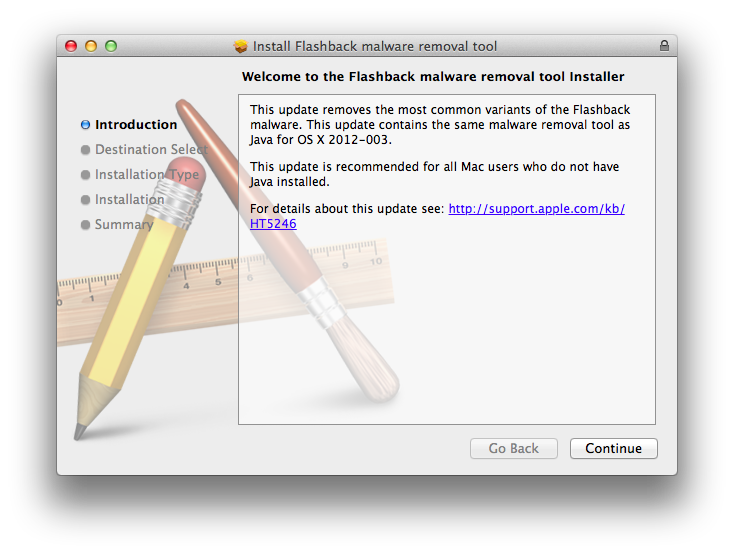
Yesterday, Apple released an update to Java on OS X to include a removal tool for common variants of the Flashback malware. A few minutes ago, Apple also released a standalone version of the Flashback malware removal tool, which contains the same code found in ”Java for OS X 2012-003”.

The removal tool has also been released in a standalone package installer for those users who don’t have Java installed on their computers. Once installed, if malware is found, ”a dialog will be presented notifying the user that malware was removed”. In some cases, completely deleting the Flashback malware might require a system restart.

Apple’s Flashback malware removal tool can be downloaded here. In the past week, a number of third-party removal tools have also surfaced online.


Apple Loses A Few Legal Battles, Wins One And Responds To DOJ Allegations

The last 24 hours has seen a number of developments regarding various legal issues that involve Apple. It’s not the most riveting news, so rather than writing them up as separate posts, we’ve decided to combine them into one, easily digestible post.

Apple Responds to DOJ Allegations

Late yesterday, somewhat belatedly, Apple issued AllThingsD with a statement responding to the DOJ’s allegations of collusion with the big book publishers. It was a similar statement that the other publishers made earlier and conveyed the idea that Apple’s entrance into the e-book market disrupted Amazon’s prior monopoly in the market.

The DOJ’s accusation of collusion against Apple is simply not true. The launch of the iBookstore in 2010 fostered innovation and competition, breaking Amazon’s monopolistic grip on the publishing industry. Since then customers have benefited from eBooks that are more interactive and engaging. Just as we’ve allowed developers to set prices on the App Store, publishers set prices on the iBookstore.

Apple Permitted To Intervene in Lodsys Case

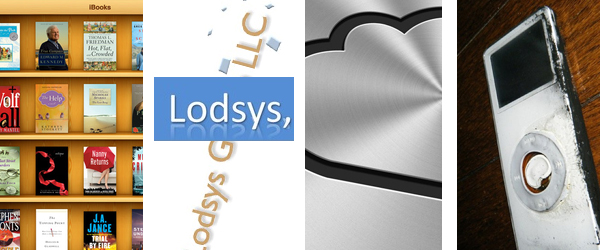
You may recall that Lodsys filed lawsuits against a number of iOS developers last year for allegedly violating their patents. Apple filed a motion to intervene in the case last year, claiming that the licensing it has attained from Lodsys itself also protects third party developers on the App Store. The court yesterday agreed with Apple and has granted permission to Apple’s motion to intervene. Unfortunately, for many developers this is too little too late, with many settling with Lodsys early on to avoid costly legal fees.

Apple Loses Attempt To Restore Push Email to German iCloud Users

Apple had been forced to suspend email push services for German iCloud users earlier in February this year after Motorola succeeded in bringing an injunction against Apple. Today the Mannheim regional court upheld that decision and Apple will be required to pay damages to Motorola Mobility.

Apple Required to Compensate Tokyo Couple For iPod Nano that Burst Into Flames

In July 2010, a first generation iPod nano spontaneously burst into flames and caused burns to the owner’s hand that took more than a month to heal. Apple was required to pay the owner approximately US$7,400 for medical fees and compensation for the pain and suffering. Apple began a worldwide replacement program of the device last November.

[via, AllThingsD, TUAW, TNW, Cult of Mac]