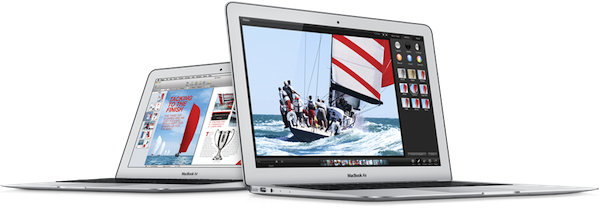
Apple’s line of MacBook Airs received nice spec bumps today, which include Intel’s fourth-generation core processors, Haswell. Haswell chips include the new Intel HD 5000 graphics, which is 40% faster than the previous generation Intel HD 4000. Haswell’s main benefit isn’t just that it’s just a new, better processor, but that it’s built especially for mobile. Intel’s latest chips are designed for power savings, and incorporate smarter low-power states. It’s an extremely efficient chip, resulting in a substantial increase in battery life over the previous generation of MacBook Airs.
Posts in news
Apple Releases New MacBook Airs, Previews New Mac Pro Design
Apple Introduces OS X Mavericks
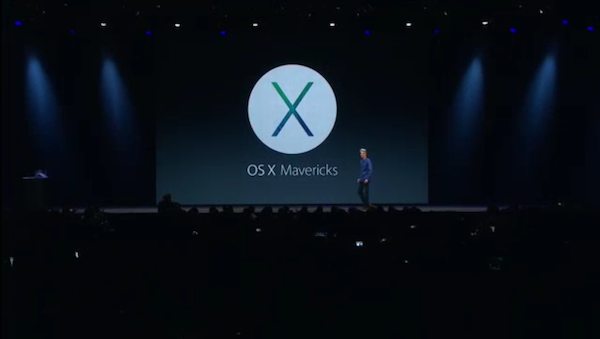
Today, during Apple’s opening Keynote at WWDC 2013, Craig Federighi introduced us to OS X Mavericks. OS X Mavericks focuses on three key areas: Apps and enhancements for everyone, battery life, and responsiveness.
The 2013 Apple Design Award Winners
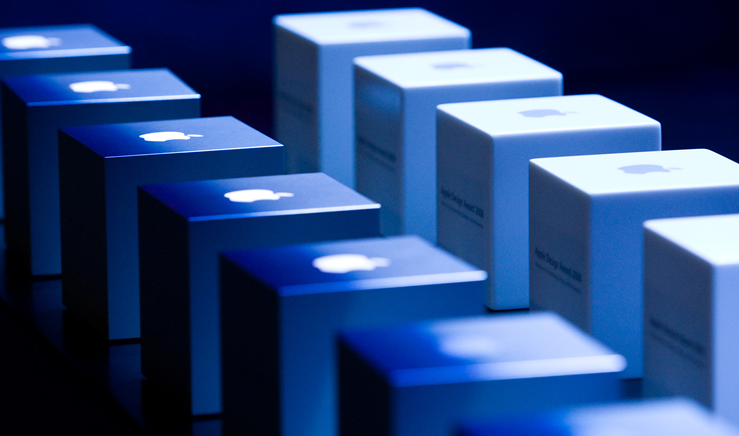
The Apple Design Awards recognize state of the art iOS and OS X apps that are well-designed, innovative, and take advantage of the latest technologies to provide an immersive, fun, and compelling experience. These apps set new standards in terms of interface design, system integration, rich functionality, and high performance; every year, Apple celebrates developers and their outstanding work by awarding them an Apple Design Award trophy and other special prizes.
After evaluating the “broadest set of apps possible”, Apple has picked this year’s winners with a dedicated event at Moscone West on WWDC 2013 opening day. We have compiled the full list of 2013 Apple Design Award Winners below.
For 2012 ADA winners, check out our previous coverage here.
Student
Mac & iOS
- Coda 2
- Ridiculous Fishing
- WWF Together
- Evernote 5
- Badland
- Yahoo Weather
- Letterpress
- Procreate
- SkyGamblers
As noted by @SteveStreza, this year Apple also awarded students who wrote custom apps for their WWDC scholarships.
For more coverage, check out our WWDC 2013 news hub and follow @macstoriesnet on Twitter.
Apple Posts WWDC 2013 Keynote, iOS 7, “Designed by Apple” Videos
For those who didn’t follow a liveblog or the news as it unfolded on Twitter, Apple has now posted the keynote video of its WWDC 2013 keynote held earlier today in San Francisco. The video can be streamed here, and a higher quality version should be made available in a few hours through iTunes (on the Apple Keynotes podcast). To avoid streaming errors, Safari is recommended for the best viewing experience.
Alongside the keynote, Apple has also posted promotional videos for iOS 7 (announced today) and “Designed by Apple”, a new campaign that the company will start running today as a TV ad. The iOS 7 video, featuring an introduction by Apple’s Jony Ive, is available here.
“Designed by Apple” has received its own webpage, where Apple has posted two videos. The first one was first shown today in San Francisco, before the keynote started; the second one is a TV ad that was aired at the end of the presentation. The first video features a series of animations with the following text:
If everyone is busy making everything, how can anyone perfect anything?
We start to confuse convenience with joy, abundance with choice. Designing something requires focus.
The first thing we ask is: what do we want people to feel? Delight. Surprise. Love. Connection. Then we begin to craft around our intention. It takes time…
There are a thousand no’s for every yes. We simplify. We perfect. We start over.
Until everything we touch enhances each life it touches.
Only then do we sign our work.
The new videos can be watched here.
For more coverage, check out our WWDC 2013 news hub and follow @macstoriesnet on Twitter.
The Numbers From Apple’s WWDC 2013 Keynote
As usual with keynotes in recent years, Apple’s CEO Tim Cook walked on stage today and offered an overview of the company’s state of the business and other noteworthy statistics. These numbers, which Apple typically shares during the year in separate press releases or product announcements, are always interesting as they provide a complete picture of Apple’s sales, installed base, and more.
- 24th WWDC, longest developer conference with attendees from 60 countries
- 6 million registered developers, 1.5 million since WWDC 2012
- WWDC 2013 was sold out in 71 seconds
- Over 1 million people per day visited Apple retail stores last year
- 407 stores around the world in 14 countries
- There are 900,000 apps on the App Store
- There are 375,000 iPad apps
- 575 million accounts on the Store
- $10 billion paid to developers, $5 billion paid in the last year alone
- 72 million installed Macs
- 28 million Mountain Lion copies since announcement, best release yet
- 35% of users adopted Mountain Lion it in first six months
- 1.8 million iBooks available on the Store
- 300 million iCloud accounts
- 35 billion redownloads of iTunes content
- Game Center has over 240 million users
- 800 billion iMessages have been sent to date
- 7.4 trillion push notifications sent to date
- Over 600 million iOS devices sold
For more coverage, check out our WWDC 2013 news hub and follow @macstoriesnet on Twitter.
Sponsor: Smile
Our thanks goes out to Smile this week for sponsoring MacStories with PDFpen 6.
PDFpen offers an affordable alternative for marking up, editing, and adding images to PDF documents. Available across Mac and iOS, PDFpen goes anywhere you do, giving you the capability to correct typos, add your signatures, and re-order pages on the fly. Because PDFpen uses OCR (optical character recognition) on PDFs and scanned documents, text is digitized so you can edit text and search the entire document for a particular keyword or phrase.
PDFpen 6 for the Mac supports Retina displays, and comes equipped with a powerful toolbar for getting things done faster than before. And for use in the office, you can export documents to a Microsoft Word document. Best of all, PDFpen 6 will auto save as you annotate or edit your PDFs, meaning you’ll never lose your progress if you have leave for a quick meeting.
PDFpen 6 is only $59.95 on the Smile Store and the Mac App Store. You can learn more and download a free trial here.
Apple To Live Stream Today’s WWDC Keynote
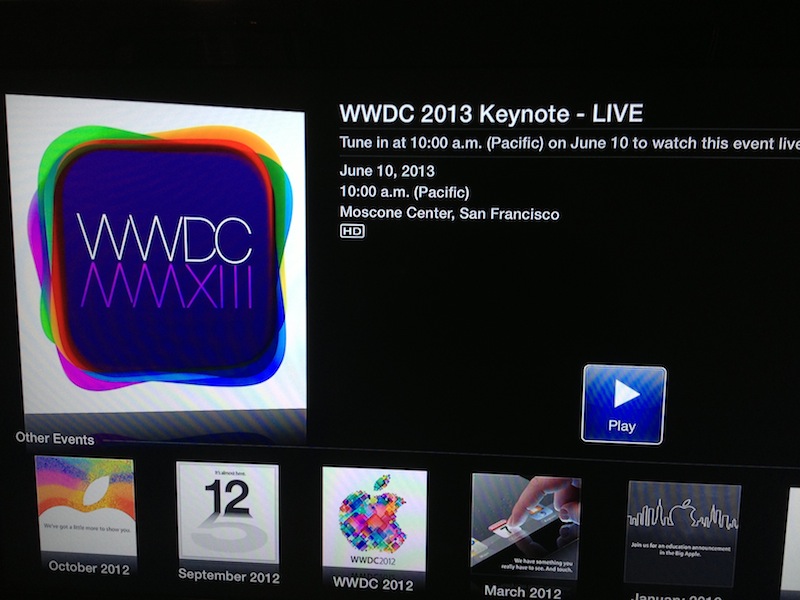
As noted by MacRumors, Apple will once again provide a live video stream of today’s WWDC 2013 keynote in San Francisco. With an update pushed overnight to Apple TV owners, Apple has added a live feed for WWDC 2013 to its existing Apple Events channel.
The last time Apple used the special Apple TV channel was on October 23, 2012, when they unveiled, among other announcements, the iPad mini. Before October 2012, Apple had offered a live stream for its “Back to the Mac” event in 2010, when the company introduced OS X Lion and a new line of MacBook Airs.
Apple hasn’t yet confirmed whether the event will also be streamed on its website to desktop and mobile browsers, but it’s likely that a link will be put up shortly on Apple’s Events webpage.
Update: As expected, Apple just confirmed that the keynote will also be streamed on its website.
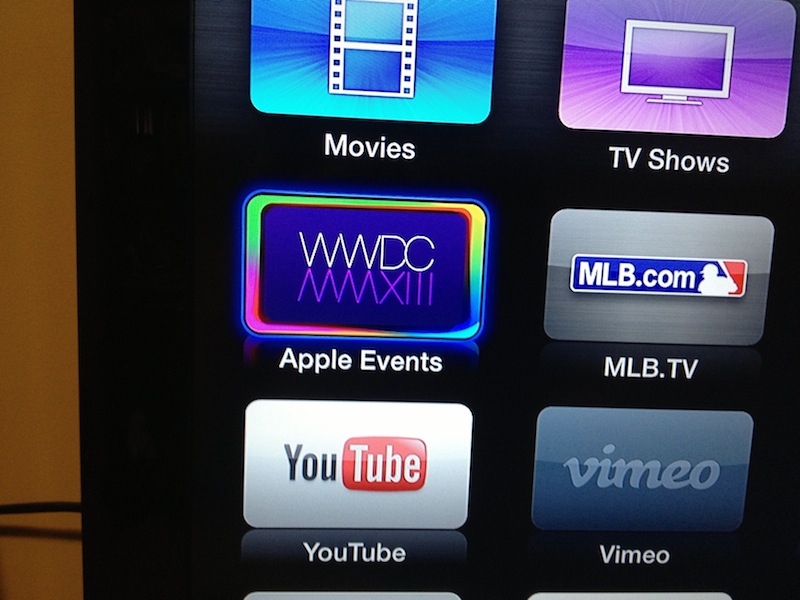
Apple’s WWDC 2013 keynote kicks off at 10 AM PDT; you can check your own timezone here.
07:00 — Honolulu, Hawaii
10:00 — San Francisco, California
13:00 — New York, New York
14:00 — São Paulo, Brazil
18:00 — London, England
19:00 — Rome, Italy
20:00 — Riyadh, Saudi Arabia
21:00 — Moscow, Russia
22:30 — New Delhi, India
01:00 — Shanghai, China (June 11)
02:00 — Tokyo, Japan (June 11)
03:00 — Sydney, Australia (June 11)
We’ll be offering a liveblog of today’s keynote here.
Liveblog: WWDC 2013 Edition

We aren’t coming back haunted, but we are coming back with @SteveStreza, who will once again be our eyes and ears at this year’s opening Keynote on June 10th. Just like last year, we’ll be bringing you live commentary, photos from the event, and all day coverage of Apple’s latest product announcements in the form of comprehensive blog posts and a good ol’ fashioned roundup for any of the smaller things that happen to show up on stage. And as always, we’ll take some time before the event starts (30 minutes) to chit chat with our readers as developers are let into Moscone West.
This year we also have something cool to remind you of the event on your iPhone. By downloading our Passbook pass, you’ll get a push notification letting you know when our liveblog is kicking off, and you’ll also have the chance to grab a promocode or two from some of our favorite developers.
Passbook
You can install our WWDC 2013 Liveblog pass here.
Apple WWDC 2013 Keynote Time Zones
You can check your own timezone here.
07:00 — Honolulu, Hawaii
10:00 — San Francisco, California
13:00 — New York, New York
14:00 — São Paulo, Brazil
18:00 — London, England
19:00 — Rome, Italy
20:00 — Riyadh, Saudi Arabia
21:00 — Moscow, Russia
22:30 — New Delhi, India
01:00 — Shanghai, China (June 11)
02:00 — Tokyo, Japan (June 11)
03:00 — Sydney, Australia (June 11)
WWDC 2013 Banners at Moscone West
- Apple Starts Decorating Moscone West with WWDC 2013 Banners
- iOS 7 Confirmed: New Banners Up at Moscone West
Note: We’ll provide all day coverage of WWDC announcements on MacStories’ homepage and through our WWDC 2013 hub. We’ll have a liveblog in this post 30 minutes before the keynote kicks off, tweet text updates as @MacStoriesLive, and announce new articles and updates as @MacStoriesNet.
iOS 7 Confirmed: New Banners Up at Moscone West [Update: OS X Too]
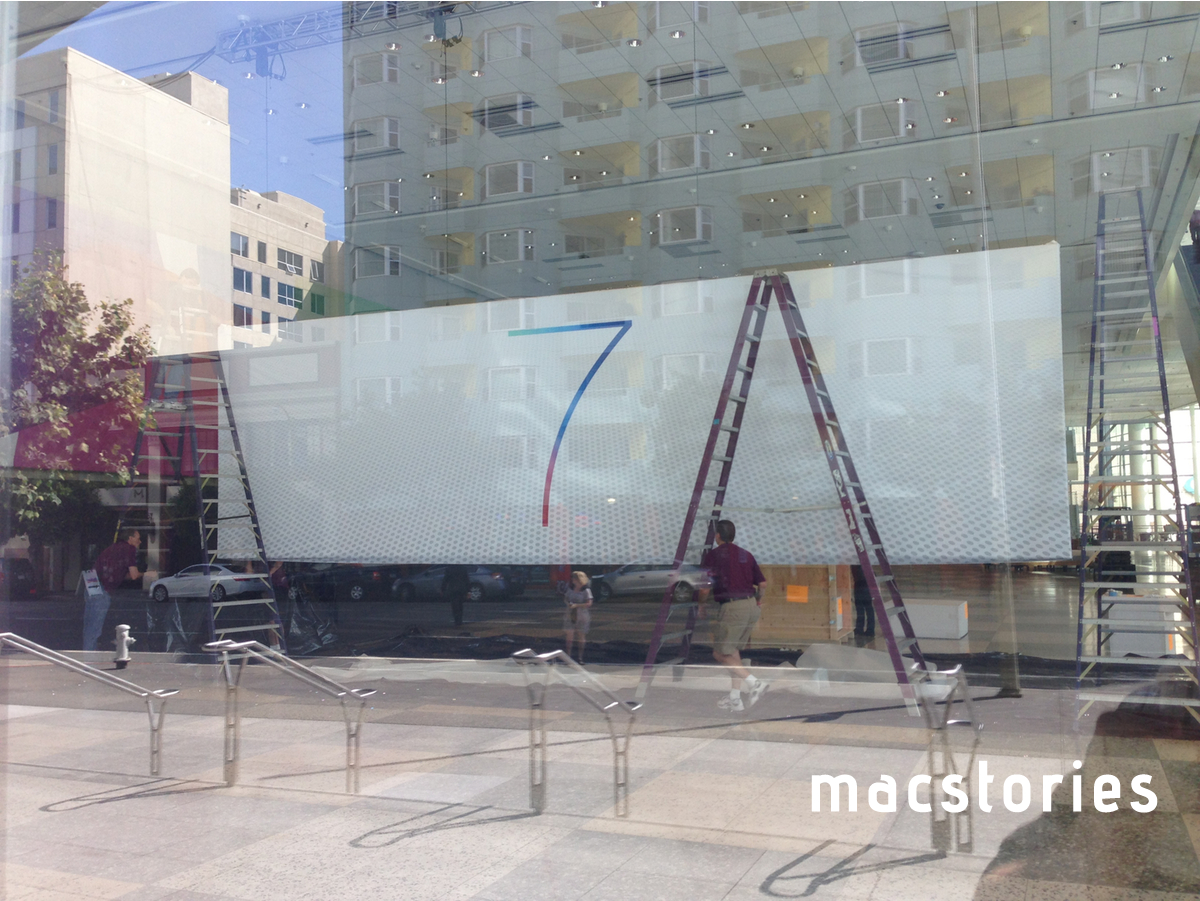
It’s been three days since Apple started decorating Moscone West with WWDC 2013 banners, and today the company has started publicly showing off new signage hinting at the next iteration of iOS, iOS 7. In a press release published in April, Apple said developers attending WWDC would learn about the future of iOS and OS X.
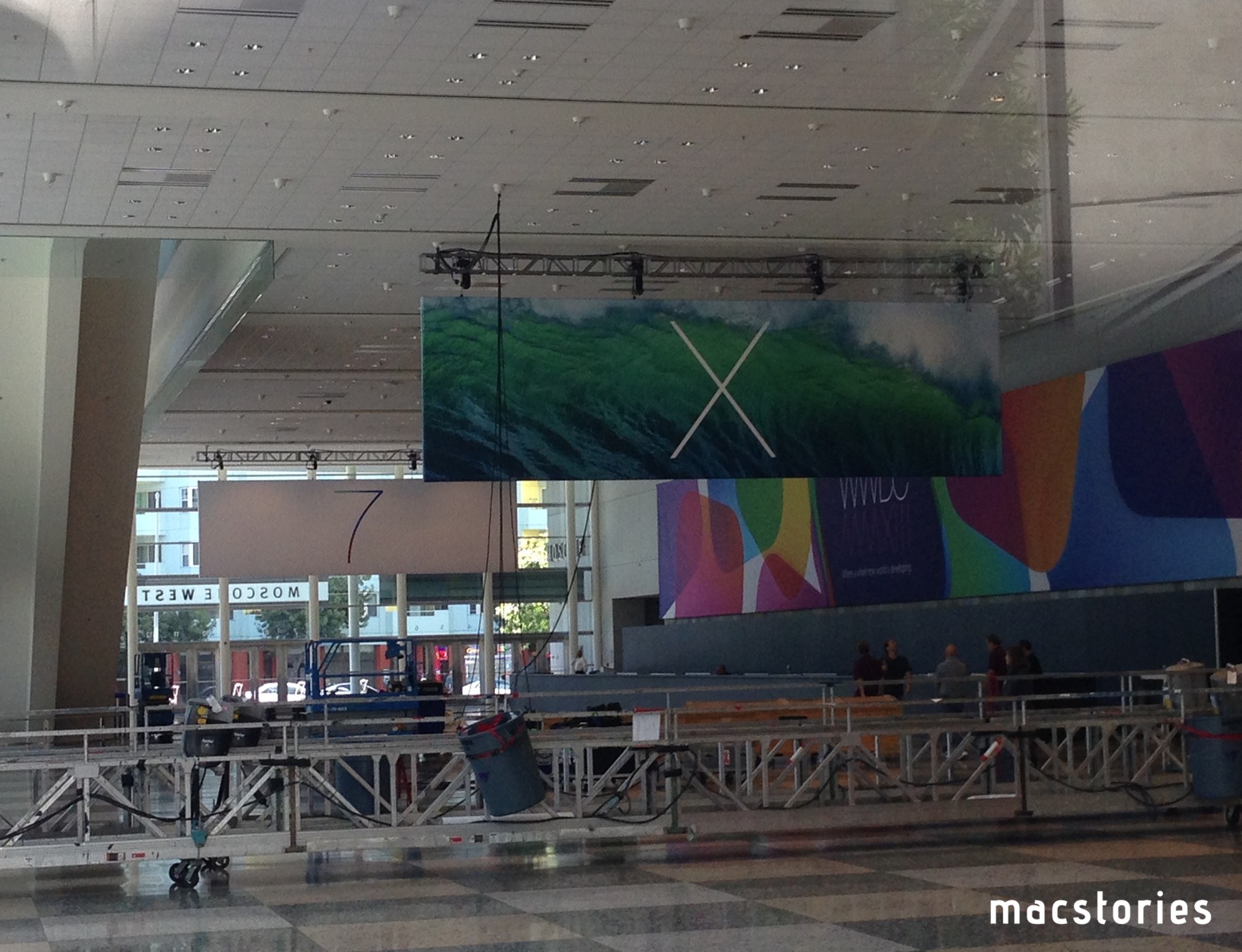
Using a very simple layout compared to last year, Apple is simply saying “7” on the banner that’s being put up at Moscone West right now. According to speculation from the past few months, iOS 7 will be a departure from previous versions of the operating system in terms of user interface design. After last year’s reorganization of the executive team, Tim Cook himself confirmed at D11 that Jony Ive, now head of the Human Interface Group at Apple, has been working on a new “look and feel” for iOS.
Update: Apple has also just started assembling banners hinting at OS X, which, similarly to the “7” banner, simply say “X”. The background of the banner seems to depict an ocean wave.