Federico Viticci

10766 posts on MacStories since April 2009

Federico is the founder and Editor-in-Chief of MacStories, where he writes about Apple with a focus on apps, developers, iPad, and iOS productivity. He founded MacStories in April 2009 and has been writing about Apple since. Federico is also the co-host of AppStories, a weekly podcast exploring the world of apps, Unwind, a fun exploration of media and more, and NPC: Next Portable Console, a show about portable gaming and the handheld revolution.

HTC Sues Apple Over Patent Infringement

As reported by Reuters, smartphone maker HTC is suing Apple claiming infringement of three patents owned by the company. The lawsuit, filed in the U.S. District Court in Delaware, relates to patents allegedly infringed by Apple with its Mac computers, iPhones, iPads and “other products”. Details are scarce right now – we’re sure Florian Mueller at FOSS Patents is already looking into this – but the Taiwan-based company is seeking a ban on the infringing products in the United States, plus “triple damages for willful infringement, and other remedies”.

In July, Apple filed an ITC complaint against HTC, looking to block the sale of several HTC products infringing Apple’s patents – that was the second complaint against HTC, as Apple was apparently looking for “a second try” with stronger patents, according to Florian Mueller.

We will update this post with more news and details on HTC’s lawsuit as they become available.

MacRumors details the patents addressed by the lawsuit:

7,765,414: Circuit and operating method for integrated interface of PDA and wireless communication system
7,672,219: Multipoint-to-point communication using orthogonal frequency division multiplexing
7,417,944: Method for orderwire modulation

Apple first sued HTC back in March, with an International Trade Commission judge finding HTC guilty of infringing on two of Apple patents in July – one of them, patent 5,946,647, said to be “fundamental” to the Android platform. HTC is however arguing they have a “strong case” against Apple’s claims, and said they will appeal the ITC ruling.
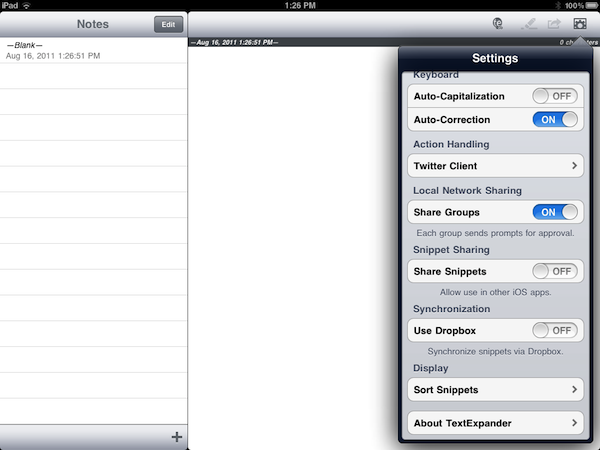


TextExpander for iOS Updated with Dropbox Sync, Tweetbot Support

If you own an iPhone or iPad and you’re used to typing a lot using Apple’s virtual keyboard for iOS (which will soon receive some interesting updates with iOS 5 on the iPad), you might also be a TextExpander user. Developed by Smile and available both on the Mac and iOS, TextExpander is a fantastic utility that allows you to create “snippets” to type frequently-used text using short abbreviations. Personally, I use TextExpander on a daily basis on my Mac to type “http://” in Twitter for Mac (which for some reason doesn’t allow you to copy links), personal information in websites I visit every day, or sentences I often write down in email responses. Whilst TextExpander for Mac is tightly integrated into the operating system and works with every app, because of the different nature of iOS third-party developers have to manually integrate their apps with TextExpander once installed on a user’s device. Currently, more than 100 apps for the iPhone and iPad sport TextExpander integration.

With an update released today, Smile has added Dropbox support to TextExpander for iOS, allowing users to sync snippets created on the Mac through the popular online service. Dropbox integration in TextExpander for Mac has been around for months as an alternative to MobileMe and local sync to share snippets “over the air” on multiple Macs. The same functionality is now available in the new TextExpander for iOS, which will require you a couple of taps to authorize with your Dropbox account, and import snippets into the app. The Dropbox sync option is available in the Settings, and it works both on the iPhone and iPad. In the Settings, there’s also a new option to sort snippets – version 1.2 brings “other fixes and improvements” as well.

You can try the new Dropbox sync functionality by downloading the latest TextExpander for iOS on the App Store. Apps that support TextExpander snippets include Second Gear’s Elements (recently updated to version 2.0), and Tapbots’ powerful Twitter client, Tweetbot.


Apple Highlights Apps “Enhanced for OS X Lion”

OS X Lion has been out for less than a month, and Apple is now starting to promote apps that take advantage of some of the new features of the OS on the front page of the Mac App Store. As noted by Stephen Hackett at Forkbombr, Apple has included the “Enhanced for OS X Lion” tagline in the banners pointing to applications that have recently been updated with Lion-exclusive features such as Versions, Full-Screen, or multi-touch gestures. These banners can be seen on the front page of the Mac App Store, both in the top section (Screenflow 3.0 and Touchgrind) or in the lower part of the page, where currently there are promotional images for Fantastical, swackett x, and Scrivener. Fantastical is indeed one of the apps that has been updated in the past month with “Lion compatibility” and Lion-only gestures for navigation in the calendar view.

This is not the first time Apple has taken special interest in apps updated to take advantage of new functionalities introduced by the company in a new version of their OSes. For example, Apple went as far as creating a dedicated section for apps updated with AirPlay support soon after the release of iOS 4.2 back in November 2010. In April, Apple showcased subscription-based magazines in the App Store’s homepage. The “Enhanced for OS X Lion” tagline doesn’t have its own category just yet, but it wouldn’t be a surprise as more customers upgrade to Lion, and developers start releasing Lion-specific app updates.

With over 250 new user features and 3,000 new developer APIs, Lion is opening a whole range of possibilities for developers willing to rewrite or update their applications to trigger the new OS. Such features and APIs include the aforementioned full-screen mode and Versions support, as well as desktop notifications, In-App Purchases, new UI controls, Resume, and Auto-Save. This Fall, developers will also be able to integrate their apps with iCloud, which will allow them to store documents and data in the cloud, enabling seamless synchronization of content between devices.

In November, Apple will also start requiring developers to update their apps with Lion’s Sandboxing APIs – you can  read more about this in John Siracusa’s OS X Lion review. By highlighting apps that have already been updated for Lion, Apple is both encouraging other developers to do the same in the next few weeks, and showcasing great software for new customers that have installed Lion and are looking for new apps to try out. Apple itself updated several apps ahead of Lion’s launch to enable new functionalities exclusive to 10.7, such as Safari 5.1 – which comes pre-installed on Lion – and the iWork suite.


OS X Lion USB Thumb Drive Now Available

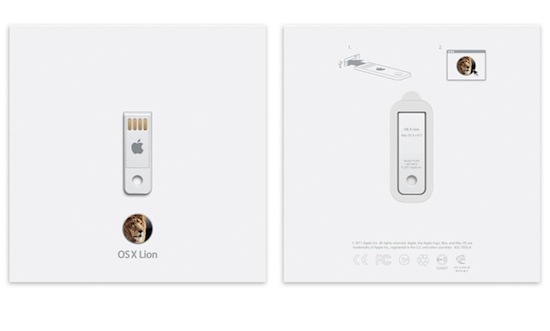
Initially announced on July 20, when OS X Lion was released to the public through the Mac App Store at $29.99, Apple has released the OS X Lion USB Thumb Drive today, allowing customers without a broadband connection – unable to download the 3.49 GB installer from the Store, or willing to keep a physical copy of the OS – to install the latest version of OS X with a USB stick similar to the one Apple shipped with the 2010 MacBook Airs (and didn’t include in the 2011 models, which come with Lion pre-installed but no USB drive in the box).

OS X Lion is available on a USB thumb drive for installation without the need for a broadband Internet connection. Just plug the drive into your USB port and follow the instructions to install. OS X Lion is also available for a lower price as a digital download from the Mac App Store.

As noted by 9to5mac, those who install Lion through the USB Thumb Drive won’t be able to perform re-installs with Lion’s built-in Recovery functionalities, as they will need to use the thumb drive again. The OS X Lion Thumb Drive is shipping in 1-3 business days.

Earlier this month, Apple released a free utility to turn any external drive into a Lion Recovery partition, and a number of unofficial solutions have also surfaced. You can find Apple’s OS X Lion Thumb Drive at $69 in the online store.


MobileMe to iCloud Transition Goes Live for Developers

As first noted by 9to5mac, Apple is now allowing developers with access to the iOS 5 beta or OS X Lion 10.7.2 preview to migrate their existing MobileMe accounts to iCloud. A MobileMe account needs to be associated with a development device to be correctly transitioned to iCloud for now – once an account is eligible, the migration process can be initiated from OS X Lion (from the MobileMe control panel) or by directly visiting me.com/move.

As Apple previously detailed in its MobileMe to iCloud Transition Q&A, some functionalities of MobileMe won’t transfer over to iCloud. This includes MobileMe Gallery, iDisk and iWeb publishing, which, however, will still be accessible until June 30, 2012, even after moving to iCloud. Another feature that iCloud won’t include is the ability of syncing several Mac OS X items like Dashboard widgets, Preferences, and Mail Rules.

Apple’s web interface for the transition is very straightforward and guides you through the process of moving your MobileMe account to iCloud by detailing each step with an explanation, and links pointing to support articles.

Once upgraded, an already configured MobileMe account on iOS or OS X will need to manually “confirmed” before completely moving to iCloud. If the account isn’t already configured, you’ll just need to log in as a new iCloud account and choose which content you’d like to keep stored on Apple’s servers.

The process is now exclusive to developers and there’s the chance Apple will tweak the interface/steps required before the public release of iCloud. However, the information available today falls in line with what Apple revealed months ago about the transition. Furthermore, it appears MobileMe accounts will be automatically upgraded to a paid 20 GB plan for free until June 30, 2012, (with pricing depending on where you live, and the 20 GBs are in addition to the 5 GBs iCloud already gives you for free) although there are no subscription management options available yet to developers on iCloud.com. Read more


13-inch MacBook Air Review

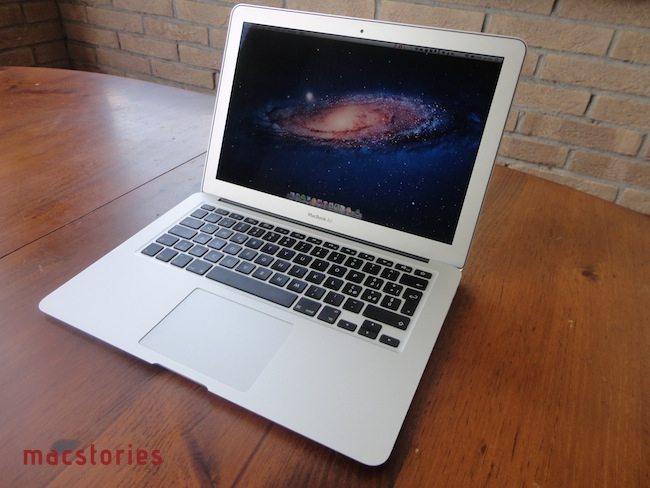
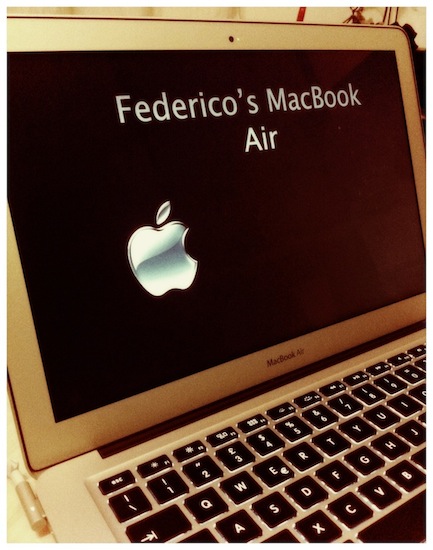
The new MacBook Air is the best Mac I’ve ever owned. This machine is shaping the future of OS X, both as an operating system and a bridge between iOS and the desktop.

In October 2008, I bought my first Mac. I had been a Windows PC user for seven years, and I was accustomed to using a PC at home for my browsing and writing needs, and at work – where my boss demanded we used PCs as he said they were more “reliable” and “fast”. After months of reading and peeking through Apple’s FAQ pages and video tutorials, I decided to buy a MacBook Pro. It was a 15-inch Unibody model with glossy screen, 4 GB of RAM, multi-touch trackpad, and Core 2 Duo processor. Back then, it was my first Mac but also the best computer I ever had. The moment I took it out of the box – and I was immediately impressed by Apple’s attention to detail in packaging and overall presentation – I knew that machine was going to change the way I “did work” on a computer. And it did. A few months later my boss fired me, and I started MacStories.

That MacBook Pro has been with me until last week.

Last year, I bought an iMac. Being the kind of Mac user that travels back and forth every day between his office (where I spend most of my day writing and managing the site) and his home, I was tired of being constantly forced to pack my MacBook Pro inside a bag, carry it around, gently place it on the passenger seat of my car, and pray that the hard drive wouldn’t die because of the terrible roads we have here in Viterbo. In spite of the fact that the MacBook Pro was the best computer I ever had, I slowly came to a point where I couldn’t stand carrying it around anymore. I decided to buy an iMac and make it my “home computer” so that I could offload media on it, backup documents, and do all those other things you’re supposed to do on “a home computer”. I bought a 21.5-inch model – again with a glossy screen – as I thought I wouldn’t ever need anything bigger than that. I was right. I’m happy with my purchase – the iMac is the finest piece of desktop hardware Apple has come up with in the past decade. Sure, my 2009 iMac doesn’t feature a Thunderbolt port and won’t get the performance boost of a Sandy Bridge-enabled machine, but it’s a trusted companion that I plan to keep for at least the next two years (that is, unless something really bad happens to the hardware, or Apple comes out with a desktop computer so revolutionary that it’ll be impossible to say no and don’t buy it).

For me, an iMac is the perfect desktop computer. It sits there, it makes my desk more elegant and classy than it could ever be, and more importantly it never failed me.

But I still had a problem with the MacBook Pro being a clumsy machine I didn’t want to carry around with me all the time. Read more


Apple’s Training Site Back With Lion, FCP X Certifications

As noted by TUAW, Apple’s training website has come back online with new OS X Lion certifications and training courses – some of them “coming soon” and others starting “this fall”. The training website is available at training.apple.com and it’s also received a facelift with a cleaner design, and plenty of OS X Lion and Final Cut Pro X graphics.

Indeed, the New Releases section on the site points to new FCP X training and exams, OS X Lion training and exams, as well as new Mac Integration Basics. IT professionals willing to support and learn about new OS X technologies might want to look at the new Lion courses coming this fall to Apple Authorized Training Centers worldwide. Books and resources are already available online and others will soon be for pre-order, and the new 10.7 certifications coming this fall will include:

  • Apple Certified Associate: Mac Integration 10.7
  • Apple Certified Support Professional 10.7
  • Apple Certified Technical Coordinator 10.7

The Mac Integration Basics 10.7 exam “will be available soon” according to the Training website, but full documentation has already been posted online for download as PDF or iBookstore guide. On the other hand, those interested in Final Cut Pro X certification can watch Final Cut Pro X Apple Pro Video Training, with classes coming “soon” worldwide.

Snow Leopard certification and courses are still available and according to Apple will remain online until January 2012.


Keep Your Lion Computer Protected with Witness

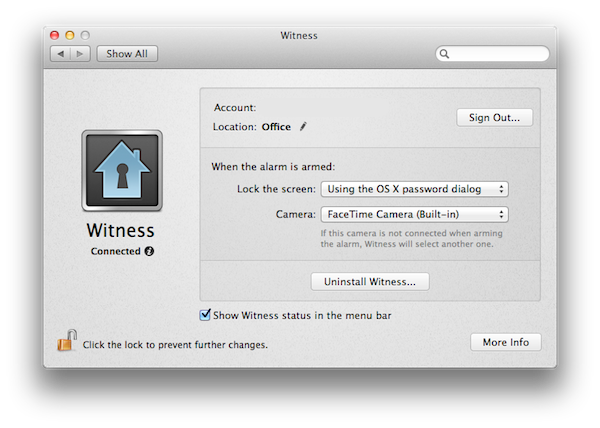
A few months ago I reviewed Witness for Mac, an OS X utility from the creators of Undercover – a tracking app for stolen computers – aimed at letting you remotely lock/unlock a machine, and see who’s using it thanks to webcam integration. The Witness app, available on the Mac as a System Preferences panel, iOS and the web, leverages the Mac’s built-in FaceTime camera (nèe iSight) to send you “mugshots” of whoever is using a locked computer – Witness can also detect motion in front of your screen and send you a push notification as soon as something happens.

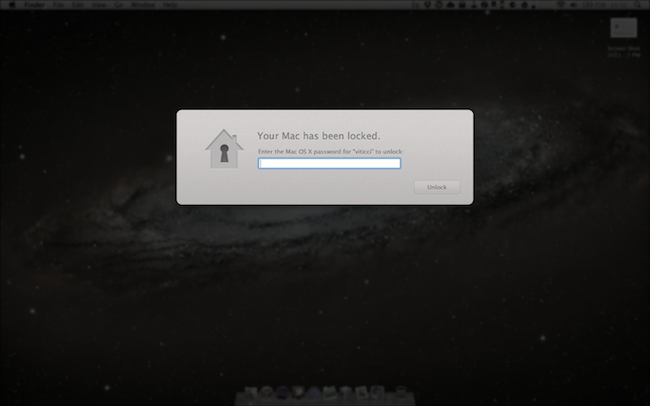
When I upgraded to Lion GM on my two Macs, I was disappointed to see the new OS broke Witness, which simply stopped working with Lion’s new Screen Saver and login screen. I could send the lock command from my iPhone or iPad, but the app would only freeze to a lockscreen. With a series of updates, the Orbicule developers have updated Witness to fully integrate with OS X Lion and its new authentication window, which in version 1.2 is used instead of the old screensaver method. Now, you can choose to lock your Mac either using Witness’ own lock system, or through the default login screen in Lion.

The screensaver/login screen triggered by Witness on Lion

For what it’s worth, Witness’ notifications already play nice with iOS 5 beta, which will list alerts of “detected motion” in its new Notification Center. Witness is a great addition to the Mac, with minimal footprint on memory and an optional menubar icon to trigger the alarm system and open the Settings.

You can create a Witness account here ($39 with student licenses available) and download the free Witness Remote app from the App Store.