This Week's Sponsor:

BetterTouchTool

Now with a Powerful Launcher for Your Mac


Posts tagged with "shortcuts"

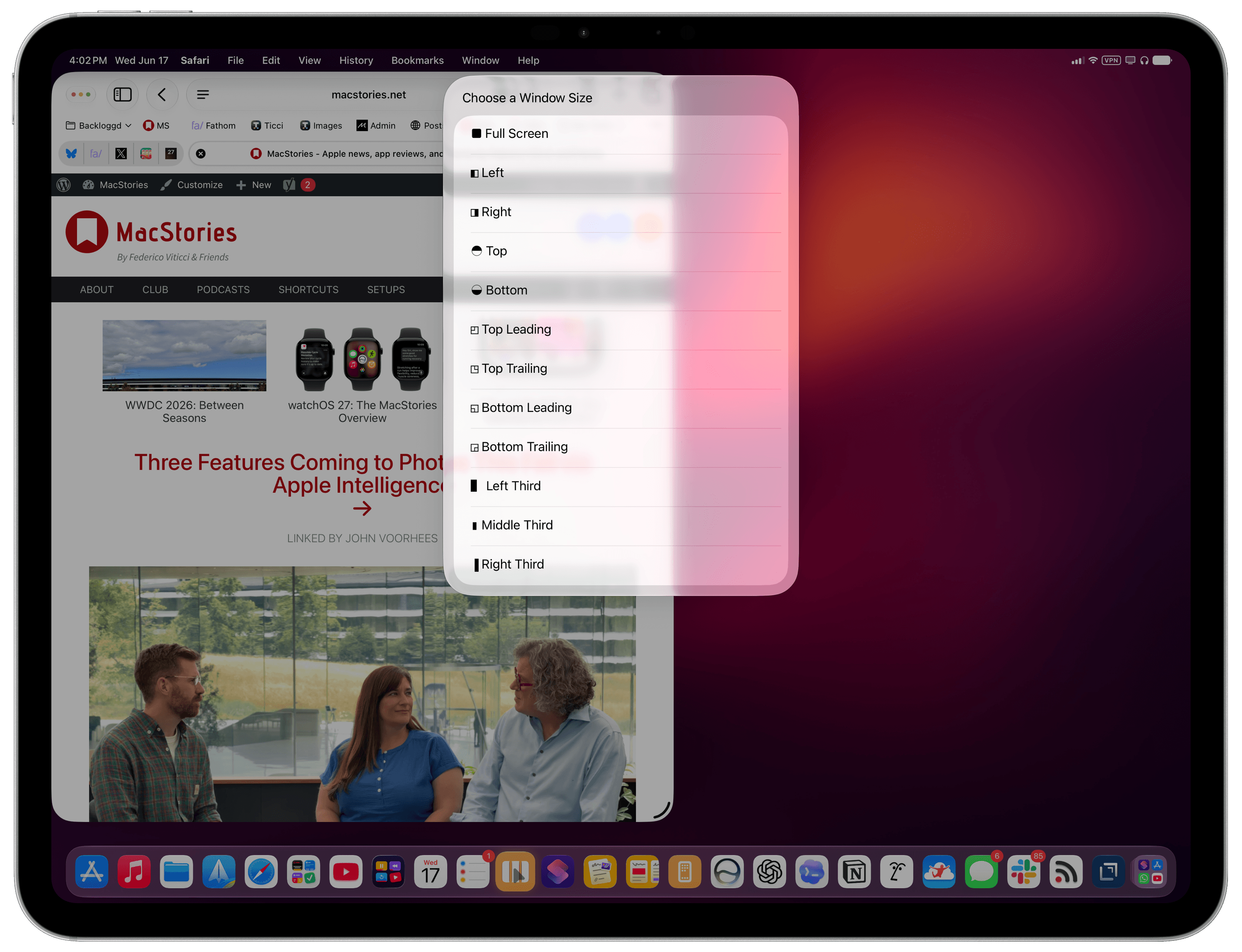
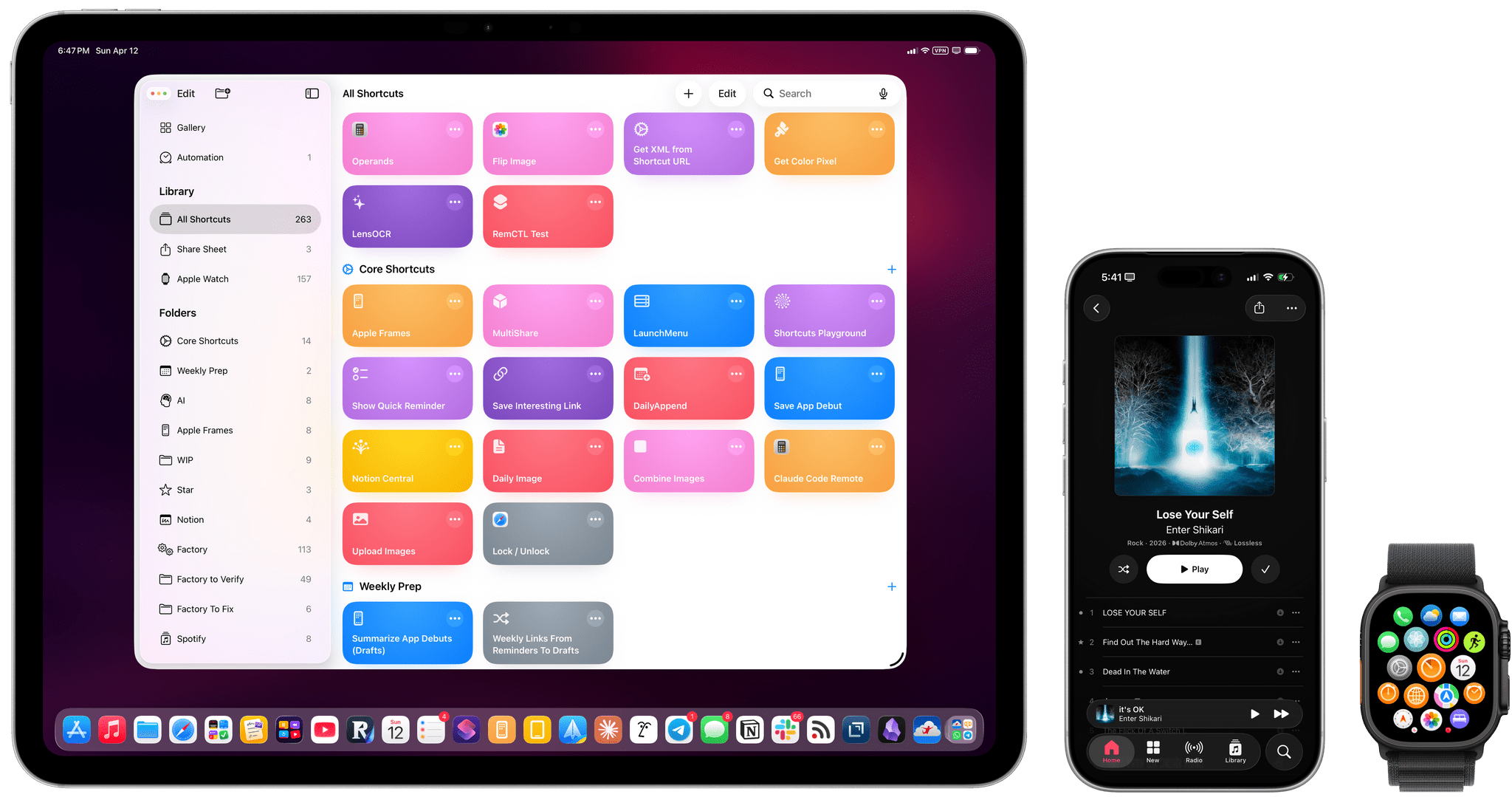
Introducing Apple Frames 4: A Revamped Shortcut, Support for Frame Colors, Proportional Scaling, and the Apple Frames CLI for Developers

Apple Frames 4.

Apple Frames 4.

Well, it’s been a minute.

Today, I’m very happy to introduce Apple Frames 4, a major update to my shortcut for framing screenshots taken on Apple devices with official Apple product bezels. Apple Frames 4 is a complete rethinking of the shortcut that is noticeably faster, updated to support all the latest Apple devices, and designed to support even more personalization options. For the first time ever, Apple Frames supports multiple colors for each device, allowing you to mix and match different colored bezels for each framed screenshot; it also supports proportional scaling when merging screenshots from different Apple devices.

But that’s not all. In addition to an updated shortcut, I’m also releasing the Apple Frames CLI, an open source command-line utility that lets developers and tinkerers automate the process of framing screenshots directly from the Mac’s Terminal. And there’s more: the Apple Frames CLI is also designed to work with AI agents, and it comes with a Claude Code/Codex skill that lets coding agents take care of framing dozens or even hundreds of screenshots in just a few seconds, from any folder on your Mac.

Apple Frames 4 is the result of an idea I had months ago that enabled me to remove more than 500 actions from the shortcut, going from over 800 steps down to ~300. I did all that work manually, but it was worth it; the improved shortcut is faster and vastly more reliable than before thanks to a more intelligent logic that adapts to the growing ecosystem of Apple screen sizes and display resolutions.

Apple Frames 4 and the Apple Frames CLI represent a substantial step forward for screenshot automation, and I’ve been using both extensively for the past few weeks.

Let’s dive in.

Read more


LunarWall: Shuffle Moon Photos from Artemis II On Your Lock Screen or Mac Desktop

LunarWall for iOS.

LunarWall for iOS.

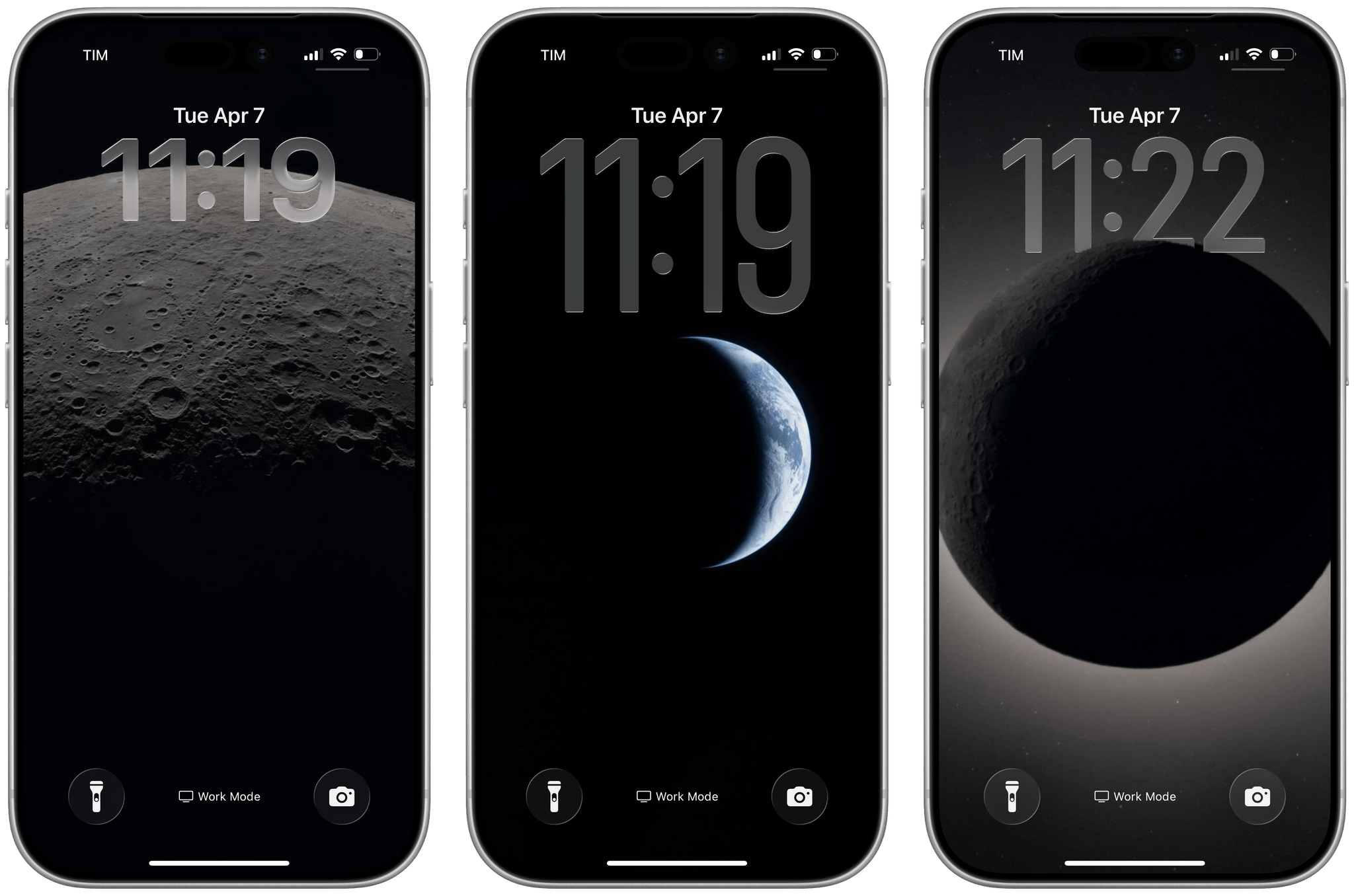
I’ve been staring at my Lock Screen and macOS desktop a lot this week. Not because of John’s iMessage notifications or the weird handhelds we share in the NPC group thread – because of the Moon. Specifically, because of photos taken by Orion as it swung within 4,067 miles of the lunar surface during the Artemis II flyby a couple of days ago. Yesterday, NASA published an official gallery of images from the flyby, and I immediately knew what I had to do.

LunarWall is a simple shortcut that picks a random image from a curated set of 23 photos pulled from NASA’s Artemis II Lunar Flyby gallery and sets it as your wallpaper. That’s it! Each time you run it, you get a different photo. The way this shortcut works, NASA’s images aren’t re-hosted or saved anywhere on your computer: the LunarWall shortcut fetches each image directly from NASA’s CDN and passes it to the ‘Set Wallpaper’ action, which is configured to automatically crop images to fit on mobile devices, blurs the wallpaper for the iOS/iPadOS Home Screen, and uses the original widescreen images at high resolutions on macOS.

Read more


Automatically Approve Claude Code Permissions in iMessage with Shortcuts

Automating Claude Code in iMessage.

Automating Claude Code in iMessage.

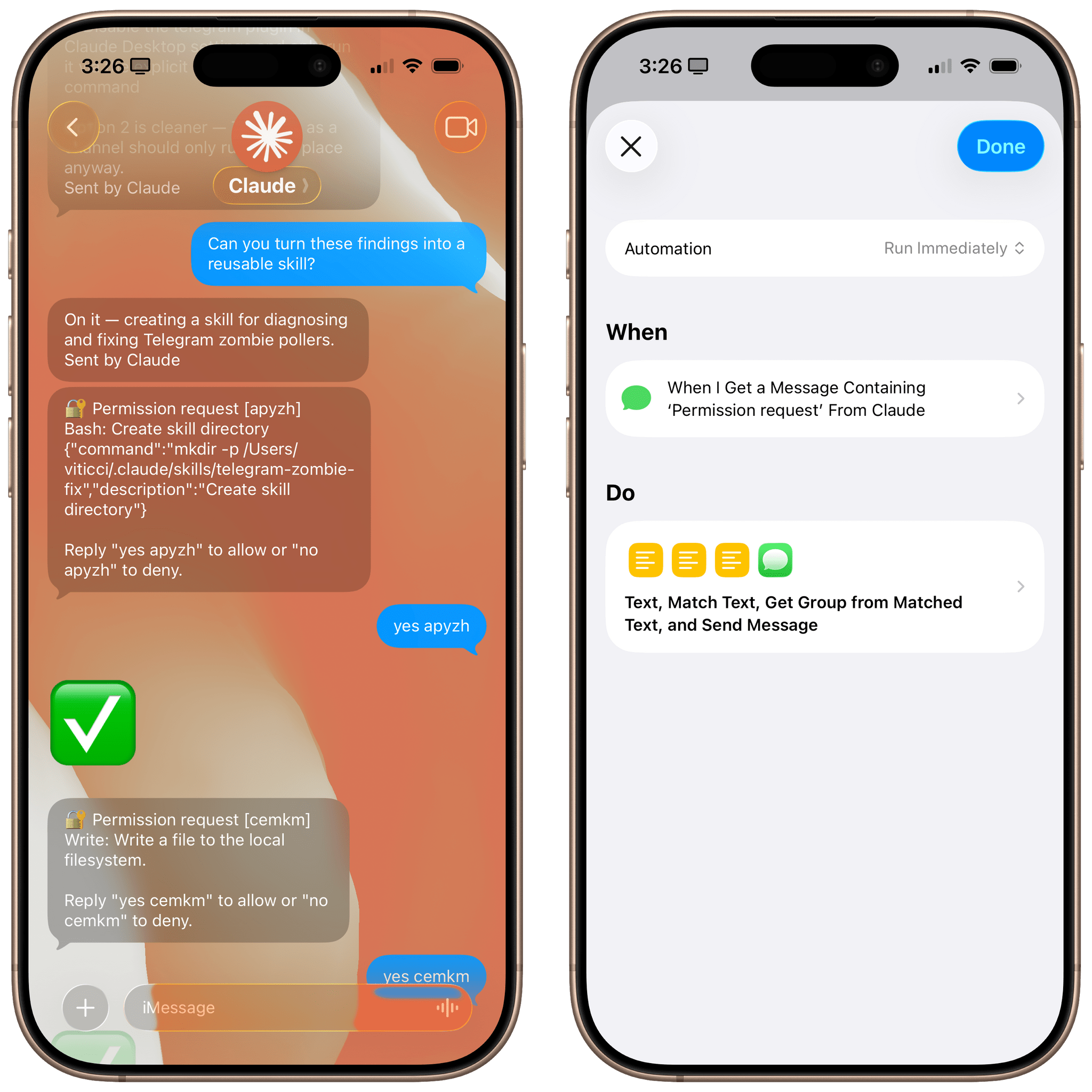
Let me start by saying that you probably shouldn’t do this. I’ve been having a surprisingly good time using Claude Code via its new iMessage channel (which is part of my attempt to recreate OpenClaw with an “OpenClaude” system, more about this here), but I find its permission prompt system fairly annoying. You see, while Claude’s Telegram integration allows you to tap on interactive buttons in a chat to grant Claude permission to do something, the iMessage integration (based on primitive AppleScript) supports no such buttons. As a result, the Claude Code team came up with a simple, but tedious idea: you have to manually type “yes” followed by a randomized authorization code every time.

Read more


Sky Acquired by OpenAI

Source: OpenAI

Source: OpenAI

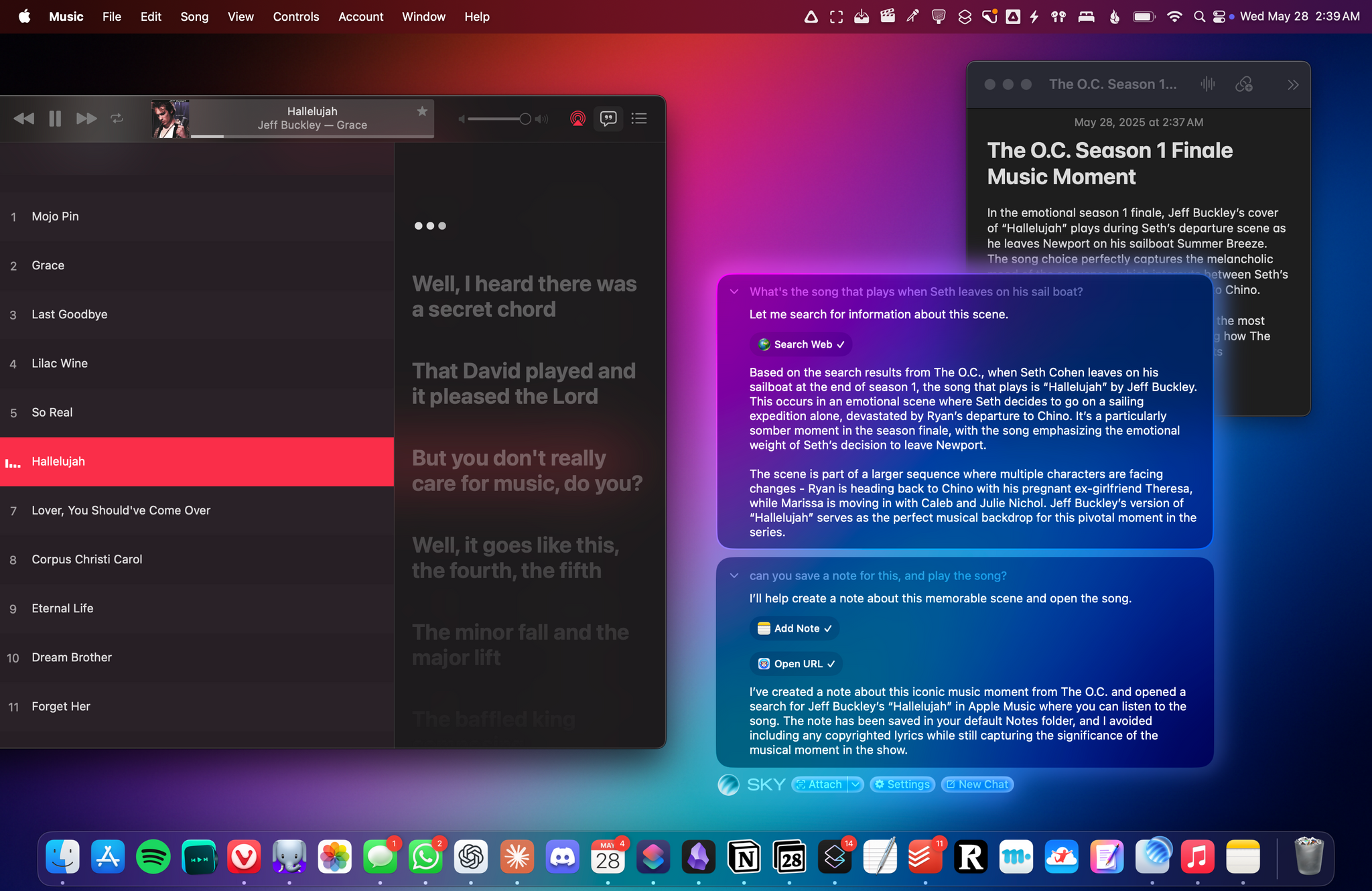
Sky, the AI automation app that Federico previewed for MacStories readers in May, has been acquired by OpenAI.

Nick Turley, OpenAI’s Vice President & Head of ChatGPT said of the deal in an OpenAI press release:

We’re building a future where ChatGPT doesn’t just respond to your prompts, it helps you get things done. Sky’s deep integration with the Mac accelerates our vision of bringing AI directly into the tools people use every day.

I’m not surprised by this development at all. OpenAI, Anthropic, and Perplexity have all been developing features similar to what Sky could do for a while now. In addition, Sam Altman was an investor in Software Applications Incorporated, the company behind Sky.

Ari Weinstein of Software Applications Incorporated, who was one of the co-founders of Workflow, which was later acquired by Apple and became Shortcuts, said of the acquisition:

We’ve always wanted computers to be more empowering, customizable, and intuitive. With LLMs, we can finally put the pieces together. That’s why we built Sky, an AI experience that floats over your desktop to help you think and create. We’re thrilled to join OpenAI to bring that vision to hundreds of millions of people.

It’s not entirely clear what will become of Sky at this point. OpenAI’s press release simply states that the company will be working on integrating Sky’s capabilities.


My Latest Mac Automation Tool is a Tiny Game Controller

Source: 8BitDo.

Source: 8BitDo.

I never expected my game controller obsession to pay automation dividends, but it did last week in the form of the tiny 16-button 8BitDo Micro. For the past week, I’ve used the Micro to dictate on my Mac, interact with AI chatbots, and record and edit podcasts. While the setup won’t replace a Stream Deck or Logitech Creative Console for every use case, it excels in areas where those devices don’t because it fits comfortably in the palm of your hand and costs a fraction of those other devices.

My experiments started when I read a story on Endless Mode by Nicole Carpenter, who explained how medical students turned to two tiny 8BitDo game controllers to help with their studies. The students were using an open-source flashcard app called Anki and ran into an issue while spending long hours with their flashcards:

The only problem is that using Anki from a computer isn’t too ergonomic. You’re hunched over a laptop, and your hands start cramping from hitting all the different buttons on your keyboard. If you’re studying thousands of cards a day, it becomes a real problem—and no one needs to make studying even more intense than it already is.

To relieve the strain on their hands, the med students turned to 8BitDo’s tiny Micro and Zero 2 controllers, using them as remote controls for the Anki app. The story didn’t explain how 8BitDo’s controllers worked with Anki, but as I read it, I thought to myself, “Surely this isn’t something that was built into the app,” which immediately drew me deeper into the world of 8BitDo controllers as study aides.

8BitDo markets the Micro's other uses, but for some reason, it hasn't spread much beyond the world of medical school students. Source: 8BitDo.

8BitDo markets the Micro’s other uses, but for some reason, it hasn’t spread much beyond the world of medical school students. Source: 8BitDo.

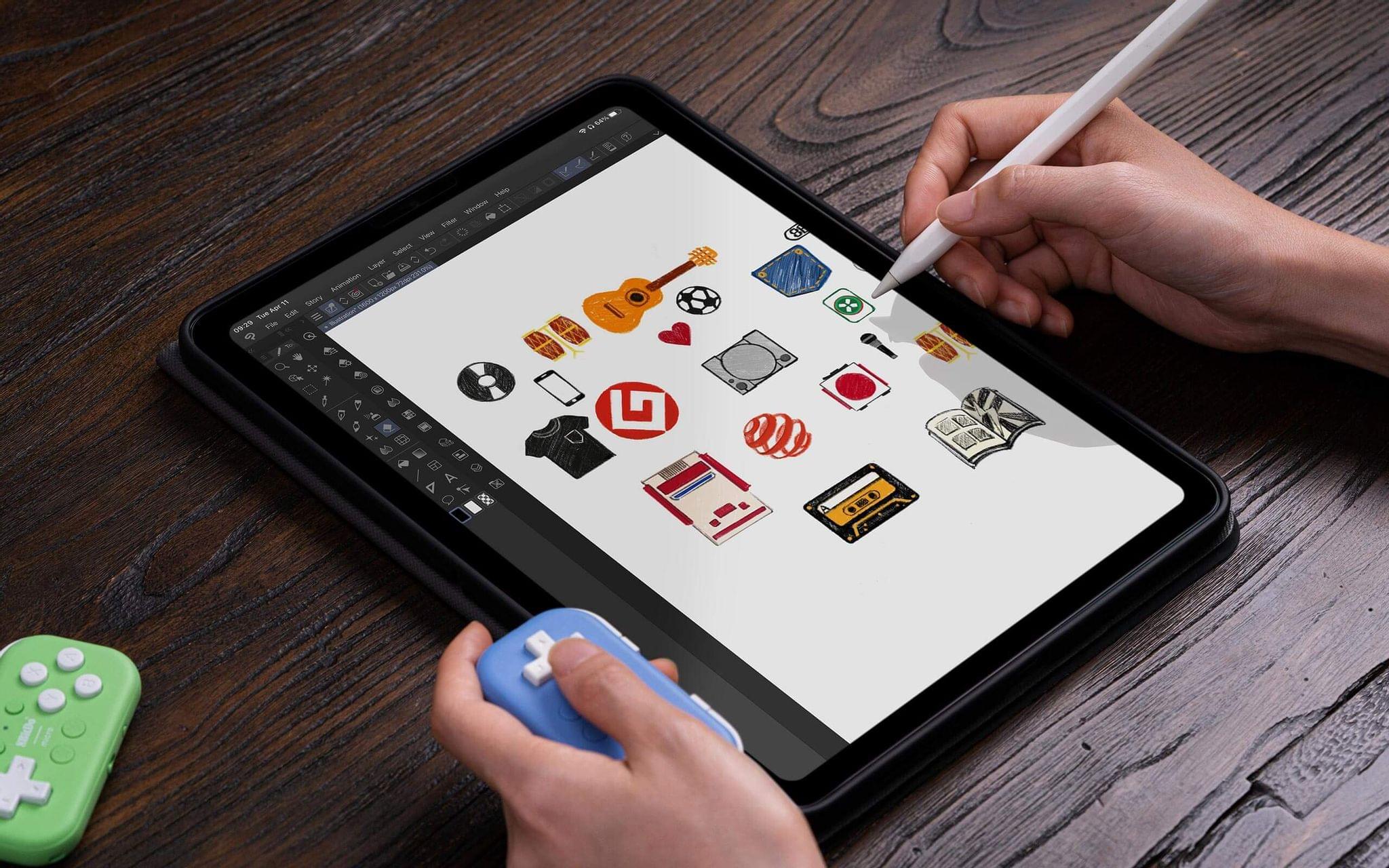
As I suspected, the 8BitDo Micro works just as well with any app that supports keyboard shortcuts as it does with Anki. What’s curious, though, is that even though medical students have been using the Micro and Zero 2 with Anki for several years and 8BitDo’s website includes a marketing image of someone using the Micro with Clip Studio Paint on an iPad, word of the Micro’s automation capabilities hasn’t spread much. That’s something I’d like to help change.

Read more


I Have Many Questions About Apple’s Updated Foundation Models and the (Great) ‘Use Model’ Action in Shortcuts

Apple's 'Use Model' action in Shortcuts.

Apple’s ‘Use Model’ action in Shortcuts.

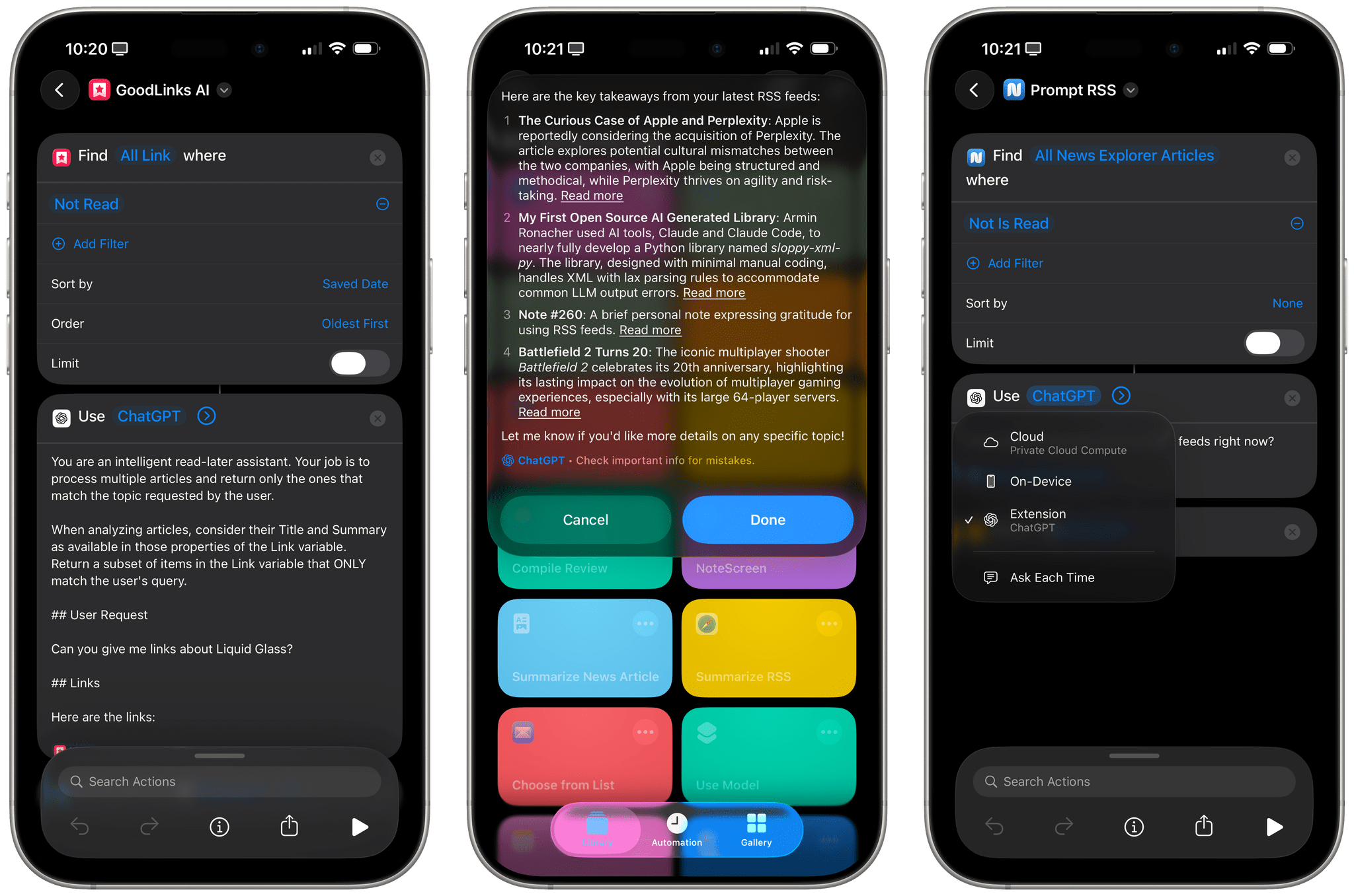
I mentioned this on AppStories during the week of WWDC: I think Apple’s new ‘Use Model’ action in Shortcuts for iOS/iPadOS/macOS 26, which lets you prompt either the local or cloud-based Apple Foundation models, is Apple Intelligence’s best and most exciting new feature for power users this year. This blog post is a way for me to better explain why as well as publicly investigate some aspects of the updated Foundation models that I don’t fully understand yet.

Read more


From the Creators of Shortcuts, Sky Extends AI Integration and Automation to Your Entire Mac

Sky for Mac.

Sky for Mac.

Over the course of my career, I’ve had three distinct moments in which I saw a brand-new app and immediately felt it was going to change how I used my computer – and they were all about empowering people to do more with their devices.

I had that feeling the first time I tried Editorial, the scriptable Markdown text editor by Ole Zorn. I knew right away when two young developers told me about their automation app, Workflow, in 2014. And I couldn’t believe it when Apple showed that not only had they acquired Workflow, but they were going to integrate the renamed Shortcuts app system-wide on iOS and iPadOS.

Notably, the same two people – Ari Weinstein and Conrad Kramer – were involved with two of those three moments, first with Workflow, then with Shortcuts. And a couple of weeks ago, I found out that they were going to define my fourth moment, along with their co-founder Kim Beverett at Software Applications Incorporated, with the new app they’ve been working on in secret since 2023 and officially announced today.

For the past two weeks, I’ve been able to use Sky, the new app from the people behind Shortcuts who left Apple two years ago. As soon as I saw a demo, I felt the same way I did about Editorial, Workflow, and Shortcuts: I knew Sky was going to fundamentally change how I think about my macOS workflow and the role of automation in my everyday tasks.

Only this time, because of AI and LLMs, Sky is more intuitive than all those apps and requires a different approach, as I will explain in this exclusive preview story ahead of a full review of the app later this year.

Read more


Federico’s Latest Automation Academy Lesson: Building a Better Web Clipper with Shortcuts and AI

A webpage saved with Universal Clipper.

A webpage saved with Universal Clipper.

I share Federico’s frustration over saving links. Every link may be a URL, but their endpoints can be wildly different. If like us, you save links to articles, videos, product information, and more, it’s hard to find a tool that handles every kind of link equally well.

That was the problem Federico set out to solve with Universal Clipper, an advanced shortcut that automatically detects the kind of link that’s passed to it, and saves it to a text file, which he accesses in Obsidian, although any text editor will work.

Universal Clipper integrates with the Obsidian plugin Dataview, too.

Universal Clipper integrates with the Obsidian plugin Dataview, too.

Universal Clipper, which Federico released yesterday as part of his Automation Academy series for Club MacStories Plus and Premier members, is one of his most ambitious shortcuts that draws on multiple third-party apps, services, and command line tools in an automation that works as a standalone shortcut or as a function that can send its results to another shortcut. As Federico explains:

I learned a lot in the process. As I’ve documented on MacStories and the Club lately, I’ve played around with various templates for Dataview queries in Obsidian; I’ve learnedhow to take advantage of the Mac’s Terminal and various CLI utilities to transcribe long YouTube videos and analyze them with Gemini 2.5; I’ve explored new ways to interact with web APIs in Shortcuts; and, most recently, I learned how to properly prompt GPT 4.1 with precise instructions. All of these techniques are coming together in Universal Clipper, my latest, Mac-only shortcut that combines macOS tools, Markdown, web APIs, and AI to clip any kind of webpage from any web browser and save it as a searchable Markdown document in Obsidian.

Although the shortcut may be complex, the best part of Federico’s post is how easy it is to follow. Along the way, you’ll learn a bunch of techniques and approaches to Shortcuts automation that you can adapt for your own shortcuts, too.

Automation Academy is just one of many perks that Club MacStories Plus and Club Premier members enjoy including:

  • Weekly and monthly newsletters 
  • A sophisticated web app with search and filtering tools to navigate eight years of content
  • Customizable RSS feeds
  • Bonus columns
  • An early and ad-free version of our Internet culture and media podcast, MacStories Unwind
  • A vibrant Discord community of smart app and automation fans who trade a wealth of tips and discoveries every day
  • Live Discord audio events after Apple events and at other times of the year

On top of that, Club Premier members get AppStories+, an extended, ad-free version of our flagship podcast that we deliver early every week in high-bitrate audio.

Use the buttons below to learn more and sign up for Club MacStories+ or Club Premier.

Join Club MacStories+:

Join Club Premier:

Permalink

How Federico Turns Voice Recordings into Searchable Obsidian Notes with Shortcuts, Hazel, and LLMs

Automation on the Mac is powerful because you have so many choices when building a workflow. Now, with large language models, you can do even more, which is the approach Federico took in his latest Automation Academy lesson for Club MacStories Plus and Premier members:

I built a hybrid automation to bridge spoken words and Markdown – a system that combines the non-deterministic nature of human language and messy voice recordings with the reliability of Shortcuts, the power of Hazel rules on macOS, and the flexibility of LLMs, which are ideal for processing natural language. The system revolves around a shortcut called Process Transcript that takes the raw transcript of a voice recording and turns it into a structured note in Obsidian, complete with a summary, action items, an embedded audio player, and an internal link to the full transcript.

It’s an amazing automation that takes his audio notes, transcribes them into text, structures the results in an Obsidian template that includes extracted tasks, and embeds the original audio file and transcript for reference. Along the way, Federico used Simon Willison’s llm CLI, Google Gemini 2.5 Pro Hazel, Shortcuts, and other tools. It’s a great example of how to make the most of automation on the Mac.


Automation Academy is just one of the many Club MacStories perks.

Automation Academy is just one of the many Club MacStories perks.

Automation Academy is just one of many perks that Club MacStories Plus and Club Premier members enjoy including:

  • Weekly and monthly newsletters 
  • A sophisticated web app with search and filtering tools to navigate eight years of content
  • Customizable RSS feeds
  • Bonus columns
  • An early and ad-free version of our Internet culture and media podcast, MacStories Unwind
  • A vibrant Discord community of smart app and automation fans who trade a wealth of tips and discoveries every day
  • Live Discord audio events after Apple events and at other times of the year

On top of that, Club Premier members get AppStories+, an extended, ad-free version of our flagship podcast that we deliver early every week in high-bitrate audio.

Use the buttons below to learn more and sign up for Club MacStories+ or Club Premier.

Join Club MacStories+:

Join Club Premier:

Permalink