Posts tagged with "apple"

OpenFeint Gets Bought For $104 Million By Japanese Mobile Social Network Gree

Japanese company Gree which runs a mobile gaming social network yesterday revealed that it had purchased OpenFeint, which runs a very similar social network, for $104 million. The deal follows the $403 million acquisition of Ngmoco by another Japanese firm, DeNa, last October. However unlike that deal, Gree and OpenFeint will not be merging their social networks into one service, opting instead to unify their codebase so that developers can choose to use either Gree, OpenFeint (or Mig33 which Gree also has a deal with) depending on the specific market which the game is targeted towards.

The appeal for such a service that OpenFeint delivers is that mobile game developers can easily utilise a mature network that offers users a more social experience with leaderboards and challenges whilst also helping developers by easily allowing cross-promotion through the network.  Gree has been a big success in Japan with over 25 million users and a market value of $3 billion, but OpenFeint has gone gangbusters on iOS and Android with over 75 million users and is implemented by over 5,000 games.

OpenFeint’s current CEO, Jason Citron, will remain in his position and said in an interview that the deal will accelerate OpenFeint’s expansion globally, which he believes is a “multibillion dollar opportunity” in conjunction with the increasing dominance of smartphones and tablets. “We are beginning of a new age,” Citron further added. “The economic opportunity here is so tremendous and gaming is the killer app.” Meanwhile, Yoshikazu Tanaka, founder and CEO of Gree said “At Gree, we are socializing the next evolution of games and, as the best-in-class US-based mobile social network, OpenFeint is the ideal partner for us to offer the best mobile social games to the largest global audience.”

[Via VentureBeat]


Apple’s Cloud Music Service Almost Ready to Launch?

According to Reuters, Apple “has completed work” on its rumored cloud-based music service that will allow users to store their music online, and access it anywhere using a computer or an iOS device connected to the Internet.

Apple Inc has completed work on an online music storage service and is set to launch it ahead of Google Inc, whose own music efforts have stalled, according to several people familiar with both companies’ plans. Apple’s plans will allow iTunes customers to store their songs on a remote server, and then access them from wherever they have an Internet connection, said two of these people who asked not to be named as the talks are still confidential.

Reuters also claims Apple hasn’t secured any deal with music labels yet, and industry sources said several labels are hoping to close these deals before the service’s launch. Similarly to Amazon’s recently launched Cloud Drive and Cloud Player, Apple could introduce a service that works on the web and mobile devices, and offers a way for users to “digitally lock” their own media in the cloud – quite possibly without even needing the blessing of music labels to do so. Amazon, for instance, was initially rumored to be in a lot of trouble with licensing deals after the Cloud Player launch, but as of today no major music label has sued the online retailer – which basically gives its users an online space to store their DRM-free songs. Amazon, however, is reportedly in talks with labels anyway to come up with a more “advanced” plan that meets the music industry’s expectations and requirements.

Apple, on the other hand, might launch a service that acts as a remote backup location for a user’s iTunes library, and it could be part of the rumored new MobileMe – a complete revamp of the suite of online sync tools that’s also expected to be free, and deeply integrated into future versions of iOS. A number of reports in the past months indicated Apple was building an online iTunes backup solution with built-in streaming capabilities, although others claimed the company was also focusing on a subscription-based model for streaming the entire iTunes Store catalogue – similarly to how music service Spotify requires a premium subscription to stream music you don’t own.

Last, Reuters reports:

Apple and Google are keen to offer services that give music fans more flexibility to access their media wherever they are rather than tying them to a particular computer or mobile device.

In late 2009, Apple bought Lala, a cloud-based music company, but closed it down in April 2010, leading to speculation that it would launch an Apple-branded cloud service.

Interestingly enough, a series of downtimes and errors in iTunes and the App Store during the past 2 days lead many to believe Apple moved its iTunes servers to the new data center in North Carolina, which was set to become fully operative in Spring 2011. Read more


Conan O’Brien Introduces The Apple iDea

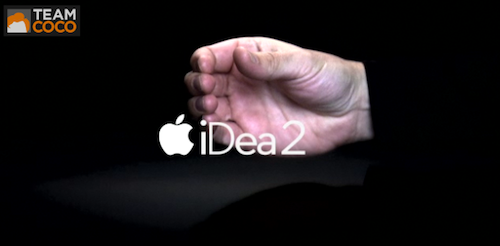
Brought to you by the minds of Conan O’Brien and TeamCoco, the iDea is the latest product in Apple’s multitouch line-up – except it’s not clear what it is, yet. Clearly inspired by Apple’s latest iPad 2 promo videos and ads, the iDea commercial touches some key parts of Apple’s marketing machine: gestures, voiceover, higher price point for bigger model, thinner design in the second-gen version. It’s got everything the Apple marketing team would be proud of.

Check out the video below. [via TUAW]
Read more


Apple Q2 2011 Financial Results: $24.67 Billion Revenue, 4.69 Million iPads, 18.65 Million iPhones Sold

Apple has just posted their Q2 2011 financial results. The company posted revenue of $24.67 billion, with 4.69 million iPads sold, 18.65 million iPhones and 3.76 million Macs. Wall Street consensus estimate was EPS of $5.36 and revenue of $23.34B. Mac sales saw a 28% increase over the year-ago quarter, while with 9.02 million iPods sold Apple saw a 17% unit decline. Overall, the company posted quarterly revenue growth of 83% and profit growth of 95%. International sales were 59% for the quarter, with Asia and Pacific regions featuring a 182% increase year over year. The reported iPhone sales were stronger than expected by most analysts, with a 113% increase year over year. iPhone revenues, however, grew faster than sales with a 126% increase [source]. Overall, this was the biggest non-holiday quarter in Apple’s history.

With quarterly revenue growth of 83 percent and profit growth of 95 percent, we’re firing on all cylinders,” said Steve Jobs, Apple’s CEO. “We will continue to innovate on all fronts throughout the remainder of the year.

In Q1 2011, the company posted a record revenue of $26.74 billion with 7.33 million iPads sold, 16.24 million iPhones and 4.13 million Macs. In the year-ago quarter, Apple posted revenue of $13.50 billion and net quarterly profit of $3.07 billion. The company sold 2.94 million Macs, 8.75 million iPhones and 10.89 million iPods during the quarter.

Apple will provide a live streaming audio feed of its Q2 2011 financial results conference call at 2:00 PM Pacific, and we’ll update this story with the conference highlights. Read more


Turn an Old iBook into an iPad Case

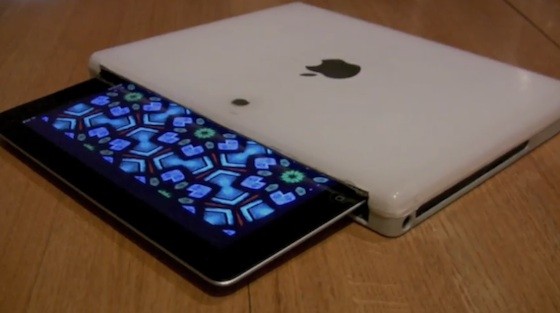
Many people with broken computers either throw them away, or send them to a recycling program. Why not keep your old iBook and use its shell to make a one-of-a-kind iPad case? Sounds difficult, right? Gary Katz, who created things such as the Personal Shoebox Apple Store and The Apple Museum - 30 Years in 2 Minutes, shows you how and it’s not that difficult. All you need is an old iBook, a Dremel tool and some free time.

Demo video after the break. Read more


Reminder: Apple Q2 Financial Results Today – 5 PM ET

Later today starting at 5:00 PM ET (2:00 PM PT) Apple will hold the Q2 2011 earnings call to announce their financial results, shortly after the markets close. An audio-only live streaming will be available here. We will offer a breakdown of the results and have a post in the homepage with continually updating notes from the earnings call.

In Q1 2011, the company posted a record revenue of $26.74 billion with 7.33 million iPads sold, 16.24 million iPhones and 4.13 million Macs. Today’s financial results will offer an insight into Verizon iPhone sales, which were rumored to be “low” and “under Apple expectations”, whilst AT&T has announced this morning 3.6 million iPhone activations in the first quarter. AT&T also revealed 322,000 3G tablets were sold in the quarter, but didn’t specify whether or not they were Apple iPads. Notes from Apple’s lawsuit against Samsung also indicated the company sold 60 million iPod touches since 2007, 19 million iPads and 108 million iPhones by March 2011. Considering Apple previously revealed 15 million iPads were sold from April to December 2010, analysts are expecting a minimum of 4.2 million iPads sold in the quarter. Analysts polled in the past weeks also predicted Apple might have sold nearly 20 million iPhones in the second fiscal quarter.

Tune in at 5PM ET for a full breakdown of the financial results and live updates from the earnings call.


Apple Cracking Down On “Pay-Per-Install” iOS Apps?

Following speculation about Apple using a new App Store ranking algorithm to better promote apps by ratings and “active usage” rather than raw download numbers, TUAW reports today Apple is also effectively banning from the App Store the so-called “pay-per-install” apps – basically, applications (usually games) that let users get access to virtual goods by downloading another app, instead of paying a fee or unlocking features with in-app purchases. This practice has apparently caught the attention of Apple and the App Review Team, and several developers are reporting they’re being notified of the rejection of their software from the Store.

According to Tapjoy, several developers within their network are receiving rejection notices from Apple because their applications feature a pay-per-install promotion.

It appears Apple is somehow enforcing section 3.10 of the App Store Review Guidelines, which states:

Developers who attempt to manipulate or cheat the user reviews or chart ranking in the App Store with fake or paid reviews, or any other inappropriate methods will be removed from the iOS Developer Program.

Clearly, Apple isn’t happy with this freemium model of apps granting virtual currency and goods in exchange for another application downloaded from the Store, and we guess it’s for two reasons: a) the system inevitably “cheats” the App Store charts by inflating downloads of an app not because of quality, but because of promised benefits; b) Apple would rather see developers implementing in-app purchases, which return the company a 30% off every purchase.

As usual, Apple has every right to change the rules in its “walled garden.” In the meantime, Tapjoy, the biggest network for pay-per-install apps, says “the system is misunderstood” and that the model is actually “is beneficial to users, advertisers, and developers.”


Full Analysis Of Apple’s Lawsuit Against Samsung

Full Analysis Of Apple’s Lawsuit Against Samsung

As we saw in the article about iPod touch, iPad and iPhone sales, Nilay Patel’s rundown of the Apple / Samsung lawsuit is an interesting read full of details. I’d like, however, to link back with a dedicated post – you really shouldn’t miss Patel’s detailed analysis of the lawsuit.

So now that Apple’s made its case, what does it want the court to do? Simple — it wants Samsung to pay up for the infringements in the past and stop infringing in the future. Specifically, Apple’s asking the court to permanently forbid Samsung and its various divisions and suppliers from ever infringing Apple’s claimed IP again, as well as triple damages for patent infringement, any wrongful profits Samsung might have gained from using Apple’s IP, some punitive damages, money for corrective advertising, and the cost of Apple’s attorney’s fees. That’s all pretty standard stuff, but it’s all very dependent on the claims themselves — and by the time a judge or jury is deciding on damages, the claims will have been argued into something very different. That’s years from now.

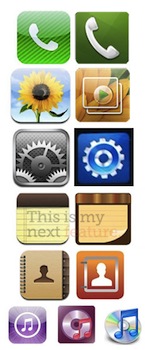
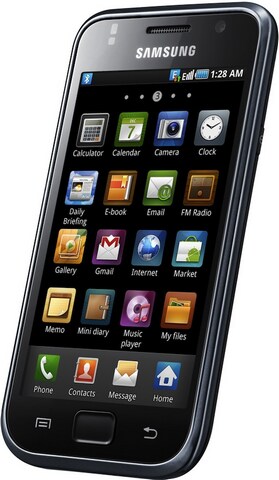
Much has been said about Samsung’s intention to “copy” the iOS style with is TouchWiz UI, and it’s pretty clear from the lawsuit that, even if Samsung is a key partner in Apple’s supply chain for iOS devices, Apple will do everything necessary to protect its intellectual properties and patents. The PDF of the document filed in the Northern District of California is available here.

Permalink

Apple Sues Samsung Over Galaxy “Look & Feel”

As reported by the Wall Street Journal, Apple has filed a lawsuit against Samsung on April 15 in the Northern District of California claiming that the South Korean company copied the “look and feel” of iPhones and iPads with its Galaxy devices – smartphones, tablets and media players.  A very few details are provided in the original report, but the WSJ claims the lawsuit indicates products like the “Galaxy S 4G,” “Epic 4G,” “Nexus S” and “Galaxy Tab” are violating Apple’s intellectual property.

Rather than innovate and develop its own technology and a unique Samsung style for its smart phone products and computer tablets, Samsung chose to copy Apple’s technology, user interface and innovative style in these infringing products,” the lawsuit said.

Representatives of Apple and Samsung didn’t immediately respond to requests for comment.

Samsung is one of the big players in the current Android landscape – the company came out last year with a 7-inch tablet and recently announced two new models (Galaxy Tab 8.9 and 10.1) that will also support Android’s Honeycomb 3.0 update. The relationship between Apple and Samsung is quite complex, as the South Korean tech giant makes the processors that go into iPhones and iPads sold by Apple. Several rumors in the past pointed to Apple willing to move the production of A4 and A5 CPUs away from Samsung (the iPad 2’s A5 CPU comes from Samsung), and this lawsuit might be a sign of things changing between the two companies. This lawsuit could also imply Apple is targeting Android indirectly by suing OEMs instead of Google itself – manufacturers like HTC, Samsung and Motorola are free to use Android, but they usually apply their custom graphical skins to differentiate their products. Apple is suing Samsung, a manufacturer of Android-based devices which applied its custom TouchWiz user interface to Android. TouchWiz, however, was also used on proprietary and Bada-based devices, but Apple is suing over the “look & feel” of the Android Galaxy line. The Wall Street Journal doesn’t specify whether or not TouchWiz was mentioned in the lawsuit.

A few weeks ago, Apple also sued online retailer Amazon over the usage of the term “App Store” in its new Android digital marketplace. Read more