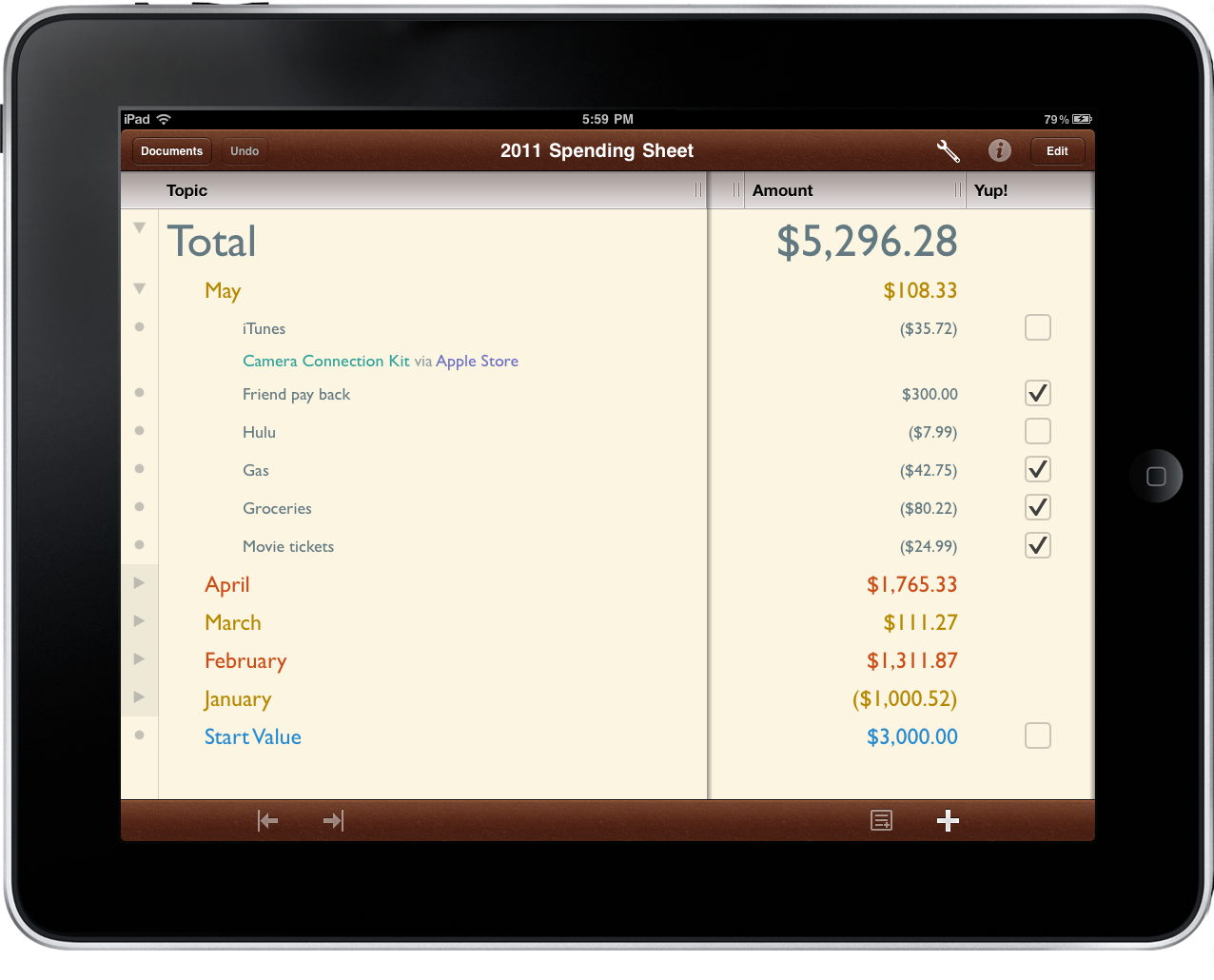
OmniOutliner for iPad Tutorial: Learning the Nuts & Bolts by Tracking Expenses

When The Omni Group brought OmniOutliner to the iPad, they didn’t just create an outlining app for text and field notes. While useful for preparing research, taking notes, and organizing ideas, OmniOutliner can adapt to a variety of needs and circumstances with relative ease. Combined with a personal desire for customization, OmniOutliner can be tailored to solve a variety of creative problems such as the one we’re looking at today.

The flexibility in OmniOutliner can be admired when we apply a real world scenario such as tracking your daily spending. Mint might be useful for telling you how you spend your money, but nothing beats your own checklist when it comes time to compare the month’s expenditures against a bank statement. Writing your purchases down enables you to catch maintenance charges, find fraudulent activity, and become better aware of your current financial status. With paper likely being a rarity in our lives thanks to the iPad, OmniOutliner fits the bill nicely.

The tutorial past the break will teach you how to modify a provided template to your liking; you’ll learn how styles work in OmniOutliner; we’ll cover date, number, and pop-up columns; and lastly we’ll put it all together to make something terrific. Even if you have zero interest in tracking your spending, this tutorial will help you learn quite a bit about how OmniOutliner’s features fit together quite beautifully.

Read more


iOS 5 To Feature Direct Twitter Integration?

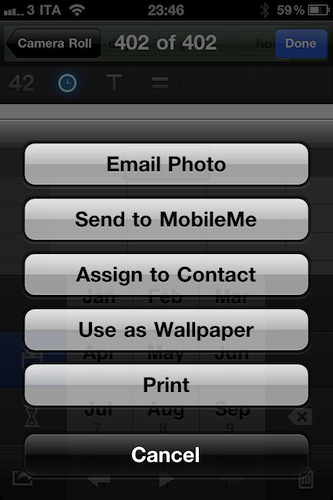
Following today’s news on iOS 5, Lion and iCloud announcements at the WWDC keynote on June 6, TechCrunch reports Twitter’s upcoming photo service, reported by various blogs yesterday and rumored to offer a similar service to Twitpic, yfrog and others, will be directly integrated into iOS 5. The new sharing option will reportedly allow users to instantly send a photo to Twitter like they can already do with videos and YouTube. Provided they have logged into Twitter from the Settings or a specific web view, iOS 5 will sport a new sharing menu to beam photos directly to Twitter, without using a third-party client.

We’ve heard from multiple sources that Twitter is likely to have a big-time partner for such a service: Apple. Specifically, we’re hearing that Apple’s new iOS 5 will come with an option to share images to Twitter baked into the OS. This would be similar to the way you can currently share videos on YouTube with one click in iOS. Obviously, a user would have to enable this feature by logging in with their Twitter credentials in iOS. There would then be a “Send to Twitter” option for pictures stored on your device.

Internal builds of iOS 4 from last year confirmed Apple was testing Facebook integration, but Twitter was never spotted in the hidden settings and code strings, at least not in the way TechCrunch claims iPhone and iPad owners will be able to share media from the Camera Roll. It’s likely that iOS 5 will bring the Facebook option back, integrate Twitter and perhaps even Flickr, but it’s too early to tell. Code strings found in the iOS 4.3 suggested Apple was working on two new features called MediaStream and Photo Stream, which, according to several reports, were targeted at letting users instantly share photos and videos with their friends using Apple’s new cloud system, now officially known as iCloud. Currently, Twitter has native apps for the Mac, iPhone and iPad available for free on the App Store.

A screenshot of an iOS 4 build featuring a Facebook preference panel in the Settings.app:

Update: Daring Fireball’s John Gruber hints at something bigger coming with Twitter integration in iOS 5:

So close to the bigger story, but yet so far. Imagine what else the system could provide if your Twitter account was a system-level service.


Lodsys Starts Filing Lawsuit Against App Developers

With a series of blog posts published earlier today, Lodsys has confirmed [via MacRumors] that they’ve started filing lawsuits against app developers allegedly infringing patents related to in-app purchases and upgrade links in their mobile applications. Lodsys initially said that they would give developers 21 days to license the patents before filing any lawsuits, but the firm decided to change its schedule in order to defend against Apple’s legal response, which showed support for iOS developers and claimed third-party “app makers” were not infringing any patent as Apple is already licensing patents from Lodsys.

Why did Lodsys sue some App Developers on May 31, 2011

Lodsys chose to move its litigation timing to an earlier date than originally planned, in response to Apple’s threat, in order to preserve its legal options.

As for why they have decided to target small, indie developers who don’t have the resources to legally defend themselves, Lodsys writes:

Why are you targeting Apple developers or Android developers? Why are you picking on small developers who cannot defend themselves?

This story is about accountability for actions. If you are a Developer, it’s about knowledge about the scope and risks of your own business.

Lodsys has only one motivation: we want to get paid for our rights.

Lodsys also posted a response to Apple’s claims that third-party developers using Apple’s SDK and agreeing to the company’s terms are not infringing patents from Lodsys. They company also says they’ve sent a letter to Apple’s legal team, which Apple can publish in its entirety if they want to.

The letter was very surprising as Apple and Lodsys were in confidential discussions and there was clearly disagreement on the interpretation of the license terms of Apple’s agreement.  Before, during and after these interactions, Lodsys has carefully considered this issue and consulted several legal experts to consider Apple’s claims.  We stand firm and restate our previous position that it is the 3rd party Developers that are responsible for the infringement of Lodsys’ patents and they are responsible for securing the rights for their applications.  Developers relying on Apple’s letter do so to their own detriment and are strongly urged to review Apple’s own developer agreements to determine the true extent of Apple’s responsibilities to them.

Lodsys previously explained that usage of in-app purchases would cost developers 0.575% of their US revenue over the period the technology was implemented – for example, an app that generates $1 million in revenue  in one year would pay $5,750 to Lodsys. Finally, Lodsys says they’ll send $1,000 as reimburse to developers hit by the lawsuit if the whole story turns out to be wrong:

While it is true that Apple and Lodsys have an obvious dispute about the scope of Apple’s license to the Lodsys Patents, we are willing to put our money where our mouth is and pay you something if we are wrong.  Therefore, Lodsys offers to pay $1,000 to each entity to whom we have sent an infringement notice for infringement on the iOS platform, or that we send a notice to in the future, if it turns out that the scope of Apple’s existing license rights apply to fully license you with respect to our claim relating to your App on Apple iOS.

As many previously suggested after Apple’s response, the story is far from over and Lodsys appears to be pursuing its agenda by suing developers that don’t agree to pay licensing fees. Several bloggers broke down Lodsys’ patent claims in the past weeks, and the EFF even came out and said Apple should stand up for its developers.

Update: Florian Mueller of FOSSpatents tweets the names of the companies and developers sued by Lodsys today.


Apple Releases Security Update To Remove Mac Defender

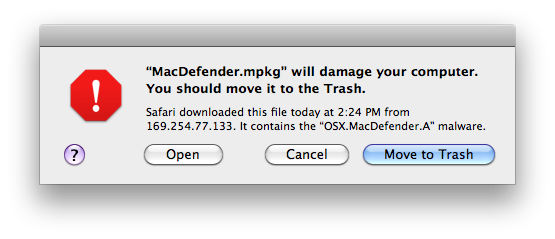
The promised software update to automatically find and remove known variants of the Mac Defender malware has just been released by Apple and it’s now available in the Software Update panel or Downloads website. The KB article HT4657 explains Apple has added a “OSX.MacDefender.A” definition to the malware check within File Quarantine. On Mac OS X 10.6.7, the installation process of the security update “will search for and remove known variants of the MacDefender malware”. Users will also be notified after a MacDefender variant is removed, and Apple offers more details and information in this article as well.

Mac OS X malware list is now updated daily in the background without the need of a manual software update:

Apple maintains a list of known malicious software that is used during the safe download check to determine if a file contains malicious software. The list is stored locally, and with Security Update 2011-003 is updated daily by a background process.

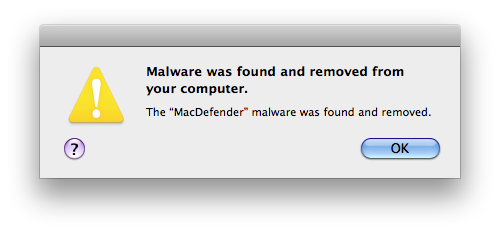
Security Update 2011-003 provides additional protection by checking for the MacDefender malware and its known variants. If MacDefender malware is found, the system will quit this malware, delete any persistent files, and correct any modifications made to configuration or login files. After MacDefender is identified and removed, the message below will be displayed the next time an administrator account logs in.

Mac OS X 10.6.8 was rumored to be the software update to include a fix for Mac Defender, but it’s likely that Apple also pushed a security update for users that will keep running the older 10.6.7 Snow Leopard version, with 10.6.8 getting the Mac Defender fix built-in. Read more


iCloud To Feature Films and TV Shows Too?

After today’s press release that confirmed Apple will hold a WWDC opening keynote on Monday, June 6, to officially unveil Mac OS X, iOS 5 and iCloud, Cnet reports the launch of the new cloud service from Apple next week may see a last-minute surprise that will make movies and TV shows available on the online “locker”. No details on how users would be able to upload, stream or purchase films and TV shows they don’t own have been posted, but it sounds like iCloud would provide a solution to store files on Apple’s servers to stream them later to a variety of devices.

Feature films could be part of Apple’s iCloud launch next week.

In the past several weeks, Apple executives have stepped up their attempts to convince some of the major Hollywood film studios to issue licenses that would enable Apple to store its customers’ movies on the company’s servers, two sources close to the negotiations told CNET. Apple began discussing a cloud service with the studios over a year ago.

An Apple spokesman declined to comment.

Cnet also reports content providers and Hollywood studios will be harder to convince than record labels and publishers, mainly because of the deals that in the US tie some studios exclusively to a cable company that airs films and shows. For instance, Warner Bros. Pictures, 20th Century Fox, and NBC Universal have an exclusive distribution deal with HBO that would prevent Apple from making their films available through iCloud immediately. As Time Warner’s CEO Bewkes (Time Warner is parent company of HBO and Warner Bros) has made several positive remarks on the new Ultraviolet video standard in the past, however, industry sources claim a deal with Apple and other cloud services could get done, and the exclusive HBO deal reworked to accommodate more distribution methods.

So if Bewkes is a believer what is the holdup? Film-industry sources have say that there’s nothing to worry about, that a deal with Time Warner to relax the HBO window will get done. But can something be completed before June 6?

Whether it can or not, Apple could still roll something out with the other three studios that are without HBO blackout agreements: Disney, Paramount Pictures and Sony Pictures.

Apple has officially announced the iCloud name today, referring to it as “upcoming cloud services offering” that seems to suggest it will go beyond music to offer a broader set of tools for online sync and storage. With the launch of the Apple TV 2nd-gen last September, Apple began offering rentals from ABC and Fox at $0.99 only through streaming, as the Apple TV doesn’t allow for local movie storage.


Pulp for Mac 2.0 Released with Cloud Sync

Times, the visual news reader for Mac that came to the iPad last year, received a major update earlier today which sees the application becoming Pulp for Mac 2.0 following the re-branding on the iPad version, and the introduction of a new cloud sync service to keep settings, articles and sources in sync across the Mac client and the tablet counterpart. I’ve been testing the new Pulp for Mac for a few months, and I’m positively impressed with the quality of cloud sync and reading experience the Acrylic Apps developers have built into this latest version. First off, the new Mac app looks just like Pulp for iPad, only running on a Mac: if you followed the development of Times / Pulp with our previous coverage, you know what to expect: you can create pages to organize content sources by topic, organize feeds and articles with different layouts, as well as import websites from Google Reader if you don’t feel like entering a website’s name manually (which takes seconds, by the way). More importantly, the release of Pulp for iPad brought the possibility of reading articles with the Magic Reader, a feature that strips away all the clutter from webpages and displays truncated RSS articles in their entirety without any manual fiddling. Pulp for Mac does everything the iPad version did, it’s got the shelf to save articles for later and syncs everything via the cloud.

The cloud service is free, and can sync ”your pages, feeds, read articles, and other settings in sync on all of your Macs and iPads”. It’s that simple: every change that’s either made on the iPad or Mac is pushed to the cloud instantly, and received on the second device in seconds. I have tested this with articles, pages and the shelf interface and it worked really well. The cloud sync can be enabled or disabled in the Settings.

I don’t particularly appreciate the page-curling effect on the Mac as I believe it wastes too much real screen estate, but the rest of the interface is really minimal, elegant, and easy to scan through. Pulp can’t be compared to other news readers like Flipboard that plug into your social streams to deliver a magazine-like experience – instead, Pulp is more focused on single websites and RSS, and on letting you build a personalized newspaper that’s now in sync with the iPad, which also received a Pulp updated today to version 1.3. If you’re already a Pulp for iPad user, you should check out the free trial for Mac and see how cloud sync and the new app work for you. If you don’t own Pulp, I still recommend you start off with the iPad version, and later consider an upgrade to the desktop application which, by the way, is an excellent port of the iPad app.

Pulp for Mac is available at $9.99 in the Mac App Store.


Potion Factory’s The Hit List 1.0 Now Available

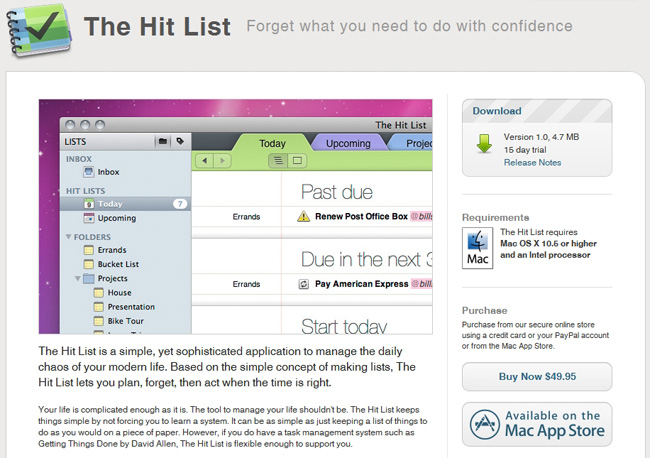
A unicorn has been born at the Potion Factory because The Hit List just went 1.0 and is ready for download via Potion Factory’s site (with a 15 day free trial) or the Mac App Store for $49.99. Back in 2009, people who purchased the MacHeist bundle got a license for the app when it was in beta and that license will still work today.

Many people doubted that it would ever see an official 1.0 release, but Andy Kim said “This, its iPhone companion app, and its sync service were the single most difficult undertaking of my life so far bar none. I hope that it won’t dissappoint and I hope that it will help you become more productive by taking the chore out of keeping track of what to do.”

More screens and iPhone news after the break.

Read more


Apple Releases iWork for iPhone

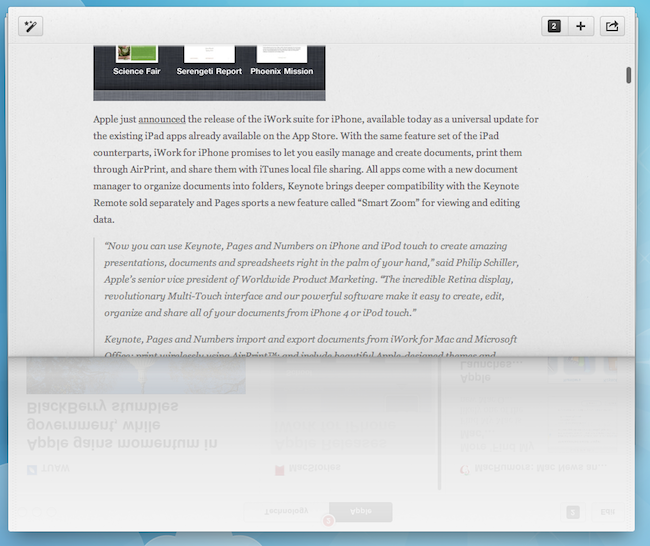
Apple just announced the release of the iWork suite for iPhone, available today as a universal update for the existing iPad apps already available on the App Store. With the same feature set of the iPad counterparts, iWork for iPhone promises to let you easily manage and create documents, print them through AirPrint, and share them with iTunes local file sharing. All apps come with a new document manager to organize documents into folders, Keynote brings deeper compatibility with the Keynote Remote sold separately and Pages sports a new feature called “Smart Zoom” for viewing and editing data.

“Now you can use Keynote, Pages and Numbers on iPhone and iPod touch to create amazing presentations, documents and spreadsheets right in the palm of your hand,” said Philip Schiller, Apple’s senior vice president of Worldwide Product Marketing. “The incredible Retina display, revolutionary Multi-Touch interface and our powerful software make it easy to create, edit, organize and share all of your documents from iPhone 4 or iPod touch.”

Keynote, Pages and Numbers import and export documents from iWork for Mac and Microsoft Office; print wirelessly using AirPrint™; and include beautiful Apple-designed themes and templates. All iWork apps now include improved document management with thumbnail images that let you find your files quickly, organize them and group them into folders using intuitive gestures. From the Tools button in the toolbar, you can easily share any presentation, document or spreadsheet without leaving the app.

The three apps – Pages, Numbers and Keynote – retain the same feature set seen on the iPad, with the addition of document manager in the 1.4 universal update and some iPhone-specific views and zoom functionalities to make sure large documents can be edited and viewed easily on the iPhone’s smaller screen. Numbers, for example, comes with the same special keyboards of the iPhone, but places the function toolbars on top. In Pages, media, charts, tables and shapes are accessible from a Camera Roll view and file picker that’s similar to what already happens on the iPad, only smaller.

Check out more screenshots and full press release below. Read more