Apple Releases iTunes 10.5.3

Following iBooks 2.0, iBooks Author and iTunes U for iOS, Apple just released a new version of iTunes, 10.5.3. We’re downloading the update to get our hands on a proper changelog but it’s likely that this new version will simply bring support for textbooks and, perhaps, manual syncing of books created through iBooks Author.

Update: iTunes 10.5.3 does indeed enable textbook syncing to iPads.

iTunes 10.5.3 allows you to sync interactive iBooks textbooks to your iPad. These Multi-Touch textbooks are available for purchase from the iTunes Store on your Mac or from the iBookstore included with iBooks 2 on your iPad.

iBooks textbooks are created with iBooks Author — now available as a free download on the Mac App Store.

iTunes 10.5.3 should hit Software Update shortly; a direct download is available on Apple’s website here.


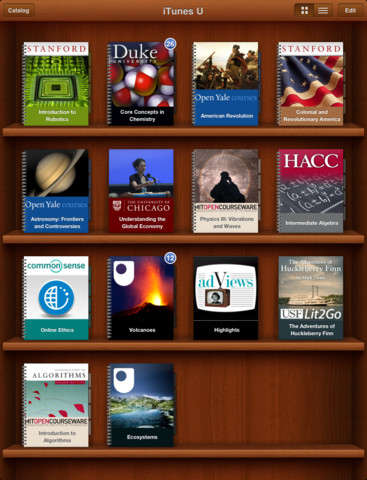
Apple Releases An iTunes U App

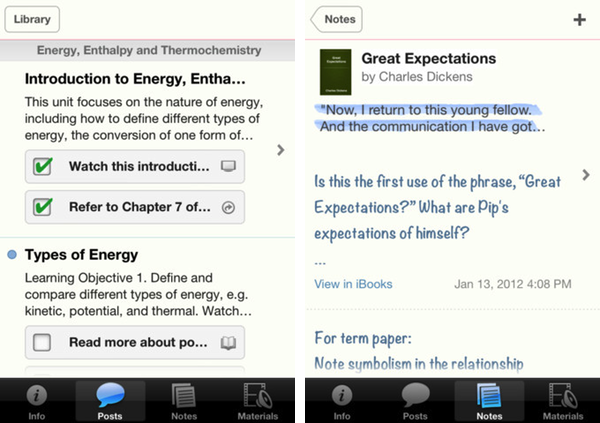
Apple has just announced and released the iTunes U App for iPhone and iPad. It’s a new app that lets teachers manage their iTunes U course and an app that helps students track all the content, assignments and messages from the courses that they study. iTunes U gives teachers the ability to customise their topics that they teach, give students information about office hours, post messages to their class and give students assignments.

The all-new iTunes U app enables students anywhere to tap into entire courses from the world’s most prestigious universities. -Eddy Cue

Effectively this new iTunes U app is similar to the various content management systems that are available for universities and other educational institutions. It’s fully featured with all the various video lectures, documents, apps and books available from within the app along with messages from teachers, the syllabus and even iBooks integration. In effect, it could be a great companion for any teacher or student. Over 100 courses have currently been created with the new iTunes U app from various universities and colleges across the US and further to that iTunes U is now available for K-12 institutions as well.

With the iTunes U app for iPad, iPhone and iPod touch, those barriers no longer exist. Students anywhere can take an entire course with complete access to all course materials right at their fingertips. With the iTunes U app, students are able to access new books right from within the app, and any notes taken in iBooks® are consolidated for easy reviewing.

Jump the break to view Apple’s press release on iTunes U for iOS. iTunes U for iOS is available here.

Read more


iBooks 2.0 Now Available

Following the announcement at the media event in New York City, Apple just released a major new version of iBooks, iBooks 2.0. As we detailed in our overview, iBooks 2.0 is mainly focused on enabling textbook support - Apple has cut deals with a series of publishers to bring iBookstore-based textbooks to the United States, and iBooks 2.0 brings full support for books created through the new Mac app, also coming today, iBooks Author.

From the changelog:

  • Experience gorgeous Multi-Touch textbooks designed for iPad
  • iBooks textbooks are filled with interactive features, diagrams, photos, and videos
  • Tap to dive into images with interactive captions, rotate 3D objects, swipe through image galleries, watch videos in full screen, and more
  • Use a finger as a highlighter when swiping over text in a textbook
  • Take advantage of Study Cards to help you memorize important highlights, notes, and glossary terms
  • Tap glossary terms to see definitions of key topics and concepts without leaving the page

It doesn’t look like iBooks’ original book and PDF reading functionalities have gone through any changes in this version. Textbooks downloaded from the iBookstore are placed in the same “Books” collection as regular titles; upon downloading a textbook on iBooks 1.5, the app will ask you to update to the latest version. Read more


Apple Announces “iBooks Author” Mac App, Available For Free Today

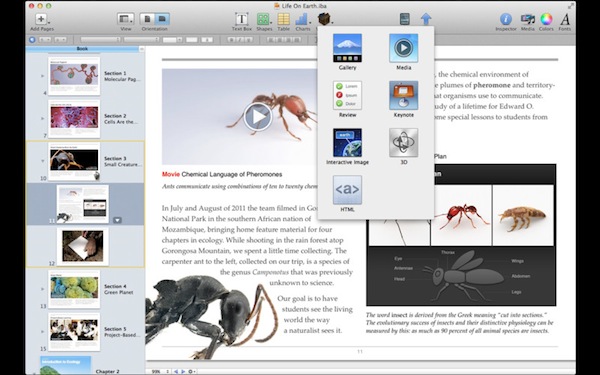
At its education media event in New York, Apple’s Phil Schiller just announced iBooks Author, a new Mac app for authoring books. From an intuitive interface that takes advantage of the desktop’s real screen estate, authors will be able to create and manage interactive books to use in the new iBooks 2, also announced and released today.

iBooks Author falls in line with previous speculation on a “GarageBand for eBooks”, and we’ll update this story with more details as we get them. From a demo offered on stage at the Guggenheim Museum, iBooks Author looked fairly impressive. Described by attendees as a “WYSIWYG application for building eBooks”, iBooks Author comes with a template chooser that makes it easy to get started on a new book project. Authors will then get access to a variety of tools in an interface that resembles Pages and Keynote with various controls to manage media, lay out text with drag & drop controls, and more. The automatic lay out of text seemed especially reliable from the first demo, with Apple noting that the experience they formed in making interactive animations in Keynote served as a foundation for making beautiful, interactive books without programming. Those in audience noted a few similarities to Push Pop Press’ one and only eBook experiment, released earlier this year on the iPad.

Now anyone can create stunning iBooks textbooks, cookbooks, history books, picture books, and more for iPad. All you need is an idea and a Mac. Start with one of the Apple-designed templates that feature a wide variety of page layouts. Add your own text and images with drag-and-drop ease. Use Multi-Touch widgets to include interactive photo galleries, movies, Keynote presentations, 3D objects, and more. Preview your book on your iPad at any time. Then submit your finished work to the iBookstore with a few simple steps. And before you know it, you’re a published author.

iBooks Author is rich on content. Authors can drag & drop Keynote presentations onto the main window and have the animation load inline, or embed web content via HTML5 and JavaScript. With glossaries, images, video and an overall focus on clean, easy-to-use management of interactive content, Apple described iBooks Author as a “miracle” compared to old eBook authoring tools. iBooks Author even iBookstore support built-in, and a preview function to quickly send a work-in-progress file to an iPad for instant preview. Read more


Apple Unveils iBooks 2.0 and iBooks Textbooks

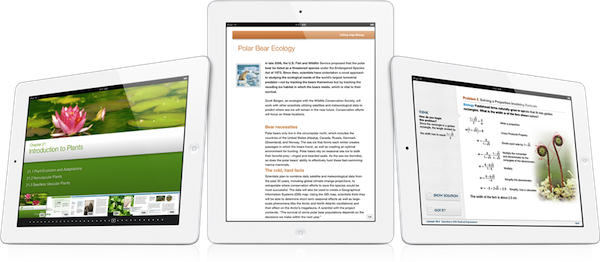
Apple has just announced iBooks 2 at its education themed event in New York. It’s the next evolution of eBooks for the iPad that Phil Schiller calls “amazing — graphic, fun, engaging”. Apple also announced iBooks Textbooks, a new initiative to bring digital textbooks to students thanks to content deals with publishers, starting with the United States.

The new iBooks will support multitouch gestures to move throughout an iBook which can be full of “rich, engaging interactive experiences” — even featuring 3D models so a student can see, for example, inside a cell. In the demo iBook, switching the iPad to portrait re-orientated the content so that the student could focus on reading the text. That way, books can have two completely different experiences, simply by re-orientating the iPad.

As you can see, authors have total freedom in terms of laying out text and graphics.

The iBooks can also bring up definitions that can include images; there is search within the book, links between pages, pages can have slideshows and more. As for those end of chapter review questions that are so common in textbooks, iBooks can now feature ”visual, interactive Q&A sections” that are much more engaging than the typical, long list of unengaging questions.

Note Taking

Another super critical study tool is highlighting and notetaking — your finger is always a highlighter. You just swipe. You can change the color. If you want to leave a note just tap.

With iBooks 2.0, Apple has brought a range of note taking features to help students with their study routine. There is everything from the traditional highlighting (just drag your finger over the desired text) to adding notes by tapping and then typing. An awesome feature here is that iBooks automatically takes all of your notes and highlights, chucks in any glossary terms and creates some study cards for revision.

I don’t think there’s ever been a textbook that made it this easy to be a good student.


Textbook Section in the iBookstore

These new textbook iBooks are now all available in a new ‘Textbook’ section that is on the iBookstore - all collated in one section. As is standard with iBooks, you can even get a free sample to see what the textbook is like.

These are stunning books. They take full advantage of what can be created.

Apple has worked with some partners and has brought some high school textbooks to the iBookstore and they’ll be available for $14.99 or less. Some of the publishers that have begun creating textbook iBooks includes Pearson, McGrawHill and Houghton Mifflin Harcourt - the three publishers that make 90% of textbooks. DK Publishing is also on board with four iBooks – they’re publishers of educational books for younger children. Finally, the E.O. Wilson Foundation is also on board, bringing the book ‘Life on Earth’ exclusively to the iBookstore - the first two chapters are available for free with the rest coming as they are completed for a “reasonable price”.

Of course, the authors can make these books and keep them up to date. But what’s most exciting is that it’s their book, for students. They keep it.


iBooks 2.0 will be available as a free update to the iBooks app today. Jump the break for Apple’s full Press Release.

Read more


New Twitter Clients

Justin Williams writes about the current state of Twitter clients for iOS:

What iOS needs is the Twitter equivalent to Adium: a well maintained, open source Twitter client that is targeted at the most hardcore and passionate users of both Twitter and the iOS platform.

That, of course, is easier typed than done. Many open source projects fail because of lack of vision or direction. Others fail because they are just badly engineered software that aims to shove every pet feature into a unified product. Projects like Adium succeed because there is an established hierarchy of managers, developers and contributors. Each release has a focus and direction much like a commercially produced project.

My first Twitter client was Twittelator Pro by Andrew Stone, which I installed soon after I got my first iPhone in 2008. After that, I switched to Twitterrific, which I kept until Tweetie came out. For a few months I bounced back and forth between Tweetie, Twitterrific and Birdfeed but, eventually, I settled with Tweetie 2. I loved Tweetie 2. It was the perfect Twitter client for my needs, it was fast and Loren was (is) a great guy. But then Twitter bought the app, started doing all kinds of crazy things to it, and the excitement wore off. I went back to Twitterrific, but it wasn’t the same – I had become very accustomed to Tweetie (now Twitter for iPhone) and the simplicity of Twitterrific was disorienting. Like Justin, I’ve always had a problem with inline DMs in Twitterrific.

Throughout 2010 and 2011 there’s also been a period when I went back to trying every Twitter client out there, including Twittelator Pro (again), but also Echofon, Tweetings, HootSuite, Osfoora, TweetList and TweetLogix. I was addicted to trying Twitter clients until Tweetbot came out and, as I wrote in my review, proved to be a Twitter app for iPhone I could once again fall in love with. I’ve been using Tweetbot for iPhone ever since, and the app keeps getting better on each release. Personally, I don’t agree with Justin’s point that Tweetbot is ”the best designed Android app available for iOS”, but this isn’t the main problem.

The real issue is that these days iOS Twitter nerds are left with Tweetbot and nothing else. Twitterrific clearly isn’t targeting power users – maybe a better expression would be “users that don’t just casually check on Twitter” – and Twitter for iPhone, well, let’s just say it’s not exactly focused on Twitter geeks anymore. How about the other clients? I see very few innovators around, and the only third-party app I’m excited about (again, except Tweetbot, which I use every day) is Twittelator Neue – Stone’s app has a good chance to reinvent a few things especially if it ever comes to the iPad. But looking at the whole Twitter software landscape today, it’s clear to me there isn’t the kind of verve and anticipation for new clients that we experienced three years ago, with developers constantly updating their clients, one-upping competitors in terms of features, and teasing new products that (sadly) never came to be.

In a scenario where the less popular Twitter clients are either a) maintained through bug fix releases or b) updated with minor features every once in a while, lacking major additions like iPad and Mac counterparts, I see a glimmer of hope in Tweetbot – Tapbots are always up to some great stuff – and services like Tweet Marker: available for free to developers to implement in their apps, Tweet Marker is the first step towards that kind of client-side unification whose lack made switching Twitter clients on a daily (or even hourly) basis so painful in 2009. Check out the apps that already support Tweet Marker, and note how they’re the same names that I’ve mentioned above.

Building an Adium-like model for the ultimate Twitter client might be a viable plan, albeit an elaborate one considering all the technical complexities and frequent changes behind the Twitter API. An ideal modern Twitter client for power users should have delightful and powerful iOS apps and an outstanding Mac client that makes it extremely easy to switch environments without user fatigue; you have to make sure the apps are always brought up to date with the latest Twitter features from Twitter itself and iOS 5 (I’m fairly sure the technologies and APIs behind AIM aren’t updated nearly as often as Apple releases new iOS betas), and when everything’s distributed for free you have to make sure you’ve got a dedicated, kick-ass team of contributors and leaders, or things start to get messy (and slow) because of updates, user support, feature request, and so forth.

So here’s another possible scenario. Let’s continue to diversify the offer of available Twitter clients, and settle with one app for power users. Justin doesn’t like Tweetbot, but perhaps one year from now Tweetbot will be available on more platforms with changes and tweaks that everyone will like and use on a daily basis, even Justin. Around that Twitter client for power users, I imagine a flourishing ecosystem of innovative Twitter apps that don’t simply focus on building an alternative to Tweetbot – a daunting task at this point – but provide a unique experience that can live alongside the main, full-featured client. I’m thinking Tweet Library, also by Tweet Marker’s Manton Reece: instead of just focusing on being the perfect regular client, Tweet Library’s built-in client is functional to the app’s real feature: curating tweets and archiving them. This is the path I believe developers should strongly consider for building Twitter-connected apps: focus on APIs, services and interactions with other software. Where’s the Twitter app that integrates with Evernote and lets you annotate tweets? Where is the app to run, manage and archive online polls exclusively via Twitter? Where’s the service that lets you use your custom vanity URL and get beautiful, real-time, reliable click analytics instead of the ugly mess that’s HootSuite?

You see where I’m getting at – I believe developers are (obviously) completely free of investing their time and resources into competing with Tweetbot, but on the other hand I don’t think focusing on other aspects of Twitter means admitting defeat. It’s easy to say “Tweetbot won” or “Twitterrific is the best” when, really, the story is much more complex than that and also goes back to a company that has shown a “peculiar” approach to guiding its own third-party developers.

Will we ever go back to the Birdfeed and Tweetie era? I don’t think so. Twitter is now integrated in iOS 5 and seeing massive growth because of it, thus justifying the prospect of creating an app “for power users” even less. Yet I can’t help but think about a time, not too distant from now, when the power users will finally settle on a single solution for their power-hungry needs, and let other developers innovate atop of the Twitter platform in disruptive new ways. The ideas, devices, APIs and users are waiting.

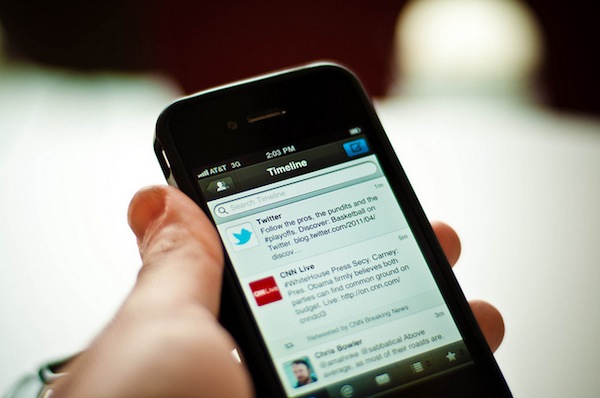
[Photo by Jorge Quinteros]


Reddit Client Alien Blue for iPhone Updated To 2.5

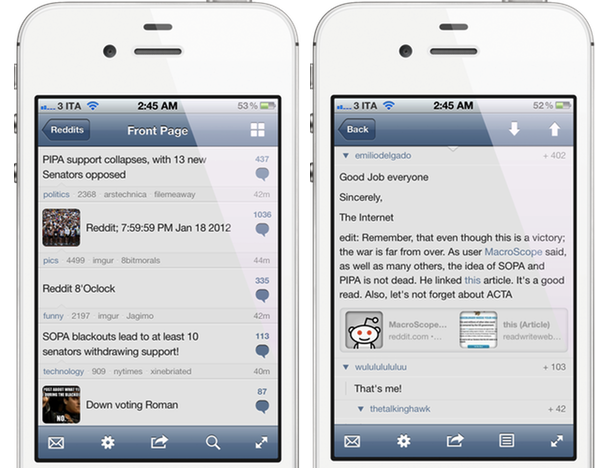
Alien Blue, my favorite iPhone app to access Reddit and see what the Internet has been up to, was updated to version 2.5 a few minutes ago. I have been beta testing the new version, and users of Alien Blue (which also comes in a separate “HD” version for iPad) will be pleased to know that several old annoyances have been fixed, and new features introduced to make browsing Reddit from an iPhone a much more pleasant experience.

Alien Blue, developed by Jason Morrissey, comes with a $1.99 in-app purchase that unlocks additional functionalities of the app including Canvas, a way to browse images posted on Reddit with a thumbnail-based interface optimized for touch. In Alien Blue 2.5, users who will unlock the Pro edition will also get access to sharper “retina thumbnails” on Retina Display devices (iPhone 4/4S, iPod touch) and comment link previews. If you usually “lurk” on Reddit just to check on the latest meme or #AdviceAnimal, being able to preview thumbnails at high definition should be a welcome addition for your Retina displays – sharper thumbnails also fit well in the app’s interface, and I’d recommend the upgrade just to avoid fuzzy images in the main list. With the same concept, any link posted in a comment thread will get a nice visual preview through the Pro upgrade – this can be quite useful to instantly know what you’re about to open from the comments, thus possibly skipping yet another Redditor’s Wife picture.

Alien Blue’s design has received a series of improvements in this update. Both the Posts and Comments screen have been revised, but I believe the sweetest “little touch” in AB 2.5 is the new “pull to refresh” animation, which I’ll let you check out by yourself without spoiling all the fun.

Alongside bug fixes, here are some of the minor improvements officially reported in the changelog:

  • Updated launch image
  • Ability to jump to subreddit directly from a post
  • Ability to jump to submitter’s details directly from a post
  • Auto-link shortening when sharing with Twitter
  • Voting status now reflects in the colour of the score

Alien Blue remains, in my opinion, the best way to check on Reddit from the iPhone and iPod touch, and I look forward to the changes introduced in this version to find their way onto the iPad as well. Alien Blue for iPhone is free (which is a great deal considering the features you’re getting anyway without paying), with a $1.99 purchase available in-app. As a side note, it appears the Mac version of Alien Blue, announced last year, is still “coming soon” according to the developer’s website.

Top image generated with iMeme for Mac.


Yoink 2.0 Brings Smarter Drag & Drop To Lion

Back in September I reviewed the first version of Yoink, a utility by Eternal Storms Software that greatly enhanced Lion’s drag & drop support by adding a virtual “shelf” to the side of your screen to store temporary files you needed to move elsewhere. From my review:

Yoink is a drag & drop assistant for Lion, in that it provides you with a virtual “safe zone” to temporarily store files — or rather, links to them — you want to move from one location (say your desktop) to another space or full-screen app. Yoink doesn’t “copy” a file, or multiple ones, to its shelf: it only acts as a bridge between the original file, and the destination of the drop.

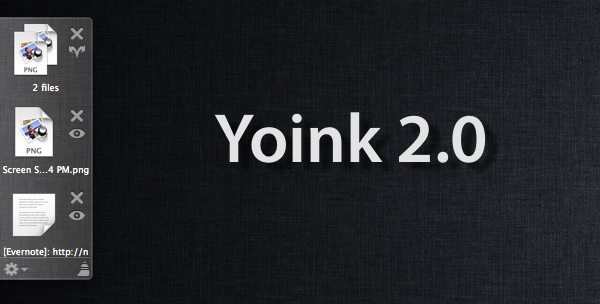
In its first version, Yoink was primarily meant to provide a better way to move files from the Finder to full-screen apps – that is the reason the app was built with Lion APIs from the ground up. Yoink 1.0 undoubtedly offered a quick and elegant way to move files around apps and desktops in an intuitive manner; Yoink 2.0, released today, is a huge step forward that now allows the app to accept almost any kind of input from OS X, from text to images and web clippings from any app.

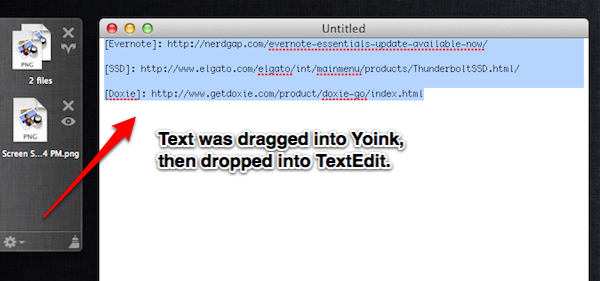
In accessing content from apps, Yoink has become more than a simple tool to temporarily store files that need to be moved around full-screen apps – think of  Yoink 2.0 as a secondary, visual clipboard that can accept almost any kind of file you throw at it. In my tests, besides dropping content from apps into Yoink’s shelf, I’ve copied links, text and images from Safari and Chrome, and successfully watched Yoink create text clippings and full copies of the images ready to be pasted anywhere on my Mac, both in the Finder and other apps. Rich text from a web browser is converted to .textclipping once imported in Yoink, and you can easily re-export everything to the Finder, or into another app that accepts text, such as TextEdit or Twitter’s compose window. Want to tweet a famous quote by The Beatles? Drag text into Yoink’s shelf, open your client of choice, and drop your previously copied text. How about quoting someone else’s words on your blog (and this is something I’ve been looking forward to)? Drag text into Yoink, fire up your blog’s editor window, drop text.

Yoink’s new drag & drop system works with almost any app  and any kind of content – you won’t be able to preserve the exact formatting of a rich text document when copying, but it surely works very well as a lightweight solution to quickly save plain text files.

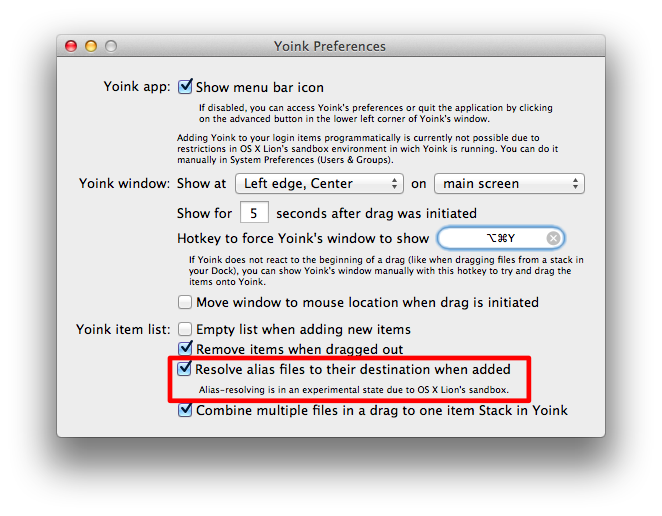
Yoink 2.0 brings a couple more interesting additions besides improved drag & drop. The interface has been redesigned to have more linen and the app can be assigned a keyboard shortcut; more positions for Yoink’s window have been added and files shouldn’t be lost anymore if they’re moved from their original location. One issue I had (and already reported to the developer) was with an alias I moved from Dropbox to my Desktop, which didn’t resolve correctly in Yoink and displayed a permission error. The error is likely happening because of some restrictions from Apple’s sandboxing technology or the fact that the alias came from Dropbox – Yoink 2.0 is capable of resolving aliases and, in fact, it worked fine with a file that was originally stored on my Desktop.

Last, Yoink now comes with File Stacks, a neat way to drag and drop multiple files into Yoink’s window and have the app combine them into one item in the shelf. This can be very handy if you’re dealing with multiple images and PDFs and you want to get them quickly out of the way.

At $2.99 on the Mac App Store, Yoink remains a fantastic way to enhance Lion’s drag & drop with an app that acts as a temporary scratchpad/visual clipboard for content that you want to copy, move elsewhere, or simple save for later. Highly recommended, you can get Yoink here.


Apple’s Education Event To Focus on iPad, K-12, “Teaching Tools” for Self-Publishers

Less than 24 hours away from Apple’s “education announcement” in New York City, Bloomberg weighs in reporting that the event, set to begin at 10 AM EST at the Guggenheim Museum, will be focused on iPad, digital textbooks for students from kindergarten to 12th grade (K-12) and self-publishers. Initially rumored to be about “textbooks” as suggested by Steve Jobs in the authorized biography by Walter Isaacson, speculation leading up to the even has seen different sources claiming Apple will have a broader set of announcements with textbooks, but also a strong iPad presence and new tools to create eBooks on the desktop. Specifically, Ars Technica referred to these tools as GarageBand for eBooks.

Bloomberg now claims Apple’s educational plans will be primarily focused on showing the potential of digital textbooks and iPads in schools:

The plans, to be unveiled by Apple Internet software chief Eddy Cue, are aimed at broadening the educational materials available for the iPad, especially for students in kindergarten to 12th grade, the people said. By setting its sights on the $10 billion-a-year textbook industry, Apple is using the tablet to encourage students to shun costly tomes that weigh down backpacks in favor of less-expensive, interactive digital books that can be updated anywhere via the Web.

According to Bloomberg, there will be announcements for both publishers and authors. Authors will be able to create new digital editions of their works using a modified version of ePub, a file format that is already used in the publishing industry. Bigger publishers will be able to create digital textbooks with embedded graphics and video, suggesting that rumors of a simple interface similar to GarageBand for managing media and content within an eBook might be correct after all. It is unclear whether Apple is preparing one or more “digital tools” for independent authors and large publishing companies, although Bloomberg noted:

Apple also wants to empower “self-publishers” to create new kinds of teaching tools, said the people. Teachers could use it to design materials for that week’s lesson. Scientists, historians and other authors could publish professional-looking content without a deal with a publisher.

If true, this would suggest the company has created an improved eBook creation tool atop of the ePub standard with different options for independent authors and publishers to distribute their creations digitally through iTunes, or, for instance, locally in a classroom. Teachers willing to collaborate with students on a week’s lesson clearly wouldn’t need the App Store or the iBookstore for distribution, which may lead to some interesting speculation about “textbook sharing” and a possible iCloud implementation, too.

Highly anticipated then quickly dismissed as “over-hyped”, Apple’s education event is shaping up to be an interesting milestone for the company in the field of education. The iPad has become Apple’s second best-selling device behind the iPhone, with the company expected to report record sales for the holiday quarter next week. In spite of the iPad and iTunes offering a variety of educational content in the form of apps, eBooks and iTunes U content, in two years of iPad Apple has yet to officially commit to education and schools as a viable market for the device. Schools and universities have adopted iPads with independent programs and initiatives; now Apple has a chance to unify its educational offerings with publishers deals, a clear policy for independent authors, new tools for eBook creation, and perhaps simpler distribution methods that don’t require iTunes in the classroom and will allow for educational discounts on volume purchases (which Apple is already doing).

We’ll be covering the news from tomorrow’s Apple event starting at 10 AM EST (7 AM Pacific time) here on MacStories.