
Bartender 1.2 Brings Full Mavericks Support, Drag & Drop Improvements

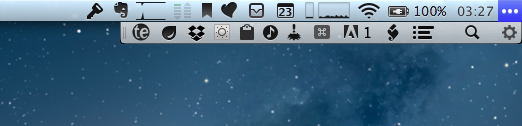
One of my must-have Mac apps, Bartender is a fantastic utility that helps you reduce clutter in the OS X menubar by grouping menubar icons into a single Bartender icon that can be viewed and closed at any time. From my previous coverage:

Providing its own custom bar to collect other icons from third-party apps, Bartender lets you organize your menubar apps while retaining the functionalities they come with. The app automatically finds third-party apps running in the menubar; it allows you to completely hide them, or show them in the Bartender bar. If you choose the latter option, your menubar apps will stil remain fully working with popover windows and keyboard shortcuts.

I rely on Bartender to keep a clean menubar that doesn’t show dozens of icons at once but that, at the same time, has running applications hidden out of view. There are some apps that I don’t need to be constantly looking at – such as Dropbox or Hazel – and with Bartender I can leave them running, but in an optional menubar that it’s there only when I need it. In this way, I can keep utilities that I use all the time (such as Evernote’s quick entry popup or Fantastical) in the main OS X menubar.

Bartender 1.2, released this week, adds full OS X Mavericks support and a number of minor improvements that, however, are welcome additions for daily Bartender users. For the upcoming Mavericks – set to be released this Fall – Surtees Studios added support for multiple displays and menubars, as well as reduced power usage to take advantage of Mavericks’ new power-saving technologies. I haven’t been able to test Bartender on Mavericks yet, but the app has never been a problem, in terms of performance and usage, on my mid-2011 MacBook Air running Mountain Lion, so I’m looking forward to seeing if differences will be notable on OS X 10.9.

Alongside bug fixes and improvements to the list of apps supported by Bartender, a feature that stood out to me is the possibility to correctly drag & drop files onto icons hidden by Bartender. In version 1.2, keeping apps like Droplr or CloudApp in the Bartender bar and dragging files from the Finder onto the Bartender icon will automatically reveal the hidden menubar, allowing you to keep dragging files onto the app you want. I have tested this with Droplr, and it works reliably.

I recommend Bartender to anyone who uses menubar apps and utilities on a daily basis. Keeping a clean menubar isn’t a beauty contest – I think it’s simply best to have the primary tools you’ll always need readily available, keeping those that are only seldom used out of sight, but still managed by a smart app. Bartender is smart, reliable, and on sale at $10 until September 30th. A free trial is also available from the developers’ website.
Apple: iPhone 5s and 5c Sales Top 9 Million Over Opening Weekend, 200 Million Devices Updated To iOS 7

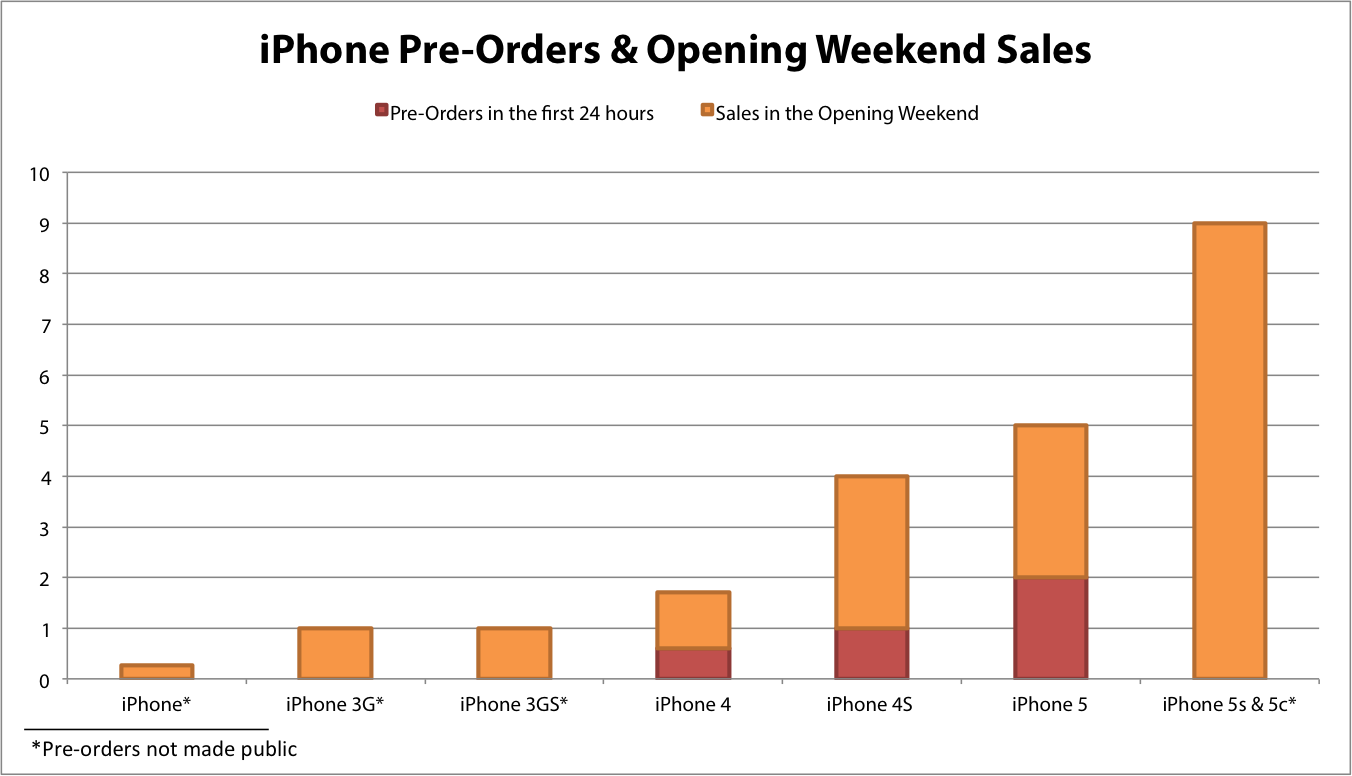
This morning, Apple issued a press release announcing that the iPhone 5s and iPhone 5c have sold more than 9 million units in their first three days of sales after launching on Friday in the US, Australia, Canada, China, France, Germany, Hong Kong, Japan, Puerto Rico, Singapore and the UK. Apple has also announced that iOS 7, released last Wednesday, has already been installed on over 200 million iOS devices (of the over 700 million that, according to Apple, have been sold to date).

This is our best iPhone launch yet―more than nine million new iPhones sold―a new record for first weekend sales,” said Tim Cook, Apple’s CEO. “The demand for the new iPhones has been incredible, and while we’ve sold out of our initial supply of iPhone 5s, stores continue to receive new iPhone shipments regularly. We appreciate everyone’s patience and are working hard to build enough new iPhones for everyone.

9 million units sold over the opening weekend is a new record for the company. Last year, Apple announced that the iPhone 5 topped 5 million sales over the opening weekend, with 100 million devices updated to iOS 6. In 2011, Apple sold 4 million iPhone 4S units in the first weekend, and, in 2010, they sold 1.7 million iPhone 4 units.

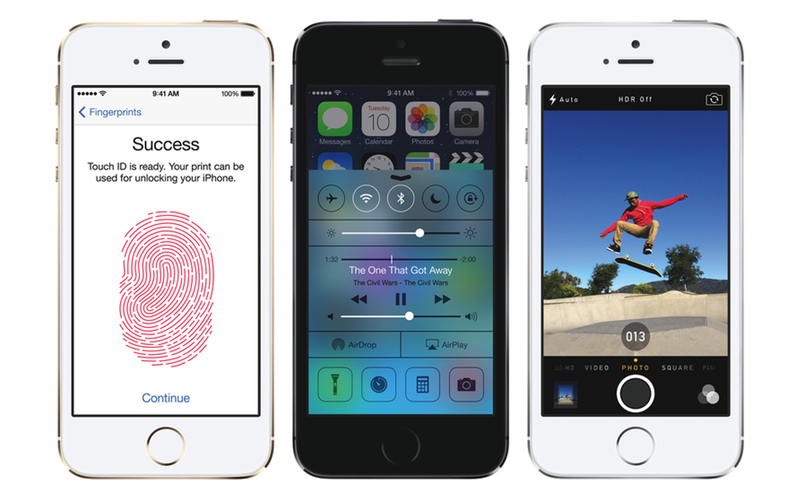
The iPhone 5s, iPhone 5c, and iOS 7 launched to positive reviews that mentioned the solid hardware construction and Touch ID feature on the new iPhones, and the modern design and new functionalities such as Control Center and improved multitasking for iOS 7. Both the iPhone 5s and 5c generated long lines at Apple retail stores around the globe, partially thanks to the lack of pre-orders for the iPhone 5s (for the iPhone 5c, there were online pre-orders, but Apple didn’t release official numbers).

Also of note in this year’s launch is the addition of China to the first round of countries, as well as the fact that, in today’s press release, there is no mention of a second round of countries. Apple also announced that ”over 11 million unique listeners have already tuned in to iTunes Radio since launch” with the most listened to song being “Hold On, We’re Going Home” by Drake.


Velocity

I never got into the idea of catching up on my read later queue through speed reading, but, for those who did, Velocity is a great choice.

I have been testing Velocity for the past month, and it comes with a clean, elegant UI made for iOS 7, Pocket and Instapaper integration, and even a built-in browser to add articles without leaving the app. In the speed reading view, you can tweak words per minute, switch themes (black is my favorite), and see how many minutes you have left in the title bar. It’s an extremely well-considered and functional app, which isn’t a surprise considering that the Quotebook guys made it.

If you like speed reading, Velocity is $2.99 on the App Store.

Permalink

Layer Cake

Justin Williams:

What we see today isn’t what we’ll see six months from now. Everyone is still learning to speak the modern iOS design language: Apple included. The folks in Cupertino built a completely new foundation for their mobile operating system in just a few months and are still working out how to best adapt their applications to speak the new language that foundation affords. It should be no surprise that many of Apple’s apps that are distributed through the App Store aren’t updated to take advantage of iOS 7 to its fullest. They’re trying to find the answers to the same questions designers outside of Cupertino are.

A great response to a shortsighted observation by Topolsky. iOS 7 – as also confirmed by Matthew Panzarino’s interviews with developers such as the NYT team and Evernote – will make conversions to Android extremely difficult and unlikely (unless you want to end up with poor interface decisions on both platforms, which is another problem).

Permalink


iOS 7 For Keyboard Power Users

Rui Carmo (via Michael Tsai) on iOS 7 and the new support for shortcuts with external keyboards:

Furthermore, to add insult to injury, the Spotlight key on my Logitech keyboard also stopped working. It takes me back to the home screen without toggling the search field, so I am now without any truly quick way to launch apps solely from the keyboard.

Finally, something happened to Bluetooth support in general — I’ve had three separate instances where my keyboard did not work at all, all solved by toggling Bluetooth off and on again, in the classic spirit of The IT Crowd.

The new Safari shortcuts that Rui mentions are welcome, and I wish that Google added that kind of keyboard support to Chrome (which is ready for iOS 7, but doesn’t have substantial new features yet). I have experienced the same issues that Rui brings up with my Logitech keyboard, and I wonder if this is a problem of iOS 7.0 that will be fixed soon or a real incompatibility of old Logitech keyboards with the new OS. I hope it’s not the latter, because I really like this keyboard.

In general, I’m not surprised that Apple hasn’t added many keyboard shortcuts to their apps yet. iOS 7 for iPad is rough in some spots, and power user stuff is the one that gets easily cut when you have to meet a deadline. The fact that third-party developers jumped on external keyboard integration gives me hope though, and I’m looking forward to seeing more shortcuts popping up in my favorite apps soon.

For iOS 7.1, it’d be awesome to see new multitasking shortcuts on the iPad.

Permalink

Initial Impressions of the iPhone 5s

I chose the Space Gray model over Gold and Silver[1], and I think the gray looks fantastic. The gray is maybe closer to stainless steel in tone, a darker tint than the aluminum finish of the silver model or of today’s MacBooks. The original batch of hands-on photos and renderings don’t do the color justice. I think “gray” downplays its premium look.

This is my first iPhone with the 4-inch Retina display and the difference is tremendous. Upgrading from the now stubby looking iPhone 4s, the 5s feels slim and tall. It’s featherlight, slick, and surprisingly more comfortable than I thought it would be. I haven’t had to think about pulling down the Notification Center or reaching too far to hit a back button.

It’s so light that I ended up purchasing one of Apple’s new leather cases just to give the phone a little extra grip. I do have mixed feelings about the leather case. As far as I can tell, it’s a plastic shell covered in a stiff (but ever so slightly plush) leather. The case doesn’t feel too different from a Smart Cover for the iPad. While it looks supple, it’s not. It’s shaped so that it very tightly snugs the phone. It’s such a tight fit that getting it out is an exercise in patience. I pried the corners back getting the phone halfway out, and used a pencil eraser maneuver the rest of it out through the camera hole, pushing on the glass. To their credit, Apple made a case that doesn’t add much bulk or weight to the iPhone 5s, but it’s not a case you will want to take on or off everyday.

Upon setting up the 5s, you’re presented with the same iCloud setup screens as usual. I opted not to restore a backup from iCloud, instead choosing only to sync other info like contacts and calendars. Afterwards you’re asked to set up Touch ID, the new fingerprint sensor that’s installed underneath the modest Home button. I didn’t think the instructions were clear enough, but I was already familiar with setup thanks to the numerous amount of hands-on videos from popular tech sites. Once activated, it really does work like magic. Other fingers don’t trigger the sensor, and it unlocks almost immediately. I’m still getting used to not swiping and typing in a pin.

Interestingly, the ring around the sensor on the Space Gray iPhone doesn’t match the gray body. Instead it’s jet black, darker than even the slate color on the previous iPhone 5. Unlike the Silver and Gold models, the black Home button does appear more translucent.

I pre-ordered an album on iTunes (just a fingerprint required) and it just worked. The natural next step for Apple would be to use Touch ID for EasyPay purchases. Michael Norton and crew touch on the idea for retail purchases during Episode 72 of The Impromptu.

I’ve taken a few selfies (I’d rather not share those) and the quality of the front facing camera is excellent, much improved from the 4s. The rear facing camera is spectacular: a dimly lit setting (overcast sky and closed blinds) appears slightly warmer and brighter in the photograph with hardly any grain. Photos taken outside are fantastic as usual. It was daylight by the time I walked out of the store, so I have to try out the upgraded flash and low light capabilities in the evening. I can’t say right now, but I’m expecting the 5s to be a very impressive little camera.

I was looking forward to giving the motion sensor a brief spin, but I haven’t noticed the Nike+ Move app in the App Store yet. I don’t know if that was slated to launch today or next week, but I’m looking forward to giving it a test and seeing what impact there is on battery life.

Lastly there’s the performance. It’s blazing fast. Everything is buttery smooth, and parallax scrolling doesn’t feel like something I have to turn off. Just how powerful the A7 chip is will become apparent down the road, as people start noticing how much faster it is to do things like export movies and photos with upgraded apps. The fact that Apple was able to double the processing speed over last year’s model (which was already twice as fast as the 4s) is impressive.


  1. While it’s true that the Space Gray model was the only available color at my carrier’s store, it was what I originally wanted. What I think is interesting is how Apple possibly underestimated interest in the Gold models, since they appear to be both in high demand and in limited supply at Apple Stores.  ↩

iOS 7 Updates: Twitter, Facebook, Yahoo Weather, and Google Chrome

Yesterday saw the release of thousands of apps optimized, enhanced, or, in some cases, completely redesigned for iOS 7. At MacStories, we highlighted several apps that were ready for the OS’ rollout such as Pocket, OmniFocus 2, or Instacast 4, and then we fired up iTunes – or simply waited for automatic updates to do their magic on iOS 7 – and checked out all the other apps that were also released yesterday. In this post, I thought I could offer a quick overview of iOS 7 updates from four big-name companies: Twitter, Facebook, Yahoo, and Google. Read more