Posts in news

Apple Releases iPhoto 9.1.2

A few minutes ago Apple released a minor update to iPhoto 9 – part of the iLife ‘11 suite – which includes new card themes, bug fixes and improves the overall stability of the app. The new version comes with fixes for toolbars not hiding correctly in fullscreen mode, as well as better formatting for the book, card and calendar themes. iPhoto 9.1.2 also contains fixes for old iPhoto 5 libraries not being upgraded to the new database, and design tools now accessible from separate Layout and Options buttons.

iPhoto 9.1.2 is available now in Software Update (106 MB download) or on Apple’s website. Full list of changes below.

  • Addresses an issue that prevented the Zoom slider from being accessible in Magnify (1-Up) view
  • Fixes an issue where Toolbars were not auto-hiding in Full Screen view
  • Search field now correctly performs an “includes” search when searching by text string
  • Fixes minor formatting issues with book, card and calendar themes
  • Message Size of emails now correctly updates when changes are made using the Photo Size menu
  • Addresses an issue that prevented some iPhoto 5 libraries from upgrading correctly
  • Multiple book pages can now be drag-selected when in All Pages view
  • Design tools in print project panels are now accessible via separate Layout and Options buttons
  • Photo backgrounds applied to a book are now preserved when book type is changed
  • Tab key can now be used to navigate through all text fields in a book project
iPhone 4 Transparent Mod Now Available For $30

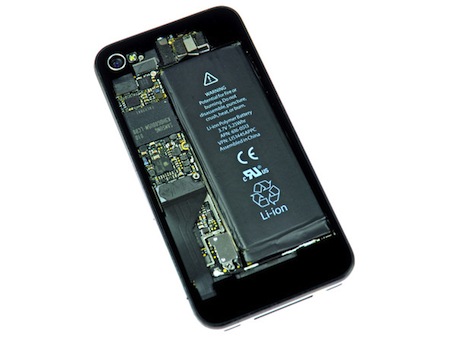
Remember the transparent iPhone 4 mod we covered a few months back here on MacStories? I thought that was beautiful. Not only it did expose the iPhone’s internal parts without compromising the durability of the device, it also was a very simple DIY mod with paint thinner applied to standard black OEM components. The good folks at iFixit – well known for their Mac and iOS device teardowns – thought the mod was interesting, too, and decided to develop their own transparent rear panel for public’s enjoyment. iFixit’s transparent panel is made of plastic, which is “ less prone to fracture, and far cheaper to replace than the glass original panel.” It currently only works with the GSM version of the iPhone 4 – the Verizon iPhone uses a different rear panel layout that didn’t fit with iFixit’s mod. Once applied (you can follow the instructions for an easy swapping process), you’ll be able to see your iPhone’s innards including the battery and logic board.

The product’s in stock and you can purchase one here at $29.95, plus shipping costs and taxes. I’m not going to buy a white iPhone 4, but I think I’ll make my iPhone transparent while waiting for a new toy in September. [via TUAW]


Amazon.com tries to toss Apple ‘app store’ trademark suit

Amazon.com tries to toss Apple ‘app store’ trademark suit, cites Steve Jobs in its own defense

Amazon.com today responded in court to Apple’s lawsuit over the name of its Android Appstore — calling the iPhone maker’s claim to the “App Store” trademark baseless, and pointing to a statement from Apple CEO Steve Jobs as one piece of evidence in its favor.

“So there will be at least four app stores on Android, which customers must search among to find the app they want and developers will need to work with to distribute their apps and get paid. This is going to be a mess for both users and developers. Contrast this with Apple’s integrated App Store, which offers users the easiest-to-use largest app store in the world, preloaded on every iPhone.”

Amazon’s argument is if App Store is specific to Apple, why did Steve Jobs generically refer to the Android Marketplace as an “app store?” The argument is that he voided his own definition of what he considers the App Store to really be. If you ask me, I’d say Apple probably won’t secure the App Store branding as it is too generic. You can get away with specifically calling it the iOS App Store, the Mac App Store, and the iTunes Store, but calling it the App Store as one inclusive generic entity is a stretch don’t you think? As with everything else, Apple may have been better off appending an “i” in front of the name and calling it day. Amazon’s Appstore stands a fair chance of keeping its name, no matter Apple’s requests to speed up the process.

Permalink

White iPhones Already Being Sold In Belgium, Italy [Update: Unboxing]

The white iPhone 4 is expected to officially launch tomorrow, but that hasn’t stopped several international retailers from selling the units they received ahead of Apple’s announcement. The device, going on sale after a 10-month delay since the original June 2010 unveiling, has been delayed multiple times in the past due to alleged production issues with the white paint, which – according to many – caused problems with the camera lens, as well as light leaking from the front panel. The final version of the white iPhone, as reported last week, introduces a redesigned proximity sensor that has a different shape and doesn’t sport the grille of small holes seen in Steve Jobs’ on-stage demo last year.

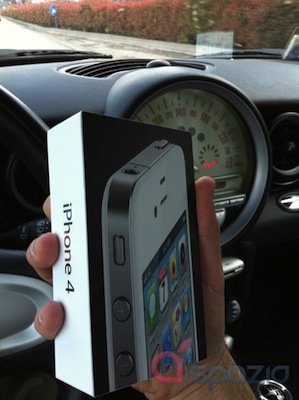
While we’re still waiting for Apple’s official press release about the white iPhone, iSpazio [Google Translation] reports a unit has been already sold in one H3G store in Italy. On the other hand, MacRumors says a reader managed to obtain a white iPhone at a Mobistar retail shop in Antwerp, Belgium – where, apparently, all the available white iPhone units were on sale to customers a day ahead of the rumored launch.

You can check out more photos below. If you’ve got a white iPhone 4, send us pics. We’d love to hear about antenna and proximity sensor performances. Read more


Rumor: Apple’s Cloud Music Service Won’t Be Free

A new report by Cnet today claims Apple will charge users a fee for its rumored cloud-based music service, although no exact details on pricing have been provided. Citing “music industry insiders”, Cnet says Apple could offer the service free of charge initially as a promotion, but eventually they’ll have to charge users to keep the service running and pay music labels. It’s unclear whether the new cloud service will offer different kinds of monthly and annual subscriptions, although Cnet points to an old report that suggested Apple could go for a $20/year fee.

Don’t expect Apple’s cloud-music service to come free of charge, at least not forever.

Apple plans to eventually charge for its cloud music service, sources told CNET. Users would be able to store their digital media on the company’s servers.

Music industry insiders told me that Apple has indicated it could offer the service free of charge initially but that company will eventually require a fee. Google is also expected to charge for a similar service.

Several reports in the past weeks indicated Apple was working on a complete MobileMe revamp featuring new cloud-based music functionalities, social and location features, as well as a new price point to make basic parts of the service (such as syncing options) free for all iOS and Mac users. Last week, it was reported work on Apple’s new music service had been finalized, with the company seeking to close deals with music labels to push ahead the release of its new iTunes-in-the-cloud offering. Cnet also claimed Apple had signed a deal with the Warner Music Group, whilst Peter Kafka at MediaMemo said Apple had already closed deals with at least two of the four major music labels, with Apple’s Eddy Cue visiting New York City to ink the remaining deals.


Evernote 2.1 for Mac Brings Faster Search and Audio Notes

Evernote’s CEO Phil Libin said Apple users are the most valuable to the service, and you might remember the release of the Mac App Store version months ago more than doubled Evernote’s new userbase. For these reasons, it appears that Evernote is now seriously committed to delivering full-featured updates for the OS X and iOS clients – Evernote 2.1 for Mac, available today, brings several new functionalities and improvements to the popular “memory tool” including faster search, audio notes for free and premium users, as well as social sharing options for Twitter, Facebook, and email.

It’s no secret that Evernote for Mac used to become really slow with hundreds of rich notes in the database, constantly backed up to the app’s cloud for web, desktop and mobile access. The improved search functionality in version 2.1 makes sure looking through all your notes is a fast and reliable process – if you consider that several users keep thousands of notes into Evernote, you can understand how important it is for the company to implement a stable search algorithm that returns accurate results in seconds. For academics, students, and journalists who keep track of everything through Evernote, improved search is quite possibly the single biggest reason to update to 2.1. This update, however, doesn’t stop at search: the Evernote team also implemented a new sharing feature to send notes off to Twitter and Facebook, but you can share a note via email or copy the URL to the system’s clipboard, too. Our writer Graham Spencer – a huge Evernote fan – says he’s not sure how much the sharing aspect of Evernote will improve his workflow, but I’m pretty sure the option will be loved my millions of users anyway.

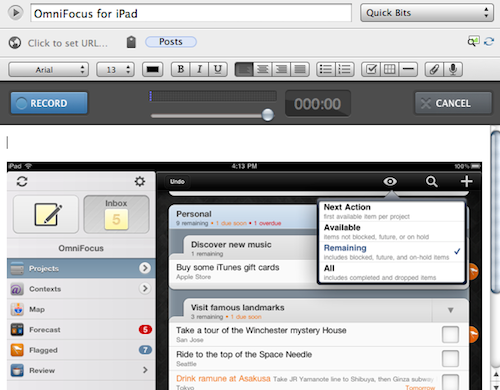
Last, Evernote 2.1 brings audio notes: whilst free users can record audio up to 25 MB per note, premium Evernote subscribers can create audio recordings up to 50 MB, which is roughly 4 hours of recoding time. The audio recording UI is nice, and all you have to do to activate it is hit the microphone button in the toolbar. You can create new audio notes or add new audio to existing files in your Evernote account.

Evernote 2.1 is propagating now through Software Update, or you can download it direct from the company’s website. The Mac App Store version (still reporting 2.0.5 as the latest update) will receive the 2.1 facelift “soon.”


iPhone 6 To Use Next-Gen Thinner Displays from Sharp?

Japanese newspaper Nikkan is today reporting that Apple may have made a display component deal with Sharp for the display of the sixth-generation iPhone. It is based on reports that Sharp has begun preparation for the start of manufacturing in Spring next year at its Kameyama plant in Japan for an iPhone display using next-generation technologies.

Sharp will reportedly be producing “low temperature poly-silicon technology” displays, a next generation technology that will allow displays to be thinner and lighter whilst consuming less power than a current LCD display. The key component of these new displays is the polycrystalline silicon, which enables display drivers to be mounted directly onto the glass and thus have a thinner display. Other advantages of the technology include displaying a more vivid image and enhanced durability because of a reduced number of connecting pins.

Previous rumors had circulated that Apple had sided with Toshiba for future display manufacturing – but a Sharp representative disputed this at the time. In a similar vein, Tim Cook commented in January at the Q1 earnings call that Apple had entered a $3.9 billion component supply deal. He didn’t specify what component it was for, but it was speculated that it was for high-resolution displays and that the deal was between Toshiba, Sharp and a third manufacturer. Sharp was also at the center of another display rumor back in January in which they were supposedly preparing to manufacture glasses-free 3D displays for the iPod Touch.

[Nikkan [Google Translate] via AppleInsider]


Android Strides Ahead In US Smartphone Market Share

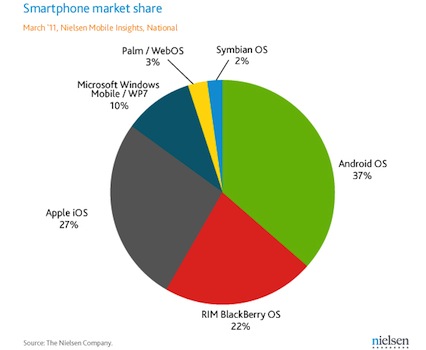
A new market survey by Nielson in the United States has shown Android drive ahead and gain 37% of the smartphone market share, a strong 10% margin over Apple and the iPhone which sits in second place at 27%. The figures show a significant change since the last Nielson survey, done in October that had the iPhone with the largest smartphone market share at 27.9% and BlackBerry in second place at 27.4%. Android has largely absorbed the 5.4% market share BlackBerry lost as well as the decreasing share of Symbian and older Windows Mobile devices to go from 22.7% in October to its 37% market share in March.

The survey also revealed that Android is now the most desired smartphone operating system for consumers, with 31.1% of consumers surveyed saying they would choose an Android phone compared with 30% who would go with an iPhone. In both the market share and desired operating system, Android is showing significant increases whilst Apple is seeing minor reductions compared to others such as BlackBerry or Symbian.

A final aspect of the survey was what recent smartphone acquisitions were and it reveals that 50% of all new smartphones purchased were running Android, whilst 25% were iPhones and 15% were BlackBerry phones. It is worth noting that this survey was solely focused on smartphones and as such did not include reference to the other iOS devices such as the iPod Touch or iPad. Jump the break for two more graphs.

[Via AllThingsD]

Read more


Following Apple’s Rejections, Tapjoy Caps Pay-Per-Install App Downloads

Last week, a number of reports suggested Apple had silently tweaked its algorithm that handles ranking of App Store applications, giving more importance to the quality and usage stats of an app rather than simple download numbers. The tweaked system, never confirmed by Apple but noticed by several third-party App Store ranking engines and advertising agencies, had its effect mostly on free apps in the Social Networking and Games categories, with the Facebook iPhone app quickly climbing to the first spots of the charts after months of sitting in the 10-20 positions. At the same time, Apple also began rejecting updates to applications that implemented “pay-per-install” methods – a system that, especially in iPhone games, allows you to earn virtual goods and currencies by downloading another app from the Store. As noted by pay-per-install and advertising network Tapjoy, the rejections came as Apple apparently started enforcing section 3.10 of the App Store Review Guidelines, which doesn’t accept developers who “attempt to manipulate or cheat” the App Store’s user reviews and charts. In this case, apps powered by pay-per-install options manipulate the charts as users go download additional software not for quality or particular interest, but just because they want to unlock the virtual goods.

At the VentureBeat Mobile Summit, Tapjoy CEO Mihir Shah said the company rolled out last week a cap on how many times an application can be downloaded through Tapjoy’s programs. Details on the cap aren’t clear, but it sounds like the new strategy is aimed at complying with Apple’s rules in a way these “offerwall” programs don’t manipulate the charting algorithm of the App Store, yet providing some exposure for Tapjoy’s advertisers. Admittedly, whilst advertising has always been a part of the Internet and it doesn’t surprise anyone that a company pays money to get exposure, having certain apps ranking higher in the App Store only because they invested more in pay-per-install methods doesn’t exactly sound great. If Apple wants to promote quality rather than download numbers, they have every right to rebuild their garden’s walls – as I stated previously. Tapjoy is yet another third-party company that had to change its service to keep up with Apple and the App Review Team. mocoNews concludes its article on Tapjoy with this quote from the company’s CEO:

Still, app developers should have some flexibility to market their applications within other applications, Shah said. “There has got to be a number of very creative long-term ideas that impresses a balance between marketing spend and organic rankings,” he said.

Creative ideas, as Shah calls them, clearly can’t come from paying money to gain visibility in the App Store. Rather, I believe Apple would see developers investing more in iAd for apps, or clever techniques to team up with fellow developers and promote iOS apps together. But right now, pay-per-install networks have to change.