Posts in news

Google Introduces YouTube Premium and YouTube Music Subscription Services, Retires YouTube Red Moniker

Google seems to have an affinity for constantly rebranding its products, and today is the latest example of that. Soon, YouTube Red will be replaced by the more costly $11.99/month YouTube Premium service – the good news is that Premium members will get all the benefits of YouTube’s new Music service thrown in too. And if you’re an existing Red subscriber, or sign up quickly before Premium launches, you can lock in the existing $9.99 monthly rate and still get all the benefits of Premium and Music.

YouTube Music is Google’s attempt at taking on streaming services like Apple Music and Spotify directly. Launching May 22nd, YouTube Music will have both a free tier and a paid, $9.99/month option. The main focus here is the paid plan though, as it will be the only way to enable background listening – a pretty important feature for music. Paid subscribers will also benefit from downloads and ad-free listening.

YouTube Music will launch with a new mobile app and desktop player, and use Google’s intelligence to power advanced search capabilities and an aggregation of different song versions you may not find elsewhere. In a confusing move, Google Play Music will continue to exist as a separate service from YouTube Music, but if you’re a subscriber to the former, you get the latter service at no extra cost.

As someone who uses YouTube regularly, but not enough to justify a Red subscription, the new Premium plan definitely seems like a more attractive all-around product, despite the price hike: you get a full-fledged music streaming service, YouTube Originals, and a better viewing experience on the largest video source in the world thanks to downloads, no ads, and background playback, all for $11.99. Spotify and Apple Music subscribers may be content with their chosen services for now, but if YouTube Music truly does become a legitimate contender in the streaming market, it will be hard to resist the allure of YouTube Premium for all the extra perks it offers.

At launch, YouTube Music and Premium will be available in the United States, Australia, New Zealand, and Mexico, and they’ll arrive shortly thereafter in Austria, Canada, Denmark, Finland, France, Germany, Ireland, Italy, Norway, Russia, Spain, Sweden, Switzerland, and the United Kingdom.

Apple Updates Its Website for Global Accessibility Awareness Day

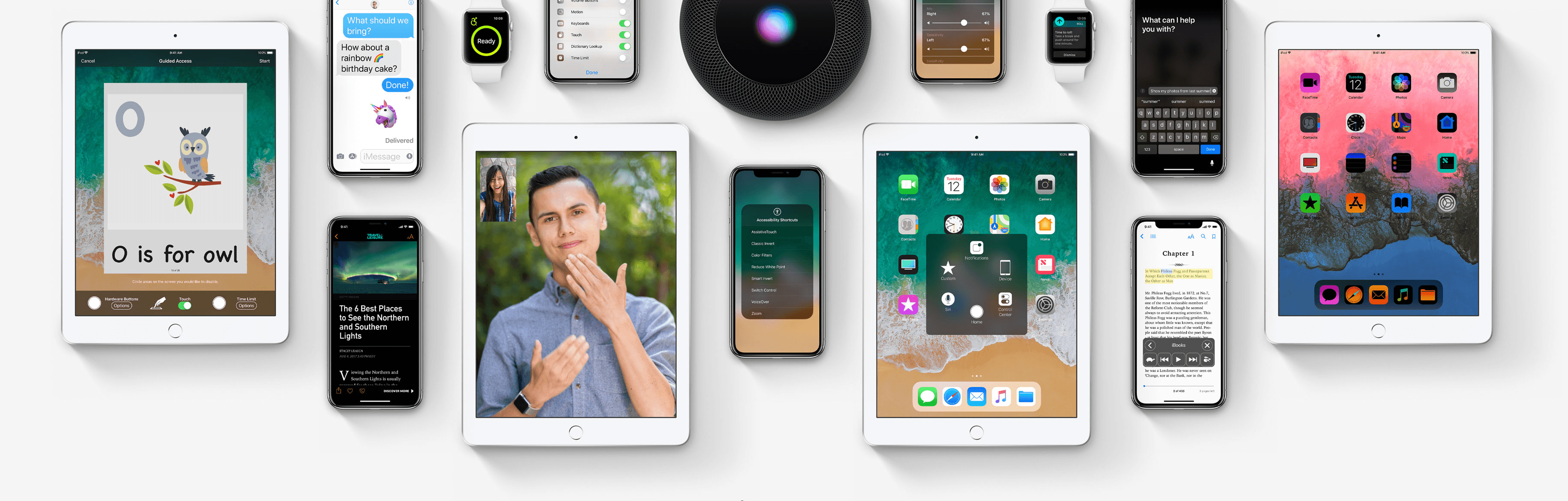
Apple has updated its homepage and accessibility webpage to celebrate Global Accessibility Awareness Day. The event, which Apple has marked in a variety of ways over the years, was created to promote access to technology and foster inclusion for people with disabilities.

Apple’s homepage includes a banner image highlighting the accessibility features of its products with the statement ‘Technology is most powerful when it empowers everyone.’ The Accessibility section elaborates on that idea with a video first published in 2016 and the following:

Taking a family portrait. Catching up over FaceTime. Raising the blinds to let in the morning light. We want everyone to enjoy the everyday moments that technology helps make possible, so we work to make every Apple product accessible from the very start. Because the true value of a device isn’t measured by how powerful it is, but by how much it empowers you.

The remainder of the Accessibility page is organized into sections dedicated to vision, hearing, physical and motor skills, and learning and literacy that outline accessibility features of Apple’s products and demonstrates them with animations and videos.

The updates to Apple’s website and its announcement that it is working with schools for blind and deaf students to help teach them to code is a reminder of the importance of accessibility to the company that hopefully encourages third-party developers to make accessibility a priority too.


Twitter Announces New End-of-Life Date for APIs and Pricing That Affects Third-Party Apps

In April, Twitter delayed a transition to a new API that was expected to have a significant impact on third-party Twitter clients like Twitterrific and Tweetbot. The delay came in the wake of an outcry from users of third-party Twitter clients prompted by developers who banded together to encourage users to complain to Twitter about the API changes that were set to take effect on June 19, 2018. Today, Twitter announced that those changes would go forward on August 16, 2018 – about two months later than originally planned.

Yesterday, in an interview with Sarah Perez of TechCruch, Paul Haddad of Tapbots, the maker Tweetbot, said:

“Twitter has a replacement API that – if we’re given access to – we’ll be able to use to replace almost all of the functionality that they are deprecating,” he explains. “On Mac, the worst case scenario is that we won’t be able to show notifications for Likes and Retweets. Notifications for Tweets, Mentions, Quotes, DMs and Follows will be delayed one to two minutes,” Haddad adds.

He also says that Tweets wouldn’t stream in as they get posted, but instead would come in one to two minutes later as the app would automatically poll for them. (This is the same as how the iOS app works now when connected to LTE – it uses the polling API.)

In addition to announcing transition date, Twitter announced pricing for its new API, and it’s expensive. A subscription covering 100-250 users will cost $2899/month, which works out to over $11 per user for 250 users. Anyone with over 250 users, which would include all the major third-party Twitter clients, is advised to contact Twitter for enterprise pricing. However, the pricing on the API’s lower tiers doesn’t leave much room for optimism.

Third-party clients that can’t or don’t want to pay those prices will have to make do without timeline streaming and push notifications for likes and retweets. Other notifications will be delayed approximately 1-2 minutes according to statements by Haddad to TechCrunch.

For its part, Twitter has made it clear, that the functionality of the old APIs will not be coming to the new APIs:

“As a few developers have noticed, there’s no streaming connection capability or home timeline data, which are only used by a small amount of developers (roughly 1% of monthly active apps),” writes Twitter Senior Product Manager, Kyle Weiss, in a blog post. “As we retire aging APIs, we have no plans to add these capabilities to Account Activity API or create a new streaming service for related use cases.”

We contacted The Iconfactory, the maker of Twitterrific, and Tapbots,1 the maker of Tweetbot, to ask about the impact of the API changes on third-party clients and Twitter users. According to Iconfactory developer Craig Hockenberry:

A lot of functionality that users of third-party apps took for granted is going away. That was the motivation for the apps-of-a-feather.com website - to soften the blow of this announcement.

Hockenberry elaborated that The Iconfactory has reached out to Twitter regarding enterprise pricing for the new APIs, but says that he doesn’t anticipate the pricing will be affordable absent a significant discount.

On the one hand, this latest blow to third-party Twitter clients may be something that some users, including me, are willing to tolerate. On the other hand, this is yet another example of third-party client hostility demonstrated by Twitter stretching back at least five years that doesn’t bode well for the long-term viability of those apps. I asked Hockenberry what he thinks the changes mean to third-party Twitter apps. His response:

Long term, I don’t think there will be any apps other than the official one. I also don’t think Twitter realizes that many long-time users, who are highly engaged on the service, are also the people who use third-party apps. These folks will look elsewhere for their social media needs.

Given Twitter’s repeated hostility towards third-party clients, that’s a hard sentiment to argue against and one that gets my attention more than Twitter’s announcement. I can live with the latest changes to Twitter’s API, but if third-party developers conclude that their time and resources are better spent elsewhere, I expect the end of the Twitter I know and use today is closer than I thought.


  1. As of publication of this post, Tapbots has not responded to our inquiry. 


HazeOver: Distraction Dimmer™ for Mac [Sponsor]

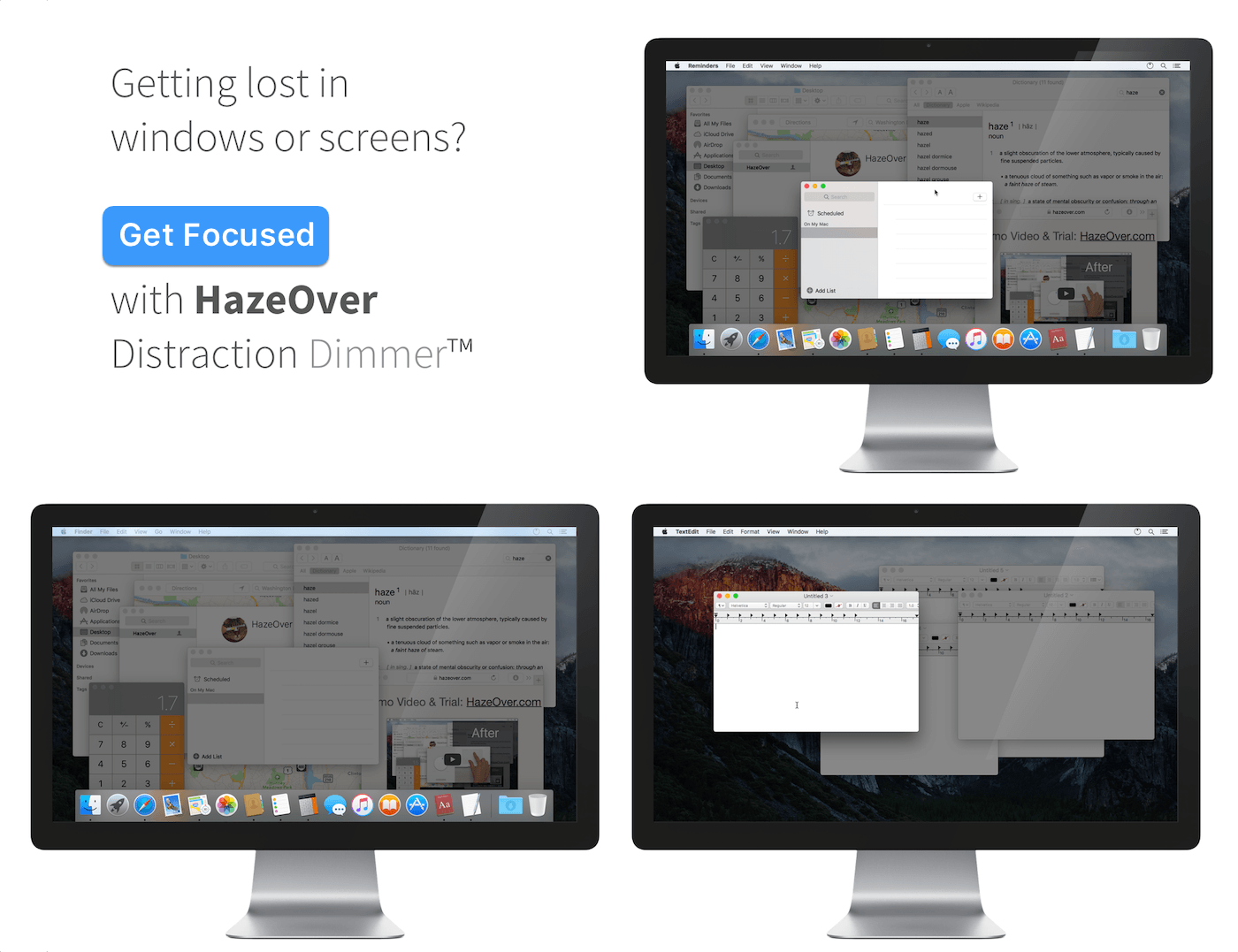
Clear away the clutter with HazeOver for Mac. It’s the distraction dimmer that helps you concentrate on one thing at a time by reducing visual clutter on your Mac’s screen.

HazeOver dims everything on your screen except the window you’re working in, reducing mental overhead and helping you focus. How much the background is dimmed is controlled by turning a clever dimmer knob in the app’s preferences. You can set the effect to be subtle, or turn it up to really block out the clutter. Dimming can also be adjusted from your Mac’s menu bar.

When you’re working a big project, it’s easy to wind up with dozens of windows scattered across your Mac’s display. It’s handy to be able to get to those windows quickly, but they can also become a distraction making it hard to focus on the task at hand. This is an especially big problem with large displays and multi-screen setups.

With HazeOver, you don’t have to manage all those windows to eliminate distractions. Dimming the background means you can enjoy the convenience of leaving windows open, without the visual mess. Better yet, dimming is automatic, highlighting windows as you switch to them and dimming the rest.

HazeOver is also especially nice at night when it reduces the harsh glare from the background of your screen. It looks great with the dark menu bar and Dock too, bringing the long-rumored macOS dark mode closer to reality until Apple implements something at a system level.

This week only, you can eliminate distractions and get focused with HazeOver for the special price of just $4.99 on the Mac App Store. If you want to try HazeOver first, there’s a free trial available too.

Our thanks to HazeOver for sponsoring MacStories this week.


Valve Announces Game and Video Streaming Apps for iOS and Android

Valve has announced that during the week of May 21st, it will release Steam Link, an iOS app that allows gamers to stream Steam games over wired Ethernet or 5GHz wireless networks to an Apple TV or iOS device. The app will support the Steam Controller and MFi controllers like the Steelseries Nimbus. Although the bandwidth necessary to stream games will preclude users from streaming on mobile networks, Steam Link provides greater flexibility to gamers who would otherwise be limited to playing on Macs and Windows PCs. The app will also be available on Android devices.

Valve also announced that it will release Steam Video on iOS later this summer. Valve sells TV shows and movies, but this is the company’s first mobile solution for viewing that content. Valve says users will be able to stream videos over WiFi and LTE networks or download them to iOS devices for viewing. Like Steam Link, Valve’s video app will be available on Android too, but a firm release date has not been announced yet.


Google Introduces News App for iOS to Replace Newsstand

Yesterday at the keynote for Google’s I/O developer conference, the company introduced a News app launching soon for iOS and Android, which will replace the existing Google Play Newsstand app. The app is rolling out some time in the next week, but here are the highlights for what it’ll contain.

Like Apple News, the landing page for Google News is called For You, which is where Google aggregates stories based on your interests. The second tab, Headlines, is strictly about the biggest stories in the world each day. These stories will be the same for everyone within a given geographic region, with no personalized curation at all. Finally, Favorites and Newsstand give you quick access to the publishers you follow, including the ability to subscribe to publications from directly within the app.

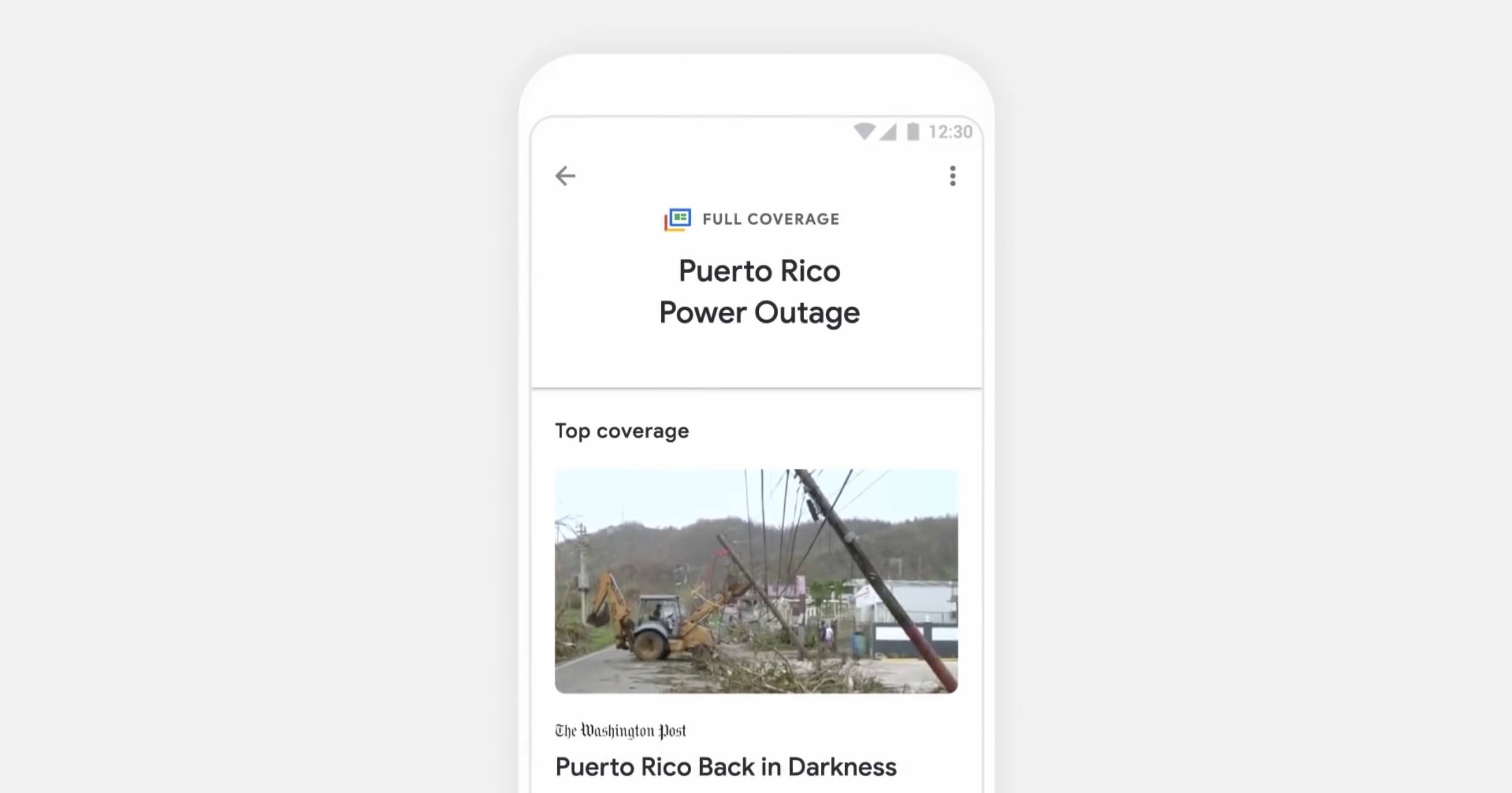
For the most part, Google News is a close imitation of Apple News – it has a similar layout, and a similar design with white backgrounds and a heavy focus on photography. The way it best differentiates itself is a feature that I think is the highlight of the app: Full Coverage. When you’re reading a story and want to gain more insights and perspectives on the same topic, tapping the ‘Full Coverage’ option opens a view that aggregates a wide array of sources covering a variety of angles on that story. It’s one way Google is aiming to promote solid journalism while gently combating filter bubbles. Based on the examples that have been shown so far, Full Coverage will list stories on an event timeline, offer answers to frequently asked questions about an event, highlight tweets and opinion pieces, fact checks, videos, and more. It’s meant to be a comprehensive overview of a given story, and I think it looks fantastic.

It’s unclear how widely available Full Coverage will be throughout the app, but we can assume that the most significant news events at least will include a Full Coverage component to them. Google demoed one Full Coverage story focusing on the Puerto Rico power outage situation.

Despite being different in execution, Full Coverage is similar in spirit to the Spotlight tab in Apple News: both aim to provide substantive overviews on a given topic by aggregating a variety of sources. While Spotlight is updated daily to cover a new topic, I appreciate Google’s approach with Full Coverage because it will make those aggregated pages more accessible and relevant to readers. I love Spotlight and check it regularly, but it’s frustrating that Spotlight stories can only be accessed the day they’re published. Apple should take a note from Google News’ playbook and start offering links to previous Spotlight features at the bottom of related stories.


New Ways to Explore and Interact with the World Are Coming Soon to Google Maps and Lens

Google announced a series of new features at its Google I/O developer conference that it will add to Google Maps and the Google Lens feature of its Photos and Assistant apps in the coming weeks and months.

During the Google I/O keynote, the company demonstrated augmented reality navigation that combines a camera-view of your location with superimposed walking directions. The feature, which works with a device’s camera, can also point out landmarks and overlay other information about the surrounding environment.

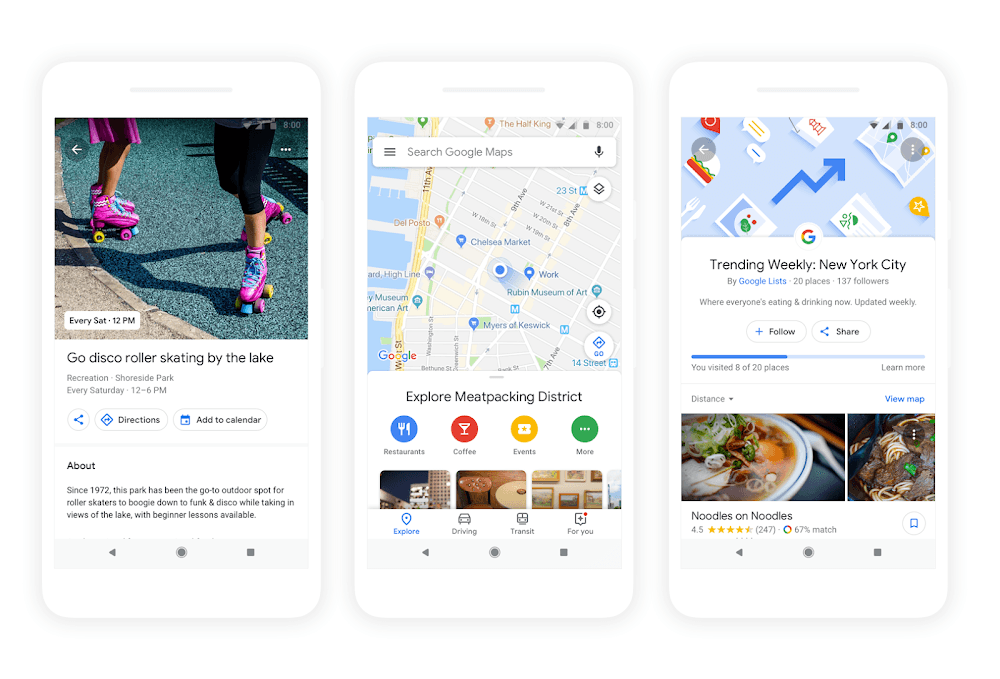
Google Maps is gaining a dedicated ‘For You’ tab too. The new tab will suggest nearby businesses, restaurants, and other activities based on things you’ve rated, places you’ve visited, and other input. The same sorts of inputs will be used in Maps’ new match score, which will predict how much you will like a particular destination and is designed to help make picking between multiple destinations easier. Maps will also allow users to quickly create lists of suggested destinations, share them with friends, and vote on where to go.

Google Lens, which is incorporated into the Google Photos and Assistant apps, is also gaining new features. Much like the iOS app Prizmo Go, Lens will be able to recognize text in books and documents viewed through the camera allowing you to highlight, copy, and paste the text into other apps. Lens is adding a Style Match feature which allows users to point a camera at something and see similar items too. In a demonstration, Google pointed Lens at a lamp, which generated a list of similar lamps almost instantly.

More than ever, Google is showing what can be accomplished with the vast amount of data it can bring to bear in real-time on mobile devices. The insights that are possible may seem creepy to some people, but if used responsibly, they allow Google to provide powerful contextual information to its users.


AppStories, Episode 54 – Pick 2: GoodNotes and Working Copy

On this week’s episode of AppStories, we pick two apps we use regularly to discuss. In this installment of Pick 2, John covers GoodNotes and how he uses it for planning and editing, and Federico explains how he and the MacStories team use Working Copy to collaborate on articles.

Sponsored by:

  • Daylite - Win more business and get more done with Daylite, the Mac CRM for small businesses that want to grow.
    • Sign up for a 30-day free trial today, and mention AppStories when you subscribe for 10% off your first month’s subscription.
AppStories+ Deeper into the world of apps

AppStories Episode 54 - Pick 2: GoodNotes and Working Copy

0:00
28:19

AppStories+ Deeper into the world of apps

Permalink