Posts in news

RapidWeaver 8 Debuts Redesign, New Responsive Themes, Unsplash Support, and Improved Plug-In Management

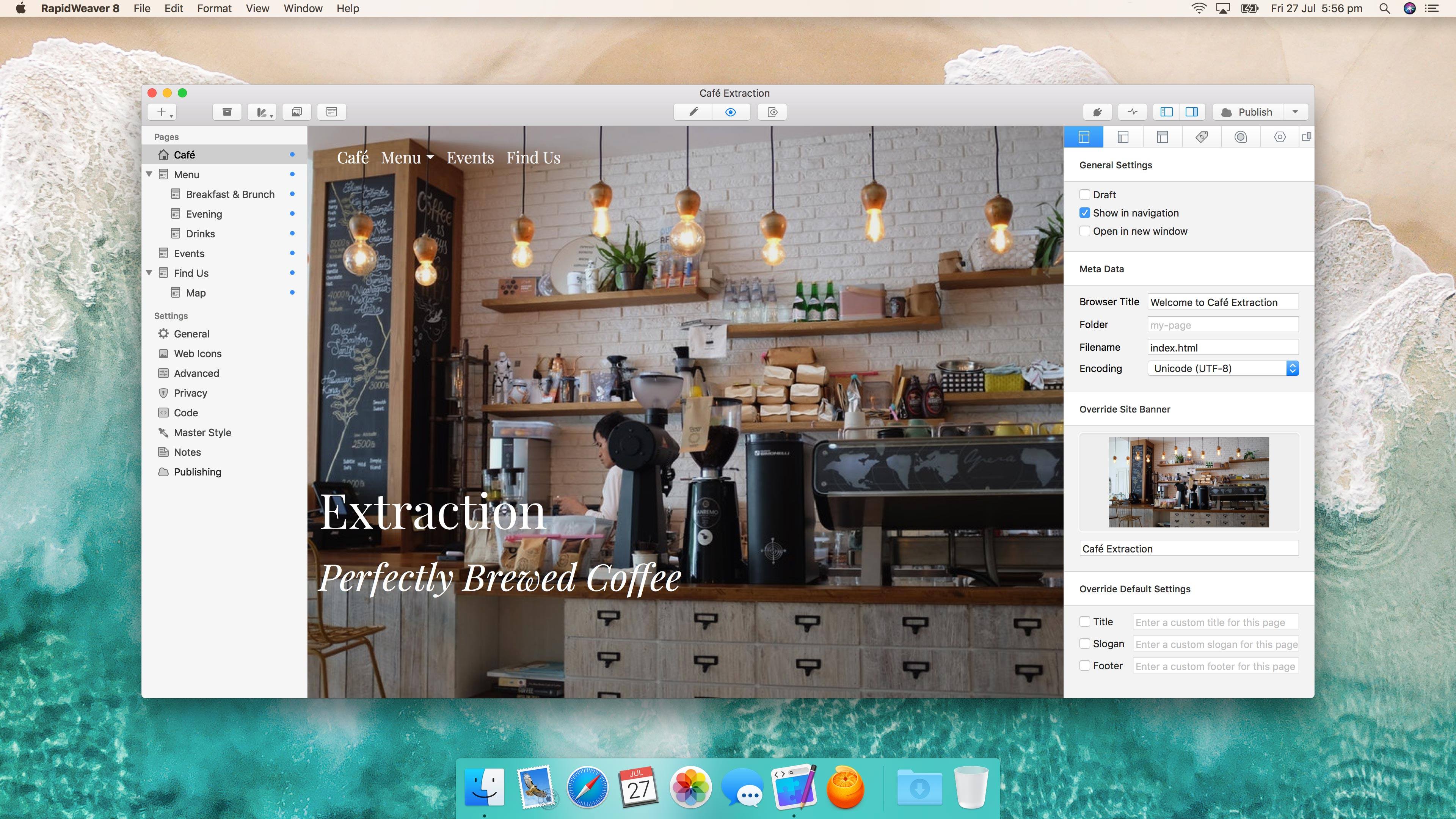
RapidWeaver by Realmac Software got a significant update today. Starting from scratch or with one of over 50 Themes, RapidWeaver allows users to create highly-customized websites by offering a wide array of tools and properties that can be tweaked. The app also supports third-party plug-ins and Themes that can be used to extend the app even further.

RapidWeaver may remind you a little of iWeb, but the similarities end with the drag and drop, template-driven approach. The depth of RapidWeaver goes well beyond what iWeb could do before Apple discontinued it.

Read more


Apple Removes iOS 12 Beta 7 Over-the-Air Update

Close on the heels of reports that Apple had pulled Group FaceTime from iOS 12 beta 7, complaints about the beta’s sluggish performance began to surface. One of the first was from Guilherme Rambo who posted a short video on Twitter demonstrating how slowly the App Store app launched under the beta:

Rambo also predicted Apple might remove the beta, which it did a short time later:

The latest iOS 12 beta is no longer available as an over-the-air update via the Software Update section of the iOS Settings app. However, IPSW files for the beta, which can be installed via iTunes on a Mac, are still available from Apple’s developer portal. In light of the issues reported with the beta 7, if you haven’t already installed beta 7, it’s probably best to not download and install the IPSW files, until a more reliable version is released.


Group FaceTime Pulled from Initial iOS 12 Release

Apple has removed Group FaceTime chat from the latest iOS 12 developer beta. The feature, which was debuted at WWDC and described as being able to handle up to 32 simultaneous users will come later this fall according to Apple’s beta release notes:

Group FaceTime has been removed from the initial release of iOS 12 and will ship in a future software update later this fall.

This delay isn’t the first time that a feature announced at WWDC has been moved to a later point release of a major iOS update. Last year, AirPlay 2, Messages in iCloud, and Apple Pay Cash all missed the initial release of iOS 11.

I’m not surprised Group FaceTime needs more time. I haven’t used it extensively, but in a late July test with four participants, it was clear that it had a long way to go before it was ready for release.


Anchor Launches Listener Support, Helping Podcasters (and Itself) Get Paid

As an app and service, Anchor is a compelling product that I’m personally a big fan of. It’s the best way to podcast from an iPad, the most mature and accessible platform for new podcasters, and it includes innovative features like transcribed video generation for sharing clips on social media.

My one area of hesitation with Anchor has been its business model. The service is entirely free, and the company has never before shared its plans for any sort of monetization strategy. Today that changes, however, as Anchor is launching a Patreon-style listener support feature.

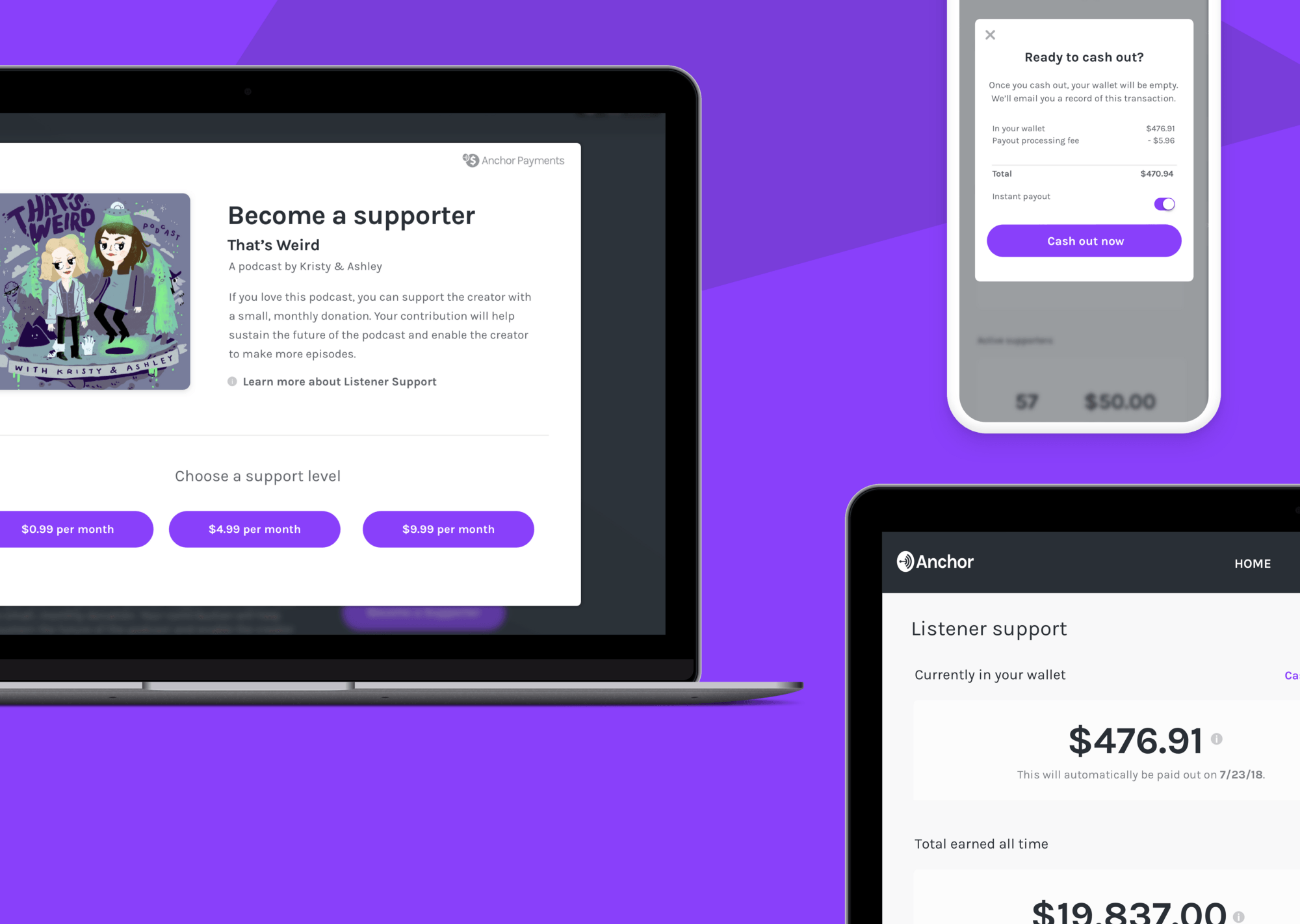
Starting now, any Anchor podcaster can choose to activate listener support for their show, which enables listeners to sign up for automatic monthly payments of $0.99, $4.99, or $9.99 to support the show. The implementation here is important, and Anchor is making it very accessible: a podcast support link will be automatically added to the show notes for each episode, making the link available no matter which podcast app a user listens through. This link takes users to the support page on a podcast’s Anchor profile, with payments processed by Stripe and available via Apple Pay on iOS and Mac, or Google Pay on Android.

All support funds are subject to Stripe’s standard fees, plus Anchor’s own 4.5% cut, but the overwhelming majority of funds end up in podcasters’ hands.

I think listener support is an interesting development for Anchor in two main ways. First, after working to democratize podcasting with its easy-to-use tools, it makes sense that Anchor now has its sights set on democratizing the payment of podcasters. Any podcaster with a decent following could use a third-party service like Patreon to get paid – and many do. And while Patreon isn’t too much more complicated for listeners wanting to pledge support, it definitely brings more complexity to the side of podcasters. Using Anchor, a podcaster can flip a switch enabling any present and future listeners to offer support. Ultimately, complexity is diminished for both parties.

The second thing making this news significant to me is that it’s the first sign of a monetization strategy for Anchor. It’s very possible the service will still introduce an ad platform in the future, but whether that happens or not, this is a thoughtful first move. It’s respectful to both podcasters and listeners alike, and as such it feels like a good fit for the service and its goals.

While I certainly don’t want to see podcasting dominated by a single platform, the way video is owned by YouTube, I nonetheless continue to be impressed by Anchor. Whatever the company’s future holds, it’s a good thing making podcasting more accessible, and a good thing for podcasters to be rewarded for their work.

Anchor users can activate listener support from their dashboard on anchor.fm.


Newton Mail to Shut Down Service September 25th

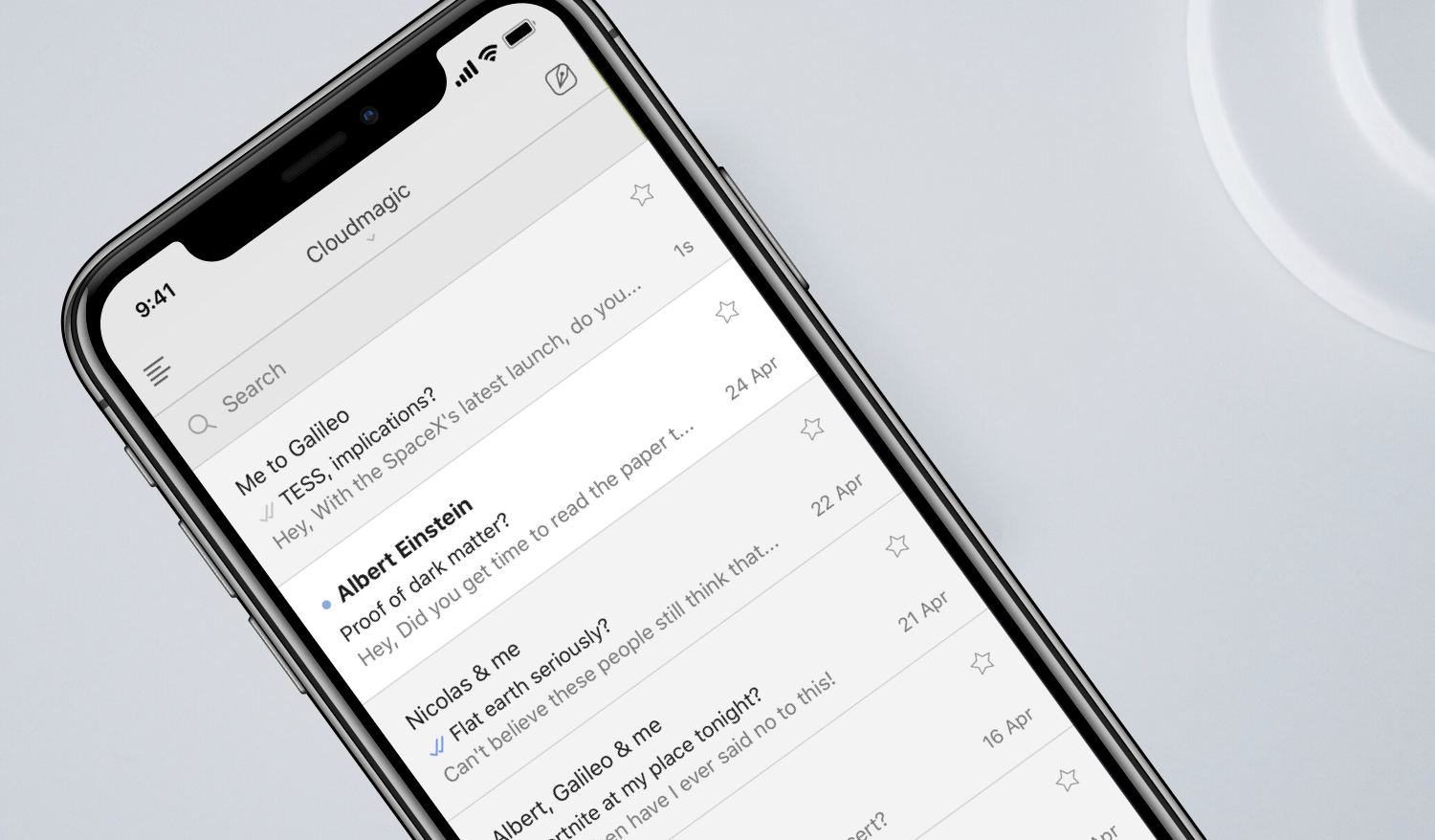
Newton, which began life as CloudMagic in 2013, will shut down its email subscription service on September 25, 2018. According to the company’s CEO, Rohit Nadhani:

We explored various business models but couldn’t successfully figure out profitability & growth over the long term. It was hard; the market for premium consumer mail apps is not big enough, and it faces stiff competition from high quality free apps from Google, Microsoft, and Apple. We put up a hard and honest fight, but it was not enough to overcome the bundling & platform default advantages enjoyed by the large tech companies.

CloudMagic was relaunched as a subscription email service and renamed Newton in 2016. According to Nadhani’s post, the company, which offered iOS, Mac, Android, and Windows versions of its email client, served over 4 million customers, 40,000 of whom signed up as paying subscribers.

In anticipation of the shutdown, the company has disabled signups to its service and is working with the App Store and Google Play Store to offer pro-rata refunds to annual subscribers whose subscriptions are set to expire after September 25th. Nadhani says that CloudMagic will continue to work on new projects.

Email is a tough category in which to compete. Default applications like Apple’s Mail app don’t give most users a reason to look elsewhere, and users that do want to try a different email client have many excellent free options from big companies like Google and Microsoft. For the remaining users willing to consider a paid email service or app, the competition is fierce with excellent choices like Airmail and Spark. The end of Newton is a reminder that no business model is a safe bet and even those apps and services you may be willing to pay for can’t last if others don’t feel the same as you.


Logitech Announces New Wireless Qi Charger

Logitech has announced that later this month, it will debut a wireless Qi charger called the Logitech Powered that the company designed in collaboration with Apple.

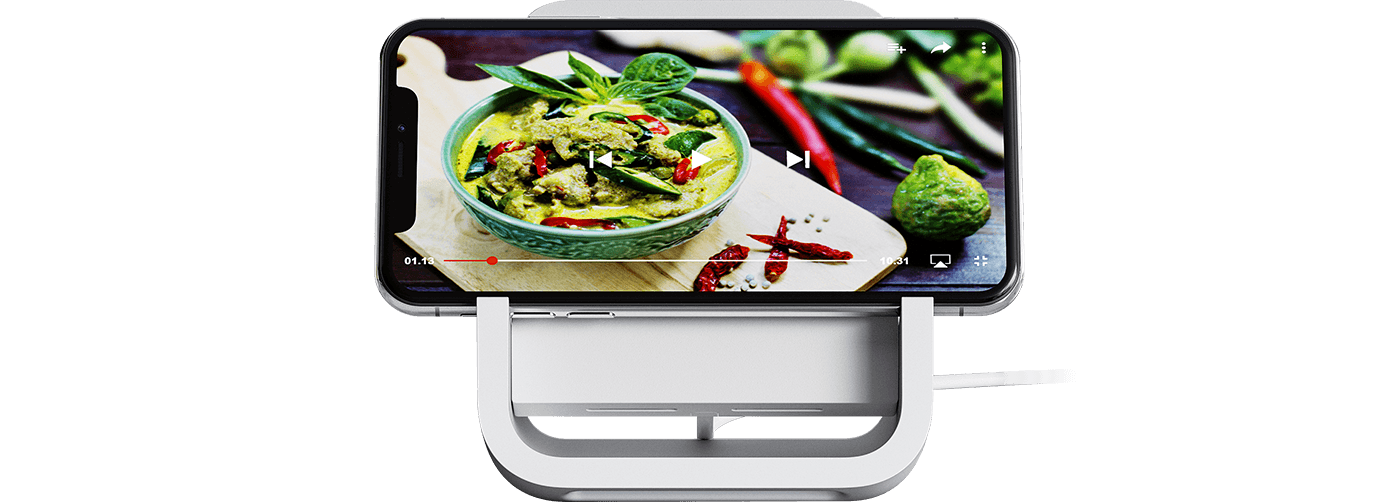
The charger delivers 7.5W of power, is vertically-oriented, and will work with the iPhone 8, 8 Plus, and X, which sit in the charger’s U-shaped cradle. Logitech says that the iPhone doesn’t need to be precisely placed in the dock to charge. An iPhone will also charge even if set in landscape mode across the top of the cradle. Although Logitech’s press release says the Powered will be sold for $69.99, its website currently offers the charger for pre-order for $79.99.

I’ve been using a vertical Qi charger for about a month and love how well it works with Face ID, which makes it easy to check something quickly on my iPhone when I’m at my desk. Although it’s on the pricey end of the spectrum, the ability of the Powered to charge in portrait or landscape and its vertical orientation makes it a tempting addition to a desk, countertop, or nightstand.

The Logitech Powered will be available at Apple Stores and directly from Logitech, where it can be pre-ordered now.


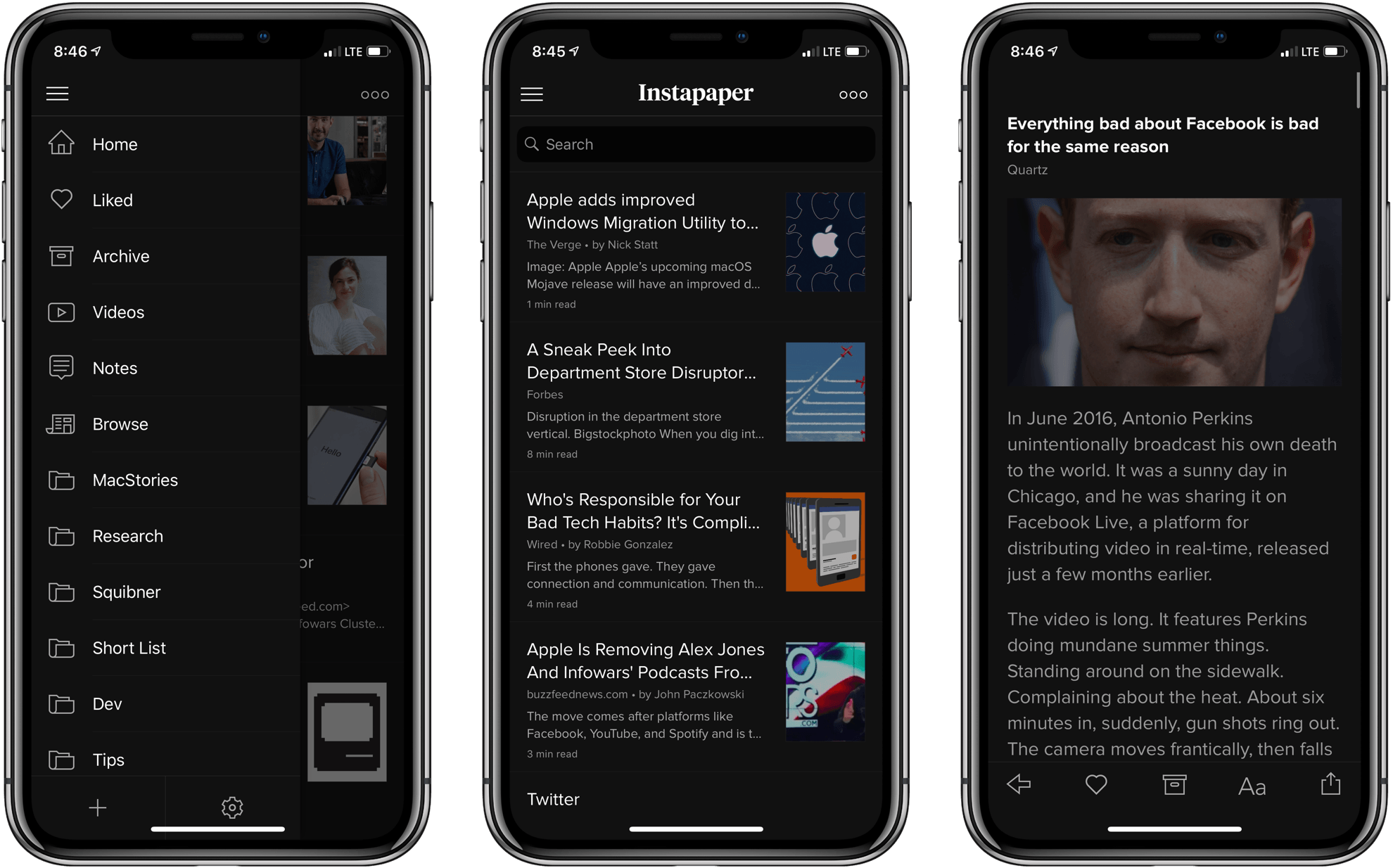
Instapaper Relaunches Premium Service as a Paid Subscription and Returns to the EU

When Instapaper Premium was introduced, it was a paid subscription that added several advanced features to the service. Later, the app and service were purchased by Pinterest, and Instapaper Premium was made available for free to all users.

Last month, Instapaper announced that it was separating from Pinterest and becoming an independent company. Today Instapaper, which turned 10 years old this year, outlined a plan for sustaining the service for the next 10 years. At the heart of Instapaper’s plan is a return to a paid subscription model. Premium features – full-text search, unlimited notes, text-to-speech playlists on mobile devices, speed reading functionality, removal of ads on the web, and the ability to send articles to Amazon’s Kindle reader – will only be available going forward for a $2.99/month or $29.99/year subscription. Currently, subscriptions are available via the web only, but the company plans to add an In-App Purchase to the app in the future.

Instapaper also announced that it is returning to the European Union. When the EU’s GDPR legislation became effective at the end of May, Instapaper wasn’t ready and blocked access to EU citizens. As an apology for the extended downtime, Instapaper is providing its premium service to EU users for six months.

I recently switched back to Instapaper from Pocket because I was encouraged by its new independence from Pinterest, where the app got little attention over the past two years. With no new features added to Instapaper Premium as part of its relaunch as a paid subscription, convincing users to sign up may be difficult. It’s still early days in Instapaper’s newfound independence though, so I remain optimistic that there’s more to come from the Instapaper team, and I plan to stick with the app as my read-it-later service for the foreseeable future.

Instapaper is available as a free download on the App Store.


Apple Rolling Out New Friends Mix to Apple Music Subscribers

Source: @CristianRus4 on Twitter

Source: @CristianRus4 on Twitter

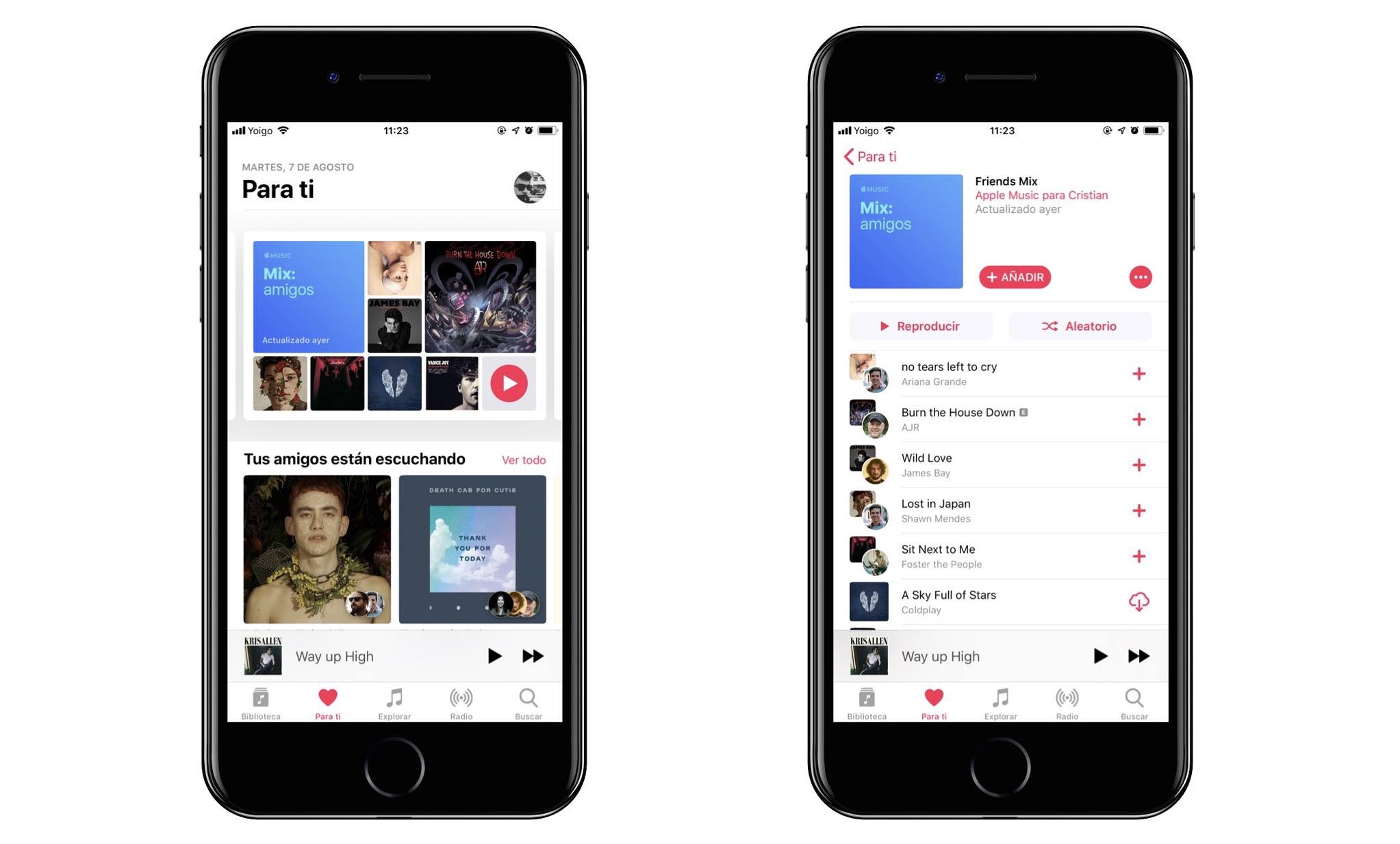
Apple Music subscribers on Twitter and Reddit are beginning to report that a new algorithmic mix has begun showing up in the ‘For You’ section of Apple Music. First noticed on the r/AppleMusic subreddit, the mix includes a collection of songs to which people you follow through Apple Music’s Friends feature are listening.

Further details emerged on Twitter, where it’s been reported that the Friends Mix includes 25 songs and is updated every Monday.

As of the publication, the new mix is propagating through Apple’s system so you may not see it in the For You section just yet. 9to5Mac says that the mix is not tied to iOS 12 or macOS Mojave, which is in line with past rollouts of Apple Music mixes.


Apple Announces Apps and In-App Purchases Will Be Removed from its Affiliate Program October 1st

Apple has announced that apps and In-App Purchases will no longer be part of the iTunes Affiliate Program effective October 1, 2018. The iTunes Affiliate Program pays a commission from Apple’s portion of the sale of apps and other media when a purchase is made with a link that contains the affiliate credentials of a member of the program. Anyone can join, but the Affiliate Program is used most heavily by websites that cover media sold by Apple and app developers.

This isn’t the first time Apple has had this part of its affiliate program in its crosshairs. In April 2017 Apple gave participants in the program 6-days notice that it was reducing commissions on apps from 7% to 2.5%. The angry fallout caused Apple to issue a face-saving ‘clarification’ that the change would only apply to In-App Purchases.

What I said then holds true today:

With ad revenue in decline, affiliate commissions are one way that many websites that write about apps generate revenue, MacStories included. Many developers also use affiliate links in their apps and on their websites to supplement their app income. This change will put additional financial pressure on both groups…

The fallout has already begun. In a post titled Apple Kills the App Store Affiliate Program, and I Have No Idea What We Are Going to Do., Eli Hodapp, the Editor-in-Chief of TouchArcade, concluded:

It’s hard to read this in any other way than “We went from seeing a microscopic amount of value in third party editorial to, we now see no value.” I genuinely have no idea what TouchArcade is going to do.

It will be a shame if Apple’s decision results in TouchArcade shutting down because it provides some of the best mobile game coverage available.

What bothers me the most though is the unnecessarily hostile tone of Apple’s announcement email:

With the launch of the new App Store on both iOS and macOS and their increased methods of app discovery, we will be removing apps from the affiliate program.

That sounds an awful lot like ‘Our new App Store is so great we don’t need you anymore, bye.’ If that’s the case, it’s short-sighted, but it’s certainly Apple prerogative to run its programs as it sees fit. Still, it’s not the right way to address the publications, developers, and others that have generated millions of dollars of referrals over the years in exchange for a modest 7% cut. Whatever the motivation, the change has been handled poorly, which is disappointing. Unlike last year, however, I don’t expect Apple will back down from this decision.