This Week's Sponsor:

Dropzone 5

Improve your Drag-and-Drop Workflow


Posts in news

Winners of the Second Annual Apple Music Awards Announced

Last year, Apple announced the winners of its first-ever Apple Music Awards, honoring artists in five categories who received a unique award featuring a 12-inch silicon wafer suspended between a sheet of glass and anodized aluminum. The announcement of last year’s awards was followed by a performance by Billie Eilish at the Steve Jobs Theater in Cupertino, California.

The Apple Music Awards are back for 2020 with the same award categories as 2019. According to Apple’s press release:

The Apple Music Awards honor achievements in music across five distinct categories, and winners are chosen through a process that reflects both Apple Music’s editorial perspective and what customers around the world are loving most. The winners for global Artist of the Year, Songwriter of the Year, and Breakthrough Artist of the Year were hand-selected by Apple Music’s global editorial team of world-class experts and tastemakers, and the awards for Top Song of the Year and Top Album of the Year are based on streaming data that is reflective of what Apple Music subscribers have been listening to this year.

The 2020 Apple Music Awards winners are:

Apple has more in store for music fans in December. To celebrate the Apple Music Awards, the company has it will kick off “a week of special performances, fan events, interviews, and more, streaming worldwide on Apple Music, Apple Music TV, and the Apple TV app” beginning December 14, 2020.

The Apple Music Awards strike a nice balance between editorial picks and awards based on streaming statistics. I’m eager to see what Apple has planned for December because last year’s performance by Billie Eilish was excellent. Although Apple’s press release is short on specifics, it suggests music fans are in for a treat with an expansion of last year’s festivities.


This Holiday Season, Give the Gift of Club MacStories

The holiday season is just around the corner, and as you shop for gifts for friends and family, we wanted to remind everyone that Club MacStories memberships can be given as gifts all year long. The Club extends what we publish at MacStories, which makes it the perfect gift for someone who wants more of the kind of in-depth app, automation, and other coverage you find on the site every day. It’s also a great time to join the Club because we have a lot planned for 2021.

Better yet, it’s a gift that can be enjoyed every week all year long, with great exclusive content, including:

  • MacStories Weekly, our weekly newsletter that’s sent on Fridays and packed full of our favorite apps, themed collections, tips, Shortcuts automations, answers to reader questions, featured Home screens, interviews, and much more.
  • The MacStories Unplugged podcast, a bi-monthly show featuring a discussion of what’s going on behind the scenes at MacStories, articles we’re working on, the gear we’ve been testing, and more.
  • The Monthly Log, a monthly newsletter that includes long-form and behind-the-scenes stories.
  • Access to giveaways, discounts, and other treats like eBook versions of Federico’s annual iOS review, John’s macOS review, and other long-form stories.
  • The full archive of over 300 issues of MacStories Weekly and the Monthly Log.

All told, that’s around 60 newsletters and lots of other perks over the course of a year.

So, if you have a MacStories reader on your holiday shopping list this season, consider a Club MacStories membership that they can enjoy all year long. Monthly ($5/month) and annual ($50/year) memberships can be given using the following links:

Finally, thanks to all our loyal Club members who have joined since the Club’s debut in 2015. You’re an essential part of what we do here at MacStories, and we hope you’ve enjoyed the Club as much as we enjoy creating its special content for you every week.

Happy Holidays!

  • The MacStories Team

Apple Reduces App Store Commissions to 15% for Small Businesses Starting Next Year

Today, Apple announced a reduction in App Store commissions that will substantially benefit a large part of the developer community. Starting January 1, 2021, developers who earn up to $1 million per year from their apps will have the commission paid to Apple cut in half, reducing it from 30% to 15%. Apple CEO Tim Cook said of the new App Store Small Business Program in an Apple press release:

Small businesses are the backbone of our global economy and the beating heart of innovation and opportunity in communities around the world. We’re launching this program to help small business owners write the next chapter of creativity and prosperity on the App Store, and to build the kind of quality apps our customers love.

Cook continued:

The App Store has been an engine of economic growth like none other, creating millions of new jobs and a pathway to entrepreneurship accessible to anyone with a great idea. Our new program carries that progress forward — helping developers fund their small businesses, take risks on new ideas, expand their teams, and continue to make apps that enrich people’s lives.

Apple says that it will provide additional details about the new program in December, but here’s what we know so far:

  • Developers who made up to $1 million on all their apps in 2020 after subtracting Apple’s commissions will qualify for the program and its reduced commissions beginning January 1, 2021.
  • New developers are eligible to participate in the App Store Small Business Program beginning January 1, 2021, too.
  • If a developer who is part of the App Store Small Business Program makes more than $1 million during a year, the commissions paid for the remainder of the year will be at the 30% rate paid outside the program and the developer won’t be eligible for the program the following calendar year.
  • A developer that is not eligible for the App Store Small Business Program will be eligible the calendar year following any calendar year that they earn less than $1 million.

For example, a developer that earns less than $1 million in 2020 on all of their apps after subtracting the amount paid to Apple for App Store commissions is eligible for the program and would pay a 15% commission on App Store earnings beginning January 1, 2021. Hypothetically, if the same developer has post-commission earnings of greater than $1 million in aggregate on all of their apps by, for example, September 1st, their App Store commission rate (assuming a paid-up-front app) would increase to 30% for the remainder of the year. That same developer would continue to pay 30% in 2022 but would be eligible for the 15% rate again in 2023 if their 2022 post-commission earnings fell below $1 million. It is our understanding that App Store earnings of all kinds count toward the $1 million total regardless of whether the source is a paid-up-front app, In-App Purchase, or a subscription.

Read more


Apple M1 Mac Review Roundup: Big Performance and Battery Gains

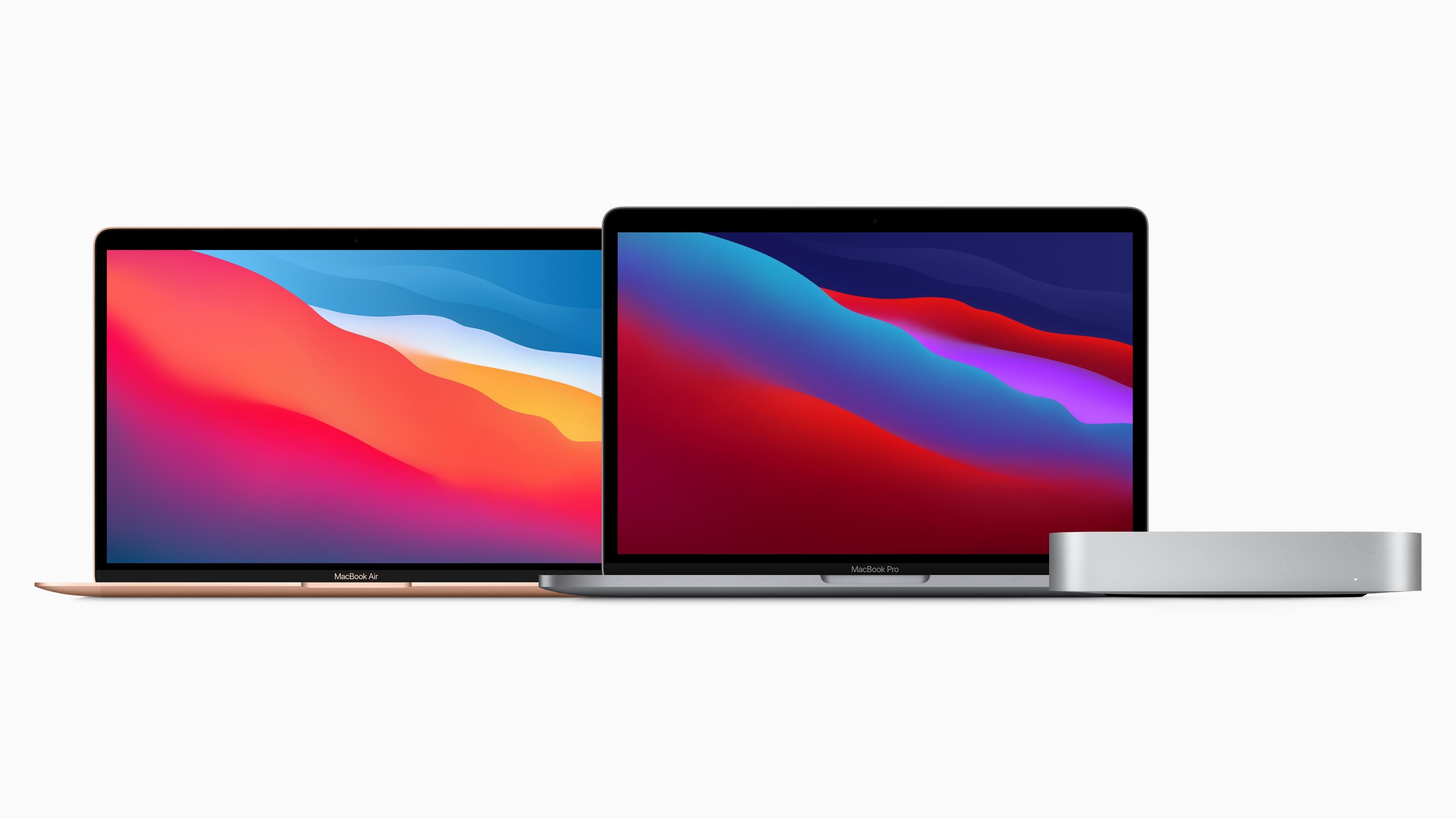
Last week, Apple unveiled M1-based models of the MacBook Air, MacBook Pro, and Mac mini. With deliveries of the computers beginning to arrive around the world, reviews are out, and I’ve rounded up some of the most interesting tidbits from them.

The reviews are overwhelmingly positive with a few caveats. However, reviewers were universally impressed by the new Macs’ performance and the laptops’ battery life. The experience of Wired’s Julian Chokkattu was common:

Spend a day with the new MacBook Air and the improvements are immediately noticeable. The thing’s as powerful as many of the higher-end Intel-powered Macs, blowing past the speed limits of the higher-tier MacBook Air from earlier this year. The M1 is no Mac evolution, it’s a Mac revolution.

What’s especially remarkable about these Macs is that they are low-end models as Jason Snell observes on Six Colors:

It’s all too easy to overlook the fact that these are low-end models, given how fast they are. But this is just Apple’s first step in what the company says is a two-year-long transition. The M1 chip, which appears to be a next-generation riff on the A12X processor in that 2018 iPad Pro, has a bunch of limitations that will undoubtedly not exist on future Apple-designed Mac processors: It only supports two Thunderbolt ports and up to 16GB of RAM. It has no support for external GPUs or discrete graphics of any kind. It can drive a maximum of two displays. It is, by every definition, a low-end chip, the slowest and least capable Mac chip Apple will ever make.

And yet…

Based on my testing, it’s also safe to say that all three M1-based Macs, these low-end systems at the bottom of Apple’s price lists, are among the fastest Macs ever made.

Jason and Myke Hurley also interviewed Apple’s Tim Millet and Tom Boger on Upgrade about the M1 Macs.

Read more


Apple Launches an Embeddable Web Players for Podcasts

Apple Podcasts now supports an embeddable podcast player for shows in its directory along with other marketing tools.

The player comes is responsive and can display either a show with multiple episodes or an individual episode along with playback controls and navigation options. There are controls for play/pause and to skip forward 30 seconds and back 15 seconds, as well as a timeline scrubber that appears after you click or tap play. An ellipsis menu button provides options to open a show or episode in Apple’s Podcasts app, copy a link to the show or episode, and copy embeddable code. The player is also responsive, making it look terrific on mobile and desktop devices. It’s worth noting that content blockers will hide the embedded players, so if you don’t see them below, disable content blockers and reload the page.

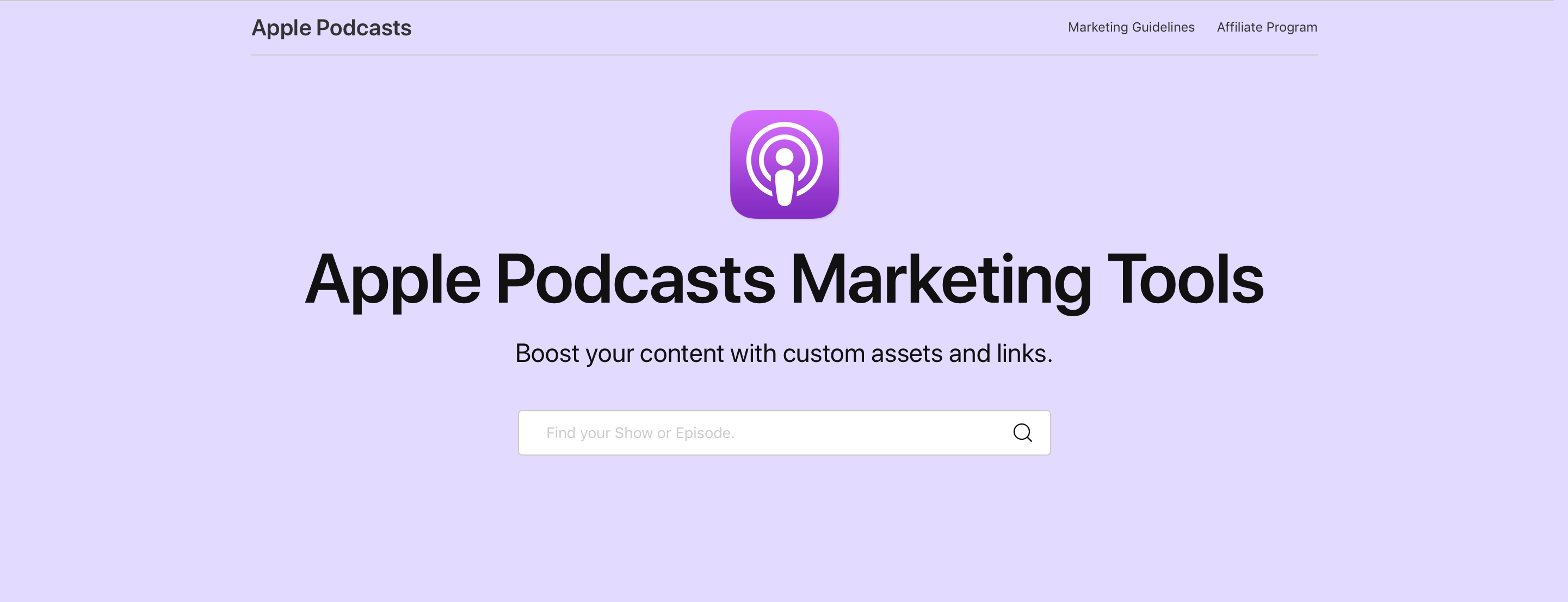
To create the code to embed the Podcasts player, visit the Apple Podcasts Marketing Tools webpage. Here’s an example of the large version of this week’s episode of AppStories:

And an embed for the show itself:

The embed for a show plays the latest episode by default with additional episodes available to the right of the player. The ‘See More Episodes’ button opens the Podcasts app. In addition to the new player, the Podcasts Marketing page offers badging resources, show and episode short link generation, Apple Podcasts iconography that can be embedded or downloaded, and QR code generation.

We’ve tested Apple’s new embeddable player with AppStories and I’ve been extremely happy with it. First of all, it’s dead simple to implement. The player uses an iframe, which means it should work out-of-the-box with little, if any, fiddling for most websites. MacStories uses WordPress and all I needed to do was paste the iframe code into the story.

What’s more, the embeds look fantastic, far better than most of the options available from podcast hosting services. Most important of all, though, the user experience is excellent, allowing MacStories readers to sample a show inline and jump to the Apple Podcasts app on any platform to learn more and subscribe.

Apple has had a similar widget system for Music content for a while, and I’m glad to see it’s been implemented for shows in Podcasts too. Podcast fans already have their preferred ways to access their favorite shows. What Apple Podcasts web embeds provides, though, is discoverability. The embeds are a simple, frictionless way for readers to sample the show and hopefully become subscribers.


MacStories Unwind: Apple’s M1 Macs, Big Sur, MusicBot, and New Reviews

AppStories+ Deeper into the world of apps
0:00
30:41

AppStories+ Deeper into the world of apps


Sponsored by: GoodTask – Better Widgets for Reminders and Calendars on iOS 14

This week on MacStories Unwind:

MacStories

Club MacStories

  • MacStories Weekly
    • Collection: November Event Highlights
    • Behind the Scenes: The MacStories Big Sur Review
    • Federico: iPad Features I’d Miss on an Apple Silicon Mac
    • An interview with PCalc developer James Thomson
  • MacStories Unplugged

AppStories

Unwind


HomePod mini Review Roundup

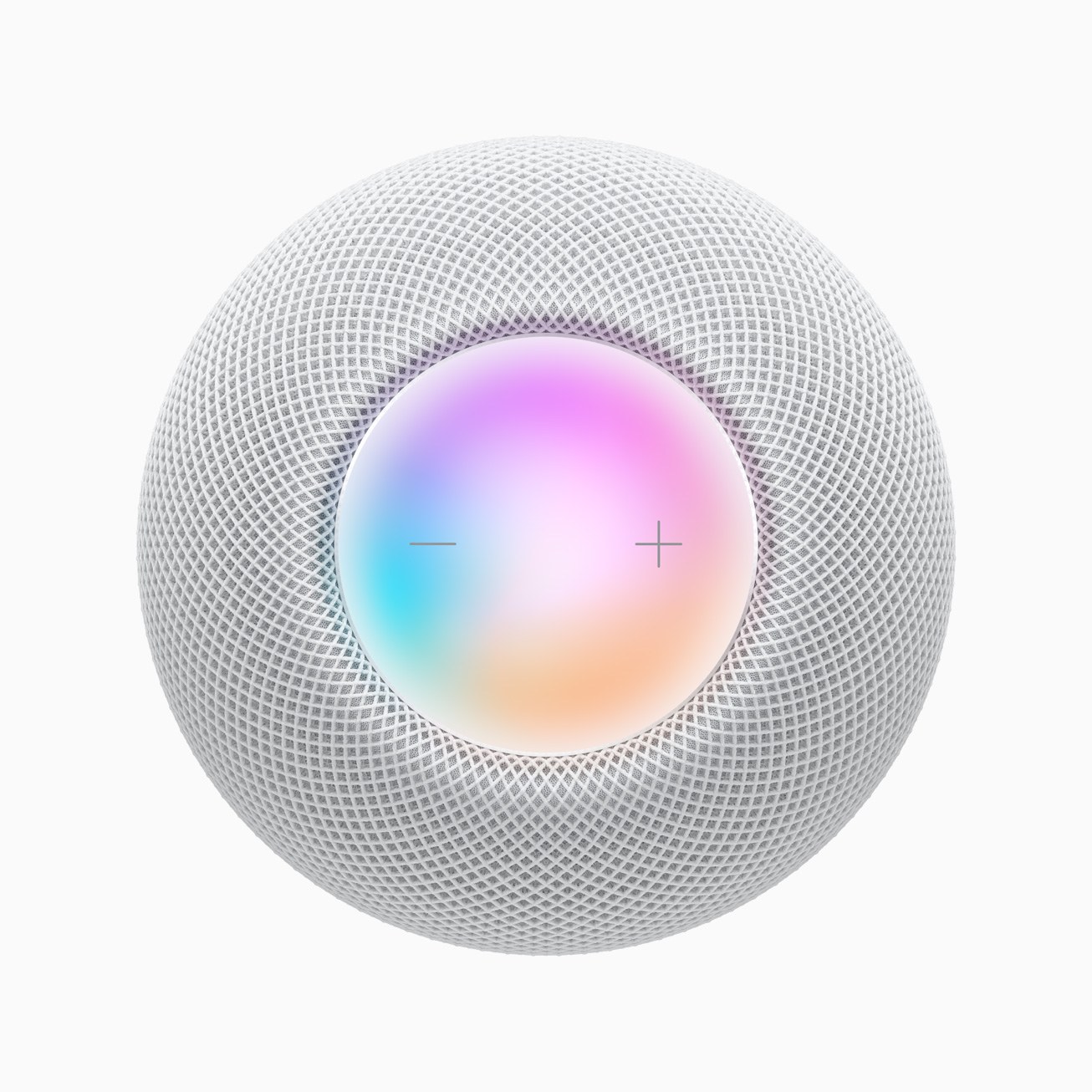
Several reviews of Apple’s new HomePod mini were published today. The mini, which I covered following Apple’s October event, is considerably smaller and less expensive than the original HomePod. Although we learned a lot about the mini in October, today’s reviews are the first to judge the sound quality of the mini.

Marques Brownlee was impressed with the quality of the HomePod mini’s audio for such a small speaker. Brownlee points out that there are less expensive smart speakers available, ones that support more smart home products, and smart assistants that he thinks are better. However, for a seamless, integrated experience with Apple’s products and great sound, he concludes the HomePod mini is a good choice.

At The Verge, Dan Seifert takes the HomePod mini through its paces too. He concludes:

At $100, compared to the original HomePod’s $350 launch price, the mini is priced low enough that you can envision buying more than one and spreading them throughout your home. It does most of the things you expect a smart speaker to do and sounds good when doing them. If you’re already fully bought into Apple’s ecosystem, including services, it’s hard to fault the HomePod mini’s price or capabilities. It also provides an escape from some of the privacy concerns and baggage that come with the Echo or Nest smart speakers, including the increasingly common ads that show up in Alexa’s responses.

However, Seifert also feels that Apple’s HomePod mini is behind the offerings available from Amazon and Google both in terms of smarts and sound quality.

Engadget’s Nathan Ingraham has a similar, although slightly more positive, takeaway:

The HomePod mini is a lot easier to recommend than the original was back in 2018. It’s significantly cheaper than the first HomePod, which automatically means more people will consider it. And it’s also a lot more capable than the original was in 2018, with more of the features you’d expect from a smart speaker. And, like the Nest Audio, it sounds very good for the price, making it a solid value for $100.

Brian Heater at TechCrunch concludes that the HomePod mini is a surprisingly good speaker for the price and size, noting about the audio:

It’s full and clear and impressively powerful for its size. Obviously that goes double if you opt for a stereo pair. Pairing is painless, out of the box. Just set up two devices for the same room of your home and it will ask you whether you want to pair them.

Jim Dalrymple at The Loop came away impressed after testing the HomePod mini, both in terms of its sound quality and ability to handle Siri requests:

I love the HomePod mini. It’s useful in accessing my personal information like lists, notes, and calendars, and it allows me the flexibility to play music wherever I want.

The sound quality of the music is really good for such a small speaker—or any speaker. HomePod mini fits almost anywhere you want to put it, and it looks great.

For more unboxing and hands-on videos, there are also videos available from Justine Ezarik:

and Rene Ritchie:

After reading and watching these reviews, I remain excited to try the HomePod mini. I have a bunch of HomeKit devices and have enjoyed the convenience of using Siri with the original HomePod, but it was too expensive to add them to every room in my house and also more speaker than necessary for many rooms. My hope is that the mini will fill in those gaps extending music to more of our home and bringing Siri into earshot in more circumstances.


iPhone and iPad Apps Are Coming to the Mac App Store

Source: Apple.

Source: Apple.

Apple’s M1-based Macs will start to be delivered to users next week and are capable of running iPhone and iPad apps natively. In an App Store story and developer documentation, Apple has explained how that will work.

iPhone and iPad apps will be available on the Mac App Store by default, although developers can opt out of offering their apps there. A developer might not want to make their iPhone or iPad app available on the Mac App Store for a variety of reasons. For example:

Some apps available on Mac may not function as they normally would on iPhone or iPad. For example, features that rely on hardware unique to iPhone or iPad—such as a gyroscope or a screen that supports complex Multi-Touch gestures—may not work on Mac. In some cases such a feature may be central to the app’s functionality, while in others the app may be usable without it.

Developers who want to offer their iPhone and iPad apps on the Mac App Store don’t have to do anything to make them work on the Mac. However, Apple is asking developers to consider adopting things like keyboard support, multitasking, and Auto-Layout, which will add Mac keyboard and window resizing support, for example.

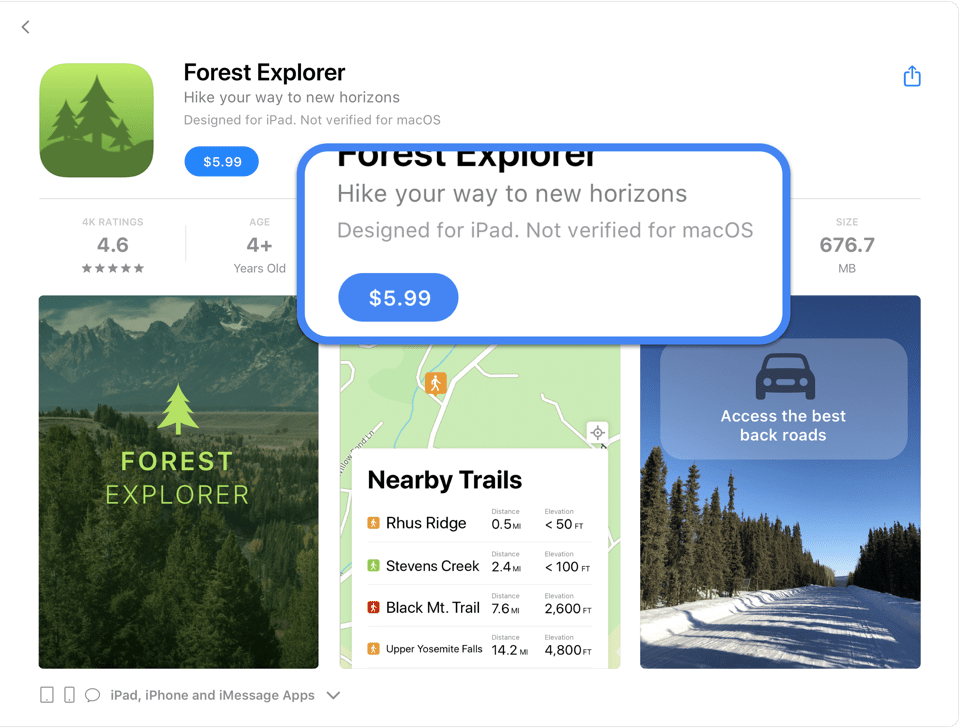
Apple is also encouraging developers to verify that their iPhone and iPad apps work on the M1 Macs. Apps built for iOS and iPadOS will be labeled as ‘Designed for iPhone’ and ‘Designed for iPad,’ so users can identify them, and if an app hasn’t been verified by its developer yet, it will also be labeled as ‘Not verified for macOS.’

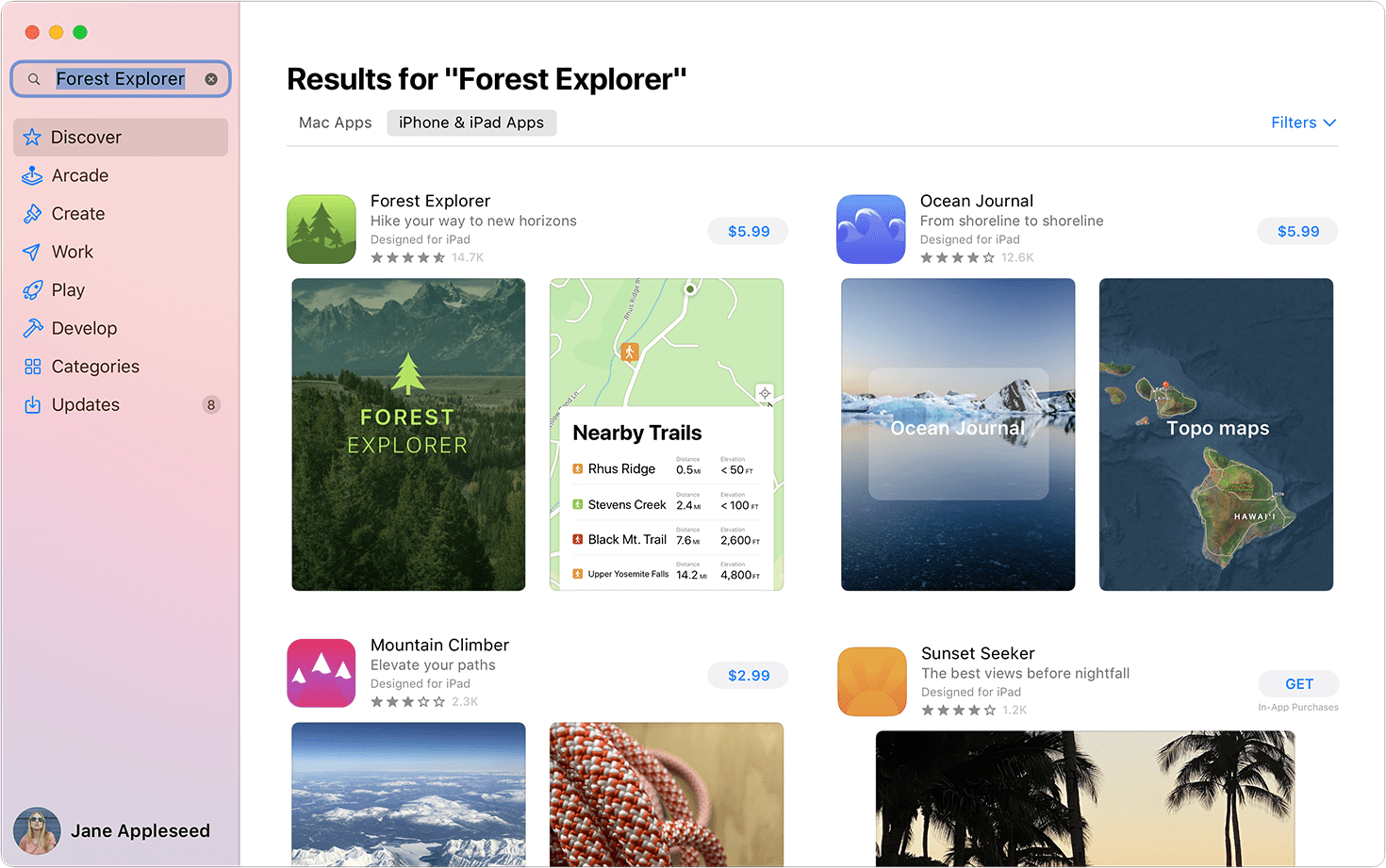
Search results will feature a toggle that separates Mac apps from iPhone and iPad apps. Source: Apple.

Search results will feature a toggle that separates Mac apps from iPhone and iPad apps. Source: Apple.

Apple’s developer documentation notes that iPhone and iPad apps can be found on the Mac App Store,

by browsing curated selections and charts, or by searching and clicking the “iPhone & iPad Apps” toggle at the top of search results.

The toggle strikes me as a good way to handle search results to help ensure that users understand which version of an app they are downloading. Also, developers who offer their iPhone or iPad app on the Mac App Store can later replace it with a macOS version, which will be delivered to users as an update to the app. However, if developers already offer a Mac app as part of a universal purchase, they cannot later offer an iPhone or iPad app instead.

It will be interesting to see how many apps opt out of the Mac App Store. There are many reasons why a developer might not participate, but I expect those that do will verify their apps relatively quickly to provide users with the confidence to try their app on a new M1 Mac.


Coming Soon: The 2020 Edition of the MacStories Selects Awards

For the first time last year, we honored our favorite apps of the year with physical MacStories Selects awards, featuring custom, hand-made awards that were shipped around the globe to each of 2019’s winners. The MacStories Selects Awards, which began in 2018, will be back again this year with awards in the following eight categories:

  • App of the Year
  • Best New App
  • Best App Update
  • Best New Feature
  • Best Design
  • Best Watch App
  • Best Mac App
  • Readers’ Choice Award

The response to the 2019 awards from readers and developers was tremendous. Last year we also introduced the Readers’ Choice Award, which is picked by Club MacStories members. If you’re a Club member, be sure to check out this Friday’s MacStories Weekly newsletter to enter your favorite app of 2020. We’ll only be accepting entries until the middle of next week, so don’t delay submitting your entries.

Every year, we look at hundreds of terrific apps. MacStories Selects is our way to call out a handful of our absolute favorites that are shining examples of the best apps on Apple’s platforms. We look forward to sharing our selections and our Club members’ pick very soon.