Posts in news

Apple Updates AirPlay 2 Page with Upcoming TV Features Including Siri Control

On the heels of the announcement that Samsung Smart TVs are gaining an iTunes Movie and TV Shows app and AirPlay 2 support, Apple has updated its AirPlay 2 page to highlight additional features that are coming to AirPlay 2.

AirPlay 2-Enabled TVs: Samsung may have been the first to announce support for AirPlay 2, but Apple’s webpage indicates that the feature is coming to ‘leading manufacturers,’ so expect more announcements at CES and beyond. In addition to using AirPlay 2 to send video from an iOS device or Mac to a compatible TV, consumers will be able to play music on their TVs and sync it with other AirPlay 2-compatible devices in their homes.

Control Your TV with Siri: Perhaps the most interesting feature is the ability to use Siri on your iPhone to send video to your TV. Because the new feature works in tandem with HomeKit, if you have multiple AirPlay 2 TVs, you’ll be able to specify the room in which you want the video to play.

Remote Control: Apple also indicates that remote control features are coming soon:

Convenient built-in controls appear in apps, on the Lock screen, and in Control Center. So you can easily play, pause, fast-forward, rewind, and adjust the volume on your TV.

Controlling the volume of a TV via AirPlay 2 would be new, and perhaps there’s something coming related to Apple’s reference to “built-in controls… in apps,’ but playback controls on the Lock screen and in Control Center already exist.

Apple is clearly using the days leading up to CES to implement the first moves in its video strategy. Observers have long wondered how Apple planned to extend the reach of a video service beyond the relatively small number of Apple TV owners. By cutting deals with TV manufacturers, Apple is moving down a path that is similar to the one Google has taken with the Chromecast and will be able to reach many more consumers. I wouldn’t be surprised if we see these new AirPlay 2 features begin to appear when Apple ships its first iOS 12.2 betas.

Samsung Announces iTunes Movies and TV Shows App and AirPlay 2 Support for Its Smart TVs

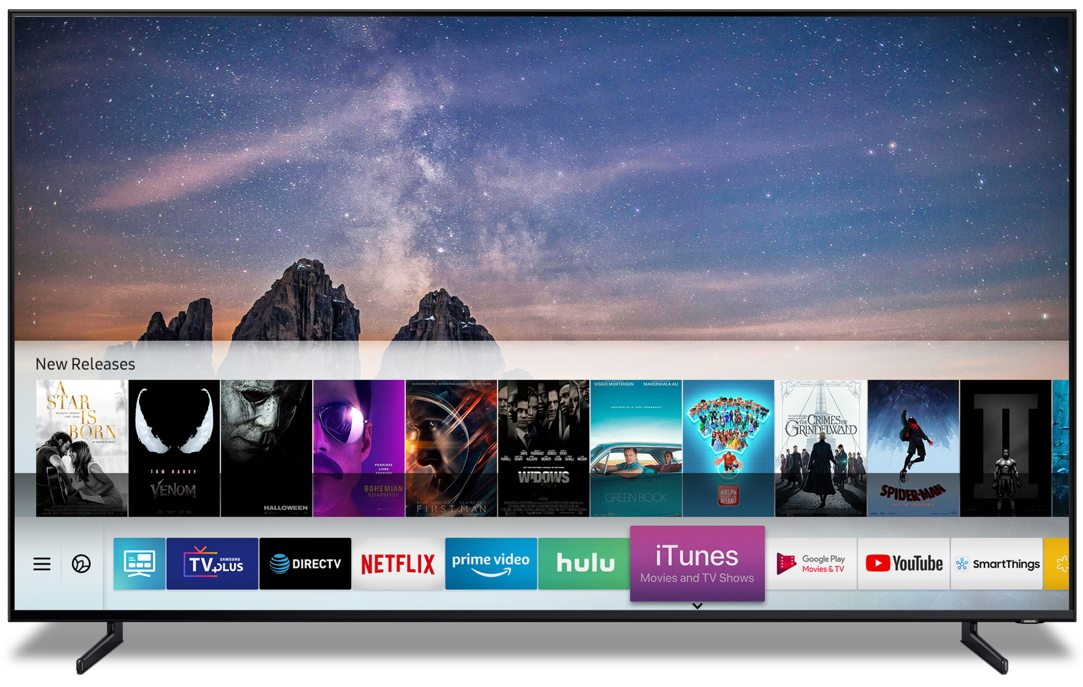
In a first among TV manufacturers, Samsung has announced that its 2019 TVs will ship with an iTunes Movies and TV Shows app in over 100 countries as well as AirPlay 2 support in 190 countries. 2018 models will receive the same support via a firmware update.

With the Consumer Electronics Show in Las Vegas just around the corner, Samsung’s US newsroom site issued a press release stating:

With the new iTunes Movies and TV Shows app on Samsung Smart TVs, Samsung customers can access their existing iTunes library and browse the iTunes Store to buy or rent from a selection of hundreds of thousands of movies and TV episodes — including the largest selection of 4K HDR movies. iTunes Movies and TV Shows will work seamlessly with Samsung’s Smart TV Services, such as Universal Guide, the New Bixby and Search, to create a consistent experience across Samsung’s platform.

With AirPlay 2 support, Samsung customers will be able to effortlessly play videos, photos, music, podcasts and more from Apple devices directly to Samsung Smart TVs, including QLED 4K and 8K TVs, The Frame and Serif lifestyle TVs, as well as other Samsung UHD and HD models.

The press release also reports Apple’s Eddy Cue as saying:

We look forward to bringing the iTunes and AirPlay 2 experience to even more customers around the world through Samsung Smart TVs, so iPhone, iPad and Mac users have yet another way to enjoy all their favorite content on the biggest screen in their home.

Apple’s partnership with Samsung, one of the largest global TV manufacturers, is particularly notable given Apple’s efforts to amass a stable of original content for a long-rumored video streaming service. By making existing and future content available directly within Samsung’s Smart TV system and providing a means for iOS device and Mac owners to easily play content on Samsung TVs, Apple greatly expands the potential viewership for the content it offers.


Apple Details iPad Pro Manufacturing Techniques and Flatness Standards

A new product launch wouldn’t be complete without some level of controversy, and for the 2018 iPad Pro models the kerfuffle has centered around bending. Some users have reported their devices being slightly bent out of the box, and Apple even confirmed to The Verge that this is the expected result of its manufacturing process. Today the company is adding to that explanation via a new support document on its website titled ‘iPad Pro unibody enclosure design.’

The document explains how every cellular iPad model undergoes a special manufacturing process called co-molding.

In this high-temperature process, plastic is injected into precisely milled channels in the aluminum enclosure where it bonds to micro-pores in the aluminum surface. After the plastic cools, the entire enclosure is finished with a precision CNC machining operation, yielding a seamless integration of plastic and aluminum into a single, strong enclosure.

Interestingly, this co-molding process isn’t used as an excuse for some iPads’ slight bends, but instead it’s presented as evidence of Apple pursuing even stricter flatness standards than ever before. The following paragraph states:

These precision manufacturing techniques and a rigorous inspection process ensure that these new iPad Pro models meet an even tighter specification for flatness than previous generations. This flatness specification allows for no more than 400 microns of deviation across the length of any side — less than the thickness of four sheets of paper. The new straight edges and the presence of the antenna splits may make subtle deviations in flatness more visible only from certain viewing angles that are imperceptible during normal use. These small variances do not affect the strength of the enclosure or the function of the product and will not change over time through normal use.

In other words, the latest iPad Pros are actually held to a stricter standard for flatness than previous iPads, but even the smallest variations may now be more visible than on previous models due to the new straight edges of the device.

The support document closes with reminders about existing Apple policies: that all products purchased from Apple include a 14-day return policy, and hardware defects outside Apple’s stated specifications are covered by a standard one-year warranty.

The iPad Pro’s bending controversy has reached nowhere near the level of attention as that of the iPhone 6 Plus a few years back, but it’s nice to finally receive official word from Apple on the subject. If your iPad is bent enough that it’s obvious and noticeable in daily use, there’s a decent chance the bend exceeds 400 microns, and thus would be covered under warranty. With slighter bends, however, it seems those are a cost we have to pay for enjoying the iPad Pro’s boxy, straight-edged new design.


Apple Announces Record App Store Sales During Holidays

Hot on the heels of yesterday’s announcement regarding disappointing holiday iPhone sales, today Apple has better news to share: the App Store enjoyed a record breaking sales period recently, with over $1.22 billion in App Store spending taking place between Christmas Eve and New Year’s Eve. This marks the biggest sales week ever for the App Store, and it was followed by the biggest single day ever: New Year’s Day 2019 brought $322 million in sales, up from last year’s then-record $300 million.

Apple’s press release provides more color on some apps and categories that were particularly successful:

Gaming and self-care were the most popular categories of app downloads and subscriptions during the holidays. Globally, multiplayer games including Fortnite and PUBG were among the top downloaded games over the holidays, along with Brawl Stars, Asphalt 9 and Monster Strike. Productivity, Health & Fitness and Education apps are already capturing the attention of customers in the first few days of the year with 1Password, Sweat and Luminosity charting in their respective categories.

$1.22 billion is a major increase from last year’s $890 million figure, and a remarkable number for one of Apple’s most profitable services. As Apple continues beating the drum that services are of growing importance to the company, news like this helps prove that claim’s validity.


Apple Revises Q1 Financial Guidance Following Poor iPhone Sales

In a letter to investors, Apple CEO Tim Cook has stated that the company has revised its financial guidance for the holiday fiscal quarter that ended on December 29th as follows:

  • Revenue of approximately $84 billion
  • Gross margin of approximately 38 percent
  • Operating expenses of approximately $8.7 billion
  • Other income/(expense) of approximately $550 million
  • Tax rate of approximately 16.5 percent before discrete items

We expect the number of shares used in computing diluted EPS to be approximately 4.77 billion.

Here’s the guidance that Apple gave November 1, 2018 when it reported its fourth quarter 2018 results:

  • revenue between $89 billion and $93 billion
  • gross margin between 38 percent and 38.5 percent
  • operating expenses between $8.7 billion and $8.8 billion
  • other income/(expense) of $300 million
  • tax rate of approximately 16.5 percent before discrete items

That’s a miss of $5-9 billion in revenue. Cook’s letter is lengthy, but the lion’s share of the problem comes down to lower than expected iPhone revenue:

Lower than anticipated iPhone revenue, primarily in Greater China, accounts for all of our revenue shortfall to our guidance and for much more than our entire year-over-year revenue decline. In fact, categories outside of iPhone (Services, Mac, iPad, Wearables/Home/Accessories) combined to grow almost 19 percent year-over-year.

While Greater China and other emerging markets accounted for the vast majority of the year-over-year iPhone revenue decline, in some developed markets, iPhone upgrades also were not as strong as we thought they would be. While macroeconomic challenges in some markets were a key contributor to this trend, we believe there are other factors broadly impacting our iPhone performance, including consumers adapting to a world with fewer carrier subsidies, US dollar strength-related price increases, and some customers taking advantage of significantly reduced pricing for iPhone battery replacements.

Although there have been rumors of lackluster iPhone sales for weeks based on supply chain leaks, a miss of this magnitude caused by falling iPhone revenue is still a big surprise, which is no doubt why Apple chose to address the issue before its next earnings report is released.


Apple Heavily Promotes the Amazon Echo’s Apple Music Integration

At the end of November, Amazon announced on its blog that Apple Music would be coming to Echo devices the week of December 17th. The music streaming service showed up on Echos a little earlier than expected last Friday, December 14th.

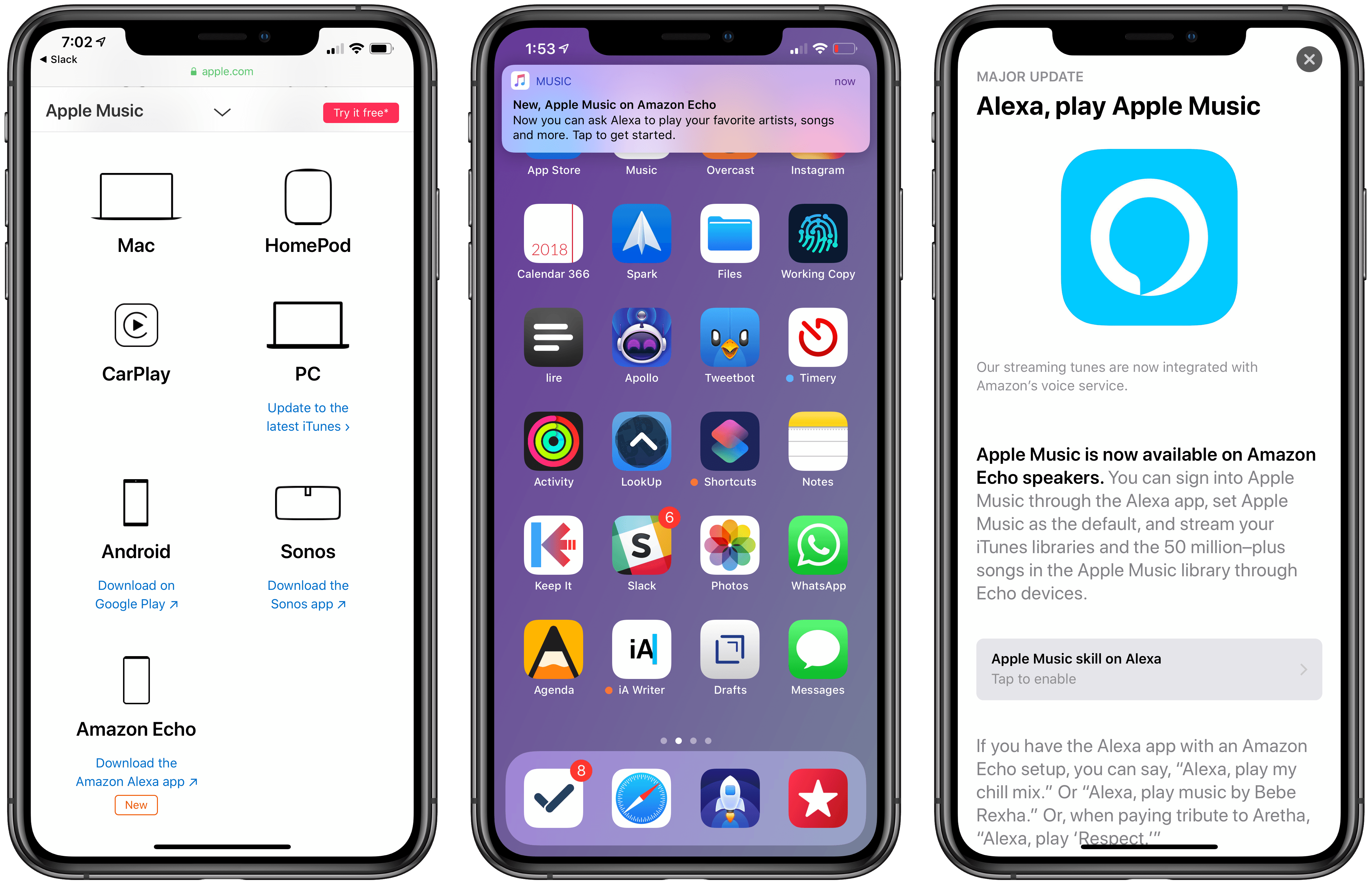
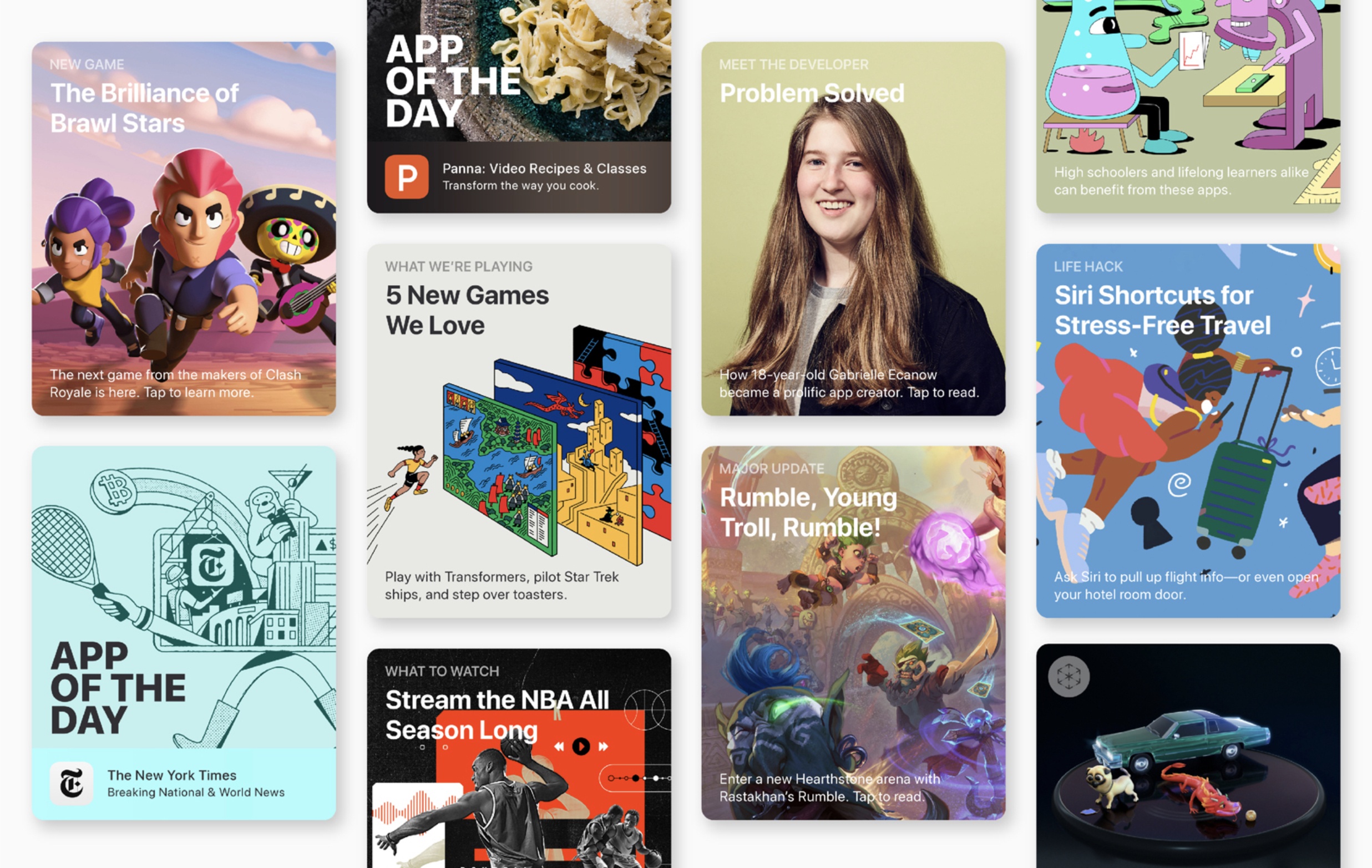
Today, Apple began promoting Apple Music’s availability on Echo devices through three different channels. The Echo integration first appeared on the App Store, which gave the Alexa app top billing in a Today tab story that highlights the new feature. Apple is also promoting the Echo integration on the Apple Music features page of its website along with other third-party devices like PCs, Android devices, and Sonos music players. Finally, late in the day US time, the Apple Music app began delivering push notifications highlighting the Echo feature.1

Amazon’s Echo devices aren’t the first third-party hardware to get Apple Music support as the Apple Music website demonstrates, but it is unusual for Apple to promote another company’s hardware alongside Apple Music to this degree. It’s also surprising because, in the two weeks that followed Amazon’s announcement, Apple said nothing. Nor did it acknowledge the change four days ago when the Alexa app was updated.

I wouldn’t be surprised if promoting the Echo was part of a bigger deal that got Apple products back on Amazon shelves in early November. Whether or not that’s the case, it’s still interesting to see Apple, which offers the competing HomePod, put so much promotional weight behind Amazon’s smart home speaker.


  1. I’m not a fan of promotional push notifications like these, which violate App Review Guideline 4.5.4 against using push notifications for advertising and promotional purposes. Unfortunately, that’s a rule that Apple has violated itself before and one that it has never meaningfully enforced against third parties. ↩︎

Apple Music Is Now Available on the Amazon Echo

Although Amazon initially indicated that it would be out the week of December 17th, Apple Music support has begun to roll out on Amazon Echo devices today in the US.

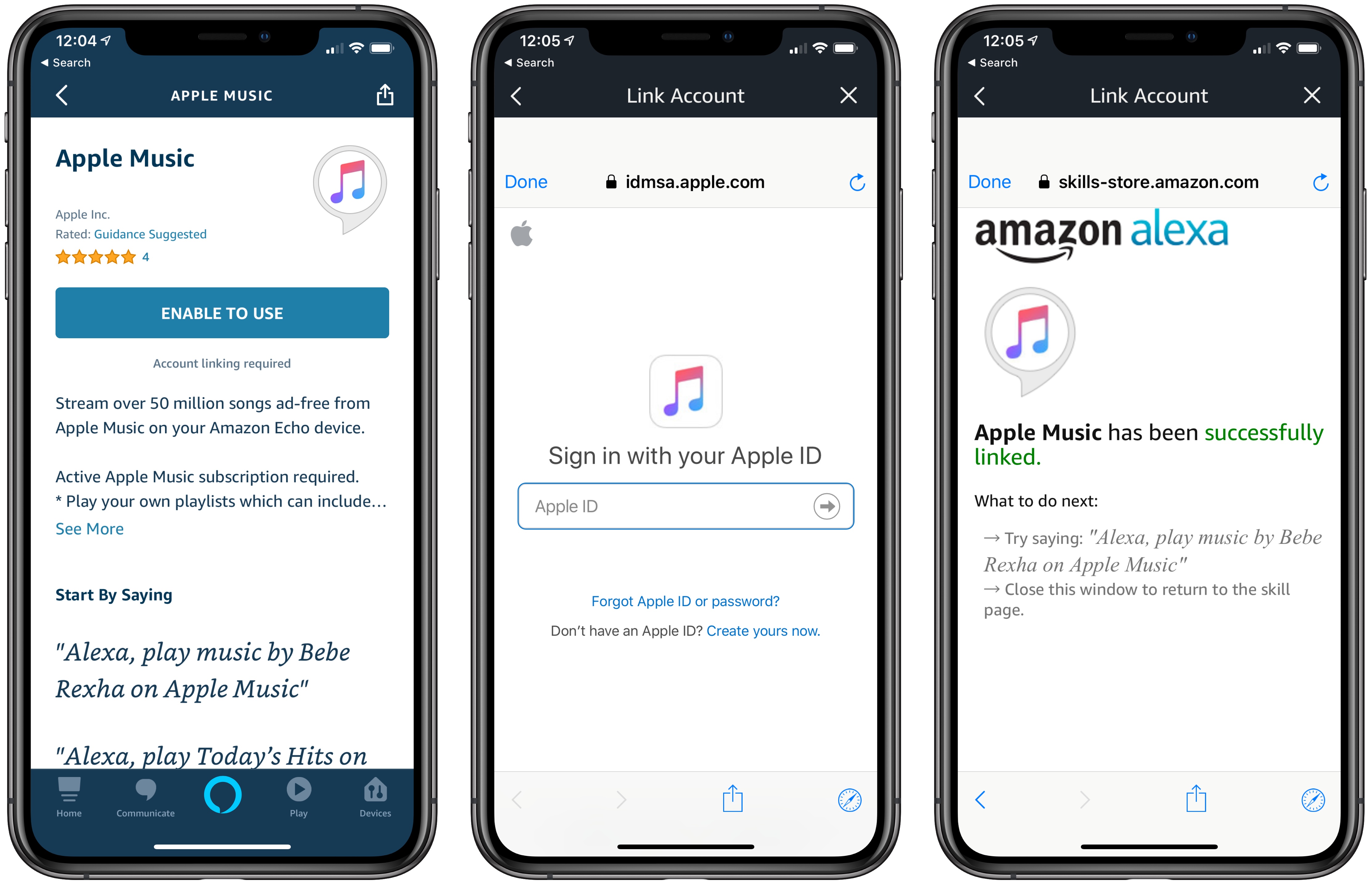
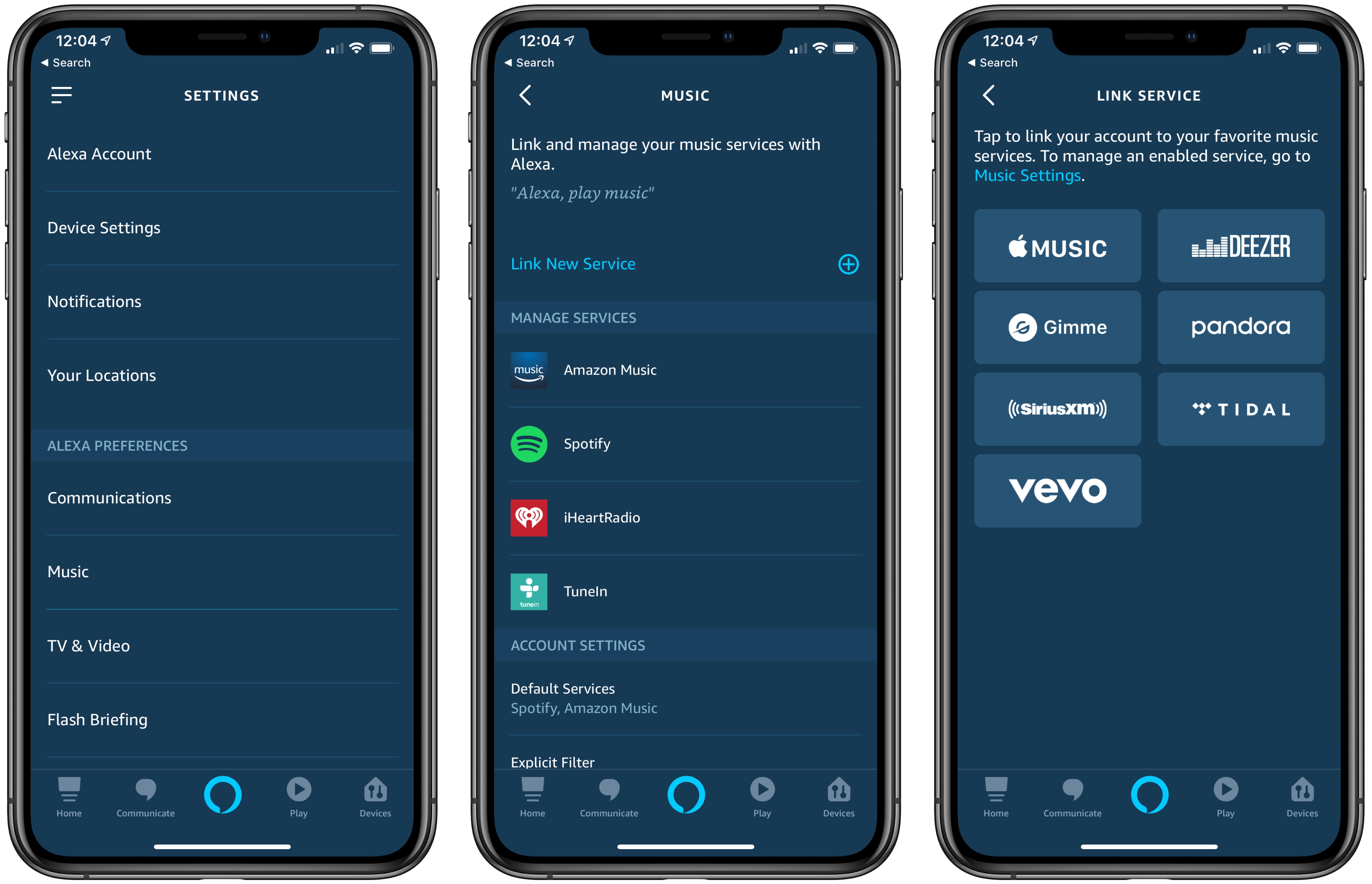
To set up Apple Music on the Echo, open the Alexa iOS app and go to the Music section of the app’s Settings. You won’t see Apple Music listed as an existing service, so tap the ‘Link New Service’ button, which will list Apple Music along with several other services.

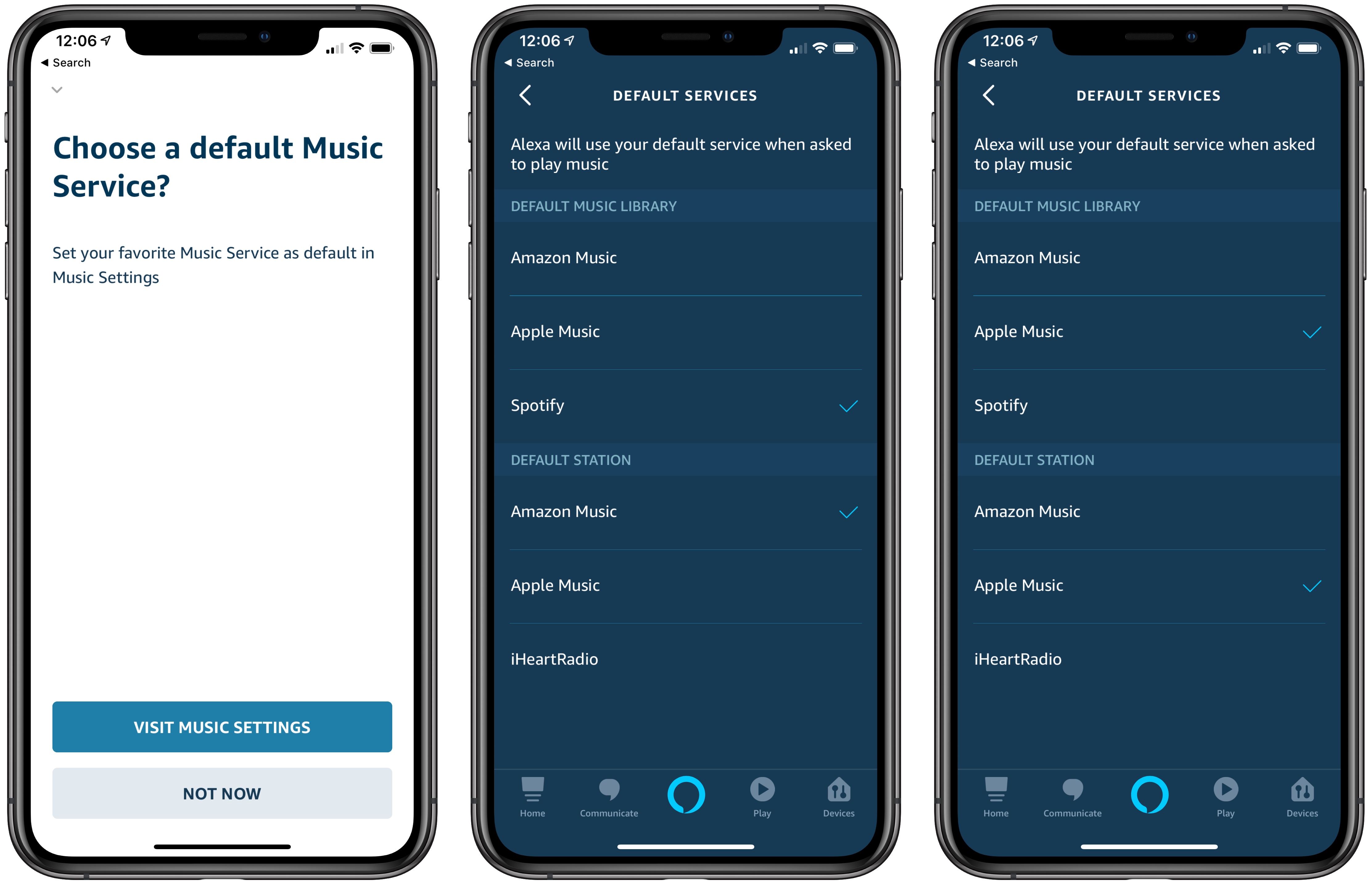
Once you’ve logged in with your Apple Music credentials, the Apple Music Skill is enabled, which allows you to say things like ‘Alexa, play my New Music Mix on Apple Music.’ You can separately set Apple Music as your default music service, which lets you use Alexa to request music without specifying ‘on Apple Music.’ When you make a request for music Alexa will let you know that playback is coming from Apple Music with a response like ‘Playing New Music Mix from Apple Music.’

Not all of the Apple Music features that work on a HomePod work with an Echo. For example, although Alexa will acknowledge your feedback if you say you like a song, that does not result in the songs being marked as ‘liked’ in Apple Music or iTunes. Nor can Apple Music be triggered through third-party Alexa apps like Astra. However, for basic playback of playlists, albums, and songs, the new integration works well.

At least one thing you cannot do with a HomePod is available on the Echo. With Apple Music activated, you can set alarms to play specific playlists as Zac Hall demonstrates on 9to5Mac, which is handy.

Overall, Apple Music’s integration with the Amazon Echo is about what you would expect. If you’re an Apple Music subscriber and use Echo devices, the option of using your Apple Music subscription is a nice addition, but it’s also a development that has the potential to help drive consumer adoption of the Echo and Apple Music.


Apple Music’s Connect Feature Is Shutting Down

Apple Music Connect, which once had a tab to itself in Apple’s Music app, was a multimedia feed of artist-submitted posts that debuted with the company’s music streaming service. The feature never really got traction after an initial flurry of posts by artists, and in the latest versions of Apple Music and iTunes, it was buried at the bottom of the ‘For You’ section and on individual artists’ pages.

According to Zac Hall at 9to5Mac, artists were contacted by Apple today with news that the company is ending Connect, which is backed up by a support page also cited by Hall. As of today, artists can no longer post Connect content, and existing posts are no longer visible in the Music app or iTunes. However, Apple also told artists that previously-uploaded content would remain available until May 24, 2019, via search.

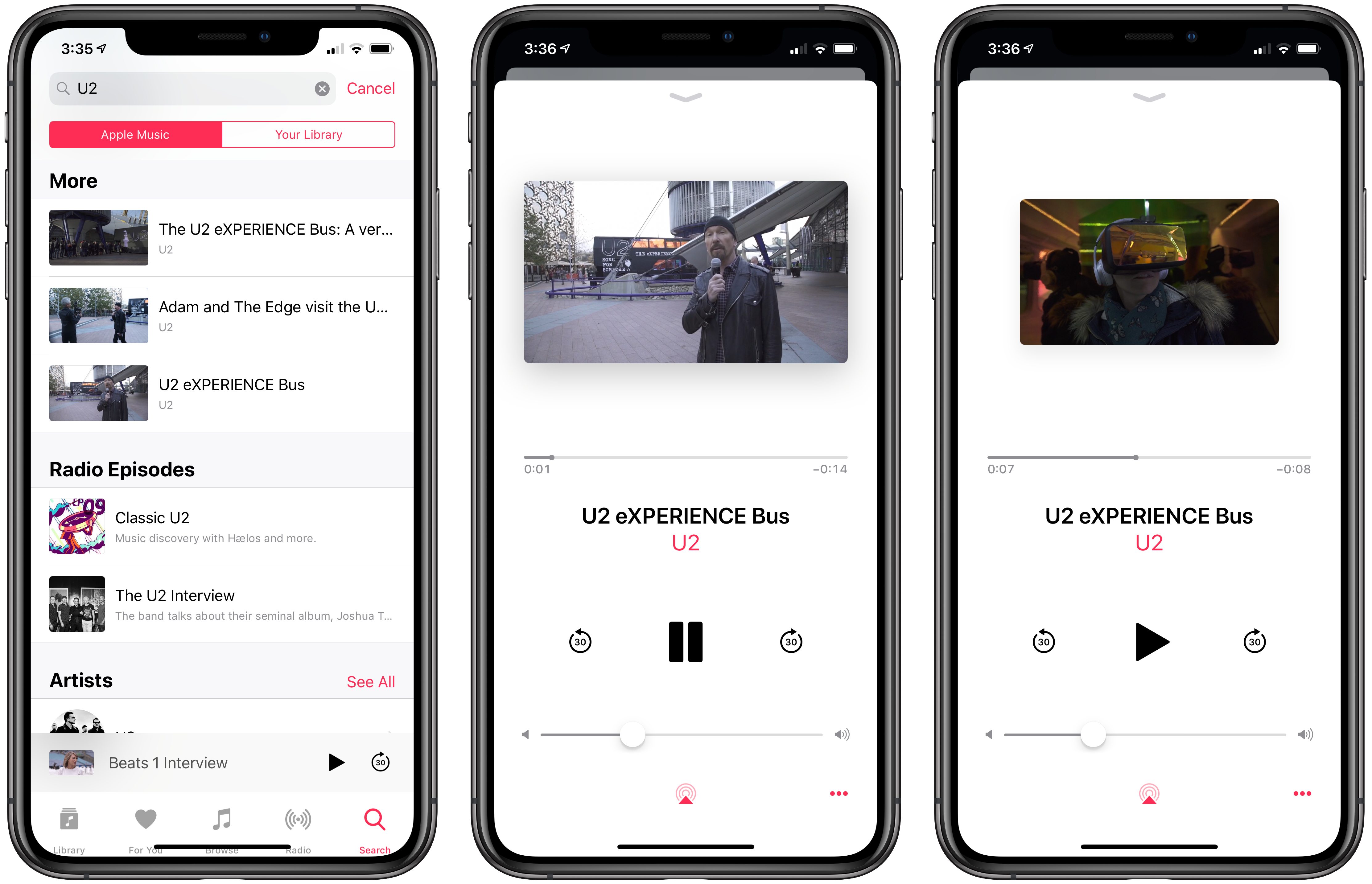
Connect content appears in the 'More' section of search results.

Connect content appears in the ‘More’ section of search results.

Based on searches of artists who I recalled having participated in Connect, it looks as though that content is included in the ‘More’ section of search results. Presented outside the context of an explanatory post, some of the material, like U2’s tour of its eXPERIENCE VR bus in the screenshots above, feels out of place. However, I’m glad Apple has chosen to preserve Connect content for the time being because it also included things like alternate versions of songs and other material that is valued by fans. Hopefully, the best of that content will surface elsewhere for fans to enjoy.

Connect wasn’t Apple’s first attempt to bring music fans and artists together. Ping, Apple’s attempt at a music-themed social network that NPR called one of the worst ideas of 2010, failed more swiftly than Connect. The third try may be the charm, however. With iOS 11, Apple introduced the ability to follow friends as a way to discover new music, which has been met with greater acceptance by users.


Apple Announces New Austin Campus and Broad Expansion Across the US


Apple has announced a significant expansion across the US, including an expanded presence in Austin, a city where it currently employs over 6,000 people. Over the next three years, Apple also plans to grow to more than 1,000 employees in Seattle, San Diego, Culver City and add hundreds of jobs in New York, Pittsburgh, Boulder, Boston, and Portland. The company is also expanding its data centers in places like North Carolina, Nevada, Iowa, and Arizona.

At the center of the announcement though is a new facility that will be located in North Austin not far from Apple’s current Austin campus. The new office will cost over $1 billion to build and sit on a 133-acre site, 50 acres of which will be set aside for open space. Initially, the Austin campus will house 5,000 employees, with the ability to expand to as many as 15,000. The new complex will run on 100% renewable energy too.

Regarding the new site and the company’s expansion plans across the US, Apple CEO Tim Cook said:

“Apple is proud to bring new investment, jobs and opportunity to cities across the United States and to significantly deepen our quarter-century partnership with the city and people of Austin,” said Tim Cook, Apple’s CEO. “Talent, creativity and tomorrow’s breakthrough ideas aren’t limited by region or zip code, and, with this new expansion, we’re redoubling our commitment to cultivating the high-tech sector and workforce nationwide.”

Overall, Apple added 6,000 jobs in the US during 2018 to bring its total US employee count to 90,000.