Federico Viticci

10759 posts on MacStories since April 2009

Federico is the founder and Editor-in-Chief of MacStories, where he writes about Apple with a focus on apps, developers, iPad, and iOS productivity. He founded MacStories in April 2009 and has been writing about Apple since. Federico is also the co-host of AppStories, a weekly podcast exploring the world of apps, Unwind, a fun exploration of media and more, and NPC: Next Portable Console, a show about portable gaming and the handheld revolution.

Keyboard Maestro 6.2

Keyboard Maestro 6.2 was released a few weeks ago and it includes some interesting additions. The Mail integration has been substantially improved with new actions to send email messages and set statuses, as well as tokens plus date, status, and action functions. Working with AppleScript and Mail has always been a problem for me, and I welcome Keyboard Maestro’s built-in support that makes things incredibly easier.

Also of note: JavaScript can now access Keyboard Maestro variables (good for bookmarklets integrated with the app) and Andreas Zeitler’s excellent new Markdown Library is now built into the app itself.

For more Keyboard Maestro coverage, see my original post on version 6.0 and subsequent articles based on it.

Permalink

Apple Confirms: Media Event On September 10

As first reported by The Loop’s Jim Dalrymple, Apple has today sent invitations to selected members of the press for a September 10th media event on Apple’s campus in Cupertino. The date of the event was also reported by AllThingsD’s Ina Fried last month.

According to speculation from the past few months, Apple’s event will focus on the introduction of new iPhone models, namely the successor to the iPhone 5 (so far unofficially called the “iPhone 5S”) and a possible new lower-price entry in the iPhone line – the “iPhone 5C”. Our Cody Fink shared his thoughts on the possibility of an entry-level iPhone back in July; as for the iPhone 5S, recent rumors have suggested that the device may include a fingerprint sensor, improved camera, and a golden color option.

Apple’s new major iOS update, iOS 7, is also expected to make its formal debut at the media event. Originally announced at Apple’s developer conference in June, iOS 7 has seen six beta releases for registered developers throughout the summer with changes and improvements to the redesign and new features that Apple unveiled in June. Typically, Apple releases “golden master” builds of iOS updates at its September media event, so an iOS 7 GM is to be expected on September 10, with Apple asking developers to start submitting iOS 7 apps to the App Store shortly after. Other software releases that may make an appearance on September 10 include OS X Mavericks, a new version of iTunes with iTunes Radio support, redesigned Apple apps (such as iWork) for iOS 7, and a new version of iCloud.com with an iOS 7-matching redesign.

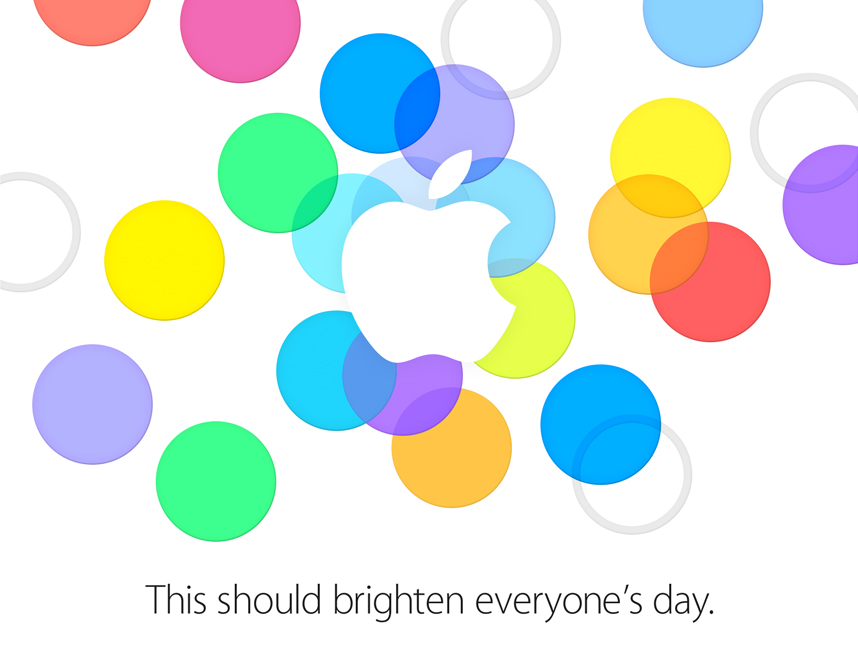
As shared by Tim Bradshaw, the event’s invitation reads “This should brighten everyone’s day”, possibly hinting at the new iOS 7 and (rumored) iPhone 5C colors.

We’ll be covering Apple’s September 10 announcements with a dedicated hub on MacStories. You can subscribe to this tag page via RSS to receive every update for Apple’s September 10 media event.


John Siracusa On Nintendo

John Siracusa:

But if the time of the game console is not yet at an end (handheld or otherwise), then Nintendo has a lot of work to do. It needs to get better at all of the game-related things that iOS is good at. It needs to produce software that clearly demonstrates the value of its hardware—or, if that’s not possible, then it needs to make new hardware.

Any advice that leads in a different direction is a distraction.

A lot has been written about Nintendo this week, and I feel like several articles and tweets miss the point of understanding Nintendo for what it is: not Apple. Not a software company, not a regular game company, and certainly not a company that likes ceding control of its destiny to others. I think that viewing Nintendo through the lens of Apple and just as another company that could make games for the App Store is the wrong approach.

John understands Nintendo. Here’s an excerpt from my interview with him published earlier this year:

Second, in my own experience with my 8-year-old son, Nintendo games still have an unmatched ability to capture the hearts and minds of kids. My son has been exposed to a ton of iOS games, on the iPod and iPad, plus PS2, PS3, and even PC/Mac games. But he chooses to spend the vast majority of his gaming time on a Nintendo console, playing both “casual” games (Wii Sports, Nintendoland) and long, deep games (Zelda, Mario).

This is not to minimize Nintendo’s woes. The threat from iOS gaming is very real. But it is heartening to know that the things we love about Nintendo are not entirely based on nostalgia.

A common argument that I’ve also read this week is that Nintendo isn’t making good games anymore. My experience mirrors John’s: I know children and teenagers who play iOS games but also own Nintendo consoles to play Mario, Luigi’s Mansion, Fire Emblem, or Mario Kart. There is something about the magic of Nintendo games that is unmatched by the App Store.

Nintendo has work to do – I even said as much in November 2011. Their problems aren’t new but they have been exacerbated by the Wii U’s failure and it’s time to fix them. For instance, refusing to launch a Wii U Ambassador Program is confusing, as Nintendo should cater to its most loyal fanbase, and reward those who bought a Wii U in times of crisis, like they did for the 3DS.

I believe that applying the same standards of the tech industry to Nintendo is a flawed process; Nintendo should face the threat of mobile gaming by being Nintendo at its best. I’d like to see more articles about this, not the App Store.

Permalink


Editorial Workflow for iThoughts

I had a feeling it was only a matter of time before Rob Trew started playing around with Editorial. Rob is the author of some of the most amazing scripts for OmniFocus and mind-mapping that I’ve ever used, and now he has created an Editorial workflow to turn a Markdown document into a tab-indented list that can be pasted in iThoughtsHD. In iThoughts, you’ll end up with a nicely formatted mind map that respects the indentation of the original document. This is just another example of Editorial’s flexibility in the workflow system and Python scripting.

Side note: I still have to check out iThoughts’ new Mac version, iThoughtsX. I’ve just been too busy finishing an eBook and submitting it to Apple.

Permalink


Nintendo Vs. Apple Pundits

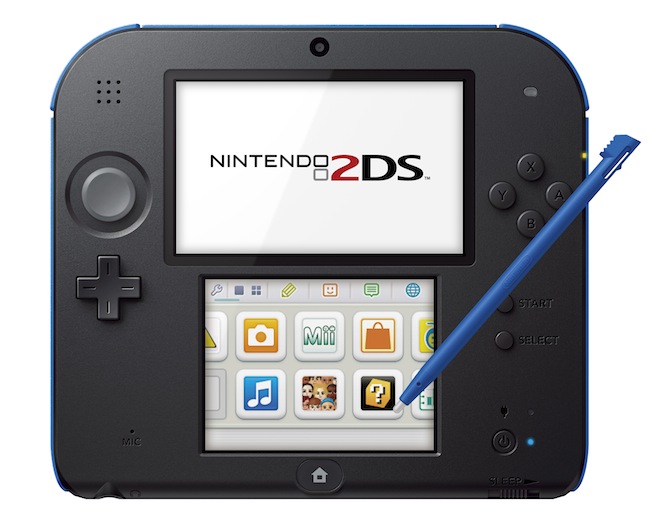
Yesterday, Nintendo announced a new portable console to play 3DS games that doesn’t actually support the 3DS’ 3D effect, a price cut for the Wii U, and various release dates for its upcoming holiday line-up. Unsurprisingly, several Apple-focused writers and bloggers suggested – again – that Nintendo is doomed; that they should start making games for iOS; and that Apple should just outright buy Nintendo.

I believe this notion – that in order to survive, Nintendo has to start making games for the App Store – shows a profound misunderstanding of how Nintendo works, operates, and, generally, plans its long-term future. I have discussed the topic with Myke last night on The Prompt.

Lukas Mathis has published an excellent post that aptly sums up what is wrong with the new “default narrative” about Nintendo:

Mac users should be familiar with the argument against this reasoning. Fantastic games like Super Mario 3DS Land can only exist because Nintendo makes both the hardware and the software. That game simply could not exist on an iPhone.

But there’s an additional problem with this argument: the premise is completely wrong. Nintendo is actually not doing poorly in the portable market. iPhones have not destroyed the market for portable gaming devices. The 3DS is, in fact, doing very well.

Nintendo and Apple may share some similarities (namely, tight integration of hardware and software), but their execution is profoundly different. Following Nintendo’s history and patterns through the years and just looking at the company’s numbers reveals a different approach and strategy.

Again, from Mathis’ piece:

The hypothesis that Nintendo needs to abandon the hardware market because the iPhone destroyed the market for portable gaming just isn’t consistent with reality.

The idea that Nintendo should make games for iOS is fascinating, easy to grasp and follow, but flawed. Nintendo doesn’t work like Apple. And, more importantly, Nintendo can’t – and doesn’t want to – be Apple. Nintendo is a mix of a toy company and a game company: consoles exist to support Nintendo’s crown jewels – the games and first-party franchises.

Nobody is denying that the Wii U is doing poorly: the console needs more quality first and third-party games, a better marketing message (same for the upcoming 2DS), and a clearer position in the market. But the overall numbers paint a different picture than what some Apple pundits are claiming: the Wii U is only slightly behind the point where the GameCube was at the same point in the console’s lifespan – and Nintendo did manage to turn a profit on the GameCube. The Wii remains the top-selling console of the current generation. The first 130 weeks of sales of the 3DS – as Mathis also notes – are comparable to those of the Nintendo DS – the second (soon first?) best-selling console of all time. Again, to understand this all you need to do is look at Nintendo’s numbers.

Mobile “casual” games are selling millions of copies (in many cases, in-app purchases) today, and Nintendo’s portable game sales are healthy, too. Here’s just one data point: Animal Crossing sold 1.54 million copies in the last quarter (a month ago, it was up to 4.5 million copies sold since its original release). Assuming that Nintendo makes around $30 in average revenue on first-party games, that would make for $46 million in revenue, in a single quarter, on a single game. Want more examples? As of March 2013, Luigi’s Mansion sold 1.22 million copies; Super Mario 3D Land moved 8.19 million copies; Monster Hunter 3 – a third-party, four-year old game – sold 2.10 million copies; also as of March 2013, Mario Kart 7 sold 8.08 million copies. Here’s what Nintendo’s upcoming line-up looks like, and add Pokémon X & Y to that (the series’ DS games, Black & White 1/2, sold 23.05 copies combined as of January-March 2013).

The 2DS is controversial and it may seem to lack any sort of practical sense, but it’s actually basic Nintendo 101 (do these other revisions ring a bell?). Except that, this time, the 2DS is aimed at addressing concerns of 3D games for children and the whole point is to sell the 2DS to kids for the holiday season, possibly alongside a copy of Pokémon.

Nintendo’s strength right now is that, once again, they can revolve around the fulcrum of portable hardware and game sales to sustain their operation, turn a profit, and buy more time to fix the mess that was the Wii U launch. Saying that Nintendo should shut everything down, go home, and start making games for iOS is an easy but flawed solution that just isn’t supported by the facts.


Soulver for iPhone Updated with iCloud Syncing, URL Scheme

Soulver, my favorite iOS calculator app that isn’t really a calculator (I like another app for that), was updated today on the iPhone to support iCloud syncing, sub-folders, and a URL scheme. iCloud syncing was first brought to Soulver for Mac in December 2012, and now the iPhone app (Soulver for iPad hasn’t been updated yet) should be capable of syncing named documents with its Mac counterpart. If you trust iCloud with your Soulver documents, I guess that this will be a handy addition.

The URL scheme is much more interesting for my workflow. According to the release notes on iTunes, there’s now a URL scheme to launch Soulver, create a new document with text, or even to append text to an existing document. I am already thinking about the possibilities opened up by this feature for integration with apps like Launch Center Pro and Drafts – but I can’t find documentation anywhere. The app does support a soulver:// URL scheme, and hopefully more information will soon be posted on Acqualia’s website.

I’m looking forward to playing with Soulver’s URL scheme and updated preferences (not so much with iCloud sync). Soulver for iPhone is $2.99 on the App Store.

Update 9/1: The guys at Acqualia have posted a URL scheme documentation here. I have already set up a Drafts URL action that lets me quickly type a calculation in Drafts – which is my go-to text capturing tool – and append it as a new line to a specific Soulver document I have called “Calculations”. From Drafts:

soulver://new?text=[[draft]]&title=Calculations

I’m already using this action all the time to launch quick currency conversions in Soulver. Open Drafts, type “2 usd in eur”, and boom – Soulver opens, displaying the result. It’s a nice URL scheme.

Permalink

The Omni Group Releases OmniKeyMaster Mac App Store License Tool

From The Omni Group’s blog:

OmniKeyMaster is a simple app that finds App Store copies of Omni apps installed on your Mac, then generates equivalent licenses from our store - for free. This gives Mac App Store customers access to discounted pricing when upgrading from the Standard edition to Professional, or when upgrading from one major version to the next. Another benefit: since they don’t have to wait in an approval queue, our direct releases sometimes get earlier access to new features and bug fixes. OmniKeyMaster lets App Store customers access those builds, as well.

Tools like OmniKeyMaster have become quite common lately, as developers of third-party Mac apps keep struggling with the limitations imposed by Apple on the Mac App Store. Having new versions of apps every time a major upgrade is released isn’t an option for many developers, and they are resorting to workarounds like this to have the best of both worlds: the Mac App Store’s purchase system and the control on your own website and app updates. It’s a trade-off, and, in most cases, the process is quite convoluted.

In The Omni Group’s defense, their Mac App Store license tool seems easy to use and clever in how it finds all App Store copies of Omni apps on a Mac. Apple may not be interested in offering upgrade pricing on the Mac App Store, but developers find a way…or at least a viable workaround.

Permalink