Federico Viticci

10865 posts on MacStories since April 2009

Federico is the founder and Editor-in-Chief of MacStories, where he writes about Apple with a focus on apps, developers, iPad, and iOS productivity. He founded MacStories in April 2009 and has been writing about Apple since. Federico is also the co-host of AppStories, a weekly podcast exploring the world of apps, Unwind, a fun exploration of media and more, and NPC: Next Portable Console, a show about portable gaming and the handheld revolution.

The Sweet Setup’s Rundown Of Photo Stream Alternatives

Bradley Chambers, writing at The Sweet Setup:

When it comes to syncing data across our devices, we’ve largely “arrived.” If you predominately use all Apple or Google apps and services, then most of your data and documents are synced through those first-party services. And if you use 3rd-party apps and services (such as the aforementioned ComiXology, Kindle, Audible, et al.), many of them provide their own syncing with apps available on all our devices.

One of the last major hurdles for syncing across all our devices and computers is with photos and home movies.

I was surprised by Bradley’s pick, but, with that pricing, it is indeed a good deal.

I’ve personally been using the free trial of Picturelife for a few months now, and I think I’m going to upgrade to Premium for the summer. I like the Picturelife apps and especially the Map view they have on the web to visualize photos by location. The company is focused on making a great product and I hope they will stick around in the future.

The question, of course, is iOS 8. Right now, I’m using a complex workflow to organize my photos in Dropbox and mirror them to Picturelife. I would love to see new iCloud photo announcements next week.

Permalink

Tokens 1.2

From the Tokens blog:

With Tokens 1.2 we’re introducing Campaigns. As well as the convenient URLs we’ve always had for sharing and tracking individual promo codes, you can now add multiple codes to a campaign and use a single URL to share them. When a user clicks redeem on a campaign page we vend them an individual token, prioritising ones that are closer to their expiration date, and use cookies to prevent refreshing from using up more codes.

Originally launched in 2012, Tokens lets developers generate promo codes from iTunes Connect easily, without logging into the website using a browser. The app can keep track of codes that have been redeemed by users, and, personally, I’m always happy to come across Tokens links as they instantly open iTunes’ redeem page and I don’t have to copy & paste anything.

The new Campaigns feature sounds interesting and easier for developers to keep track of, and I like the idea of Passbook support for WWDC. With the update, Tokens is also getting a new pricing model and different limitations in the trial version. You can read the details here.

Permalink

iOS 8 Banner Going Up at Moscone West

Click for full size.

Click for full size.

It’s been four days since Apple began decorating Moscone West with WWDC 2014 banners, and today the company has started hanging new signage hinting at the next major version of iOS, iOS 8.

Last year, Apple displayed banners suggesting a different look for iOS with a colorful and thin “7” logo on a minimalistic background. This year, Apple has taken a different approach with a water background (reminiscent of the iOS 6 banner in 2012) and a white “8” logo.

In a press release published in April, Apple said that WWDC 2014 would give developers from around the world a chance to ”learn about the future of iOS and OS X”. Apple is expected to unveil iOS 8 and the next version of OS X during the WWDC keynote; OS X is expected to receive a complete redesign with a significant overhaul of the Aqua interface, while iOS 8 is rumored to be an iterative update focused on refinements and new featured based on last year’s bold new look.

Update: The banner for OS X went up as well.

You can follow @MacStoriesNet on Twitter or our WWDC 2014 hub for updates.

Our thanks goes to Steve Streza and Alex Novosad for providing the photos and helping us with coverage from San Francisco.


MindNode 3.1 Adds Redesigned Outline, Markdown Export

MindNode is an elegant and powerful mindmapping app that I use on all my devices to visualize thoughts and topics before writing an article or preparing research for a podcast episode. I’ve been a fan of MindNode for years, and I was particularly impressed with version 3.0, which brought a new iOS 7 design alongside more intuitive interactions, better iCloud sync, and keyboard shortcuts.

Today’s 3.1 update, available on the App Store, features an entirely new sidebar for your mindmap outline that replaces the app’s old popover. The advantage of the sidebar approach is immediately clear on the iPad, and especially in landscape mode: with the new version, you can keep the map and sidebar open at the same time, tapping on items in the outline to select the respective node on the map (and vice versa).

Read more


Editorial 1.1: Another Step Forward for iOS Automation

Editorial, Ole Zorn’s text automation tool and Markdown editor for iOS, has changed the way I work on my iPad.

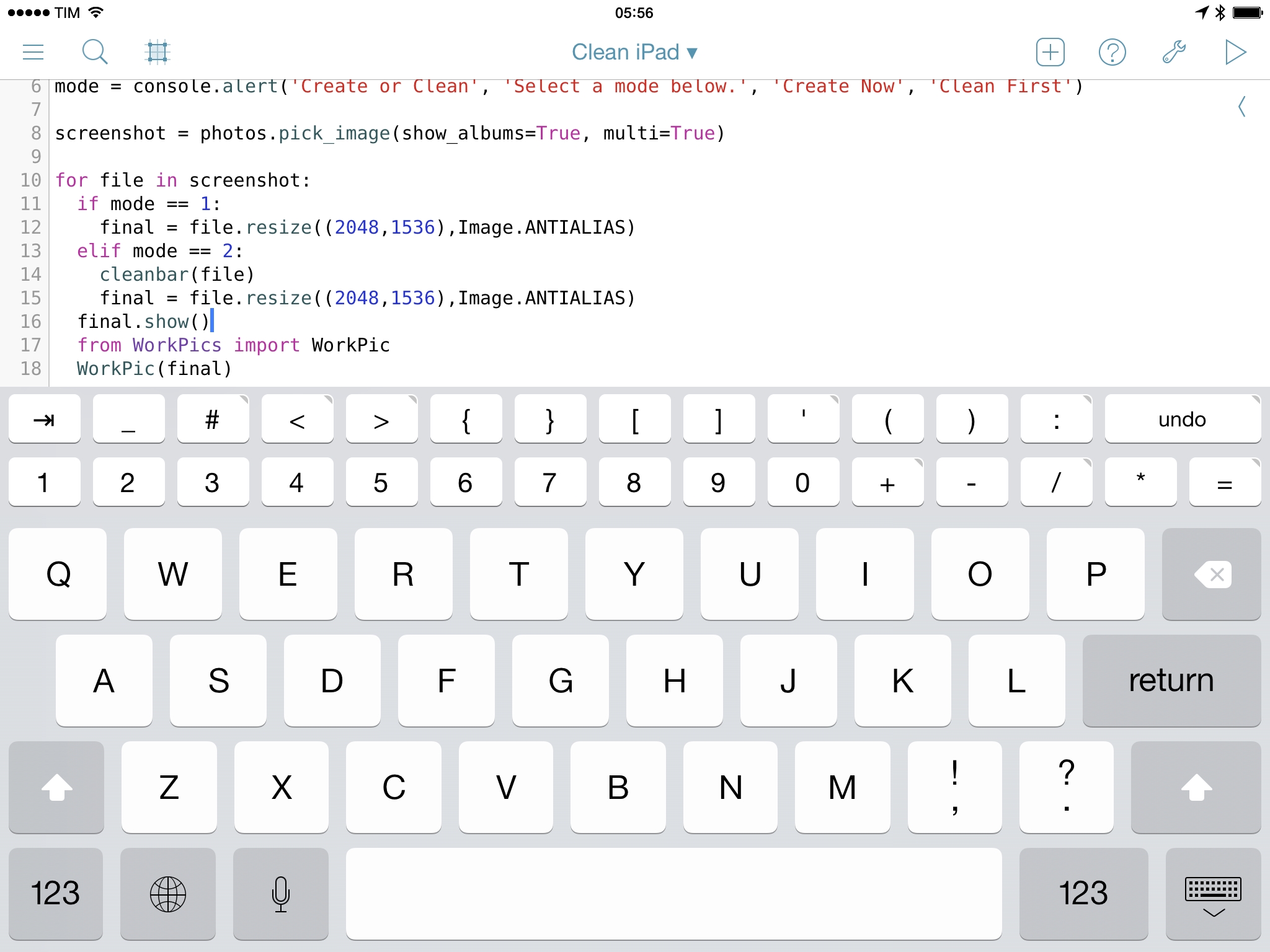
Combining an elegant text editing experience with a powerful workflow system based on actions and a built-in Python interpreter, Editorial reinvented iOS automation and explored new horizons of what could be achieved with inter-app comunication on an iPad. Editorial can be just a text editor, but its true potential and versatility are revealed by an Automator-inspired interface that is the foundation for workflows to automate text editing, web services, image manipulation, and more – all on an iPad, without needing a Mac. Editorial sits at the forefront of the post-PC era, and it’s become an indispensable tool for my professional life.

Editorial came out on August 15, 2013. Over the past nine months, I’ve seen Editorial go from a minor 1.0.1 release to a feature-packed, redesigned 1.1 that feels like a 2.0 update – the kind of deep, fundamentally different version of an app that several developers would charge for as a separate product on the App Store.

It’s undeniable that Zorn should have released an update with fixes and basic iOS 7 compatibility sooner, but it’s important to note that Editorial 1.0 (aside from minor issues) kept working well on iOS 7, and Zorn documented the development process with notes and screenshots on the app’s forums. As an Editorial user and reviewer, it’s been a long journey from version 1.0 in August 2013 to today’s 1.1 release, but it’s been worth it.

Editorial 1.1 brings a plethora of design changes, Markdown improvements, and automation breakthroughs that, just ahead of iOS 8, represent a major milestone for Markdown text editors and iOS automation. Editorial 1.1 may be a text editor on the surface, but, in reality, it’s a small revolution for iOS power users.

Read more


Reeder 2 for Mac Review

Reeder 2 for Mac, available today on the Mac App Store at $9.99, isn’t the most full-featured RSS reader that ever graced the docks of OS X users. It doesn’t support all the services found in ReadKit, it doesn’t have any sort of smart folder functionality, and it doesn’t bring dozens of breakthrough features that are dramatically different from what Silvio Rizzi offered in version 1.0 of the app. But in spite of what it doesn’t do or what it doesn’t have, Reeder 2 is a superbly polished, fluid, and fast Mac app that lets me enjoy checking my RSS feeds, primarily because of its gesture controls.

Read more


Beats Music and Curation

Tim Cook, in an interview with Re/Code’s Peter Kafka about the Beats deal and Beats Music’s curation:

We get a subscription music service that we believe is the first subscription service that really got it right. They had the insight early on to know how important human curation is. That technology by itself wasn’t enough — that it was the marriage of the two that would really be great and produce a feeling in people that we want to produce. They’ve also built an incredible premium headphone business that’s been tuned by experts and critical ears. We’re fans of that. It’s a reasonable-size business that’s fast-growing.

The focus on curation and editorial picks was immediately clear when Beats Music launched in January. The service’s front page featured a collection of curated playlists (handpicked by humans) provided through automatic recommendations based on user taste and listening habits.

From my original article, Why Beats Music Matters:

Computers and algorithms, in spite of modern advancements in data extraction and parsing, don’t understand things like artistic influences, song meanings, subtle references, or the “mood” of a song. Computers can’t compute emotion. They can’t understand what’s behind Dave Grohl’s “Best of You” at Wembley or why Death Cab For Cutie’s Transatlanticism is an album about long distance love. Computers don’t have the human touch, and I believe that they will never be able to fully, empathically replicate the ability to appreciate music as an artistic expression.

That’s why Beats Music hired people knowledgeable about music and uses algorithms as a tool, and not the medium: there’s more to music than data.

If the plan comes together, Beats Music has a serious chance at reinventing how music streaming services should work. I’m optimistic.

And here’s how Beats Music describes their editorial team’s efforts:

At Beats Music, our mission is to create playlists and make music recommendations based on songs that feel right together, at the right time, and for the right person… not just that sound alike.

That can’t be done with an algorithm. It requires a real human with a trained ear for blending genres and styles and a knowledge of what song comes next.

The Beats Music part of the Apple-Beats deal was highlighted in several sections of today’s press statements and interviews, suggesting that Apple (unlike what speculation implied over the past weeks) saw potential in the relatively young Beats Music service. Here’s Tim Cook in an interview with The New York Times:

“Could Eddy’s team have built a subscription service? Of course,” he said. “We could’ve built those 27 other things ourselves, too. You don’t build everything yourself. It’s not one thing that excites us here. It’s the people. It’s the service.”

Unlike subscriber numbers and country availability, music knowledge and culture can’t be quantified, but they’re extremely valuable. With Beats, Apple isn’t simply buying a popular brand of headphones and a music app – they’re investing in fashion sense, the interplay of technology and culture for music, and a team of people with a profound appreciation and understanding of music history and trends. And this drives analysts crazy because it can’t be visualized with a pie chart.

Permalink