Posts tagged with "HomeKit"

Audio and Home: The MacStories Overview

During the WWDC keynote earlier today, Apple devoted an entire section to home and audio updates coming this fall. These updates include features for tvOS, AirPods, and the Home app. We’ll have a full tvOS overview later, but first, let’s dive into what’s coming for AirPods and Home.

AirPods

Siri Interactions offer a new, hands-free way of responding to Siri announcements for AirPods Pro users. With a simple nod or shake of the head, users can answer phone calls, dismiss messages, and more. This new interaction method is helpful in scenarios where speaking aloud or pulling out your phone isn’t an option.

Voice Isolation, a feature previously available on iPhone, iPad, and Mac, is coming to AirPods Pro themselves. When you’re on a call, the H2 chip will use machine learning to automatically filter out background noise and wind to make it easy for the person on the other end to hear what you’re saying.

Apple is also improving the experience of gaming with AirPods. Personalized Spatial Audio is expanding to games, using head tracking and the device’s understanding of your ear shape to deliver an immersive audio experience. AirPods Pro will offer lower audio latency when gaming on iPhone in Game Mode and higher voice quality for audio chats with 16-bit, 48kHz audio. Finally, an API for immersive gaming audio will be available to developers.

Home

Guest access is coming to the Home app, enabling residents to grant guests the ability to control locks, garage doors, and security systems for a limited amount of time instead of giving them full home access. Users can also view guests’ Activity History to see what home devices were accessed and when.

Smart locks that support home keys can be unlocked hands-free when a resident is within six feet of the door. The Home app is adding support for robot vacuum cleaners. And Apple is partnering with utility providers, starting with Pacific Gas & Electric Company in California, to allow users to connect their utility accounts to the Home app, track electricity usage, and make more informed decisions about their energy use.

SharePlay is coming to Apple Music on the HomePod and HomePod mini. Users can control playback and add songs to the music queue by bringing their iPhone close to the iPhone connected to the HomePod or by scanning a QR code on the other iPhone’s screen, and even users who aren’t subscribed to Apple Music can take part in SharePlay sessions. Spatial Audio is also coming to AirPlay, allowing immersive audio to be beamed from an iPhone to a HomePod or other compatible AirPlay speaker.


You can follow all of our WWDC coverage through our WWDC 2024 hub or subscribe to the dedicated WWDC 2024 RSS feed.

Controller for HomeKit’s Interactive Floor Plan Is the Best Way to Control Your Home Yet

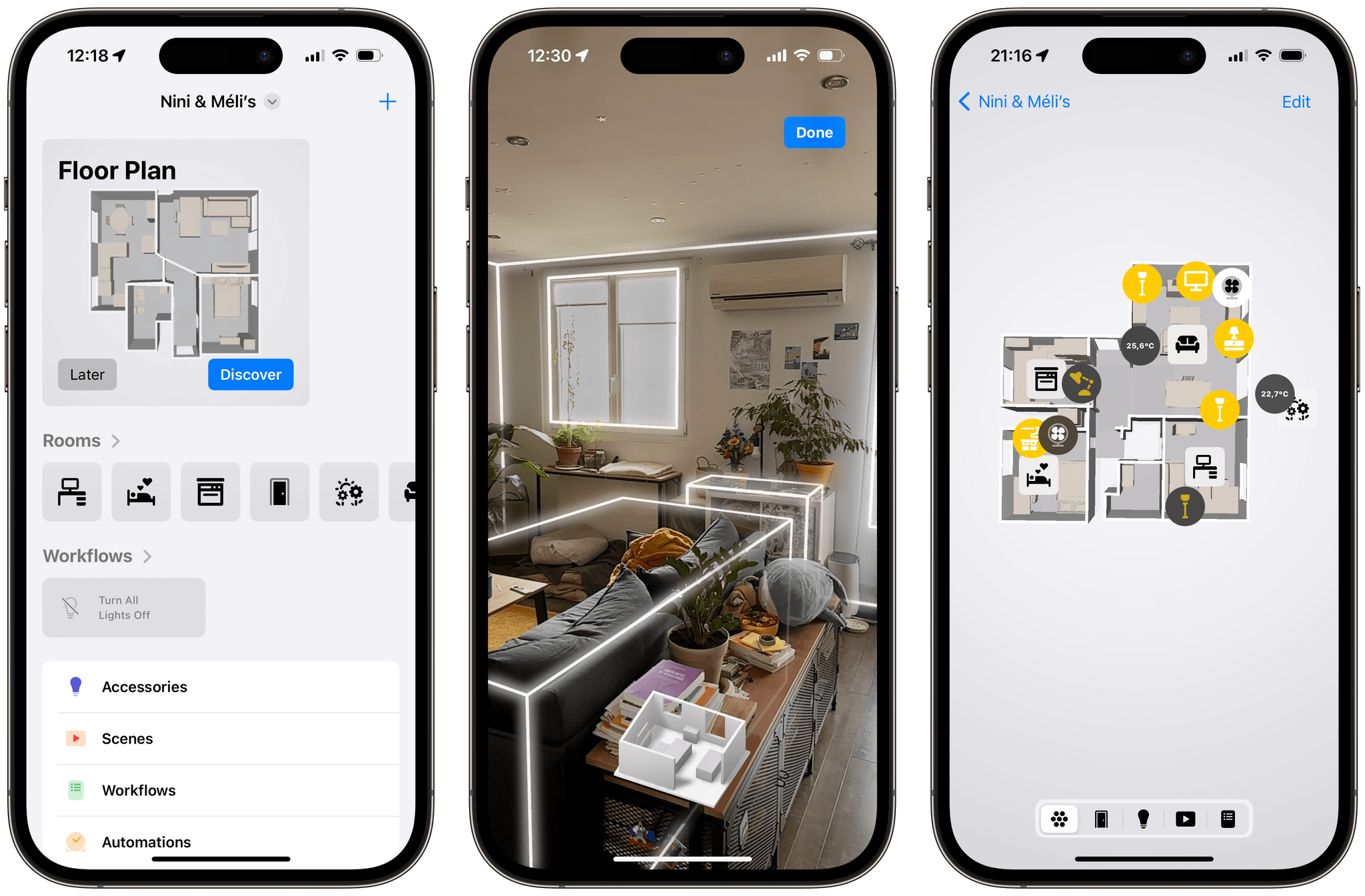
Controller for HomeKit is an alternative way of controlling and setting up your HomeKit accessories, scenes, and automations from your iPhone. While the app has been around for some time, this month it received a major upgrade with a new feature that turns the app into a fun and powerful control center for your home.

Now, in Controller for HomeKit, you can leverage the iPhone’s LiDAR sensor to scan your entire home and create a 3D floor plan, on top of which you can overlay your lights, scenes, and other HomeKit accessories. The result is a fun, customizable, and interactive UI that works so well and is so intuitive that it almost feels like it belongs in Apple’s own Home app for the iPhone.

Let’s check it out.

Read more


Tadoº Announces New Range of Smart Heating Products Supporting Matter Over Thread

Tadoº, the European-based smart heating company, has announced a new line of products called tadoº X. These products feature upgrades from the company’s previous V3+ range, support the new Matter smart home standard, and are built on the Thread protocol for a more reliable connection.

Tadoº also announced a new product, the Heat Pump Optimizer X. This device controls heat pumps, an increasingly popular way to heat homes that is more efficient and not dependent on fossil fuels. Tadoº says the new tadoº X range “has been designed to make Smart Thermostats and the new Heat Pump Optimizer X more accessible for millions more households across Europe to cut both their energy bills and impact on the climate.”

The tadoº X line includes the following products:

  • Smart Thermostat X
  • Smart Radiator Thermostat X
  • Wireless Temperature Sensor X
  • Heat Pump Optimizer X
  • Bridge X (which serves as a Thread border router)

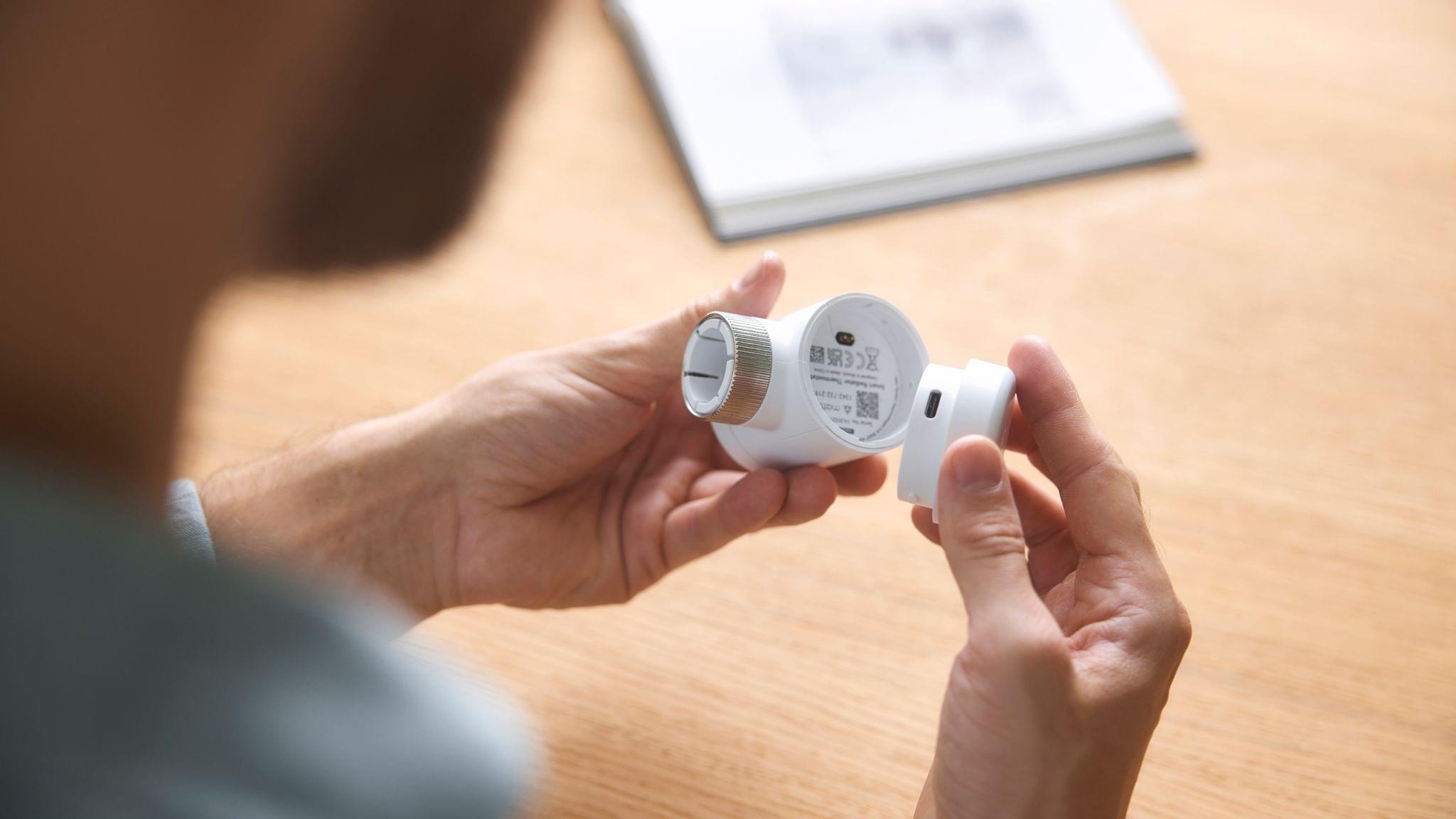
Amongst the notable upgrades, the Smart Radiator Thermostat X now features a USB-C rechargeable battery that can be detached without removing the whole device from the radiator. The Heat Pump Optimizer X can be used with tadoº’s smart energy tariffs to shift operation times to periods of the day when energy prices are cheaper. Finally, the tadoº Bridge X that serves as a Thread border router, allowing your devices to connect to each other and the Internet, is not necessary if you already have a HomePod mini or the Wi-Fi + Ethernet version of the latest-generation Apple TV 4K, as these also serve as Thread border routers.

The smart radiator thermostat now has a removable, rechargeable battery.

The smart radiator thermostat now has a removable, rechargeable battery.

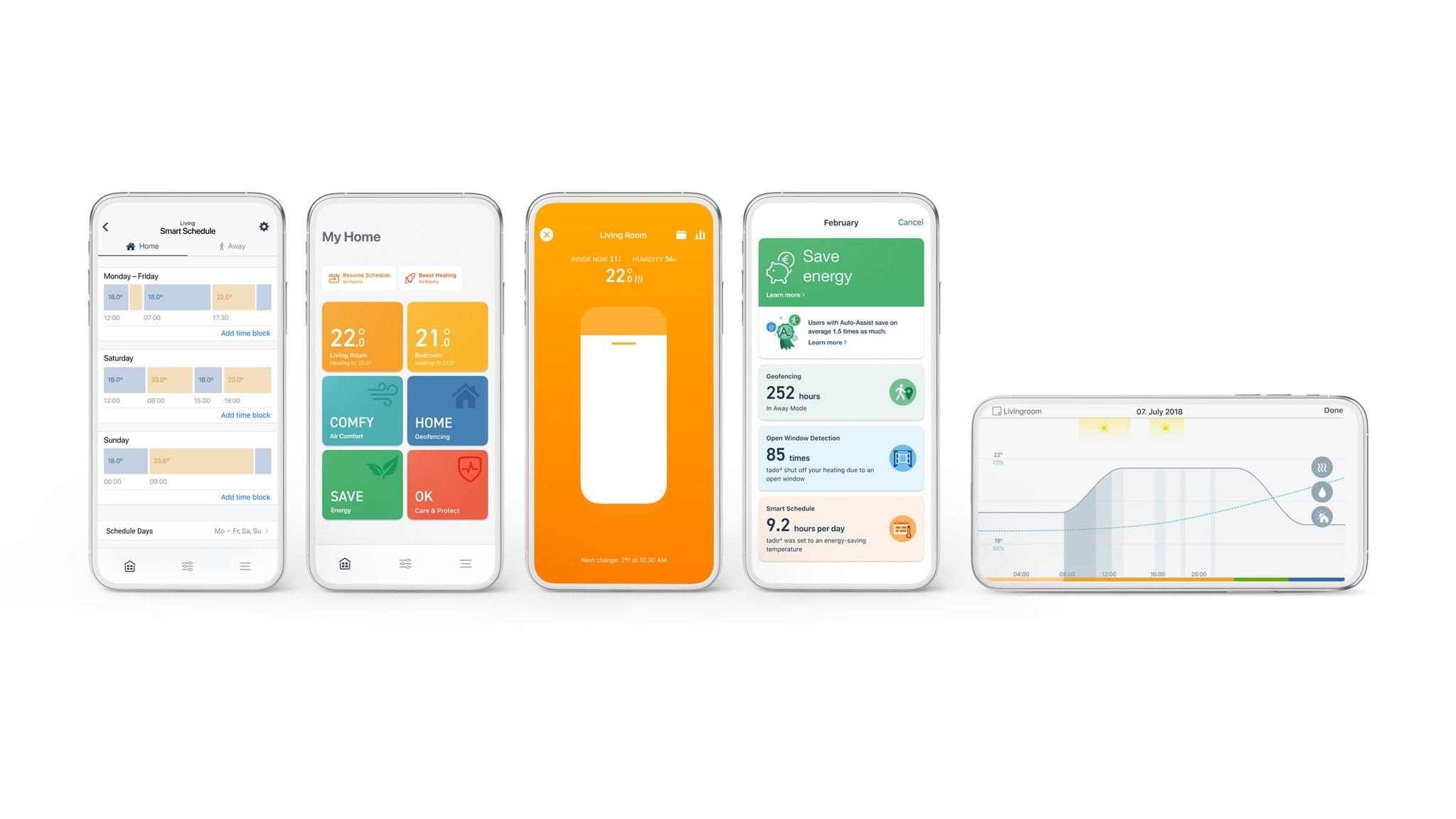
As before, the tadoº range is compatible with the Apple Home app, but most features – such as advanced scheduling and checking battery levels – are only available in the tadoº app. The devices also integrate with an optional subscription called ‘Auto-Assist’ that gives access to additional features including Energy IQ, Care & Protect, Geofencing, and Open Window Detection. This service costs €3.99 per month or €29.99 per year, but each tadoº X product comes with 12 months free.

The tadoº app. Image: tadoº

The tadoº app. Image: tadoº

I have personally used tadoº products for over three years now (and covered them recently in our home accessories roundup), and I’ve seen genuine savings in my usage. (tadoº claims an average of 22% savings based on internal usage data.) One flaw I’ve sometimes encountered is dropped connections, as the previous V3+ range could only connect to a single bridge that had to also connect via ethernet to my router. The move to Thread should hopefully alleviate these issues.

I will have to wait for the new tadoº range, however, as it is not launching in the UK yet. In response to an inquiry about this, tadoº told me the company has a September target release date in the UK and other European countries. They also confirmed an additional product, the Wireless Smart Thermostat X, which connects to traditional gas boilers like the one I have, will be released at that time. This will enable efficient usage through the ability to remotely turn the boiler off if no radiator thermostats are on.

Another detail provided to me is that the Auto-Assist feature, which was previously complimentary to Apple users, was a limited offer through Apple. As such, after the 12-month trial, the service will now cost the standard €3.99 per month or €29.99 per year, even if you are an Apple Home user.

The new tadoº X range is now available in Germany, Austria, the Netherlands, France, Italy, Spain, Belgium, Sweden, and Denmark.


HomeKit Gadgets: The MacStories Team Collection

John: Everyone on the MacStories team is deep into HomeKit devices. For me, smart home gadgets tick all the boxes:

  • Hardware
  • Software
  • Automation

It’s really as simple as that.

However, as fun as HomeKit devices can be, they can also be frustrating. The best accessories fit comfortably into your household, making life a little easier but falling back gracefully to a simple solution for anyone in your home who isn’t interested in automation. It sounds easy, but it’s a tough balancing act that few companies get right.

We’ve all tried our share of HomeKit and other smart home devices. Some have worked out, and others have fallen by the wayside as failed experiments. Today, we thought we’d pool our collective experience and share with you the MacStories team’s favorite smart home gadgets.

We have a lot of ground to cover, so this story will focus on indoor gadgets. Soon, we’ll shift our focus to the great outdoors.

[table_of_contents]

Read more


Vision Pro App Spotlight: HomeUI Enables Spatial Control over HomeKit Lights, Switches, and Outlets

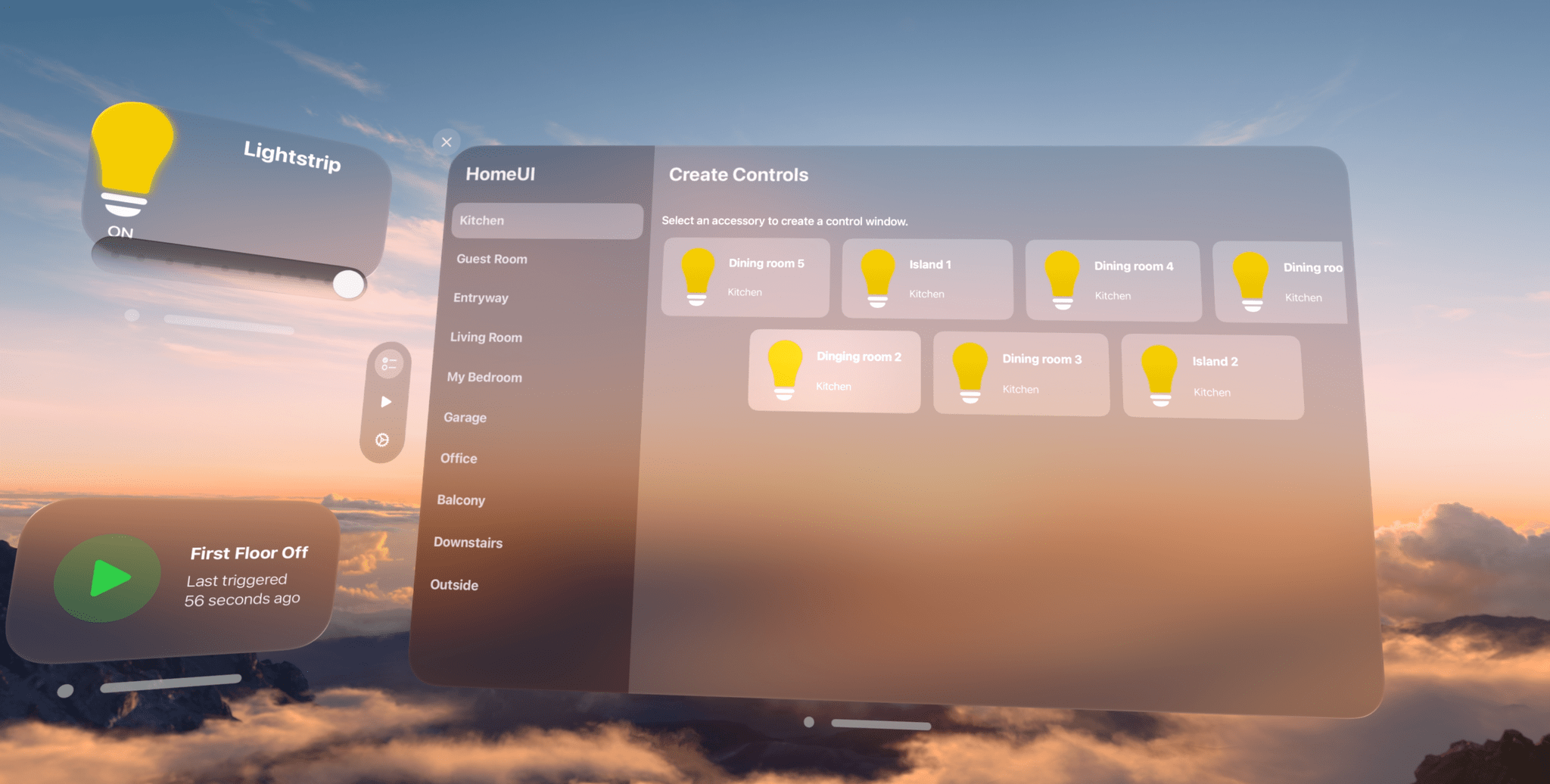
The Apple Vision Pro doesn’t have a native version of the company’s Home app. You can launch the iPad version in compatibility mode, which I’m glad is available, but that means it doesn’t offer any spatial computing features beyond a window floating in your environment. Fortunately, HomeUI by Rob Owen fills the gap with a native visionOS app focused on lights, electrical outlets, and switches.

Read more


Adding Colorful, Animated Flare to the Holiday Season with Hue’s Festavia Lights

Source: Philips Hue.

Source: Philips Hue.

A couple of weekends ago, after we put up our Christmas tree, I broke out Hue’s Festavia lights, which the company recently sent me to test. Ever since we moved in late 2022, we’ve had a generic string of big-bulb white lights hanging around the perimeter of the second-floor balcony that I controlled with the help of an outdoor smart plug. The setup provided a little extra light and atmosphere whenever we sat outside in the evening, which I enjoyed. However, I was also curious to see how I could take the setup further and add some holiday cheer with a set of the Festavia lights. So, instead of putting the lights on our tree, I replaced our existing balcony lights with the Hue lights.

Read more


Garage Access as a Service: The Chamberlain Group’s Anti-Consumer Approach to the Smart Home

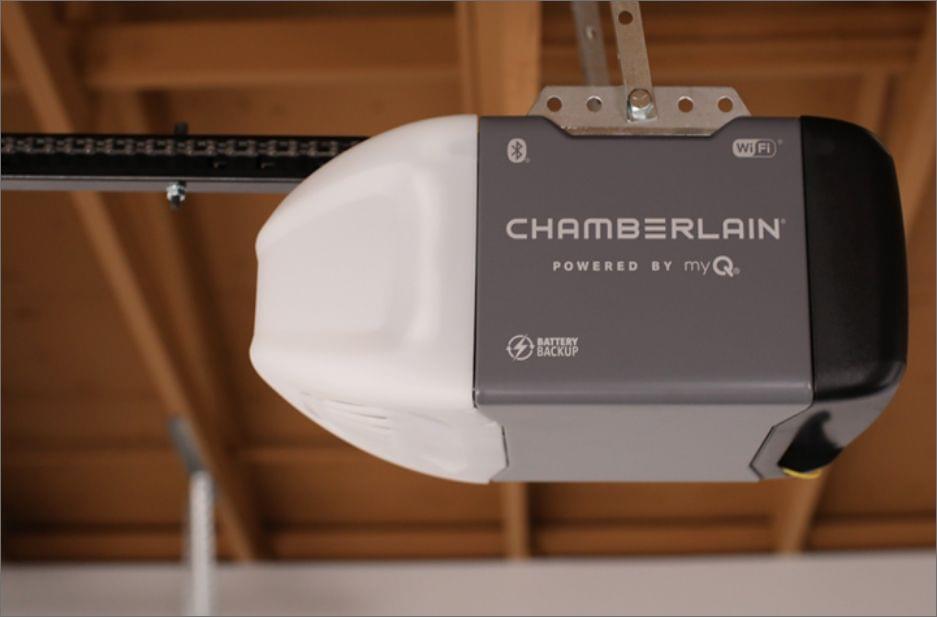
Source: The Chamberlain Group.

Source: The Chamberlain Group.

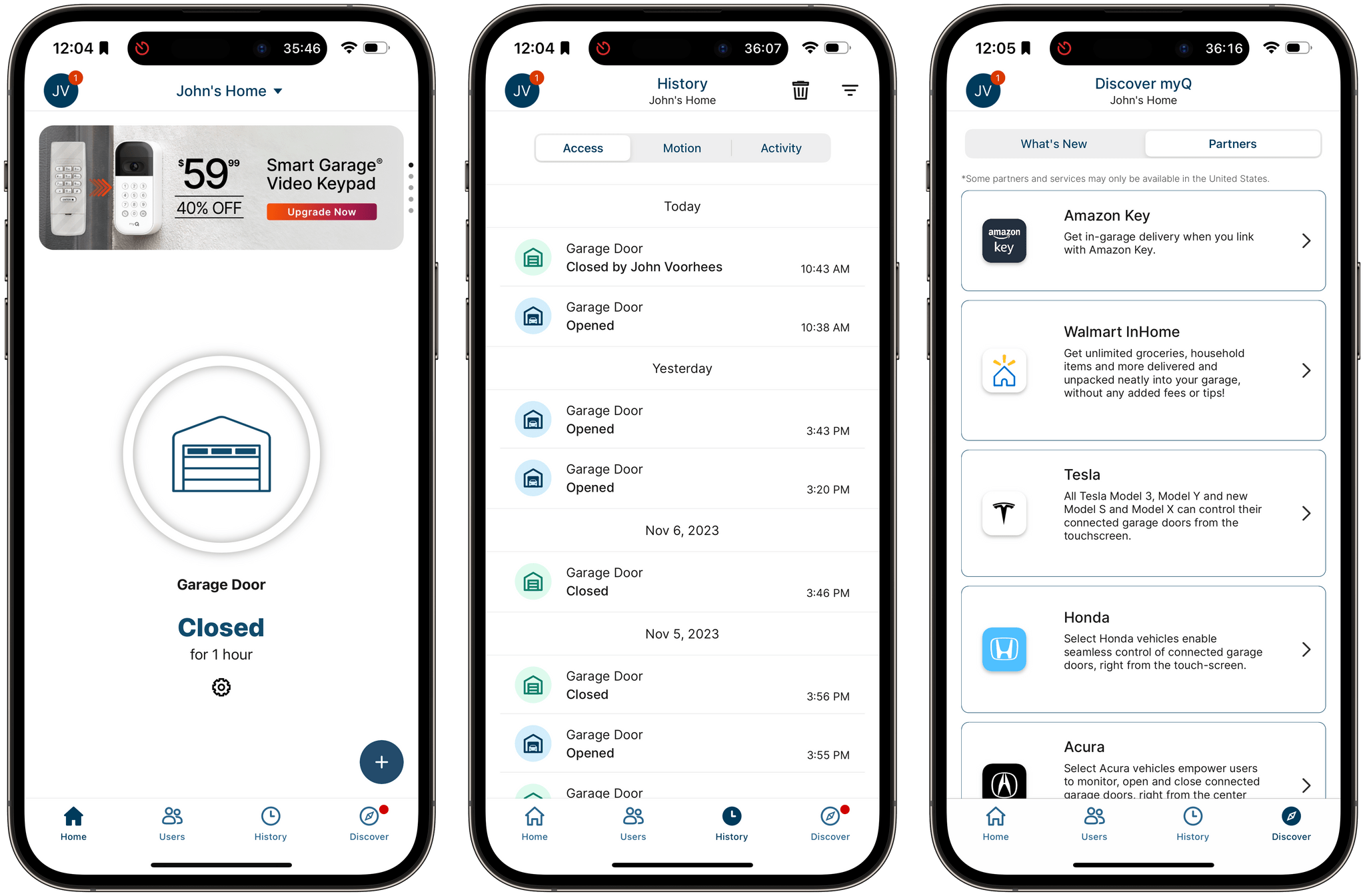
When you install a garage door in your home, you expect to have full access to how it works – at least, that’s how it worked historically. As Jennifer Pattison Touhy explains for The Verge, that’s not at all the case with The Chamberlain Group, which has built its myQ smart garage door controller technology into many of the doors it sells and has systematically removed ways for consumers to use the tech:

The move breaks the smart home integrations of thousands of users who relied on platforms such as Homebridge and Home Assistant to do things like shut the garage door when they lock their front door or flash a light if they leave their door open for 10 minutes, or whatever other control or automation they wanted to do with the device they bought and paid for.

The move comes a year after Chamberlain discontinued its official Apple HomeKit integration and a few months after it finally killed support for Google Assistant. It’s sadly another example of how the company continues to be hostile to the interoperable smart home.

The result is that many people who purchased garage doors with myQ’s smart controller technology built in now have a less capable door. The only way to restore smart home interoperability is to buy a new door controller or one of the devices covered in The Verge’s story.

What I find most galling about this story is that The Chamberlain Group is removing these features from its doors while simultaneously expanding its partnerships with auto manufacturers and security companies. Think of it as GaaaS: Garage Access as a Service. Instead of offering consumers control directly, The Chamberlain Group ironically has set itself up as the gatekeeper of your garage. Rather than allowing consumers convenient access to their garage doors, The Chamberlain Group is steering them through paid services, which stinks.

A giant button and ads. That's it. That's the myQ app review.

A giant button and ads. That’s it. That’s the myQ app review.

I have a Chamberlain garage door at home and haven’t decided yet what to do in light of this news. The myQ app is garbage – it’s literally just a big button to open and close the door without access via a widget, the Home app, or Shortcuts. Oh, and it has ads too. I had been planning to go the Home Assistant route after The Chamberlain Group removed HomeKit access last fall, but instead, I expect I’ll buy the Meross Smart Wi-Fi Garage Door Opener that Stephen Hackett has used for a while.

Permalink

With Version 1.2, Matter Now Supports over 20 Device Types

Jennifer Pattison Tuohy, writing for The Verge on the latest update to Matter, the interoperable home automation standard:

Matter — the IOT connectivity standard with ambitions to fix the smart home and make all of our gadgets talk to each other — has hit version 1.2, adding support for nine new types of connected devices. Robot vacuums, refrigerators, washing machines, and dishwashers are coming to Matter, as are smoke and CO alarms, air quality sensors, air purifiers, room air conditioners, and fans. It’s a crucial moment for the success of the industry-backed coalition that counts 675 companies among its members. This is where it moves from the relatively small categories of door locks and light bulbs to the real moneymakers: large appliances.

And:

While it’s possible today to get your lights to flash when your laundry is done, turn a light red when your fridge’s temperature rises, or shut off the HVAC system if the smoke alarm goes off, it can be complicated to set up and often wholly unreliable. You need to download multiple apps, maybe buy a sensor or two, deal with laggy cloud integrations, and worry about whether your washer is even compatible with your smart home app in the first place. With Matter support, this type of simple command and control should be much easier to implement in any ecosystem.

I spent the past year making as many parts of my new home as connected as possible (our apartment is powered by KNX; I had this bridge installed to bring lights, temperature sensors, and shutters into HomeKit) so, as you can imagine, I’m very much on board with the idea of having my accessories be compatible with multiple ecosystems at once. We live in a “mixed assistant” household (we use Siri in English and Alexa in Italian), so the idea behind Matter is the kind of technology we’re looking for.

The problem, at least from my perspective, is that I have very little hope regarding Apple’s ability to support the new device types added to Matter in their Home app anytime soon.

Apple’s Home app is, by far, the UI I use most for manually controlling my smart home, whether it’s from the Home app itself or Control Center. It’s also leagues beyond the terrible design of the Alexa app; its integration with automations and the Shortcuts app is also incredible. But let’s be honest: the Home app already struggles to fully support device types that were added years ago, such as sprinklers; realistically, how long is it going to take Apple to integrate with robot vacuums and air purifiers?

The way I see it, any connected home standard is only as useful as the UI that lets you control its accessories. So while I’m excited about Matter and strongly believe in the initiative, the weak link for me remains Apple’s Home app.

Permalink