
 Monthly Log: February 2017
Mozilla Acquires Pocket
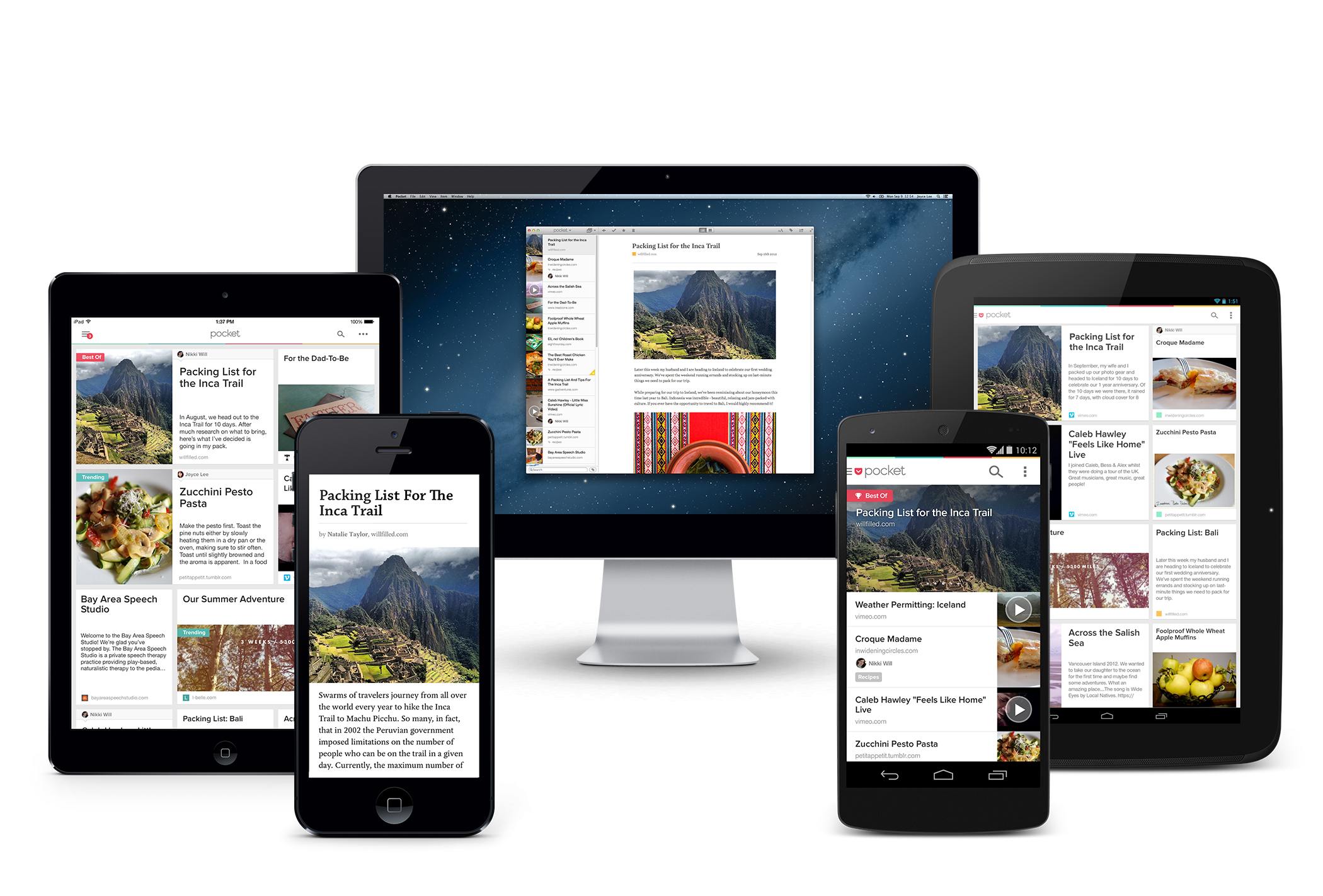
Mozilla Corporation announced today that it has acquired read-it-later service Pocket. Saving stripped down, ad-free versions of articles from the web for reading later has been around for a long time. Pocket and Instapaper were two of the first and have shared a similar trajectory. Both started out as web services that evolved into apps. Most recently, both have been sold to larger companies.
Instapaper was sold by developer Marco Arment to Betaworks in 2013 and then to Pinterest in 2016. Today, Pocket took a similar path by being acquired by Mozilla, maker of the Firefox web browser.
Pocket says that it:
will continue on as a wholly-owned, independent subsidiary of Mozilla Corporation. We’ll be staying in our office, and our name will still be on the wall. Our team isn’t changing and our existing roadmap has been reinforced and is clearer than ever. In fact, we have a few major updates up our sleeves that we are really excited to get into your hands in the coming months.
For its part, Mozilla says:
Pocket will join Mozilla’s product portfolio as a new product line alongside the Firefox web browsers with a focus on promoting the discovery and accessibility of high quality web content.
The evolution of read-it-later services is interesting. If the acquisitions of these services by bigger corporations is an indication of anything, it’s that they are features more than standalone products. As Casey Newton of The Verge highlights, Pocket’s recommendation engine is likely what interests Mozilla, which has launched what it dubs its ‘Context Graph’ initiative that uses browser activity to enhance web discovery. What that means for Pocket’s long-term viability as a standalone app and service remains to be seen, but for now, it remains a separate product.
MacStories Sponsorship Changes for 2017
Many readers may not know this, but for the past few years, MacStories sponsorships were sold by a third party. The arrangement worked well, but for a variety of reasons, it makes sense to manage sponsorships internally now. So, starting today, MacStories.net sponsorships will be handled in-house by MacStories contributor John Voorhees.
As in the past, we will offer exclusive, week-long sponsorships that highlight a sponsor’s product in a sponsored post on MacStories.net. However, we have instituted a new two-tier sponsorship structure. Most of the features of previous MacStories sponsorships are now included in our Basic Sponsorship package. A second tier called the Plus Sponsorship incorporates additional features, including some not previously offered as part of any MacStories sponsorship.
The Basic Sponsorship package includes:
- A sponsored post at the beginning of the week published on MacStories’ homepage and to its RSS feed describing the sponsor’s product and including an image. The post copy can be provided by the sponsor or written by us if the sponsor prefers.
- A link to the sponsor’s website at the top of every page of MacStories.net, throughout the week.
- A thank-you tweet from the MacStories Twitter account sent at the beginning and end of the week.
The Plus Sponsorship package includes:
- A sponsored post like the Basic package, but with the option to add an embedded video in the post.
- The option to include a banner image and link at the top of every page of MacStories.net, throughout the week.
- Thank-you tweets from the MacStories, Club MacStories, MacStories Deals, and Federico sent at the beginning and end of the week.
If you are interested in sponsoring MacStories, please contact John Voorhees for rates and to check availability.
In connection with bringing sponsorship sales in-house, we have created a sponsorship policy for MacStories.net. Our readers’ trust is something we work hard to earn and maintain every day, so we feel we owe it to them and to our future sponsors to articulate how we will handle sponsorships.
The full policy and additional background are accessible from the ‘Advertise’ section of the site but, in summary, the policy is as follows:
- We only accept sponsorships for products that we are comfortable recommending to our readers.
- Product reviews are not for sale. A sponsorship of MacStories is not an agreement to review a product.
- The decision of whether to review a product is made separately from whether to accept a sponsorship.
- MacStories retains the final say over the content of sponsored posts, banner images, and any other content that appears on MacStories.net, its social media accounts, and its other publication channels.
- To minimize actual and perceived conflicts of interest, we will not accept sponsorships from app developers, hardware makers, or online services for two weeks following the launch of a major new product or update covered by a MacStories review.
We hope you appreciate that we take the trust of MacStories readers seriously and will continue to do our best to honor it with every editorial and business decision we make. If you ever have any questions or concerns about these policies, feel free to get in touch.
Game Day: Evergrow

Many of the best games I’ve played on iOS recently remix elements of existing genres in new and unexpected ways. Evergrow by Imagility does just that, mixing puzzle, action, and tower defense elements into a fun, colorful game that keeps things interesting by throwing new details at you throughout the game.
RAW Power Review

RAW Power is a powerful image editor reminiscent of Aperture that takes Apple’s discontinued pro photo editing tool a step further than Apple ever did. Whether you use RAW Power as a standalone image editor or as a Photos extension, what strikes me most about it is that with a little experimentation and patience, it’s accessible regardless of whether you consider yourself a pro user.
Before Photos, Apple had two photography apps: iPhotos for average consumers and Aperture for pros. In 2014, Apple discontinued Aperture. Around the same time, Apple evolved iPhoto into Photos, bringing the macOS and iOS apps that go by that name closer together from a feature set standpoint. That left pros and ‘prosumers’ who relied on Aperture in a bind. There are alternatives like Adobe’s Lightroom, but if you preferred Aperture, you were out of luck, until now.
RAW Power, by Gentlemen Coders, has a stellar pedigree. Its lead developer, Nik Bhatt, was Senior Director of Engineering for Aperture and iPhoto, so it’s safe to assume he understands Apple’s RAW engine. What sets RAW Power apart from something like Aperture, though, is its flexibility. Images can be edited non-destructively either in the standalone RAW Power app or from within Photos because RAW Power’s full functionality is also a Photos extension.
Like many people, my photo library is a mixture of thousands of images taken over many years that were shot with a variety of hardware, including old point-and-shoot digital cameras, a variety of iPhones, and a Sony NEX-5N I got in 2011 for a trip to Patagonia. I enjoy photography and have improved beyond taking simple snapshots, but I’ve never gone too deep into the technical side of it. Nonetheless, for special occasions I still shoot RAW images on my Sony camera to give myself maximum editing flexibility when I process my photos. RAW Power’s Photos extension fits my mix of photos and approach to editing perfectly by offering pro tools that are available on my command as an extension from within Photos when I need them, but stay out of the way when I don’t.
Record Bird Is Apple Music’s Missing Discovery Tool for New Releases
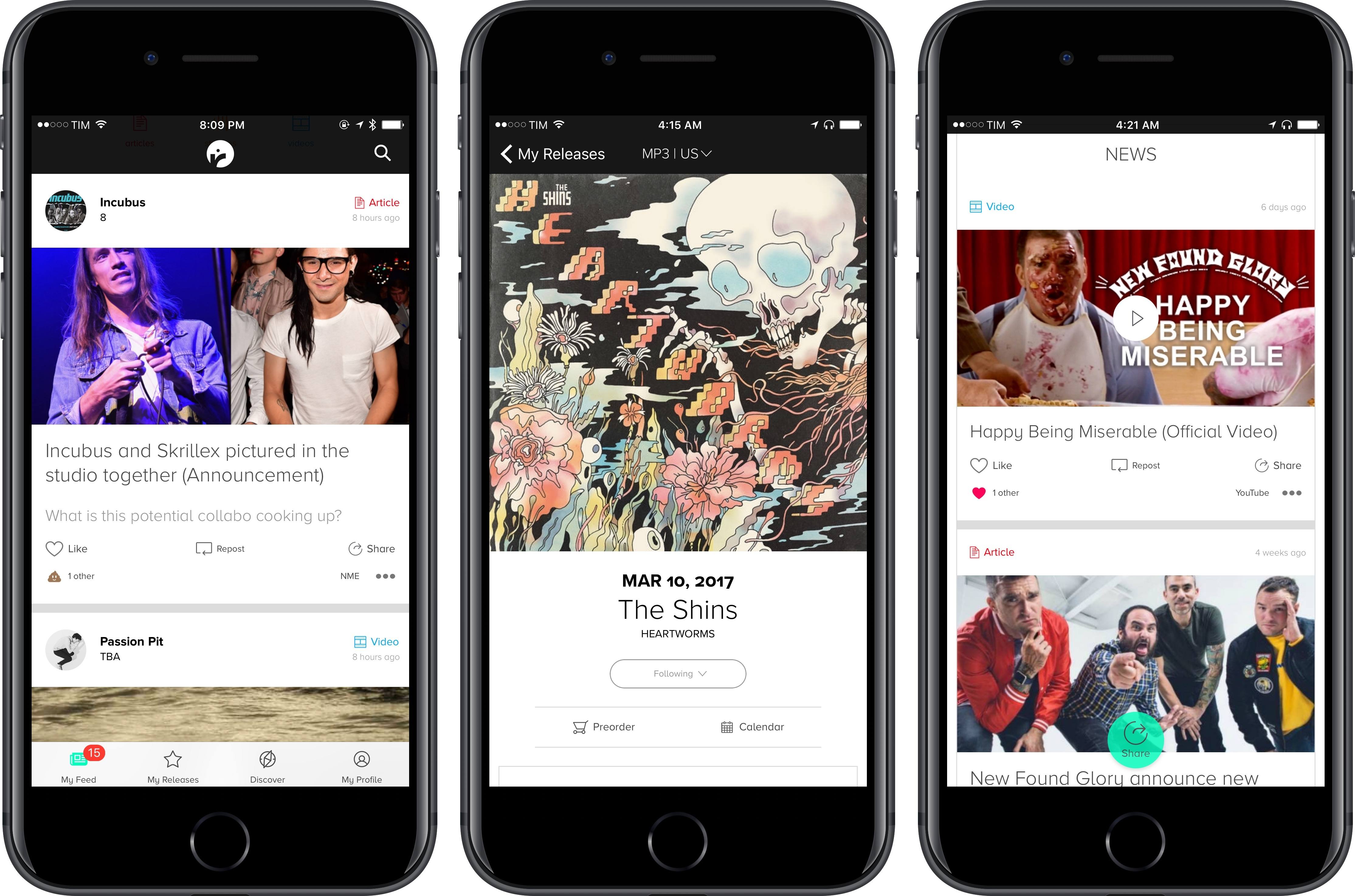
When it comes to keeping track of new music releases from my favorite artists, streaming services have always been a disappointment. After nearly eight years of streaming music every day, I’ve realized that the problem lies on the two ends of the New Releases spectrum: these days, services either prioritize front page curation skewed towards new pop, R&B/hip-hop, or EDM tracks (the most popular and lucrative genres), or they algorithmically suggest new releases for artists I may like, but which I’m not necessarily familiar with.
I’ve tried all of the major streaming services since 2009, and only two of them have gotten close to my ideal implementation of “Here’s everything artists you already know have released or are about to release”.
Rdio (forever in our hearts) had a solid New Releases section featuring a mix of variegate editorial picks culled from a variety of genres, labels, and trends. Unlike the modern equivalents in Spotify and Apple Music, I remember Rdio’s New Releases page1 offered a more balanced, heterogeneous mix of new songs.
Spotify, on the other hand, has invested heavily on algorithmic and serendipitous discovery of songs, but it still hasn’t quite figured out how to display every new release from every artist you care about. Spotify can send emails for new release highlights, but those are only a subset of new releases from your favorite artists – usually, only the most popular ones. Other Spotify features are similarly focused on highlights.
In comparing the treatment of new music releases among different services, I realized that this is largely what Apple had set out to solve with Connect in Apple Music: a way to follow all your favorite artists and view updates for their announcements – whether they were new songs, video clips, tour dates, or photos.
Apple Music Connect, however, has faltered due to Apple’s inability to scale a music-centric network (twice) and because it was predicated on a commitment from artists – both superstars and smaller acts – to post regular updates on their Connect feeds. After an initial spur of song previews and photos published on Connect, Apple Music’s network has mostly turned into a ghost town of sporadic updates, often automatically cross-posted to other networks (without any exclusivity), with hashtags that can’t be tapped and shortened links that open Safari webpages after multiple redirects. It’s not a good user experience. Apple Music Connect is an afterthought; it’s also been regarded as such by Apple itself with the removal of the dedicated page in iOS 10.
Fortunately, there are still people who understand what a music lover with a broad range of preferences wants from a tool designed to discover new music. For the past couple of months, I’ve been using Record Bird, a free iPhone app hailing from Austria, to check on updates from my favorite artists every day, stream songs, watch videos, and even read related stories.
iOS 10.2.1 Has Reduced Unexpected iPhone 6s Shutdown Issues→
Matthew Panzarino, writing for TechCrunch following a statement from Apple:
Over the past couple of iPhone versions users have complained of “unexpected” shutdowns of their devices. Some iPhone 6, 6s, 6 Plus and 6s Plus devices could basically go dark unexpectedly, forcing a user to have to plug them into an outlet to get them to power back on.
Apple has been working on this very annoying bug and it says it has come up with a fix of sorts that should mitigate the problem on a majority of iPhone 6 and iPhone 6s devices. The fix is actually already on your iPhone if you have installed iOS 10.2.1 — something that around 50 percent of iOS users have already done. After letting the fix simmer on customer devices, Apple now has statistics to share on how it has improved the issue, citing 80 percent reduction on iPhone 6s and 70 percent reduction on iPhone 6 devices.
These unexpected shutdowns were a different issue than the iPhone 6s battery recall. From personal experience, I’ve heard quite a few friends mention how their iPhones’ serial number weren’t eligible for the battery replacement program despite frequent shutdowns. iOS 10.2.1 should fix that, and Apple is also rolling out a new message in the Settings app in case a device’s battery has to be replaced.