This Week's Sponsor:

BetterTouchTool

Now with a Powerful Launcher for Your Mac


AutoSleep 4.0

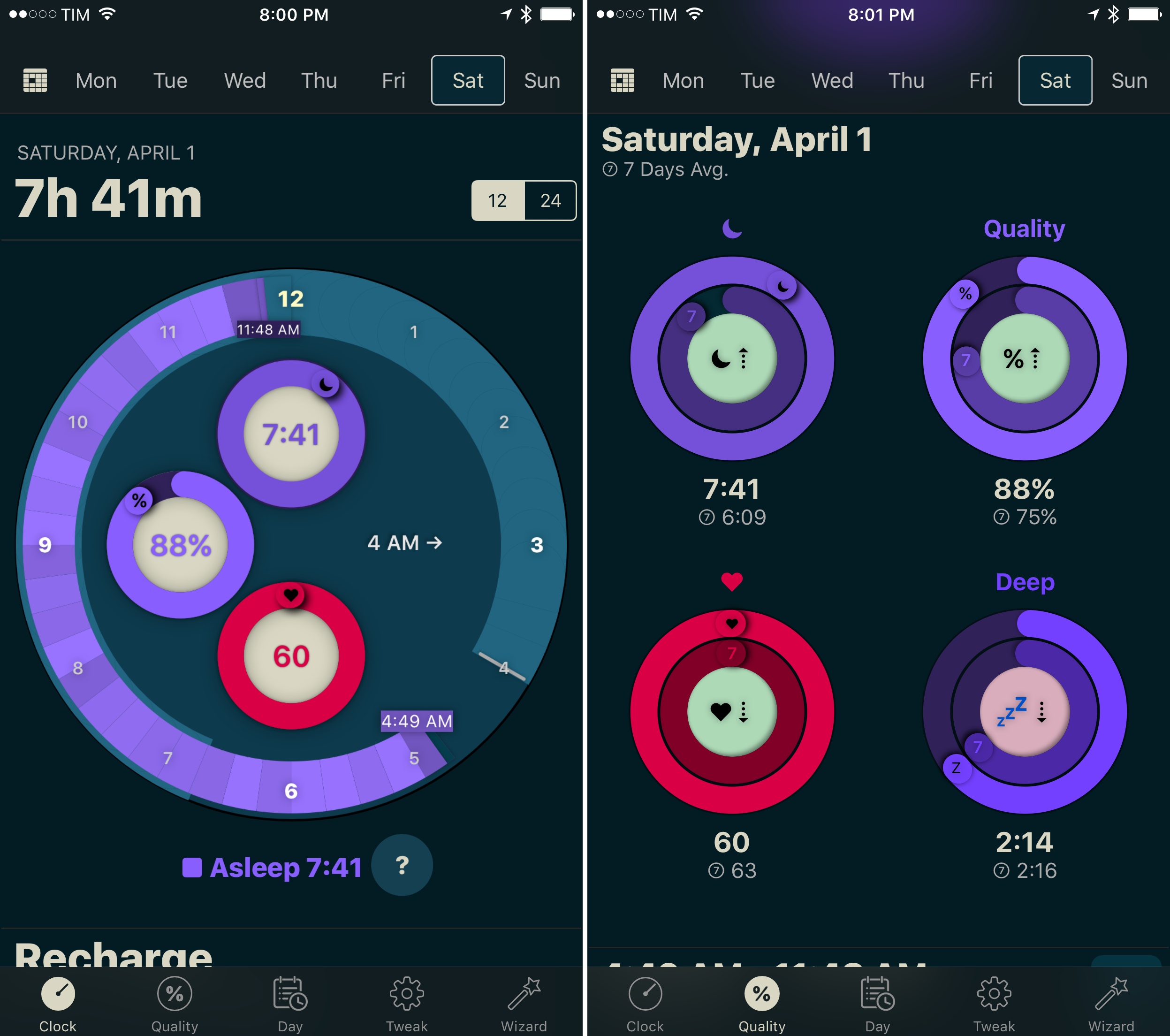
AutoSleep, my favorite sleep tracking app for Apple Watch, has received a major update to version 4.0 earlier this week, which has brought a complete redesign that makes the app more intuitive and informative.

Developer David Walsh has been busy with AutoSleep’s development: version 3.0 was already quite a departure from the original app released in December 2016, but AutoSleep 4.0 feels like something else entirely. The app is finally beautiful to look at, with a clever visualization of sleep times and quality based on rings. In the main clock UI, you can now easily see how much you’ve slept and the quality of your sleep; at the bottom of the same page, another set of rings displays ‘Today’s Sleep’ alongside an arguably more useful 7-day average. This use of rings is reminiscent of Apple’s Activity app, and I think it’s a perfect match for sleep tracking. If Apple ever adds native sleep tracking to watchOS, I wouldn’t be surprised to see an implementation similar to AutoSleep.

There’s a lot more to explore in AutoSleep 4.0 – the app now has a dark interface (which makes the colored rings truly pop), every chart has been redesigned and reworded for clarity, and browsing an individual day’s timeline is faster than before. I continue to be impressed with Walsh’s ability to listen to feedback and iterate without drifting away from AutoSleep’s underlying goal, which is to help you form better sleep habits by seeing what you’re doing wrong.

AutoSleep makes me appreciate wearing the Apple Watch more. I highly recommend taking version 4.0 for a spin if you haven’t tried the app in a while.

AutoSleep 4.0 is available on the App Store.

“Apple Is Pushing iPad Like Never Before”

Fascinating research note by Neil Cybart on iPad sales and Apple’s new iPad strategy:

Apple is making its iPad sales pitch to two groups: existing iPad users and long-time PC users. According to my estimates, there are 100M users still using older iPads (iPad 1, iPad 2, iPad 3, iPad 4, iPad mini). A significant portion of these users are using devices that don’t even support the latest iOS release. Management thinks simpler storytelling and an aggressively low $329 price will entice these users to upgrade to the new 9.7-inch iPad.

The fact that 100M people are still using older iPads demonstrates that the product provides value. Apple is also confident that users will see the significant improvement between the latest iPads and models from five to seven years ago. As for PC users, Apple thinks the iPad Pro line is capable of handling the vast majority of tasks currently given to laptops. Apple looks at the iPad Pro line, which includes Apple Pencil and Smart Keyboard, as a better solution for consumers than even the Mac. This is quite telling as to management’s long-term motivation.

Strong iPad updates in this year’s iOS release would certainly help Apple steer the iPad’s narrative in a new direction.

Permalink

Game Day: Trilogic

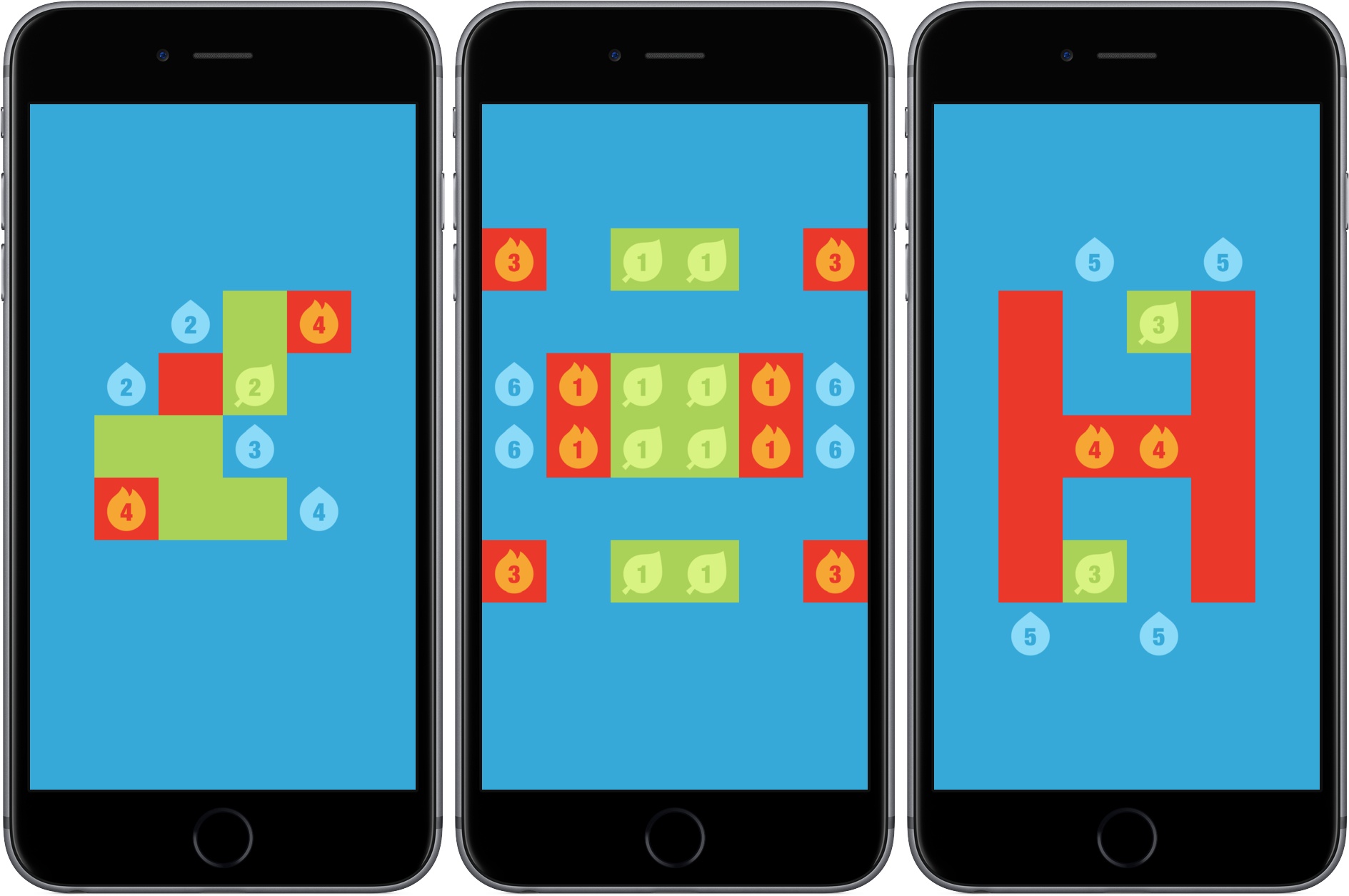
Simple puzzles that make you think are a great way to unwind. Getting the hang of playing them is easy, which eliminates any up-front frustration. The challenge is all in the puzzle itself, which is an excellent distraction from whatever might be on your mind. There is virtually no friction to getting started with Trilogic, the follow-up to developer 1Button’s game called Bicolor. That makes Trilogic’s progressively tricky puzzles a perfect escape for brief moments throughout the day.

Read more


Twitter Replies No Longer Count @Usernames Against 140-Character Limit

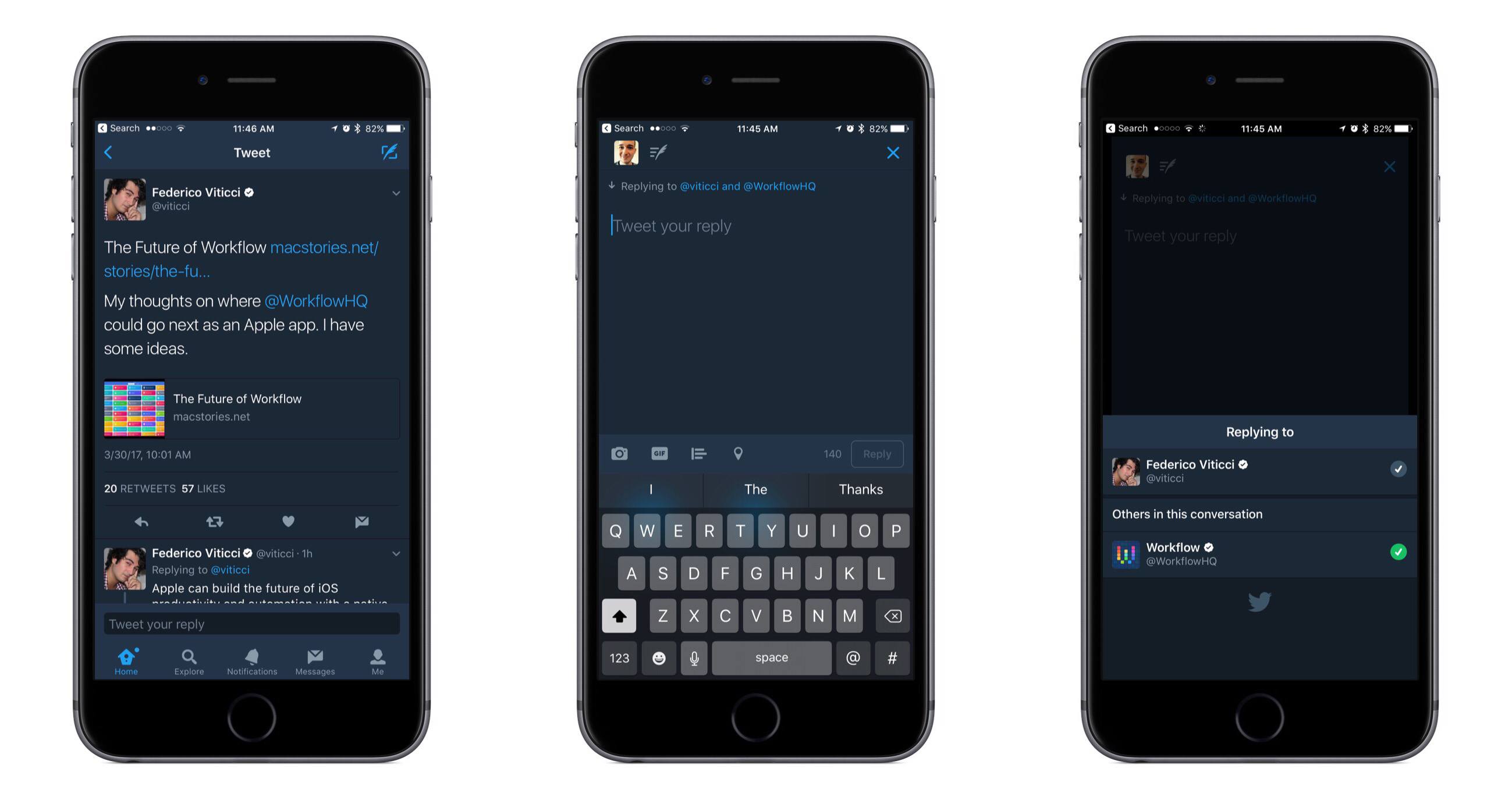
Twitter has announced a major change to the way replies are handled across all platforms – on the web and in iOS and Android apps. Presumably the Mac app will be included as well. Sasank Reddy writes:

Now, when you reply to someone or a group, those @usernames won’t count toward your Tweet’s 140 characters.

With this change, we’ve simplified conversations in a few ways:

  • Who you are replying to will appear above the Tweet text rather than within the Tweet text itself, so you have more characters to have conversations.
  • You can tap on “Replying to…” to easily see and control who’s part of your conversation.
  • When reading a conversation, you’ll actually see what people are saying, rather than seeing lots of @usernames at the start of a Tweet.

One potentially confusing detail worth mentioning: although the usernames of those you reply to will not count against the 140-character limit, if you add any new usernames to the body of your reply, those new mentions will count against your limit.

You can see today’s change in action by watching the following video:

https://twitter.com/twitter/status/847479110616047616

This update is rolling out to all users now. If you haven’t seen it yet, it should be coming to you soon.

Permalink

IFTTT Adds New Applets for iOS Calendar and App Store

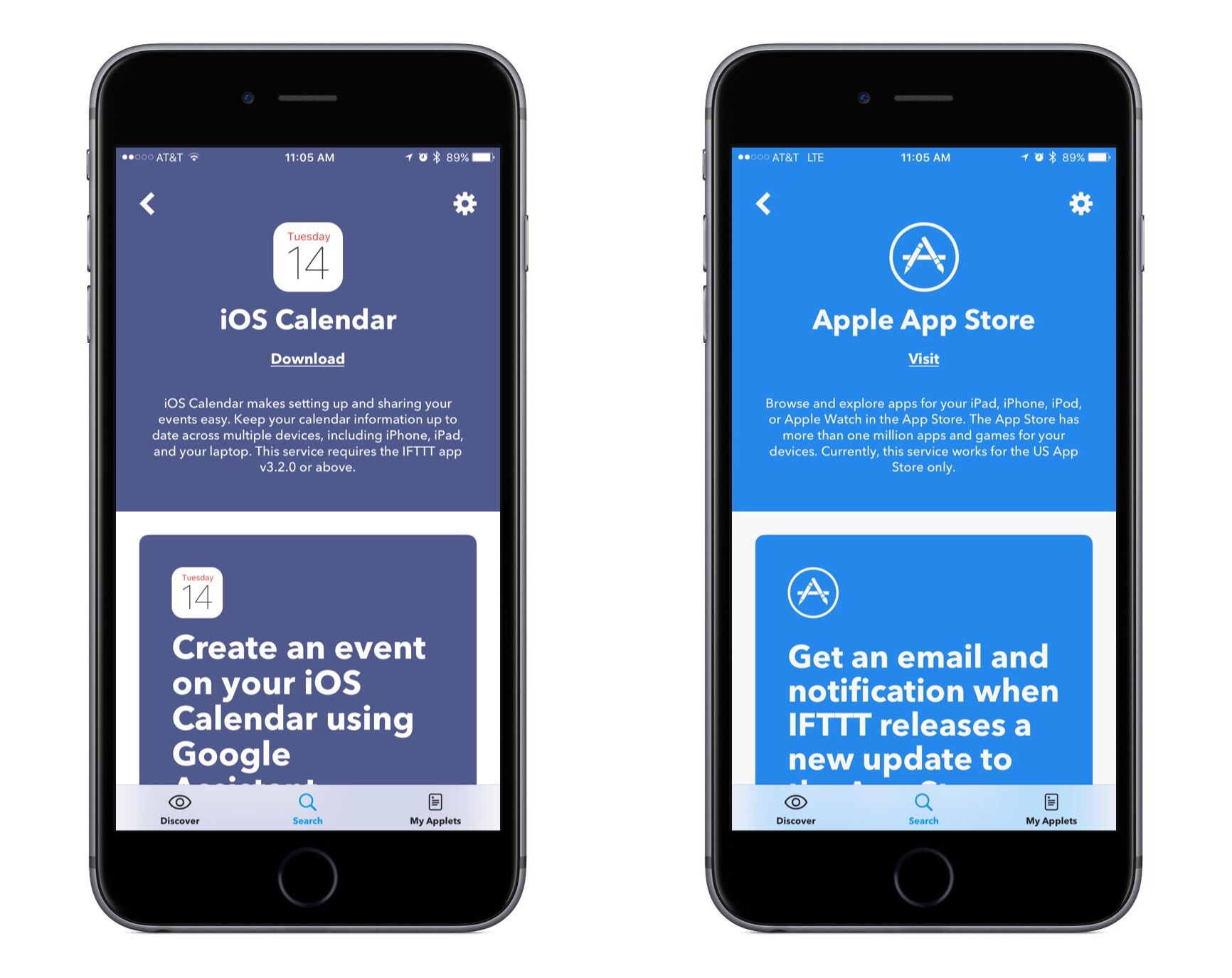
IFTTT, the popular web automation platform, has two new Apple-supported applets launching today: iOS Calendar and the App Store.

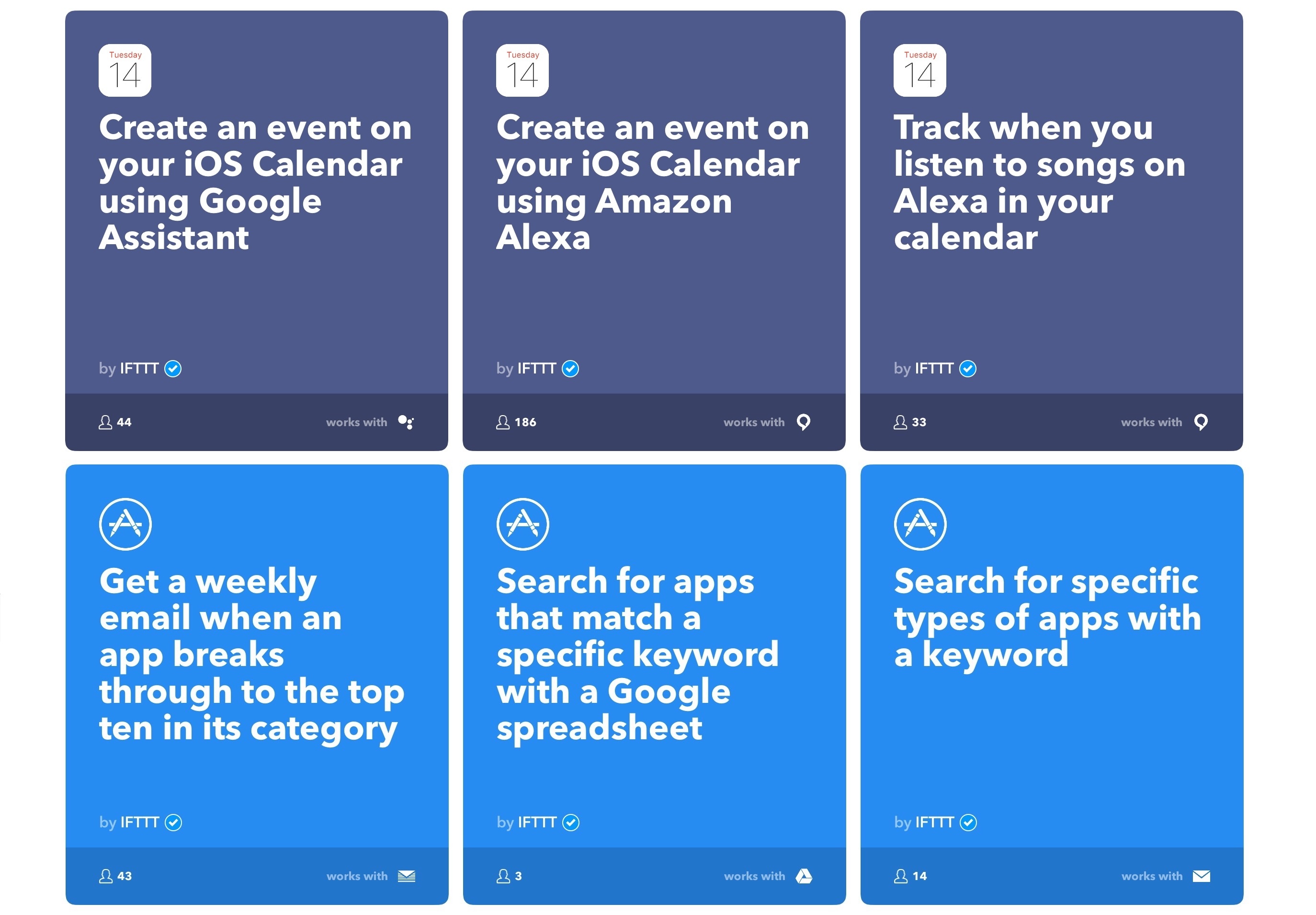
Both of these new applets feature recipes created by IFTTT. These include several recipes prominently featuring integrations with Apple’s competitors, such as recipes that enable creating an iOS Calendar event using Google Assistant or Amazon Alexa.

A sampling of IFTTT-created recipes.

A sampling of IFTTT-created recipes.

The applet for iOS Calendar works as you would expect, with triggers such as:

  • New event added to any calendar
  • New event added to specific calendar
  • New event added from search

The latter of these is the most interesting. It allows your trigger to fire whenever a new event contains a specific keyword or phrase. Searches for keywords look into an event’s title, location, notes, and invitees, making this a great option when crafting recipes with a deep level of specificity.

The App Store applet features a variety of interesting triggers, including:

  • New top ten app in a category
  • New app from search
  • New app featured in a collection
  • Top ten app goes on sale
  • App price dropped
  • App version updated

IFTTT is available on the App Store.


The Future of Workflow

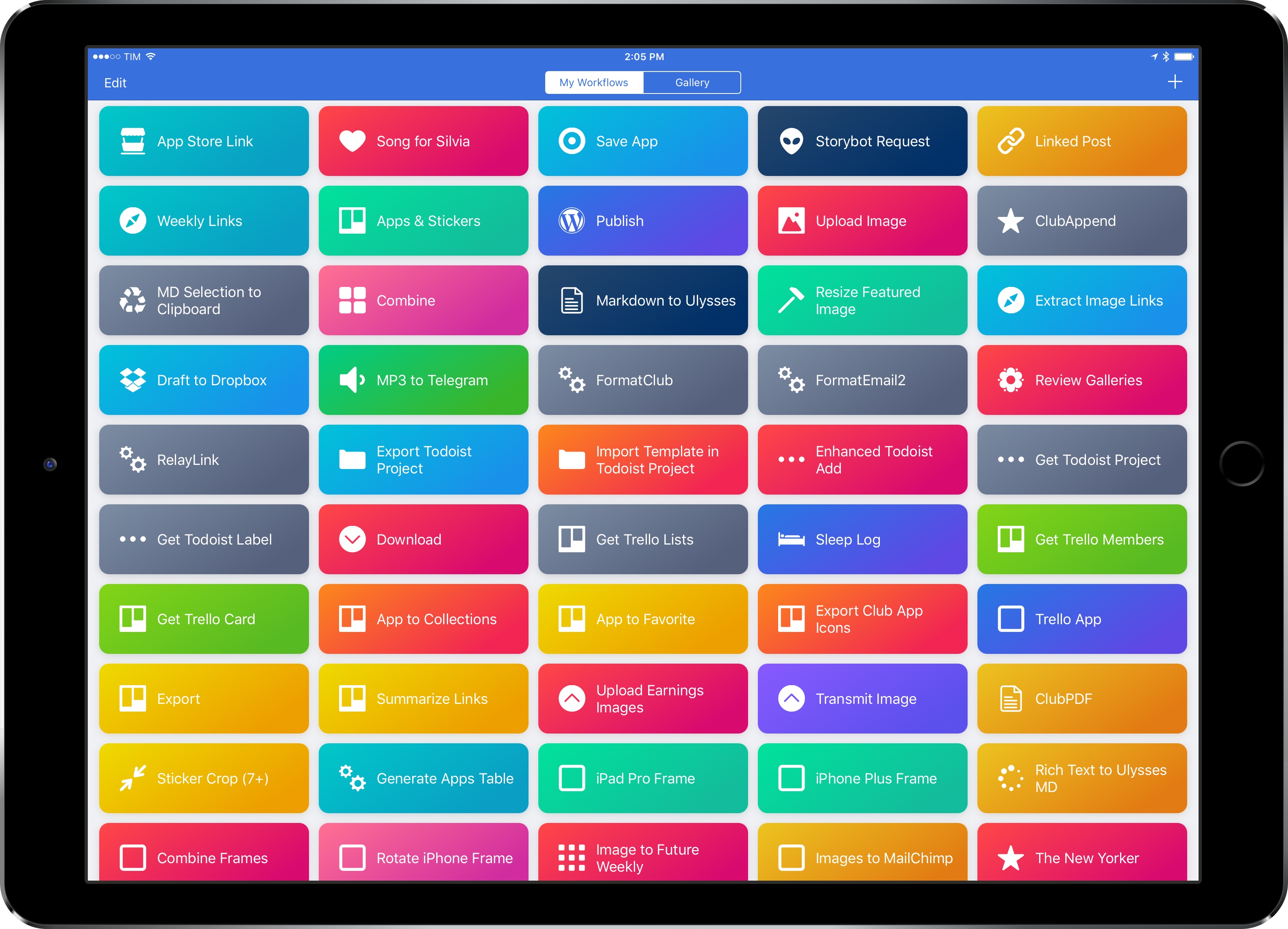
I’ve loved Workflow since the first beta I was sent in August 2014. Workflow is my most-used iOS app of all time, and, in many ways, it is the reason my iPad Pro can be my primary computer. I’ve written thousands of words on the app and have created hundreds of workflows for myself and others over the course of two years.

I referred to Workflow as Minecraft for iOS productivity and the modern bicycle for the mind in the past. I stand by those analogies. There’s nothing else on iOS like Workflow, which deftly walked the fine line between absurd innovation and Apple rejections with a bold vision and technical prowess. Workflow embraced the limitations of iOS and turned them into strengths, resulting in a power-user app with no competition. After two years, no app gets remotely close to the automation features shipped by the Workflow team.

And now Workflow and its creators are going to be part of Apple and the company’s bigger (and more secretive) plans.

Somewhere in the back of my mind, I had always kept the possibility that Workflow could eventually be discontinued or acquired. In a somewhat prescient move, Stephen quizzed me on this problem a few weeks ago on Connected. My “worst-case scenario” of Workflow going away became the new reality of iOS automation last week.

Workflow as an app is an incredibly good acquisition for Apple, but there’s a deeper subtext here. Workflow represents a movement from a large number of users who enjoy working from iOS devices so much, they want to optimize the experience as much as possible. Workflow’s goal wasn’t to merely provide a capable alternative to the Mac’s AppleScript and Automator; Workflow wanted to eclipse legacy scripting environments and usher iOS users into a new era of mobile automation. There’s the Workflow app and team – technically impressive and absolutely talented – and there’s the bigger theme behind Workflow.

But what has Apple acquired, exactly? Under Apple’s control, can Workflow continue on its mission to make automation accessible for everyone? If Apple sees a future in iOS automation powered by Workflow, what else can be done with a virtually infinite budget and stronger ties to the platform? And what does this acquisition mean for Apple’s commitment to pro users on iOS?

I’ve been mulling over these questions for the past week. I don’t have any absolute answers at this point, but, after building workflows and following the app’s development for two years, I have some ideas on where Workflow can go next.

Below, you’ll find two possible scenarios for Workflow as an Apple app, as well as some considerations on how Apple could evolve Workflow into a native feature of iOS devices and a new developer platform.

Read more