NoiseBuddy: Control Noise Cancellation and Transparency Modes of AirPods Pro on a Mac

Earlier this week, Guilherme Rambo released a new Mac utility called NoiseBuddy that toggles between the noise cancellation and Transparency modes of AirPods Pro and the Beats Solo Pro headphones when they’re connected to a Mac. The app can place an icon in your Mac’s menu bar or on the Touch Bar and uses the same noise cancellation and Transparency iconography found in Control Center on iOS and iPadOS. The app’s settings allow you to run NoiseBuddy in the menu bar, on the Touch Bar, or in both places. To switch modes, simply click the icon in the menu bar or tap the Touch Bar button.

The Touch Bar in transparency mode.

The Touch Bar in transparency mode.

This isn’t Rambo’s first time working with Bluetooth headphones and the Mac. He also created AirBuddy, which we covered previously. AirBuddy is a Mac utility that displays the charge status of AirPods and Beats headphones that use Apple’s proprietary wireless chips. The app also allows users to connect those headphones to their Macs via Bluetooth with a single click.

NoiseBuddy’s menu bar app in transparency mode.

NoiseBuddy’s menu bar app in transparency mode.

NoiseBuddy is the kind of Mac utility that I love. It takes overly fiddly aspect of interacting with macOS and makes it dead simple. The free app is available from Rambo’s GitHub repo, where it can be downloaded as a ZIP archive and then dragged into your Applications folder.



Triode: Internet Radio from The Iconfactory with AirPlay 2, Apple Music Integration, and CarPlay

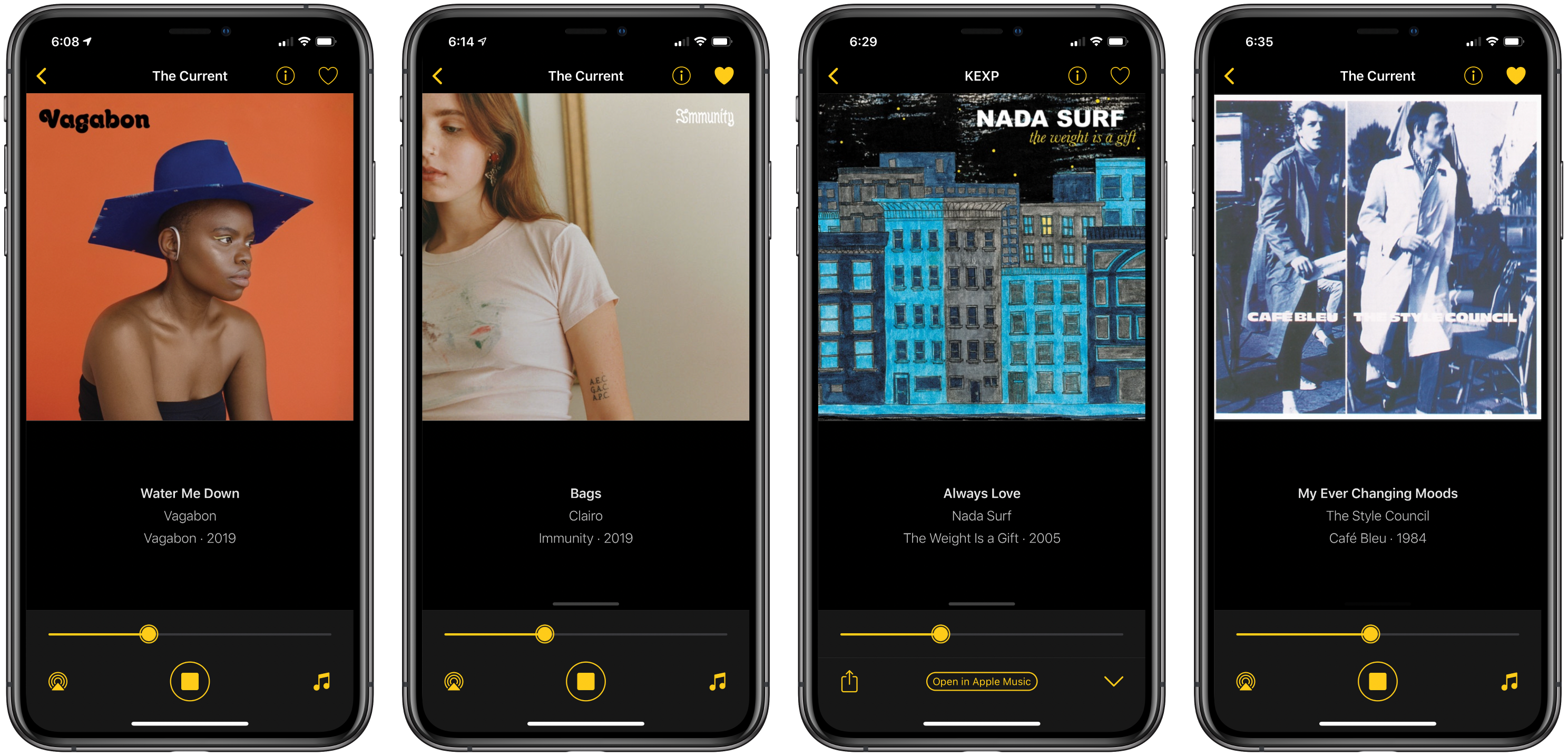
Triode is a new Internet radio app from The Iconfactory for iOS and iPadOS, the Mac, and Apple TV that fills a niche all but abandoned by Apple. Internet radio stations used to claim a more prominent place in iTunes, but in Apple’s new Music app, they have been mostly abandoned in favor of Apple’s own radio stations. A handful of third-party broadcast stations are available in Music, the HomePod can play many more stations, and you can open any station’s stream on a Mac if you know the URL, but that’s it. Triode fills the gap with support for iOS, iPadOS, the Mac, and tvOS, plus CarPlay via the app’s iOS app.

As someone who hasn’t listened to the radio in years, I was a little skeptical of the utility of an Internet radio app at first, but Triode immediately won me over. The app is beautifully-designed, as you’d expect from The Iconfactory, and easy to use. Coupled with Apple’s latest technologies and a set of 31 hand-picked stations, the combination makes for a compelling way to discover new music.

Read more


Adapt, Episode 13: Automated Shortcuts

On this week’s episode of Adapt:

One of the most common Shortcuts feature requests was granted in iPadOS 13: the ability to run shortcuts automatically in the background. Federico walks through this powerful feature in detail, then Ryan surveys the App Store’s best calendar apps.

You can listen below (and find the show notes here), and don’t forget to send us questions using #AskAdapt and by tagging our Twitter account.

AppStories+ Deeper into the world of apps
0:00
01:14:31

Adapt, Episode 13

AppStories+ Deeper into the world of apps

Permalink

Apple Debuts New Research App, Launches Health Studies for Women’s Health, Hearing, and Heart and Movement

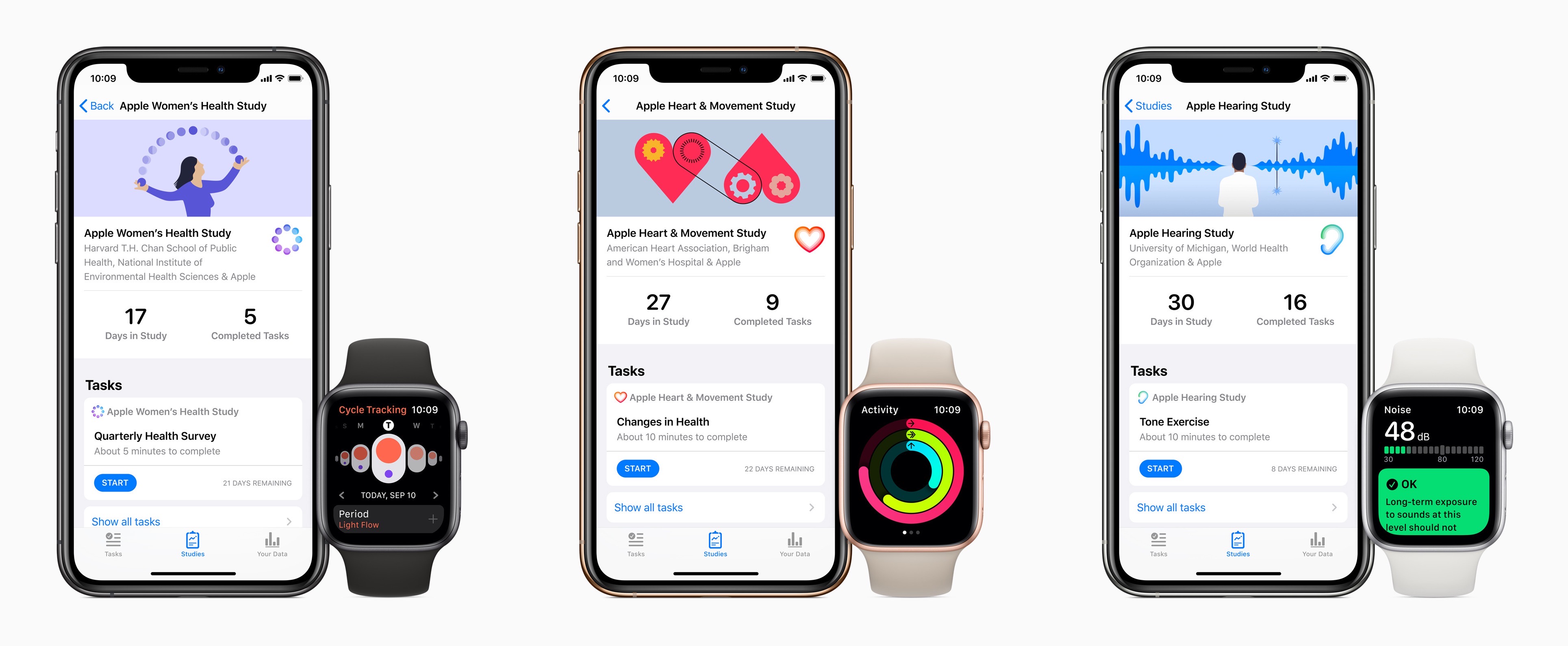
Today Apple announced the next phase of its efforts in medical research studies. Following the Heart Study which debuted in late 2017 and shared its first results earlier this year, Apple now has three new studies it’s launching at once, which users can sign up for through a brand new Apple Research app.

“Today marks an important moment as we embark on research initiatives that may offer incredible learnings in areas long sought after by the medical community,” said Jeff Williams, Apple’s chief operating officer. “Participants on the Research app have the opportunity to make a tremendous impact that could lead to new discoveries and help millions lead healthier lives.”

Users can enroll in one or more of the new studies: the Women’s Health Study, Heart and Movement Study, and Hearing Study. Each of these uses an iPhone and Apple Watch to collect certain data for the purpose of aiding medical advancements.

Anything health-related can come with plenty of privacy concerns, so the Research app’s on-boarding flow includes a very clear privacy commitment, stated in four points:

  1. Your data will not be sold.
  2. You decide which studies you join, and you can leave the study at any time.
  3. You control which types of data you share, and you can stop sharing your data at anytime.
  4. Studies must tell you how your data supports their research.

Tim Cook on multiple occasions has sought to emphasize how important the issue of health is to Apple. Far from a mere hobby, he’s said he believes health will end up being Apple’s most significant area of contribution to mankind. Studies like these are one way to help push the needle on that goal.


HomeRun Adds Thousands of Icons for Customizing Your Watch HomeKit Triggers

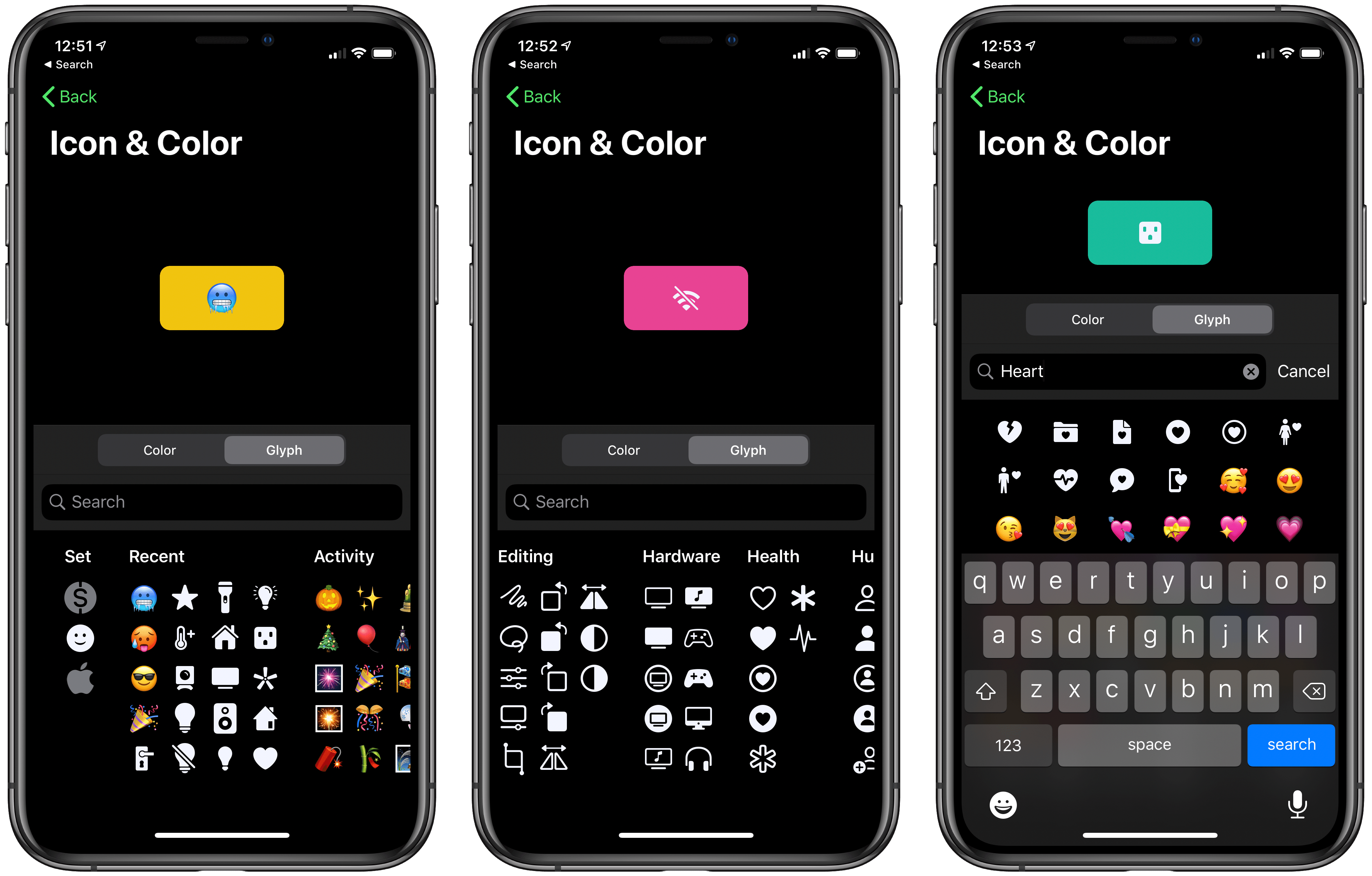
Browsing custom icons in HomeRun's iPhone companion.

Browsing custom icons in HomeRun’s iPhone companion.

Customization options have never hurt an app, and in many cases they make apps far more functional and endearing. Today HomeRun, the Apple Watch app for running HomeKit scenes, has expanded its customization options immensely by adding over 4,400 new icons that can be used for configuring the app’s grid of HomeKit scenes, and also for adorning your watch face via HomeRun’s complications.

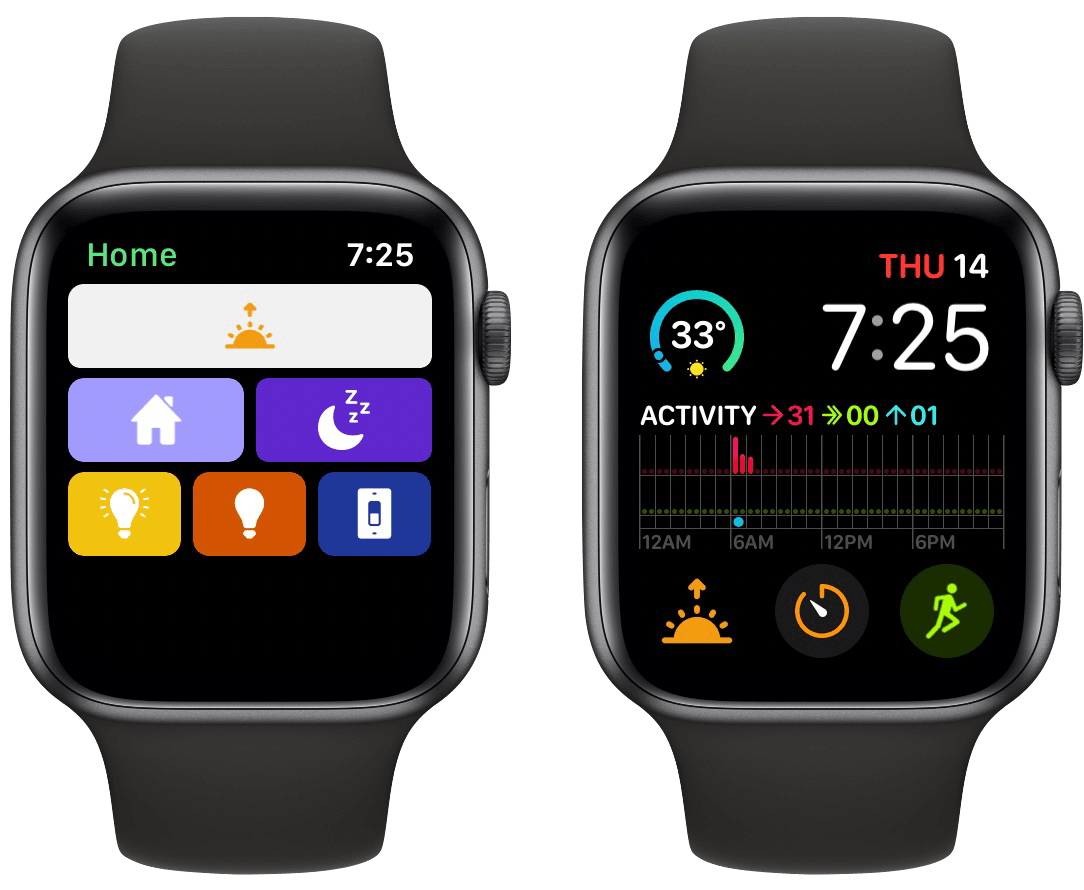
HomeRun debuted last November as the best option for running HomeKit scenes from your Apple Watch. Unlike Apple’s own Home app, which only displays two scene triggers on-screen at once, with HomeRun you can fit up to 12 on-screen with a 44mm Watch, plus create complications for those scenes that run on a user-set schedule, so the right scene complication is always present at the right time.

HomeRun's scene grid (left) and custom complication (right).

HomeRun’s scene grid (left) and custom complication (right).

Previous releases enabled customizing HomeRun’s scene grid, which makes up the app’s main UI, by choosing from different colors and glyphs for each of your HomeKit scenes. The number of options was fine before, but now it’s much more than fine. Developer Aaron Pearce has added thousands of new icons by including the full set of Apple’s SF Symbols, the full set of Simpaticons, plus emoji options. The over 4,400 icons can be browsed inside HomeRun’s companion iPhone app, where a search option has thankfully been included.

I love that these new options work not only inside HomeRun’s grid, but also for configured complications. The sole exception is emoji, since they don’t fit watchOS’ design standards for complications. That slight drawback aside, this is a fantastic release for HomeRun that ensures I have no reason to ever look elsewhere for HomeKit scene control on the Apple Watch.

HomeRun 1.3 is available now on the App Store.


Connected, Episode 269: Read My Email Through My Eyes

On this week’s episode of Connected:

There’s a new MacBook Pro in town, bringing with it an updated design and a new keyboard, and Apple’s rumored AR glasses make everyone feel old. Myke is crowned the Popsocket Enthusiast, Stephen gets an email and Federico explains Toolbox Pro.

You can listen below (and find the show notes here).

AppStories+ Deeper into the world of apps
0:00
01:37:37

Connected, Episode 269

AppStories+ Deeper into the world of apps

Sponsored by:

  • Pingdom: Start monitoring your website performance and availability today, and get instant alerts when an outage occurs or a site transaction fails. Use offer code CONNECTED to get 30% off. Offer expires on June 30, 2020.
  • Ahrefs: SEO Tools & Resources To Grow Your Search Traffic. Get a 7-day trial for just $7.
  • eero: Get your WiFi fixed as soon as tomorrow! Free overnight shipping.
Permalink

Adobe Previews Direct Photo Import from External Storage Coming to Lightroom for iPad

In a video shared earlier today, Tom Hogarty, who’s a Lightroom product manager at Adobe, demonstrated an upcoming feature of Lightroom for iPad – the ability to import photos from external devices (such as cameras, drives, or SD cards connected over USB-C) into Lightroom’s library without copying them to the Photos app first.

Here’s how it’s going to work:

The workflow looks very nice: an alert comes up as soon as an external device is detected, photos are previewed in a custom UI within Lightroom (no more Photos overlay) and they’re copied directly into the app. I think anyone who uses Lightroom for iPad to edit photos taken with a DSLR is going to appreciate this addition. Keep in mind that the 2018 iPad Pros support up to 10 Gbps transfers over USB-C, which should help when importing hundreds of RAW files into Lightroom.

Direct photo import from external USB storage devices was originally announced by Apple at WWDC 2019 as part of the “Image Capture API” for iPadOS. When I was working on my iOS and iPadOS 13 review, I searched for documentation to cover the feature, but I couldn’t find anything on Apple’s website (I wasn’t the only one). Eventually, I just assumed it was part of the functionalities Apple delayed until later in the iOS 13 cycle. It turns out that this feature was quietly introduced by Apple with iOS and iPadOS 13.2, as also suggested by Hogarty in the Lightroom video.

According to this thread on StackOverflow, direct photo import is part of the ImageCaptureCore framework, which is now also available for iOS and iPadOS. I still can’t find any documentation for it on Apple’s developer website.

Permalink

Apple Music Introduces Replay, a Rolling Playlist of Your Most-Played Music

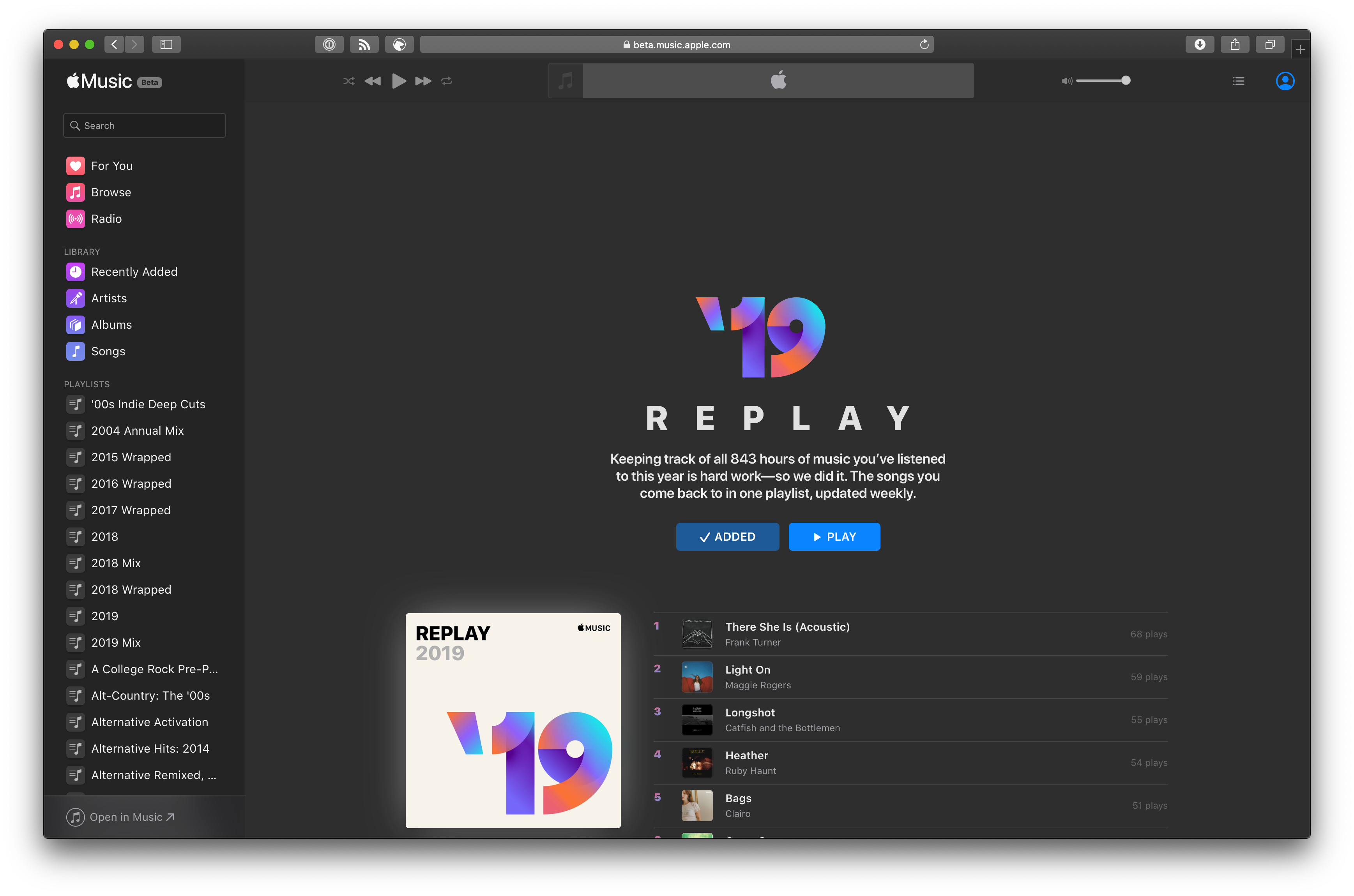
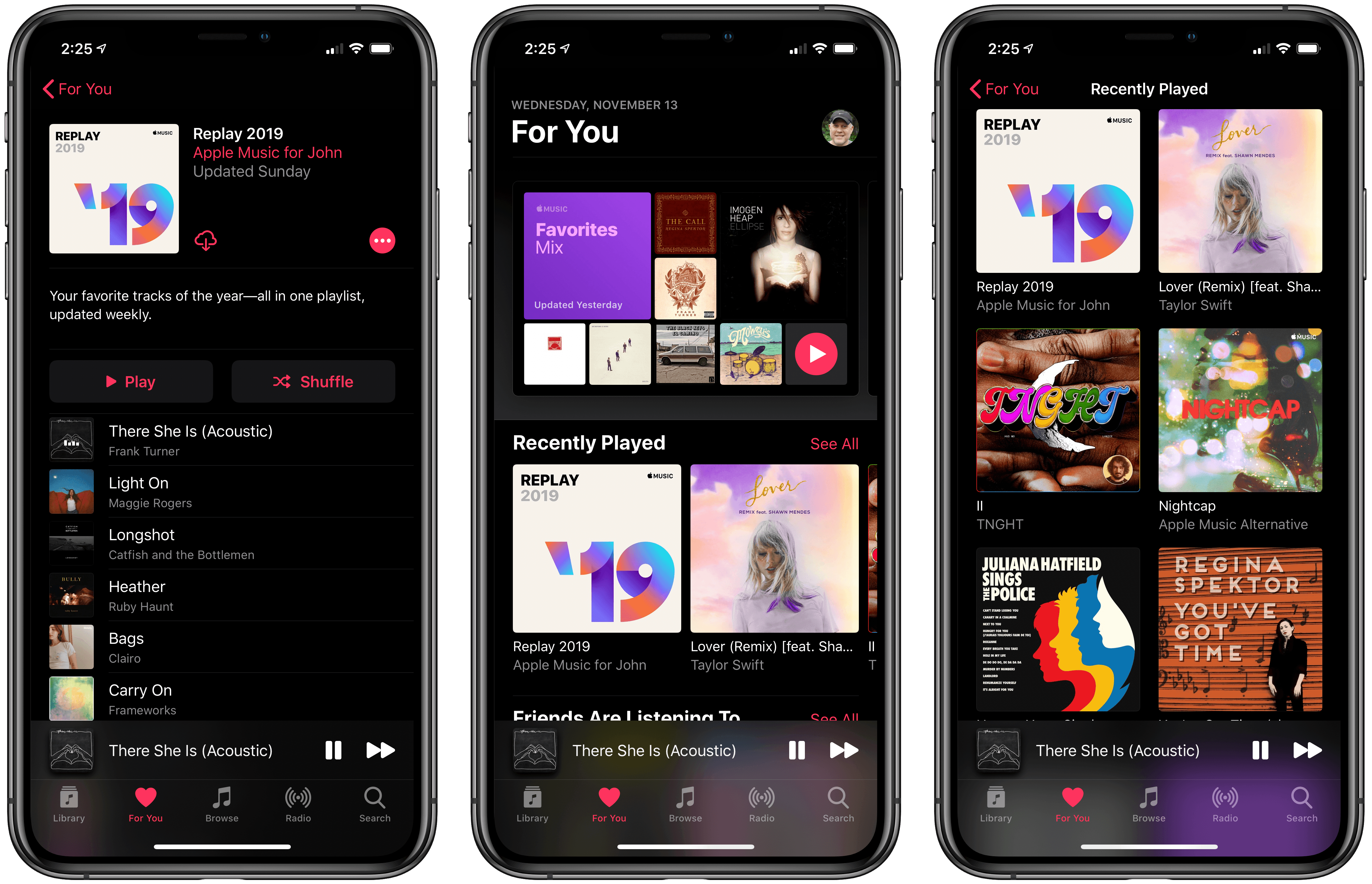
TechCrunch reports that Apple Music has added a new automatically-generated playlist called Replay that collects your top 100 songs for each year you’ve subscribed to the music streaming service. The concept is similar to Spotify’s year-end Wrapped playlist but differs in that it is updated every Sunday throughout the year.

According to Sarah Perez’s story on TechCrunch:

With Apple Music Replay, subscribers will get a playlist of their top songs from 2019, plus playlists for every year you’ve subscribed to Apple Music, retroactively. These can be added to your Apple Music Library, so you can stream them at any time, even when offline. Like any playlist, your Apple Music Replay can also be shared with others, allowing you to compare top songs with friends, for example, or post to social media.

If you don’t see your 2019 Replay playlist in Music, I was able to force it onto my devices by visiting replay.music.apple.com, adding my 2019 playlist, and then playing it. A couple of minute later it showed up in the Recently Played section of For You on iOS, though it seems to be taking longer to show up on my Mac.

I’ve always hoped Apple Music would do something like this, as has Federico who took matters into his own hands and created his Apple Music Wrapped Shortcut that you can find in the Music section of the MacStories Shortcuts Archive. I also appreciate that the playlist will be available throughout the year as a snapshot of my current favorite songs.

Permalink