OmniFocus AppleScripts To Clear & Assign Due Dates
Assigning and removing due dates to and from multiple actions in OmniFocus can be quite cumbersome. With these scripts, you’ll get it done in seconds. FastScripts is, of course, highly recommended. [via Shawn Blanc]
When Apple introduced the iPad, along with it came a set of Human Interface Guidelines.
This idea is essentially doubling down on skeuomorphic realism — a derivative device containing features from an analog ancestor for purely aesthetic or emotional reasons.
But how good is that advice, generally? This is clearly a call for more than just the polished aesthetic details and refinements a designer takes pride in. This is about advancing literalist design styles and skeuomorphics on the grounds that it improves usability through a natural understanding of how an app works. Apple rightly resisted this temptation in many cases, but the Notes and Calendar apps are a different story. Apple combined analog design with modern UI patterns at the expense of affordance. My real life, analog paper doesn’t scroll. Are we now to expect its digital replication should?
A very few developers seem to understand that you don’t have to necessarily imitate real life objects to create a successful and enjoyable application. [via Beautiful Pixels]
Good news, fellow Italian and Swiss MacStories readers: we haz iTunes Movies. Earlier today Apple indeed silently launched the new iTunes section in both countries, you too can check it out by following this link. Both normal purchases and rentals are available.
We say “silently” because no press release went out nor did Apple put any banners and / or links in the iTunes Store homepage to promote the new Movies (or, in Italian, “Film”) – it’s pretty much a hidden section with a rather straightforward interface. Read more
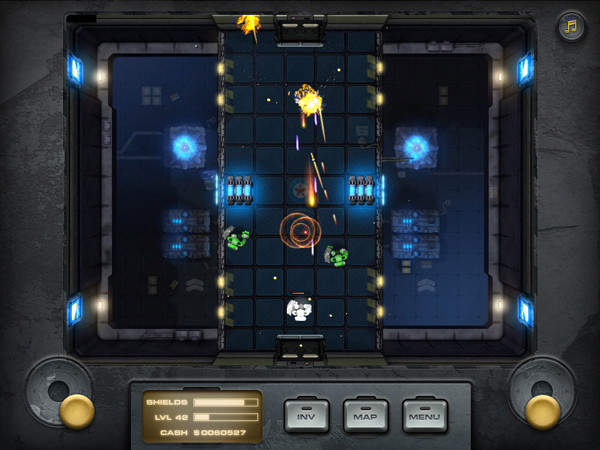
Time Geeks is a classic seek and find game like the ones we used to play in the 80s and early 90s. Those games where you’re given something to find, and the level isn’t completed until you find it. Simple rules. Simple gameplay. So how do you reinvent the genre today, with an App Store overloaded with 3D FPS and zombies games? By making it fun, geek, great-looking and cheap.
Yesterday we reported many Mac developers lamented over the impossibility to register their Mac applications in iTunes Connect and submit them to the Mac App Store for Apple’s approval. Apparently, the problem lied in already registered bundle identifiers – the actual names of the apps.
We reported Tod Ditchendorf, developer of the popular Fluid for Mac, was unable to register the app, just like Realmac Software with Little Snapper and RapidWeaver or Isaiah Carew with Kiwi. That lead use to think name squatters were already targeting the Mac App Store.
Fascinating rumor posted by Cult of Mac today: according to author Leander Kahney, Apple almost acquired the company behind today’s Microsoft’s Kinect controller in 2008. According to the rumor, Inon Beracha, CEO of Israeli company PrimeSense, had been visiting many companies in the Silicon Valley to sell the technology, developed by engineers in the Israeli military.
Based on cameras and an infrared sensor to recognize users’ movements in space, Beracha thought Apple would be interested in applying the technology in its products. Read more
If you have a jailbroken iPad and happen to like first-person shooters, you must be happy to know that Quake 3 Arena is coming to the tablet in a glorious full-resolution version with high-res textures and on-screen controls.
Based on the original id Software game and the iPhone port released by Seth Kingsley in 2008, Quake 3 Arena for iPad has gone under a complete makeover thanks to Alexander Pick’s efforts, who squashed lots of bugs and turned the game in a full tablet-enjoyable experience. It can even run on non-jailbroken devices using a developer certificate and on a jailbroken iPad running iOS 4.2, with installation happening via manual APT, I guess.
The game can be played offline and online, levels can be added via iTunes file sharing and you can also drop high resolution texture files into it. We can’t wait. Additional info available on Paduser. [9to5 via Giz]
The problem is that hardware manufacturers and tech journalists assume that the hardware just needs to exist, and developers will flock to it because it’s possible to write software for it. But that’s not why we’re making iPhone and iPad software, yet those are the basis for the theory.
We’re making iPhone software primarily for three reasons:
Dogfooding: We use iPhones ourselves.
Installed base: A ton of other people already have iPhones.
Profitability: There’s potentially a lot of money in iPhone apps.
With this in mind, think about the installed based of Macs.
The answer is just the same for the iPad. What is it for? Well, I use mine to browse the Internet, cook in the kitchen, play games, manage my finances, earn a living, entertain the children, look at photos and so on. In other words, it’s a computer and that’s how I use it. The novelty of its appearance, functioning and so on seems to require re-categorization or a some highly-specialized usage scenario. Of course in many ways my iPad is significancy different than my MacBook Pro, but in others it’s quite the same.
Here’s what I’m going to do this weekend: find old articles about “Apple’s tablet” speculations and see how many got it right.