Ivory for Mastodon Review: Tapbots Reborn

Ivory for Mastodon.

Ivory for Mastodon.

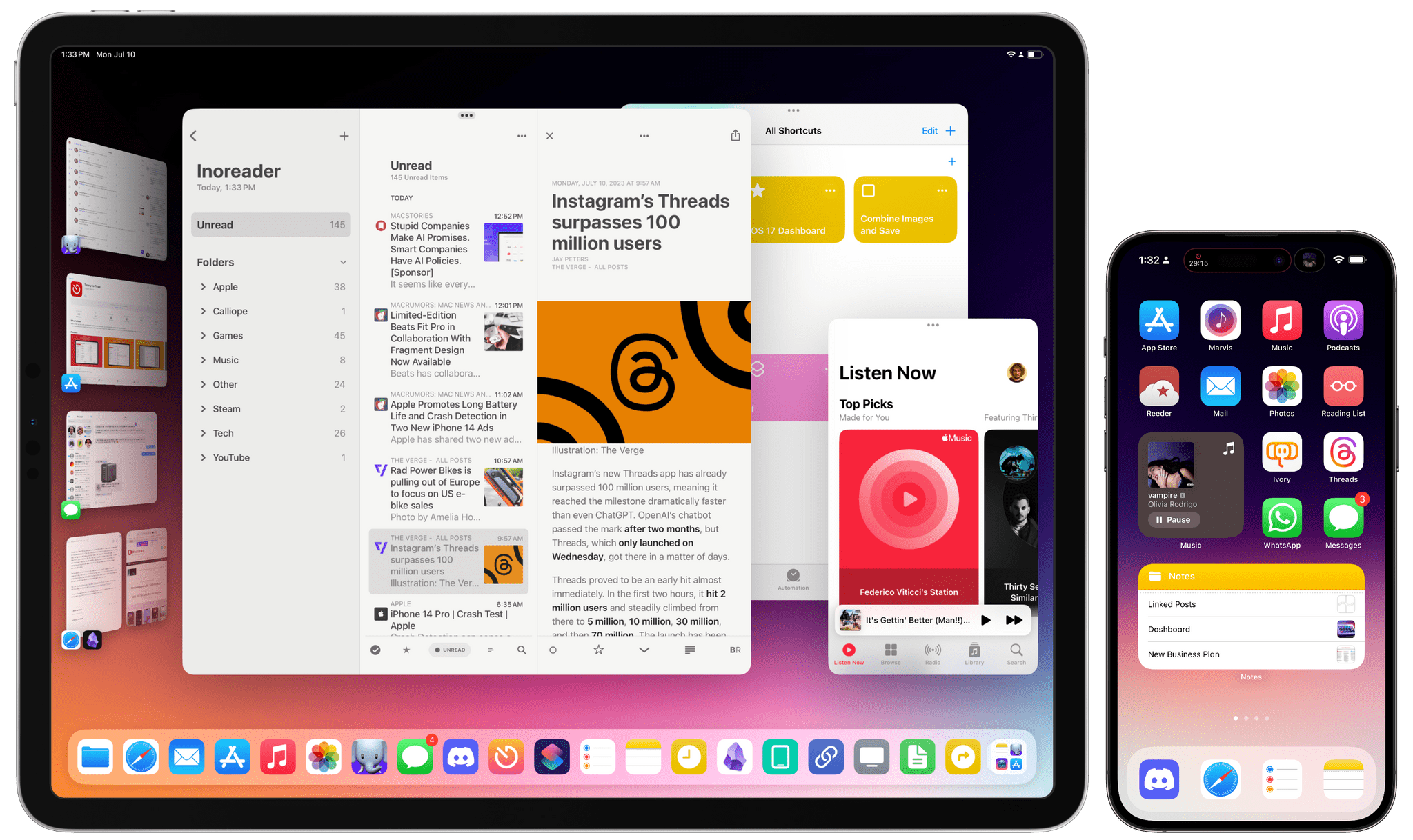
There’s an intangible, permeating quality about Tapbots apps that transcends features and specs: craftsmanship. With Ivory, launching today on the App Store for iPhone and iPad, you can instantly appreciate that level of care and refinement that the Texas-based duo is well known for after more than a decade on the App Store. But there’s something else, too: for the first time in a few years, it feels like Mark and Paul are having fun again.

Ivory is a Mastodon client, and it’s tricky to evaluate it right now because its version 1.0 is launching under extraordinary circumstances.

As we’ve documented on MacStories, Twitter’s idiotic new “leadership” recently decided to unceremoniously and crassly put an end to third-party clients such as Tweetbot with no warning, which forced Tapbots to scramble and figure out a solution on how to discontinue Tweetbot while dealing with subscription renewals while also accelerating the timeline for the launch of Ivory, which they’d been working on for months. I’ve been following the development of Ivory very closely (I’ve been using the app as my main Mastodon client since its first alpha in late November), and I know that the Ivory 1.0 launching today isn’t the debut version Mark and Paul were envisioning. By Tapbots’ own admission, there’s still a lot of work to do on Ivory, but given how the Twitter situation evolved, they had to ship something. There is already a roadmap on Tapbots’ website for Ivory, if you’re curious to know what the developers are planning for the foreseeable future.

As I was saying above, however, there’s something else about Ivory that, in many ways, makes today’s release an important milestone in our community worth documenting and celebrating. Ever since we at MacStories decided to abandon Twitter, we’ve gone all-in on Mastodon and, broadly speaking, we want to embrace the idea of decentralized and federated social media. Over the past few weeks, I’ve seen hundreds of other people I used to follow on Twitter do the same. I believe we’re witnessing the beginning of a new social networking era, and even though Mastodon has been around for a few years, many of us (myself included) are only realizing now that we should have paid attention to this kind of technology years ago.

For the second time since I started MacStories in 2009, I can observe developers imagining what interfaces for reading and posting status updates on the web should look like. New conventions are being created as we speak, and we are, once again, witnessing the rise of a vibrant ecosystem of third-party apps designed for different needs, platforms, and people. Only, this time, there is no single company that controls the fate of all this.

So that’s the something that makes the release of Ivory a special one in the Apple community. More than a reactionary “what if Tweetbot, but for Mastodon” move, Ivory marks a new beginning for Tapbots in a way that Netbot never was. (If you know, you know.) We’re living in new and exciting times for indie apps, and I think that you can feel it when the creator of an app feels the same way. Ivory exudes enthusiasm. Even though it’s not the most feature-rich client I’m testing right now, it’s the one I’m constantly drawn towards. Ivory is going to establish a baseline for quality and polish on iOS and iPadOS; it’s the app future Mastodon clients for iPhone and iPad (and, hopefully soon, Mac) will have to measure up against.

Ivory is the start of a new chapter for one of the most beloved indie studios in our community. So let’s take a look.

Read more


Apple Offers Educational Resources for Data Privacy Day

January 28th is Data Privacy Day, and Apple is marking the occasion with educational resources, including a short film starring Nick Mohammed called “A Day in the Life of an Average Person’s Data” and a Today at Apple session called “Taking Charge of Your Privacy on iPhone.”

The short film featuring Mohammed, who plays Coach Nate in the Apple TV+ show Ted Lasso, illustrates how personal data can be misused in a variety of humorous scenarios, highlighting how users can protect themselves using features built into Apple devices. The Today at Apple session is designed for users of all experience levels to take control of their privacy. According to Apple, the Today at Apple session will:

explore features including Mail Privacy Protection, Safety Check, Location Services, and passkeys. In this session, attendees will learn how they can customize each feature based on their individual privacy preferences.

Signups for the session are open starting today on the Today at Apple website.


Last Week, on Club MacStories: Audio Transcription Shortcuts, Scrobbling from Windows, Controlled Chaos, and Minimalism

Because Club MacStories now encompasses more than just newsletters, we’ve created a guide to the past week’s happenings:

MacStories Weekly: Issue 352

Episode 98 of AppStories transcribed by Whisper.

Episode 98 of AppStories transcribed by Whisper.


The New M2 Mac mini and MacBook Pros

Source Apple

Source Apple

Reviews of the new M2-based Mac minis and MacBook Pros are out, and of the two computers, the mini is the one that I find the most interesting. With Apple silicon no longer limited to the entry-level mini, it’s now possible to spec the tiny desktop so it rivals some configurations of the M1 Mac Studio, leading The Verge’s Chris Welsh to dub the higher-end mini configuration the ‘Mac Studio junior.’

That’s a great way to look at that model, but it also fills many more roles than just the slot immediately beneath the Mac Studio. As Dan Moren of Six Colors explains:

It’s hard to argue that the mini’s versatility isn’t the biggest part of why the product is still going strong, nigh on two decades after its debut. If the iMac, the Mac Studio, and the still-waiting-in-the-wings Apple silicon Mac Pro are the bricks of Apple’s Mac lineup, the Mac mini is the mortar, with its various configurations filling the gaps in between.

Welch strikes a similar note:

But remember that there’s no such thing (yet) as an iMac with an M2 Pro inside. So for anyone who wants a Mac desktop but finds the Mac Studio to be overkill — and it’s exactly that for many use cases — this M2 Pro Mini could make a ton of sense. And it doesn’t cost anywhere near as much.

I’ve owned the 2009 and 2014 Mac minis, as well as a fully-spec’d 2018 Mac mini, which I’m still running as a home server. I’ve also tested the M1 version of the mini. It’s safe to say that I’m a big fan of Apple’s tiniest desktop machine, which started as a way to attract Windows users into the Mac universe with a modestly-powered and priced desktop. That original mini has morphed into a Mac that now fulfills a remarkably broad spectrum of use cases. I’m sure that if I weren’t using an M1 Max Mac Studio, I’d have an M1 Pro Mac mini with 32 GB of unified memory, a 4 TB SSD, and 10 Gigabit Ethernet on my desk instead.

Source: Apple.

Source: Apple.

The M2 MacBook Pro is less interesting than the mini, not because it’s a less capable computer, but because the design is identical to the M1 version of the laptop and the speed gains are incremental over those models. Of course, as Jason Snell points out on Six Colors, most users won’t be upgrading from an M1 MacBook Pro to the M2 model, and for them, the jump will be significant and worthwhile:

The fact remains, though: If you want the very best laptop Apple has to offer, the MacBook Pro will not disappoint you. The M1 models were great in late 2021, and these new M2 models are even better—albeit incrementally so.

I’m fascinated with Apple’s gaming narrative. Ever since WWDC, Apple has touted Metal 3 and the M1, and now, M2’s videogame performance. There aren’t a lot of games that take advantage of Metal 3 yet, so it’s still hard to judge how Apple’s computers stack up to their PC counterparts, so I was particularly intrigued by Monica Chin’s imperfect, but insightful take on how the MacBook Pro with M2 Max’s performance compares to gaming laptops that she’s tested for The Verge:

I think — put the pitchforks away, I know these are totally different things and there are all sorts of problems with this comparison — that the simplest way to think of the MacBook Pro with M2 Max is as the addition of an RTX 3070 GPU. It’s not quite providing the frame rates that we’ve seen from the biggest RTX 3070 computers out there (MSI’s GS76 gave us 114fps, for example) but it’s not too far off, and it’s well above what we’d expect to see from an RTX 3060 gaming machine. The M2 Pro Mac Mini, which only put up 62fps on Tomb Raider, is closer to RTX 3050 territory.

There are far more economical ways to achieve that sort of gaming performance than buying a MacBook Pro, but it’s still interesting to see where the laptop falls on the gaming spectrum because it speaks directly to the capabilities of its GPU. As with the M1-based MacBook Pros, the M2 models also distinguish themselves compared to the MacBook Air by their superior displays, higher memory configurations, the wider variety of ports, and ability to drive multiple external displays.

If there’s anything missing from Apple’s current laptop lineup, it’s the ability to configure a laptop with the horsepower of an Air but the memory and storage capacities and screen of the MacBook Pro. I think there are a lot of ‘pro’ uses for a laptop that would benefit from that sort of configuration but don’t require a lot of raw CPU or GPU performance. However, given the lines along which Apple distinguishes its ‘Pro’ laptops from the Air, I’m not holding my breath waiting for it.


Jump-Start Your New Year with the Perfect Trio of Health and Fitness Apps: WaterMinder, FitnessView, and Calory [Sponsor]

Embarking on a healthy 2023 is easy with Funn Media’s trio of top-rated health and fitness apps: WaterMinder, FitnessView, and Calory. Together, they’ll help you track what you eat and drink and push your fitness to new levels.

WaterMinder makes tracking hydration simple. The app features an elegant interface and myriad ways to input the water and other drinks you consume throughout the day. The app is available on all of Apple’s platforms, is highly customizable, and includes support for Shortcuts, widgets, and Apple Watch complications. With WaterMinder’s rich charts for tracking, hydration reminders, and integration with Apple Health, you’ll have your hydration on track in no time flat.

Fitness tracking is essential to maintaining healthy habits and preventing injury. FitnessView has you covered on both fronts with deep insights into every workout, along with trend-spotting that lets you train smarter than ever before. The app, which is available on the iPhone and Apple Watch, offers deep integration with Apple Health. With extensive stats and goal tracking, FitnessView provides a holistic overview of where your fitness stands today and where you’re heading. The fully-customizable app also includes Home Screen widgets for monitoring your progress at a glance, a long list of workout types, and workout sharing with friends.

Calory rounds out Funn Media’s health and fitness trio with the most intuitive calorie tracker on the App Store. The app’s rich visualization of the calories you’ve consumed and easy input system remove the friction from tracking your goals. Available on all Apple platforms, Calory lets you log what you eat from anywhere, so you never forget to log a meal. Coupled with glanceable charts plotting your progress and access to more detailed stats and a journal view, Calory offers a complete overview of the food and drink you consume, along with deep nutritional data.

Get started down the road to health and fitness with WaterMinder, FitnessView, and Calory by visiting Funn Media’s website today to learn more about these fantastic apps.

Our thanks to Funn Media for sponsoring MacStories this week.


Hands-On with Apple Music for Windows

Apple Music for Windows.

Apple Music for Windows.

Last week, Apple released native versions of Apple Music, Apple TV, and Apple Devices for Windows. The apps, which are available on the Microsoft Store, are labeled as “previews”, and they’re meant to eventually serve as replacements for iTunes for Windows, which is the only flavor of iTunes Apple still distributes after they transitioned to standalone media apps a few years ago. I suppose the apps are also part of a broader strategy from Apple to establish a stronger presence of their services on Windows, as we saw last year with the launch of Apple Music on Xbox and iCloud Photos on Windows (which joined the existing iCloud configuration panel for Windows devices).

As an Apple Music subscriber and owner of a Windows gaming laptop, I thought it’d be fun to take Apple Music for a spin and see how it compares to Spotify on Windows as well as the existing Apple Music experience for Apple’s platforms, which I know very well and enjoy on a daily basis.

Read more


Apple Celebrates Black History Month with a New Black Unity Collection and More

Source: Apple.

Source: Apple.

To celebrate Black History Month, Apple has released a new Black Unity Collection. The collection includes an iPhone wallpaper, an Apple Watch face, and a Sports Loop band.

According to Apple, the special-edition Apple Watch Black Unity Sport Loop “features the word “Unity” woven abstractly into the band using red, green, and black yarns that pay homage to the Pan-African flag, while a unique layering of yarns lends a sense of three-dimensionality to the letters.” Both the iPhone wallpaper and watch face combine geometric shapes in green, black, red, and yellow. On the watch face, the numbers on the face change as the minutes pass, using parts of other numbers.

Apple is also marking Black History Month across many of its services, including the App Store, Apple Music, the TV app, Fitness+, News, Podcasts, Books, and Maps. Among the offerings will be Apple Maps Guides by the Smithsonian, curated TV and film collections by Dr. Jelani Cobb, apps and games, special playlists on Apple Music, and podcast spotlights.

Apple also announced that it:

is supporting Art Gallery of New South Wales (Sydney), Ghetto Film School (New York, Los Angeles, London), Music Forward (Los Angeles), Shout Mouse Press (Washington, D.C.), and The National Museum of African American Music (Nashville, Tennessee). Apple’s support for these organizations is a continuation of REJI grants over the past two years that helped organizations committed to providing economic, educational, and creative opportunities in communities of color.

The Apple Watch Black Unity Sport Loop is available to order online today and will be in stores on January 24th for $49. The Unity 2023 watch face and iPhone will be available next week, presumably alongside OS updates.


Apple Announces Second-Generation HomePod

Source: Apple.

Source: Apple.

Over the weekend, Mark Gurman said that Apple would be releasing a new HomePod soon. As it turns out, he was correct because today, Apple released a new second-generation HomePod. According to Apple’s press release,

With convenient new ways to manage everyday tasks and control the smart home, users can now create smart home automations using Siri, get notified when a smoke or carbon monoxide alarm is detected in their home, and check temperature and humidity in a room — all hands-free.

The HomePod is powered by an S7 chip and appears to feature a sound system similar to the first-gen model.

Source: Apple.

Source: Apple.

The new HomePod also adds a temperature and humidity sensor, which can be used as a trigger for home automations, and supports the Matter home automation standard.

The second-generation HomePod is available to order today, with deliveries beginning Friday, February 3rd for $299, which is $50 less than the original HomePod’s price.

Update: Thanks to the Wayback Machine, I’ve gone back and checked the second-generation HomePod’s tech specs against the original model, and there are some interesting differences. The new model weighs less at 5.16 pounds (2.3 kg) versus 5.5 pounds (2.5 kg). The new model is a little shorter, too, at 6.6 inches (168 mm) compared to the original’s 6.8 inches (172 mm), but the same width.

The new HomePod has two fewer tweeters at five compared to the original’s seven. No mention is made of direct and ambient audio beamforming in the tech specs for the new HomePod, although it does support Spatial Audio and Dolby Atmos, which is a nice addition. The latest HomePod has four far-field microphones compared to the original’s six too.

In addition to the temperature and humidity sensor, the new HomePod also features an accelerometer and will support Sound Recognition later this spring with a software update. It’s not clear whether that software update will work with the original HomePod or not.

The new HomePod is also getting a WiFi upgrade with 802.11n support. The new model also includes a Thread radio and Ultra Wideband chip, which the original did not.

Last but not least, the new HomePod’s tech specs appear to suggest that the power cable may be detachable, unlike the original model, because it’s listed as an item ‘in the box,’ whereas that wasn’t the case when the HomePod debuted.