

#MacStoriesDeals - Wednesday

MyGreatFest - The World’s First Jailbreak Convention

The MyGreatFest event is going to be “the worlds first iCommunity and Jailbreak convention ever held.” It’s being organized by Craig Fox, founder of MyGreatFest, and he has assembled a diverse, dedicated, and knowledgeable group. Not to name drop but Jay Freeman, aka saurik, will be in attendance along with many other popular names in the jailbreak community. The event on September 17, 2011 at The Old Truman Brewery on Brick Lane, in London, UK. Ticket information is below.
MyGreatFest team video after the break. Read more
Duplifinder Gets Update, Highlights Duplicates & Better iPhoto Deletion

Duplifinder is growing up fast! We checked out the iPhoto duplicate remover last week, and the developer has already launched a big update. Not only are duplicates now highlighted with the grew squares you see above, but you can double click a photo to immediately reveal it in iPhoto, and pressing the delete key will now delete those duplicates from iPhoto effortlessly. As you can see, our product review pictures get duplicated quite a bit between camera imports, and it’s become an essential tool to help clean out my Mac after an afternoon of product shoots. Ready to jump on board with Duplifinder 2? Download it here!
Tweeple Tap: iPhone Game to Recognize People By Their Tweets

Here’s a neat iPhone game for today while you’re waiting for more Apple news to come in and get you all excited about the event on March 2: Tweeple Tap, a free app by Puntrix, is all about the people you follow on Twitter, and how well you think you know them. In this game, in fact, you’ll have to recognize people by their tweets, which are displayed one after another as you select the correct Twitter user and keep on accumulating points.
There’s nothing else to do, just prove your skills in knowing the people you follow. You can get hints by tapping on a link on a tweet, or just go ahead and try to guess who tweeted what without even looking. Ok, maybe not that one.
Still: go download, it’s free.
The Daily Set To Head To Android Tablets This Spring
Sources have told AllThingsD that News Corp’s The Daily, which is currently an iPad exclusive daily newspaper, will be heading to Android in the coming three months. Whilst it was always planned for The Daily to head to the Google operating system and propagate onto as many tablets as possible it wasn’t expected to happen at this rapid rate.
The News Corp team got some extensive help from Apple in regards to technical details and was also the pioneering app to use Apple’s new subscription service. The event in which The Daily was launched was not only supposed to include Steve Jobs, but Rupert Murdoch, News Corp CEO said at the event that “we think last year, this year, and next year will belong to the iPad.”
Apple Confirms: iPad 2 Event on March 2
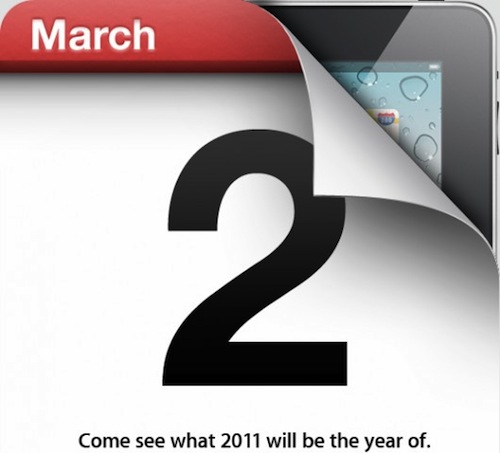
According to The Loop, Apple just sent out the invitations for the previously reported media event on March 2 – where the company is expected to announce a new iPad.
Apple on Wednesday sent an invitation to media inviting them to a special event on March 2 in San Francisco, Calif.
According to the invitation received by The Loop, the event will be held at the Yerba Buena Center for the Arts at 10:00 am. This is the same venue Apple has used to introduce a number of products in recent years.
For a summary of the iPad 2 rumors surfaced on the Internet from September until today, check out our iPad 2 rumors timeline. The event will take place at 10 AM Pacific Time, and you’ll find our meta-liveblog coverage on MacStories, as well as posts as iPad 2 details will start coming in. The new iPad – dubbed “iPad 2” so far – is widely believed to introduce a front-facing camera for FaceTime, a thinner and lighter design, an updated version of iOS 4.3 with Photo Booth capabilities. It’s still unclear whether or not Apple will also include a rear camera and a USB / Light Peak port on the device.
Looking at the invitation, it appears that Apple is kind of putting a reference to other tablets from competitors in there: it says “Come see what 2011 will be the year of”. That’s a nice tagline. Does this mean we’ll only see an iPad 2 in 2011, and not an iPad 3?
Tune in at 9.30 AM Pacific Time on Wednesday for our live coverage of Apple’s iPad 2 event.
Canned Mail Lets You Save Time Sending Pre-Composed Emails
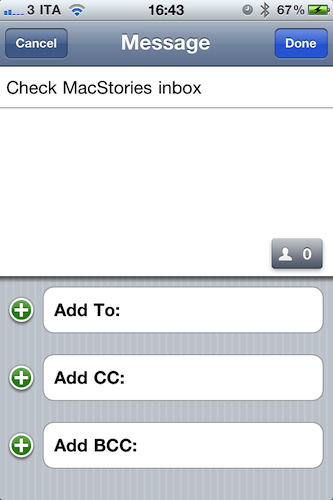
There are cool utilities for the iPhone, and then there are must-have apps you just can’t work without anymore once you’ve tried them. That has been the case for me with Canned by Sky Balloon, a neat little iPhone app that allows me to send pre-composed text messages to my favorite contacts, thus saving time typing when the subjects are always the same over and over. I’m talking about stuff like “Hey mom, remember to buy some pizza” or “Meet me in 5 at the station”. Canned, of all the apps I have, is probably the one I use the most.
But Sky Balloon knew that text messages were just the beginning, and so they listened to their userbase’s requests and developed a new version of Canned that’s meant for emails. Canned Mail, available at $0.99 in the App Store, lets you create pre-composed emails to send at any time to one of your Address Book contacts, or multiple ones at once. You can in fact create complete emails with subject / To / CC / BCC fields, save them in the app’s main screen and tap on them to send them in seconds.
If you find yourself sending the same emails every day, you need Canned Mail. Go download it here.
SyncMate 3 Syncs Androids To Mac Over WiFi, Bluetooth, & USB
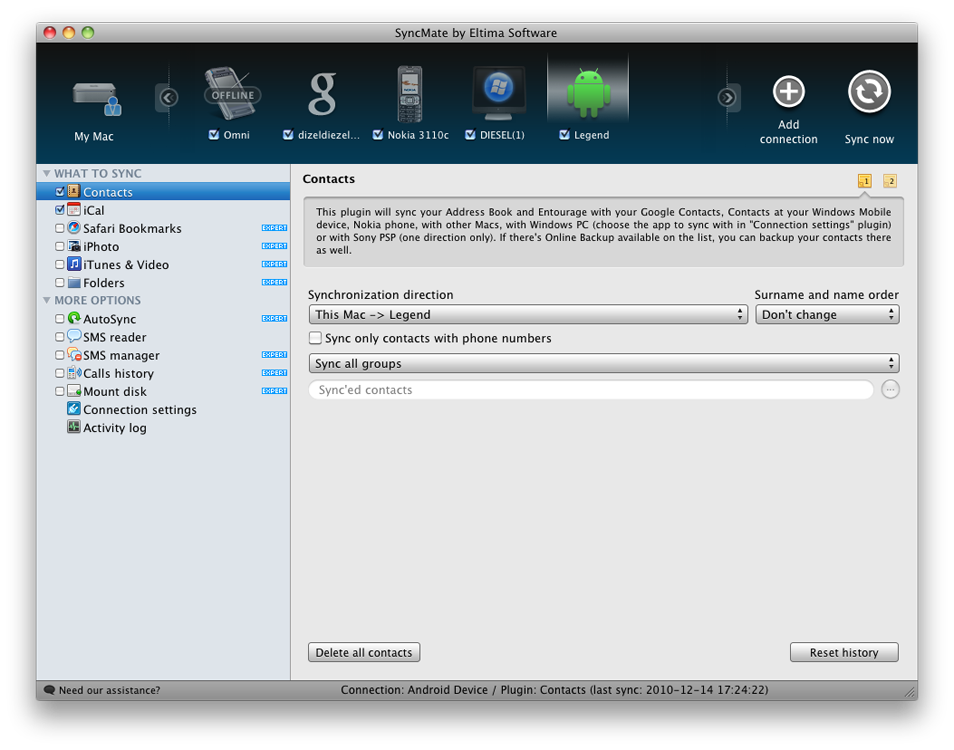
Why are we talking about Androids? Let’s just say our little green friends need some love too, and there’s nothing like a quick trip down syncing lane to remind us that manually inserting tunes onto your SDCard is definitely a lot more painful than iTunes. Without bloated music software, how can you manage your Droid or Nexus One? Eltima Software has the answer with their launch of SyncMate 3, which is a well rounded information manager I reviewed not too long ago. If you sport the latest in Google technology, SyncMate’s latest update can mount your Android phone wirelessly or by cable, and sync contact information like music, images, and video straight to the device.
One of my complaints was SyncMate was its interface, but the latest rendition is much improved to fit our sometimes picky standards. Plus, I quite like having a portrait of Andy giving me a quick link to my Motorola Droid when it’s time to load a podcast or two. If you’re still syncing with those Windows PCs, SyncMate also gives you more control over which accounts you want to pull information from.
If you have Android phone and use a Mac (don’t forget SyncMate is on the PC too), you’ll want to check out the latest update at Eltima Software. SyncMate Expert includes all the features described above (including the ability to manage SMS which is neat), and costs only $39.95 for a personal license (good for two Macs).
The Power Of The iPad Illustrated In Infographic
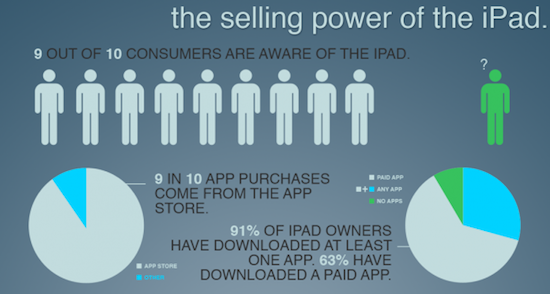
If there was any doubt the iPad is a very strong product among consumers, an infographic by Yudu Media is here to confirm Apple achieved a huge success with its first tablet. The full image is available here, but let’s break it down a bit. 9 out of 10 consumers are aware of the iPad, not a surprise considering Apple’s massive advertising strategy. Those consumers who have bought an iPad, however, have made 9 in 10 app purchases from the App Store (this is not very clear), and 91% of them have downloaded at least one app. 63% of iPad owners have downloaded at least one paid app. That’s not a bad number – I can tell you many of my friends are that kind of users that refrain from entering their credit card information in iTunes and only download free apps on their iPhones. Perhaps the iPad shows bigger paid app numbers than the iPhone? This is an interesting subject.
The infographic also reports Apple is expected to make $15 billion from app revenue in 2011, 3 times the total of 2010. Overall, iPad owners “are more likely to view, interact with, and buy as a result of viewing advertising than other device users”. Whatever that means in our daily iPad usage, we’re pretty sure Apple’s commercials play an important role in this.
Check out the infographic here.