“Select Developers” Testing iPhone 4 Prototypes Running A5 Chip?

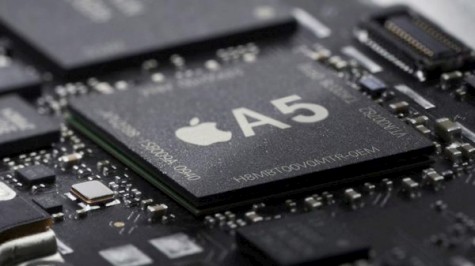
According to a report by 9to5mac, Apple has begun testing a prototype version of the iPhone running the A5 chip with “select developers.” The units, carrying the usual Apple model numbers for prototypes, are apparently based on the iPhone 4 hardware, with the only exception of the Apple A5 processor – clearly aimed at enhancing speed and graphics performances on the next-generation device. The report goes on to say these modified iPhones featuring the A5 CPU have been given to “high-level gaming outfits” in order to start writing gaming applications for the iPhone 5 that will, allegedly, be announced in September. As with the first-generation iPad, Apple is forcing these developers to keep the prototypes in a safe in the company’s offices at night – likely under strict surveillance from Apple employees or security staff.

Apple isn’t taking the next iPhone’s A5-power lightly. They already have select developers working on versions of their iPhone applications that take full advantage of the next-generation iPhone’s speedier and much more powerful hardware. These developers, seemingly from high-level gaming outfits, have been given what is essentially an iPhone 4 but with an A5 processor instead of an A4. The device itself is virtually identical to the iPhone 4, and there is no way anyone can tell it’s not an iPhone 4 based on the phone’s exterior.

According to the report, these early units are nothing but modified iPhone 4s with an A5 chip inside – even the OS is the same iOS 4 that’s currently shipping to customers, only slightly tweaked to work with the new processor. As far as the design goes, these developers haven’t seen anything about the next-generation iPhone that’s not already available to the public with the iPhone 4. From a software perspective, it makes sense to start giving prototypes of a device that’s going to be very similar to the final version away to developers now: the A5 processor will surely find its way in the iPhone 5, and game developers will have plenty of time to test their improved graphics. And as soon as iOS will be previewed at the WWDC ‘11 and released in beta form, these same developers will have a chance to test an A5-enabled iPhone running the new OS.

If the iPhone 5 is really going to be a minor refresh of the existing iPhone hardware, being able to test the A5 – which will likely be the most important addition – five months ahead of the rumored release date must sound like a great plan to these developers.




ListBook: A Simple List App for iPhone

ListBook, a new iPhone app from the developers of MoneyBook, wants to be the simplest solution to create lists on an iPhone, and check off completed items with ease. The App Store is full of apps that enable you to create lists: just think about Simplenote, the popular note-taking application for iPhone and iPad (and the web) that, among other things, also allows you to convert notes to lists. Not to mention the hundreds – if not thousands – of Dropbox-enabled apps that you can use to set up quick shopping lists, todos and reminders and have them always available anywhere you go. The ListBook’s developers, though, recognize that setting up a Dropbox account and having to mess with plain text files, folders and, why not, Markdown support might be a pattern average iPhone users aren’t ready to learn. We, as geeks, love to fiddle with OTA sync, filenames and tags: the majority of iPhone users, however, might not want to do that. And that’s why ListBook doesn’t come with any of these features, but still enables you to create lists, with a beautiful interface and a clever use of gestures.

In ListBook, you create lists and assign new items to them. There are no due dates or tags – you just check off an item once it’s been taken care of. Every list can have a name, as well as a badge on the homescreen to tell you how many tasks you still have to complete. There is no sync or iPad version, no web app or Dropbox integration. You can navigate between lists in a Safari-like UI that displays lists as “pages” in the browser; you can also pinch & zoom to reveal a list and close it.

ListBook won’t satisfy the geeks, but it should be a good alternative to Apple’s Notes app for most iPhone users. Get it in the App Store at $0.99.


iCade iPad Arcade Cabinet Now Available, But Backordered

What began as an April Fools’ joke based off the concept of enabling iPad users to turn their device into an old-style arcade cabinet – the iCade – eventually became a real product with Atari’s official backing and a slew of games built specifically for the cabinet’s Bluetooth-based controls. When the product was “unveiled”, many thought that, in spite of the actual quality of the joke, it would never see the light of day. However, as we saw in January, ThinkGeek announced that the iCade made it after the design and pre-production stage and was set to go on sale this Spring.

And indeed, the iCade became available at $100 earlier today, only to be backordered until May within a few hours of online sales. If you were looking to buy an iCade before Easter: I’m sorry, you’ll have to wait. But of course, there’s always the DIY way to come to the rescue. [ThinkGeek via Engadget]


Kickstarter Project: “Full Metal Jacket Diary” - The iPad App

This Kickstarter Project isn’t about an iDevice accessory or a social networking game but something a little more serious and just as interactive - a book. Well, not exactly a book, but an iPad app based off the book “Matthew Modine’s Full Metal Jacket Diary.”

Back in 1985 actor Matthew Modine starred in a little movie called “Full Metal Jacket,” directed by the legendary Stanley Kubrick. The movie was an instant classic. Modine decided to keep a detailed diary of his experiences and Kubrick also gave Modine permission to photograph the film-making process as well, something he never allowed. Modine captured hundreds of behind-the-scenes moments in the two years it took to finish the film. Modine made a series of 10 x 10-inch prints from the movie and gave them to Kubrick and the others as gifts. When he returned to his home in New York City he put his diary, negatives, and extra prints in a box. In the mid-90s, Modine turned his documented writings and pictures into a hardcover book called Full Metal Jacket Diary. The first edition was limited to only 20,000 laser-etched numbered copies. A paperback edition was never released and many fans of Kubrick have been waiting for something.

Video after the break. Read more


iPhone Location Tracking A Bug To Be Fixed In Next iOS Update?

Following yesterday’s debate on a file discovered by two security researchers that keeps track of your entire location history in the form of cellular triangulation data stored unencrypted in the iPhone’s backup, Daring Fireball’s John Gruber weighed in to suggest this might be a simple bug or “an oversight” on Apple’s part. He claims that a “little-birdie” told him the consolidated.db file acts as a cache for your location, and it’s not meant in any way to be used by Apple to track your location history and moves; the file is never sent to Apple’s servers, but is kept locally on your 3G device and on your computer – if you decided to back up an iPhone or iPad using iTunes. Moreover, the location data doesn’t rely on accurate GPS information – instead, it uses antennas’ triangulation, meaning that in most cases data can be miles off your actual location on a specific day.

The big question of course, is why Apple is storing this information. I don’t have a definitive answer, but my little-birdie-informed understanding is that consolidated.db acts as a cache for location data, and that historical data should be getting culled but isn’t, either due to a bug or, more likely, an oversight. I.e. someone wrote the code to cache location data but never wrote code to cull non-recent entries from the cache, so that a database that’s meant to serve as a cache of your recent location data is instead a persistent log of your location history. I’d wager this gets fixed in the next iOS update.

iOS 4.3.2 was released last week, and Apple might push a 4.3.3 software update relatively soon to “improve overall stability” and introduce “bug fixes” – as they usually write in their changelogs for this kind of updates. Apple PR hasn’t issued a statement about the discovery of this location tracking system for iPhones and iPads 3G, but the story has quickly made the rounds of the Internet and ended up on mainstream media as well. If it’s really a bug, or an oversight, a software update should be the easiest solution to the problem.


Sleipnir Browser Comes To The iPad With Gestures, Bookmark Sync

When I originally reviewed Sleipnir, an alternative browser for the iPhone, back in December, I was impressed by how the app managed to innovate in a market – the one of alternatives to Apple’s MobileSafari – that was saturated and full of apps that were just trying to offer the same set of functionalities over and over again – that is, tabs and Dropbox integration and, overall, some UI schemes that were aimed at porting the classic browsing desktop experience to the iPhone. Like Portal, Sleipnir was one of the very few apps that truly wanted to innovate on the platform. Rather than just copying the desktop and trying to squeeze a Mac-like experience into the iPhone’s screen, Sleipnir provided a series of features like touch-based tab management, tab groups and fullscreen mode that showed everyone how it was indeed possible to innovate with a mobile browser. And now Sleipnir wants to do the same on the iPad.

Released last night in the App Store, Sleipnir for iPad looks a lot like the iPhone version but it makes much greater use of multitouch gestures and tabs to offer a unique browsing experience like no other on the tablet. Instead of placing tabs as “panels” under the top app toolbar, Sleipnir for iPad follows the path traced by its iPhone counterpart and visualizes open pages as thumbnail previews at the bottom. The larger screen of the iPad allowed developers to further play around with this concept and implement a larger bar that shows more open websites at once. The refined cache management in version 1.2 also makes it possible to keep more pages open at once without losing your scrolling position and being forced to reload a page – although I’ve noticed after a dozens of tabs running in the background Sleipnir will refresh a page anyway. However, it works as well as Safari on the iPad 2, if not better: I rarely stumbled upon the page reload issue, and when I did Sleipnir refreshed the page in a way that my exact position was maintained. But there’s more: this new version introduces “TouchPaging”, a new feature that allows you to navigate between tabs with a horizontal swipe (think of the iOS 4.3 multitasking gestures, or the “back” animation in Lion’s Safari) and close a single tab by tracing a “L” on screen. I love these gestures, as they make browsing on the iPad so much natural it’s incredible to think Apple didn’t come out with a similar idea on Safari.

Just like on the iPhone, tabs can be organized in “groups” with drag&drop support, and you can close a tab with a vertical swipe on its preview. You can also drag a tab to the trash, and move as many tabs as you want inside a group. Again, the iPad’s bigger screen allows for a more convenient tab management that truly shines on Sleipnir for iPad. Last, bookmark sync: I still don’t like how Sleipnir handles the creation of bookmarks and the assignment of labels, but with a free Sleipnir Pass account the app lets you keep bookmarks in sync across the iPad and iPhone. The lack of bookmark importing features is annoying, but OTA sync across devices is just great.

Sleipnir is available for free on the App Store, and it’s one of the most innovative browsers ever released on iOS. Give it a try. Read more


Verizon CFO Fran Shammo Hints At Global iPhone 5

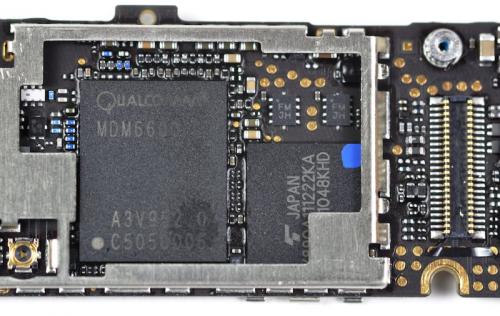
When iFixit tore down the Verizon iPhone 4 back in February, they found a Qualcomm Gobi that’s dual-mode GSM/CDMA capable, which indicates to us that the next iPhone on the CDMA spectrum would go global. During yesterday’s conference call, Verizon CFO Fran Shammo indicated that the next iPhone to be released on the network would be a global phone, allowing the next iPhone to become a world-phone as GSM capabilities are enabled. From Barron’s,

Verizon CFO Fran Shammo, asked about the sluggishness of the company’s ARPU growth in Q1, when the iPhone was introduced — growth was just 2.2%, compared to 2.5% in Q4, remarked:

The fluctuation, I believe, will come when a new device from Apple is launched, whenever that may be, and that we will be, on the first time, on equal footing with our competitors on a new phone hitting the market, which will also be a global device.

While Verizon could be poised to obtain an iPhone that was world-phone enabled, it might be a good time to rehash the universal SIM. Previously, Bloomberg reported that Apple is working on the ability to toggle between CDMA and GSM networks with a single SIM that would allow customers to willfully switch between CDMA and quad-band GSM. The iPhone 5 is also rumored to have a bigger display, NFC capabilities, but otherwise is expected to utilize a similar design to the iPhone 4 as a product refresh amongst other reports of an aluminum design with an internal antenna.

[Barron’s via MacRumors]
Image source: iFixit


News.me iPad App Launches To Take On Social Magazines

News.me, a new social reading experience for the iPad developed by technology incubator Betaworks and The New York Times, launched on the App Store a few minutes ago after much anticipation and speculation on whether or not the service could take on well-established “social magazines” like Flipboard and Zite. There’s no doubt the iPad has created a new market for this kind of applications: rather than presenting a series of links pulled from the top Google News or Techmeme, apps like Flipboard aim at showcasing content being shared by your friends on Twitter and Facebook. But while Flipboard simply collects all content shared in your timelines without applying any sort of filter for relevance and popularity, News.me wants to change the rules of tablet-based social reading experiences by offering a “smart” system that, thanks to data provided by popular URL shortener bit.ly, can filter out the most relevant items appearing in your Twitter timeline – and in someone else’s as well.

That’s the key point of News.me, the feature that will need to be tested in the long term to see if the experiment has a chance to survive in this crowded digital and social newsstand. Not only does News.me enable you to see what your friends are sharing (through tweets), it also lets you see what they are reading. And from this standpoint, logging into Twitter within News.me gives the app a whole new meaning when it comes to “Twitter integration.” It’s a huge bet for Betaworks and The New York Times: can the bit.ly-backed algorithm provide an efficient way to distribute personalized news to iPad users? More importantly, is it enough to convince people to pay $0.99 a week, or $34.99 a year? Read more