The Essence of a Name

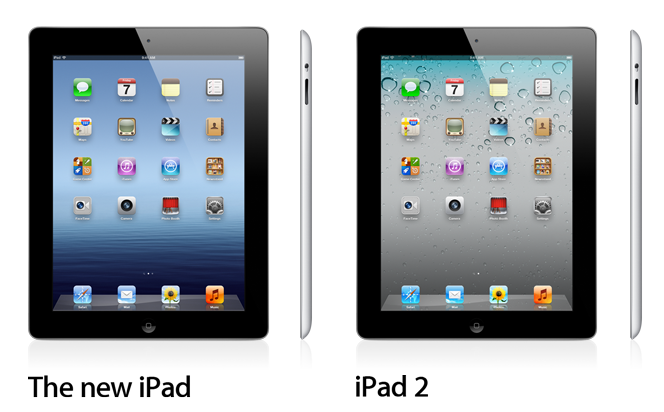
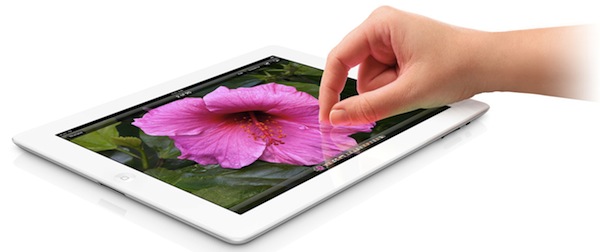
Following yesterday’s announcement of the new iPad, a debate has arisen as to whether Apple should have called the new iPad something along the lines of “iPad 3” or “iPad HD” so to give the device a unique name easily understandable by consumers. I think Macworld has the two smartest (and most balanced) takes on the subjects.

Dan Moren thinks going with “iPad” is a good move:

Constantly reinventing a nomenclature is unsustainable. Is every iPad between now and 2022 going to have a different number, letter, or some combination appended? Is Apple going to eventually reach the iPad 13GS+ Extreme? I’d argue that’s exactly what the company doesn’t want.

Lex Friedman disagrees:

I drive a Honda Accord. It’s a 2006 model. If Apple wants to keep the same names for its products each year like car companies do, adding a year to the product name seems like a fine approach. I always know which wipers to get for my 2006 Accord. I think the average consumer ought to know which case fits their iPad, too; making them instead rely on distinctions like third-generation—that aren’t in the official product names, or printed on the devices themselves—just makes things harder.

The first few seconds after Tim Cook was photographed on stage with a big “The new iPad” image behind him, I, too, was slightly confused and disappointed. Why would Apple want to go back to just iPad, after years of iPhone 4, iPad 2, and iPhone 4S? But then I, like Lex, thought about car companies. I am not driving a Polo 13. My mom doesn’t drive a Meriva 2S. Yet, in case of necessity, both my mom and I – the polar opposites on a scale from consumer to nerd – would know how to look up the company’s proper model name – the “version” – of the cars we drive. Mine’s a 2003 Polo. Not every car company does this, but it’s very common (and easy to understand).

I hear the concerns of people like Lex. Not having a unique name for each generation of device does make things harder when it comes to support, referencing a product in an article, or looking up information on Google. It means you have to do more work. It means you have to type a little more to find out – either in manuals or support docs or the Apple Store itself – what generation of device you are talking about. It’s about Apple not giving us a unique way to call the iPad – well, actually they do, it’s iPad, but that makes some people uncomfortable. It’s unsettling at first, because we were used to a different convention.

But here’s the thing: people are not stupid. Sure, some people are geekier than others, but as car companies prove, eventually people find a way to properly retrieve information about the products they use. Eventually, as in more work. Which could mean using Google, reading a manual, asking a friend, or driving to the nearest Apple Store. Apple has the best customer support around, and no tech company beats Apple’s online Support resources. No one ever died from looking up a model name. 1

But why? The trade-off is an increase in simplicity and elegance. Otherwise, we’d end up like Samsung and Square-Enix, naming our products with monickers like “Epic” or “XIV” (good luck telling a 10 year-old kid that’s 14, and not “xiv”).

More importantly, Apple’s new name puts the focus on the essence of the product, not the way it follows its predecessor year after year. It’s iPad, my friend Matthew was told by Apple. And I see the thinking behind such choice: by combining a more elegant name with new features, Apple will, yes, end up having to explain better its model numbers, but they will gain in user-friendliness and overall message. Because, again, our faith in humanity might falter every once in a while, but people know how to refer to a product. If anything, my dad would have a hard time differentiating between 3GS, 4S and 3G. But he sure knows how to say “that new iPad”.

It’s about context. People will understand, and will find a way to explain what they are talking about. And if they want to be precise, hey, Apple has a way for that too.

Peter Cohen writes:

I’d also like to point out that when the first iPad was introduced, its name was the subject of huge controversy in the blogosphere and among the tech punditry, many of whom considered the name silly or likened it to a feminine hygiene product.

I also like to see it this way: by going back to “iPad”, Apple reminds us that is the iPad that should have always been. The realization of a vision. The most advanced display ever seen in a mobile device, the fastest networking available, the most apps to choose from. It’s the new iPad, but it’s also the iPad that should have been here in the first place. Now we have the technology that makes it possible.

I thought the keynote’s theme would have been “the biggest leap since the original iPad”. Tim Cook said it better: “We have redefined, once again, the category that Apple created”.


  1. To those arguing that specific names and version numbers are necessary for support, especially in software: I agree, and indeed Apple has a complete name for the iPad on its site and online Store. I could also argue that it’s harder to describe software (bits) compared to a product (a physical object).


New iPad Keynote: Miscellaneous Tidbits & Information

Yesterday’s Apple event was packed with information and new product releases. From a new iPad to software updates and a new Apple TV, March 7th can easily go down in the company’s history as one of the biggest rollouts ever, perhaps only second to October 12th, 2011. In this post, we have collected some miscellaneous tidbits and pieces of information that we missed or only briefly mentioned in our coverage of the event.

The Verge suggests the new iPad has 1 GB of RAM, as previously rumored:

One piece of information that wasn’t mentioned, however, was RAM. Sources have informed us that Apple’s latest has indeed received an upgrade in that area as well, and will ship with 1GB of RAM — double that of its predecessor.

The new iPad is using Qualcomm’s MDM9x00 Baseband, according to AnandTech:

Now that the restore .ipsw images have been posted and are available for download, I took a peek inside and did a little bit of forensics. It turns out that Apple has gone with Qualcomm’s MDM9600, and has given the device codename Maverick (as opposed to Trek for MDM6610). This part still contains UE Category 3 LTE, CDMA2000 1x/EVDO Rev.A (and B), GSM/EDGE, and WCDMA/HSPA+ all the way through DC-HSPA+ 42 Mbps. It’s a 45nm 13x13mm part we’ve seen in numerous other 4G LTE devices thus far.

Stephen Hackett at 512 Pixels was first to report that OpenStreetMap has wrote a blog post claiming Apple is using OSM’s data with no credit, but not the tiles:

The OSM data that Apple is using is rather old (start of April 2010) so don’t expect to see your latest and greatest updates on there. It’s also missing the necessary credit to OpenStreetMap’s contributors; we look forward to working with Apple to get that on there.

It looks like iTunes 10.6 now lets you keep apps on a device, if you don’t want to sync them with a computer.

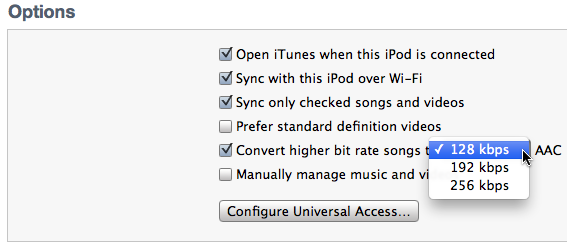
Also new in iTunes 10.6: automatic conversion of songs to more bit rates. Obviously, unless you want to save space or are converting from a lossless format, transcoding music isn’t generally a good idea.

iTunes 10.6 was released yesterday, and there’s one new feature which will, I think, please a number of the readers of this blog. As you may know, when you sync an iPod, you can have iTunes automatically convert your music files to a lower bit rate, so you can save space on a portable device. Previously, the only choice you had was 128 kbps. But iTunes 10.6 offers three choices: 128, 192 and 256 kbps.

Square’s Louie Mantia has created a nice iOS app icon template that also works with icons for the new iPad.

AirPlay Mirroring on the new iPad continues to be 720p, but AirPlay video streaming is 1080p to a 3rd gen Apple TV, 720p to a second-gen Apple TV. Video mirroring and video out support 1080p.

New iPad has a “Built-in 42.5-watt-hour rechargeable lithium-polymer battery”; iPad 2 has a “Built-in 25-watt-hour rechargeable lithium-polymer battery”.

Missing some movies from your new iTunes in the Cloud? CNET says Fox and NBC Universal will soon join other providers:

AllThingsD reported yesterday that Fox and NBC Universal are holdouts and that the reason has to do with exclusive licenses that those studios have with Time Warner’s HBO. This is the same contractual obligation that plagued the UltraViolet platform from signing some of the labels. HBO has exclusive licensing rights for electronic sales of films from NBC Universal, Warner Bros. and Fox. This is a minor holdup my film industry sources said.

As Shawn Blanc notes, the only way for Apple to give the idea of a Retina display is to make non-Retina screenshots look blurry and fuzzy.

As a sign of the times, the iPhoto for iOS app icon doesn’t contain a camera, but just a lens.

Apple published a support document on ”Siri: Japanese language availability”, saying:

After updating to iOS 5.1, Japanese customers will be prompted to enable Siri. During the initial rollout, availability may be limited and Siri may not be immediately usable.

Apple is calling the new iPad in a variety of ways. On its website, the company uses “iPad”, “the new iPad”, “third-generation iPad” and “iPad (3rd generation)” depending on what section you are visiting. Apple PR says it’s simply called iPad.

Unless they are calling it “the new iPad”, Apple (as usual) prefers to call the device “iPad” – without “the” – in almost every sentence. Example:

Now for the first time, you can share the high-speed data connection on your iPad. If your carrier supports it, iPad can act as a personal hotspot for connecting up to five devices — such as a MacBook Air, an iPod touch, or another iPad — over Wi-Fi, Bluetooth, or USB.

The new Apple TV has a single-core A5 chip.

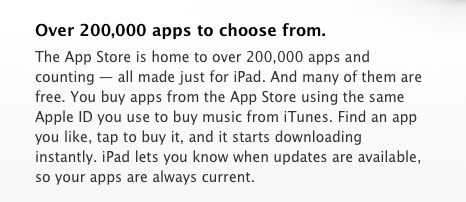
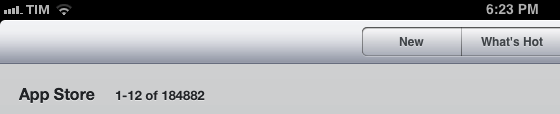
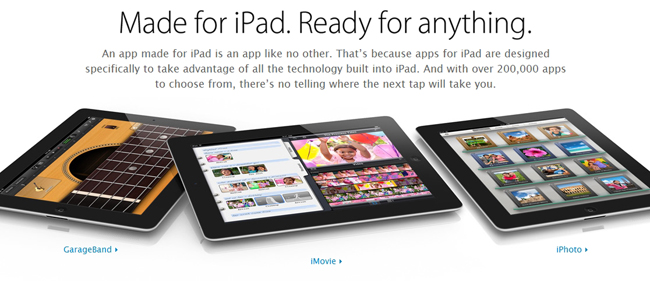
Apple says there are over 200,000 apps for iPad, but the App Store (as of today) disagrees.

MacStories’ March 7th Coverage

In case you missed it, you can catch up on our iPad keynote coverage with these links:

This Is The New iPad: Our Complete Overview

The Apple TV Gets A Refresh: New UI, 1080p Playback, Available on March 16 [Photos]

New iPad & Tablet Comparison Chart

Apple Releases iOS 5.1 [Direct Links, Screenshots]

Apple Updates Most of Its iOS Apps for the new iPad

iPhoto for iOS Review

The New iPad Keynote Roundup


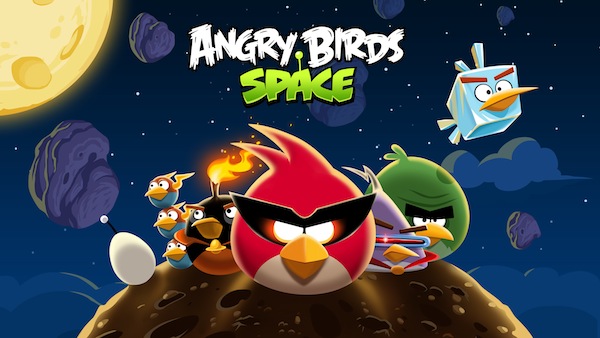
Rovio Officially Announces “Angry Birds Space” with New Trailer

The first new game by Rovio in over a year, Angry Birds Space is the next step in the company’s franchise, and it’s coming out on March 22. Previously teased online, Rovio has now updated the game’s webpage with an official trailer featuring a NASA engineer talking about the game and the new physics engine behind it. Based in a weightless environment, the basic gist of the game seems to be that in such conditions, trajectories are affected by gravity, and objects end up following curves, rather than straight lines. Using a “galactic slingshot” in footage shot on-location at the International Space Station, NASA’s Don Pettit explains how astronauts and scientists have to consider these changes in physics and gravity when they are in outer space; apparently, this mechanic will be brought to Angry Birds Space in a fairly accurate representation.

Angry Birds isn’t new to physics. In fact, we could say that the entire franchise has been so successful thanks to its user-friendly implementation of actual law of physics that take into account gravity, weight, trajectories, and speed through a multitouch interface. From what we can see in the trailer, surprisingly demoed on a Galaxy Note, the new Angry Birds will work as a crossover between the original game and Super Mario Galaxy – those who have played Nintendo’s Wii game might remember how planets affected Mario’s jumps and moves when floating in space. It looks like Angry Birds Space will somehow translate that gameplay in 2D scenes while mixing it with new birds, new pigs, and new actions with the ultimate goal of giving the franchise a new spin and an entirely new set of physics users will have to adapt to.

Angry Birds Space will be released on March 22 on iOS, Android, Mac, and PC. Check out the official video below.

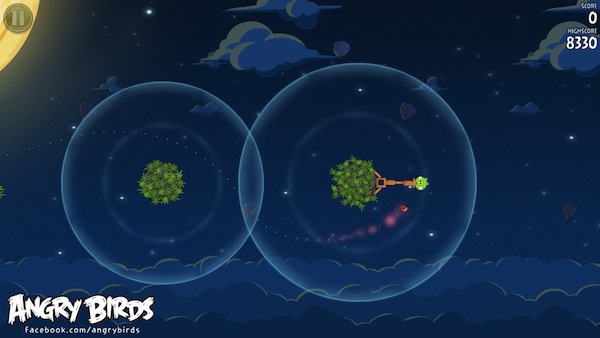
Update: More screenshots and information directly from Rovio.

Features:

  • 60 interstellar levels!
  • Regular free updates!
  • Brand new birds!
  • Brand new superpowers!
  • Zero-gravity space adventures!
  • Trick shots using planets’ gravity!
  • New in-app purchases for iOS!
  • Hidden bonus levels!
  • Beautifully detailed backgrounds!

Description:

After a giant claw kidnaps their eggs, the Angry Birds chase it into a wormhole and find themselves floating in a strange new galaxy – surrounded by space pigs! Luckily the Angry Birds have super powers of their own…

Angry Birds Space features 60 interstellar levels on planets and in zero gravity, resulting in spectacular gameplay ranging from slow-motion puzzles to lightspeed destruction. With regular free updates, new in-app purchases, brand new birds, brand new superpowers, and a whole galaxy to explore, the sky is no longer the limit!

Screenshots


Read more


The New iPad Keynote Roundup

iLife on 3 3rd Gen iPads

iLife on 3 3rd Gen iPads

Today’s one of those days when I can sit happily at my desk and know that the tech press didn’t win. Despite the mounting evidence, the alleged photographs of bits and pieces, and the last minute rumors of x-chip and y-feature for a gadget we seemingly knew everything about, Apple still managed to pull a fast one that was so obvious it makes even the most certain journalists curse under their breaths. iPad. You should have seen it coming right? Even the iPad 2 was simply referred to as the iPad on its aluminum shell. iPad. Even if it was just a little surprise, it’s a simple reminder that not even those with the best sources can fully beat Apple at its own game. As long as this continues to be true, I’m pretty sure that means Apple is doing alright.

With that said, let’s check out all of the great stuff Apple just launched.

Read more


iPhoto for iOS Review

iPhoto for iOS was released on the App Store earlier today, and after an enthusiastic introduction at Apple’s media event in San Francisco, the latest photo editing app from Cupertino received a controversial “welcome” on various blogs and Twitter streams as users got their hands on the all-new interface and photo management system. So what’s all the fuss about iPhoto for iOS?

I have been trying the app on my iPad 2 and iPhone 4S (running iOS 5.1, of course, as it’s a requirement) for the past few hours, and I think that it is very powerful. As I’ll illustrate in a bit, Apple did manage to squeeze some advanced photo editing and refinement technologies in the mobile version of iPhoto, putting it on the same level if not above iPhoto for Mac when it comes to editing, making quick adjustments, and interacting with your photos. Once mastered, the new gestures and tap commands can be quite powerful, although the app can have a steep learning curve. I also believe, however, that iPhoto for iOS suffers from a serious file management problem, in that it’s the best example of iOS’ lack of a centralized file system where apps are able to easily “talk” to each other and share files or modifications to them.

I want to get this out of my system before I get to the (very) good stuff. If you were hoping to see Apple coming up with an effortless way of importing photos avoiding duplicates and manual management, well, I’m sorry, you’ll be disappointed with iPhoto for iOS. This version of iPhoto is yet another data silo that is self-contained, and won’t simply “sync” the changes it makes to photos out of its closed environment.

I say “simply”, because there are exceptions in iPhoto for iOS, as it doesn’t use the exact same system of iPhoto for Mac when it comes to finding photos on your device. Because iOS devices come with a systemwide “Camera Roll” that’s accessible by other apps, Apple engineers had to make sure iPhoto could access such location – and here’s where I started to run into issues. Read more


Apple to Developers: Update Your Apps for iOS 5.1

Following the release of iOS 5.1 earlier today, Apple has updated its developer portal with a new “Create Apps for iOS 5.1” webpage, asking developers to start submitting apps written specifically with the iOS 5.1 SDK. The checklist includes links to the iOS 5.1 SDK release notes, Xcode 4.3.1 for developers, and a detailed explanation of the various functionalities introduced in iOS 5.

iOS 5.1, the latest version of the world’s most advanced mobile operating system is now in the hands of millions of iOS customers. Install iOS 5.1 now and download Xcode 4.3.1 with iOS 5.1 SDK from the Mac App Store, so you can test and submit your iOS 5.1 apps today.

Furthermore, Apple has updated the iOS Human Interface Guidelines with new icon size information, as well as the iOS App Programming Guide.

Developers can head over this page to check out Apple’s resources for developing and submitting iOS 5.1 apps.


Apple Updates Most of Its iOS Apps for the new iPad

Today, during Apple’s Keynote, they showed off updates for iWork, iMovie and GarageBand after revealing the new iPad. After the Keynote, many more of Apple’s iOS apps also received updates as well. All these updates are available now in support of the new iPad. Lucky for you we have the entire list (with direct links) for our loyal readers!

iOS Apps

Find My Friends 1.1:

  • Support for Retina display-capable devices
  • Bug Fixes
  • Stability enhancements

iTunes U 1.1:

  • Now designed for the spectacular Retina display on the all new iPad.
  • This version also includes a number of performance improvements.

GarageBand 1.2:

  • Start a Jam Session to play or record live with up to three of your friends using iPad, iPhone, or iPod touch*
  • Conduct an entire string orchestra using Smart Strings
  • Use the Note Editor to adjust or fine-tune any Touch Instrument recording
  • Combine recordings to free up additional tracks using Track Merge
  • Keep your GarageBand songs up to date across all your iOS devices with iCloud*
  • Share your songs directly to Facebook, YouTube, and SoundCloud
  • Perform retro and modern synth bass lines and grooves with new Smart Bass instruments
  • Play synth melodies and arpeggios with new Smart Keyboard instruments

*Jam Session and iCloud are available on iPhone 4 or later, 4th generation iPod touch, and all iPad models.

iMovie 1.3:

  • Create beautiful movie trailers with stunning graphics and world-class soundtracks*
  • Swipe up on the playhead to freeze a frame in your video
  • Preview music and sound effects in the Audio Browser
  • Create a song in GarageBand and send it directly to iMovie

*Trailers are available on iPhone 4 or later and iPad 2 or later

Find My iPhone 1.4:

  • Support for Retina display-capable devices
  • Bug Fixes
  • Stability enhancements

iBooks 2.1:

  • Read books more easily with sharply detailed text on the new iPad’s amazing Retina display
  • See page numbers that correspond to the printed edition of select titles
  • Search for a page number to jump to a desired page with a single tap
  • Use your finger as a highlighter when swiping over text
  • This version also includes a number of important stability and performance improvements

Numbers 1.6: (Numbers 1.6 requires iOS 5.1 software update or later)

  • Create and view stunning 3D bar, line, area, and pie charts
  • Numbers 1.6 is enhanced to take advantage of the Retina display on the new iPad
  • Includes performance improvements

Keynote 1.6: (Keynote 1.6 requires iOS 5.1 software update or later)

  • Create and view stunning 3D bar, line, area, and pie charts
  • Animate your 3D charts with Crane, Grow, Radial, Rotate, Rotate & Grow, and Z Axis builds
  • Keynote 1.6 is enhanced to take advantage of the Retina display on the new iPad
  • Use new builds and transitions including Iris, Shimmer, Wipe, Flame, Perspective, Swing, Object Push, Object Zoom, and Fade Through Color
  • Includes performance improvements

Pages 1.6: (Pages 1.6 requires iOS 5.1 software update or later)

  • Easily enter text using the landscape keyboard on iPhone and iPod touch
  • Create and view stunning 3D bar, line, area, and pie charts
  • Pages 1.6 is enhanced to take advantage of the Retina display on the new iPad
  • Includes performance improvements

Remote 2.3:

  • Support for iTunes Match on Apple TV
  • Support for Retina display on iPad

Mac Apps

Xcode 4.3.1:

  • Includes SDKs for Mac OS X 10.7 Lion and iOS 5.1
  • New code signing workflow supports signing OS X apps with Developer ID
  • Adds installation of command-line tools to the Downloads preference pane
  • Open Developer Tool menu launches Instruments, File Merge, and other tools
  • ARC migration tool converts both retain/release and garbage collected code
  • Additional bug fixes and stability improvements

iBooks Author 1.1:

  • iBooks Author 1.1 is enhanced to create books that take advantage of the Retina display on the new iPad
  • Includes performance and stability improvements

iPhoto 9.2.2:

  • Photos can now be deleted from Photo Stream

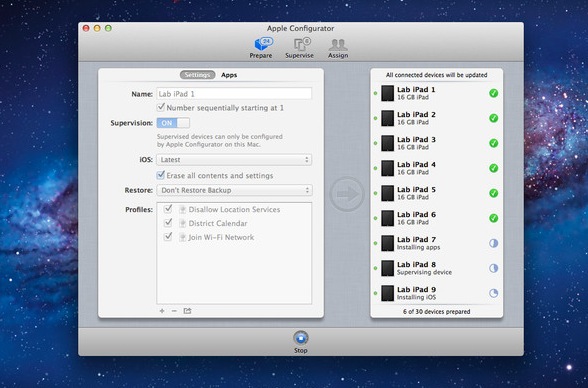
“Apple Configurator” Released To Mass Configure iOS Devices

“Apple Configurator” Released To Mass Configure iOS Devices

Apple has released a new free app on the Mac App Store, a utility called “Apple Configurator” to ease the mass configuration process of iOS devices for businesses and schools. Whilst the support page for the app still has to become available, it appears the app will allow those who are looking for a simple deployment solution to set Profiles for iOS devices, update iOS, install apps, and set restrictions. It’s certainly a welcome addition that confirms Apple’s focus in education, and in helping schools manage iOS devices and distribute applications.

Apple Configurator makes it easy for anyone to mass configure and deploy iPhone, iPad, and iPod touch in a school, business, or institution.

Apple Configurator is available for free here.

Permalink